
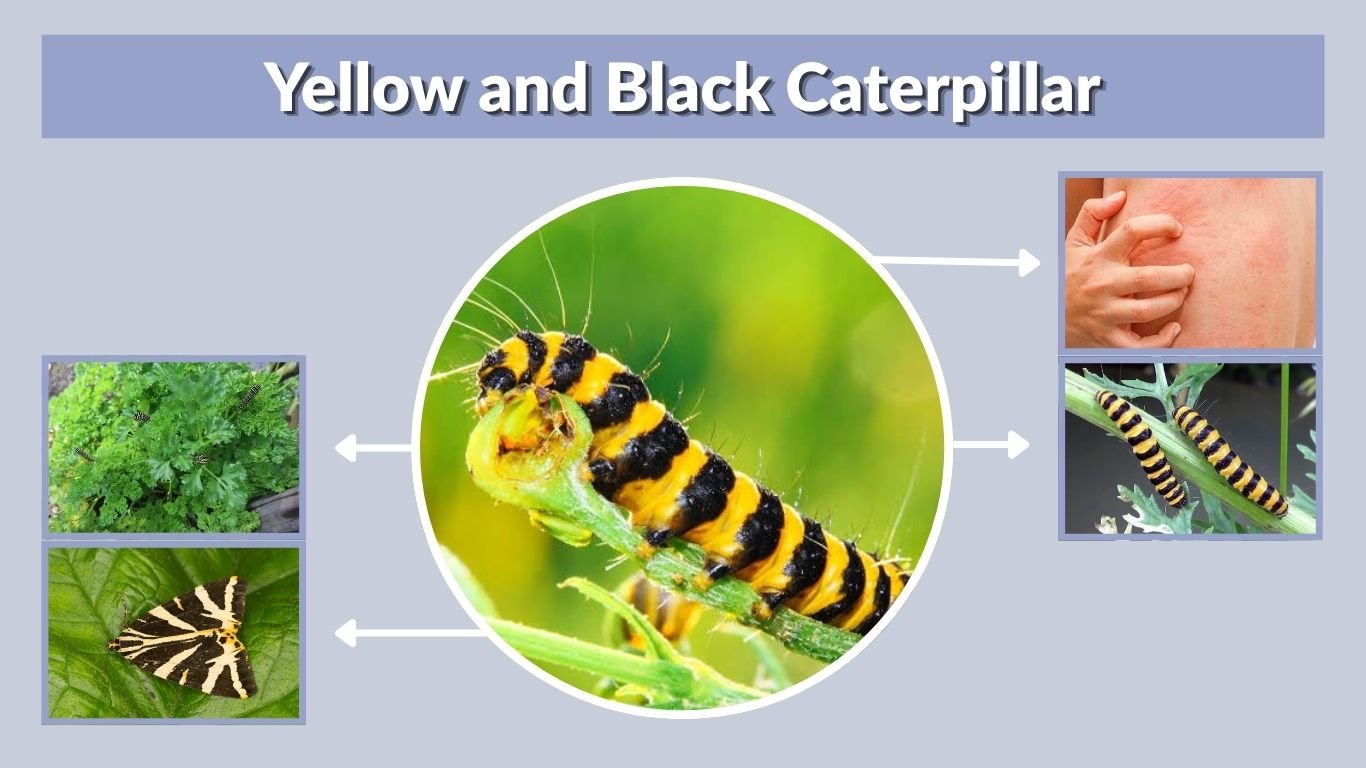
A black and yellow caterpillar can look beautiful, strange, or even dangerous. Some are fuzzy, some are striped, and others have spikes, horns, or bright spots. Many people find them on garden plants, trees, sidewalks, or house walls and wonder if they are poisonous. The answer depends on the species. This guide explains how to identify common black and yellow caterpillars, whether they sting, and what they may become.
What Is a Black and Yellow Caterpillar?
A black and yellow caterpillar is the larval stage of a moth or butterfly. The black and yellow color pattern is common in many species because it can help with camouflage or act as a warning sign. Some caterpillars use bright colors to tell predators that they may taste bad or have irritating hairs.
Common Identification Features
Black and yellow caterpillars can look very different from one species to another. Some have smooth bodies with clean stripes, while others are covered in hairs or spines. A few may also have white markings, red heads, green bodies, or a horn-like tail.
Common features include:
- Black body with yellow stripes
- Yellow body with black bands or spots
- Fuzzy black and yellow hairs
- White, black, or yellow spikes
- Red, orange, or black head
- Green body with black and yellow markings
- Tail horn or raised spine-like structure
- Rows of spots along the sides
The best way to identify one is to look at its full pattern, not just color. Body shape, host plant, location, and season are also important clues.
Why Are Some Caterpillars Black and Yellow?
Black and yellow is a strong color combination in nature. It can warn predators to stay away. Some caterpillars are harmless but still look dangerous to avoid being eaten. Others have irritating hairs, bad taste, or chemicals from the plants they eat.
For example, caterpillars that feed on milkweed may store bitter compounds from the plant. Birds often learn to avoid bright warning colors after trying unpleasant insects.
Fuzzy, Striped, or Spiky: What Is the Difference?
People often describe caterpillars in different ways. One person may call it fuzzy, while another may call it spiky or hairy. These descriptions can point toward different groups.
| Caterpillar Look | What It May Mean | Safety Note |
| Black and yellow striped | Clear bands or lines across body | Usually identify by host plant |
| Black and yellow fuzzy | Covered with dense hairs | Avoid touching bare-handed |
| Yellow and black spiky | Has raised spines or hair tufts | May irritate skin |
| Green, black, and yellow | Mixed camouflage and warning colors | Check plant it feeds on |
| Black and yellow with horn | Often a moth caterpillar | Horn is usually not a stinger |
A fuzzy caterpillar is not always poisonous, but it can still irritate skin. A horned caterpillar may look scary, but the horn is often harmless.
Common Types of Black and Yellow Caterpillars
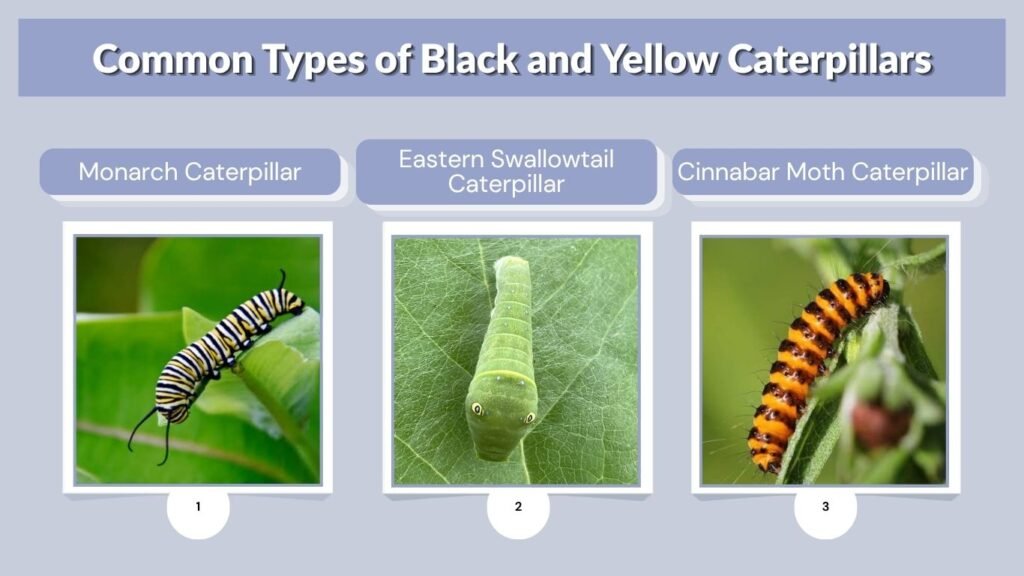
Many caterpillars match this color pattern. Some become butterflies, while many fuzzy or hairy ones become moths. Correct identification is easier when you know the plant where it was found.
Monarch Caterpillar
The monarch caterpillar is one of the most recognized black, yellow, and white caterpillars. It has smooth bands around the body and two pairs of black tentacle-like filaments, one near the head and one near the rear.
Identification features:
- Black, yellow, and white bands
- Smooth body, not fuzzy
- Long black filaments at both ends
- Usually found on milkweed
- Turns into a monarch butterfly
Monarch caterpillars are not dangerous to touch in the same way as stinging caterpillars, but it is still better to avoid handling them. They feed on milkweed and rely on this plant for survival. If you find one, leave it on the milkweed plant.
Eastern Swallowtail Caterpillar
Some swallowtail caterpillars may show black, yellow, green, and white markings depending on their life stage. Young black swallowtail caterpillars can look dark with pale bands, while older ones often become green with black and yellow spots.
Identification features:
- Green body with black bands
- Yellow or orange spots
- Smooth, plump body
- Often found on parsley, dill, fennel, or carrot leaves
- Turns into a swallowtail butterfly
Swallowtail caterpillars have a special defense organ called an osmeterium. When disturbed, it may pop out from behind the head and release a strong smell. This can scare predators, but it is not the same as a stinger.
Cinnabar Moth Caterpillar
The cinnabar moth caterpillar is famous for its bold black and yellow-orange bands. It often feeds on ragwort and can appear in groups.
Identification features:
- Bright black and yellow or orange bands
- Smooth body
- Often found on ragwort plants
- Feeds openly on leaves
- Turns into a red and black moth
Its bright colors warn predators that it may be unpleasant to eat. This caterpillar is more common in some regions than others, so location matters when identifying it.
Yellow Woolly Bear Caterpillar
A yellow woolly bear caterpillar may look yellow, tan, orange, or brownish with darker hairs mixed in. Some people describe it as black and yellow fuzzy because the hair color can vary.
Identification features:
- Thick fuzzy body
- Yellow, tan, brown, or black hairs
- Slow crawling movement
- Often found crossing roads, paths, or lawns
- Turns into a moth
Although many woolly bear caterpillars are not seriously dangerous, their hairs may irritate sensitive skin. It is best to move them with a leaf or paper instead of using bare hands.
Tussock Moth Caterpillar
Tussock moth caterpillars are among the most striking black, yellow, white, and fuzzy caterpillars. They may have brush-like tufts on the back, long black hair pencils, and bright warning colors.
Identification features:
- Black, yellow, white, or orange markings
- Tufts of hair along the back
- Long hair pencils near front or rear
- Often found on trees and shrubs
- Turns into a moth
These caterpillars should not be handled. Their hairs can cause itching, redness, or rash in some people. Children may want to touch them because they look soft, but they are better observed from a distance.
American Dagger Moth Caterpillar
The American dagger moth caterpillar is often yellow or whitish-yellow with black hair tufts. Some people may describe it as a yellow and black fuzzy caterpillar or a yellow caterpillar with black spikes.
Identification features:
- Pale yellow or bright yellow fuzzy body
- Long black hair tufts
- Found on oak, maple, birch, elm, and other trees
- Often seen in late summer or fall
- Turns into a grayish moth
This caterpillar can irritate skin, so it should not be picked up. If it falls from a tree or crawls onto a porch, use a stick, leaf, or gloves to move it.
Are Black and Yellow Caterpillars Poisonous?
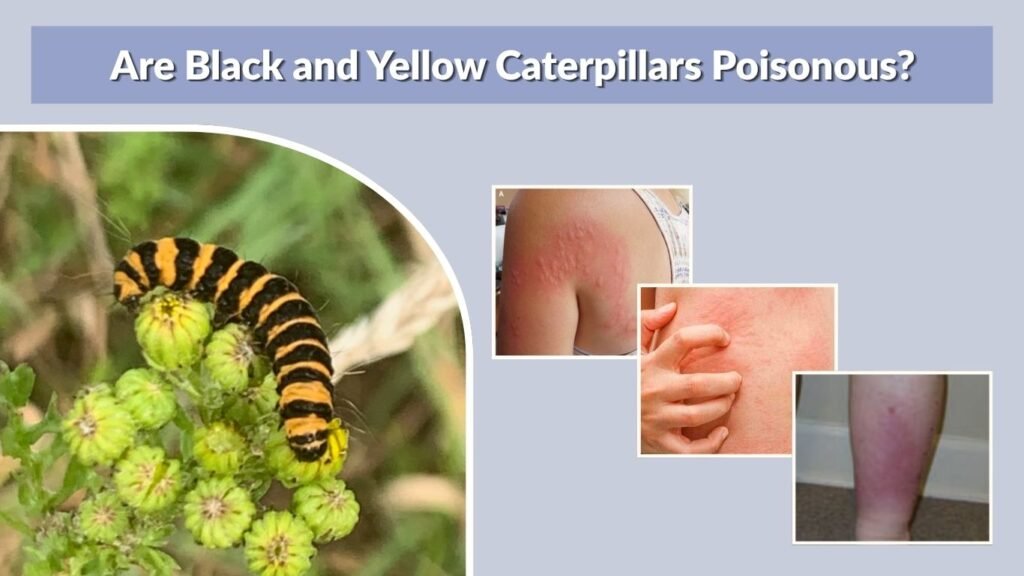
Not every black and yellow caterpillar is poisonous. Some are harmless, some taste bad to predators, and some have irritating hairs or spines. The word “poisonous” is often used loosely, but the real concern for people is usually skin irritation.
Can They Sting?
Some black and yellow caterpillars can cause a sting-like feeling if their hairs or spines touch your skin. They do not sting like bees, but tiny hairs may break off and irritate the skin.
Possible symptoms include:
- Itching
- Redness
- Mild swelling
- Burning feeling
- Small rash or bumps
- Skin tenderness
- Eye irritation if hairs touch the face
If you touch a fuzzy or spiky caterpillar, wash the area with soap and water. Avoid rubbing your eyes. If irritation is strong or does not improve, seek medical advice.
Are They Dangerous to Humans?
Most black and yellow caterpillars are not life-threatening to humans. However, some can be unpleasant to handle. People with sensitive skin, allergies, or asthma may react more strongly.
The safest rule is simple: do not touch unknown caterpillars with bare hands. This is especially important for fuzzy, hairy, spiky, or brightly colored caterpillars.
Are They Harmful to Dogs and Cats?
Dogs and cats may sniff, lick, or bite caterpillars. Hairy caterpillars can irritate a pet’s mouth, nose, or paws. A pet may drool, paw at its mouth, vomit, or act uncomfortable after contact.
If your pet chews a fuzzy black and yellow caterpillar, remove any visible hairs gently if safe, offer water, and contact a veterinarian if symptoms appear. Try to take a photo of the caterpillar for identification.
Where Black and Yellow Caterpillars Are Found
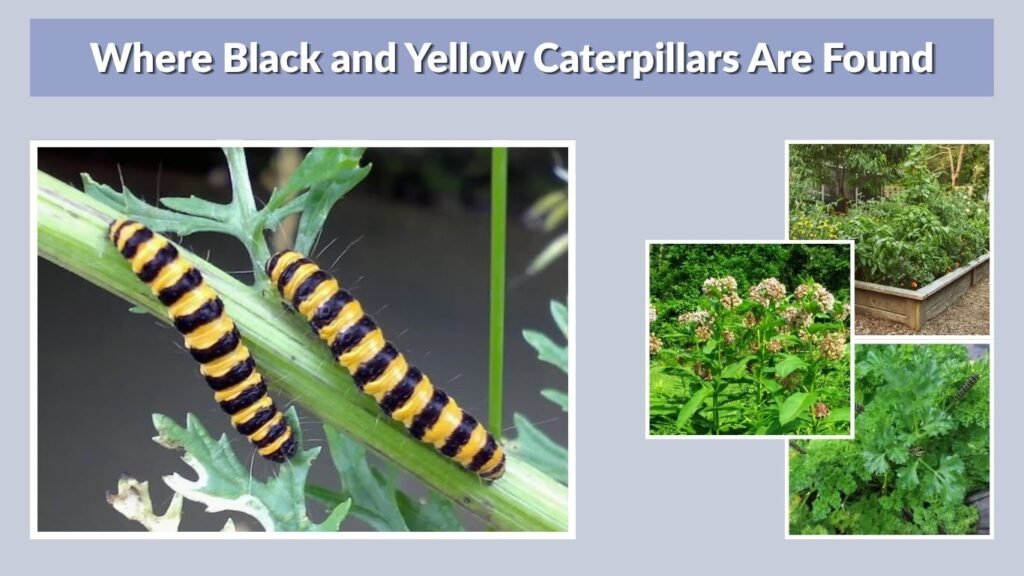
Black and yellow caterpillars live in many habitats. Some are common in gardens, while others prefer forests, fields, wetlands, or roadside plants. Their location often depends on their host plant.
Common Habitats
You may find black and yellow caterpillars in many outdoor places. Some stay on leaves, while others wander when they are ready to pupate.
Common places include:
- Milkweed patches
- Vegetable gardens
- Herb gardens with dill, parsley, or fennel
- Oak, maple, birch, and willow trees
- Shrubs and ornamental plants
- Lawns and sidewalks
- Forest edges
- Wildflower areas
- Fence posts, decks, and house walls
If you find a caterpillar crawling on the ground, it may not be feeding. It may be searching for a safe place to form a cocoon or chrysalis.
Black and Yellow Caterpillars in Gardens
Gardeners often notice caterpillars because they chew leaves. A few caterpillars usually do not cause serious damage. Many become important moths or butterflies and support the local ecosystem.
Before removing them, check the plant. If the caterpillar is on milkweed, parsley, dill, or native plants, it may be a butterfly species. If many are damaging a plant, hand removal with gloves is usually better than spraying chemicals.
Regional Searches: Florida, Georgia, Michigan, Ontario, and Alberta
People often search for black and yellow caterpillars by location because species vary by region. In warm places like Florida and Georgia, caterpillars may appear for more months of the year. In northern places like Michigan, Ontario, and Alberta, sightings are often more seasonal.
Regional identification should include:
- Local climate
- Host plant
- Time of year
- Caterpillar size
- Fuzzy or smooth body
- Stripe, spot, or spike pattern
A black and yellow caterpillar in Florida may not be the same species as one found in Ontario. Location helps narrow the answer.
What Does a Black and Yellow Caterpillar Turn Into?
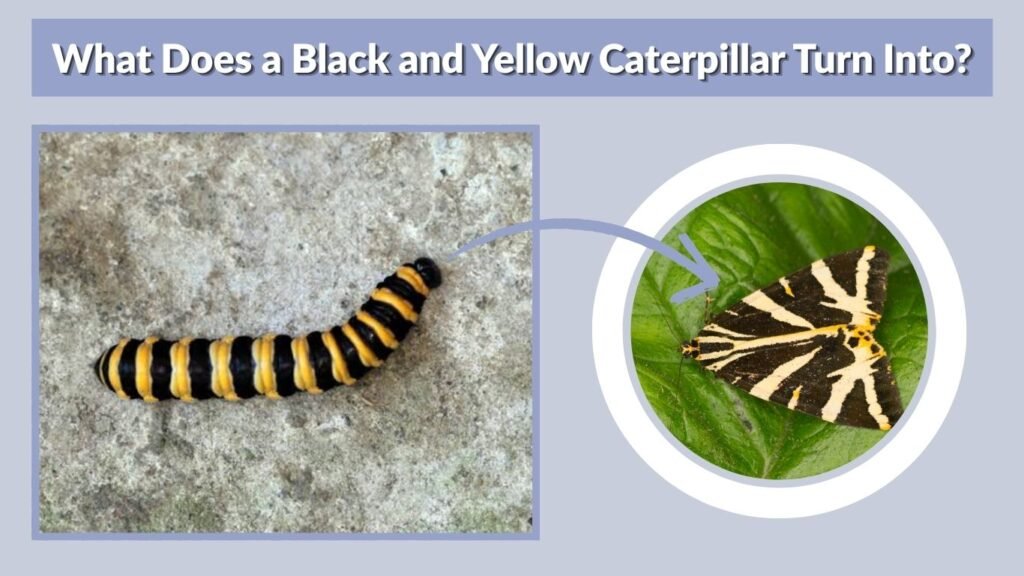
A black and yellow caterpillar may turn into a butterfly or a moth. Smooth, banded caterpillars are often butterfly larvae, while fuzzy or hairy ones are usually moth larvae.
Butterfly Caterpillars
Some black and yellow caterpillars become butterflies. These usually have smoother bodies and clear color patterns.
Examples include:
- Monarch caterpillar
- Black swallowtail caterpillar
- Some other swallowtail species
- Certain checkerspot or brush-footed butterfly larvae
Butterfly caterpillars often have specific host plants. For example, monarch caterpillars need milkweed, while black swallowtail caterpillars often feed on parsley family plants.
Moth Caterpillars
Many fuzzy black and yellow caterpillars turn into moths. Moth caterpillars often have hairs, tufts, woolly bodies, or warning colors.
Examples include:
- Tussock moth caterpillars
- Woolly bear caterpillars
- Dagger moth caterpillars
- Tiger moth caterpillars
- Cinnabar moth caterpillars
Adult moths may look much duller than the caterpillar. A bright, fuzzy larva can become a gray, brown, white, or patterned moth.
Basic Life Cycle
Caterpillars are only one stage in the life cycle. They spend most of this stage eating and growing.
The life cycle usually follows this order:
- Egg is laid on a host plant
- Caterpillar hatches and begins feeding
- Caterpillar molts several times
- Mature caterpillar leaves the plant or hides
- Pupa, chrysalis, or cocoon forms
- Adult moth or butterfly emerges
Some species complete the cycle quickly. Others overwinter as pupae and emerge months later.
How to Identify a Black and Yellow Caterpillar Safely
You can identify most caterpillars without touching them. A clear photo and a few notes are usually enough.
Step-by-Step Identification Guide
Start by looking closely at the body pattern. Use your phone camera to zoom in from a safe distance.
Check these details:
- Is the body smooth, fuzzy, hairy, or spiky?
- Are the stripes horizontal, vertical, or broken?
- Are there yellow spots, bands, or full stripes?
- Does it have white markings?
- Does it have a red or black head?
- Does it have a horn on the tail?
- What plant is it eating?
- Where was it found?
- What month or season is it?
- Is it alone or in a group?
The host plant is one of the strongest clues. A black and yellow caterpillar on milkweed is likely different from one on parsley, oak, or ragwort.
When You Should Not Touch It
Avoid touching any caterpillar that is fuzzy, spiky, brightly colored, or unknown. Even harmless species can be injured by handling. Caterpillars are soft-bodied and can be harmed easily.
Do not touch it if:
- It has long hairs
- It has stiff-looking spines
- It has bright warning colors
- It is on an unknown plant
- You have sensitive skin
- A child or pet is nearby
- You are unsure of the species
If you must move it, use a leaf, stick, paper, container, or gloves.
What to Do If You Find One at Home
If the caterpillar is outside, it is usually best to leave it alone. If it is on a walkway, move it gently to nearby vegetation. If it is inside your house, guide it into a container and release it outdoors near plants.
Avoid spraying insecticide unless there is a major infestation. Many caterpillars are beneficial parts of the ecosystem and become pollinating moths or butterflies.
FAQs
What is a black and yellow caterpillar?
A black and yellow caterpillar is the larval stage of a moth or butterfly. It may be striped, fuzzy, spotted, smooth, or spiky depending on the species. Common examples include monarch caterpillars, swallowtail caterpillars, tussock moth caterpillars, woolly bears, and cinnabar moth caterpillars.
Is a black and yellow caterpillar poisonous?
Some black and yellow caterpillars are harmless, while others can irritate skin with tiny hairs or spines. They are not always poisonous to humans, but bright colors can warn predators that the caterpillar may taste bad or be irritating. Avoid touching unknown caterpillars.
What does a black and yellow caterpillar turn into?
It may turn into either a moth or a butterfly. Smooth striped caterpillars often become butterflies, while fuzzy or hairy black and yellow caterpillars usually become moths. The host plant, body shape, and pattern can help identify the adult form.
Can a black and yellow fuzzy caterpillar sting?
Some fuzzy caterpillars can cause a sting-like feeling because their hairs irritate the skin. They do not sting like bees, but the hairs may cause itching, redness, burning, or a rash. Wash the area with soap and water if contact happens.
Should I remove black and yellow caterpillars from my garden?
You do not need to remove them unless they are causing serious plant damage or creating a safety concern. Many become butterflies or moths. If removal is needed, use gloves or a leaf and move them gently instead of touching them directly.
