
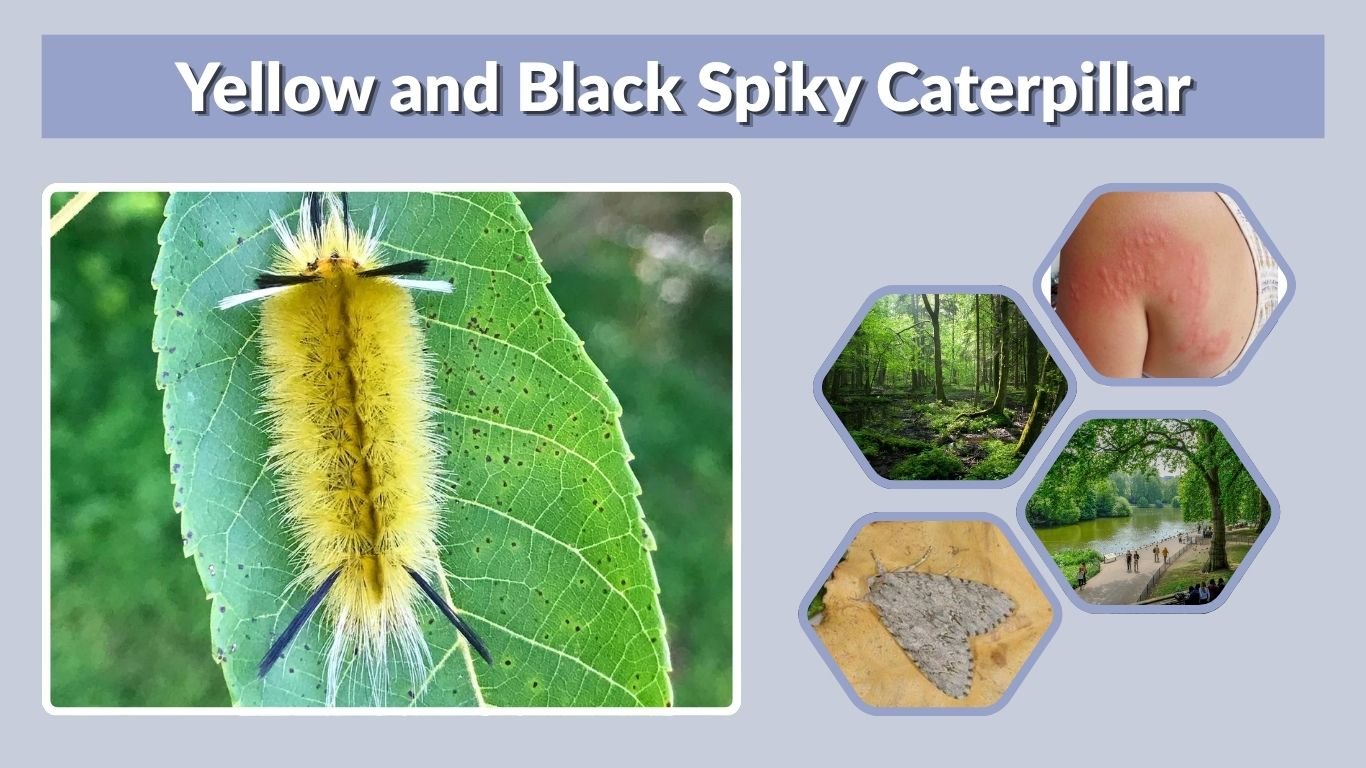
A yellow caterpillar with black spikes can look strange, beautiful, and a little alarming. Many people find these caterpillars on garden plants, trees, fences, or sidewalks and wonder if they are poisonous, harmful, or safe to touch. The truth is that several caterpillar species can appear yellow, fuzzy, hairy, or spiky with dark markings. Correct identification depends on body color, spike pattern, hairs, location, host plant, and season.
What Is a Yellow Caterpillar With Black Spikes?
A yellow caterpillar with black spikes is usually the larval stage of a moth or butterfly. The “spikes” may be soft hair tufts, branched spines, or stiff-looking setae. Some species are harmless, while others can irritate human skin if handled. Because many caterpillars change color as they grow, the same species may look yellow, orange, black, greenish-yellow, or striped at different stages.
Common Appearance
Most yellow caterpillars with black spikes are easy to notice because their color stands out against green leaves. Some look fluffy, while others have long black hair pencils or sharp-looking spines.
Key features may include:
- Bright yellow or pale yellow body
- Black spikes, tufts, or bristles
- Fuzzy, woolly, or hairy texture
- Black dots, bands, or stripes
- Red, orange, or black head
- White or black spine clusters
- Long hairs near the front or back
Some caterpillars are mostly yellow with black spike-like tufts, while others are black with yellow stripes or yellow spots. This is why identification should never rely on color alone.
Why They Have Spikes
The spikes and hairs help protect caterpillars from predators. Birds, lizards, and small mammals may avoid hairy or brightly colored caterpillars because they look unpleasant or dangerous. In some species, the hairs are only for defense by appearance. In others, the hairs may break off and cause itching or a mild rash.
Bright yellow color can also act as a warning signal. It tells predators that the caterpillar may taste bad, be irritating, or be difficult to swallow. Even harmless species often benefit from looking dangerous.
Yellow, Fuzzy, Hairy, or Spiky: Are They the Same?
Many people use the words fuzzy, hairy, fluffy, woolly, and spiky in the same way. However, these words can describe different body structures.
| Description | What It Usually Means | Identification Clue |
| Fuzzy yellow caterpillar | Covered with soft-looking hairs | Often moth larvae |
| Yellow caterpillar with black spikes | Has dark hair tufts or spines | Check spike placement |
| Black and yellow spiky caterpillar | Dark body with yellow bands or spots | May be a butterfly or moth larva |
| Yellow woolly caterpillar | Dense hair, woolly appearance | Avoid touching with bare hands |
| Yellow caterpillar with white and black spikes | Mixed pale and dark spine clusters | Look at host plant and region |
The same caterpillar may be described in several ways by different people. A “yellow fuzzy caterpillar with black spikes” could be a tussock moth caterpillar, a dagger moth caterpillar, or another hairy moth larva.
Common Types of Yellow Caterpillars With Black Spikes
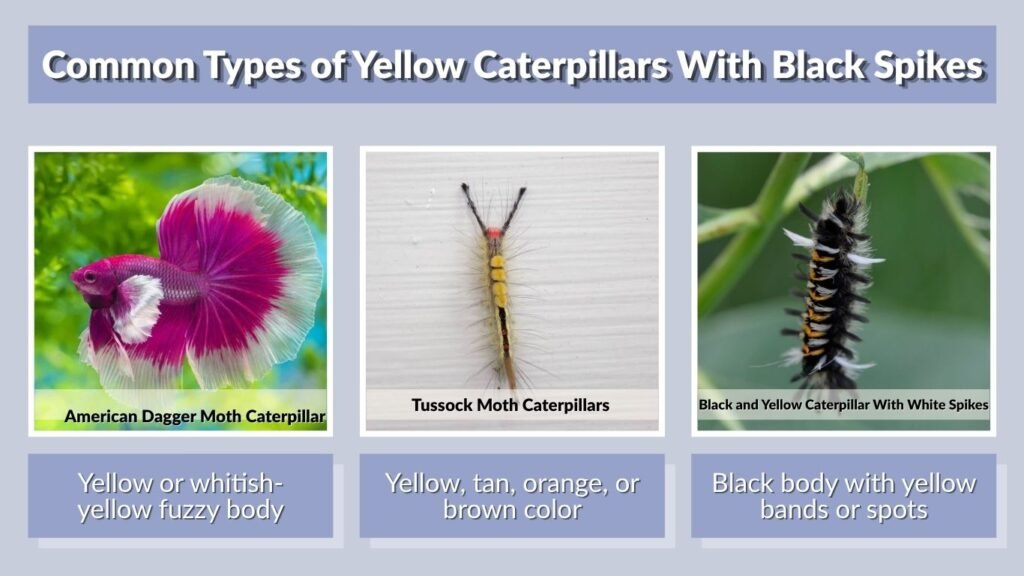
Several caterpillars can match this description. Some are common in North America, including Ontario, Michigan, Florida, and other regions. Others may appear in gardens, forests, parks, and around homes.
American Dagger Moth Caterpillar
The American dagger moth caterpillar is one of the most common matches for a yellow fuzzy caterpillar with black spikes. It is usually bright yellow or pale yellow and has long black hair pencils sticking out from the body.
Identification features:
- Yellow or whitish-yellow fuzzy body
- Several long black hair tufts
- Dense soft-looking hairs
- Often found on trees
- May appear on sidewalks or patios after leaving trees
This caterpillar is often seen on oak, maple, birch, elm, and other hardwood trees. Although it looks soft, it should not be handled. Its hairs can irritate skin and may cause itching or redness.
The adult form is a grayish dagger moth. It is not a butterfly. Many people ask what a yellow caterpillar with black spikes turns into, and in this case, the answer is a moth.
Tussock Moth Caterpillars
Tussock moth caterpillars are another common group that can look yellow, black, white, and spiky. Some species have brush-like tufts on the back and longer hair pencils near the front and rear.
Identification features:
- Tufts of hair along the back
- Black, white, yellow, or orange markings
- Long black hair pencils
- Fuzzy or bristly body
- Often found on trees and shrubs
These caterpillars are eye-catching but can cause skin irritation. Children may want to touch them because they look fluffy, but it is better to observe them without contact.
Tussock moth caterpillars usually become small or medium-sized moths. Their adult forms are less colorful than the caterpillar stage.
Yellow Woolly Bear Caterpillar
Some woolly bear caterpillars may look yellow, cream, orange, or brownish-yellow. They are usually very hairy, and some individuals may have darker tufts or dark bands that look like spikes.
Identification features:
- Thick, woolly body
- Yellow, tan, orange, or brown color
- Dense hairs covering the body
- Slow crawling movement
- Often found crossing paths or lawns
Woolly bear caterpillars are usually moth larvae. Some are relatively harmless, but their hairs can still irritate sensitive skin. If you find one, avoid squeezing or rubbing it against your skin.
Black and Yellow Caterpillar With White Spikes
Some caterpillars are not mainly yellow but have black, yellow, and white patterns. These may include butterfly larvae or moth larvae. They can have white spikes, black spines, yellow bands, or spotted markings.
Identification features:
- Black body with yellow bands or spots
- White or pale spikes
- Rows of raised bumps
- May feed on garden plants
- Often more structured than fuzzy
This type needs careful identification because several species share similar colors. Host plant is one of the best clues. For example, a caterpillar found on milkweed, parsley, tomato, or willow may belong to a completely different group.
Is a Yellow Caterpillar With Black Spikes Poisonous?
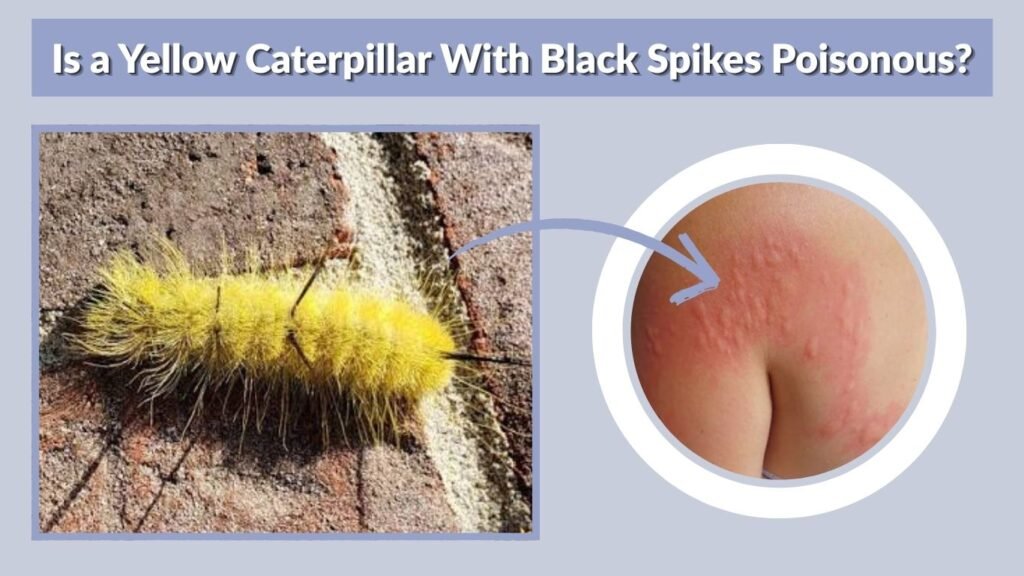
Many yellow and black spiky caterpillars are not truly poisonous in the way venomous animals are, but some can be irritating. Their hairs or spines may cause a rash, burning feeling, itching, or mild swelling when touched.
Can It Sting?
Some caterpillars have irritating hairs that feel like a sting, even though they do not sting like bees or wasps. The discomfort usually comes from tiny hairs breaking off in the skin. These hairs can trigger irritation, especially in people with sensitive skin.
Possible symptoms include:
- Itching
- Redness
- Mild swelling
- Burning sensation
- Small bumps or rash
- Eye irritation if hairs touch the face
If you touch a caterpillar and feel irritation, wash the area gently with soap and water. Sticky tape can sometimes help lift tiny hairs from the skin. Avoid scratching because that may worsen irritation.
Are They Dangerous to Humans?
Most are not seriously dangerous to humans. However, it is still smart to avoid handling any fuzzy or spiky caterpillar. The risk is usually higher for children, people with allergies, and anyone who rubs their eyes after touching the caterpillar.
If symptoms become severe, spread quickly, or involve breathing problems, medical help is needed. That kind of reaction is uncommon, but it is better to be cautious.
Are They Harmful to Dogs or Cats?
Pets may sniff, lick, or bite caterpillars. A yellow fuzzy caterpillar with black spikes can irritate a pet’s mouth, nose, or paws. Dogs may drool, paw at their mouth, or act uncomfortable after contact.
If a pet eats or chews a hairy caterpillar, watch for vomiting, mouth irritation, swelling, or unusual behavior. Contact a veterinarian if symptoms appear or if you are unsure what species the caterpillar was.
Where Yellow Caterpillars With Black Spikes Are Found
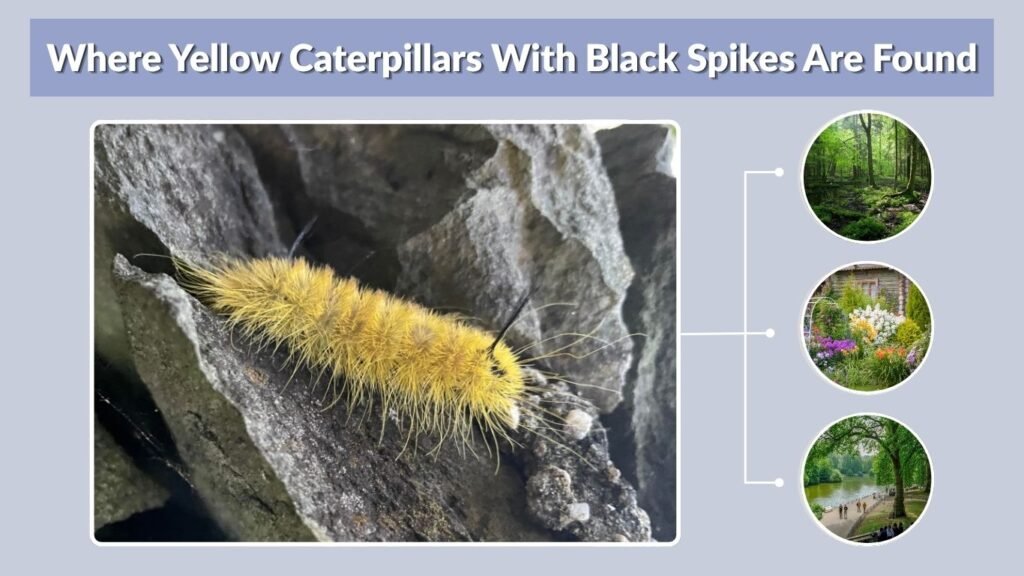
These caterpillars may appear in forests, gardens, parks, orchards, yards, and around houses. Many fall from trees or crawl down trunks when they are ready to pupate. That is why people often find them on decks, driveways, sidewalks, and walls.
Common Locations
Yellow spiky caterpillars are often found in late summer or fall, though timing depends on the species and region. In warmer areas, they may appear earlier or have more than one generation per year.
Common places include:
- Oak, maple, birch, elm, and willow trees
- Garden shrubs and ornamental plants
- Sidewalks under large trees
- Wooden fences and decks
- House walls and porch areas
- Lawns and leaf litter
- Forest trails and parks
If the caterpillar is on a plant and actively feeding, note the plant name. This can help identify the species more accurately than color alone.
Ontario, Michigan, and Northern Areas
Searches for yellow caterpillars with black spikes in Ontario and Michigan are common because hairy moth caterpillars often appear in these regions. American dagger moth caterpillars and tussock moth caterpillars can be found in many northern and eastern areas of North America.
In these places, people usually notice them in late summer or early fall. They may leave their host trees and crawl around looking for a place to pupate.
Florida and Warmer Areas
In Florida and other warm states, caterpillar diversity is higher. A yellow caterpillar with black spikes may belong to several moth or butterfly species. Warm climates can support caterpillars for more months of the year.
Because some Florida caterpillars can have stronger irritating spines, avoid touching any unknown fuzzy or spiky caterpillar. Take a clear photo instead and compare it with local extension or wildlife resources.
What Does a Yellow Caterpillar With Black Spikes Turn Into?
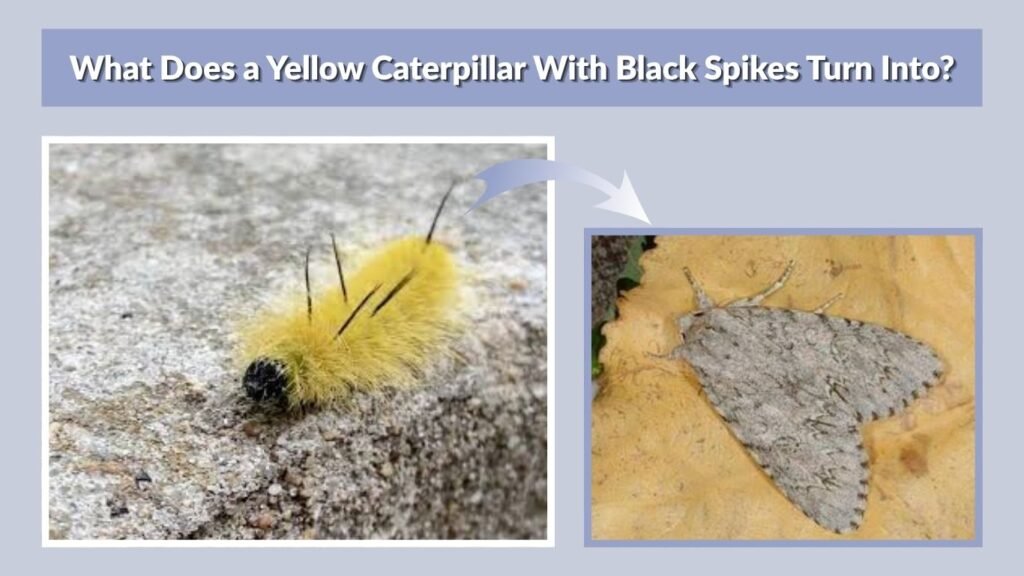
Most yellow fuzzy caterpillars with black spikes turn into moths, not butterflies. This is especially true for dagger moths, tussock moths, tiger moths, and woolly bear types.
Moth or Butterfly?
People often ask whether a yellow caterpillar with black spikes turns into a butterfly. Sometimes it can, but many common fuzzy yellow caterpillars become moths. Moth caterpillars are often hairy, woolly, or covered in tufts. Butterfly caterpillars are usually smoother or have more organized spines.
A simple guide:
- Very fuzzy body: often a moth
- Long hair pencils: often a moth
- Brush-like back tufts: often a tussock moth
- Smooth body with horn: may be a sphinx moth
- Spiny but not fuzzy: could be butterfly or moth
The adult moth may look plain compared with the caterpillar. A bright yellow larva can become a gray, brown, or white moth.
Life Cycle
A yellow caterpillar is only one stage in the insect’s life. It feeds heavily, grows through several stages, then pupates before becoming an adult.
Typical life cycle:
- Egg is laid on a host plant
- Caterpillar hatches and begins feeding
- Caterpillar molts and grows larger
- Mature caterpillar leaves plant or hides
- Pupa or cocoon forms
- Adult moth or butterfly emerges
Some species overwinter as pupae, meaning the caterpillar may disappear in fall and the adult may emerge the next year.
Why Color Changes Matter
Caterpillars can change appearance as they grow. A small yellow caterpillar with black spikes may become darker later. Another may begin dark and turn yellowish after molting. Weather, age, diet, and region can also affect color.
This is why photos from different stages may look confusing. To identify one correctly, compare body shape, hair pattern, head color, host plant, and location.
How to Identify One Safely
You do not need to touch a caterpillar to identify it. In fact, touching is the least useful and most risky method. A photo and a few field notes are much better.
Step-by-Step Identification Tips
Start by observing the caterpillar from a safe distance. Use your phone camera to zoom in and capture details.
Check these details:
- Body color: yellow, pale yellow, orange-yellow, or greenish-yellow
- Spike color: black, white, brown, or mixed
- Hair type: fuzzy, woolly, stiff, or branched
- Head color: black, red, orange, or yellow
- Pattern: stripes, dots, bands, or tufts
- Size: small, medium, large, or about inches long
- Host plant: tree, shrub, flower, vegetable, or weed
- Location: state, province, yard, forest, garden, or house wall
- Season: spring, summer, fall, or winter
Clear side-view and top-view photos are helpful. Also photograph the plant if the caterpillar is feeding.
Do Not Handle It
Even if the caterpillar is harmless, it is better not to pick it up. Fuzzy caterpillars can lose hairs easily. These hairs may irritate your skin, eyes, or mouth.
If you need to move it, use a leaf, stick, paper, or gloves. Place it near vegetation away from foot traffic. Do not crush it unless it is clearly causing serious plant damage and you are managing pests.
When It Is on Garden Plants
A few caterpillars can damage garden plants if many are feeding together. However, one or two caterpillars usually do not require control. Many become moths or butterflies and support birds, pollinators, and the local food web.
If there are many caterpillars on one plant, remove them with gloves or prune heavily infested leaves. Avoid using broad insecticides unless necessary because they can harm beneficial insects.
FAQs
What is a yellow caterpillar with black spikes?
A yellow caterpillar with black spikes is usually a moth or butterfly larva. Common possibilities include American dagger moth caterpillars, tussock moth caterpillars, and yellow woolly bear types. Identification depends on spike pattern, hair texture, host plant, location, and season.
Is a yellow fuzzy caterpillar with black spikes poisonous?
Most are not deadly poisonous, but some can irritate skin. Their hairs or spines may cause itching, redness, burning, or a rash. It is best not to touch any unknown fuzzy or spiky caterpillar with bare hands.
What does a yellow caterpillar with black spikes turn into?
Many yellow fuzzy caterpillars with black spikes turn into moths. For example, the American dagger moth caterpillar becomes a dagger moth. Some spiny caterpillars may become butterflies, but very fuzzy yellow caterpillars are more often moth larvae.
Can a yellow caterpillar with black spikes sting?
It may feel like a sting if the hairs irritate your skin. Many do not sting like bees, but their tiny hairs can break off and cause discomfort. Wash the area with soap and water if contact happens.
Should I remove yellow caterpillars from my yard?
You do not need to remove them unless they are damaging plants or creating a safety concern. If one is on a walkway, move it gently with a leaf, stick, or paper. Avoid touching it directly, especially if it is fuzzy or spiky.
