
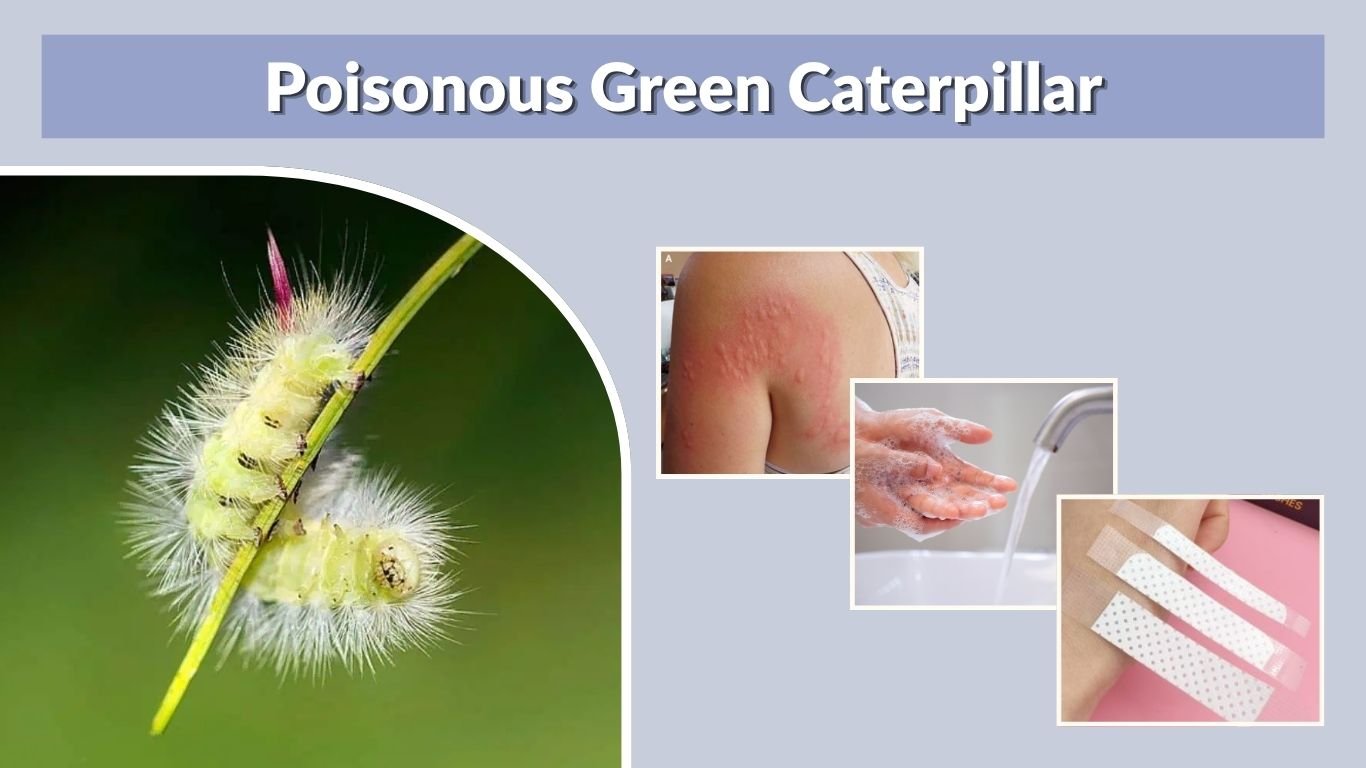
A poisonous green caterpillar can be hard to identify because many harmless caterpillars are also green. Some are smooth, some are fuzzy, and others have horns, spikes, or bright markings. Most green caterpillars are not deadly to humans, but a few can cause skin irritation, burning, itching, or allergic reactions. This guide explains how to identify poisonous-looking green caterpillars, which signs to watch for, whether horned or fuzzy types are dangerous, and what to do if you find one.
What Is a Poisonous Green Caterpillar?
A poisonous green caterpillar is usually a caterpillar that can irritate skin, sting, or contain chemicals that make it unsafe for predators to eat. Many people use the word “poisonous” for any caterpillar that looks dangerous, but not all green caterpillars are harmful. Color alone is not enough for identification.
Poisonous vs. Venomous Caterpillars
A caterpillar may be poisonous, venomous, irritating, or completely harmless. These words are often confused.
- Poisonous: Harmful if eaten or crushed against skin
- Venomous: Can inject irritating chemicals through spines
- Irritating: Hairs or bristles may cause rash or itching
- Harmless: Does not sting and is safe to observe
- Warning-colored: Looks bright to scare predators
Most green caterpillars do not bite or attack. The main risk comes from touching fuzzy, spiky, or unknown species.
Why Some Green Caterpillars Look Dangerous
Green helps caterpillars blend with leaves. However, many poisonous-looking caterpillars also have warning signs such as spines, horns, bright dots, black stripes, or fuzzy hairs. These features may protect them from birds and other predators.
Some harmless caterpillars copy dangerous-looking species. This makes identification confusing, especially when people search for “green caterpillar poisonous” after seeing a bright green larva in the garden.
Quick Identification Table
| Green Caterpillar Feature | Safety Meaning |
| Smooth green body, no hairs or spines | Usually harmless |
| Green body with a rear horn | Usually harmless hornworm, but may damage plants |
| Fuzzy green body | Avoid touching; may irritate skin |
| Green body with sharp spines | Possible stinging caterpillar |
| Bright green with black/yellow markings | Identify before handling |
| Tiny green caterpillar on vegetables | Usually a garden pest, not dangerous |
| Green caterpillar with white stripe | Usually harmless, but check species |
Are Green Caterpillars Poisonous?
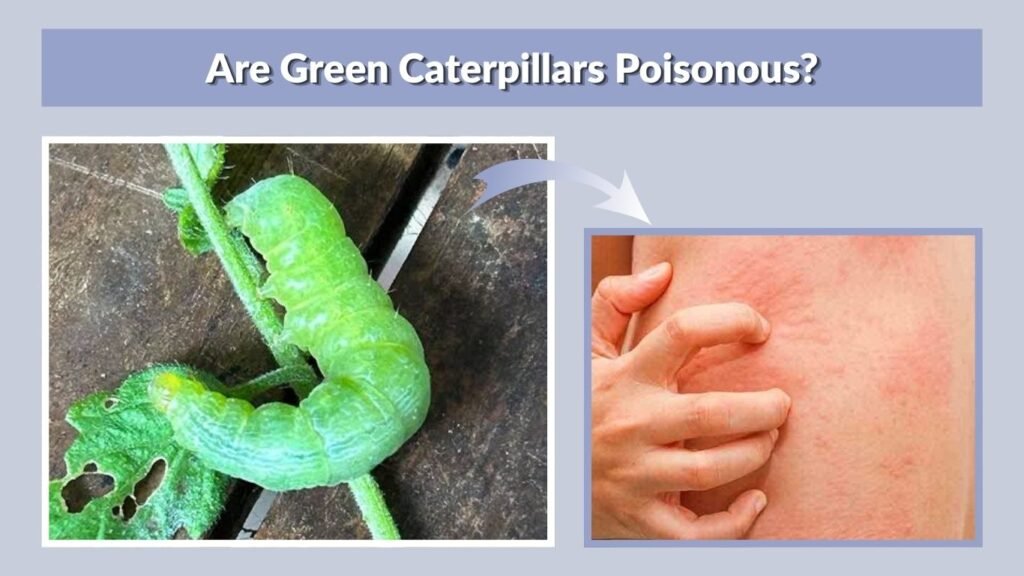
Most green caterpillars are not poisonous to humans. Many are simply butterfly or moth larvae feeding on plants. However, some green caterpillars have stinging spines or irritating hairs. These can cause pain, redness, swelling, itching, or a burning feeling if touched.
Usually Harmless Green Caterpillars
Many common green caterpillars are safe to observe. These include cabbage worms, inchworms, many swallowtail caterpillars, and several hornworms. They may eat garden plants, but they usually do not harm people.
Harmless green caterpillars are often smooth-bodied and lack sharp spines or dense hairs. Still, avoid rough handling because caterpillars are soft and easily injured.
Caterpillars That May Irritate Skin
Fuzzy, hairy, or spiky green caterpillars should be treated carefully. Their hairs or spines may break off in the skin and cause irritation. Some people react more strongly than others.
Possible symptoms include itching, redness, small bumps, burning, swelling, or mild pain. Sensitive people may experience stronger reactions, especially if hairs touch the eyes, mouth, or face.
When a Green Caterpillar Is More Concerning
A green caterpillar is more concerning when it has sharp spines, thick hairs, bright warning colors, or an unknown appearance. If you cannot identify it, do not touch it.
Children and pets should also be kept away. Dogs and cats may sniff or eat caterpillars, which can cause mouth irritation, drooling, vomiting, or discomfort.
Common Poisonous-Looking Green Caterpillars
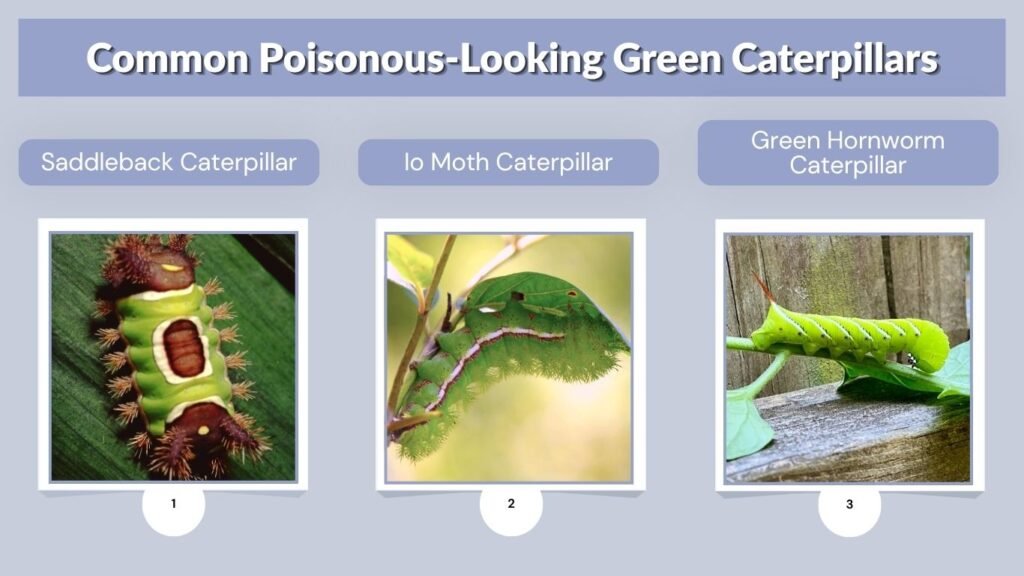
Not every dangerous-looking green caterpillar is actually poisonous. Some horned caterpillars look scary but are harmless. Others look soft and beautiful but may cause irritation. The best way to identify them is by checking body texture, markings, host plant, and location.
Saddleback Caterpillar
The saddleback caterpillar is one of the most important stinging caterpillars to recognize. It is usually green with a brown or dark “saddle” marking on the back. It has spines that can cause a painful sting if touched.
This caterpillar is often found on trees, shrubs, and garden plants. Because it is small and colorful, people may accidentally touch it while gardening. It should never be handled with bare hands.
Io Moth Caterpillar
The io moth caterpillar is green and covered with branching spines. It may have pale or reddish side stripes. Its spines can sting and cause burning pain, redness, and swelling.
It feeds on many plants, including trees, shrubs, and garden ornamentals. If you see a green caterpillar with many sharp spines, treat it as unsafe to touch.
Green Hornworm Caterpillar
Green hornworms, such as tomato hornworms and tobacco hornworms, are large green caterpillars with a horn at the rear. Many people ask if a green caterpillar with a horn is poisonous. In most cases, hornworms are not poisonous or dangerous to touch.
The horn looks scary, but it is not a stinger. However, hornworms can cause serious damage to tomato, pepper, eggplant, and potato plants.
Green Swallowtail Caterpillar
Some swallowtail caterpillars are green with eye-like markings, black bands, or yellow spots. They may look unusual, but most are harmless to humans. When disturbed, they may release a strong smell from an orange fork-like organ called an osmeterium.
This smell is a defense against predators. It does not mean the caterpillar is dangerous to people, but it is better to observe without handling.
How to Identify a Poisonous Green Caterpillar
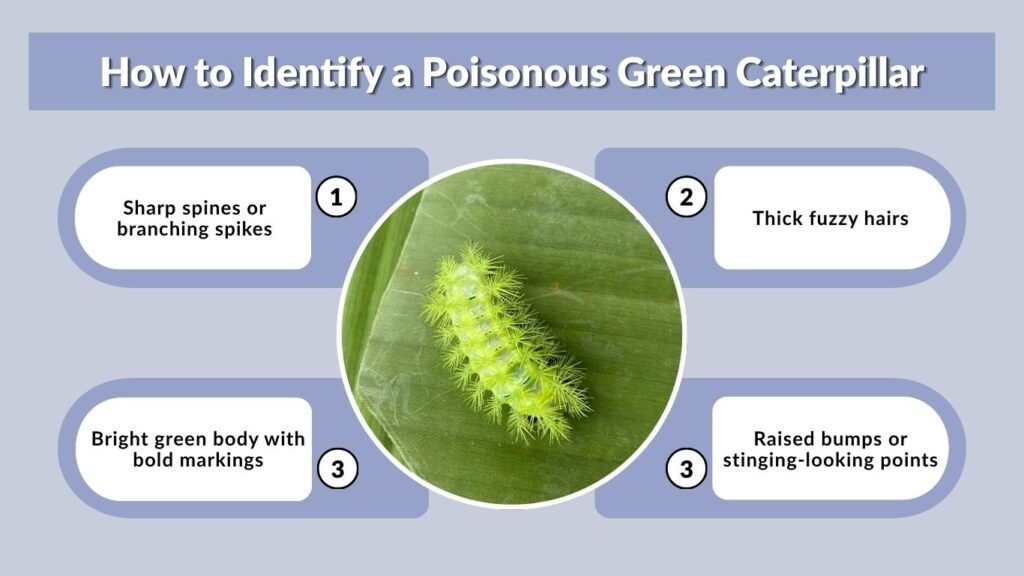
Identification starts with body texture. A smooth green caterpillar is less likely to irritate skin than one with spines or hairs. Next, check markings, host plant, size, and location. Photos from the top, side, head, rear, and plant can help with accurate identification.
Look for Warning Signs
Be cautious if the caterpillar has:
- Sharp spines or branching spikes
- Thick fuzzy hairs
- Bright green body with bold markings
- Red, yellow, black, or white warning colors
- Raised bumps or stinging-looking points
- Unknown horn-like projections
- Group feeding on trees or shrubs
- Skin reaction after contact
These signs do not always mean the caterpillar is highly poisonous, but they do mean you should avoid touching it.
Check the Host Plant
The plant can help identify the caterpillar. Many species depend on specific host plants.
- Tomato, pepper, eggplant: hornworms
- Cabbage, kale, broccoli: cabbage worms or loopers
- Citrus plants: swallowtail caterpillars
- Oak, rose, palm, or shrubs: possible stinging caterpillars
- Milkweed: milkweed-feeding caterpillars
- Trees and ornamentals: many moth larvae
If the caterpillar is on vegetables and is smooth, it is more likely a plant pest than a danger to humans.
Notice the Body Texture
Body texture is one of the strongest safety clues. Smooth caterpillars are usually safer. Fuzzy and spiny caterpillars are more likely to irritate skin.
A “green fuzzy caterpillar poisonous” search often comes from people who found a hairy larva. In that case, avoid direct contact. Use gloves, a leaf, or a container if you need to move it.
Green Caterpillar With Horn: Is It Poisonous?
A green caterpillar with a horn is usually a hornworm or sphinx moth larva. The horn is located at the back end of the body. It may look sharp, red, black, blue, or green, but it is usually not a stinger. These caterpillars are more important as garden pests than human hazards.
Tomato Hornworm
The tomato hornworm is a large green caterpillar with white diagonal stripes and a rear horn. It feeds on tomato plants and related crops. It can remove leaves quickly and may damage fruit.
The horn does not sting. Gardeners often remove tomato hornworms by hand, but gloves are useful if you dislike touching caterpillars.
Tobacco Hornworm
The tobacco hornworm is similar to the tomato hornworm. It is green with diagonal lines and a colored rear horn. It feeds on tobacco, tomato, pepper, and other nightshade plants.
It is not considered poisonous to humans, but it can damage garden plants. If you find one with white cocoons on its body, leave it alone because parasitic wasps are controlling it naturally.
Why Hornworms Look Dangerous
Hornworms look dangerous because they are large, bright green, and have a rear horn. However, the horn is mainly a defense feature to scare predators. It is not designed to inject venom.
The bigger problem is plant damage. A single large hornworm can eat many leaves in a short time.
Green Fuzzy and Spiky Caterpillars
Green fuzzy and spiky caterpillars deserve more caution than smooth ones. Hairs and spines can cause skin irritation or stings. Some species have venom-bearing spines, while others simply have irritating hairs. Because reactions vary, it is best to avoid touching any fuzzy or spiky green caterpillar.
Green Fuzzy Caterpillars
A fuzzy green caterpillar may look soft, but the hairs can irritate skin. Some hairs break off easily and cause itching or a rash. This is especially risky for children, people with sensitive skin, and anyone who touches their eyes after handling caterpillars.
Use a stick, leaf, or gloves to move fuzzy caterpillars. Do not pick them up with bare hands.
Green Spiky Caterpillars
A green spiky caterpillar may be a stinging species. Spines can deliver irritating chemicals or break into the skin. The sting may feel like burning, sharp pain, or a strong itch.
If you see a green caterpillar with many sharp spines, do not touch it. Take a photo from a safe distance and identify it before deciding what to do.
Big Green Caterpillars
A big green caterpillar is not automatically poisonous. Many large green caterpillars are hornworms or moth larvae. They may look alarming because of their size, but most are harmless to people.
Still, large caterpillars can damage plants quickly. Check the plant for missing leaves, droppings, and chewed stems.
What to Do If You Touch a Poisonous Green Caterpillar
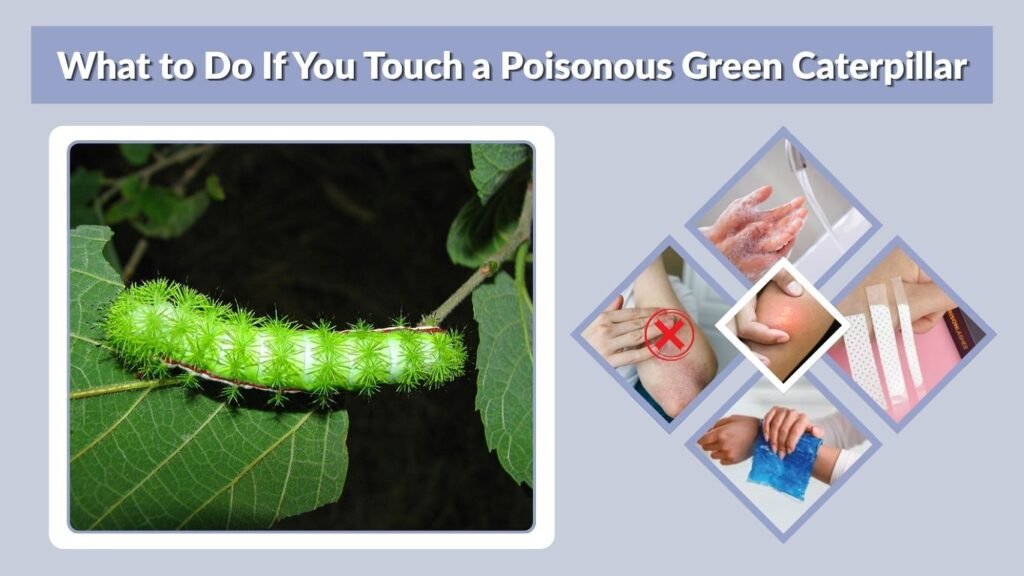
If you touch a green caterpillar and feel pain, burning, or itching, act quickly but calmly. Most reactions are mild, but some can be uncomfortable. The goal is to remove hairs or spines, clean the area, and reduce irritation.
First Aid Steps
Follow these steps after contact:
- Do not rub the area
- Wash the skin with soap and water
- Use tape gently to lift tiny hairs or spines
- Apply a cold compress for pain or swelling
- Avoid scratching the irritated area
- Wash clothing that touched the caterpillar
- Seek medical help if symptoms are severe
If caterpillar hairs get into the eyes, rinse with clean water and get medical advice.
When to Seek Medical Help
Get medical help if the reaction includes severe swelling, intense pain, breathing problems, dizziness, eye exposure, or symptoms that continue to worsen. Children, older adults, and people with allergies may need extra caution.
A strong reaction does not always mean the caterpillar is deadly, but it should be treated seriously.
What Not to Do
Do not crush the caterpillar on your skin. Do not scratch the rash. Do not apply unknown chemicals or home remedies that may irritate the skin more.
If possible, take a clear photo of the caterpillar before moving away. This can help with identification if medical advice is needed.
How to Remove Poisonous Green Caterpillars Safely
If a green caterpillar is on a plant, wall, patio, or near children and pets, remove it carefully. Do not use bare hands, especially if it is fuzzy or spiky. Safe removal protects both you and the caterpillar when possible.
Safe Removal Methods
Use simple, low-risk methods:
- Wear thick gloves
- Use a stick, leaf, or cardboard
- Place the caterpillar in a container
- Move harmless species to a host plant
- Remove stinging species from walkways
- Keep pets away during removal
- Wash tools and gloves afterward
Avoid sweeping fuzzy caterpillars with bare hands because hairs may spread onto skin or clothing.
Garden Control
If caterpillars are damaging vegetables or ornamental plants, hand removal is often enough. For larger problems, inspect leaves daily and remove eggs or young larvae early.
Avoid broad chemical sprays unless necessary. Many sprays kill beneficial insects, including butterflies, bees, and natural predators. Correct identification should come before treatment.
Prevention Tips
Keep your garden safer by checking plants regularly. Look under leaves, near stems, and along plant edges. Caterpillar droppings, chewed leaves, and missing foliage are signs of active feeding.
Wearing gloves while gardening is one of the easiest ways to prevent accidental contact.
FAQs
Is a green caterpillar poisonous?
Most green caterpillars are not poisonous to humans. Smooth green caterpillars are usually harmless, although they may damage plants. Fuzzy, hairy, or spiky green caterpillars are more concerning because they can irritate skin or sting. If you cannot identify the caterpillar, avoid touching it with bare hands.
Is a green caterpillar with a horn poisonous?
A green caterpillar with a horn is usually a hornworm, such as a tomato hornworm or tobacco hornworm. The horn looks dangerous, but it is not usually a stinger. These caterpillars are generally harmless to people, though they can quickly damage tomato, pepper, and other garden plants.
Are fuzzy green caterpillars poisonous?
Some fuzzy green caterpillars can irritate skin, even if they are not truly poisonous. Their hairs may cause itching, redness, rash, or burning in sensitive people. It is best not to touch fuzzy caterpillars. Use gloves, a stick, or a leaf if you need to move one.
What green caterpillars can sting?
Green caterpillars with sharp spines are the most likely to sting. Examples include saddleback caterpillars and io moth caterpillars. Their spines can cause pain, redness, and swelling. If a green caterpillar has spines, raised bumps, or a warning-colored body, do not handle it.
What should I do if a poisonous green caterpillar touches me?
Wash the area with soap and water, avoid rubbing, and use tape gently to remove tiny hairs or spines. Apply a cold compress for pain or swelling. Seek medical help if you have severe pain, swelling, breathing trouble, eye exposure, or symptoms that continue to get worse.
