
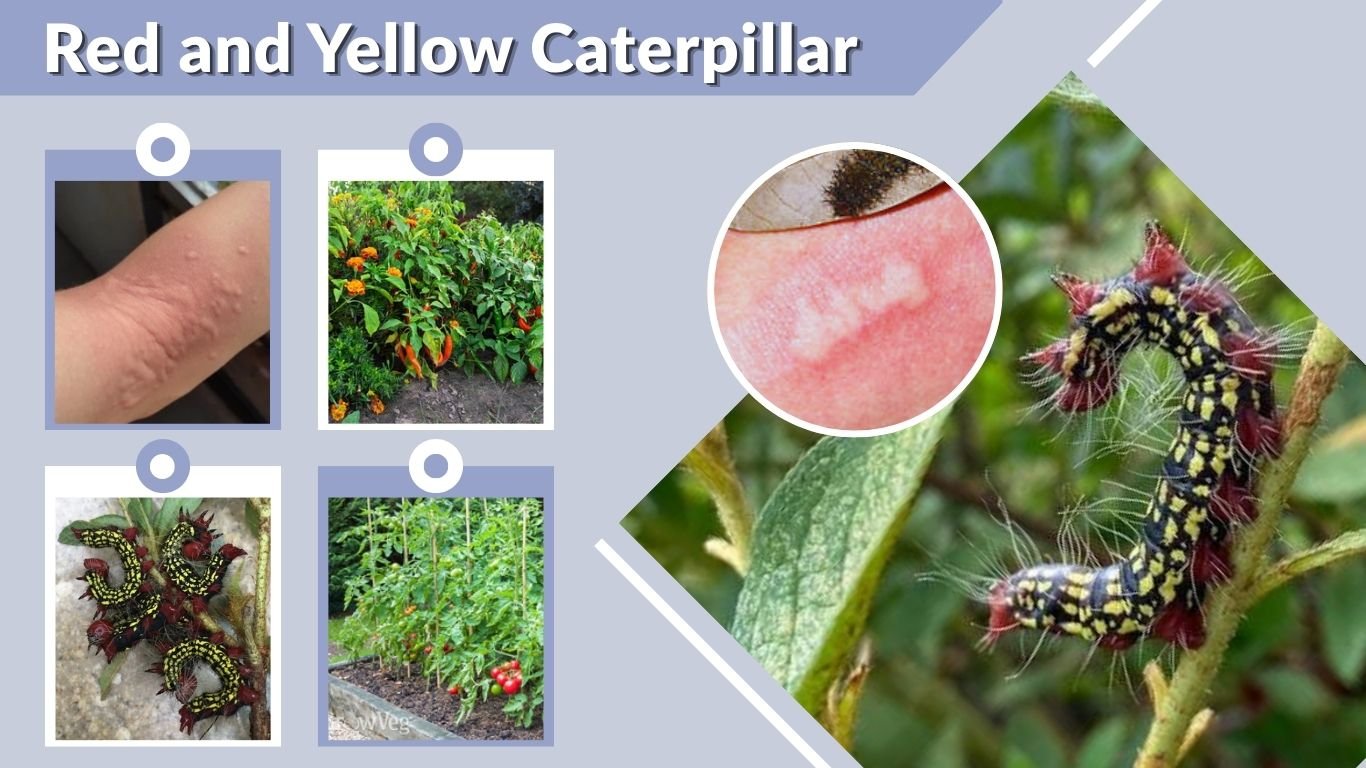
A red and yellow caterpillar can look striking, but color alone is not enough for exact identification. Some have red heads, yellow stripes, black bodies, horns, spikes, or fuzzy hairs. Many are harmless butterfly or moth larvae, while others can irritate skin or damage garden plants. This guide explains how to identify red, yellow and black caterpillars, where they are found, whether they are poisonous, and what to do if you see one in your yard or garden.
What Is a Red and Yellow Caterpillar?
A red and yellow caterpillar is not one single species. Many caterpillars show red and yellow markings during their larval stage. Some are mostly yellow with a red head, while others are black with yellow spots and red horns. Their colors may change as they grow, making identification more difficult without checking body shape and host plant.
Common Color Patterns
Red and yellow caterpillars can appear in several forms:
- Yellow body with a red head
- Black body with yellow spots and a red horn
- Red and yellow striped body
- Yellow caterpillar with red horns or red feet
- Black, red and yellow fuzzy body
- Green caterpillar with red and yellow dots
- Spiky caterpillar with red, yellow, blue, or black knobs
These patterns are often warning colors. Bright red and yellow markings may help scare predators or signal that the caterpillar tastes unpleasant.
Why Red and Yellow Markings Appear
Caterpillars use color for survival. Red and yellow can act like warning signs in nature. Birds, lizards, and small mammals may avoid bright caterpillars because they may be toxic, irritating, or bad-tasting.
However, not every colorful caterpillar is dangerous. Some harmless caterpillars copy the warning colors of more toxic species. This is why appearance alone should not be used to judge safety.
Quick Identification Table
| Caterpillar Feature | Possible Meaning |
| Black body with yellow spots and red horn | Hornworm or sphinx moth larva |
| Yellow body with red head | Moth or butterfly larva, depends on plant |
| Red and yellow fuzzy body | Avoid touching; may irritate skin |
| Black and yellow stripes with red head | Possible moth larva or sawfly-like larva |
| Green body with red and yellow dots | Possible moth larva or young butterfly larva |
| Red and yellow spiky body | Handle with caution |
Common Types of Red and Yellow Caterpillars
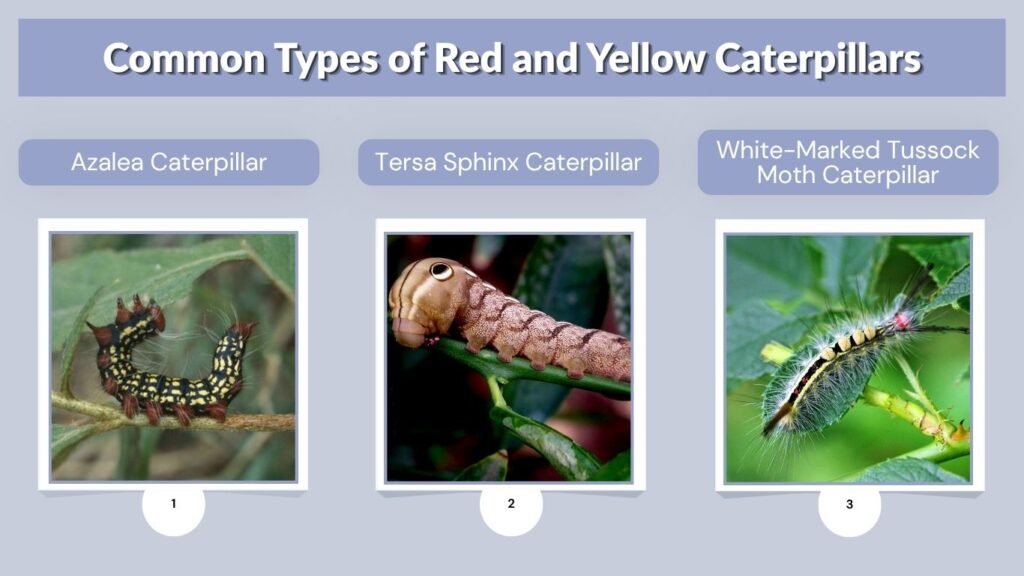
Several caterpillars match red, yellow and black search descriptions. Some are smooth-bodied, while others are hairy or spiny. The exact species depends on region, plant, season, and body pattern. Instead of relying only on color, compare the caterpillar’s head, stripes, horn, hairs, and feeding plant.
Azalea Caterpillar
The azalea caterpillar is one of the best-known black, red and yellow caterpillars. It often has a black body with yellow or whitish lines and a red head or red legs. It feeds in groups and can strip leaves from azalea plants.
This caterpillar later becomes a moth. It is not considered highly dangerous, but its hairs may bother sensitive skin. If many are present, they can damage ornamental shrubs quickly.
Tersa Sphinx Caterpillar
The tersa sphinx caterpillar may appear brown, green, or dark with eye-like spots. Some individuals have yellow markings and reddish tones. It has a smooth body and can be confused with other hornworms.
This caterpillar feeds on plants such as pentas, buttonweed, and related species. It becomes a sphinx moth. Because its color varies, the plant and body shape are important clues.
White-Marked Tussock Moth Caterpillar
The white-marked tussock moth caterpillar may have yellow, black, red, and white markings. It often has a red head, bright tufts, and long hair-like setae. This is one of the caterpillars people should avoid touching.
The hairs can irritate skin in some people. It is often found on trees and shrubs. Its colorful appearance makes it attractive, but it should be observed without direct handling.
Milkweed Tussock Moth Caterpillar
The milkweed tussock moth caterpillar can look orange, yellow, black, and fuzzy. It feeds on milkweed and often appears in groups. Its colors may look red-yellow from a distance, especially when the orange tufts are bright.
This caterpillar is not a true stinging caterpillar, but the hairs can irritate sensitive skin. Because it feeds on milkweed, it may taste unpleasant to predators.
How to Identify a Red, Yellow and Black Caterpillar
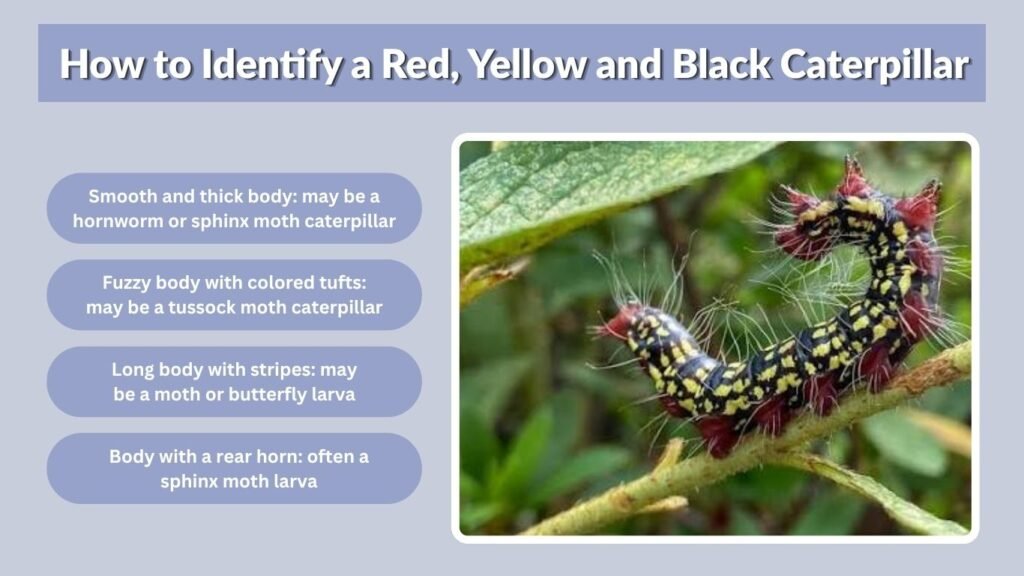
To identify a red, yellow and black caterpillar, focus on pattern, texture, size, and host plant. Many caterpillars share similar colors, but their body details are different. A black caterpillar with yellow spots and a red horn is not the same as a fuzzy yellow caterpillar with a red head.
Check the Body Shape
Look closely at the body before touching it. Smooth caterpillars are often easier to identify than fuzzy ones.
- Smooth and thick body: may be a hornworm or sphinx moth caterpillar
- Fuzzy body with colored tufts: may be a tussock moth caterpillar
- Long body with stripes: may be a moth or butterfly larva
- Body with a rear horn: often a sphinx moth larva
- Body with sharp spines: avoid touching
- Short, group-feeding larvae: may be shrub or tree feeders
A horn at the rear is a major clue. Many people describe these as caterpillars with a red horn, yellow spots, or black body.
Look at the Head Color
A red head is common in several caterpillars. It may appear bright red, orange-red, or reddish brown. A yellow and black caterpillar with a red head may be a moth larva, especially if it is hairy or feeding on shrubs.
A red head does not automatically mean the caterpillar is poisonous. But if the red head is combined with fuzzy hairs, spines, or bright tufts, avoid handling it.
Notice the Stripes and Spots
Stripes and spots help narrow identification. A red and yellow striped caterpillar may be very different from a black caterpillar with yellow spots and a red horn.
Clean yellow stripes on a black body may suggest a shrub-feeding caterpillar. Scattered yellow spots with a horn may point toward hornworms. Red and yellow fuzzy patches may suggest tussock moth larvae.
Are Red and Yellow Caterpillars Poisonous?
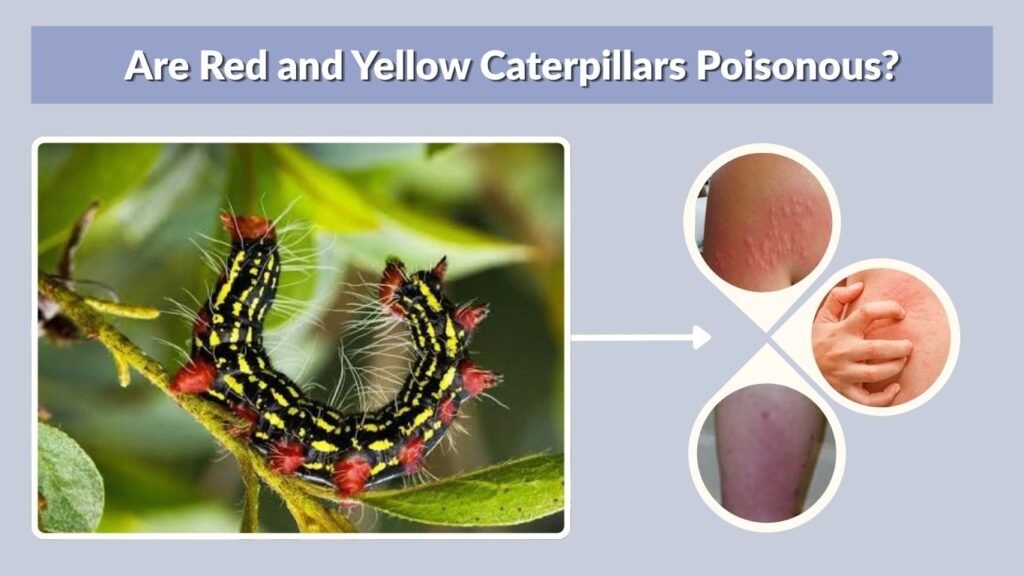
Most red and yellow caterpillars are not deadly to humans, but some can irritate skin. The biggest risk usually comes from hairs, spines, or chemical defenses. Bright colors are often a warning, so it is smart to avoid touching unknown caterpillars with bare hands.
Poisonous vs. Stinging
People often use “poisonous” for any dangerous-looking caterpillar, but there are differences.
- Poisonous caterpillars may be harmful if eaten by predators.
- Stinging caterpillars have spines that can inject irritating chemicals.
- Hairy caterpillars may cause itching or rash.
- Harmless caterpillars may still look colorful.
- Toxic-looking colors do not always mean danger to humans.
A caterpillar can be bad-tasting to birds but harmless to touch. Another caterpillar may not be toxic if eaten, but its hairs can irritate skin.
When You Should Avoid Touching
Do not touch a red and yellow caterpillar if it has fuzzy hairs, stiff spines, sharp horns, or unknown tufts. Children and pets should also be kept away from unidentified caterpillars.
If you accidentally touch one and feel burning, itching, or redness, wash the area with soap and water. Avoid rubbing the skin. For strong reactions, swelling, eye exposure, or breathing problems, seek medical help.
Are They Dangerous to Pets?
Most pets are curious and may sniff, paw, or eat caterpillars. A colorful fuzzy caterpillar can cause mouth irritation, drooling, vomiting, or discomfort if eaten. Dogs and cats should not be allowed to chew unknown caterpillars.
If a pet eats a hairy or spiky caterpillar and shows symptoms, contact a veterinarian.
Where Red and Yellow Caterpillars Are Found
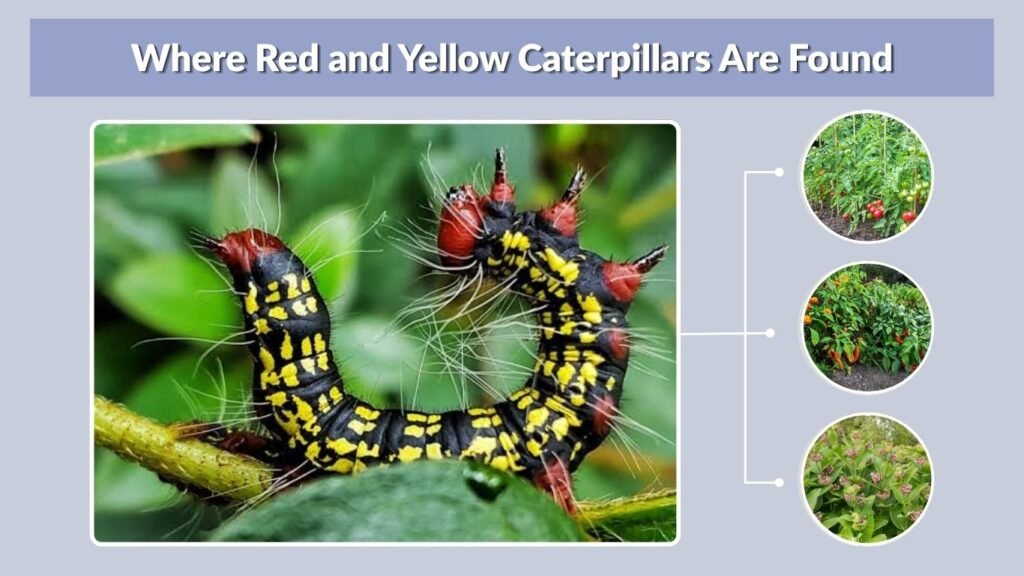
Red and yellow caterpillars may appear in gardens, forests, lawns, parks, shrubs, vegetable beds, and trees. Their location depends on the host plant. Some are common on ornamental shrubs, while others feed on vegetables, wildflowers, or tree leaves. Knowing the plant is often the fastest path to identification.
Garden Plants
Many colorful caterpillars appear in gardens during warm months. Some feed on flowers and vegetables, while others use nearby weeds or herbs.
Common garden locations include:
- Tomato plants
- Pepper plants
- Milkweed
- Pentas
- Parsley-family plants
- Cabbage-family crops
- Flowering ornamentals
- Shrubs near fences or walls
If the caterpillar is damaging leaves heavily, take photos before removing it. This helps confirm whether it is a pest or a butterfly/moth larva worth keeping.
Trees and Shrubs
Hairy red, yellow and black caterpillars are often found on trees and shrubs. Tussock moth caterpillars may feed on many woody plants. Azalea caterpillars are commonly linked with azalea shrubs.
Group-feeding caterpillars can defoliate small shrubs quickly. If many appear on one plant, inspect the underside of leaves and stems.
Regional Clues
Searches often include places such as North Carolina, Virginia, California, Indiana, Central Texas, the UK, and the Amazon rainforest. Location can help, but it should not be the only clue.
A caterpillar in North Carolina may be a common local shrub feeder, while a similar-looking tropical caterpillar may be entirely different. Always match region with host plant and body pattern.
What Do Red and Yellow Caterpillars Turn Into?
Red and yellow caterpillars eventually become moths or butterflies. The adult often looks completely different from the larva. A bright fuzzy caterpillar may become a plain moth, while a smooth horned caterpillar may become a large, fast-flying sphinx moth.
Moth Larvae
Many red and yellow caterpillars become moths. Tussock moths, sphinx moths, and other moth families include larvae with bold warning colors. These caterpillars may be hairy, smooth, striped, or horned.
Moth caterpillars are common on shrubs, trees, flowers, and garden plants. Some are minor pests, while others cause noticeable leaf damage.
Butterfly Larvae
Some butterfly caterpillars can include red, yellow, and black markings, especially in early or late growth stages. However, many of the fuzzy red-yellow-black caterpillars people find are more likely moth larvae than butterfly larvae.
Butterfly caterpillars are often found on specific host plants. Matching the plant is one of the best ways to identify them correctly.
Color Changes Before Pupation
Caterpillars often change color as they mature. A young caterpillar may look black and yellow, then later show red, green, or brown markings. Some become darker before pupation.
This is why one photo may not match every stage of the same species. Size and growth stage matter.
Should You Remove a Red and Yellow Caterpillar?
You should remove a red and yellow caterpillar only if it is damaging plants, irritating people, or putting pets at risk. Many caterpillars are part of the natural food chain and later become moths or butterflies. If the plant damage is small, leaving it alone is often best.
Leave It Alone When Possible
Leave the caterpillar alone if it is not harming important plants and does not pose a risk. Many caterpillars feed for a short time before moving away to pupate.
Observation is usually safe if you do not touch it. Take clear photos and note the plant name for later identification.
Remove It From Valuable Plants
If the caterpillar is stripping leaves from vegetables, herbs, or ornamental shrubs, remove it carefully.
Use these safe methods:
- Wear gloves before handling
- Use a leaf or stick to move it
- Place it in a container for identification
- Relocate harmless species to a suitable host plant
- Remove heavy pest infestations by hand
- Avoid spraying unless identification is confirmed
Chemical sprays can harm beneficial insects, including butterflies, bees, and natural predators.
Protect Children and Pets
Bright caterpillars attract children and pets. Teach children not to touch fuzzy or spiky caterpillars. Keep pets away from caterpillars on patios, lawns, and garden beds.
If many hairy caterpillars appear near walkways or play areas, remove them with gloves and clean up fallen leaves where larvae may hide.
FAQs
What is a red and yellow caterpillar?
A red and yellow caterpillar is a moth or butterfly larva with red and yellow markings. It may also have black stripes, spots, hairs, horns, or spines. Many different species share these colors, so identification depends on the body pattern, host plant, location, and whether the caterpillar is smooth, fuzzy, or spiky.
Is a red and yellow caterpillar poisonous?
Some red and yellow caterpillars can irritate skin, but most are not deadly to humans. Fuzzy or spiny caterpillars are more likely to cause itching, rash, or burning. Avoid touching unknown caterpillars with bare hands, especially if they have hairs, bright tufts, or sharp-looking spines.
What is a black caterpillar with yellow spots and a red horn?
A black caterpillar with yellow spots and a red horn may be a type of hornworm or sphinx moth caterpillar, depending on the host plant and region. The horn is usually at the rear end. It may look dangerous, but many hornworms are harmless to touch, though they can damage plants.
What does a black, red and yellow fuzzy caterpillar become?
A black, red and yellow fuzzy caterpillar often becomes a moth, such as a tussock moth or another hairy moth species. These caterpillars may feed on trees, shrubs, or milkweed. Because fuzzy hairs can irritate skin, it is best to observe them without touching.
Should I kill red and yellow caterpillars in my garden?
Do not kill them immediately. First check what plant they are eating and how much damage they are causing. If there are only a few and the damage is minor, leave them alone. If they are heavily damaging vegetables or shrubs, remove them by hand while wearing gloves.
