

The black and yellow mud dauber wasp is one of nature’s most fascinating solitary hunters. Recognized by its slender body and bright markings, this wasp is both a skillful builder and a beneficial insect that helps control spider populations, including venomous species like the black widow. Unlike aggressive wasps such as hornets or yellowjackets, mud daubers are calm, quiet, and rarely sting — making them one of the least threatening wasp species to humans.
Identification
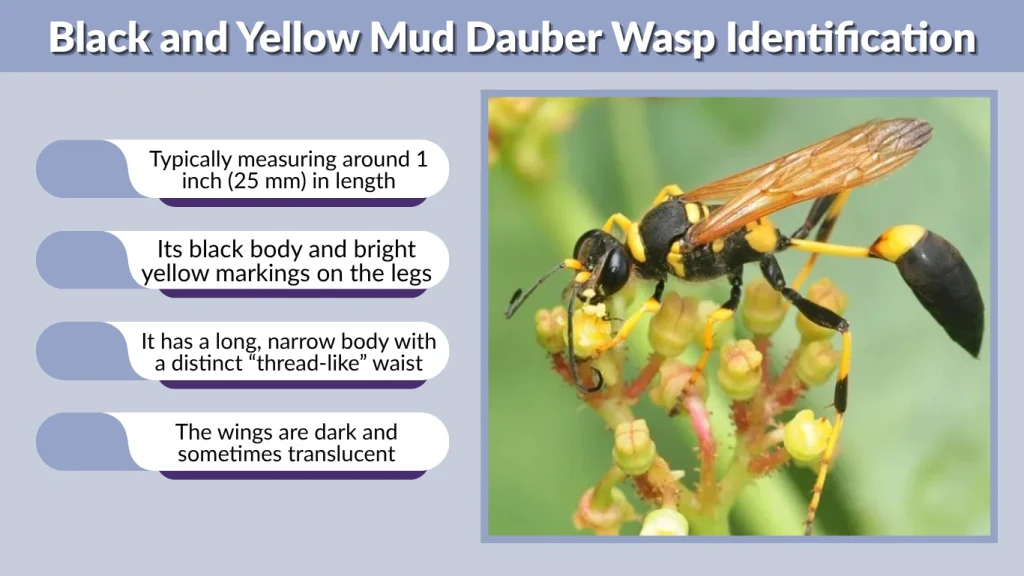
Physical Appearance
The black and yellow mud dauber (Sceliphron caementarium) is a medium-sized wasp, typically measuring around 1 inch (25 mm) in length. It has a long, narrow body with a distinct “thread-like” waist, which separates the thorax from the abdomen. Its black body and bright yellow markings on the legs and thorax make it easily recognizable. The wings are dark and sometimes translucent, and the antennae are slightly curved.
In flight, the mud dauber appears elegant and smooth, gliding slowly compared to the quick, darting movements of social wasps. Its behavior alone often helps identify it — mud daubers are calm and methodical, especially when gathering mud for nest building.
Related Species
Several species are commonly confused with the black and yellow mud dauber:
- Black Mud Dauber (Chalybion californicum): Metallic blue-black color, often reuses nests built by other wasps.
- Blue Mud Dauber: Similar in behavior but with a shiny metallic blue body. Known for hunting black widow spiders.
- Great Black Wasp (Sphex pensylvanicus): Larger, fully black, and preys on grasshoppers and katydids instead of spiders.
Each species differs in color and nesting style but shares the same peaceful nature and important ecological role.
Nest and Habitat
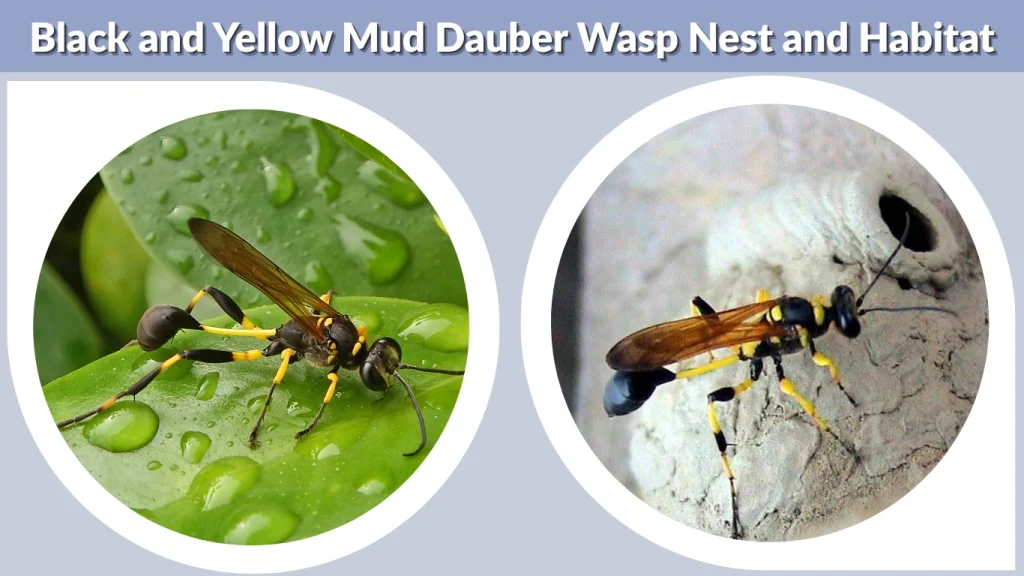
The black and yellow mud dauber is a master builder, crafting its nest from small mud pellets. The female collects moist mud, carries it in her mandibles, and shapes it into tubular cells. Each cell is roughly one inch long and serves as a nursery for her offspring.
Once a cell is completed, she hunts spiders — her preferred prey — paralyzing them with a mild sting. The spiders remain alive but motionless, stored inside the mud cell as fresh food for the larvae. After laying a single egg on the prey, the female seals the chamber with more mud and begins another.
Common Nesting Locations
Mud daubers prefer quiet, sheltered areas such as:
- Under eaves, decks, or porches
- Inside barns, sheds, or attics
- Around window frames, pipes, and doorways
- Under roof soffits or in hollow objects like pipes
When the larvae mature, the adult wasp emerges by chewing a small round hole in the nest — a clear sign that the structure is no longer active.
Behavior and Hunting Habits
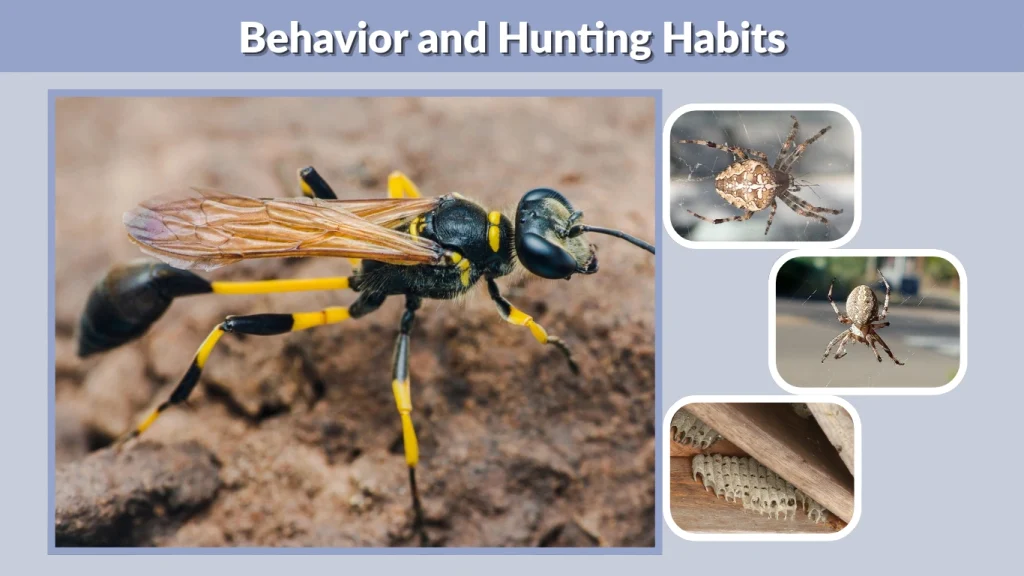
Mud daubers are solitary insects, meaning each female works alone. They do not form colonies or have workers, queens, or drones like hornets or paper wasps. Their calm behavior makes them safe to observe up close, as they rarely perceive humans as a threat.
Diet and Prey
Their diet primarily consists of spiders. The black and yellow mud dauber captures several types, including orb-weavers, jumping spiders, and black widows. This makes them valuable natural pest controllers. They also feed on flower nectar as adults, playing a small role in pollination.
Interestingly, blue mud daubers often reuse abandoned nests built by the black and yellow species, cleaning out old cells and refurbishing them. This cooperation highlights an efficient recycling system within nature’s design.
Sting and Safety
Mud dauber stings are extremely rare and usually occur only when the wasp is handled or trapped. Their sting is mild and primarily used to paralyze spiders, not to defend themselves.
If a person is stung, the pain is short-lived, often comparable to a small bee sting. Mild redness or swelling may occur but fades quickly. They are not considered medically dangerous unless the person has a severe allergic reaction to wasp venom.
Compared to social wasps, mud daubers are peaceful and prefer flight over fight. They will not swarm, attack, or chase humans — even when disturbed near their nests.
Black & Yellow Mud Dauber vs Great Black Wasp
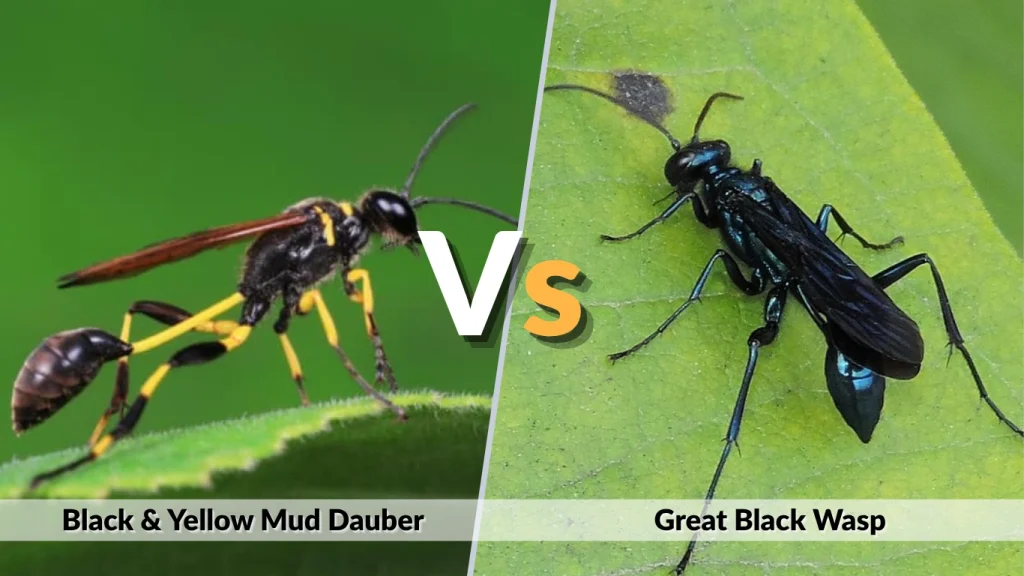
People often mistake the black and yellow mud dauber for the great black wasp because both are dark and solitary. However, they differ significantly in appearance, nesting habits, and prey.
| Feature | Black & Yellow Mud Dauber | Great Black Wasp |
| Color | Black with yellow markings | Solid black |
| Body Shape | Slender with long waist | Robust and thick-bodied |
| Nest Type | Mud tubes on walls or ceilings | Underground burrows |
| Prey | Spiders (especially black widows) | Katydids and grasshoppers |
| Aggression | Non-aggressive | Mildly defensive if handled |
| Sting | Mild, used for hunting | Stronger, used for paralyzing prey |
While both wasps are solitary and beneficial, the mud dauber’s mud nests are easier to identify and are typically found on human structures, while great black wasps prefer the ground and garden soil.
Interaction with Black Widow Spiders
One of the most remarkable behaviors of the black and yellow mud dauber is its natural role as a predator of black widow spiders. The female hunts black widows in dark corners or garages, stinging and paralyzing them before carrying them back to her nest.
She stores several of these immobilized spiders inside each mud chamber, laying a single egg on one of them. The larva then hatches and feeds on the spiders over time. This makes mud daubers an important ally in reducing the population of venomous black widows and other dangerous spiders around homes.
Are Black and Yellow Mud Daubers Dangerous?
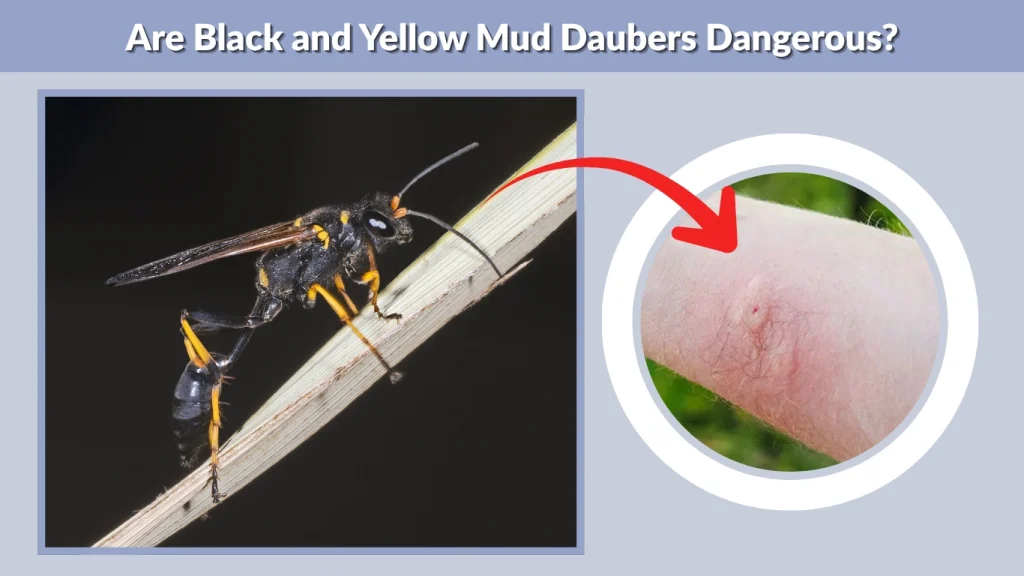
Despite their size and intimidating appearance, mud daubers are not dangerous to humans. They do have stingers, but they don’t use them for self-defense unless severely provoked. Unlike hornets or yellowjackets, mud daubers don’t guard their nests aggressively, so it’s safe to remove an inactive nest without fear of being attacked.
If one happens to sting, the pain is minimal and fades within minutes. Symptoms such as mild redness or swelling are common and rarely serious. However, individuals with known wasp or bee allergies should exercise caution, as allergic reactions can be more severe.
In general, mud daubers are considered harmless and beneficial insects.
Nest Removal and Prevention
Safe Removal Steps
If mud dauber nests become unsightly or accumulate around doorways or eaves, they can be removed easily:
- Wait until evening or early morning when wasps are inactive.
- Wear gloves and protective eyewear.
- Gently scrape off the nest with a putty knife or spatula.
- Clean the area with soap and water to remove residual mud and scent.
- Dispose of the nest in a sealed trash bag.
Prevention Tips
- Seal cracks, soffits, and vent openings where wasps may enter.
- Repaint or smooth surfaces to prevent nest adhesion.
- Reduce spider populations near your home — fewer spiders mean fewer mud daubers.
- Remove inactive nests regularly to discourage reuse by blue mud daubers.
These steps help keep your property tidy while allowing these beneficial insects to thrive in safer outdoor environments.
Ecological Importance
Mud daubers play a vital ecological role as natural pest controllers. By targeting spiders — including venomous ones — they help maintain balance in local ecosystems. Their hunting activities keep spider populations low, reducing the likelihood of infestations around homes and gardens.
In addition to pest control, mud daubers also contribute slightly to pollination while visiting flowers for nectar. Though not as efficient as bees, their presence supports plant diversity and overall ecological health.
Their peaceful coexistence with humans makes them one of the few wasp species considered truly beneficial.
FAQs
Are black and yellow mud dauber wasps dangerous?
No. These wasps are solitary and non-aggressive. They rarely sting, and their venom is mild. They are beneficial predators of spiders, including black widows.
What happens if a black mud dauber stings you?
The sting causes mild pain and temporary redness, similar to a small bee sting. It typically heals within a few hours without medical treatment.
Do mud daubers make the same nests as other wasps?
No. Mud daubers use clay or mud to create tube-shaped nests, while social wasps build papery combs. Mud nests are sealed and contain one larva per cell.
What’s the difference between a great black wasp and a mud dauber?
The great black wasp is larger, solid black, and nests underground. Mud daubers are thinner, use mud for nests, and hunt spiders instead of insects.
Do mud dauber wasps eat black widows?
Yes. They paralyze black widow spiders with their sting and store them as food for their young. This makes them beneficial around homes and barns.
