

Crickets are highly adaptable insects found on every continent except Antarctica. They’re omnivorous, meaning they eat both plants and animals, and their diet changes depending on where they live. From scavenging for decaying leaves in the wild to munching on crumbs in your kitchen, crickets are nature’s recyclers. This article explores what crickets eat, what eats them, and how their diet supports both ecosystems and pet nutrition.
Identification
Overview of Crickets
Crickets belong to the family Gryllidae and are known for their chirping, nocturnal behavior, and long antennae. There are several species, including house crickets, field crickets, mole crickets, camel crickets, and cave crickets. Though their diets vary slightly, all are opportunistic eaters that thrive in warm, moist environments where organic material is plentiful.
What Do Crickets Eat?

General Diet Overview
Crickets are omnivorous scavengers. Their diet includes both plant matter and animal remains. They feed on:
- Decaying leaves and grass
- Fruits, vegetables, and grains
- Fungi and small insects
- Organic waste like dead plant material
In times of scarcity, crickets can even become cannibalistic, consuming weaker crickets for protein. Their adaptability makes them one of the most resilient insects in nature.
What Crickets Like to Eat Most
Crickets are drawn to moist, soft foods that are easy to chew. Favorites include:
- Apple and banana slices
- Leafy greens (lettuce, kale, spinach)
- Grains and cereals
- Small pieces of bread or fruit peelings
They prefer fresh food but will consume decaying matter if necessary, especially in humid conditions.
What Do Crickets Eat in the Wild?

Natural Diet
In the wild, crickets help recycle nutrients by breaking down organic material. They feed on:
- Grass blades and roots
- Weeds, seeds, and stems
- Decomposing leaves and fungi
- Dead insects or larvae for protein
Their ability to consume both plants and carrion makes them vital to soil health. Wild crickets are active mostly at night, hiding under rocks or leaves during the day to avoid predators.
Seasonal Variations
Cricket diets change with the seasons:
- Spring: Tender shoots, new grass, and young plant stems.
- Summer: Grains, seeds, and smaller insects.
- Autumn: Rotting vegetation and fungi as food becomes scarce.
- Winter: Many crickets die off, but some survive by feeding on decaying matter under soil or logs.
What Do Crickets Eat Indoors?
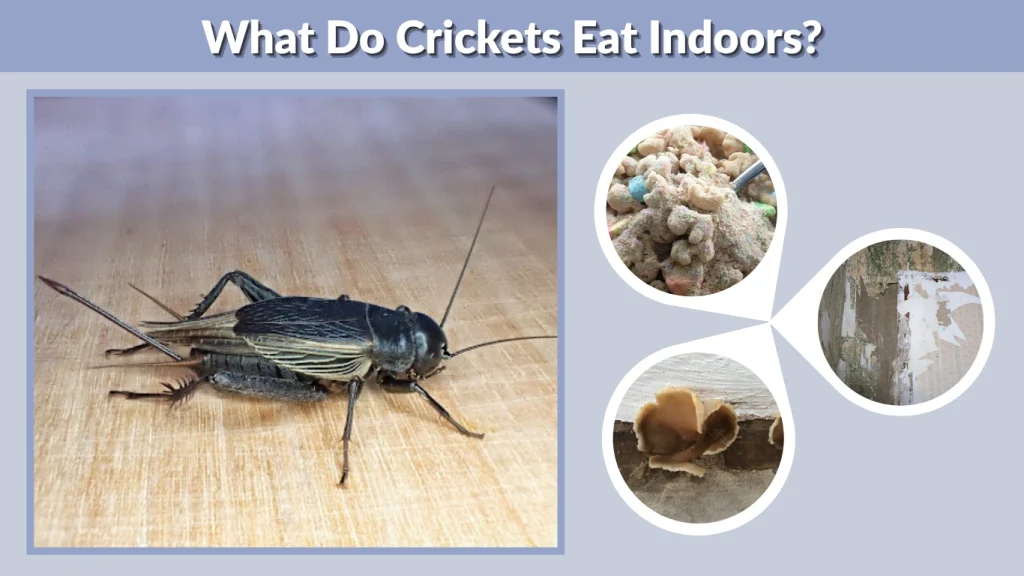
House Cricket Diet
When crickets invade homes, they adapt quickly to what’s available. They feed on:
- Food crumbs, cereals, and pet food
- Cardboard, wallpaper glue, and paper fibers
- Mold or fungus growing in damp areas
- Fabric or clothing (in rare starvation cases)
These insects are drawn to moisture and warmth, especially basements, kitchens, and bathrooms.
Preventing Indoor Infestation
To avoid cricket infestations:
- Keep food sealed and floors clean.
- Repair water leaks to remove moisture.
- Store pet food in airtight containers.
- Vacuum and remove clutter where crickets can hide.
What Do Different Species of Crickets Eat?

House Crickets (Acheta domesticus)
- Common indoors and in pet stores as feeder insects.
- Eat starch-based foods, bread crumbs, fruits, and veggies.
Field Crickets (Gryllus campestris)
- Live outdoors; feed on grass, seeds, and insects.
- Known for their loud chirping and preference for grains.
Mole Crickets (Gryllotalpa gryllotalpa)
- Burrowing species that feed on grass roots and soil insects.
- Can damage lawns or crops but play a role in soil aeration.
Camel and Cave Crickets
- Eat fungi, wood, organic debris, and even dead insects.
- Thrive in dark, moist environments like caves, cellars, and basements.
Jerusalem Crickets
- Large, wingless crickets that live underground.
- Feed on decaying roots, tubers, and plant matter.
Do Crickets Eat Each Other?
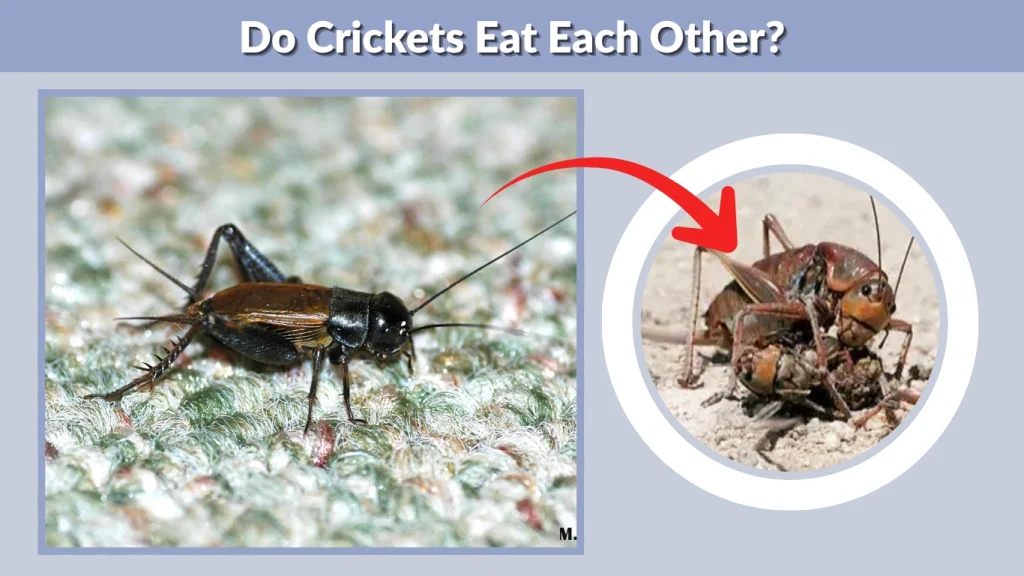
Cannibalism Explained
Yes, crickets may eat other crickets, especially when food or water is limited. This behavior occurs most often in crowded environments. Crickets prefer attacking weak or injured individuals. The act provides extra protein and helps control overcrowding in confined spaces.
Preventing Cannibalism in Captivity
- Provide adequate food and hydration.
- Keep population densities low.
- Maintain moderate temperatures to reduce stress.
Do Crickets Eat Other Insects?
Opportunistic Feeders
Crickets are not strict herbivores—they’re opportunistic feeders. In the wild or captivity, they sometimes consume other insects, particularly smaller or weaker ones. They are known to eat:
- Ants and mosquitoes when available
- Cockroach nymphs and larvae
- Spider eggs or small spiders
- Dead insects such as beetles and flies
Crickets rarely hunt living prey aggressively. Instead, they feed on already dead or immobile insects, acting as natural cleaners in their habitats.
What Eats Crickets?

Natural Predators
Crickets may be resourceful eaters, but they are also an important food source for many animals. Their soft bodies and abundance make them easy targets. Common predators include:
- Birds: Robins, starlings, and sparrows actively hunt crickets.
- Reptiles: Lizards, snakes, and geckos rely on crickets for protein.
- Amphibians: Frogs and toads are natural cricket hunters.
- Small mammals: Mice, shrews, and hedgehogs eat them in the wild.
- Spiders: Trap and consume crickets frequently.
Crickets play a vital ecological role as prey, supporting multiple food chains.
Crickets as Feeder Insects
For Reptiles and Amphibians
Crickets are one of the most common feeder insects for pet reptiles and amphibians. Their nutritional balance of protein, fat, and fiber makes them ideal for species like:
- Bearded dragons – Juveniles eat up to 60 crickets daily.
- Leopard geckos – Require 6–10 small crickets per feeding.
- Frogs and toads – Thrive on live crickets as their main food source.
- Snakes and turtles – Occasionally eat crickets as supplemental prey.
Gut Loading for Nutrition
Pet owners often “gut-load” crickets before feeding them to reptiles—feeding the crickets nutrient-rich food like fruits and vegetables. This process ensures pets receive extra vitamins and minerals through their prey.
Can Cats and Dogs Eat Crickets?
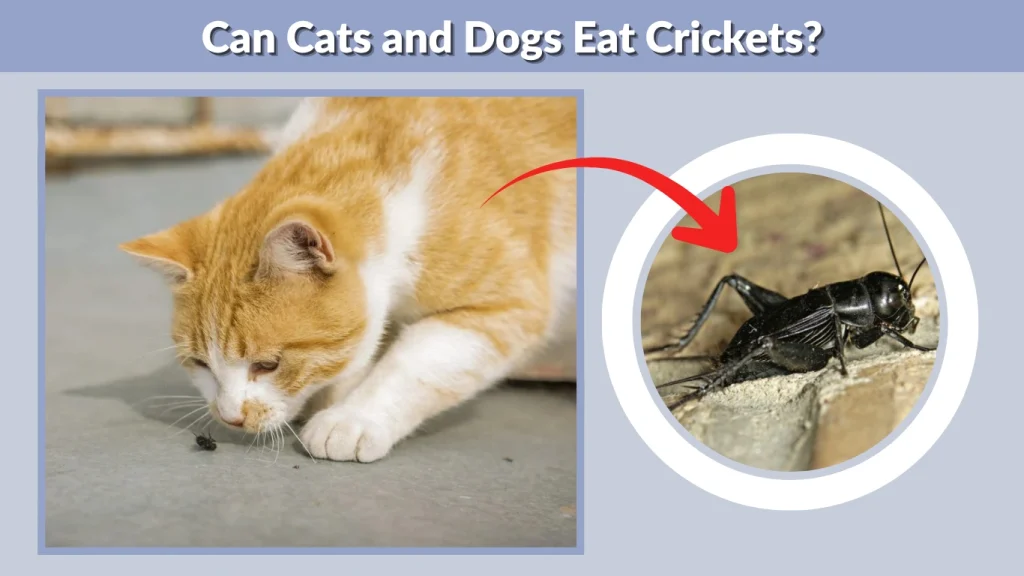
Cats and Crickets
Cats can safely eat crickets in small amounts. A wild or indoor cat might chase and eat one occasionally. Crickets provide:
- Natural protein and essential amino acids
- Taurine and omega fatty acids in small amounts
However, avoid letting cats eat wild crickets, which might carry parasites or pesticides.
Dogs and Crickets
Crickets are also safe for dogs and are now used in eco-friendly dog treats and protein powders. They contain:
- Over 65% protein
- Vitamin B12, calcium, and iron
Dogs can eat cooked or farm-raised crickets safely, but wild ones should be avoided due to contamination risk.
Humans Eating Crickets
Can People Eat Crickets?
Yes—crickets are edible insects consumed in many cultures around the world. They are high in nutrition and low in environmental impact. Crickets are eaten roasted, fried, or ground into flour for baking.
Health Benefits
Crickets offer several health advantages:
- Complete protein with all nine essential amino acids
- High in fiber, calcium, and iron
- Contains vitamin B12, which supports nerve and brain health
- More sustainable and eco-friendly than traditional livestock farming
Safety and Preparation
- Only eat farm-raised crickets bred for human consumption.
- Cook thoroughly before eating to eliminate bacteria.
- Avoid if allergic to shellfish, as both share similar proteins.
Common Cricket-Based Foods
- Cricket protein bars and shakes
- Roasted whole crickets with spices
- Cricket flour for baking bread and cookies
Fun Facts and Educational Insights
- Crickets eat half their body weight in food every day.
- They’re nocturnal eaters, most active just after sunset.
- A cricket’s chirp rate increases after feeding and rises with temperature.
- Female crickets prefer well-fed males with louder chirps—a sign of good health.
- In many cultures, crickets symbolize luck, vitality, and prosperity.
FAQs
Do crickets eat plants or grass?
Yes, especially field crickets. They feed on grass, weeds, leaves, and stems, helping recycle organic matter.
Do crickets eat clothes or cardboard?
Only in extreme hunger. They may nibble on fabric or paper materials found indoors but don’t rely on them as food.
Do frogs and turtles eat crickets?
Absolutely! Frogs, turtles, and many reptiles thrive on live crickets as part of their protein-rich diet.
Are crickets safe for humans and pets to eat?
Yes, when sourced responsibly. Farm-raised crickets are safe, nutritious, and sustainable for both humans and animals.
Where can you buy edible crickets?
They’re available online and in health food stores—often sold roasted, flavored, or powdered for cooking.
