

Crickets are fascinating insects known for their rhythmic chirping and role in the ecosystem. Belonging to the Gryllidae family, they are found in gardens, fields, and even homes worldwide. Their life cycle, from egg to adult, reveals how these resilient insects grow, reproduce, and survive in diverse environments. This article explores each stage of their development, lifespan, and ecological importance in a way that’s both informative and easy to understand.
Identification
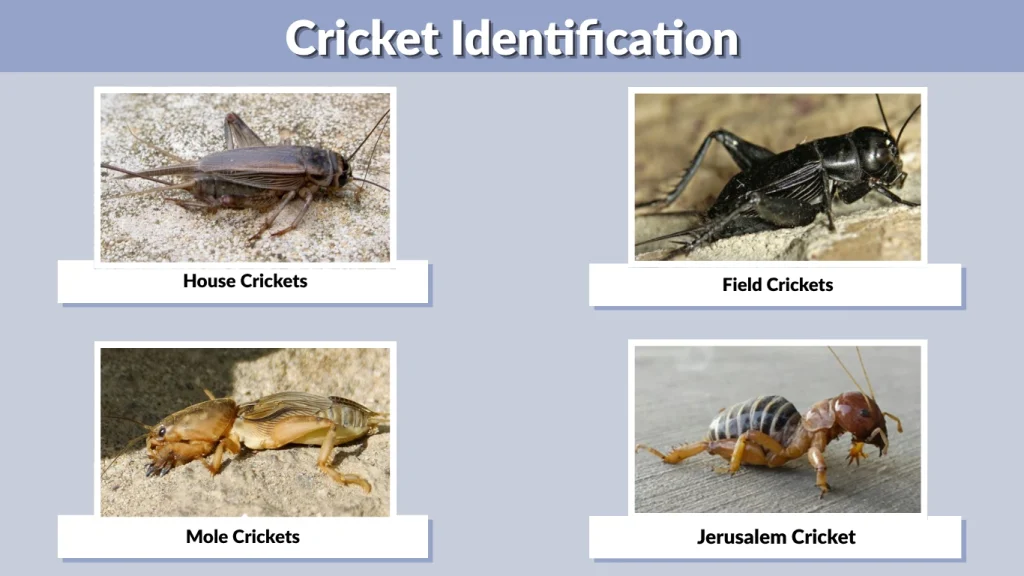
Physical Features
Crickets are medium-sized insects easily recognized by their long antennae, strong hind legs, and distinct chirping sounds. Their bodies are divided into three sections—head, thorax, and abdomen. Most are dark brown or black, though some species display lighter or greenish hues. Their hind legs are powerful, allowing them to jump long distances. Males produce chirping sounds by rubbing their wings together, a process called stridulation, used to attract females or warn rivals.
Types of Crickets
- House Cricket (Acheta domesticus) – Commonly found indoors and used as pet food.
- Field Cricket (Gryllus campestris) – Lives outdoors and is famous for its loud, melodious chirping.
- Mole Cricket (Gryllotalpa gryllotalpa) – A burrowing species with spade-like forelegs for digging.
- Jerusalem Cricket (Stenopelmatidae) – Large, wingless, and found underground or in leaf litter.
- Camel Cricket (Ceuthophilus spp.) – Prefers cool, damp areas like basements and caves.
Each species has unique habits and environments, but all share similar life stages.
The Life Cycle of a Cricket
Overview
Crickets undergo incomplete metamorphosis, meaning they develop through three stages—egg, nymph, and adult—without forming a pupal stage like butterflies. This process usually takes 8 to 10 weeks, though it can vary by species and climate. Temperature, humidity, and food availability play major roles in how quickly crickets mature.
Egg Stage

Egg Development
The cricket life begins with an egg. Female crickets lay their eggs in moist soil or soft plant stems using a thin, tube-like organ called an ovipositor. These eggs are small, white, and cylindrical, about 2–3 millimeters long—barely visible to the naked eye. A single female can lay 100–200 eggs during her lifetime, ensuring the next generation’s survival.
Incubation Period
Eggs typically hatch within 10 to 14 days under warm and humid conditions. In cooler environments, hatching can take up to three weeks. The warmth of the soil and proper moisture are crucial, as dry conditions can prevent development. Once hatched, the young crickets—called nymphs—emerge ready to start feeding and growing.
Nymph Stage

Appearance and Growth
Nymphs are miniature versions of adult crickets, but they lack wings and reproductive organs. Their bodies are softer and lighter in color at first. As they feed on small organic materials, they grow rapidly and shed their exoskeleton several times in a process called molting. Each molt helps them expand and harden their new outer shell, gradually developing wing buds and stronger legs.
Duration
The nymph stage lasts four to six weeks. During this period, nymphs undergo 8 to 10 molts before reaching adulthood. They are highly active and feed on decaying plants, grains, and fungi to gain energy for rapid development. Warm weather and abundant food can accelerate their growth, while cooler temperatures may extend the stage.
Adult Stage
Physical Maturity
After the final molt, crickets become adults with fully developed wings, hardened bodies, and reproductive organs. Males begin to chirp loudly to attract females and establish territory. The chirping rate often increases with temperature, which is why crickets are more vocal during warm summer nights.
Reproduction and Behavior
Once a male successfully courts a female, mating takes place, and she begins laying eggs soon after. Females use their ovipositor to insert eggs into soil or organic material, ensuring a safe environment for development. Adult crickets are nocturnal and prefer hiding during the day. Their lifespan is relatively short, but their reproductive success ensures continuous population growth.
Cricket Lifespan and Life Expectancy

Average Lifespan
Crickets typically live between 8 and 10 weeks in the wild, though some species may survive longer under favorable conditions. In captivity, where they have stable temperatures and consistent food sources, crickets can live up to 6 months.
Factors Influencing Lifespan
Several factors affect a cricket’s survival:
- Climate: Warmer temperatures speed up growth but shorten life expectancy.
- Diet: A nutrient-rich diet of grains, vegetables, and fruits promotes longevity.
- Predators: Birds, reptiles, spiders, and amphibians feed on crickets.
- Habitat: Safe, moist, and shaded environments improve survival chances.
A cricket’s life may seem brief, but within those few weeks, it completes a full cycle—growing, reproducing, and playing an important ecological role.
Different Cricket Species and Their Life Cycles
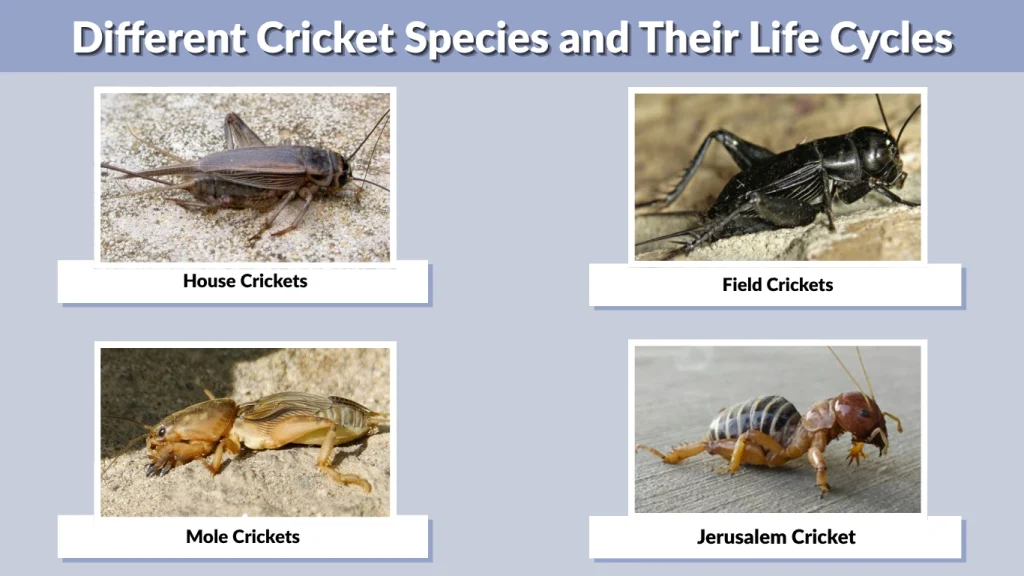
House Cricket (Acheta domesticus)
This species is the most familiar, often found indoors and used as feeder insects for reptiles and amphibians. House crickets have a short life cycle of about 8–10 weeks. They thrive in warm, dry conditions and reproduce rapidly. Males chirp continuously at night, a sound that has become symbolic of summer evenings.
Field Cricket (Gryllus campestris)
Field crickets are known for their louder and more musical chirping. They live outdoors in meadows and grassy areas. Their life cycle is similar to house crickets but slightly longer—10–12 weeks on average. Field crickets are active during late summer and early fall and are often used in research on sound communication.
Mole Cricket (Gryllotalpa gryllotalpa)
Unlike most crickets, mole crickets are burrowers that live underground. Their powerful, spade-like forelegs help them dig intricate tunnels. Because of their subterranean lifestyle, they grow slower and can live up to one year. Their deep burrows also amplify their chirps, which are used to attract mates.
Jerusalem and Camel Crickets
Jerusalem crickets are large, wingless species found mainly in the western United States. Despite their intimidating appearance, they’re harmless to humans. Camel crickets, on the other hand, are hump-backed and prefer cool, damp environments like basements or caves. Both species develop slowly and are more nocturnal than other types.
Diet, Habitat, and Behavior
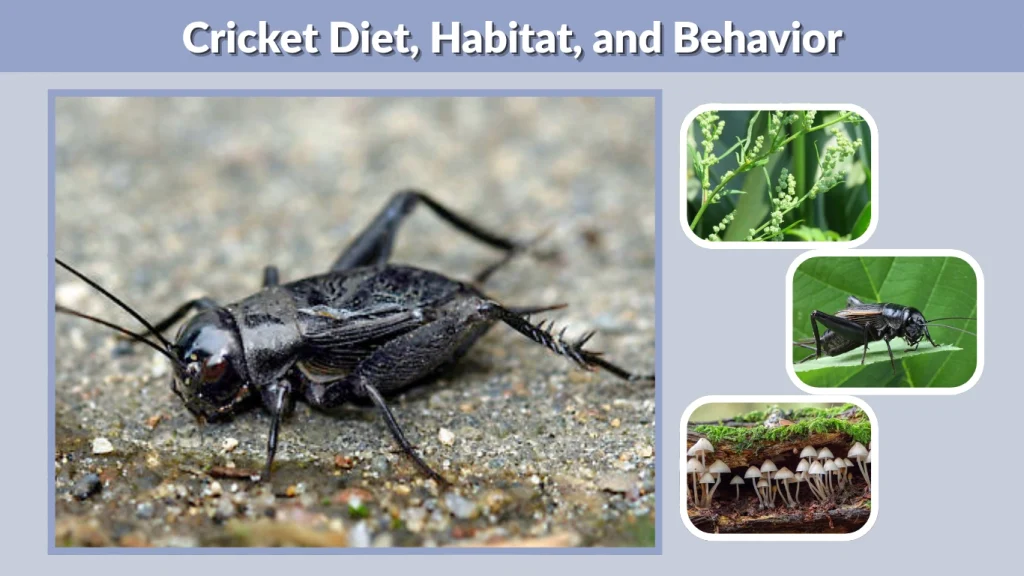
Diet
Crickets are omnivorous and have a broad diet. They eat decaying plants, fungi, and organic debris in the wild. In captivity, they enjoy fruits, vegetables, grains, and leafy greens. They also consume dead insects, helping recycle nutrients back into the ecosystem. This flexible diet allows them to adapt to many environments.
Habitat
Crickets prefer warm, moist environments such as gardens, grassy fields, and under rocks. House crickets are drawn to human dwellings, thriving in basements, crawl spaces, and near sources of warmth. Field crickets live outdoors, while mole crickets dig underground tunnels to stay protected from predators.
Behavior
Crickets are nocturnal—most active at night. Males chirp to attract females, establish dominance, and ward off other males. Interestingly, the speed of their chirps increases with temperature, which led to the famous “cricket thermometer” rule: count the number of chirps in 14 seconds and add 40 to estimate the temperature in Fahrenheit.
Crickets in Pop Culture and Symbolism
Cricket from A Bug’s Life
In Pixar’s A Bug’s Life, the character “Hopper” is modeled after a grasshopper but shares similarities with field crickets in appearance and behavior. The film popularized insect life for children, portraying crickets and grasshoppers as complex, organized creatures.
Jiminy Cricket and Cultural Meanings
Jiminy Cricket, from Pinocchio, is perhaps the most famous cricket in pop culture. He symbolizes morality, guidance, and conscience. In Chinese and Japanese traditions, crickets represent good luck, vitality, and protection. Ancient cultures even kept them in cages for their melodious chirping, viewing them as bringers of harmony and peace.
Environmental Role and Human Uses
Ecological Importance
Crickets are vital to ecosystems. They act as decomposers, feeding on organic waste and helping recycle nutrients into the soil. Their burrowing improves aeration and soil fertility. They are also a major food source for reptiles, amphibians, birds, and small mammals, making them a crucial link in the food chain.
Human Applications
Crickets are raised commercially for several reasons:
- Feeder insects for pets like lizards, frogs, and birds.
- Scientific research on insect communication and reproduction.
- Sustainable food source—cricket protein is rich in amino acids, calcium, and iron, making it an emerging alternative to meat in eco-friendly diets.
Their easy breeding, fast growth, and minimal environmental impact make them ideal for sustainable farming initiatives worldwide.
Fun Facts and Educational Insights
- Crickets can survive freezing temperatures by entering a dormant state, reviving once conditions warm up.
- They chirp faster when temperatures rise—about 120 chirps per minute at 80°F.
- Female crickets have a long ovipositor at the end of their abdomen, used for laying eggs.
- In ancient China, cricket fighting was a popular pastime, and crickets were kept as prized pets.
- Many classrooms use crickets to teach about metamorphosis and insect life cycles through observation projects.
FAQs
How long do crickets live?
Crickets live around 8–10 weeks on average, though some species, like mole crickets, can live for nearly a year depending on environmental conditions.
What are the three main stages of a cricket’s life?
Crickets undergo incomplete metamorphosis, passing through three stages—egg, nymph, and adult—without forming a cocoon or chrysalis.
How do crickets chirp?
Male crickets produce sound by rubbing the edges of their wings together. This process, called stridulation, helps them attract mates and mark territory.
Do crickets die after laying eggs?
Yes, most female crickets die shortly after laying eggs, completing their life cycle. Their offspring hatch soon after, continuing the generation.
Can crickets survive freezing temperatures?
Crickets can enter a temporary hibernation state in cold weather and “come back to life” when warmed, though extended freezing will kill them.
