
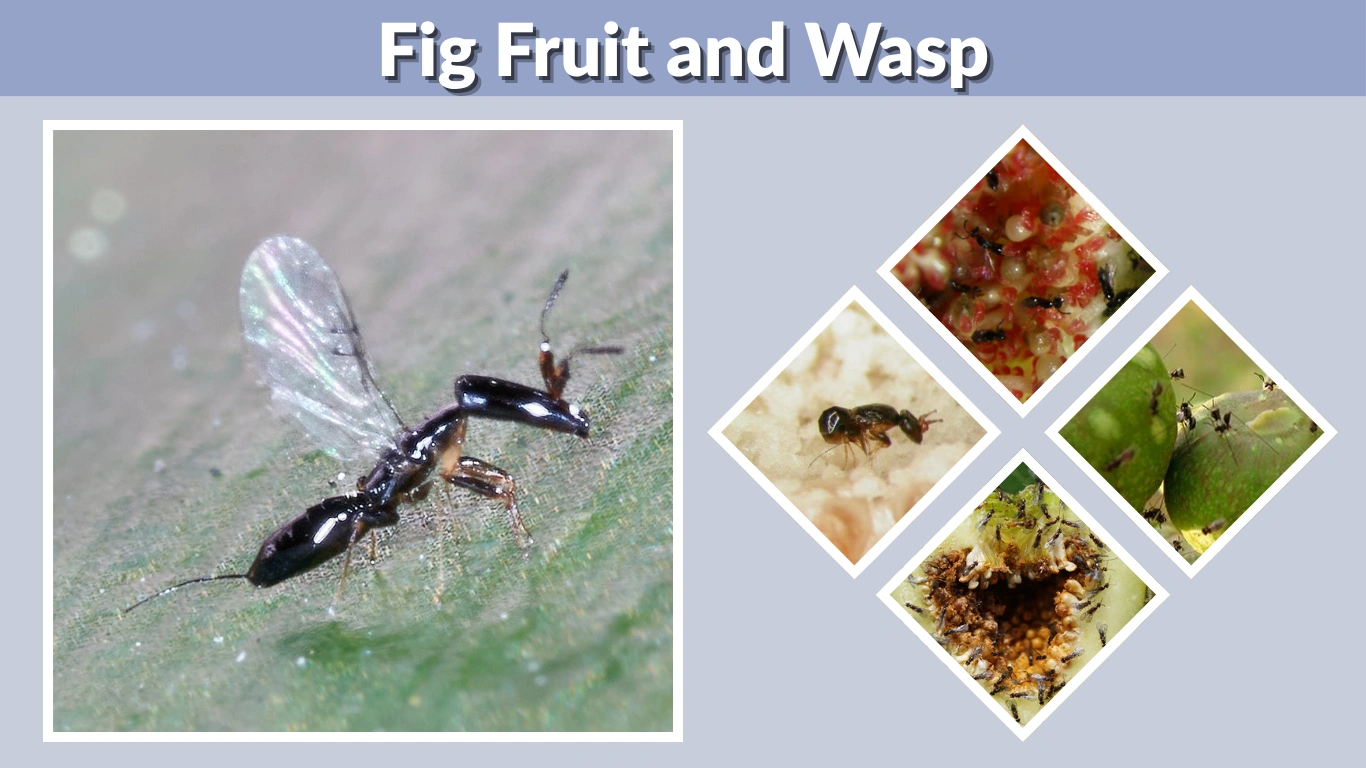
Inside the delicious fig fruit lies one of the most extraordinary natural relationships — the bond between the fig and the fig wasp. This ancient partnership, existing for more than 60 million years, represents a perfect example of coevolution. The fig fruit depends on the wasp for pollination, while the wasp depends on the fig as a secure place to reproduce. This remarkable connection ensures both species continue to thrive.
Identification

Fig Fruit
The fig is not a typical fruit but rather a cluster of tiny flowers hidden inside a fleshy pod called a syconium. Each fig contains hundreds of small blossoms that develop into seeds once pollinated. The outer layer of the fig protects these delicate inner flowers, which cannot be pollinated by wind or bees. Common varieties include the common fig (Ficus carica), sacred fig (Ficus religiosa), and sycamore fig (Ficus sycomorus).
Fig Wasp
The fig wasp, belonging to the Agaonidae family, is the tiny yet crucial pollinator of fig trees. Females are winged and enter the fig through a small natural opening called the ostiole, carrying pollen from another fig. Inside, they lay eggs and spread pollen to fertilize the flowers. Males, on the other hand, are wingless and spend their entire short lives inside the fig, mating and digging escape routes for the females before dying.
Why Wasps Enter Fig Fruit
The process begins when a female fig wasp, drawn by the scent of a receptive fig, enters the fruit through the ostiole — a narrow hole at the fig’s tip. The journey is dangerous and often fatal; she loses her wings and antennae during entry, ensuring she never leaves. Once inside, she lays eggs in some flowers and deposits pollen on others. This act fertilizes the fig, leading to seed formation.
This interaction is more than just a pollination process — it’s mutualism, where both species benefit. The wasp gets a safe place for her offspring to develop, and the fig gets pollinated, allowing it to bear fruit.
Pollination and Reproduction Cycle
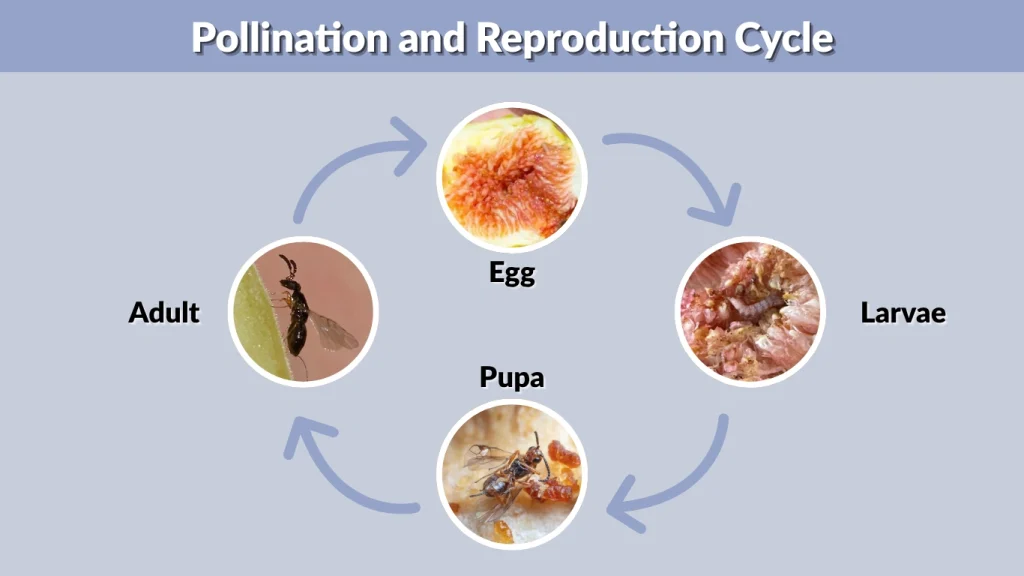
Egg Laying and Larval Growth
After the female lays her eggs, they develop inside the fig’s inner flowers. The larvae feed safely within this protected space. Once matured, the males hatch first. Their sole purpose is to mate with females while still inside the fig. After mating, males dig tunnels for females to exit and die soon afterward — completing their life cycle within the same fig that gave them life.
Pollen Transfer and New Generation
The newly fertilized females collect pollen from the fig’s male flowers before leaving through the tunnels. They then search for another receptive fig to repeat the cycle. This journey, though short-lived, ensures both the wasp and fig species survive across generations.
Do All Figs Need Wasps to Fruit?
While many wild figs depend entirely on fig wasps for pollination, not all do. Some cultivated varieties, like the common fig (Ficus carica), can produce fruit without pollination. This phenomenon, called parthenocarpy, allows the fruit to form naturally without fertilization or wasp involvement.
Commercially grown figs that rely on parthenocarpy dominate markets today, especially in regions like North America, where specific pollinator wasps may not even exist. Therefore, most figs consumed by humans contain no wasps at all.
What Happens to the Wasp Inside the Fig?
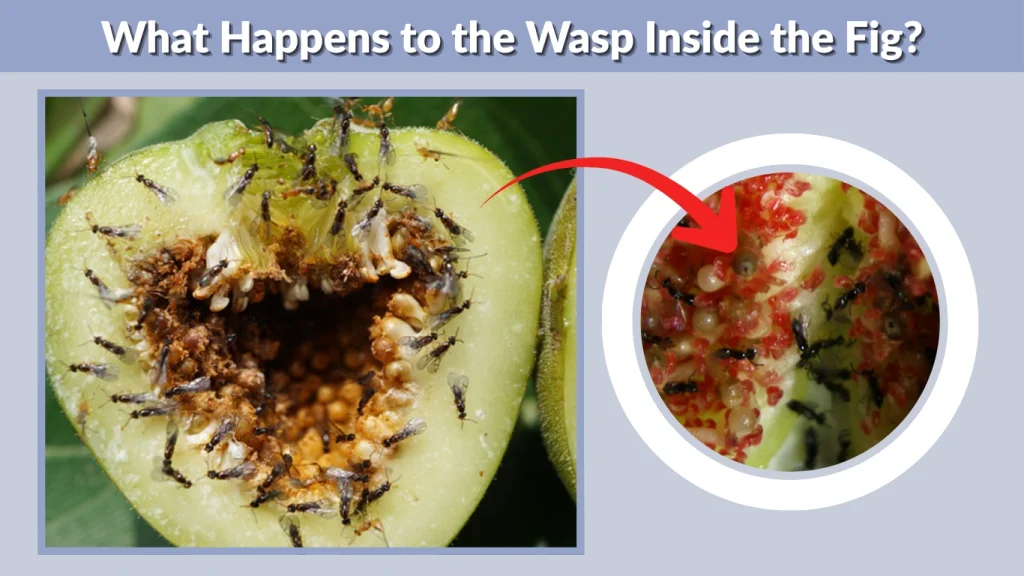
Many people are surprised to learn that some figs contain a wasp — but it’s not as unpleasant as it sounds. In wild figs, the wasp that enters to lay eggs dies inside after completing her task. However, as the fig ripens, natural enzymes known as ficin break down the wasp’s body, turning it into protein that nourishes the fruit.
By the time the fig is ready to eat, there’s no visible trace of the insect. It’s nature’s way of recycling — the wasp helps the fig reproduce, and in return, the fig absorbs her into its fruiting process.
Fig Fruit Without Wasps
Modern agriculture has allowed the cultivation of parthenocarpic fig varieties that develop fruit without needing wasps. These are the types commonly found in supermarkets and used for drying or jam production. Because they don’t depend on pollinators, they can grow in regions where fig wasps don’t exist, such as parts of the United States and Europe.
However, in tropical ecosystems, wild figs and fig wasps remain inseparable. Their life cycles are intertwined, maintaining the balance of biodiversity that supports countless other animals.
Adaptations Between Fig Fruit and Wasp
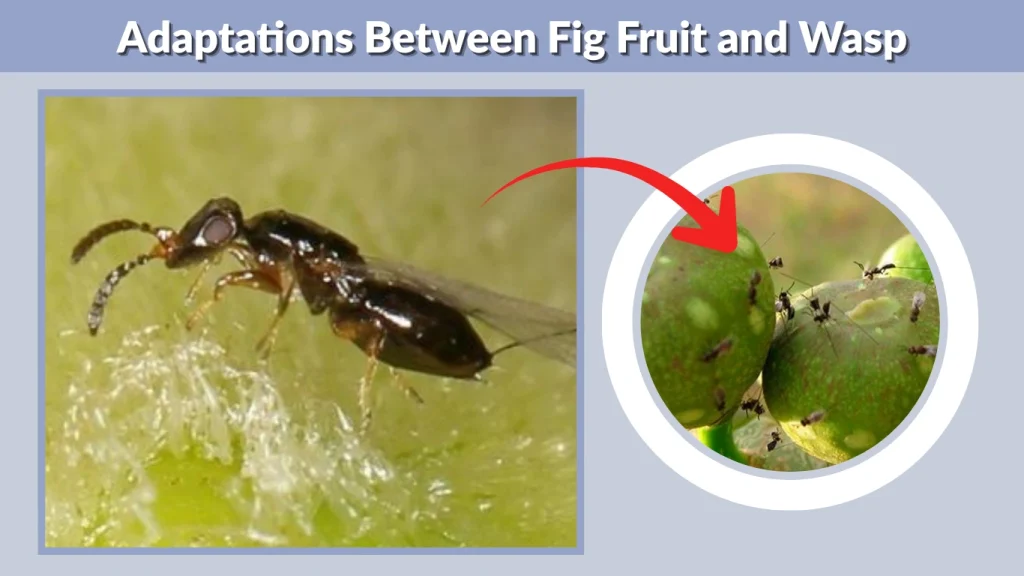
Over millions of years, fig fruits and wasps have developed an incredibly precise system that guarantees successful pollination. The relationship is so specialized that each fig species usually has its own dedicated wasp species. This coevolution has shaped both organisms to fit each other perfectly.
- Chemical Attraction: Figs release a unique blend of chemicals when they’re ready to be pollinated, signaling to female wasps that it’s time to enter.
- Physical Fit: The wasp’s small, flexible body and smooth wings are adapted for squeezing through the narrow ostiole without damaging the fig’s structure.
- Timed Synchronization: Fig trees time their reproductive cycles to match wasp activity, ensuring both life cycles align perfectly.
- Enzyme Reaction: The fig produces the enzyme ficin, which dissolves dead wasps naturally, integrating them into the fruit’s development process.
These adaptations reveal an intricate partnership where evolution shaped both species for mutual benefit — a relationship so refined that even minor disruption can affect their survival.
Ecological Importance
Fig fruits and wasps aren’t just partners; they are ecological pillars. Figs act as a keystone species in many tropical forests, meaning their presence supports countless other forms of life. Since fig trees can bear fruit year-round, they provide food when other sources are scarce.
Birds, bats, monkeys, and insects depend on figs for nourishment. In turn, these animals disperse fig seeds across vast areas, helping forests regenerate. The fig–wasp partnership indirectly maintains ecosystems, biodiversity, and even soil fertility. Without this relationship, many tropical habitats would collapse.
Fig Fruit and Wasp in Human Agriculture
In agriculture, the fig–wasp connection has been both a challenge and a blessing. Early farmers noticed that certain fig trees would not bear fruit unless pollinating wasps were nearby. This discovery led to controlled pollination techniques, especially for species like the Smyrna fig, which still requires fig wasps.
Modern horticulture, however, favors parthenocarpic figs, which produce fruit without pollination. These varieties are easier to cultivate commercially and ensure consistent, wasp-free harvests. This adaptation allows people to enjoy figs globally — even in regions where fig wasps can’t survive.
Misconceptions About Wasps in Fig Fruit
One of the most common myths is that every fig contains a dead wasp. While it’s true that female wasps die inside wild figs, the fig’s natural enzymes break them down completely. By the time the fruit ripens, no trace of the insect remains — only a smooth, sweet, plant-based fruit.
In fact, most figs you eat today have never been pollinated by a wasp. Commercial varieties are entirely wasp-free and formed through natural plant hormones rather than insect activity.
FAQs
Do figs need a wasp to produce fruit?
Not always. Wild fig species depend on fig wasps for pollination, but cultivated varieties like Ficus carica can produce fruit without wasps through a process called parthenocarpy. These figs develop naturally, ensuring modern crops remain free of wasps.
Are there dead wasps inside figs?
In wild figs, yes — the female wasp dies inside after pollination. However, her body is broken down by natural enzymes, leaving no visible trace. In commercially grown figs, no wasps are involved at all.
Why does a wasp go into fig fruit?
The female wasp enters the fig to lay her eggs and pollinate its internal flowers. She provides the fig with pollen and, in return, uses the fig’s flowers as a nursery for her larvae — a perfect exchange in nature.
Can fig fruit form without wasps?
Yes. Many modern figs can form fruit without pollination through parthenocarpy. These fruits are commonly cultivated for human consumption and do not rely on any wasp activity.
Do all fig fruits have wasps?
No. Only wild, naturally pollinated fig species contain wasps. Cultivated figs grown for markets and home gardens are wasp-free and entirely safe to eat, though they share the same evolutionary history with their pollinating partners.
