
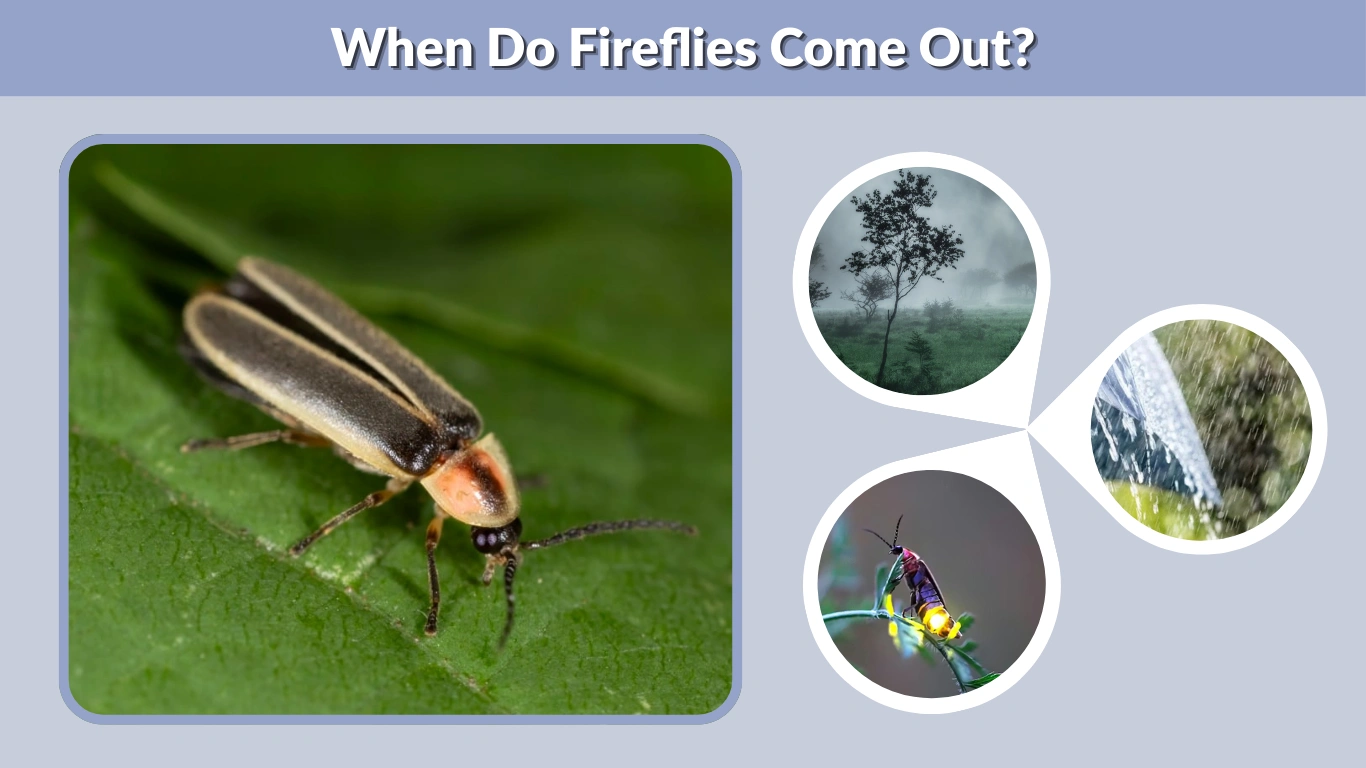
Fireflies are one of nature’s most enchanting summer spectacles, glowing across fields, forests, and backyards when the conditions are just right. Although most people see them in mid-summer, the exact timing of when fireflies come out varies dramatically depending on where you live, your local climate, temperature patterns, and even how much it has rained. This guide breaks down when fireflies emerge, when they appear at night, and when they show up in each U.S. region so you can plan the perfect viewing moments.
What Triggers Fireflies to Come Out?

Several environmental cues must align before fireflies emerge. Their appearance is not random; it’s influenced by temperature, moisture, soil conditions, and natural seasonal timing. The major triggers include:
- Warm weather above 60°F (15°C)
- High humidity during early summer
- Moist soil conditions following rainfall
- Darkness free of strong artificial lights
- Seasonal cues tied to soil warming in spring
Fireflies spend most of their lives underground as larvae, feeding on snails and small insects. Only when temperatures stabilize and soil warms sufficiently do they transform into adults and begin their glowing displays.
When Do Fireflies Come Out at Night?

Fireflies typically start glowing just after sunset, once the sky becomes dark enough for their flashes to stand out. In most areas, this means:
- Activity begins around 8:30 PM–10:30 PM
- Warm, slightly humid evenings produce the best displays
- Activity increases dramatically after light rainfall
- Heavy wind or storms reduce nightly flashing
The evening emergence is tied to mating behavior. Males fly in search of females, flashing distinctive patterns, while females perched in grasses or bushes respond with their own signals. If nights are too cold, windy, or dry, fireflies reduce their activity or stay hidden altogether.
U.S. Firefly Season by State & Region
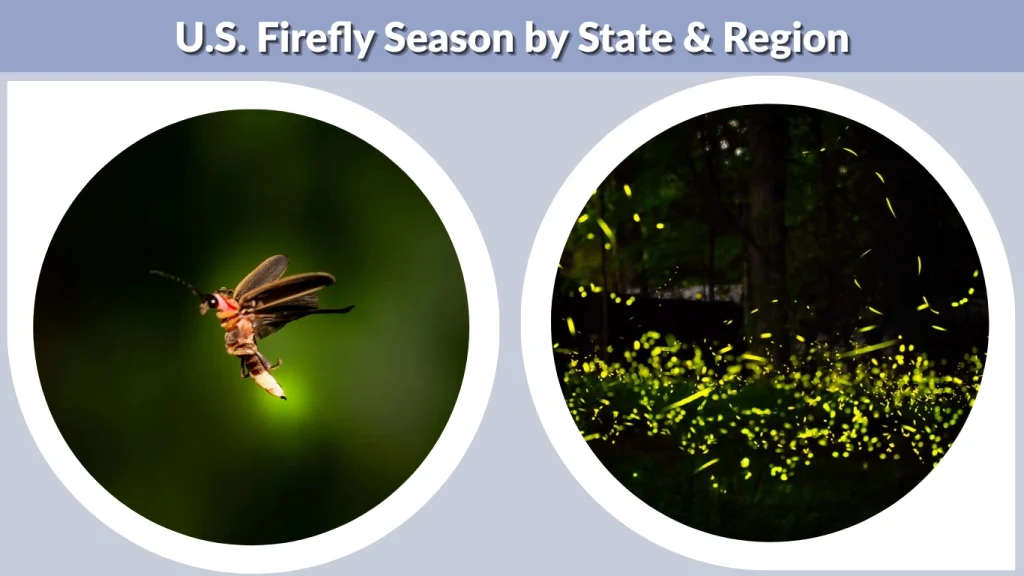
Firefly timing differs widely across the United States due to regional climate variations. Below is a clear breakdown of when they typically appear in each area.
Southern States – Earliest Firefly Emergence
Includes: Alabama, Georgia, Florida, Louisiana, Texas, South Carolina
Southern states experience the first firefly sightings of the year thanks to early spring warmth.
- First appearance: Late April
- Peak season: May–June
- End of season: July
In places like Georgia and Florida, sightings can stretch farther into summer during rainy years.
Mid-South & Appalachian Region
Includes: Tennessee, East Tennessee, Middle Tennessee, Smoky Mountains, Kentucky
This region hosts some of the world’s most famous firefly events, including the synchronous fireflies of the Smokies.
- First appearance: Late May
- Peak: Early to mid-June
- Special note: Blue ghost fireflies appear earlier — late April through May in dark forests.
Midwest Region
Includes: Ohio, Michigan, Illinois, Indiana, Wisconsin, Missouri, Minnesota, Iowa
The Midwest has a classic early-summer firefly season influenced by cooler night temperatures.
- First appearance: Early June
- Peak: Mid-June to mid-July
- End: Late July
States like Michigan and Wisconsin tend to see slightly later peaks because of long winters and cooler springs.
Northeast & New England
Includes: New York, NYC, New Jersey, Pennsylvania, Maine, Massachusetts, Vermont, New Hampshire, Connecticut
Northern climates push the firefly season later into the summer.
- First appearance: Mid-June
- Peak: Late June to late July
- End: Early August
Areas like Pennsylvania and New York are especially known for dense, glowing forests during peak weeks.
Central & Plains States
Includes: Kansas, Kansas City, Nebraska, Oklahoma, South Dakota
These states heat up quickly but also cool rapidly at night, creating moderate firefly windows.
- First appearance: Early June
- Peak: Mid-June
- End: July
Thunderstorm cycles heavily influence nightly sightings.
Mid-Atlantic Region
Includes: Maryland, Virginia, West Virginia, Washington DC
A mix of forest, farmland, and river valleys creates excellent firefly habitat.
- First appearance: Early June
- Peak: Mid-June to early July
- End: Mid-July
The region’s high humidity encourages strong displays.
International Locations
Australia
Fireflies appear during the southern hemisphere summer:
- November to February
Canada (Ontario & Nova Scotia)
Cool spring delays their emergence.
- First appearance: Late June
- Peak: Early to mid-July
- End: Late July
Special Firefly Species & When They Come Out

Blue Ghost Fireflies
Blue ghost fireflies are famous for their steady, eerie blue-green glow rather than the typical blinking patterns. They appear mainly in the Appalachian Mountains, especially in North Carolina, South Carolina, and Tennessee.
- First appearance: Late April
- Peak season: May
- Best conditions: Cool, moist forest floors with minimal light pollution
Their unique light behavior draws thousands of visitors each year, and because they require specific moist habitats, timing can shift depending on spring rainfall.
Synchronous Fireflies (Smoky Mountains)
These fireflies flash in perfect synchronization, creating one of the world’s most spectacular natural light shows.
- Peak appearance: Early to mid-June
- Most reliable location: Great Smoky Mountains National Park
- Weather influence: Seasons may shift slightly based on how early the soil warms each spring
Synchronous fireflies are extremely sensitive to light pollution, temperature swings, and visitor disturbances, which makes their timing closely tied to environmental stability.
Sunset Fireflies
Unlike most fireflies that start flashing after full darkness, sunset fireflies begin glowing shortly after sundown.
- Season: May to July
Their early-evening behavior makes them easier to spot for families and children.
Weather Conditions That Affect Firefly Activity
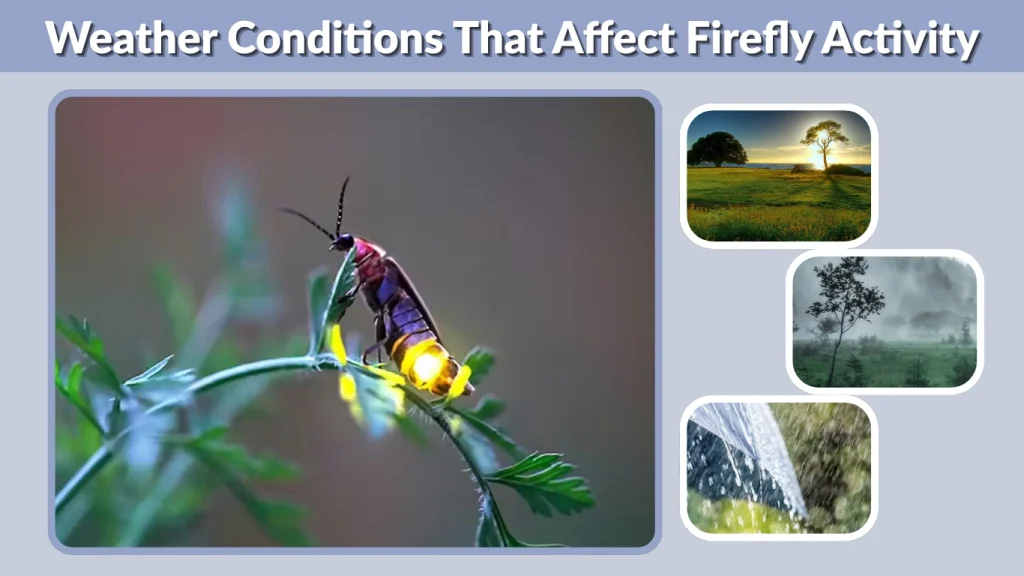
Fireflies respond instantly to weather changes, and their nightly visibility depends heavily on temperature, humidity, and rainfall.
Do Fireflies Come Out When It Rains?
Light or recent rain usually increases firefly activity because the moist environment protects them from dehydration and helps larvae thrive. However, heavy rain or storms suppresses activity, as adults hide in grass and shrubs to avoid damage.
Do Fireflies Come Out When It’s Cold?
Fireflies need warm air to flash efficiently.
- Below 60°F (15°C) → minimal activity
- Below 55°F (12°C) → most stop flashing altogether
Cold snaps during early summer can delay entire seasons by a week or more.
Why Humidity Matters
High humidity is one of the strongest predictors of firefly displays. Because fireflies are prone to drying out, they glow more actively in moisture-rich air, especially after evening thunderstorms.
When Do Fireflies Come Out of Hibernation?

Firefly larvae spend fall, winter, and early spring underground or beneath leaf litter. They “wake up” as the soil warms.
- Soil temperature threshold: Around 50–55°F (10–13°C)
- Timing: Varies from April in the South to June in the North
Once warmed, larvae pupate and transform into adult fireflies. The speed of this transition depends heavily on seasonal rainfall and soil moisture, which means firefly emergence can shift from year to year.
Quick Reference Firefly Season Table
| Region | First Appearance | Peak Season | Season Ends |
| Deep South | Late April | May–June | July |
| Midwest | Early June | June–July | Late July |
| Northeast | Mid-June | Late June–July | Early August |
| Appalachia | Late May | June | July |
| Canada | Late June | Early July | Late July |
This overview helps determine the best weeks to enjoy firefly displays in your area.
FAQs
When do fireflies usually come out each year?
Fireflies generally appear between late spring and early summer, depending on your region. In warm southern states, they emerge as early as April, while northern states often see them beginning in mid-June. Their season aligns with warm evening temperatures and moist soil conditions.
Why do fireflies come out after rain?
Moisture from rain protects fireflies from drying out and enriches the habitat where larvae live. After light rain, humidity rises, creating ideal conditions for mating flights. However, during heavy downpours they tend to hide until conditions stabilize.
Do fireflies come out in cold weather?
No. Fireflies are highly sensitive to temperature and typically stop flashing when the air drops below 60°F. Cold nights delay their activity, and in some regions, a late-season cold snap can postpone emergence entirely.
When do fireflies come out in big cities like Chicago or NYC?
Urban areas tend to see fireflies later and in fewer numbers due to heat islands and light pollution. In Chicago and New York City, they usually appear between late June and mid-July. Suburban parks and darker green spaces often offer the best viewing.
How can I increase my chances of seeing fireflies?
Visit moist grassy areas, forests, or fields around 30 minutes after sunset. Turn off bright lights, avoid flashlights, and choose warm, humid evenings—especially after light rain. Reducing pesticide use and protecting natural vegetation also helps fireflies thrive near your home.
