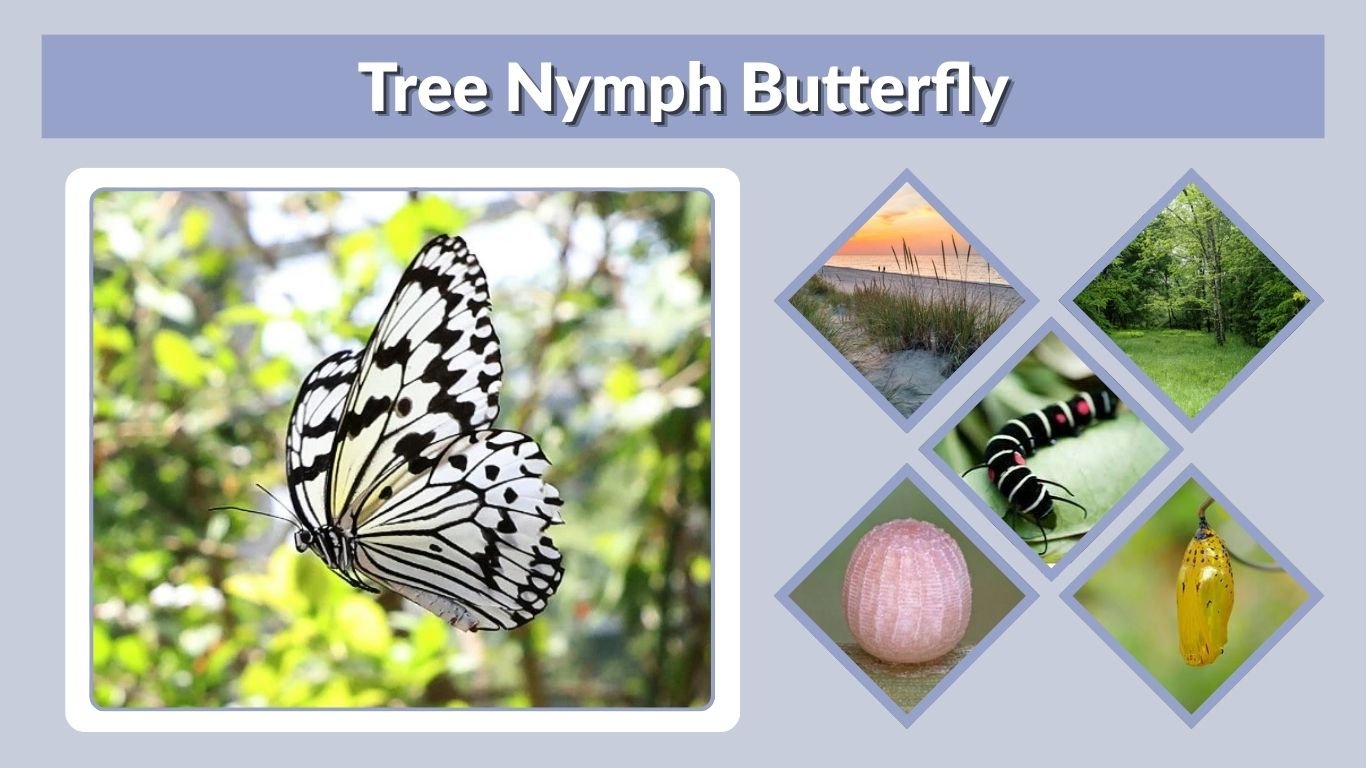
The tree nymph butterfly is a beautiful tropical butterfly known for its large, translucent white wings, striking black markings, and graceful floating flight. Commonly called the paper kite or rice paper butterfly, it inhabits forests and coastal regions across Southeast Asia. Several related species, including the Malabar tree nymph and Ceylon tree nymph, share similar appearances but occupy different geographical regions. Their unusual wing patterns, defensive adaptations, and fascinating life cycles make them especially interesting. Understanding their identification, habitat, feeding habits, lifespan, and conservation status reveals their ecological importance.
What Is a Tree Nymph Butterfly?
Tree nymph butterflies commonly refer to several large butterflies belonging to the genus Idea, particularly Idea leuconoe. These butterflies belong to the Nymphalidae family and the Danainae subfamily, which also includes monarch butterflies.
They are recognizable by their delicate black-and-white wings and unusually slow, floating flight. Their large wings allow them to glide through tropical forests with minimal effort.
Tree Nymph Butterfly Identification
- Scientific Name: Idea leuconoe (large tree nymph)
- Common Names: Tree Nymph, Paper Kite, Rice Paper Butterfly
- Family: Nymphalidae
- Subfamily: Danainae
- Wingspan: Approximately 4.5–6 inches
- Wing Color: Translucent white with black markings
- Body Color: Black with pale markings
- Habitat: Tropical forests and coastal vegetation
- Diet: Flower nectar and other suitable liquid food sources
- Distribution: Southeast Asia and nearby islands
Their translucent wings resemble thin rice paper, explaining their popular alternative names.
Different Types of Tree Nymph Butterflies
Several butterfly species share the tree nymph name. Although many have similar wing patterns and flying behaviors, their distributions and conservation requirements differ.
Common Tree Nymph Butterfly Species
- Large Tree Nymph (Idea leuconoe): A large black-and-white butterfly found across parts of Southeast Asia.
- Malabar Tree Nymph (Idea malabarica): A distinctive species native to India’s Western Ghats.
- Ceylon Tree Nymph (Idea iasonia): A butterfly endemic to Sri Lanka.
- Dusky Tree Nymph (Idea lynceus): A large tropical butterfly found in Southeast Asia.
- Malayan Tree Nymph (Idea hypermnestra): Another member of the genus Idea.
The spotted lilac tree nymph (Sevenia pechueli) is a different butterfly found in Africa. Despite sharing the tree nymph name, it belongs to another genus.
Tree Nymph Butterfly Habitat and Distribution
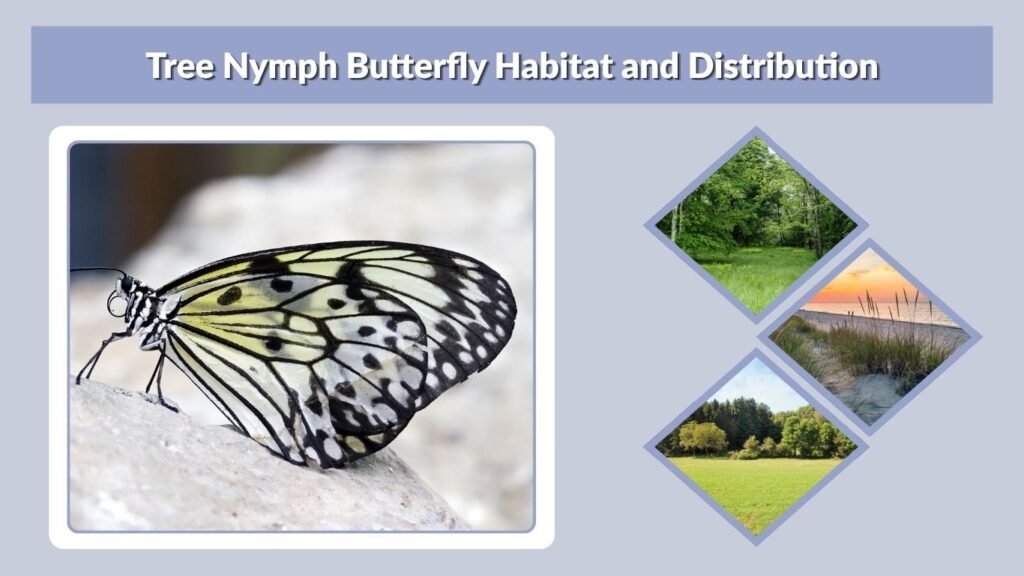
Tree nymph butterflies primarily inhabit tropical and subtropical environments containing dense vegetation, suitable caterpillar host plants, and flowering trees.
They are especially associated with humid forests, woodland edges, and sheltered coastal habitats.
Where Do Tree Nymph Butterflies Live?
Large tree nymph butterflies occur in several Southeast Asian countries, including Malaysia, Indonesia, and the Philippines. Their distribution also extends to Taiwan and parts of southern Japan.
The Malabar tree nymph inhabits forested areas of India’s Western Ghats, especially evergreen forests and nearby clearings.
The Ceylon tree nymph is restricted to Sri Lanka, where it occupies suitable forest habitats.
Although their geographical distributions differ, these butterflies generally prefer warm environments with abundant vegetation.
Large Tree Nymph or Paper Kite Butterfly
The large tree nymph (Idea leuconoe) is among the best-known tree nymph species. It is frequently displayed in tropical butterfly conservatories because of its impressive size and elegant appearance.
Its wings have a pale, almost transparent background decorated with bold black veins and irregular spots.
Why Is It Called a Rice Paper Butterfly?
The name comes from the butterfly’s thin, translucent wings, which resemble delicate sheets of rice paper.
Unlike many fast-flying butterflies, the paper kite glides slowly through the air, occasionally moving its wings.
This floating movement makes it appear almost weightless.
Its contrasting wing patterns also serve as warning signals to predators.
Malabar Tree Nymph Butterfly
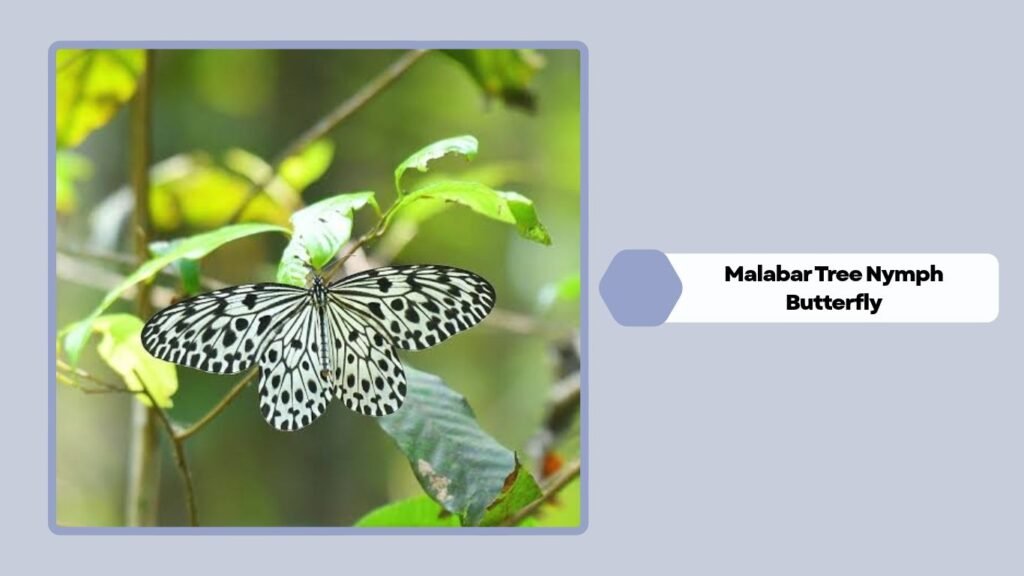
The Malabar tree nymph (Idea malabarica) is a distinctive butterfly associated with the Western Ghats of India.
Its large, pale wings are decorated with dark veins and numerous black spots. It often flies through forest openings and near the canopy.
Is the Malabar Tree Nymph Rare?
The Malabar tree nymph has a restricted geographical distribution and may be locally uncommon.
It depends on suitable forest habitats and specific larval host plants, including Aganosma cymosa and Parsonsia alboflavescens.
Habitat degradation and the loss of native vegetation can threaten its populations.
The species receives legal protection in India.
Ceylon Tree Nymph Butterfly
The Ceylon tree nymph (Idea iasonia), also known as the Sri Lankan tree nymph, is endemic to Sri Lanka.
This butterfly has elegant translucent wings with distinctive black markings.
It closely resembles other members of the genus Idea but differs in geographical distribution and certain physical characteristics.
Ceylon Tree Nymph Habitat
The species inhabits suitable forest environments throughout parts of Sri Lanka.
Its caterpillars feed on particular native plants, including Parsonsia alboflavescens.
The Ceylon tree nymph is recognized as vulnerable under Sri Lanka’s national conservation assessments, making habitat preservation important for its survival.
What Do Tree Nymph Butterflies Eat?
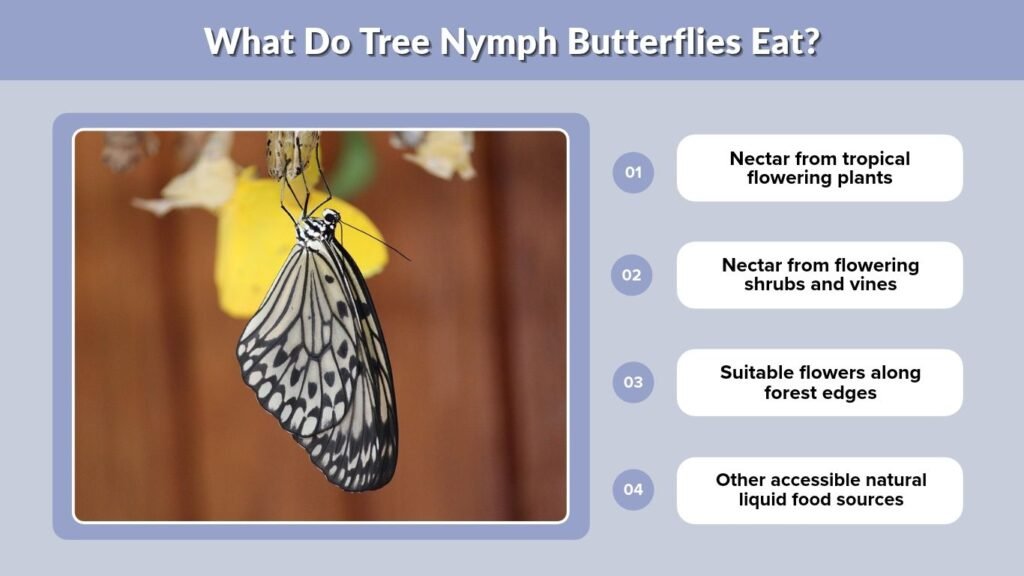
Adult tree nymph butterflies primarily obtain nourishment from liquid food sources, particularly flower nectar.
They use their long proboscis to collect nectar while visiting flowering vegetation.
Tree Nymph Butterfly Food Sources
- Nectar from tropical flowering plants
- Nectar from flowering shrubs and vines
- Suitable flowers along forest edges
- Other accessible natural liquid food sources
Their feeding behavior depends on local flowering seasons and available vegetation.
Caterpillars have different dietary requirements and consume leaves from specific host plants.
For the large tree nymph, documented host plants include climbing vines belonging to the genus Parsonsia.
Tree Nymph Butterfly Life Cycle
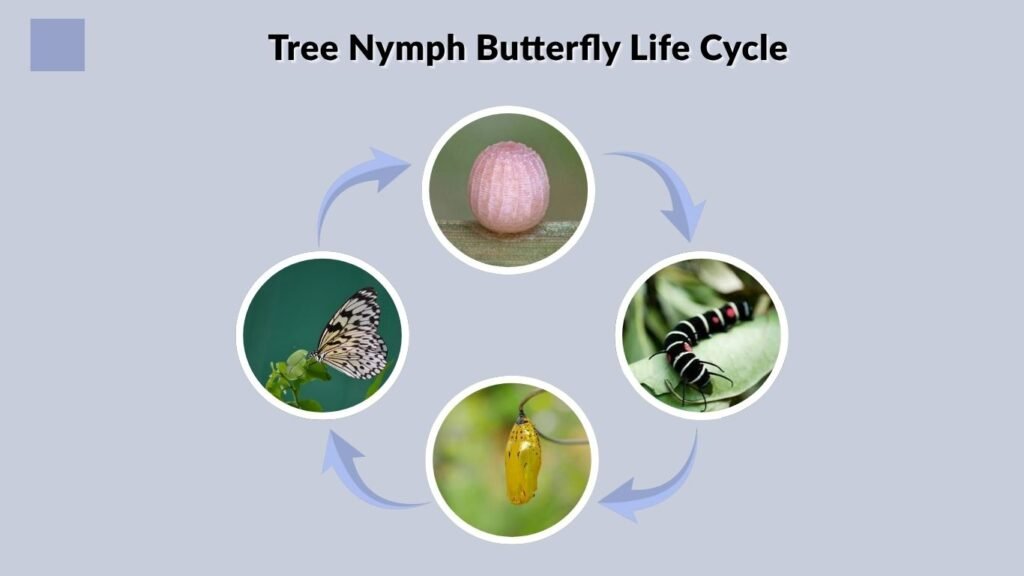
Tree nymph butterflies undergo complete metamorphosis, passing through four developmental stages: egg, caterpillar, chrysalis, and adult.
The duration of each stage varies among species and depends on environmental conditions.
Egg Stage
Female butterflies lay eggs on suitable host plants.
The developing embryos remain inside the eggs until the caterpillars are ready to emerge.
Caterpillar Stage
Newly hatched caterpillars begin eating their host plants.
Large tree nymph caterpillars have striking dark and pale patterns, often accompanied by reddish markings.
These colors warn predators about their chemical defenses.
Chrysalis Stage
After completing larval development, the caterpillar forms a chrysalis.
One remarkable feature of the large tree nymph is its shiny, metallic-gold chrysalis.
This beautiful structure protects the developing butterfly during metamorphosis.
Adult Stage
The adult butterfly emerges from the chrysalis with soft, folded wings.
After expanding and drying its wings, it begins flying, feeding, and searching for mates.
Tree Nymph Butterfly Lifespan
Tree nymph butterfly lifespan varies depending on species, environmental conditions, food availability, and predators.
Many butterflies survive only several weeks as adults. However, the large tree nymph can live considerably longer under suitable conditions.
Captive individuals of Idea leuconoe have been reported to survive for approximately six months.
Wild lifespans are less predictable because of natural hazards and environmental changes.
Are Tree Nymph Butterflies Poisonous?
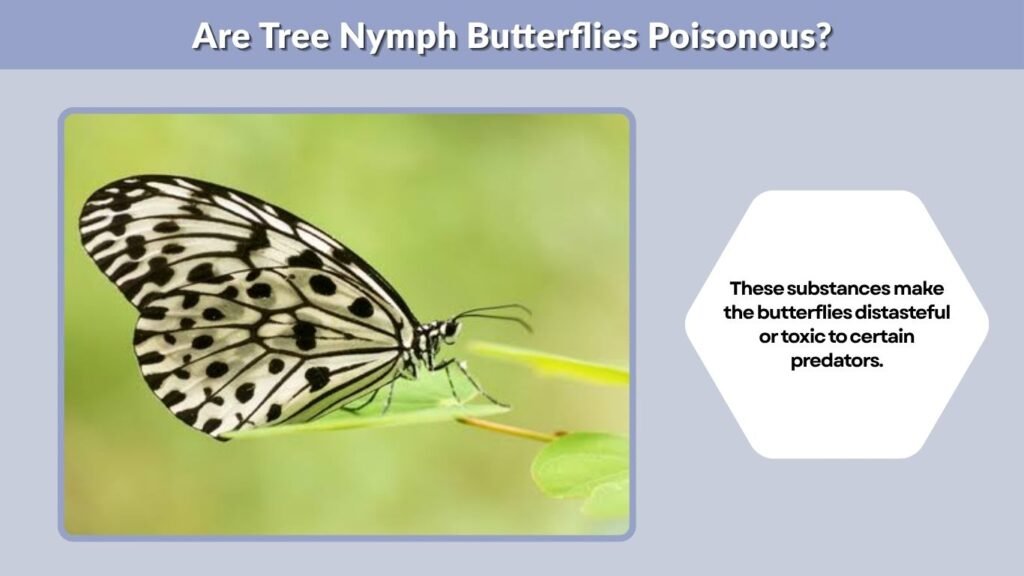
Several tree nymph species contain defensive chemicals obtained from plants consumed during their caterpillar stage.
These substances make the butterflies distasteful or toxic to certain predators.
How Do Tree Nymph Butterflies Protect Themselves?
Their black-and-white wing patterns function as warning coloration.
Their slow, conspicuous flight may help predators recognize these warning patterns rather than attack them.
The chemical defenses are primarily important against animals that might eat the butterflies. Their presence does not mean the butterflies are dangerous to people observing them.
Tree Nymph Butterfly in Terraria
The Tree Nymph Butterfly also appears as a rare collectible creature in the video game Terraria.
Unlike the real butterfly, the game version has specific spawning conditions and can be collected for fishing bait or decoration.
How to Get a Tree Nymph Butterfly in Terraria
Tree Nymph Butterflies can appear in surface Forest areas during suitable daytime conditions.
They do not normally spawn during rain or strong winds.
Players can catch them using a Bug Net and place them inside decorative butterfly jars.
The Tree Nymph Butterfly has 50% fishing bait power and can be sold for one gold coin.
It is a rare butterfly variant, with a relatively low chance of appearing among ordinary butterfly spawns.
The Golden Fishing Rod is not required to catch a Tree Nymph Butterfly.
FAQs
1. Are Tree Nymph Butterflies Rare?
Some tree nymph butterflies are relatively widespread, while others have restricted distributions. The large tree nymph occurs across several Southeast Asian regions. However, certain populations and species, including the Malabar and Ceylon tree nymphs, face localized conservation concerns.
2. What Is the Spiritual Meaning of a Tree Nymph Butterfly?
Tree nymph butterflies are sometimes associated with transformation, freedom, peace, and personal growth. Their graceful flight and dramatic metamorphosis inspire these symbolic interpretations. However, spiritual meanings vary between individuals and cultures and are not scientifically established characteristics.
3. Are Tree Nymph Butterflies Found in the Philippines?
Yes, the large tree nymph butterfly occurs in the Philippines and other parts of Southeast Asia. It inhabits suitable tropical forests and coastal environments. Its large black-and-white wings and slow, floating flight make it particularly recognizable.
4. What Is the Difference Between a Paper Kite and a Tree Nymph Butterfly?
The names paper kite, rice paper butterfly, white tree nymph, and large tree nymph commonly refer to the same species, Idea leuconoe. However, the broader name tree nymph also describes several related butterfly species with different distributions.
5. Why Are Tree Nymph Butterflies Important?
Tree nymph butterflies contribute to tropical ecosystems through their interactions with flowering plants, host plants, and other animals. They also attract interest in butterfly conservation and environmental education. Protecting their habitats supports biodiversity and other forest-dependent species.