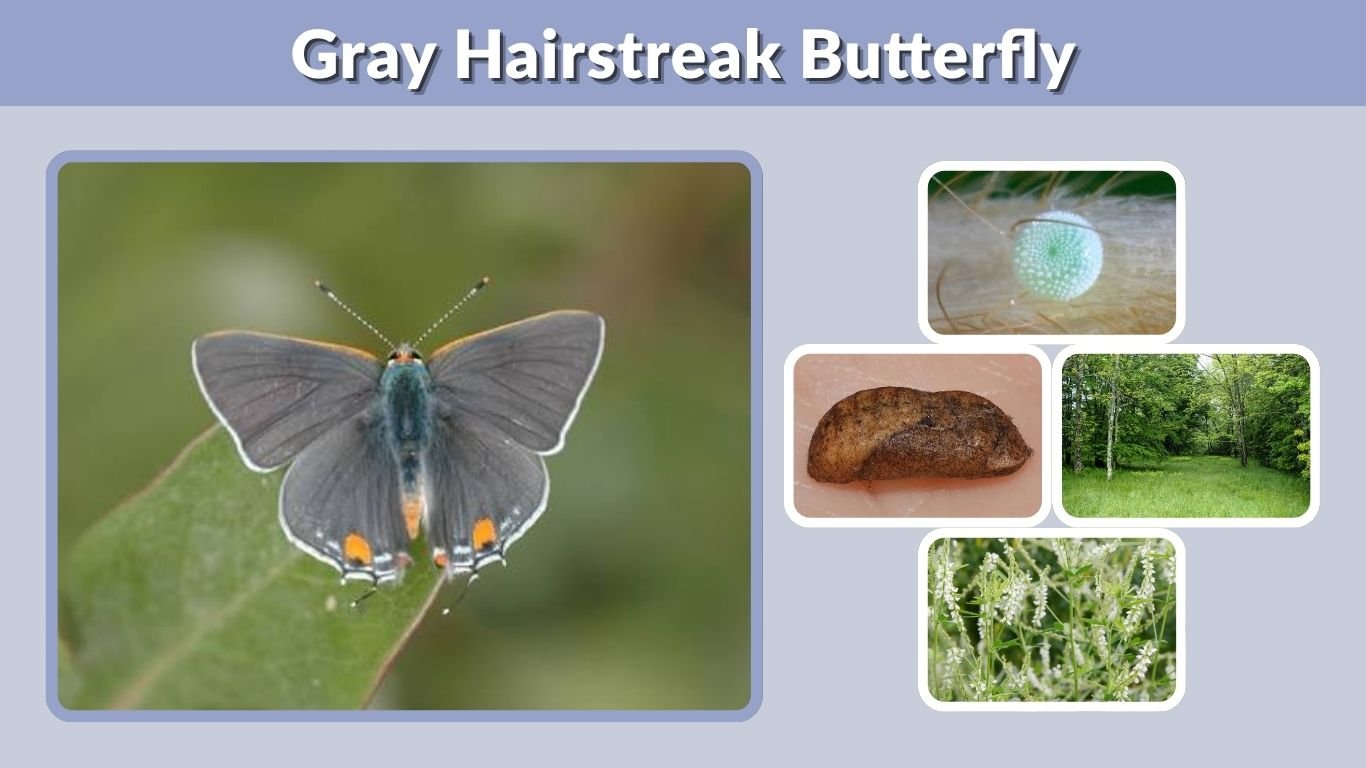
The gray hairstreak butterfly is a small, attractive butterfly recognized for its bluish-gray wings, orange spots, and delicate hairlike tails. Scientifically known as Strymon melinus, this species is widely distributed across North America and commonly visits gardens, grasslands, and flowering fields. Its unusual wing markings help protect it from predators, while its caterpillars feed on various flowering plants. Understanding the gray hairstreak butterfly’s identification, habitat, host plants, life cycle, lifespan, and behavior provides valuable insight into one of North America’s most widespread hairstreak butterflies.
What Is a Gray Hairstreak Butterfly?
The gray hairstreak butterfly (Strymon melinus) belongs to the Lycaenidae family, commonly called the gossamer-winged butterflies. It is one of the most widespread hairstreak species in North America.
This butterfly is relatively small, with bluish-gray upper wings, pale gray undersides, orange spots, and thin tails extending from its hindwings.
Gray Hairstreak Butterfly Identification
- Scientific Name: Strymon melinus
- Common Name: Gray Hairstreak Butterfly
- Family: Lycaenidae
- Subfamily: Theclinae
- Wingspan: 0.9–1.4 inches
- Wing Color: Bluish-gray or slate-gray
- Distinctive Markings: Orange spots and white-bordered dark lines
- Habitat: Grasslands, gardens, fields, and roadsides
- Diet: Flower nectar
- Host Plants: Legumes, mallows, and other flowering plants
- Distribution: North America and parts of Central and South America
One distinguishing feature is the orange-and-black eyespot near the hindwing tails. This marking creates the appearance of a second head, potentially confusing predators.
Gray Hairstreak Butterfly Habitat and Range
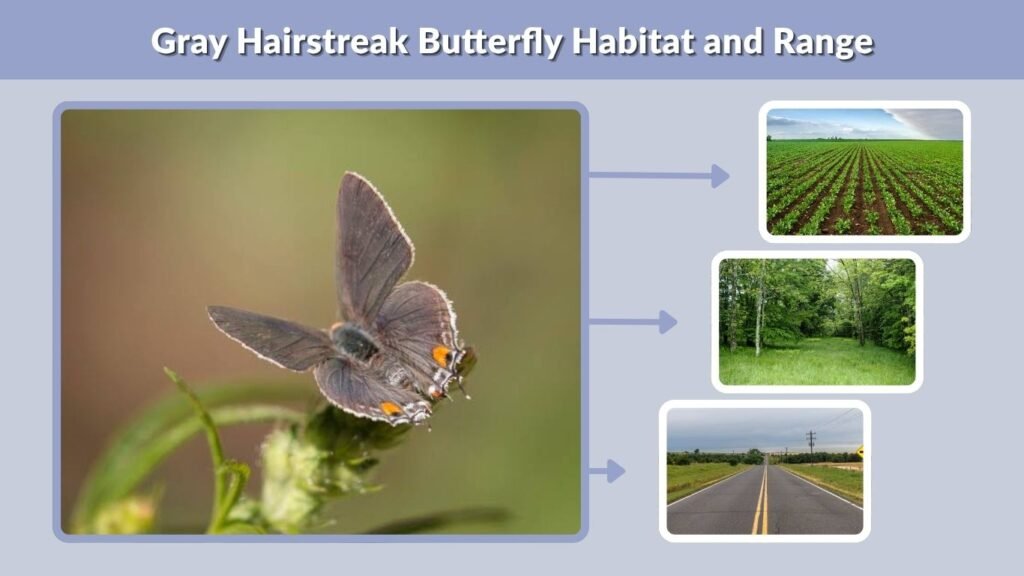
Gray hairstreak butterflies occupy a wide variety of open habitats. They prefer sunny environments containing flowering plants and suitable vegetation for caterpillar development.
Unlike some specialized butterflies, this species adapts well to disturbed environments and gardens.
Where Do Gray Hairstreak Butterflies Live?
Gray hairstreak butterflies occur throughout most of the continental United States, extending from southern Canada through Mexico and farther south into parts of South America.
They are commonly observed in California, Texas, Arizona, Florida, Mississippi, Georgia, North Carolina, and South Carolina.
In North Carolina, they occur throughout the state, including mountain regions. They are also widespread in South Carolina.
Their habitats include abandoned fields, woodland edges, roadsides, prairies, parks, and residential gardens.
Warm southern regions may support several generations annually, while northern populations have shorter active seasons.
Gray Hairstreak Butterfly Caterpillar
Gray hairstreak caterpillars have soft, somewhat flattened bodies that differ considerably from the appearance of adult butterflies.
Their colors vary depending on developmental stage and host plant.
Gray Hairstreak Caterpillar Identification
Mature caterpillars are often green, yellowish, pink, or reddish. Their rounded bodies have short hairs and subtle markings that help them blend into flowers and developing seedpods.
Young caterpillars usually feed on flower buds and reproductive plant structures. As they mature, they may also consume leaves.
Some caterpillars interact with ants, which feed on sugary secretions produced by specialized glands. These interactions may provide protection against certain predators.
Gray Hairstreak Butterfly Host Plants
Gray hairstreak butterflies use an unusually broad variety of host plants. Females typically lay eggs on plants whose flowers and developing fruits provide food for newly hatched caterpillars.
Plants belonging to the pea and mallow families are particularly important.
Common Gray Hairstreak Host Plants
- White Clover: Provides flowers and developing seeds for caterpillars.
- Alfalfa: A commonly used host in agricultural environments.
- Partridge Pea: Supports caterpillar development in native habitats.
- Bush Clover: Offers suitable flowering structures.
- Tick Trefoil: Provides flowers and developing seedpods.
- Common Mallow: A recognized host from the mallow family.
- Cotton: Occasionally supports gray hairstreak larvae.
- Garden Beans: Can serve as host plants in cultivated areas.
Planting suitable native host plants can encourage gray hairstreak butterflies to reproduce in gardens.
What Do Gray Hairstreak Butterflies Eat?
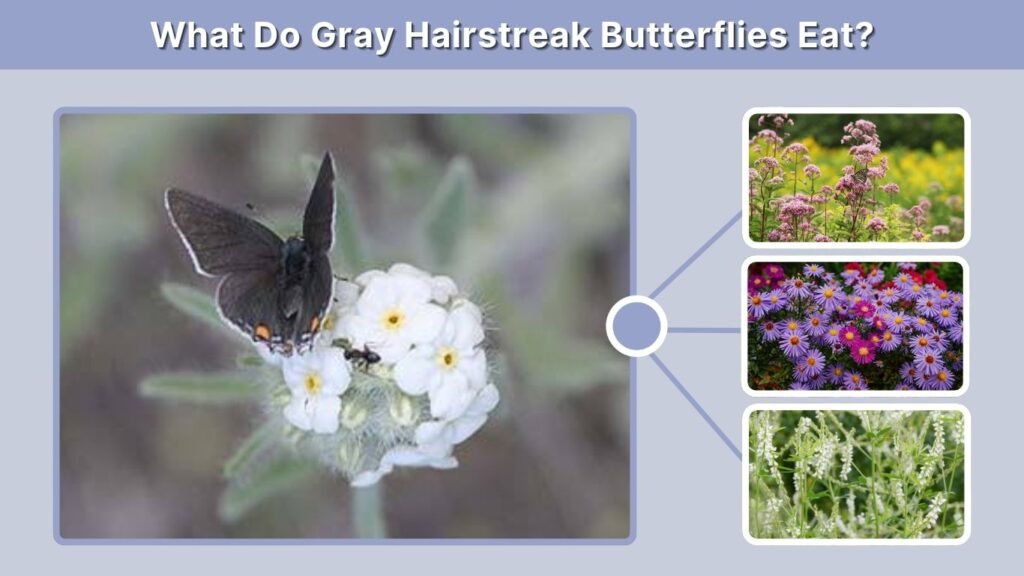
Adult gray hairstreak butterflies primarily consume nectar from flowering plants. They use their long, flexible proboscis to collect nectar while visiting blossoms.
Unlike caterpillars, which consume solid plant material, adults depend mainly on liquid foods for energy.
Common Nectar Sources
- Milkweed: Provides nectar during flowering periods.
- Goldenrod: Offers nectar during late summer and autumn.
- Mountain Mint: Attracts adults to sunny gardens.
- Asters: Supply nectar during seasonal flowering.
- Dogbane: A frequently visited wildflower.
- White Sweet Clover: Provides accessible nectar.
- Blazing Star: Attracts butterflies in open habitats.
Adults frequently move between flowers during warm daylight hours.
These feeding visits may also contribute to pollination, although the butterfly’s effectiveness varies among plant species.
Gray Hairstreak Butterfly Life Cycle
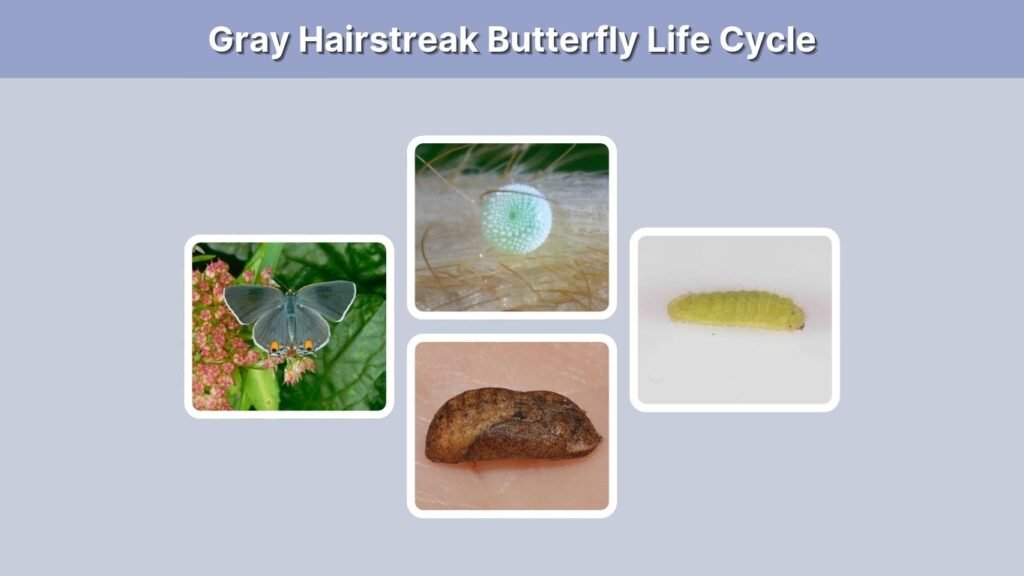
The gray hairstreak butterfly undergoes complete metamorphosis, developing through four distinct stages: egg, caterpillar, chrysalis, and adult.
Development varies with temperature, seasonal conditions, and food availability.
Egg Stage
Female butterflies deposit small, flattened eggs individually on flowers or flower buds of suitable host plants.
The eggs are generally pale green and have finely textured surfaces.
After several days, developing caterpillars emerge and begin feeding.
Caterpillar Stage
Newly hatched caterpillars consume tender flowers and developing fruits.
They grow through several stages, shedding their outer skin as their bodies increase in size.
Chrysalis Stage
Mature caterpillars transform into chrysalises, which are generally brownish with darker markings.
In colder regions, the species can survive winter in the chrysalis stage before adult emergence.
Adult Butterfly Stage
After emerging, adults expand and dry their wings before flying.
They spend their active lives feeding, finding mates, and reproducing.
Multiple generations are possible annually, especially in warmer southern environments.
Gray Hairstreak Butterfly Camouflage and Predators
Gray hairstreak butterflies have an unusual defensive adaptation involving their hindwing tails and colorful eyespots.
The orange-and-black markings near the tails resemble a small head, while the tails can appear similar to antennae.
How Does the False Head Protect Them?
When resting, gray hairstreak butterflies sometimes move their hindwings, causing their delicate tails to wiggle.
This behavior may direct a predator’s attention toward the rear of the wings rather than the actual head.
Birds, spiders, and other insect-eating animals may attack butterflies. If a predator strikes the false head, the butterfly sometimes escapes with damaged wings.
Its muted gray coloration also helps it blend into certain natural backgrounds.
Gray Hairstreak Butterfly Lifespan
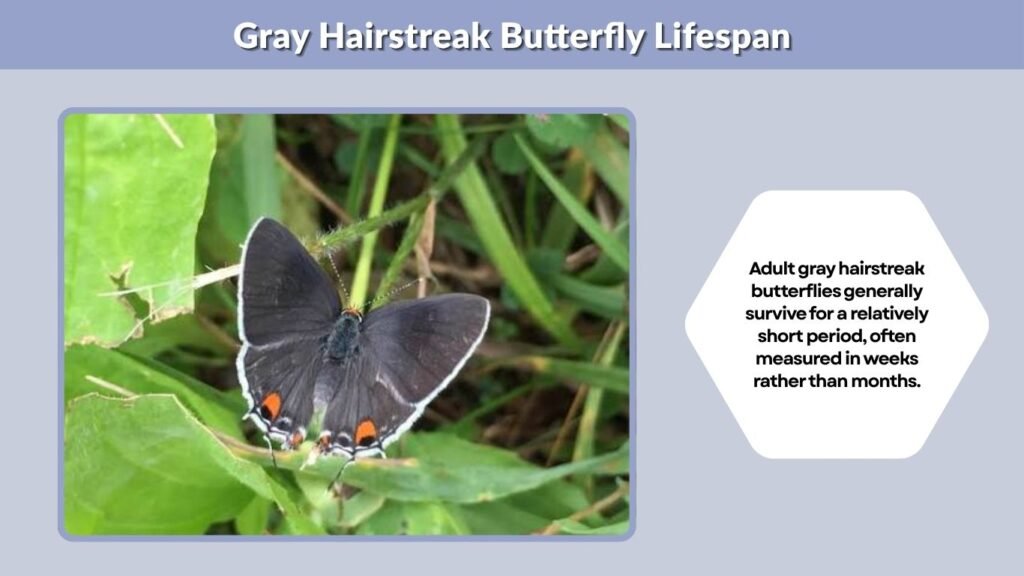
Adult gray hairstreak butterflies generally survive for a relatively short period, often measured in weeks rather than months.
Their exact lifespan depends on weather, food availability, predators, and environmental conditions.
The complete life cycle may extend considerably longer when the chrysalis remains dormant during winter.
In warmer regions, multiple generations can develop throughout the year.
Gray Hairstreak Butterfly Spiritual Meaning
In some personal and cultural interpretations, the gray hairstreak butterfly symbolizes transformation, adaptability, hope, and new beginnings.
Its metamorphosis is often associated with personal growth, while its delicate appearance may represent resilience.
Some people interpret seeing a gray butterfly as a reminder to embrace change or appreciate small moments.
However, these meanings are symbolic interpretations rather than scientifically established characteristics of the species.
How to Attract Gray Hairstreak Butterflies
Gray hairstreak butterflies may visit gardens that provide both nectar-rich flowers and suitable caterpillar host plants.
Creating a butterfly-friendly environment can support feeding, reproduction, and shelter.
Tips for Attracting Gray Hairstreak Butterflies
- Plant native clovers and other suitable host plants.
- Grow nectar-rich flowers such as asters and milkweed.
- Provide sunny, sheltered garden areas.
- Avoid unnecessary insecticide applications.
- Maintain flowering plants across different seasons.
- Leave some natural vegetation undisturbed.
A diverse garden containing both adult nectar sources and caterpillar host plants offers better habitat than one containing flowers alone.
FAQs
1. Are Gray Hairstreak Butterflies Rare?
Gray hairstreak butterflies are generally widespread and relatively common across North America. However, their local abundance varies depending on climate, habitat, and season. They may be uncommon in certain northern regions or locations lacking suitable host plants.
2. How Long Do Gray Hairstreak Butterflies Live?
Adult gray hairstreak butterflies typically live for a few weeks, although their lifespan varies with environmental conditions. Their entire life cycle can last considerably longer, especially when they overwinter in the chrysalis stage before emerging during warmer weather.
3. Are Gray Hairstreak Butterflies Found in Florida?
Yes, gray hairstreak butterflies are common in Florida and can be observed in gardens, parks, roadsides, and open fields. Florida’s warm climate supports several generations annually, allowing adults to remain active through much of the year.
4. What Is the Spiritual Meaning of a Gray Hairstreak Butterfly?
Some people associate the gray hairstreak butterfly with transformation, resilience, renewal, and personal growth. These interpretations often reflect the butterfly’s metamorphosis and delicate appearance. However, spiritual symbolism varies among individuals and cultures and has no established scientific meaning.
5. What Is the Difference Between Male and Female Gray Hairstreak Butterflies?
Male and female gray hairstreak butterflies have similar gray wings and orange hindwing markings. Their external differences are subtle, making sex identification difficult without close examination. Males commonly perch on vegetation while searching for receptive females.