
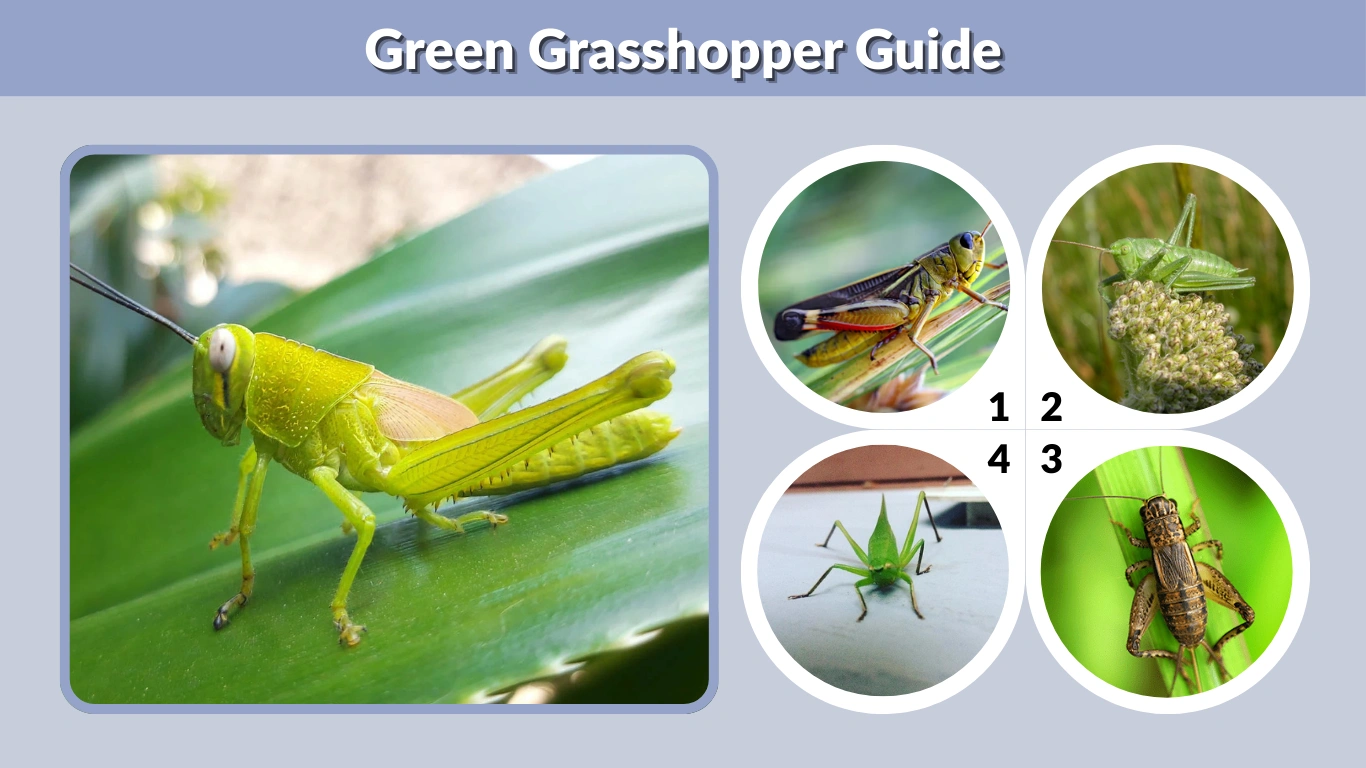
Green grasshoppers appear in fields, gardens, and even indoors, often leading people to wonder about their symbolism, diet, and how to tell them apart from similar green insects. With searches like “green bug that looks like a grasshopper” and “spiritual meaning of green grasshopper,” interest in these vibrant insects is higher than ever. This guide covers species, identification, symbolism, behavior, and the many green imitators people commonly confuse with grasshoppers.
What Is a Green Grasshopper?
Green grasshoppers are a diverse group of insects known for their bright hues and impressive jumping abilities. While many grasshoppers are brown or tan, green species thrive in lush environments where their coloring helps them blend into foliage. Their shade can range from pale leaf-green to deep emerald or even neon tones depending on age, species, and habitat.
Green grasshoppers are often confused with crickets, katydids, or leaf insects—especially when their wings mimic the shape of a leaf. Despite their appearance, they are not locusts, though some large green species may be misidentified as such. Their vibrant color serves primarily as camouflage, helping them avoid predators.
Common Green Grasshopper Species

Understanding the species around you can help with accurate identification. The following are among the most frequently encountered.
Green Species You’re Most Likely to See
- Common Green Grasshopper (Omocestus viridulus): Small to medium, bright green, common in fields.
- Short-Winged Green Grasshopper: Recognizable by its reduced wing size.
- Large Green Bush Cricket: Often mistaken for a grasshopper due to size and color.
- Katydid (Leaf Grasshopper): Leaf-like wings, extremely convincing camouflage.
- Giant Green Grasshopper: Thick-bodied, can appear intimidating but usually harmless.
Quick Identification Table
| Species | Size | Key Features | Look-Alikes |
| Common Green Grasshopper | Small–medium | Bright green body | Other green field species |
| Katydid | Large | Leaf-shaped wings, long antennae | Leaf insects |
| Short-Winged Grasshopper | Small | Short wings | Young nymphs |
| Giant Grasshopper | Large | Heavy body, strong legs | Locusts |
Green Grasshopper Identification Guide

Identifying a green grasshopper involves looking at color, wings, size, and distinctive features. Many species vary widely, especially juveniles, which can be lighter or more neon-like compared to adults.
Color Patterns
Green grasshoppers can appear:
- Solid bright green
- Lime or neon green
- Green with black markings
- Pale or light green
- Striped green
These tone differences help determine species and age.
Wing Types
Grasshoppers may have:
- Fully developed long wings (capable of sustained flight)
- Short wings (limited flight, mostly jumping)
- No wings if they are early-stage nymphs
Key Features to Examine
- Body thickness: Thin-bodied species often belong to katydid groups.
- Ovipositor (misidentified as a stinger): Found only on females and harmless.
- Eye color: Some species have striking red or brown eyes.
- Ability to fly: Not all green grasshoppers take off readily.
Green Bugs That Look Like Grasshoppers
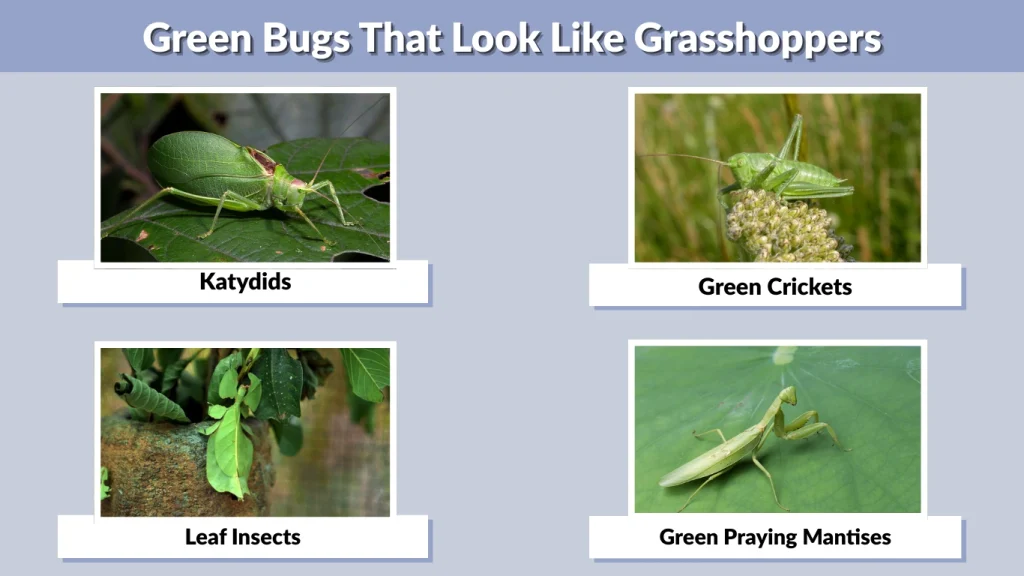
Many insects resemble grasshoppers due to their green coloration and jumping legs, but they differ in body shape, wing texture, and antenna length.
Insects Commonly Confused with Grasshoppers
- Katydids: Large, leaf-shaped, long antennae.
- Green Crickets: Slender-bodied with long antennae.
- Leaf Insects: Strong leaf mimicry with veined wings.
- Green Praying Mantises: Slender, upright stance.
- Leafhoppers: Tiny, wedge-shaped jumping insects.
How to Tell Them Apart
- Antenna length: Grasshoppers have short antennae; crickets and katydids have long ones.
- Wing texture: Katydid wings look like leaves.
- Body shape: Mantises are narrow; grasshoppers are stout.
- Sound production: Crickets and katydids chirp at night; grasshoppers typically during the day.
Large and Giant Green Grasshoppers
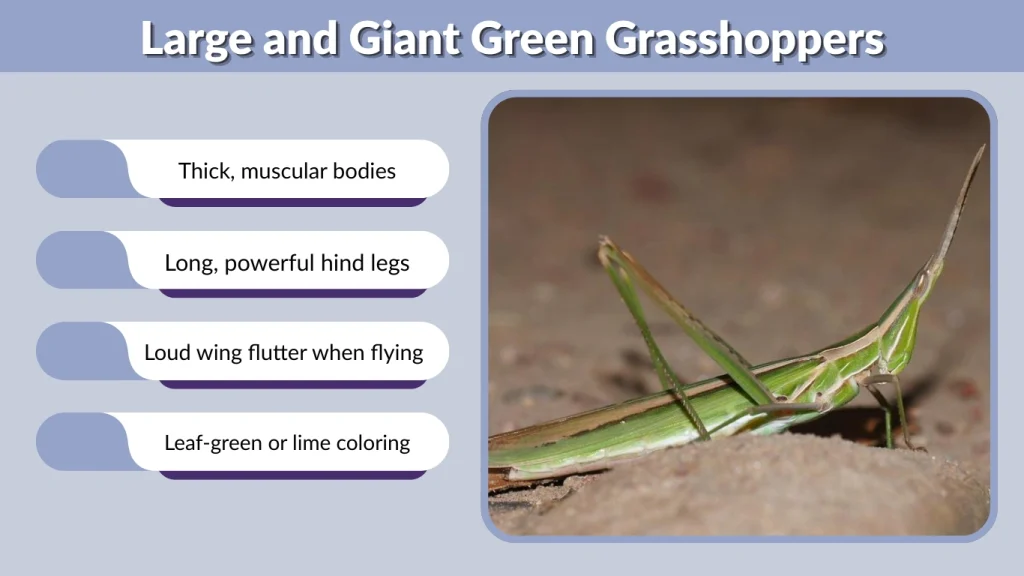
Large green grasshoppers attract attention due to their size and bright coloration. Though they look intimidating, they are typically harmless.
Large species often have:
- Thick, muscular bodies
- Long, powerful hind legs
- Loud wing flutter when flying
- Leaf-green or lime coloring
Some people report sightings of “green grasshoppers with stingers”—these are usually females with an ovipositor. Despite its sharp appearance, it’s used only for laying eggs and cannot sting or harm humans.
Tiny Green Grasshoppers and Nymphs
Not all green grasshoppers are adults. Many tiny, bright green insects in gardens are nymphs—young grasshoppers that undergo multiple molts before maturing.
Characteristics of Nymphs
- Wingless or with tiny wing buds
- Very bright or neon green
- Fast jumpers but unable to fly
- Common on leaves, stems, and flower beds
These small hoppers can sometimes cause minor plant damage due to their high appetite during growth stages.
Green Grasshoppers in Homes & Gardens

Seeing a grasshopper indoors or around plants is common, especially during warmer months.
Why They Enter Homes
- Light attraction during the night
- Seeking warmth or shelter
- Accidental entry through open doors and windows
What Green Grasshoppers Eat
Grasshoppers prefer:
- Grass blades
- Soft leaves
- Crops and garden plants
- Certain flowers
Their diet is strictly plant-based, and consumption increases during warmer weather.
Spiritual Meaning of Seeing a Green Grasshopper
Spiritual interpretations vary across cultures, but green grasshoppers are frequently linked with messages of growth and transformation.
Symbolism Breakdown
- Renewal: Green represents rebirth and fresh energy.
- Opportunity: Grasshoppers symbolize taking leaps forward.
- Abundance: Their presence is often seen as a sign of good fortune.
- Personal growth: Particularly if one enters your home unexpectedly.
Cultural Interpretations
Different traditions associate grasshoppers with intuition, creativity, and forward momentum. In some cultures, a green grasshopper is believed to be a positive omen indicating that new opportunities are emerging.
Green Grasshopper vs Cricket vs Katydid
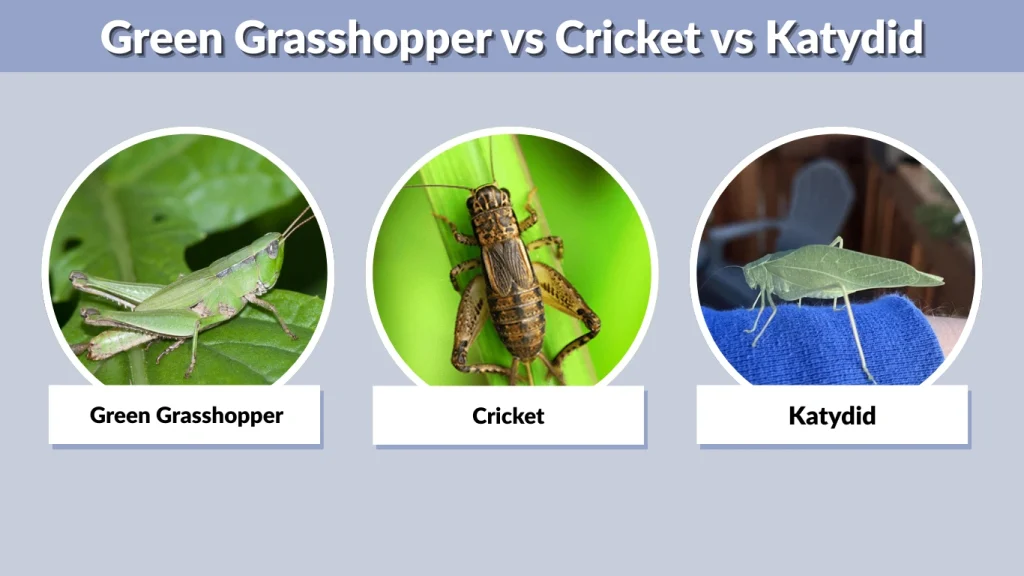
Many people confuse green grasshoppers with crickets and katydids, but these insects have distinct differences in shape, sound, and behavior. Grasshoppers typically have short antennae and are active during the day, while katydids and crickets possess long antennae and are more active at night. Color can overlap across all three groups, but body structure offers the strongest clues.
Key Differences
Grasshoppers tend to have a stout body, prominent hind legs, and strong jumping ability. Crickets are slimmer, with long antennae nearly as long as their bodies. Katydids resemble leaves, with broad, veined wings that provide excellent camouflage. While grasshoppers chirp during daylight by rubbing their hind legs on their wings, katydids and crickets usually produce their songs at night.
Quick Comparison Table
| Feature | Grasshopper | Cricket | Katydid |
| Antennae | Short | Long | Very long |
| Color | Brown, green | Brown, black, green | Bright leaf-green |
| Sound | Daytime chirping | Nighttime chirping | Nighttime rasping |
| Shape | Thick and stout | Thin and small | Leaf-shaped body |
| Wings | Short or long | Long | Long, leaf-like |
Green Grasshopper Behavior
Green grasshoppers display a range of behaviors linked to survival, feeding, and reproduction. Their day-active patterns make them easier to spot than nocturnal insects, and they rely heavily on their jumping ability to escape predators. Some species can fly well, while others prefer to hop long distances using powerful hind legs.
Flying and Jumping
Grasshoppers are known for their powerful jumps, often reaching many times their body length. Larger species can fly considerable distances, producing an audible flutter as they take off. Their flight behavior varies—some glide short distances, while others have fully powered flight.
Mating and Ovipositors (“Stingers”)
The pointed structure seen on female grasshoppers is an ovipositor, not a stinger. It’s used to deposit eggs into soil or plant stems. While intimidating in appearance, it is harmless to humans. Males use clicking sounds or vibrations to attract mates depending on their species.
Green Grasshopper Drinks & Cocktails
Not all “green grasshopper” searches refer to insects—many refer to a classic minty cocktail. The Grasshopper drink is a sweet, green, dessert-like cocktail that has been popular since the mid-20th century.
Classic Green Grasshopper Cocktail
Traditional ingredients include:
- 1 part green crème de menthe
- 1 part crème de cacao
- 1 part cream
Shaken with ice and served in a chilled glass, it delivers a cool, mint-chocolate flavor. Variations of the drink include frozen versions, chocolate-enhanced mixes, and lighter, non-alcoholic recipes that use mint syrup instead.
Green Grasshopper Drink Variants
- Frozen Grasshopper: Blended with ice cream for a dessert cocktail.
- Light Grasshopper: Mint syrup with milk or cream for a non-alcoholic option.
- Mint-Choco Twist: Adds shaved chocolate or cocoa powder.
Green Grasshopper in Pop Culture
Green grasshoppers appear frequently in animation, children’s media, and illustrations due to their bright, friendly appearance. Many preschool materials show grasshoppers in simplified cartoon form, emphasizing their hopping movement and cheerful color. They also appear in storybooks, art, and educational graphics designed to teach children about insects.
These cartoon versions often exaggerate features like large eyes, smiling faces, and long legs, making them a common symbol of nature and playfulness in early education content.
FAQs
What does it mean when you see a green grasshopper?
Seeing a green grasshopper is often interpreted spiritually as a sign of growth, opportunity, and renewal. Its green color symbolizes abundance and balance, while the grasshopper itself represents bold movement forward. Many believe it appears during transitions to encourage courage and intuitive decision-making.
Are green grasshoppers dangerous or do they bite?
Green grasshoppers are not dangerous. Although large species may pinch if handled roughly, they rarely bite and lack venom. Their primary instinct is to escape rather than attack. Even those with sharp-looking ovipositors pose no threat, as these structures are used only for laying eggs.
Why do green grasshoppers sometimes look like leaves?
If a green grasshopper looks exactly like a leaf, it is almost always a katydid. These insects evolved leaf-shaped wings with veins and natural curves to avoid predators. Their camouflage is so effective that they blend seamlessly into foliage, often fooling both humans and animals.
What do green grasshoppers eat?
Green grasshoppers mainly eat plant material such as grasses, soft leaves, flowering plants, and crops. They prefer tender vegetation and consume more food during warm months. Nymphs eat significantly more than adults due to their rapid growth and multiple molting stages.
What insect looks like a giant green grasshopper with a stinger?
This is typically a female katydid or bush cricket. The “stinger” is actually an ovipositor used for laying eggs. Although it looks sharp, it cannot sting or injure people. These insects are often mistaken for giant grasshoppers because of their size, shape, and long hind legs.
