

Lubber grasshoppers are among the most recognizable insects in the southeastern United States, especially in Florida where their populations can surge dramatically during warm seasons. Known for their large size, vivid colors, and slow-moving behavior, these grasshoppers often surprise homeowners with both their appearance and the damage they leave behind. Although they seem harmless at first glance, lubber grasshoppers can quickly defoliate garden plants, resist many predators, and cause recurring outbreaks year after year.
Their most well-known species, the Eastern Lubber Grasshopper, stands out not only for its size but also for its bright coloration and unusual defensive tactics. Because of this, many homeowners ask whether these insects are poisonous, dangerous, or invasive—and most importantly, how to get rid of them. This guide explains everything from identification and biology to safe control methods.
What Are Lubber Grasshoppers?

Lubber grasshoppers are large, flightless insects within the family Romaleidae. Their name “lubber” likely comes from an old English term meaning clumsy or lazy, which accurately reflects their slow movement compared to typical grasshoppers. While they cannot fly, their size, bright coloration, and ability to secrete toxic foam make them surprisingly successful in nature.
They include several species across North America, but the most widespread and problematic is the Eastern Lubber Grasshopper, dominant throughout the southeastern states. Other species—such as the Southern Lubber, Plains Lubber, and Western Horse Lubber—are present in more limited regions.
Common identifying traits include:
- Thick, sturdy bodies
- Limited jumping ability
- Bright color patterns (yellow, orange, red, black)
- Defensive chemical spray
- Slow walking movement instead of typical grasshopper leaps
Eastern Lubber Grasshopper Overview
The Eastern Lubber Grasshopper is the most recognizable member of the group. Adults typically measure between 2 to 3 inches, making them one of the largest grasshoppers in North America. They are easily identified by their colorful bodies—often yellow or orange with black outlines, though some populations appear mostly black with red accents.
Their wings are underdeveloped and unable to support flight. Instead, these wings function primarily as warning displays to deter predators. Eastern lubbers thrive in humid, warm regions and are especially abundant in Florida, Georgia, Alabama, Mississippi, and parts of the Carolinas.
Lubber Grasshopper Identification Guide

Adult vs Nymph Differences
Understanding the difference between nymph and adult stages is crucial because control is most effective during the early nymph phase.
Nymphs
- Jet-black or dark brown
- Often clustered in large groups
- Wingless
- Small but destructive feeders
- More susceptible to insecticides
Adults
- Large, brightly colored, and slow
- Short or nonfunctional wings
- More resistant to chemicals
- Spread out individually rather than clustering
Many homeowners mistake black nymphs for a different species altogether, but these young grasshoppers are simply an early stage of the Eastern Lubber. Recognizing them early helps prevent massive adult infestations later in the season.
Male vs Female Lubbers
Male and female Eastern Lubbers are similar in appearance, but there are notable differences:
- Females are significantly larger, often reaching 3 inches or more.
- Males are thinner and more active.
- Females have a more prominent abdominal tip used for laying eggs.
Understanding this distinction can help gauge how quickly a local population may expand.
Life Cycle of the Lubber Grasshopper

Lubber grasshoppers have a predictable life cycle that plays out annually across much of the Southeast. Their life stages include:
- Eggs – Deposited in clusters called egg pods, typically in sunny soil areas.
- Nymphs – Hatch in spring; black-bodied and wingless.
- Adults – Mature by late spring or early summer.
- Reproduction – Mating and egg-laying occur through summer and early fall.
The entire cycle takes about one year, with eggs overwintering until warm temperatures return.
Eastern Lubber Life Cycle Specifics
In Florida, Eastern Lubbers begin hatching earlier due to consistently warm weather. Nymphs may emerge as early as February, giving them more time to grow into large adults by mid-summer. In states further north, hatching typically begins around April or May.
Adult Eastern Lubbers often live several months, feeding heavily during this time and depositing dozens of eggs in multiple pods. Since these pods survive winter, annual outbreaks are common in warm climates.
Habitat and Distribution

Lubber grasshoppers prefer warm, humid environments with abundant vegetation. They thrive in open fields, gardens, roadside areas, and forest edges. Their slow-moving nature means they don’t migrate far, but they reproduce in large numbers and can dominate regional landscapes.
Their distribution includes:
- Florida (highest population density)
- Georgia
- Alabama
- Mississippi
- Louisiana
- Eastern Texas
- Southern Carolinas
Eastern Lubber Habitat
Eastern Lubbers perform best in:
- Moist soil with nearby sun exposure
- Dense vegetation or ornamental gardens
- Overgrown yards or unmanaged fields
- Areas without many natural predators
Because they are poor fliers and weak jumpers, they remain localized, but their numbers can overwhelm gardens when conditions are favorable.
Diet – What Lubber Grasshoppers Eat
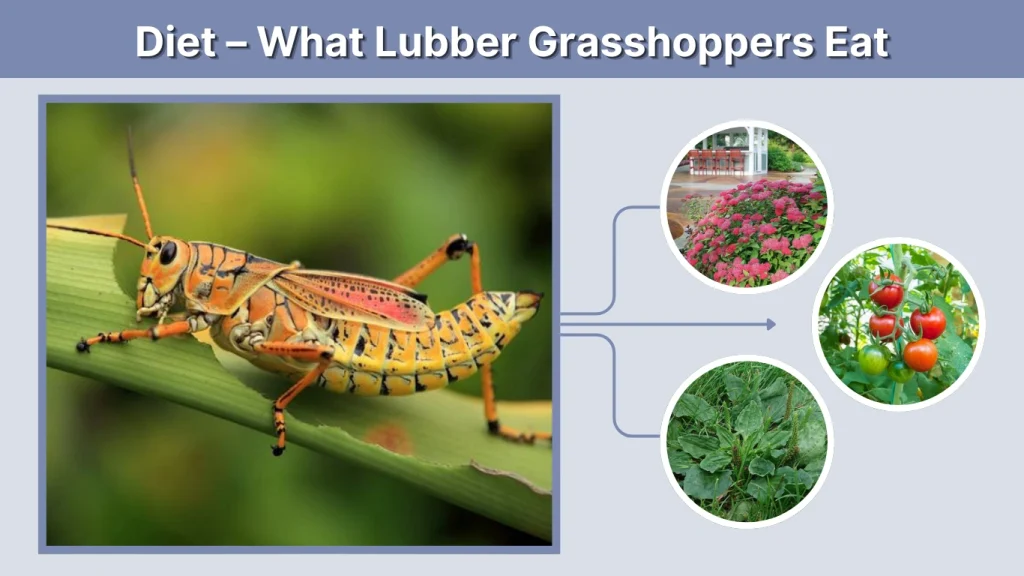
Lubber grasshoppers are generalist feeders, meaning they consume a wide range of vegetation. Their feeding style is slow but relentless, often stripping plants leaf by leaf rather than consuming entire stems. Because they move slowly, they spend long periods on the same host plant, causing concentrated damage.
Their preferred foods include:
- Ornamental shrubs
- Tender new growth
- Vegetables such as tomatoes, lettuce, and beans
- Broadleaf plants
- Wildflowers and native plants
Although lubbers are not the fastest eaters, their size—and the fact that several may gather on one plant—means the damage can accumulate quickly.
Eastern Lubber Diet Variations
Eastern Lubbers in Florida and the Southeast often show preferences based on available vegetation. Some of their common targets include:
- Crinum and amaryllis
- Lantana
- Citrus leaves
- Hibiscus
- Oleander
Interestingly, they tend to avoid many grasses and some aromatic herbs like rosemary or lavender. However, when populations spike, they may feed on nearly any available plant.
Toxicity, Safety & Myths
One of the most common questions homeowners ask is whether lubber grasshoppers are poisonous. The short answer is yes—lubber grasshoppers contain toxins that can make them unpalatable or even harmful to predators. Their bright coloration and defensive posture act as warnings, similar to other toxic insects in nature.
Lubbers do not inject venom, but they can produce:
- Foamy toxic secretions
- Noxious smells
- Irritating chemicals that deter predators
These defenses make them troublesome for pets and wildlife.
Are They Dangerous to Pets?
While most encounters are harmless, lubber grasshoppers can cause gastrointestinal irritation if eaten by pets. Dogs and cats may vomit or show mild discomfort after consuming one. Smaller pets, such as reptiles, are at greater risk due to their size.
For chickens:
Most chickens instinctively avoid lubbers because of their taste and chemical defenses, though some may try to eat them. Reactions vary, but lubbers are generally not recommended as feed.
For bearded dragons:
Lubbers should never be fed to reptiles. Their toxins can cause illness and digestive problems.
Do Lubber Grasshoppers Bite?
Lubbers rarely bite. They do not aggressively attack humans, and their mouthparts are not strong enough to cause significant injury.
However, they may nip if handled roughly. The sensation is minor—more of a pinch than a true bite. Their defensive foam is far more concerning than their jaws.
Are Lubber Grasshoppers Invasive?

Lubber grasshoppers are native to the southeastern United States, so they are not considered invasive in their home range. However, in places like Florida, their populations can grow so rapidly that they behave as nuisance pests with invasive-like impacts.
Why populations surge:
- Warm, humid climate
- Urban landscaping provides abundant food
- Reduced predators due to their toxicity
- Mild winters allow egg pods to survive
Because of these factors, Florida often experiences large outbreaks that overwhelm gardens and ornamental landscapes.
Predators of Lubber Grasshoppers
Lubber grasshoppers have few natural enemies because of their chemical defenses. Still, some predators occasionally feed on them, particularly younger nymphs that have not developed full toxins.
Common predators include:
- Loggerhead shrikes
- Large birds such as crows
- Robber flies
- Certain spiders
- Opossums and raccoons (rarely)
Most predators avoid outright consumption and may only kill lubbers without eating them. This imbalance helps the insects grow to high densities.
Damage Caused by Lubber Grasshoppers

Lubbers are selective yet destructive feeders. They can devastate gardens quickly, especially when nymphs travel in groups.
Common signs of damage include:
- Ragged leaf edges
- Holes in foliage
- Defoliated stems
- Clusters of black nymphs on a single plant
- Skeletonized leaves
- Drooping or weakened plants
Plants with tender foliage suffer the most, such as lilies, hibiscus, basil, and tomatoes. During peak summer months, one cluster of nymphs can strip multiple plants in just a few days.
Control Methods – How to Get Rid of Lubber Grasshoppers
Controlling lubbers requires an early, consistent strategy. Because adults are resistant to many sprays and grow too large to kill easily, it’s best to target them while still in the nymph stage.
Organic and Manual Control
Natural options are safe and effective when applied early:
- Hand-picking: Wear gloves and drop lubbers into soapy water.
- Egg removal: Look for buried egg pods in loose, sunny soil.
- Garden cleanup: Remove weeds and tall grass where nymphs hide.
- Natural repellents: Neem oil or garlic-based sprays deter feeding.
- Barrier methods: Fine netting around vulnerable plants.
These methods work best for small gardens or low population levels.
Chemical / Insecticide Options
Chemical control is effective but must be used responsibly. Insecticides work best on young nymphs, as adults resist many chemicals due to their tough exoskeleton and size.
Effective products include:
- Carbaryl (Sevin)
- Bifenthrin
- Permethrin
- Cyfluthrin
Always follow label instructions and avoid spraying on windy days to protect beneficial insects.
Integrated Pest Management Plan
The best strategy uses a multi-step seasonal approach:
- Early Spring: Identify and eliminate nymph clusters.
- Late Spring: Apply insecticides if populations remain high.
- Summer: Hand-remove adults and protect plants with barriers.
- Fall: Remove egg-laying sites and clear debris.
Long-term prevention depends on staying ahead of early hatchlings, as later control becomes significantly more difficult.
Special Questions Homeowners Ask
Can You Eat Lubber Grasshoppers?
Although some grasshopper species are edible, lubber grasshoppers are not safe to consume due to their toxic compounds.
Can Chickens or Bearded Dragons Eat Them?
Chickens may sample them but often spit them out. Bearded dragons and reptiles should never be fed lubbers due to toxicity.
Can Lubber Grasshoppers Fly?
No—despite having wings, Eastern Lubbers cannot fly. Their wings are too small to support flight.
Are They the Same as Locusts?
No. Lubbers are not locusts, do not swarm in masses, and belong to a different insect family.
Quick Facts About Lubber Grasshoppers
- Adult size: 2–3+ inches
- Nymph color: black
- Flight ability: none
- Danger to pets: mild to moderate if eaten
- Habitat: warm, moist Southeastern regions
- Diet: broadleaf plants and garden ornamentals
- Lifespan: one-year cycle
FAQs
Are lubber grasshoppers poisonous?
Yes. They produce toxic foam and chemical defenses that deter predators and can upset pets’ stomachs.
How do you get rid of lubber grasshoppers naturally?
Hand-picking, removing egg pods, garden cleanup, and using natural repellents work well in early stages.
Are lubber grasshoppers dangerous to pets?
They can cause vomiting or irritation if eaten but are rarely dangerous.
Do Eastern Lubber Grasshoppers bite?
They may pinch when handled, but bites are rare and harmless.
Are lubber grasshoppers invasive in Florida?
They are native but behave like invasive pests due to large population spikes.
