

Fireflies, also known as lightning bugs, are among the most enchanting insects in the world. Their glowing flashes light up warm summer nights, creating a magical display that fascinates both children and adults. But despite their beauty, many people are surprised to learn that fireflies don’t live very long—at least not in their adult form. Their total lifespan, however, is much longer and more complex than most people realize.
Understanding how long fireflies live requires looking at their entire life cycle, from egg to larva to adult. Their lifespan can also vary depending on whether they live in the wild, underground, or in captivity. This guide explains each stage in detail and answers the most common questions about firefly longevity.
How Long Do Fireflies Live Overall?

Fireflies don’t live just a few days, as commonly believed. Their total lifespan is typically 1–2 years, but almost all of that time is spent in the larval stage. The glowing adults we see in summer live just long enough to mate and lay eggs.
Adult fireflies usually survive 2–8 weeks, depending on species, climate, and food availability. Because people only see them during this adult phase, many assume fireflies only live for a few days.
Why Their Lifespan Seems Short
Fireflies seem short-lived because:
- Adults appear only in late spring and summer
- Their nighttime glow makes them briefly noticeable
- Many species have adults that do not feed
- The adult’s main mission is reproduction
Their short adult lifespan is a natural part of their biology—not a sign of population decline.
Firefly Life Cycle Breakdown

To understand firefly lifespan, it’s important to explore their development through four major stages: egg, larva, pupa, and adult. Each stage lasts a different amount of time.
Egg Stage
Firefly eggs hatch in 3–4 weeks. Females lay their eggs in moist soil, leaf litter, or under decaying wood. Some species have eggs that emit a faint glow—a defense mechanism to deter predators like ants and beetles.
Most of a firefly’s survival depends on the safety of this early stage.
Larva Stage (Glowworms)
The larval stage is the longest and most important part of a firefly’s life. Larvae live for:
- 6–12 months on average
- Up to 18 months in colder climates
During this stage, fireflies:
- Live underground or in moist leaf litter
- Glow more consistently than adults
- Hunt snails, worms, and slugs
- Store energy for adulthood
Larvae glow to signal toxicity and warn predators not to eat them. Because they spend nearly a year hidden underground, most people never notice this stage.
Pupa Stage
Fireflies pupate for 10–14 days. During this time, they undergo metamorphosis from a worm-like larva into a winged adult.
The pupa may still glow faintly, but it does not move or feed. This is one of the most vulnerable periods of the firefly life cycle.
Adult Stage
Once they emerge as adults, fireflies live:
- 2–4 weeks on average
- Up to 8 weeks for some species
Adults focus almost entirely on reproduction:
- Males fly and flash to attract females
- Females wait on vegetation and respond with timed flashes
- Both sexes glow in unique patterns
Once mating and egg-laying are complete, adults naturally decline and die.
How Long Do Adult Fireflies Live?
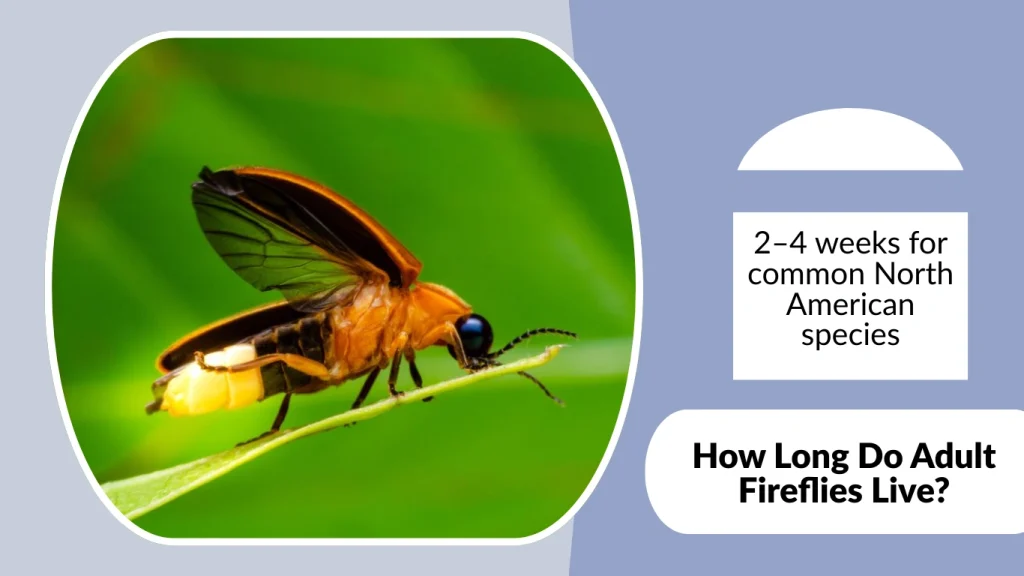
Adult fireflies have the shortest lifespan of any stage. Their typical life expectancy depends on environmental conditions such as heat, humidity, food availability, and light pollution.
Typical Adult Lifespan
Most adult fireflies live:
- 2–4 weeks for common North American species
- Up to 6–8 weeks in cooler, wetter areas
In hot states like Georgia or Florida, adults may live slightly longer because warm nights allow extended mating activity.
Why Adults Have Short Lives
Adult fireflies don’t last long because:
- Their biological purpose is to reproduce
- Flashing consumes energy
- Most species hardly eat as adults
- Predation increases during mating flights
- Artificial lights disrupt mating behavior
Their glowing signals also attract predators, shortening their lives further.
Do Adult Fireflies Eat?
Surprisingly, many adult firefly species don’t eat at all. They rely on stored energy from the larval stage. However, some species do feed on:
- Nectar
- Pollen
- Mites
- Other insects (especially predatory Photuris females)
Fireflies that feed may live somewhat longer than those that don’t.
How Long Do Fireflies Live in Different Situations?

Firefly lifespan also changes depending on whether they’re in the wild, underground as larvae, or kept in captivity.
In the Wild
In natural environments:
- Larvae live up to 12 months
- Adults live 2–8 weeks
- Total lifespan: 1–2 years
The wild provides ideal humidity and natural prey for larvae, contributing to longer survival.
Underground (Larval Stage)
Larvae spend nearly their entire first year underground, where they:
- Hunt prey
- Glow to communicate danger
- Survive winter in colder climates
This underground life stage accounts for most of their lifespan.
In Captivity
Fireflies kept in captivity rarely survive long due to:
- Low oxygen
- Excess heat
- Lack of food
- High stress
Most adults live only 1–2 days when trapped indoors or kept in jars.
How Long Do Fireflies Live in a Jar?

Many people catch fireflies in jars to observe their light. However, jars create an unnatural environment that significantly shortens their lifespan.
Typical Lifespan in a Jar
Most fireflies live only:
- A few hours to
- 1–2 days at most
This short lifespan has nothing to do with cruelty—fireflies simply cannot survive long in enclosed spaces because they were never meant for captivity.
Why They Die Quickly in Jars
Several biological factors cause rapid decline:
- Low oxygen: jars restrict airflow needed for glowing
- Heat buildup: glass traps heat and dehydrates adults
- Stress: captured fireflies waste energy trying to escape
- No natural food sources: adults that eat cannot find nectar or prey
- Disrupted mating cycles: stress reduces their lifespan
Even with holes in the lid, jars cannot mimic outdoor conditions.
Why Fireflies Stop Glowing in Containers
When a firefly stops glowing inside a jar, it’s usually because:
- Oxygen levels drop
- Temperature becomes too hot or dry
- The insect becomes exhausted
- Stress interferes with flashing nerves
This is why experts recommend observing fireflies briefly and releasing them quickly.
How Long Do Fireflies Live Without Food?

Firefly lifespan depends heavily on whether they feed as adults.
Adult Fireflies
Many adult fireflies do not eat at all. They survive on fat stored during their lengthy larval stage. These adults can live:
- Up to 3 weeks without food
- Sometimes longer if humidity is high
For species that drink nectar or eat small insects, food scarcity may shorten their lifespan.
Larvae and Pupae
Larvae require constant access to prey, including:
- Snails
- Slugs
- Small worms
- Soft-bodied insects
If larvae cannot find food, they may die within days or weeks, long before becoming adults.
Pupae do not eat—they rely entirely on energy stored as larvae.
Firefly Squid Note
Firefly squid (a marine species unrelated to fireflies) live:
- About 1 year, dying shortly after spawning
Their diet and lifespan differ greatly from glowing insects.
Lifespan Differences by Location & Species
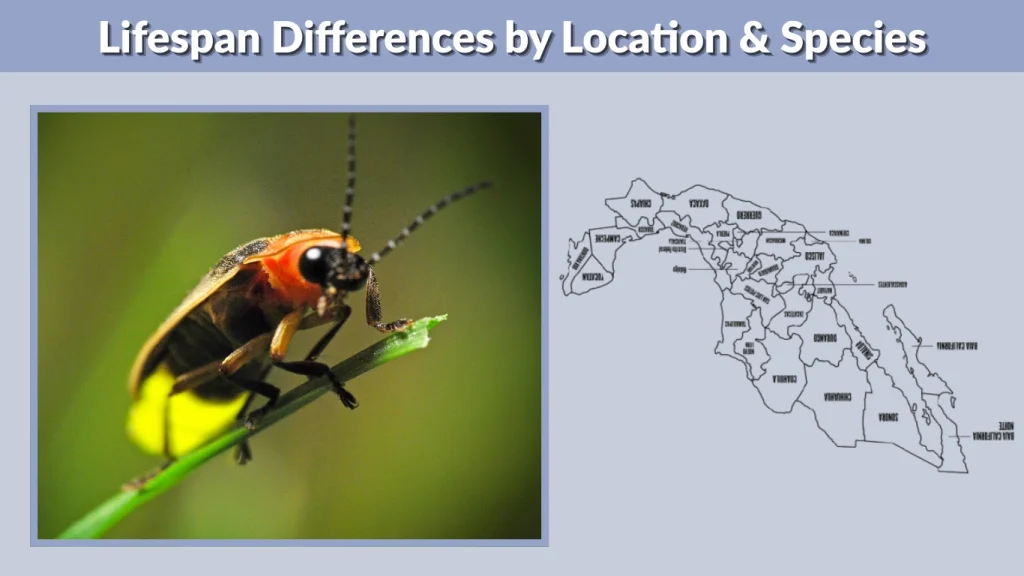
Not all fireflies live the same amount of time. Climate and species shape their longevity.
Fireflies in Georgia
In Georgia’s warm, humid climate:
- Adults may live 3–6 weeks
- Nights stay warm enough for extended mating
- Larvae survive well due to moist soil and abundant prey
Warm summers can slightly lengthen the adult stage, making fireflies more active for longer periods.
Species Variations
Different firefly species have unique lifespans:
- Photinus (common U.S. species): 2–4 week adults
- Photuris (“femme fatale” species): up to 8 weeks
- Synchronous fireflies (Great Smoky Mountains): short-lived adults with brief annual appearance
- Japanese fireflies (Luciola): adults live slightly longer due to humid environments
Larval lifespan also varies—predatory larvae tend to live longer because their diet is protein-rich.
Factors Affecting Firefly Lifespan
Fireflies are sensitive insects, and their survival depends on environmental conditions.
Temperature
- High heat shortens adult lifespan
- Too much heat dries out larvae
- Mild, humid nights extend adult activity
Humidity & Moisture
Larvae need moist soil or leaf litter to hunt. Dry environments dramatically reduce firefly populations.
Predators
Common predators include:
- Birds
- Frogs
- Spiders
- Other fireflies (Photuris females eat males of other species)
Predation is especially high during mating flights when fireflies glow more frequently.
Habitat Loss
The biggest modern threat:
- Removal of leaf litter
- Over-mowed lawns
- Loss of wooded or moist areas
- Paving over soil where larvae hunt
Pesticides & Chemicals
Pesticides kill both adults and larvae. Lawn treatments, even organic ones, reduce prey for larvae and poison soil.
Light Pollution
Artificial lights confuse adults, preventing them from finding mates, reducing breeding success, and shortening lifespan.
How to Help Fireflies Live Longer
Simple changes in your yard or environment can support firefly populations.
Improve Their Habitat
- Leave some leaf litter
- Keep a corner of your yard wild
- Add logs or moist areas
- Plant native vegetation
- Avoid over-mowing during firefly season
These small changes create ideal hunting grounds for larvae.
Reduce Artificial Lighting
Fireflies depend on darkness to signal each other. Reduce light by:
- Turning off porch and yard lights
- Installing motion sensors
- Using warm-colored lights that don’t mimic firefly signals
Dark yards glow brighter with lightning bugs.
Avoid Pesticides
Chemical-free yards support both larvae and adult fireflies. Healthy soil and natural prey help larvae survive through their long underground stage.
FAQs
How long do fireflies glow before dying?
They glow throughout adulthood, but flashing slows as they age, experience stress, or run low on oxygen.
Do fireflies die after mating?
Most males die soon after mating. Females die after laying eggs.
Why do fireflies disappear so quickly each summer?
Adults live only a few weeks. Different species appear at different times throughout summer.
Do firefly larvae glow their entire life?
Yes. Larvae glow for defense, communication, and signaling danger.
Can fireflies be kept as pets?
No. Fireflies cannot survive in captivity and often die within 1–2 days. They should always be released quickly.
