

Fireflies are some of the most enchanting insects in the natural world, known for their glowing bodies and gentle presence on warm summer nights. Because they often land on people and fly close to homes and gardens, many wonder whether fireflies bite, sting, or pose any kind of threat. This question becomes even more important for families with children or pets who play outside during firefly season. This guide explores everything you need to know about firefly behavior, safety, habitat, and common bite-related myths.
What Exactly Are Fireflies?
Fireflies, sometimes called lightning bugs, belong to the beetle family Lampyridae. Despite their delicate appearance and soft glow, they are true beetles, complete with wing covers, six legs, and distinct life stages. Their bioluminescent ability is what sets them apart, allowing them to produce light through a chemical reaction involving luciferin and oxygen.
This glow is most visible in their adult phase, when they use light signals to communicate, attract mates, and warn predators of their chemical defenses. The soft flashing patterns are species-specific and a key part of their behavior.
Firefly Diet and Mouthparts
Most adult fireflies do not rely heavily on feeding. Some species consume nectar or pollen, while many stop eating altogether once they reach maturity and focus primarily on reproduction. Because their adult mouthparts are small and not designed for piercing or biting skin, they cannot bite humans or other large animals. Firefly larvae, however, have stronger mandibles, but even these are too weak to break human skin.
Do Fireflies Bite?

The Simple Answer
No—fireflies do not bite. They lack the necessary anatomical strength to pierce skin, and they have no interest in feeding on blood or tissue. Their behavior is passive, slow, and entirely non-aggressive, making them one of the safest insects to encounter outdoors.
Why Fireflies Don’t Bite
Adult fireflies have soft, underdeveloped mouthparts that are designed for light feeding or, in some species, no feeding at all. They do not hunt, sting, or aggressively defend themselves. Instead, their primary behavior revolves around producing light signals for communication and courtship. Because of their fragile build and gentle nature, they simply do not engage in biting of any kind.
Do Fireflies Bite Humans Specifically?
Some people feel a tickle when a firefly lands on their skin, which can lead to the false impression of a tiny bite. In reality, the insect is only walking or exploring the surface with its legs and antennae. There is no mechanism for biting or breaking skin, and they carry no venom or stinger. Whether one lands on your arm, hand, or shirt, it will not harm you.
Do Fireflies Sting or Inject Toxins?
Another common concern is the idea that fireflies might sting like bees or wasps. Fireflies cannot sting because they do not possess a stinger or any type of venom-injection system. Their only defensive chemicals—called lucibufagins—are internal toxins used to discourage predators such as birds, lizards, and frogs. These toxins are not harmful through touch and pose no risk unless an animal eats the firefly.
Do Fireflies Bite Dogs or Pets?

Fireflies Don’t Bite Pets
Just as fireflies do not bite humans, they also do not bite dogs, cats, or other domestic animals. Their anatomy prevents them from breaking skin or acting aggressively toward larger creatures. Pets may be curious and sniff or chase them, but the fireflies themselves remain harmless on contact.
Toxicity When Eaten by Dogs or Cats
While fireflies do not bite, they can be dangerous if eaten. Dogs and cats that consume fireflies may experience poisoning due to lucibufagins—the same chemical that protects fireflies from natural predators. Symptoms of ingestion can include vomiting, drooling, trembling, digestive distress, and, in severe cases, seizures. Pet owners should gently discourage animals from snapping at fireflies during outdoor play.
Firefly Larvae (Glowworms): Do They Bite?
Firefly larvae, commonly referred to as glowworms, are more active predators than the gentle adults. They hunt snails, slugs, and small insects, and they use sharper mandibles to pierce prey. However, their mandibles are still far too weak to bite human skin. Even though they appear more insect-like and less delicate than adults, they pose no danger to people who encounter them outdoors.
Larval Mandibles Explained
Glowworm mandibles are designed to inject digestive enzymes into small prey, softening the tissue so the larva can consume it. These mandibles are effective only against tiny creatures and cannot penetrate human or pet skin. Thus, even in their most predatory life stage, fireflies remain harmless.
Firefly Behavior Around Humans

Fireflies are naturally gentle and passive insects. When they fly around people at dusk, they are not looking for food or showing aggression—they are simply navigating, flashing for communication, or being drawn to natural light sources. Many people misinterpret this close contact as a sign that fireflies might bite, but their behavior is far from aggressive. They rarely react to humans at all, even when handled gently.
Myths About Aggression
Several long-standing myths suggest that fireflies might bite or sting, particularly because any insect that flies at night can seem threatening. In reality, these myths often come from confusion with other insects like mosquitoes, midges, or beetles that do bite or sting. The glow of a firefly can also make people assume it possesses powerful biological abilities. However, bioluminescence has nothing to do with aggression or self-defense—it is simply a mating and communication signal.
Firefly Defense Mechanisms (Non-Biting)
Chemical Defense – Lucibufagins
Although fireflies cannot bite or sting, they do possess a natural defensive chemical called lucibufagins. These compounds make them distasteful or toxic to predators, particularly birds and amphibians. The presence of these chemicals is why many animals instinctively avoid eating fireflies after one unpleasant attempt. However, the toxins pose no threat through skin contact and are harmless unless ingested.
Light Signals as Protection
Bioluminescent flashes also serve as warnings. Some species of fireflies use their light to signal to predators that they are not a good meal. In addition, certain predatory firefly species mimic the flashing patterns of others to lure mates and then consume them. Even this behavior involves no biting of humans—only interactions between fireflies themselves.
Firefly Habitat, Range & Encounter Likelihood
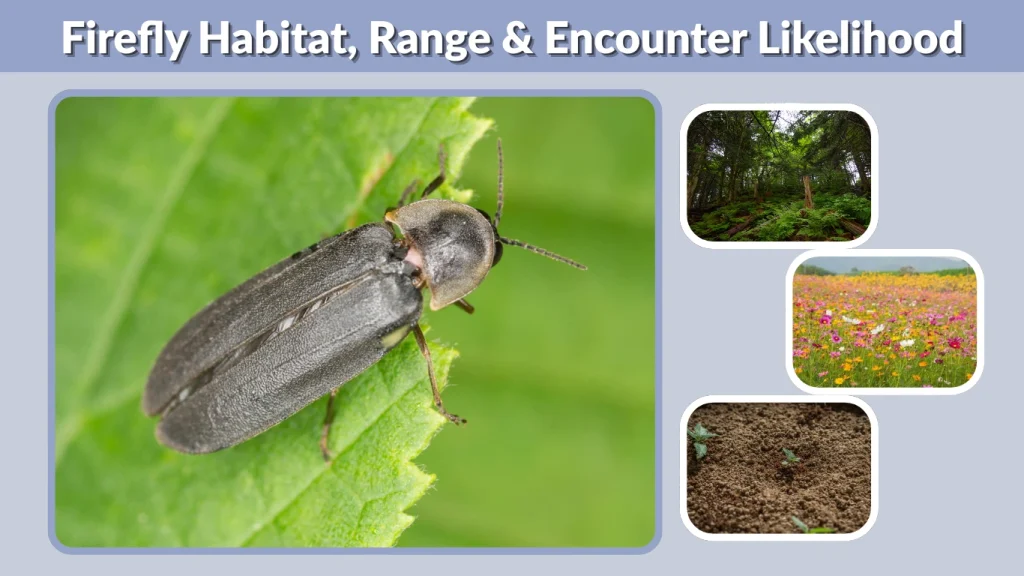
Fireflies can be found in many parts of the world, including North America, Europe, Asia, and South America. They flourish in warm, humid areas such as forests, meadows, marshes, and backyards with moisture-rich soil. Encounters with humans are most common at dusk during the summer months when they emerge to begin their nightly flashing displays. Because they flourish in calm, low-wind environments, they often fly close to humans who are outdoors at the same time.
Environmental Conditions They Prefer
Fireflies rely heavily on moisture. Areas with shaded vegetation, damp soil, tall grass, and low light pollution serve as perfect habitats. They are sensitive to bright artificial lighting, which can disrupt their mating signals. Proper environmental conditions increase both firefly populations and the chances of human encounters—but these encounters remain completely safe, as fireflies neither bite nor sting.
Differences Between Fireflies and Other Biting Insects
Why People Confuse Them With Biting Bugs
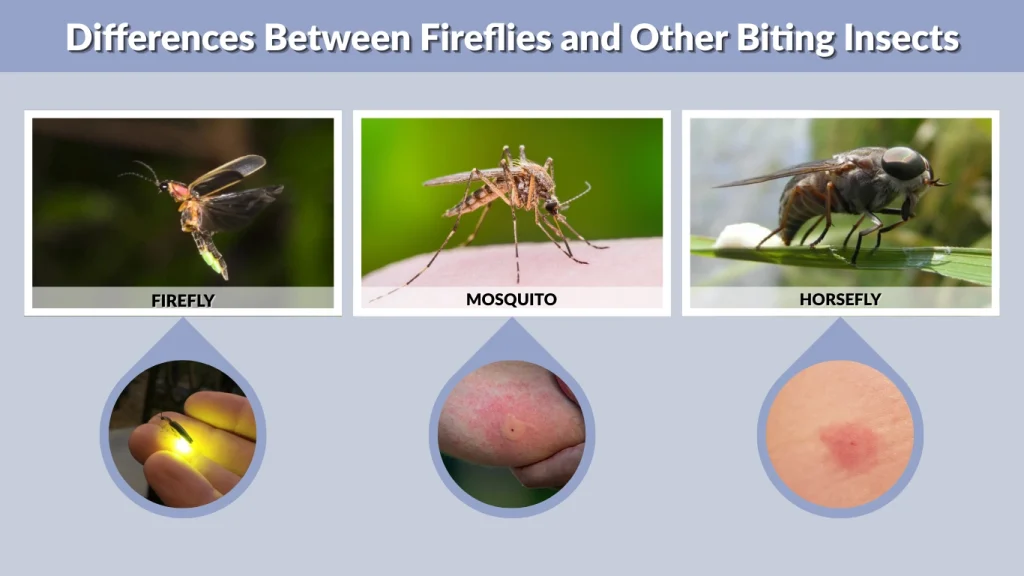
Nighttime flying insects are often lumped together, and because fireflies appear during the same hours as mosquitoes and gnats, people sometimes assume they behave similarly. The gentle landing of a firefly may be mistaken for a bite, especially if it happens when mosquitoes are also active. Their glow can also give them an air of mystery or danger, leading people to believe they might sting or inject venom.
Comparison Table
| Insect | Bite? | Sting? | Harm to Humans | Harm to Pets |
| Firefly | No | No | None | Toxic if eaten |
| Mosquito | Yes | No | Itchy bites | Disease risk |
| Horsefly | Yes | No | Painful bites | Pain/swelling |
| Wasp | No | Yes | Painful stings | Allergic risk |
| Flea | Yes | No | Skin irritation | Skin issues |
This comparison shows how different fireflies are from other common insects. While many nighttime insects bite or irritate skin, fireflies pose no such threats.
Are Fireflies Safe to Touch?
Gently Handling Fireflies
Fireflies are entirely safe to touch. Many people enjoy allowing a firefly to crawl along their fingers or rest momentarily in their hands. Because fireflies are delicate, the key is to handle them with extreme care. They are easily injured by squeezing or trapping them.
Safety Tips
- Wash hands after handling any insect
- Do not enclose fireflies in tightly sealed containers
- Avoid bright light exposure
- Release them quickly to avoid stress
Fireflies cannot harm you, and touching them is safe—as long as you protect the insect itself.
Rare Questions & Keyword Variants
Many people search online using variations of the same question. Keywords such as “do.fireflies bite,” “fireflies do they bite,” “do fireflys bite,” or “firefly insect do they bite” all stem from the same curiosity. The answer remains the same across all spelling differences, plural forms, and phrasing variations: fireflies do not bite, do not sting, and do not harm humans. These insects remain some of the most harmless and peaceful creatures in nature.
Do Fireflies Carry Diseases?
Unlike mosquitoes and ticks, fireflies are not disease carriers. They do not transmit bacteria, parasites, viruses, or pathogens to humans or pets. Their biology is not suited for feeding on blood or breaking skin, which eliminates the risk of disease transmission. Whether they land on your hands, clothes, or hair, there is no health risk involved.
Why Fireflies Glow (And Why It Matters for Safety)

Purpose of Bioluminescence
Fireflies glow primarily to attract mates. Each species has a distinct flash pattern, and these glowing signals help individuals locate suitable partners. They also use light to communicate and sometimes to warn predators of their chemical defenses.
Safety Insight
The glow of a firefly may seem magical, but it has no connection to biting or stinging. It is not a sign of aggression, defense, or danger. Their light is simply a communication tool, and it poses no threat whatsoever to humans or pets.
Conservation & Human Interaction
Firefly populations are declining worldwide due to habitat loss, pesticides, pollution, and increasing levels of artificial light. Understanding that fireflies are harmless encourages people to treat them with respect and avoid harming them out of fear. Protecting moist habitats, reducing yard pesticides, and minimizing light pollution can help sustain firefly populations for future generations.
FAQs
Do fireflies bite or sting?
Fireflies neither bite nor sting. They lack strong mandibles and do not possess a stinger or venom. Their behavior is gentle and non-aggressive, and they are completely safe to handle with care. Their glowing bodies have nothing to do with defense or attack mechanisms.
Can a firefly hurt you?
No, fireflies cannot hurt you. They do not bite, scratch, sting, or spread disease. They may land on your skin out of curiosity or because they were attracted to light, but they cause no physical harm. At worst, you’ll feel a light tickle from their tiny legs.
Are fireflies poisonous to dogs?
Fireflies can be poisonous to dogs—but only if eaten. Fireflies contain chemicals called lucibufagins, which can make pets sick when ingested. Dogs that eat fireflies may vomit or show signs of distress. Prevent pets from catching or swallowing them during playtime.
Can you hold a firefly safely?
Yes, holding a firefly is safe as long as you do it gently. Cup your hands loosely and allow the insect to crawl freely. Avoid squeezing, trapping, or exposing it to bright light. Always release it after a few seconds to reduce stress on the delicate insect.
Do fireflies carry diseases?
No, fireflies do not carry or transmit diseases. They do not feed on blood or interact with humans in ways that spread pathogens. They are among the safest insects in the environment and pose no risk of infection or illness.
