

The tomato hornworm is a common garden pest that can cause significant damage to tomato plants in a short time. Understanding its life cycle is essential for effective control, as each stage presents different opportunities for prevention and management. From tiny eggs to large caterpillars and finally to moths, the tomato hornworm undergoes a complete transformation. By learning how each stage develops, gardeners can take timely action to protect their plants and reduce infestations.
Overview of Tomato Hornworm Life Cycle
The tomato hornworm (Manduca quinquemaculata) undergoes complete metamorphosis, meaning it passes through four distinct stages: egg, larva (caterpillar), pupa, and adult moth.
Complete Metamorphosis
This transformation process includes:
- Egg → Larva → Pupa → Adult moth
Each stage has a unique appearance and function, contributing to the insect’s development and reproduction.
Why Lifecycle Matters
Understanding the hornworm’s lifecycle is crucial for effective pest control. Some stages, like eggs and young larvae, are easier to manage, while others, like pupae hidden in soil, are more difficult to detect. Knowing when to act can prevent serious plant damage.
Stage 1: Egg Stage
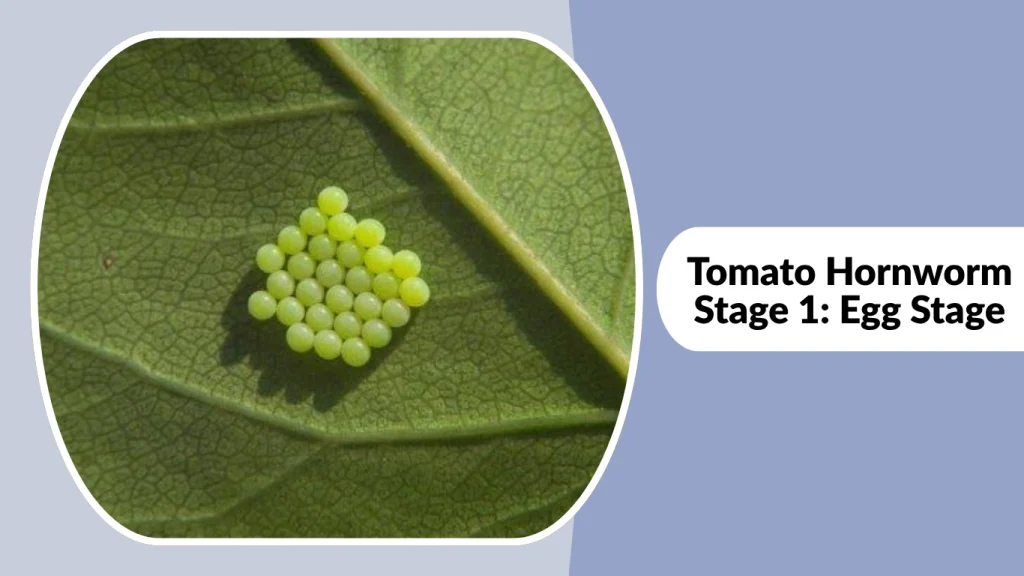
The life cycle begins when an adult moth lays eggs on host plants.
Appearance of Eggs
Tomato hornworm eggs are small, round, and pale green. Their color helps them blend in with the leaves, making them difficult to notice without close inspection.
Where Eggs Are Found
Eggs are typically laid on the underside of leaves, especially on tomato plants and other members of the nightshade family such as peppers and eggplants.
Duration of Egg Stage
The egg stage usually lasts about 3 to 5 days, depending on environmental conditions like temperature and humidity. Warmer temperatures tend to speed up development.
Control Opportunity
This is one of the best stages for prevention. Removing eggs by hand can stop the infestation before it begins, saving plants from later damage.
Stage 2: Larval Stage (Tomato Hornworm Caterpillar)
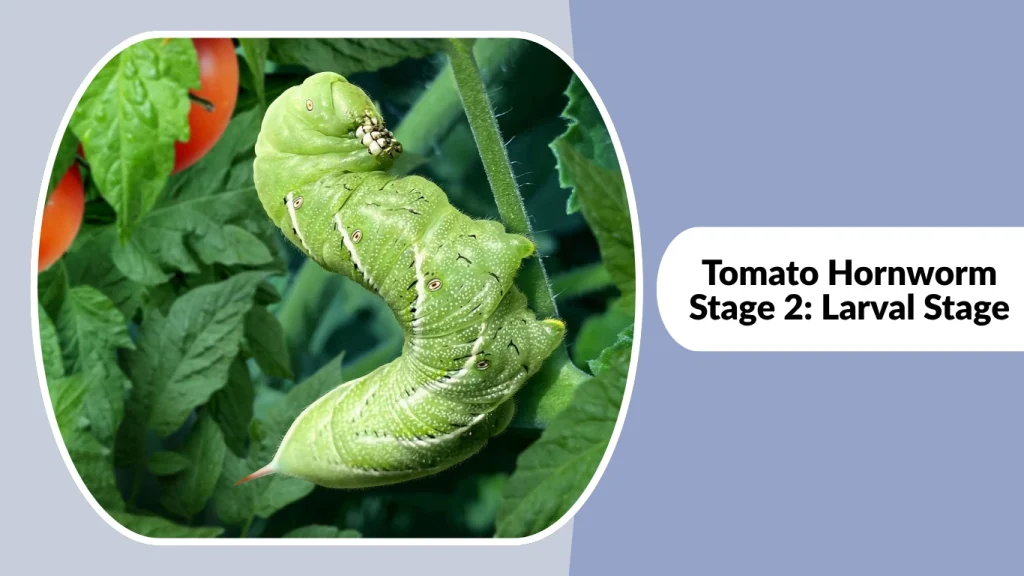
Once the eggs hatch, the hornworm enters its most destructive phase.
Physical Appearance
The larva is a large, green caterpillar with white diagonal stripes along its sides and a distinctive horn-like projection at the rear. Its green color provides excellent camouflage among plant leaves.
Growth Phases (Instars)
During the larval stage, hornworms go through several growth phases known as instars. At each stage, they shed their skin and grow larger, becoming more destructive as they develop.
Feeding Behavior
Hornworms are voracious feeders. They consume leaves, stems, and even fruits, often leaving behind large holes and stripped plants. Their feeding activity can quickly weaken or destroy tomato plants.
Duration
The larval stage typically lasts 2 to 3 weeks. During this time, the caterpillar grows rapidly, reaching up to 4 inches in length.
Why This Stage is Most Destructive
This is the stage where hornworms cause the most damage. Their size and appetite allow them to consume large amounts of plant material in a short period, making early detection critical.
Stage 3: Pupal Stage
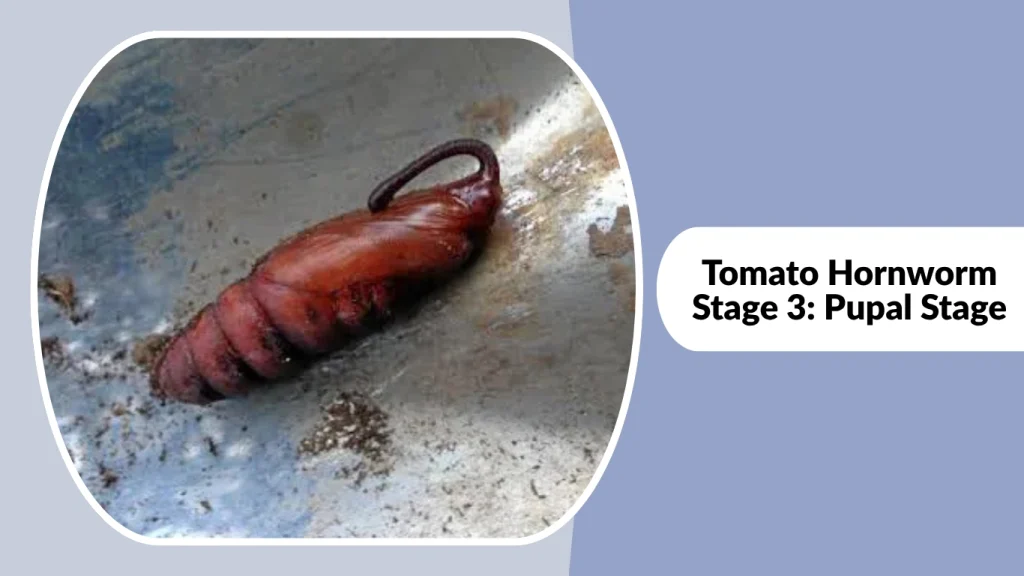
After completing the larval stage, the hornworm prepares for transformation.
Transition Process
The fully grown caterpillar drops to the ground and burrows into the soil. There, it forms a protective casing known as a pupa.
Appearance of Pupa
The pupa is brown, smooth, and elongated, resembling a small capsule. It remains hidden underground, making it difficult to detect.
Duration
The pupal stage can last several weeks. In cooler climates, the pupa may overwinter in the soil and emerge as an adult moth in the following season.
Hidden Nature
Because the pupa is buried in soil, it is one of the hardest stages to control. However, practices like tilling soil can help expose and eliminate pupae.
Stage 4: Adult Stage (Hawk Moth)

The final stage of the tomato hornworm life cycle is the adult moth.
Appearance
The adult is a large, gray-brown moth with a thick body and narrow wings. It typically has five pairs of yellow or orange spots along its abdomen, which is why it is often called the five-spotted hawk moth.
Behavior
These moths are nocturnal and are most active at night. They feed on nectar from flowers using a long proboscis and are often seen hovering like hummingbirds.
Role in Lifecycle
The primary role of the adult moth is reproduction. Female moths lay eggs on suitable host plants, beginning the cycle again.
Lifespan
Adult moths usually live for a few weeks, during which they focus on feeding and laying eggs.
Tomato Hornworm Life Cycle Timeline
Understanding the overall timeline helps gardeners predict infestations and take timely action.
Complete Duration
The entire life cycle of a tomato hornworm typically takes about 30 to 50 days, depending on environmental conditions. In warmer climates, development may occur more quickly.
Seasonal Patterns
Hornworms are most active during the growing season, especially from late spring through summer. Adult moths emerge, lay eggs, and produce multiple generations during this period.
Multiple Generations
In warm regions, tomato hornworms can complete two or more generations per year, increasing the risk of repeated infestations if not properly managed.
Factors Affecting the Life Cycle
Several environmental factors influence how quickly hornworms grow and reproduce.
Temperature
Warm temperatures accelerate development at every stage of the lifecycle. Eggs hatch faster, larvae grow more quickly, and pupae emerge sooner.
Climate
Regions with mild winters allow pupae to survive and emerge earlier in the season, leading to longer activity periods.
Food Availability
The presence of host plants such as tomatoes, peppers, and eggplants directly affects hornworm survival and population growth.
Best Stage for Control (Lifecycle-Based Strategy)
Controlling tomato hornworms effectively requires targeting the right stage at the right time.
Egg Stage (Prevention)
Removing eggs from leaves is one of the easiest and most effective ways to prevent infestations before they begin.
Larval Stage (Most Effective Control Point)
This is the best stage for active control. Hand-picking, natural treatments, and biological methods are most effective when hornworms are still small.
Pupal Stage (Soil Management)
Tilling soil can expose pupae and reduce future populations. This is especially useful at the beginning and end of the growing season.
Adult Stage (Egg-Laying Prevention)
Preventing moths from laying eggs—using row covers or reducing light attraction—can help break the lifecycle.
Common Mistakes in Lifecycle Understanding
Ignoring Egg Stage
Many gardeners overlook eggs because they are small and hard to see, missing the easiest control opportunity.
Missing Soil Pupae
Failing to manage soil can allow pupae to survive and re-emerge the following season.
Only Treating Visible Worms
Focusing only on large caterpillars ignores earlier stages that are easier to control and leads to repeated infestations.
FAQs
What do tomato hornworms turn into?
Tomato hornworms transform into large hawk moths, also known as five-spotted hawk moths.
How long is the full lifecycle?
The complete lifecycle typically lasts between 30 and 50 days, depending on environmental conditions.
Do hornworms survive winter?
Yes, hornworms can survive winter in the pupal stage, buried in the soil, and emerge in the next growing season.
How many eggs does a moth lay?
A female moth can lay dozens to hundreds of eggs during her lifetime, which can quickly lead to infestations if not controlled.
Pro Tips for Gardeners
- Inspect plants regularly, especially the undersides of leaves
- Remove eggs and small larvae early to prevent major damage
- Till soil at the start and end of the season to reduce pupae
- Use a combination of natural and preventive methods for best results
Conclusion
The tomato hornworm life cycle is a fascinating example of complete metamorphosis, but it also presents challenges for gardeners. By understanding each stage—from egg to adult moth—you can identify the best moments to intervene and prevent serious damage. Early detection, consistent monitoring, and lifecycle-based control strategies are key to managing hornworms effectively. With the right approach, you can protect your plants and maintain a healthy, thriving garden.
