
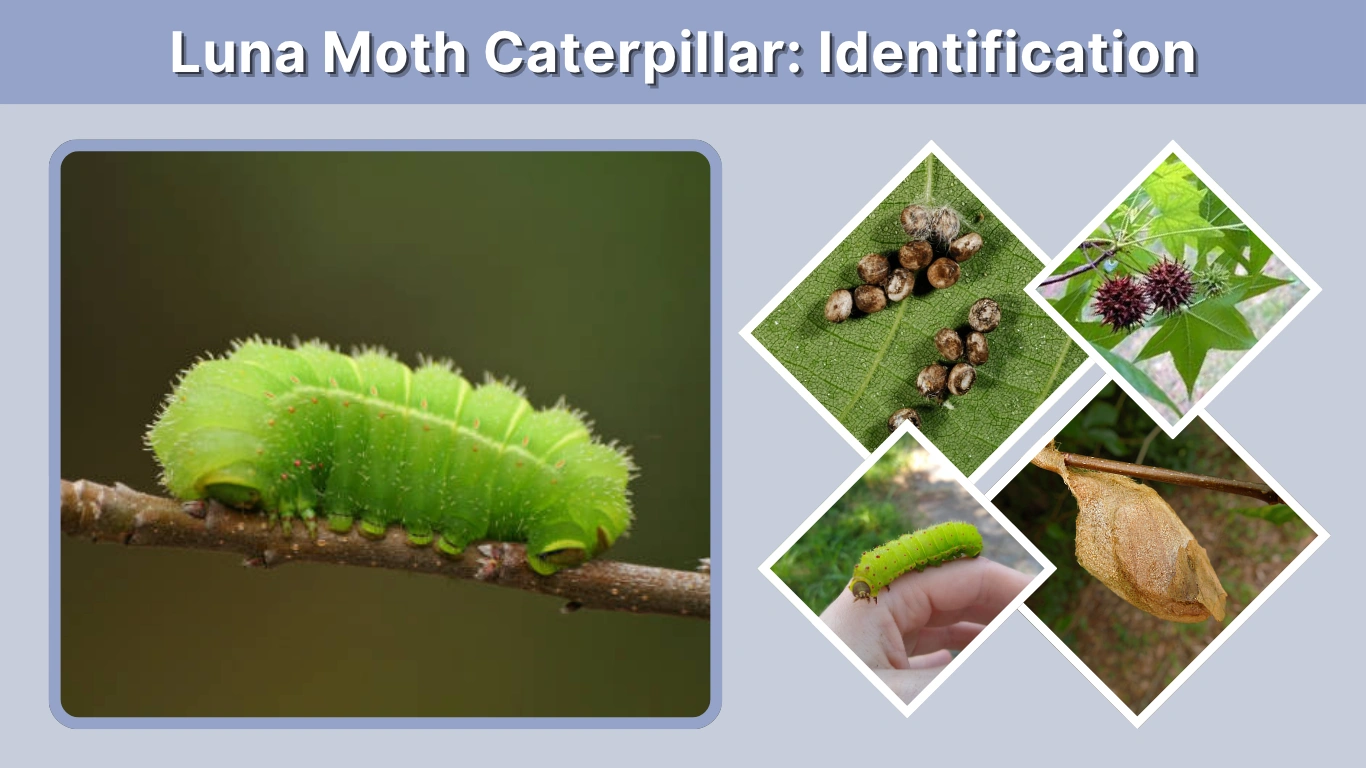
The luna moth caterpillar is one of the most beautiful and intriguing insects found in North America. Known for its bright green color and gentle appearance, this caterpillar is the larval stage of the stunning luna moth (Actias luna). Unlike many garden pests, it plays an important role in the ecosystem. Understanding its appearance, feeding habits, and lifecycle can help nature enthusiasts appreciate and protect this remarkable species.
What is a Luna Moth Caterpillar?
The luna moth caterpillar is the larval stage of the luna moth, a member of the Saturniidae family, also known as giant silk moths.
Scientific Classification
- Species: Actias luna
- Family: Saturniidae
General Overview
Luna moth caterpillars are part of a fascinating transformation process known as complete metamorphosis. After hatching from eggs, they spend their time feeding and growing before eventually forming a cocoon and transforming into one of the most recognizable moths in North America. Unlike destructive pests, they typically do not cause significant harm to plants.
What Does a Luna Moth Caterpillar Look Like?
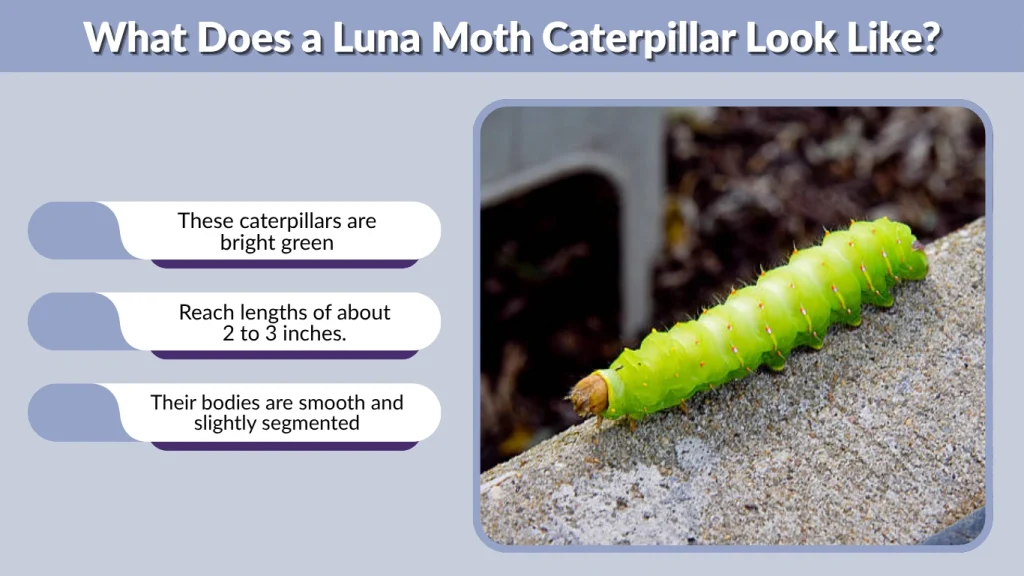
Identifying a luna moth caterpillar is relatively easy once you know what to look for.
Physical Appearance
These caterpillars are bright green, which helps them blend in with leaves. Their bodies are smooth and slightly segmented, giving them a soft and harmless appearance. Along their sides, you may notice small yellow or reddish spots that add to their distinctive look.
Size and Growth
As they grow, luna moth caterpillars can reach lengths of about 2 to 3 inches. They go through several growth stages, shedding their skin multiple times as they increase in size.
Unique Features
Unlike some caterpillars, luna moth caterpillars do not have spines or hairs, making them appear less threatening. Their calm behavior and soft coloration make them one of the more visually appealing caterpillars in nature.
Luna Moth Caterpillar Lifecycle
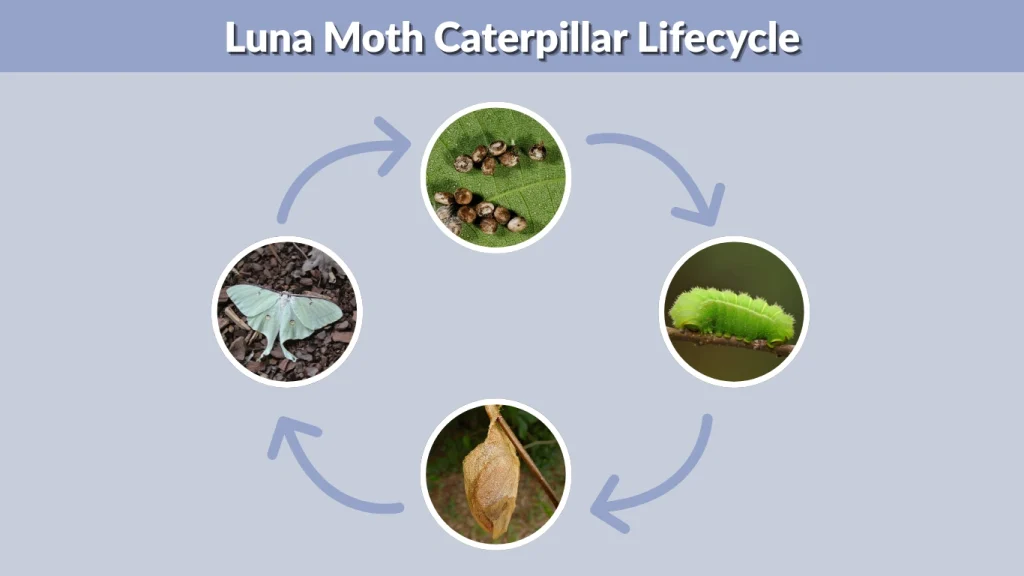
The lifecycle of the luna moth caterpillar is a remarkable journey through several stages of transformation.
Egg Stage
The process begins when a female luna moth lays eggs on the leaves of suitable host plants. These eggs are small and blend well with their surroundings, providing protection from predators.
Larval Stage (Caterpillar)
After hatching, the caterpillar begins feeding immediately. This stage is focused on growth, and the caterpillar consumes leaves to store energy for its transformation. During this period, it molts several times, growing larger with each stage.
Cocoon Stage
Once fully grown, the caterpillar spins a silk cocoon, usually within leaves or on the ground. Inside this cocoon, it undergoes a transformation into its adult form.
Adult Moth Stage
The adult luna moth emerges from the cocoon with its iconic pale green wings and long tails. Interestingly, adult luna moths do not eat; their sole purpose is reproduction, after which the lifecycle begins again.
What Do Luna Moth Caterpillars Eat?
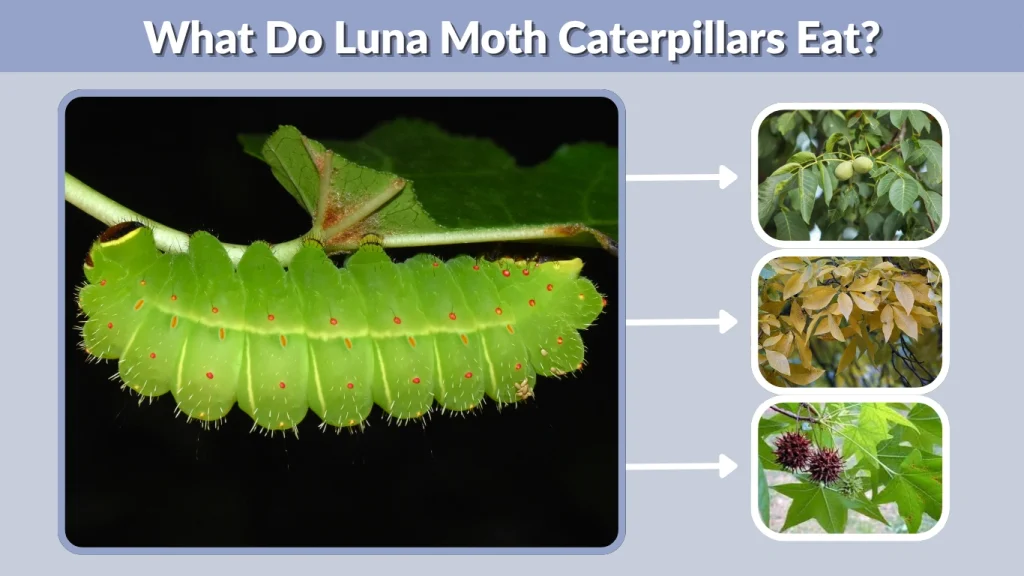
Luna moth caterpillars are herbivores and rely on specific host plants for survival.
Host Plants
They commonly feed on the leaves of:
- Walnut trees
- Hickory trees
- Sweet gum trees
- Birch trees
Feeding Behavior
These caterpillars feed by chewing leaves, but unlike many pest species, they usually do not consume enough to cause serious damage. Their feeding is relatively moderate and limited to specific host plants.
Where Are Luna Moth Caterpillars Found?
Understanding their habitat can help you spot these unique caterpillars in the wild.
Geographic Distribution
Luna moth caterpillars are native to North America and are widely distributed across the eastern United States and parts of Canada.
Habitat
They are most commonly found in:
- Deciduous forests
- Woodlands
- Gardens with suitable host trees
Seasonal Appearance
Luna moth caterpillars typically appear during the spring and summer months, depending on the region and climate conditions.
Are Luna Moth Caterpillars Harmful?
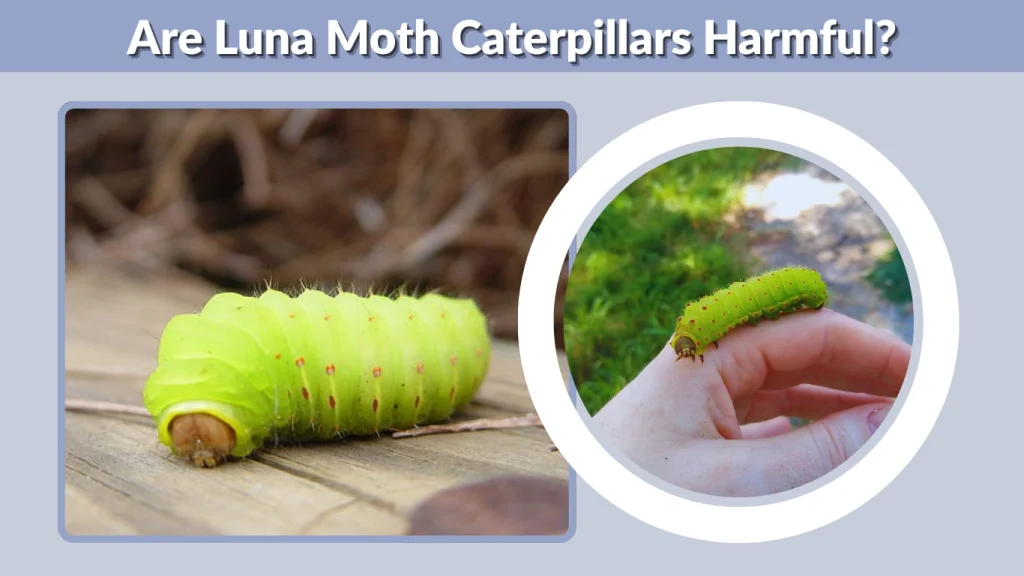
One of the most common questions about luna moth caterpillars is whether they pose any threat.
Impact on Plants
Unlike destructive pests such as hornworms, luna moth caterpillars generally cause minimal damage. Their feeding is usually limited and does not significantly harm healthy trees.
Impact on Humans
These caterpillars are completely harmless. They do not bite, sting, or produce toxins, making them safe to observe and handle gently.
Ecological Importance
Luna moth caterpillars play an important role in the ecosystem. They serve as a food source for birds and other wildlife and contribute to the natural balance of their habitat.
Luna Moth Caterpillar vs Other Green Caterpillars
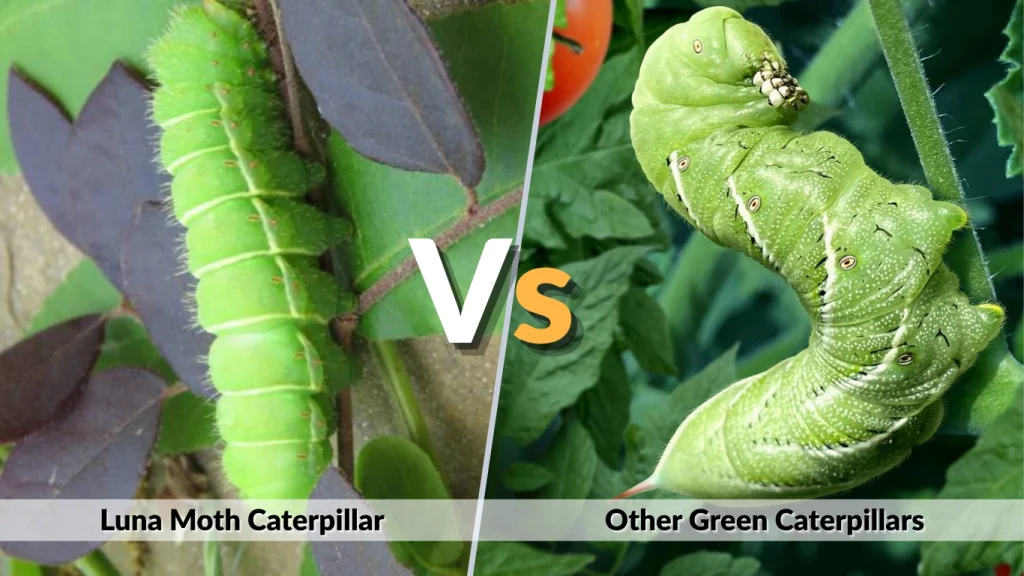
Luna moth caterpillars are often confused with other green caterpillars, especially those found in gardens.
Key Differences
Luna caterpillars have a smooth, bright green body with small colored spots and no prominent horn or spines. In contrast, tomato hornworms have bold white stripes and a noticeable horn-like tail.
Common Confusions
They are most commonly mistaken for:
- Tomato hornworms
- Other moth larvae with similar green coloration
Why Identification Matters
Correct identification helps prevent unnecessary removal or harm. Unlike pest species, luna moth caterpillars are generally harmless and beneficial to the ecosystem.
Can You Raise Luna Moth Caterpillars?
Raising luna moth caterpillars can be a rewarding experience for nature enthusiasts and educators.
Basic Care Guide
To raise them successfully:
- Provide fresh leaves from their host plants daily
- Use a well-ventilated container
- Keep their environment clean by removing waste
Ethical Considerations
It is important to release the moth back into its natural habitat after it emerges. Keeping wild insects permanently can disrupt local ecosystems.
Challenges
Luna moth caterpillars can be sensitive to environmental changes. Their short lifecycle and specific feeding needs require careful attention.
How to Protect Luna Moth Caterpillars
Protecting these caterpillars helps support biodiversity and healthy ecosystems.
Avoid Pesticides
Limiting or eliminating pesticide use prevents accidental harm to luna moth caterpillars and other beneficial insects.
Preserve Host Plants
Maintaining trees like walnut, hickory, and birch ensures they have a natural food source.
Support Natural Habitat
Encouraging native plants and reducing habitat destruction creates a safe environment for their development.
Interesting Facts About Luna Moth Caterpillars
- They grow rapidly and molt several times before forming a cocoon
- Their bright green color provides natural camouflage
- They transform into one of the most beautiful moths in North America
- Adult luna moths do not eat and live only for a short time
FAQs
How long do luna caterpillars live?
The caterpillar stage typically lasts a few weeks before they form a cocoon and transform.
Do they bite or sting?
No, luna moth caterpillars are completely harmless and do not bite or sting.
What do they turn into?
They transform into luna moths, known for their pale green wings and long tail-like extensions.
Are they rare?
They are not extremely rare but can be less commonly seen due to their short lifespan and specific habitat needs.
Pro Tips for Nature Enthusiasts
- Observe caterpillars without disturbing them in their natural environment
- Photograph different stages of their lifecycle
- Plant native trees to attract and support luna moth populations
- Avoid handling them excessively to reduce stress
Conclusion
The luna moth caterpillar is a fascinating and harmless insect that plays an important role in nature. From its vibrant green appearance to its transformation into a stunning moth, it represents one of the most remarkable examples of metamorphosis. By understanding its lifecycle, habitat, and ecological importance, we can better appreciate and protect this unique species. Supporting natural habitats and avoiding harmful chemicals ensures that future generations can continue to enjoy the beauty of luna moths.
