
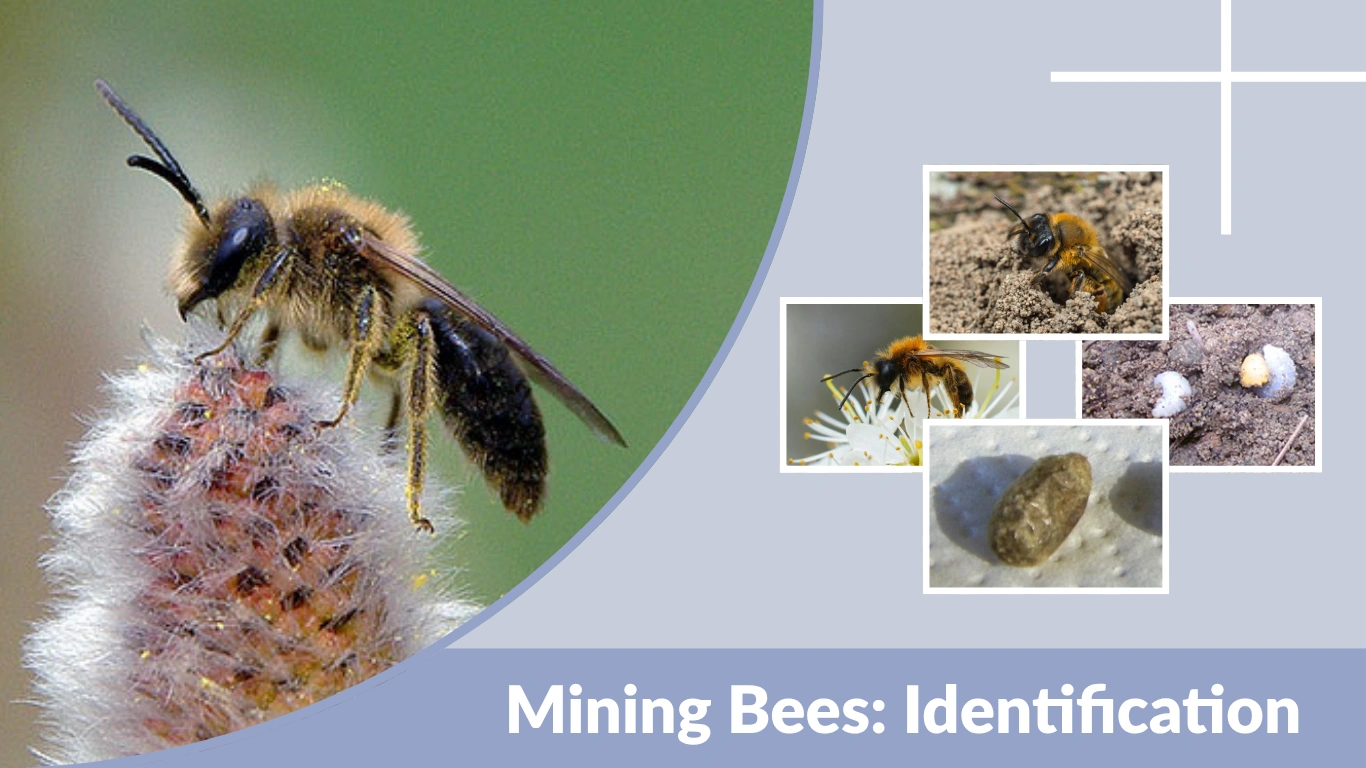
If you’ve recently noticed small holes in your yard with bees flying low over the ground, you’re likely dealing with mining bees. These bees often appear in early spring, creating concern for homeowners who worry about stings or lawn damage.
The good news is that mining bees are generally harmless and play an important role in pollination. While their sudden appearance can be alarming, understanding their behavior and lifecycle can help you decide whether to take action or simply let them be.
What Are Mining Bees?
Mining bees are a group of solitary, ground-nesting bees belonging to the family Andrenidae. Unlike honey bees or bumblebees, they do not live in large colonies or produce honey. Instead, each female mining bee builds and manages her own nest underground.
These bees are among the first pollinators to emerge in spring, making them essential for early-blooming plants and flowers.
Key Characteristics
- Solitary lifestyle: Each female works independently
- Ground nesting: They dig tunnels in soil rather than using hives
- Low aggression: Rarely sting and avoid human interaction
Because they don’t defend a colony, mining bees are far less aggressive than social bees.
What Do Mining Bees Look Like?
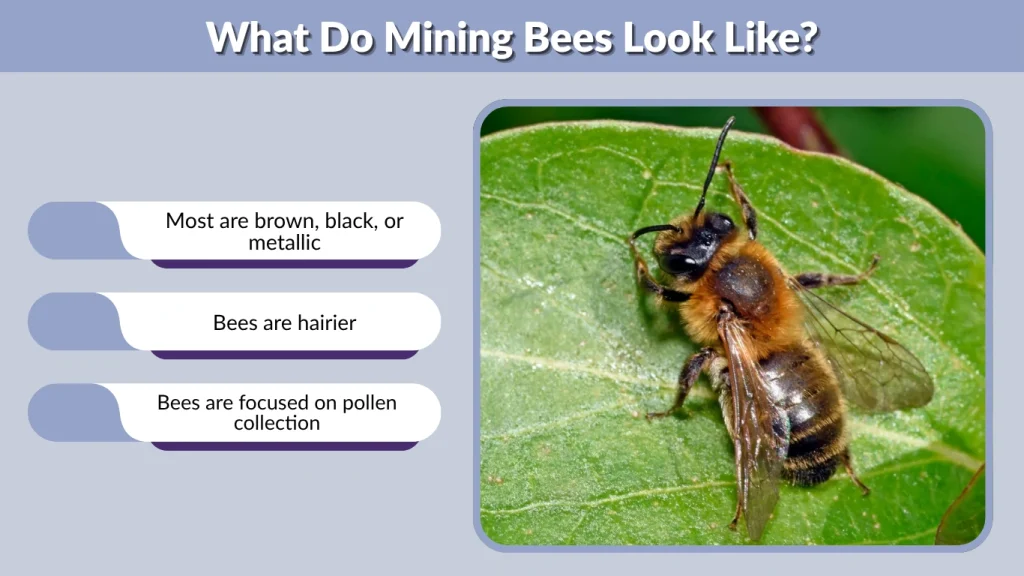
Mining bees are typically small to medium-sized and can vary in color depending on the species. Most are brown, black, or metallic, often with light-colored hairs that help them collect pollen.
Female mining bees tend to be slightly larger than males, while males are often seen hovering near nesting areas waiting to mate.
Mining Bees vs Wasps
Mining bees are often mistaken for wasps, but there are clear differences:
- Bees are hairier, while wasps have smooth bodies
- Bees are focused on pollen collection; wasps are more predatory
- Mining bees are far less aggressive
Mining Bees vs Honey Bees
- Mining bees are solitary, while honey bees live in colonies
- They are usually smaller and less uniform in appearance
- They do not produce honey
Where Do Mining Bees Live?
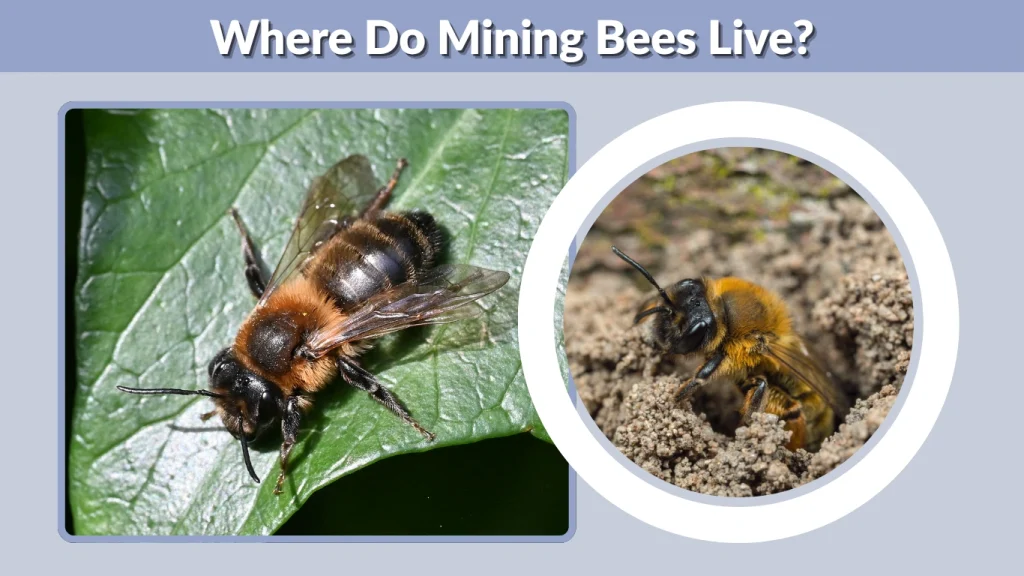
Mining bees live underground, preferring areas with dry, well-drained soil. They are commonly found in lawns, gardens, parks, and even along sidewalks.
Nest Structure
Each female digs a small hole in the ground, which leads to a tunnel system with several chambers. Inside these chambers, she lays eggs and provides food (pollen and nectar) for her offspring.
You may notice small mounds of soil around the entrance holes—this is a key sign of mining bee activity.
Why Are Mining Bees in Your Yard?
Mining bees choose nesting sites based on soil conditions and environmental factors. If they’ve appeared in your yard, it’s likely because your lawn provides the ideal habitat.
Common Triggers
- Bare patches of soil: Easier for digging nests
- Dry conditions: Wet soil is less suitable
- Sunny areas: Bees prefer warmth for activity
Their presence is usually temporary, lasting only a few weeks during their active season.
Life Cycle of Mining Bees
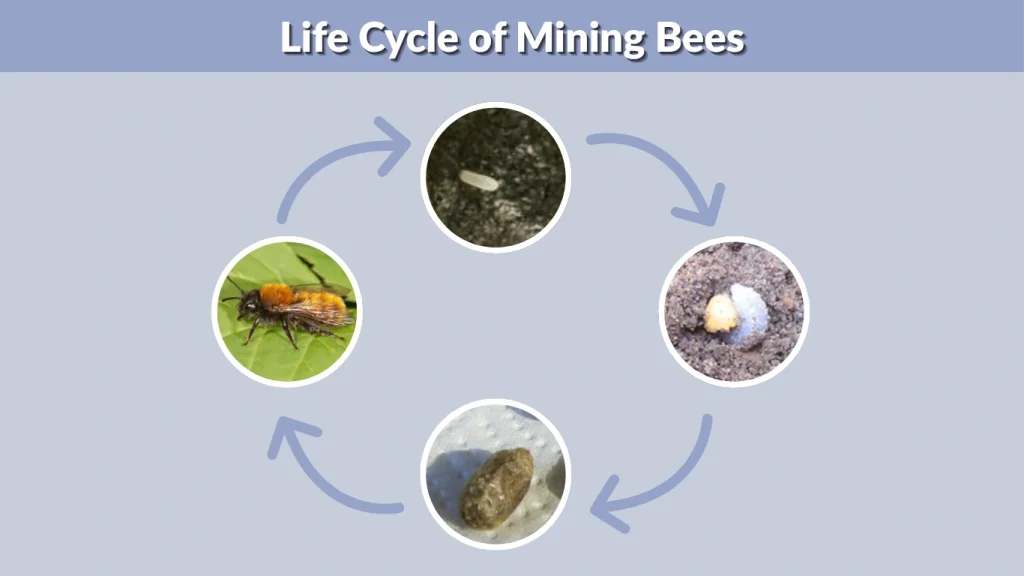
Mining bees have a simple but fascinating lifecycle that revolves around seasonal activity.
Lifecycle Stages
- Egg: The female lays eggs in underground chambers
- Larva: Larvae feed on stored pollen and nectar
- Pupa: Development occurs underground
- Adult: Bees emerge in spring
Seasonal Timeline
Mining bees are most active in early spring, often for just 3–6 weeks. After this period, the adults die off, and the next generation remains underground until the following year.
Are Mining Bees Dangerous?
One of the most common concerns about mining bees is whether they pose a threat to humans or pets. Fortunately, these bees are considered non-aggressive and low-risk.
Do Mining Bees Sting?
Female mining bees are capable of stinging, but this is extremely rare and usually only happens if they are directly handled or threatened. Male mining bees, which are often seen flying around, cannot sting at all.
Aggression Level
Mining bees are not territorial and do not defend a hive. Their main focus is reproduction, not protection. This makes them far less likely to sting compared to other bee species or wasps.
Benefits of Mining Bees
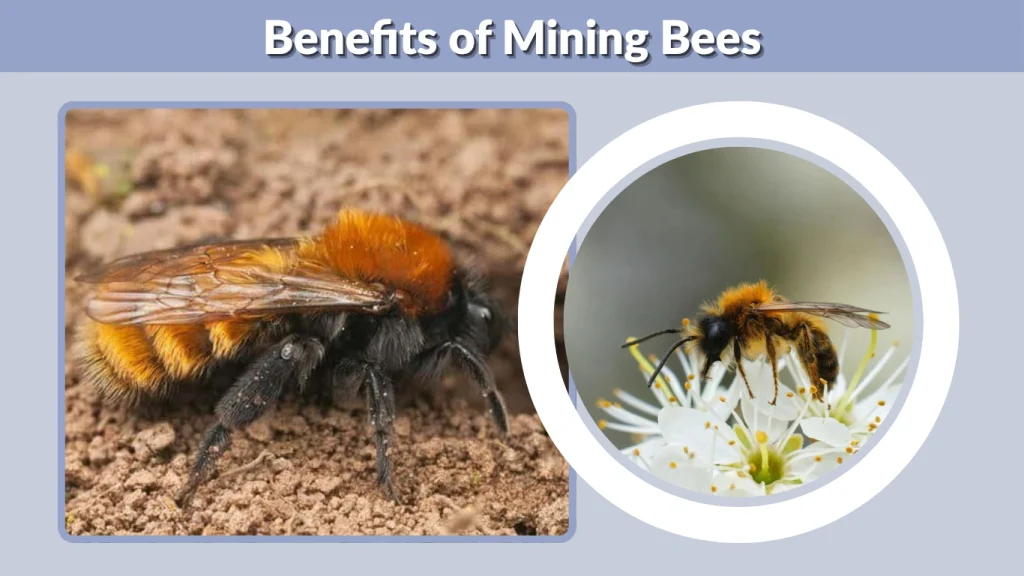
Although their presence may seem inconvenient, mining bees provide significant ecological benefits. They are highly effective pollinators and contribute to the health of many plants and crops.
Why Gardeners Love Them
- Efficient pollinators: Mining bees transfer pollen between flowers, helping plants reproduce
- Early-season activity: They pollinate plants that bloom in early spring when other pollinators are scarce
- Support biodiversity: Their activity helps maintain a balanced ecosystem
Unlike some pests, mining bees actually improve the productivity of gardens and agricultural areas.
Signs of Mining Bees in Your Yard
Mining bees are easy to identify once you know what to look for. Their nesting behavior leaves visible clues on the ground.
Common Signs
- Small soil mounds: Tiny piles of dirt around holes
- Multiple holes: Clusters of pencil-sized openings in the ground
- Low-flying bees: Bees hovering just above the soil surface
These signs are often mistaken for ant hills, but the presence of bees nearby helps confirm their identity.
Mining Bees vs Other Bees
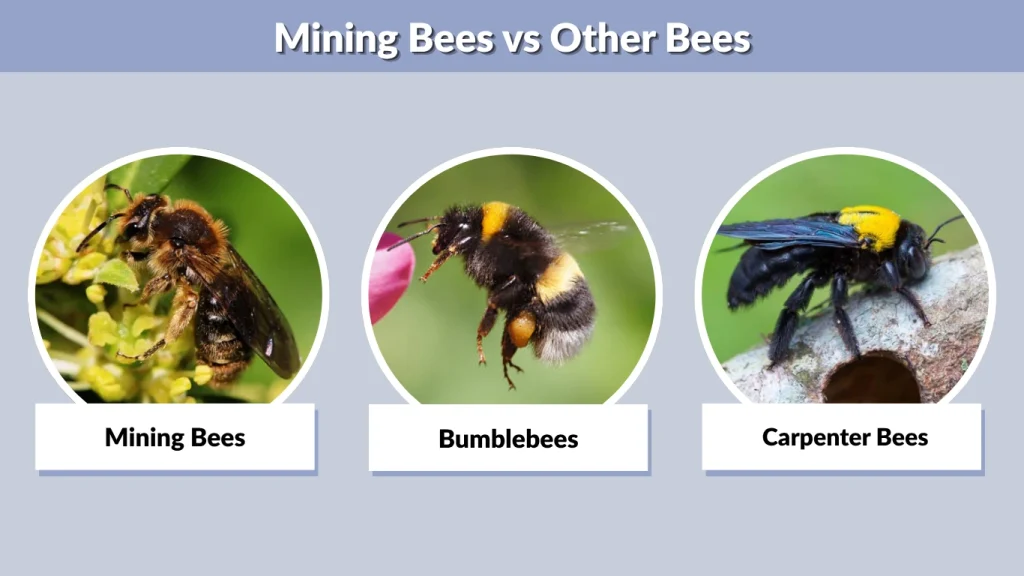
Understanding how mining bees differ from other common bees can help reduce confusion and unnecessary concern.
Mining Bees vs Bumblebees
- Bumblebees live in social colonies, while mining bees are solitary
- Bumblebees often nest in cavities, whereas mining bees dig into soil
- Bumblebees are larger and fuzzier
Mining Bees vs Carpenter Bees
- Carpenter bees nest in wood, not soil
- Mining bees create underground tunnels
- Carpenter bees are typically larger and more noticeable
These distinctions make it easier to identify which type of bee you’re dealing with.
How to Get Rid of Mining Bees (If Necessary)
In most cases, removing mining bees isn’t necessary. However, if they are in high-traffic areas or causing concern, there are safe and natural ways to manage them.
Natural & Safe Methods
- Water the soil regularly: Moist soil discourages nesting
- Add mulch: Covers bare patches and prevents digging
- Plant grass or ground cover: Reduces exposed soil
These methods focus on making your yard less attractive to mining bees rather than harming them.
Prevention Tips
- Maintain a healthy, dense lawn
- Avoid leaving large areas of exposed soil
- Improve soil moisture in dry seasons
Consistent lawn care can significantly reduce the chances of bees returning.
When to Call Professionals
- If there is a large infestation
- If someone in the household has severe allergies
- If bees are nesting in high-traffic areas like walkways
Professionals can assess the situation and recommend safe solutions.
Should You Remove Mining Bees?
Before taking action, it’s important to consider whether removal is truly necessary.
Reasons to Leave Them Alone
- They are harmless and non-aggressive
- Their activity lasts only a few weeks
- They provide valuable pollination
In many cases, simply waiting for their season to end is the best option.
When Removal Makes Sense
- Nests are located in frequently used areas
- There is a risk of allergic reactions
- The number of bees is unusually high
Balancing safety with environmental impact is key when making this decision.
FAQs
Are mining bees aggressive toward humans?
No, mining bees are not aggressive. They are solitary and do not defend a hive, which makes them much less likely to sting compared to other bees. Most will simply fly away if disturbed.
Can mining bees infest homes or buildings?
No, mining bees do not infest homes. They only nest in soil and have no interest in wood, walls, or indoor spaces like carpenter bees or termites.
Do mining bees produce honey?
No, mining bees do not produce honey. Unlike honey bees, they are solitary and only collect nectar and pollen to feed their offspring.
How deep are mining bee nests?
Mining bee nests are usually a few inches to about a foot deep, depending on the species. These tunnels contain small chambers where eggs are laid.
What time of year do mining bees disappear?
Mining bees typically disappear by late spring. After their short active period (3–6 weeks), the adult bees die off, and the next generation remains underground until the following year.
Conclusion
Mining bees may seem like a problem at first, especially when they suddenly appear in your yard. However, they are harmless, beneficial pollinators that play an important role in the environment.
By understanding their behavior, lifecycle, and nesting habits, you can make informed decisions about whether to manage or simply tolerate their presence. In most cases, the best approach is to let them complete their short seasonal activity and enjoy the benefits they bring to your garden.
