

Cabbage loopers are one of the most common pests that attack leafy vegetables in home gardens and farms. Known for their distinctive looping movement, these green caterpillars can quickly damage crops like cabbage, broccoli, and kale if left unchecked. The cabbage looper (Trichoplusia ni) goes through several life stages, with the larval stage causing the most harm by feeding on plant leaves. Understanding how to identify, prevent, and control cabbage loopers is essential for protecting your plants and maintaining a healthy, productive garden throughout the growing season.
What Is a Cabbage Looper?
The cabbage looper (Trichoplusia ni) is a common garden pest that primarily attacks leafy vegetables. It is especially known for damaging crops like cabbage, broccoli, kale, and other cruciferous plants. Despite its small size, this insect can cause significant harm to home gardens and commercial farms if left uncontrolled.
Cabbage loopers belong to the moth family, and their larvae (caterpillar stage) are the most destructive. These pests are named for their unique “looping” movement, which sets them apart from many other caterpillars. Because they feed aggressively on plant leaves, they can quickly reduce crop quality and yield.
What Does a Cabbage Looper Look Like?
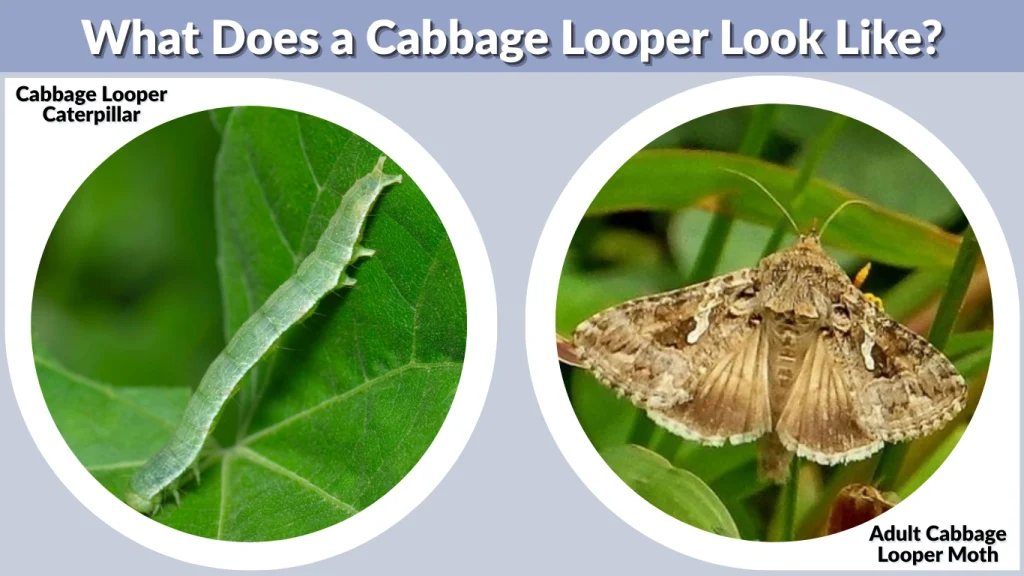
Identifying a cabbage looper early is key to preventing damage. They go through several stages, but the caterpillar and moth are the most noticeable.
Cabbage Looper Caterpillar (Larvae)
The cabbage looper caterpillar is light green with a smooth body and faint white stripes running along its sides. It typically grows up to 3–4 cm long. One of its most distinctive features is its movement—it arches its body into a loop as it crawls because it lacks middle legs.
This looping motion is the reason behind its name. Gardeners often refer to it as a “cabbage looper worm” or simply a green caterpillar found on leafy vegetables.
Adult Cabbage Looper Moth
The adult cabbage looper is a medium-sized moth with brownish-gray wings. A key identifying feature is the small silver marking on its forewings, often shaped like a figure-eight or a curved line.
These moths are mostly active at night. Female moths lay eggs on the underside of leaves, starting the life cycle again.
Cabbage Looper vs Cabbage Worm
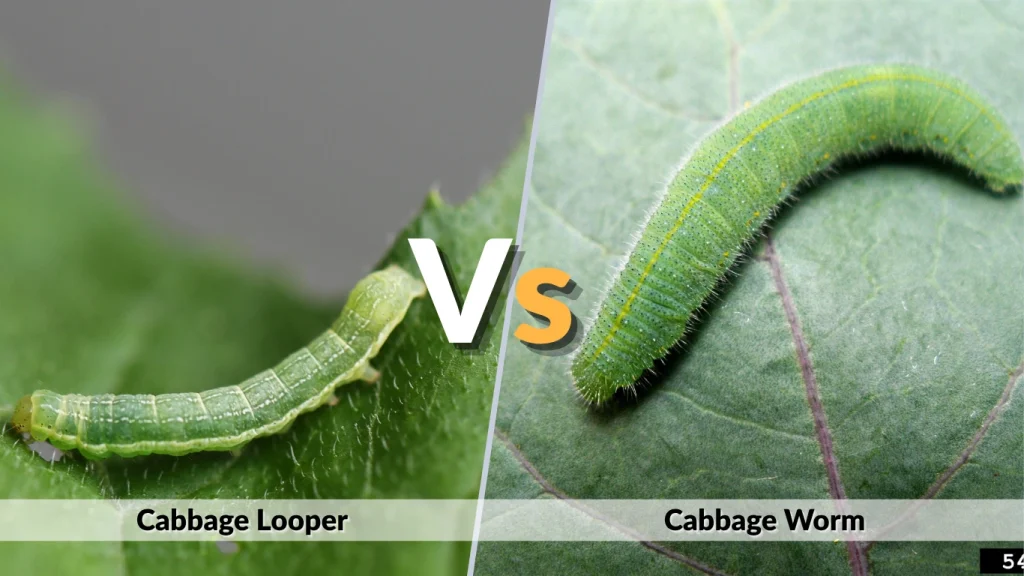
Cabbage loopers are often confused with cabbage worms, but they are different pests and require slightly different control methods.
The most noticeable difference is movement. Cabbage loopers move in a looping or inching motion, while cabbage worms crawl normally. In terms of appearance, cabbage loopers are smooth and light green, whereas cabbage worms are usually velvety and slightly fuzzy.
Correct identification is important because some treatments are more effective on one pest than the other. Misidentifying them can lead to ineffective pest control and continued plant damage.
Cabbage Looper Life Cycle
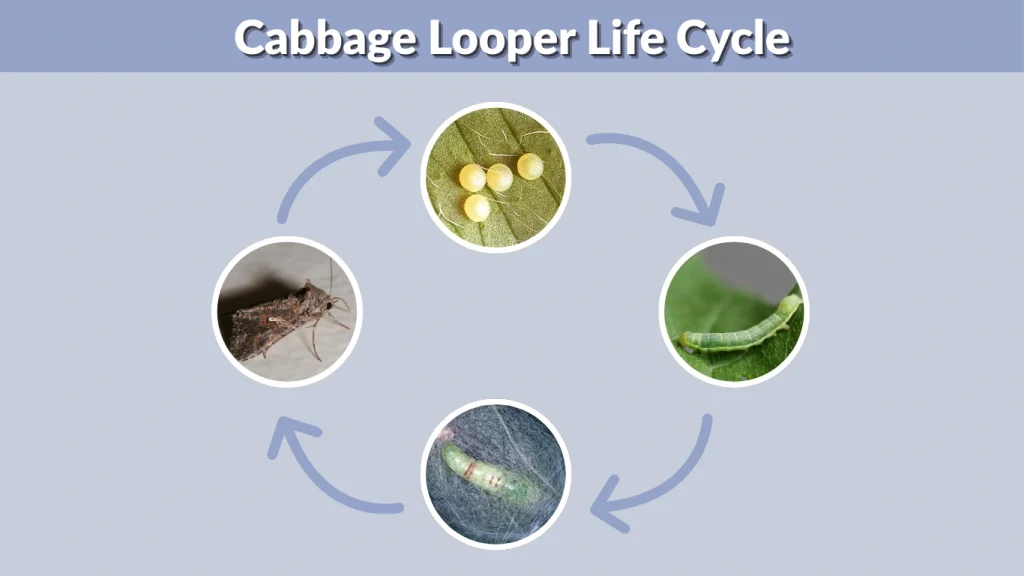
Understanding the life cycle of the cabbage looper helps in controlling it effectively. These insects reproduce quickly, especially in warm climates.
Eggs
Cabbage looper eggs are small, round, and pale green. They are usually laid singly on the underside of leaves. These eggs hatch within a few days, depending on temperature.
Because they are tiny and blend in with the leaf surface, they can be difficult to spot early.
Larvae (Caterpillar Stage)
Once the eggs hatch, the larvae begin feeding immediately. This is the most destructive stage of the cabbage looper’s life cycle. The caterpillars consume large amounts of leaf tissue, creating visible holes and damage.
They grow rapidly and molt several times before entering the next stage.
Pupa (Cocoon Stage)
After feeding for several weeks, the caterpillar forms a thin cocoon, usually on the plant or nearby debris. Inside this cocoon, it transforms into a pupa.
This stage lasts about one to two weeks, during which the insect develops into an adult moth.
Adult Moth
The adult moth emerges from the cocoon and begins the cycle again by laying eggs. In favorable conditions, multiple generations can occur in a single growing season, leading to rapid infestations.
What Do Cabbage Loopers Eat?
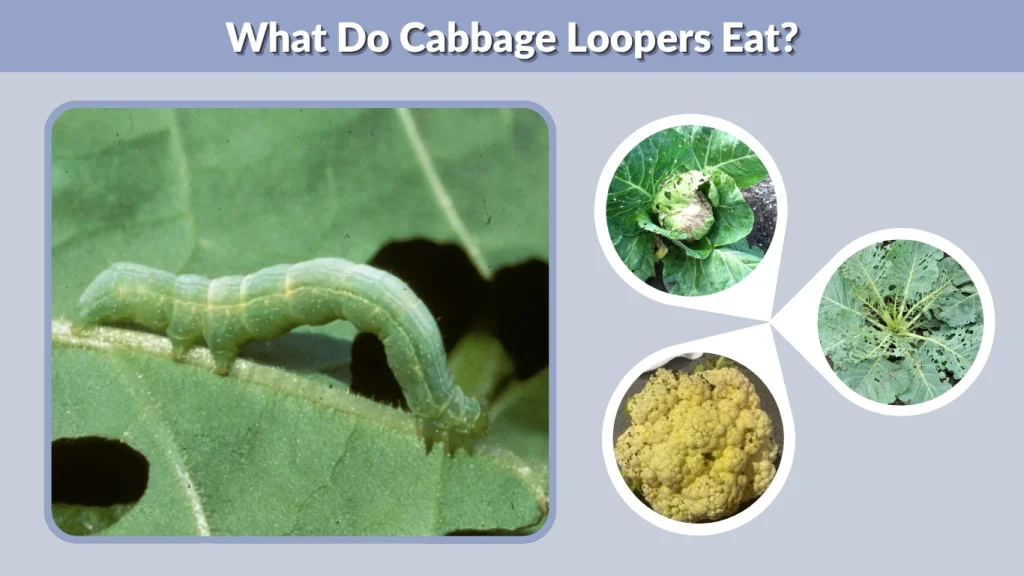
Cabbage loopers mainly feed on leafy vegetables, especially those in the cabbage family. Their favorite plants include cabbage, broccoli, cauliflower, kale, and Brussels sprouts.
However, they are not limited to these crops. They can also attack tomatoes, lettuce, spinach, and even herbs like basil. The caterpillars feed on the soft tissue of leaves, often leaving behind large, irregular holes.
Because they tend to stay on the underside of leaves, they can go unnoticed until significant damage has already occurred.
Cabbage Looper Damage and Symptoms
Cabbage loopers can cause serious damage to plants if not controlled early. The most common symptom is the presence of irregular holes in leaves, often giving them a ragged appearance.
In severe infestations, leaves may become skeletonized, with only veins remaining. This reduces the plant’s ability to photosynthesize, leading to poor growth and lower yields.
Another clear sign of cabbage looper activity is the presence of green droppings, known as frass. These small pellets are often found on leaves or around the base of the plant.
If left unchecked, cabbage loopers can quickly spread and damage an entire crop.
Are Cabbage Loopers Harmful to Humans?
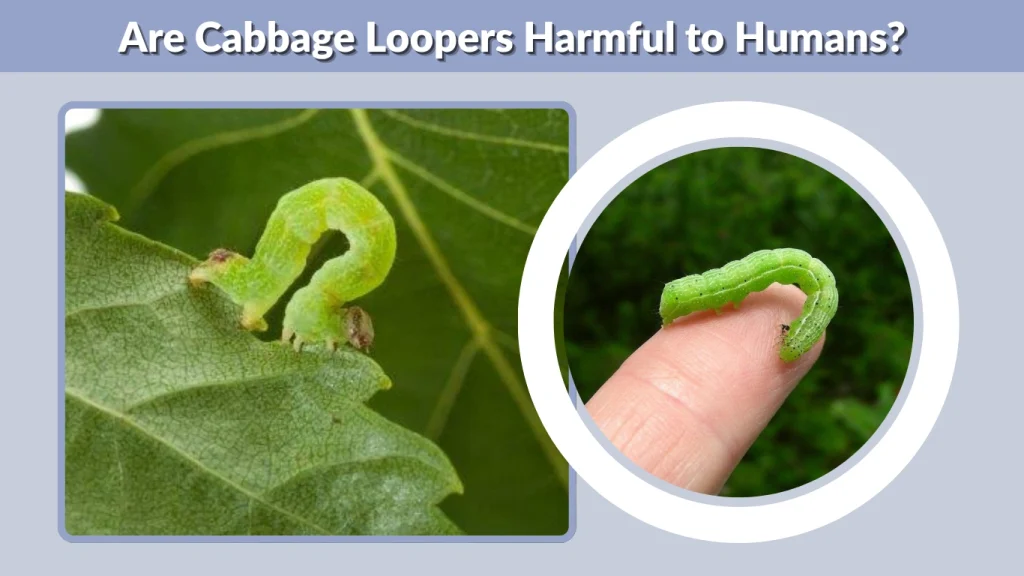
Cabbage loopers may look unpleasant, but they are not harmful to humans. These caterpillars are neither poisonous nor capable of biting or stinging. You can safely handle them with your hands, although wearing gloves is recommended for hygiene when gardening.
Their primary threat is to plants, not people. However, if they infest vegetables, they can contaminate produce with droppings (frass), making it less appealing to eat. Washing vegetables thoroughly before consumption is usually enough to remove any residue.
Natural Predators of Cabbage Loopers
In nature, cabbage loopers have several predators that help keep their population under control. Birds are among the most common predators, often feeding on the caterpillars directly.
Parasitic wasps are also highly effective. These tiny insects lay their eggs inside cabbage looper larvae, eventually killing them. Additionally, beetles, spiders, and other beneficial insects contribute to reducing their numbers.
Encouraging these natural predators in your garden can be an effective and eco-friendly way to manage cabbage looper infestations.
How to Get Rid of Cabbage Loopers
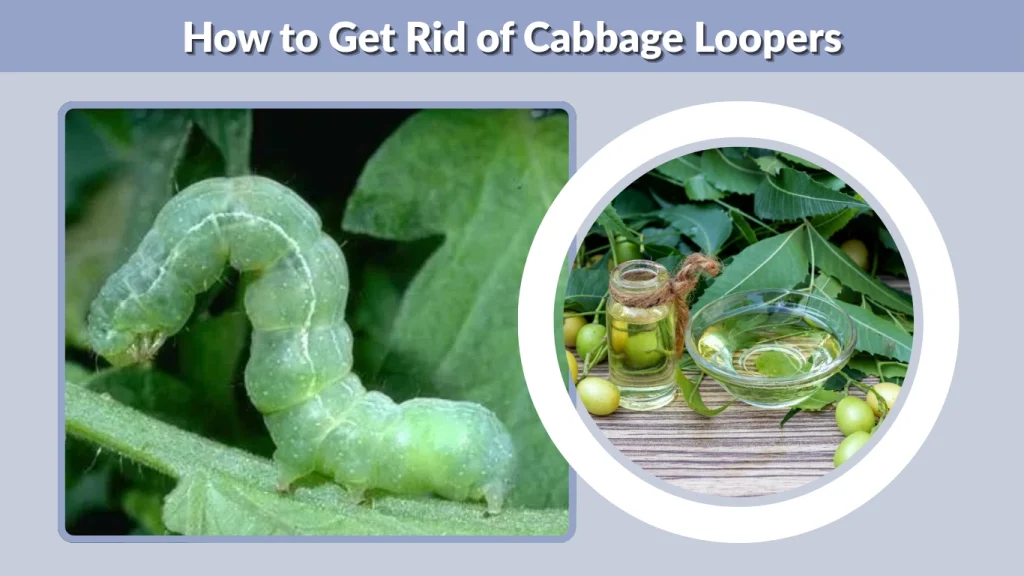
Controlling cabbage loopers requires a combination of methods. The earlier you act, the easier it is to prevent serious damage.
Organic Control Methods
Organic solutions are often the first choice for home gardeners. One of the simplest methods is handpicking the caterpillars from plants and removing them manually. While time-consuming, this can be very effective for small infestations.
Neem oil is another popular option. It works by disrupting the insect’s feeding and reproductive cycle. Spray it directly on affected plants, especially under the leaves where caterpillars hide.
Bacillus thuringiensis (Bt) is a natural bacteria that specifically targets caterpillars. When ingested, it stops them from feeding and eventually kills them. It is safe for humans, pets, and beneficial insects when used correctly.
Diatomaceous earth can also be applied around plants. This fine powder damages the outer layer of insects, causing them to dehydrate.
Chemical Control
For severe infestations, chemical insecticides may be necessary. There are several products specifically designed to control caterpillars like cabbage loopers.
When using insecticides, always follow label instructions carefully. Apply them during early morning or late evening to avoid harming beneficial insects like bees. Overuse of chemicals can lead to resistance, so they should be used as a last resort.
Preventive Measures
Prevention is often more effective than treatment. Using row covers can physically block moths from laying eggs on plants. Crop rotation also helps reduce the chances of recurring infestations.
Regularly inspecting plants, especially the underside of leaves, allows you to catch problems early before they spread.
Best Methods to Prevent Cabbage Looper Infestation
Keeping your garden healthy and clean plays a major role in preventing cabbage loopers. Remove plant debris and weeds, as these can provide hiding spots for pests.
Encouraging beneficial insects and maintaining biodiversity can naturally reduce pest populations. Companion planting with herbs like dill or cilantro may also help deter pests.
Consistent monitoring is key. The sooner you detect cabbage loopers, the easier they are to control.
Conclusion
Cabbage loopers are a common but manageable garden pest. By learning how to identify them, understanding their life cycle, and recognizing early signs of damage, you can take effective action before they cause serious harm.
Using a combination of organic methods, natural predators, and preventive strategies is the best approach for long-term control. With regular care and attention, you can protect your crops and maintain a healthy, productive garden.
FAQs
What does a cabbage looper turn into?
A cabbage looper eventually turns into a moth. After the caterpillar stage, it forms a cocoon (pupa) and later emerges as an adult cabbage looper moth with brownish-gray wings and a silver marking.
What do cabbage looper eggs look like?
Cabbage looper eggs are very small, round, and pale green. They are usually laid on the underside of leaves, making them difficult to spot without close inspection.
How do I get rid of cabbage loopers naturally?
You can control cabbage loopers naturally by handpicking them, applying neem oil, or using Bacillus thuringiensis (Bt). These methods are safe for humans, pets, and beneficial insects when used properly.
Are cabbage loopers harmful or poisonous?
No, cabbage loopers are not harmful to humans. They are not poisonous and do not bite or sting. Their only impact is on plants, where they cause damage by feeding on leaves.
What plants do cabbage loopers attack the most?
Cabbage loopers mainly attack cruciferous vegetables like cabbage, broccoli, kale, and cauliflower. They can also feed on tomatoes, lettuce, spinach, and herbs like basil.
