

The cecropia moth caterpillar is one of the most striking and largest caterpillars found in North America. Known for its bright green body and colorful bumps, this fascinating insect often catches the attention of nature lovers and gardeners alike. Despite its unusual appearance, it is completely harmless and plays an important role in the ecosystem.
In this guide, you’ll learn everything about the cecropia moth caterpillar, including its size, diet, life cycle, and how to care for it if you decide to raise one.
What Is a Cecropia Moth Caterpillar?
The cecropia moth caterpillar is the larval stage of the cecropia moth (Hyalophora cecropia), the largest native moth in North America. It belongs to the giant silk moth family, known for producing large, beautiful moths and strong silk cocoons.
These caterpillars are an essential part of the food chain. They serve as a food source for birds and other predators while also helping maintain plant balance by feeding on leaves. As they mature, they undergo a remarkable transformation into one of the most impressive moths in the world.
Cecropia Moth Caterpillar Identification and Appearance
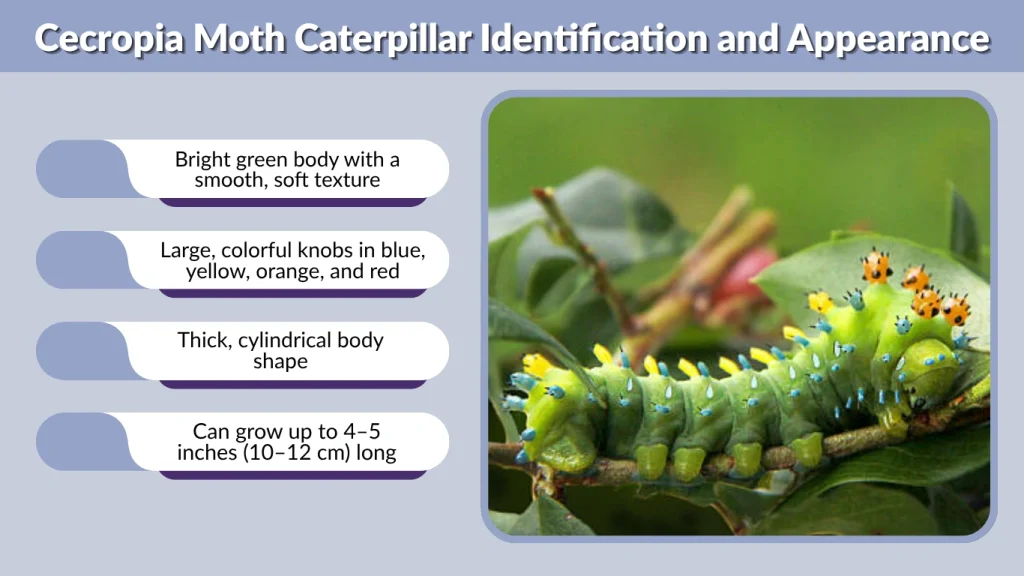
The cecropia moth caterpillar is easy to recognize due to its large size and striking colors. Its bold, textured body and unique patterns make it stand out from most other caterpillars. Even at a glance, its bright green color combined with colorful knobs gives it a distinctive and almost ornamental look.
Key identification features:
- Bright green body with a smooth, soft texture
- Large, colorful knobs (tubercles) in blue, yellow, orange, and red
- Thick, cylindrical body shape
- Can grow up to 4–5 inches (10–12 cm) long
- No stinging hairs or venom (harmless appearance despite spikes)
- Often found on leaves of host trees like maple or cherry
These features make the cecropia caterpillar one of the most visually recognizable and largest caterpillars in North America.
Cecropia Moth Caterpillar Life Cycle
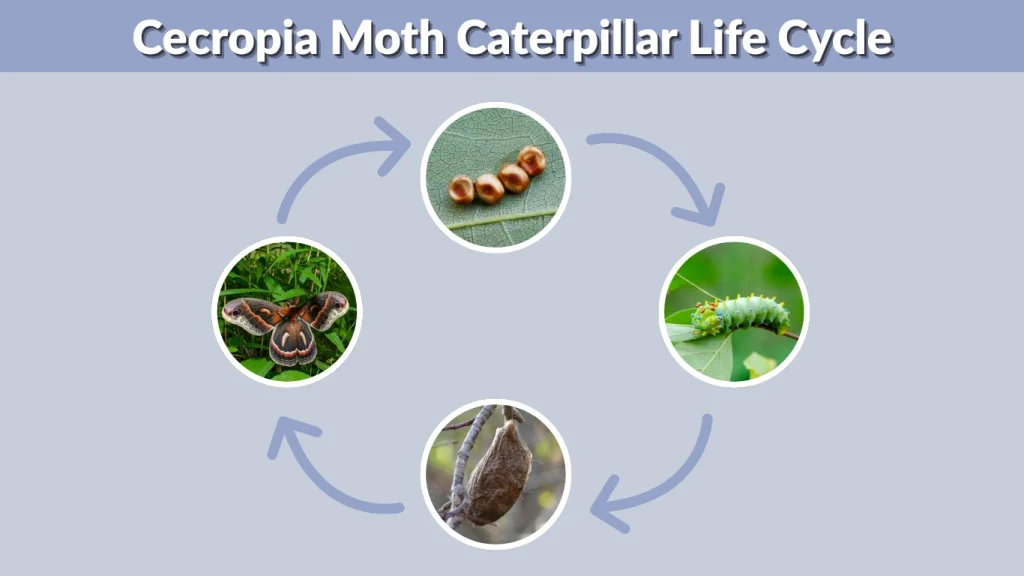
Stages of Development
The life cycle of the cecropia moth consists of four main stages:
- Egg
- Caterpillar (larva)
- Cocoon (pupa)
- Adult moth
The cycle begins when the female moth lays eggs on the leaves of host plants. Once the eggs hatch, tiny caterpillars emerge and begin feeding immediately. Over time, they grow rapidly before eventually forming a cocoon.
Instars Explained
Cecropia caterpillars pass through several growth stages called instars. During each instar, the caterpillar sheds its skin and grows larger.
With each stage, noticeable changes occur in color, size, and the development of their distinctive tubercles. Early instars are smaller and darker, while later stages show the bright green coloration and vibrant knobs that make them so recognizable.
Cecropia Moth Caterpillar Diet and Food
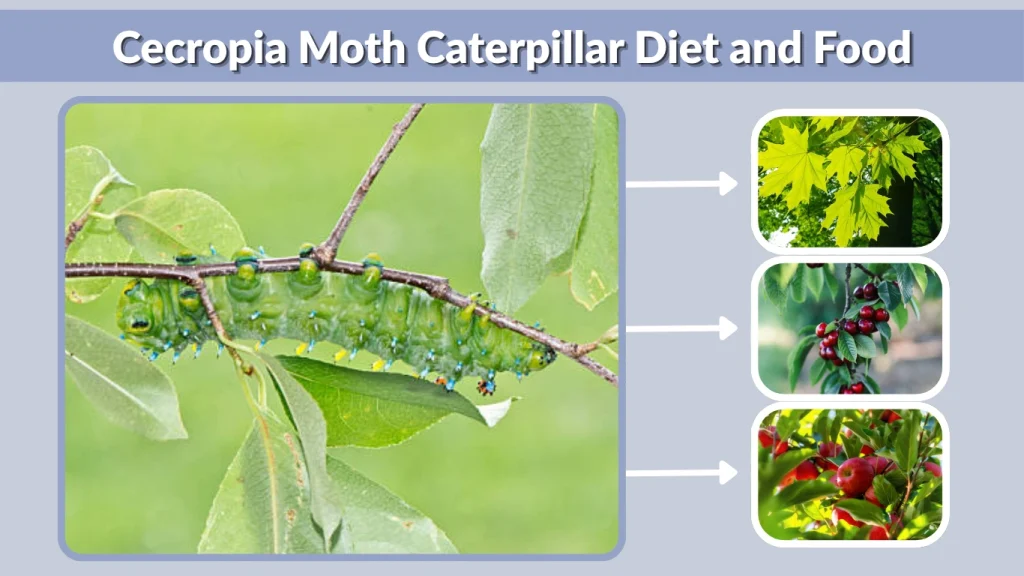
What Do Cecropia Caterpillars Eat?
Cecropia moth caterpillars are herbivores, meaning they feed exclusively on plant leaves. They have a strong appetite and spend most of their time eating to support their rapid growth.
Fresh, tender leaves are essential for their development, especially during their later stages when they consume large amounts of food.
Common Host Plants
These caterpillars are not very picky but prefer a range of deciduous trees and shrubs. Common host plants include:
- Maple
- Cherry
- Apple
- Birch
- Willow
They usually stay on the same type of plant where they hatch, feeding continuously until they are ready to pupate.
Cecropia Moth Caterpillar Cocoon and Transformation
Once the caterpillar reaches its full size, it prepares for the next stage of its life. It spins a strong, silk cocoon, usually attached to a branch or tucked among leaves.
Inside this cocoon, the caterpillar undergoes a complete transformation known as metamorphosis. During this stage, it changes into a pupa and eventually develops into an adult moth.
The cocoon also serves as protection during winter. Cecropia moths typically overwinter in this stage, emerging as adults in late spring or early summer.
Are Cecropia Moth Caterpillars Poisonous?
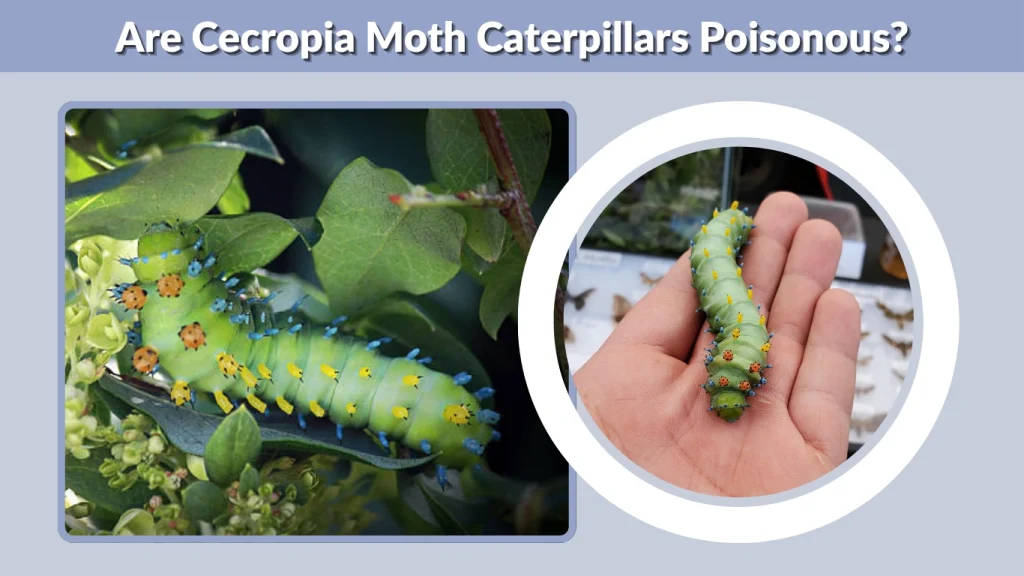
Do They Sting or Bite?
A common concern is whether cecropia caterpillars are dangerous. Despite their spiky appearance, they do not sting or bite.
Are They Safe to Touch?
These caterpillars are completely harmless to humans. The colorful knobs on their bodies may look intimidating, but they are soft and non-toxic. However, like all wildlife, they should be handled gently and respectfully to avoid causing stress or injury.
How to Raise a Cecropia Moth Caterpillar
Basic Care Tips
Raising a cecropia moth caterpillar can be a rewarding experience, especially for beginners interested in insects or nature. These caterpillars are relatively easy to care for as long as their basic needs are met.
Start by placing the caterpillar in a well-ventilated container, such as a mesh enclosure or a jar with air holes. Good airflow is important to prevent mold and keep the environment healthy.
Provide fresh leaves from its host plant daily. It’s best to use the same type of plant where the caterpillar was originally found. Replace old or dried leaves regularly and keep the enclosure clean by removing waste (frass).
Important Things to Avoid
While caring for a cecropia caterpillar is simple, there are a few common mistakes to avoid:
- Feeding leaves from the wrong plant
- Allowing the enclosure to become dirty or moldy
- Overhandling the caterpillar
- Keeping it in direct sunlight or extreme temperatures
By maintaining a clean and stable environment, you can help the caterpillar grow successfully and reach the cocoon stage.
Cecropia Moth Caterpillar Habitat and Distribution
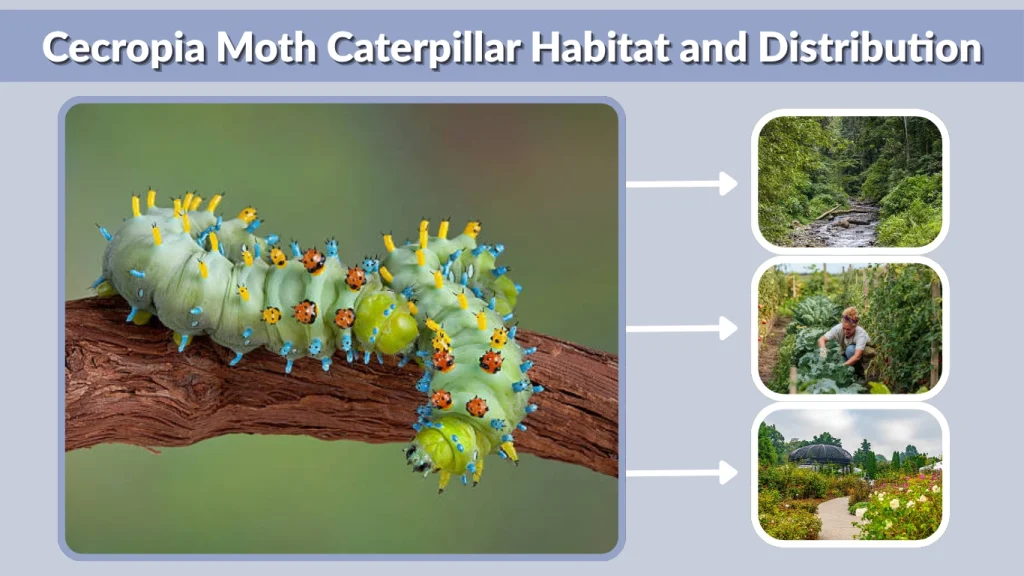
Cecropia moth caterpillars are found across much of North America. They are especially common in regions with plenty of deciduous trees and shrubs.
You can often spot them in forests, gardens, parks, and even suburban areas. They tend to stay on host plants, so looking closely at leaves on trees like maple or cherry can increase your chances of finding one.
In places like Ontario and other parts of Canada and the United States, they are a familiar sight during the warmer months, particularly in late spring and summer when caterpillars are actively feeding.
Cecropia vs Luna Moth Caterpillar
Cecropia and luna moth caterpillars are both members of the giant silk moth family, but they have some noticeable differences.
Cecropia caterpillars are larger and more colorful, with bright knobs in multiple colors. In contrast, luna moth caterpillars are usually smoother and pale green, with a simpler appearance.
Behaviorally, both species feed on leaves and undergo similar life cycles, but the adult moths look very different. The luna moth is known for its light green wings and long tails, while the cecropia moth is larger with reddish-brown wings and bold patterns.
Interesting Facts About Cecropia Caterpillars
The cecropia moth caterpillar has several fascinating traits that make it unique:
- It grows into the largest native moth in North America
- The adult moth does not eat and lives only for a short time
- Its cocoon is made of strong silk and can survive harsh weather
- The caterpillar’s bright colors may help deter predators
These features make it an interesting species for study and observation.
Can You Buy Cecropia Moth Caterpillars?
Cecropia moth caterpillars are sometimes available for purchase through breeders or educational suppliers. However, availability can vary depending on the season and location.
Before buying, it’s important to check local regulations, as collecting or transporting native species may be restricted in some areas.
Ethically, it’s often better to observe or raise caterpillars found naturally in your environment rather than purchasing them. This helps protect wild populations and supports local ecosystems.
Conclusion
The cecropia moth caterpillar is truly one of nature’s most impressive insects. From its large size and colorful appearance to its fascinating life cycle, it offers a unique glimpse into the world of metamorphosis.
Whether you are observing one in the wild or raising it at home, understanding its diet, habitat, and behavior can deepen your appreciation for this remarkable species. Protecting these caterpillars and their natural habitats ensures that future generations can continue to enjoy their beauty.
FAQs
What does a cecropia moth caterpillar look like?
It has a bright green body with large, colorful knobs in blue, yellow, orange, and red. Its thick body and large size make it very easy to recognize.
Where can you find cecropia caterpillars?
They are commonly found on trees like maple, cherry, and apple in forests, gardens, and suburban areas across North America.
Are cecropia moth caterpillars dangerous?
No, they are completely harmless. They do not sting, bite, or produce any poison.
How long does the caterpillar stage last?
The caterpillar stage usually lasts several weeks, during which it eats and grows rapidly before forming a cocoon.
What is the purpose of their colorful knobs?
The bright knobs likely help deter predators by making the caterpillar look unusual or unappealing, even though it is not actually dangerous.
