

Worker bees are the backbone of any bee colony. These small, hardworking insects are responsible for nearly every task that keeps the hive alive and functioning. From feeding larvae to collecting nectar, worker bees ensure the survival of the colony and play a vital role in pollination. Without them, ecosystems and agriculture would suffer greatly. In this article, we’ll explore who worker bees are, how they develop, and the essential roles they perform throughout their lives.
What Are Worker Bees?
Worker bees are sterile female bees that make up the majority of the colony. Unlike the queen bee, they do not reproduce, and unlike drones, they are constantly active. Their primary purpose is to maintain the hive and support the queen.
Worker bees are called “workers” because they perform all the labor-intensive tasks required for the colony’s survival. A single hive can contain tens of thousands of worker bees, each contributing to the colony’s efficiency.
Worker Bees vs Queen Bee
The queen bee is the only reproductive female in the colony, while worker bees are sterile. The queen’s main job is to lay eggs, whereas worker bees handle everything else—from feeding the queen to building the hive. Physically, the queen is larger and has a longer abdomen.
Worker Bees vs Drones
Drones are male bees whose primary role is to mate with a queen. They do not collect food, defend the hive, or participate in maintenance. Worker bees, on the other hand, are female and perform all essential tasks. Drones also have shorter lifespans compared to worker bees during active seasons.
Physical Characteristics of Worker Bees

Worker bees are specially adapted for efficiency, allowing them to perform multiple tasks within and outside the hive. Their bodies are designed for foraging, building, defense, and communication. Despite their small size, they possess unique structures that make them highly productive and essential to colony survival.
Key Physical Features (Quick List)
- Body Segments: Divided into head, thorax, and abdomen
- Compound Eyes: Help detect movement and navigate surroundings
- Antennae: Used for sensing smell, touch, and communication
- Wings: Two pairs of wings for fast and controlled flight
- Pollen Baskets (Corbicula): Located on hind legs for carrying pollen
- Wax Glands: Produce wax for building honeycomb
- Proboscis (Tongue): Long tube for sucking nectar from flowers
- Stinger: Barbed structure used for defense
- Hairy Body: Helps trap pollen during foraging
These physical traits enable worker bees to handle diverse responsibilities efficiently, making them perfectly suited for life in a highly organized colony.
Life Cycle of a Worker Bee
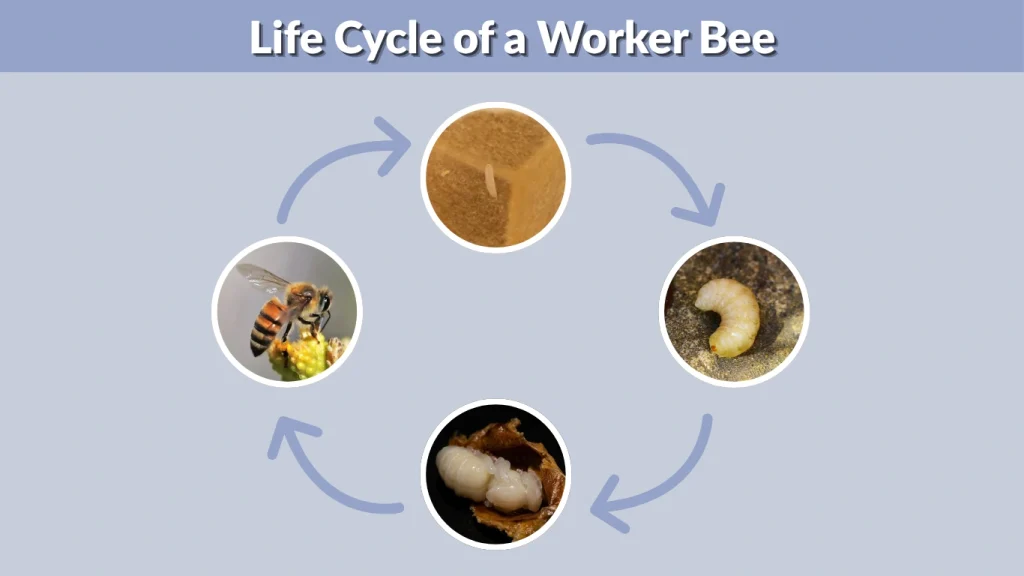
The life cycle of a worker bee consists of four main stages: egg, larva, pupa, and adult. This complete transformation process is known as metamorphosis and typically takes about 21 days.
Egg Stage
The life of a worker bee begins when the queen lays an egg in a honeycomb cell. This stage lasts about three days. Each egg is tiny and white, barely visible to the naked eye.
Larva Stage
After three days, the egg hatches into a larva. During this stage, nurse bees feed the larva a nutrient-rich diet, helping it grow rapidly. The larva remains in this stage for about six days, during which it increases significantly in size.
Pupa Stage
Once fully grown, the larva enters the pupal stage. The cell is sealed with wax, and inside, the larva transforms into a fully formed bee. This stage lasts about 12 days and involves major physical changes.
Adult Worker Bee
After completing development, the adult worker bee emerges from the cell. Initially, it performs simple tasks within the hive before gradually taking on more complex responsibilities as it ages.
Roles and Responsibilities of Worker Bees

Worker bees perform a wide range of duties that change as they grow older. This system, known as division of labor, ensures that all tasks in the hive are efficiently managed.
Early Stage Tasks (Days 1–10)
In the first few days of their lives, worker bees focus on cleaning and maintenance. They clean empty cells to prepare them for new eggs and help keep the hive hygienic. During this stage, some worker bees become nurse bees, feeding and caring for developing larvae.
Middle Stage Tasks (Days 11–20)
As worker bees mature, they begin producing wax from special glands in their bodies. This wax is used to build and repair honeycomb structures. They also help process nectar into honey and store it in cells. Additionally, worker bees assist in ventilating the hive by fanning their wings, which helps regulate temperature and humidity.
Late Stage Tasks (Days 21+)
In the final stage of their lives, worker bees leave the hive to forage. They collect nectar, pollen, and water, which are essential for the colony’s survival. Some worker bees also act as guards, protecting the hive from predators and intruders.
Behavior and Communication
Worker bees are highly organized and communicate effectively to maintain the colony’s efficiency. Their behavior is driven by cooperation and shared goals, making them one of the most coordinated groups in nature.
Waggle Dance
One of the most fascinating forms of communication among worker bees is the waggle dance. When a bee finds a good food source, it returns to the hive and performs a specific movement pattern. This dance conveys information about the direction and distance of the food source, helping other bees locate it quickly.
Pheromones and Signals
Worker bees also rely on chemical signals called pheromones to communicate. These signals help regulate colony behavior, alert others to danger, and maintain social structure within the hive.
Importance of Worker Bees in Ecosystem
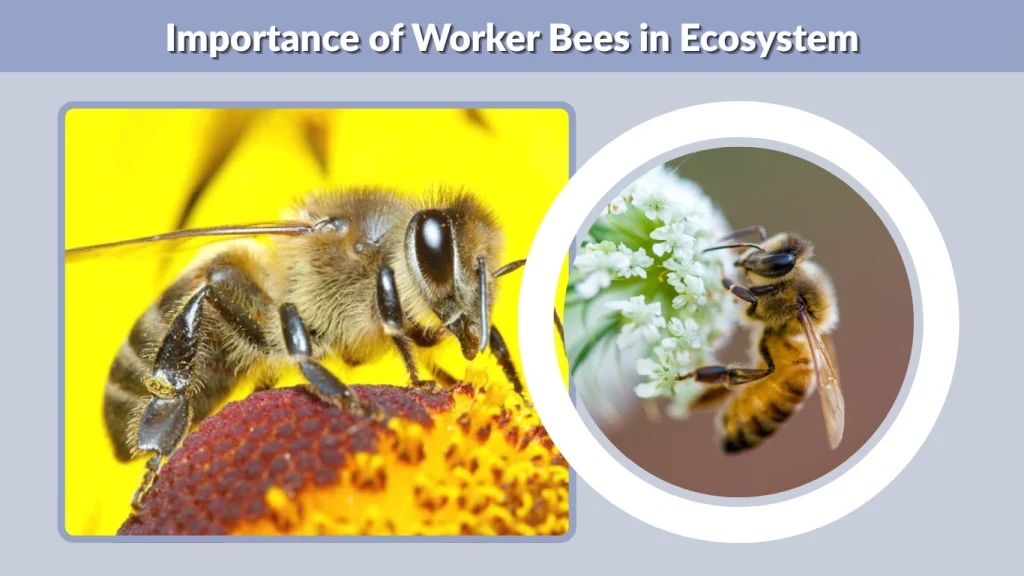
Worker bees play a crucial role not only in their colonies but also in maintaining ecological balance. Their activities directly impact plant life, food production, and biodiversity.
Pollination Role
As worker bees collect nectar, they transfer pollen from one flower to another. This process, known as pollination, is essential for plant reproduction. Many fruits, vegetables, and crops depend heavily on bee pollination.
Impact on Agriculture
Worker bees significantly contribute to global agriculture. Crops such as almonds, apples, and berries rely on bees for higher yields and better quality. Without worker bees, food production would decline, affecting both availability and cost.
Contribution to Biodiversity
By supporting plant growth, worker bees indirectly sustain other species that depend on those plants. This helps maintain biodiversity and ensures the stability of ecosystems.
Threats Facing Worker Bees
Despite their importance, worker bees face numerous threats that are affecting their populations worldwide.
Pesticides and Chemicals
The use of harmful pesticides can poison worker bees, affecting their ability to navigate and forage. Even small amounts can weaken colonies over time.
Climate Change
Changes in climate disrupt flowering patterns, making it harder for bees to find food. Extreme weather conditions can also damage hives and reduce survival rates.
Colony Collapse Disorder
Colony Collapse Disorder (CCD) is a serious issue where worker bees suddenly disappear from the hive. Without workers, the colony cannot survive, leading to its eventual collapse.
How to Protect Worker Bees
Protecting worker bees is essential for preserving ecosystems and food supplies. Individuals and communities can take simple steps to support bee populations.
Plant Bee-Friendly Flowers
Growing a variety of flowering plants provides bees with a consistent source of nectar and pollen. Native plants are especially beneficial.
Avoid Pesticides
Using natural or organic alternatives to chemical pesticides can reduce harm to bees and other pollinators.
Support Local Beekeepers
Buying honey and other products from local beekeepers helps sustain responsible beekeeping practices and supports bee conservation efforts.
Conclusion
Worker bees are essential to the survival of their colonies and the health of our planet. From their complex life cycle to their diverse responsibilities, these small insects perform tasks that have a massive impact on ecosystems and agriculture. However, increasing environmental threats put their existence at risk. By understanding their importance and taking steps to protect them, we can help ensure a sustainable future for both bees and humans.
FAQs
How many worker bees are in a hive?
A typical honey bee hive contains around 20,000 to 60,000 worker bees, depending on the season and colony health. During peak seasons like spring and summer, the number increases significantly due to high activity and food availability.
What do worker bees eat?
Worker bees mainly consume nectar and honey for energy, along with pollen for protein. Young worker bees, especially nurse bees, also consume bee bread—a mixture of pollen and nectar—to support their development and ability to produce royal jelly.
Can worker bees survive without a queen?
Worker bees can survive temporarily without a queen, but the colony cannot sustain itself long-term. Without a queen laying fertilized eggs, the population declines, and the colony eventually collapses if a new queen is not produced.
How do worker bees make honey?
Worker bees collect nectar from flowers and store it in their honey stomach. Back in the hive, they pass it to other bees, who break it down with enzymes. The nectar is then stored in cells and dried to form honey.
Do worker bees sleep?
Worker bees do rest, but not in the same way humans do. They take short periods of inactivity, especially at night or when inside the hive. These rest periods help them conserve energy for continuous work.
