

The term “queen bee honey” often attracts attention, suggesting a rare or superior type of honey. However, many people are unaware that this name can be misleading. In reality, all honey is produced by worker bees, while the queen bee plays a completely different role within the hive. Understanding this distinction is important for making informed choices when buying honey. In this article, you’ll discover what “queen bee honey” really means, how to identify genuine honey, and the truth behind this popular but often misunderstood term.
What Is Queen Bee Honey?
The term “queen bee honey” often creates confusion among readers and consumers. Many people assume that it refers to a special type of honey produced exclusively by the queen bee. However, this is not scientifically accurate. In reality, all honey in a hive is produced by worker bees, not the queen.
Worker bees collect nectar from flowers, process it using enzymes, and store it in honeycombs where it eventually becomes honey. The queen bee does not participate in this process at all. Her primary role is reproduction—laying eggs and maintaining the colony’s population.
So why does the term “queen bee honey” exist? In most cases, it is used as a marketing label to suggest higher quality, rarity, or premium value. While the name may sound appealing, it does not represent a distinct type of honey.
Another important point is the connection between the queen bee and royal jelly. This is a nutrient-rich substance produced by worker bees and fed to the queen throughout her life. Unlike honey, royal jelly is specifically associated with the queen and plays a key role in her development and fertility.
Identification of Queen Bee Honey

Understanding how to identify “queen bee honey” is essential to avoid confusion and misleading claims. Since there is no scientifically recognized product with this name, most items labeled as such are simply regular honey marketed differently.
Signs It’s Just Regular Honey
Products labeled as “queen bee honey” usually have the same characteristics as standard honey. There is no unique production process or special ingredient that makes them different.
- Similar color range (golden to dark amber)
- Thick, sticky texture
- Sweet natural taste
- Produced by worker bees
These features confirm that the honey is not exclusive to the queen but is part of the general hive production.
How to Identify Pure Honey Instead
Instead of focusing on the name, it is more useful to identify whether the honey is pure and natural. High-quality honey has certain recognizable traits.
- Thick consistency that does not flow like water
- Does not dissolve instantly when dropped in water
- Natural floral aroma
- No artificial sweetness or chemical aftertaste
Pure honey may crystallize over time, which is actually a sign of authenticity rather than spoilage.
Label Reading Tips
Reading labels carefully can help you avoid misleading products. Many brands use attractive names like “queen bee honey” to stand out, but the ingredient list tells the real story.
- Look for “100% pure honey”
- Avoid products with added sugar or syrups
- Check for certifications like organic or raw honey
- Verify the source or brand reputation
Being aware of these details helps you make informed purchasing decisions and ensures you are getting genuine honey.
Difference Between Queen Bee Honey and Royal Jelly
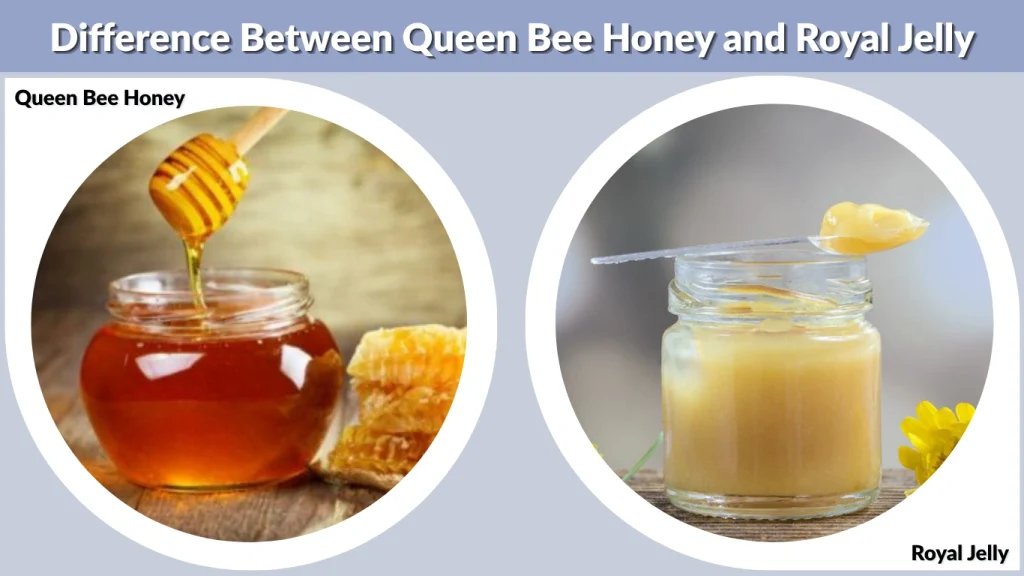
One of the biggest misconceptions is confusing “queen bee honey” with royal jelly. While the name suggests a connection, these two substances are completely different in origin, composition, and purpose.
Royal jelly is a creamy, nutrient-rich secretion produced by worker bees. It is fed to all larvae initially, but only future queen bees continue to receive it throughout their development. This special diet enables the queen to grow larger, live longer, and become fertile.
Honey, on the other hand, is made from nectar collected from flowers. It serves as the primary energy source for the entire colony, including worker bees and drones.
Quick Comparison
- Honey: Made from nectar, used as food for all bees
- Royal Jelly: Secreted by worker bees, exclusively feeds the queen
- Function: Honey provides energy; royal jelly supports growth and reproduction
- Texture: Honey is thick and sticky; royal jelly is creamy
Understanding this distinction helps clarify why the term “queen bee honey” can be misleading.
How Honey Is Produced in a Hive
To fully understand the concept, it’s important to look at how honey is actually produced inside a hive. This process is carried out entirely by worker bees through a series of coordinated steps.
First, worker bees collect nectar from flowers using their long tongues and store it in a special part of their stomach known as the “honey stomach.” Once they return to the hive, the nectar is passed from one bee to another, gradually breaking down into simpler sugars.
Enzymes play a key role in this transformation, converting nectar into a more stable substance. The bees then deposit the processed liquid into honeycomb cells. Over time, water content is reduced through evaporation, turning the liquid into thick, golden honey.
Finally, the bees seal the honeycomb with wax to preserve it. This stored honey becomes a vital food source for the colony, especially during times when nectar is scarce.
Queen Bee’s Role in Honey Production

Although the queen bee is often associated with honey, she does not directly produce it. Her contribution to honey production is indirect but extremely important. By laying thousands of eggs, she ensures a steady population of worker bees—the ones actually responsible for making honey.
A strong and healthy queen leads to a large and active workforce. More worker bees mean more nectar collection, which ultimately results in higher honey production. On the other hand, if the queen becomes weak or stops laying eggs efficiently, the colony’s population declines, and honey production drops significantly.
In this way, the queen bee acts as the foundation of the hive’s productivity. Without her, the entire system that produces honey would collapse.
Benefits of Honey (Often Confused as Queen Bee Honey)
Many people search for “queen bee honey benefits,” assuming it offers unique advantages. In reality, the benefits come from natural honey itself, not from any special connection to the queen bee.
Honey has been used for centuries as both a food and a natural remedy due to its rich composition.
- Provides a quick and natural source of energy
- Contains antioxidants that help fight free radicals
- Supports immune system health
- Has antibacterial properties useful for healing wounds
Is “Queen Bee Honey” Healthier?
There is no scientific evidence that “queen bee honey” is healthier than regular honey. The quality of honey depends on factors such as its source, purity, and processing method.
Raw and unprocessed honey generally retains more nutrients compared to highly processed varieties. Therefore, choosing pure, raw honey is far more important than focusing on the product name.
Uses of Honey in Daily Life
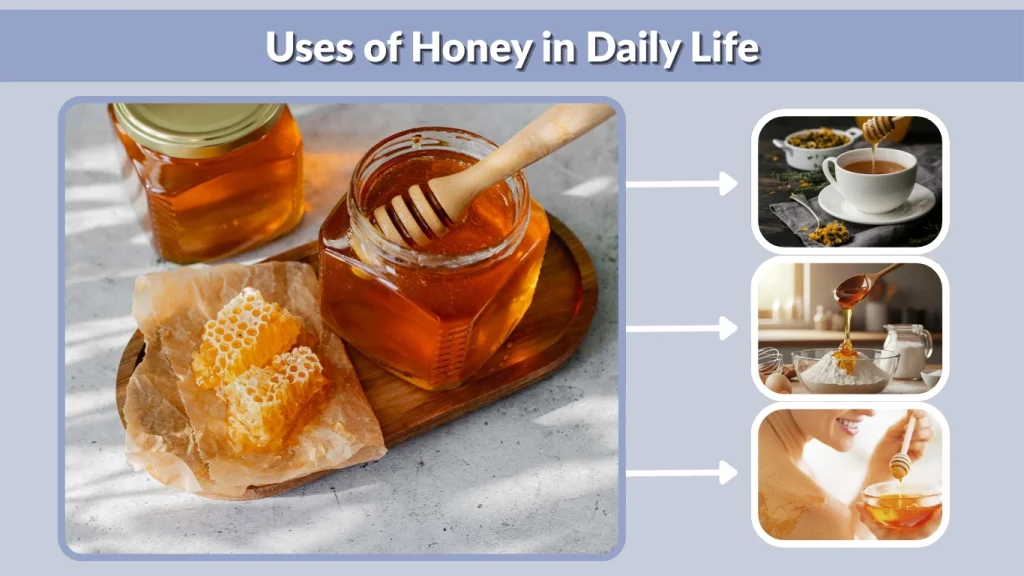
Honey is a versatile natural product with a wide range of uses in everyday life. Its nutritional and medicinal properties make it valuable in both traditional and modern applications.
- Food and beverages: Used as a natural sweetener in tea, desserts, and cooking
- Home remedies: Helps soothe sore throats and coughs
- Skincare: Applied as a natural moisturizer or face mask
- Traditional medicine: Used in various cultures for healing purposes
Because of these benefits, honey remains a popular and trusted natural ingredient across the world.
Queen Bee Honey in the Market (Myth vs Marketing)
The term “queen bee honey” is widely used in the market, but it is important to understand that it is primarily a branding strategy rather than a scientific classification.
Many companies use this label to make their product appear premium, rare, or more valuable. While the honey itself may still be high quality, the name does not indicate any biological difference.
Consumers should be cautious and not rely solely on product names when making purchasing decisions.
How to Avoid Misleading Products
To ensure you are buying genuine honey, consider the following tips:
- Research the brand and its reputation
- Read customer reviews
- Check for clear labeling and ingredient transparency
- Avoid products with vague or exaggerated claims
Focusing on quality indicators rather than marketing terms will help you choose better products.
FAQs
Does the queen bee produce honey?
No, the queen bee does not produce honey. All honey in a hive is made by worker bees, which collect nectar and convert it into honey. The queen’s role is focused on reproduction and maintaining the colony.
Why is it called queen bee honey?
The term “queen bee honey” is mainly used as a marketing label. It suggests premium quality or uniqueness, but it does not refer to a specific type of honey produced by or for the queen bee.
Is queen bee honey different from raw honey?
No, there is no real difference. Products labeled as “queen bee honey” are usually just raw or regular honey. The actual quality depends on whether the honey is pure, organic, or minimally processed.
Can queen bees eat honey?
Queen bees can consume honey, but their primary diet is royal jelly. This special nutrient-rich substance supports their growth, fertility, and long lifespan.
How can I choose the best quality honey?
To choose high-quality honey, look for products labeled as 100% pure or raw. Check for natural texture, avoid added sugars, and buy from trusted brands with proper certifications for authenticity.
Conclusion
“Queen bee honey” may sound like a special or superior product, but in reality, it is simply a marketing term. All honey is produced by worker bees, while the queen bee plays an indirect yet essential role by maintaining the colony’s population.
Understanding this distinction helps you make informed choices and avoid misleading claims. Instead of focusing on names, it is better to choose honey based on its purity, quality, and source. In doing so, you can fully enjoy the natural benefits that real honey has to offer.
