
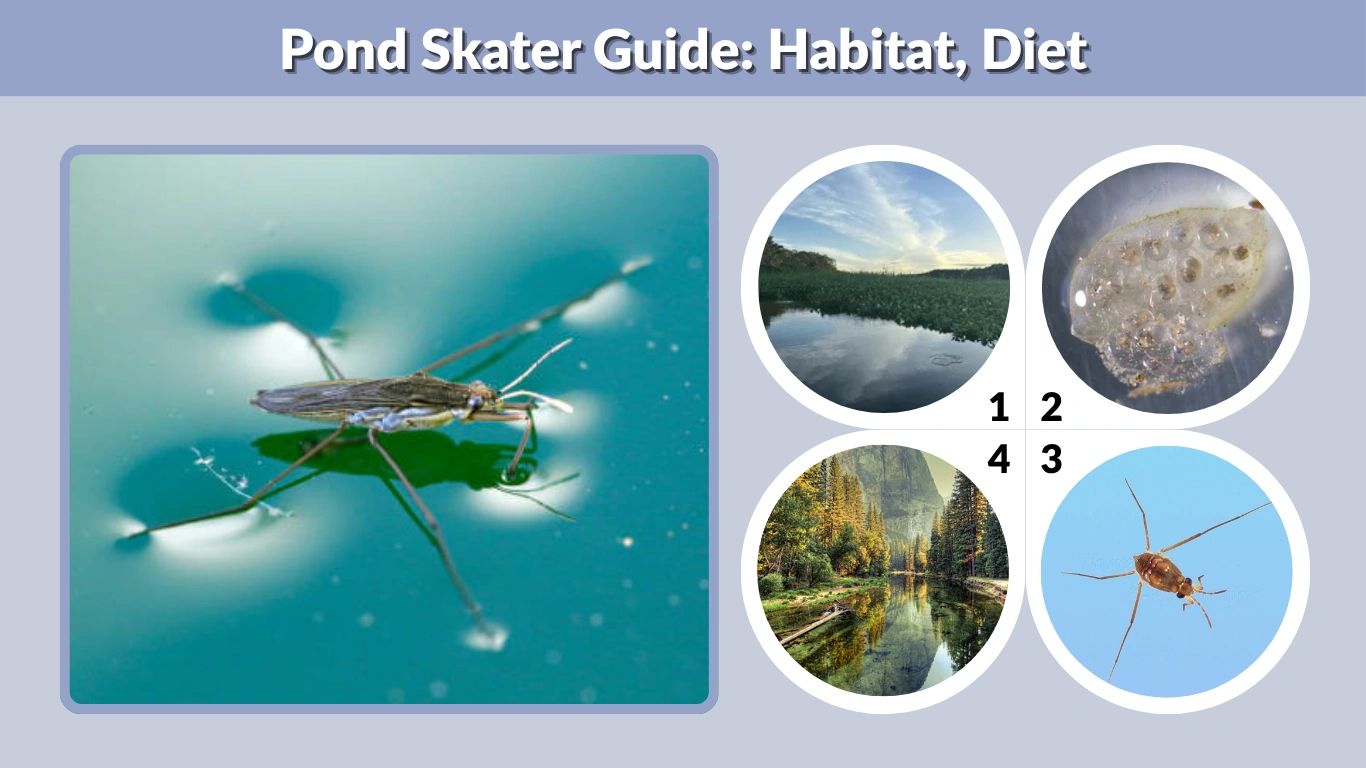
Pond skaters, also known as water striders, are fascinating insects that live on the surface of still water. Their ability to glide effortlessly across ponds and lakes makes them one of the most unique creatures in freshwater ecosystems. These insects rely on specialized body structures and natural physics to survive and hunt. Beyond their unusual movement, pond skaters play an important role in maintaining ecological balance. Understanding their behavior, habitat, and adaptations reveals how perfectly they are designed for life on water.
What Is a Pond Skater?
A pond skater is a type of aquatic insect belonging to the Gerridae family. These insects are commonly seen skating across calm water surfaces, using their long legs to stay afloat. They are considered true bugs and are closely related to other members of the Hemiptera order.
- Belongs to the Gerridae family
- Commonly called water striders
- Lives on the surface of freshwater bodies
- Adapted for surface-level movement
Scientific Classification
Pond skaters are classified within the insect world based on their structural and biological features. Their classification places them among insects that use piercing mouthparts and undergo gradual development.
Physical Characteristics of Pond Skaters
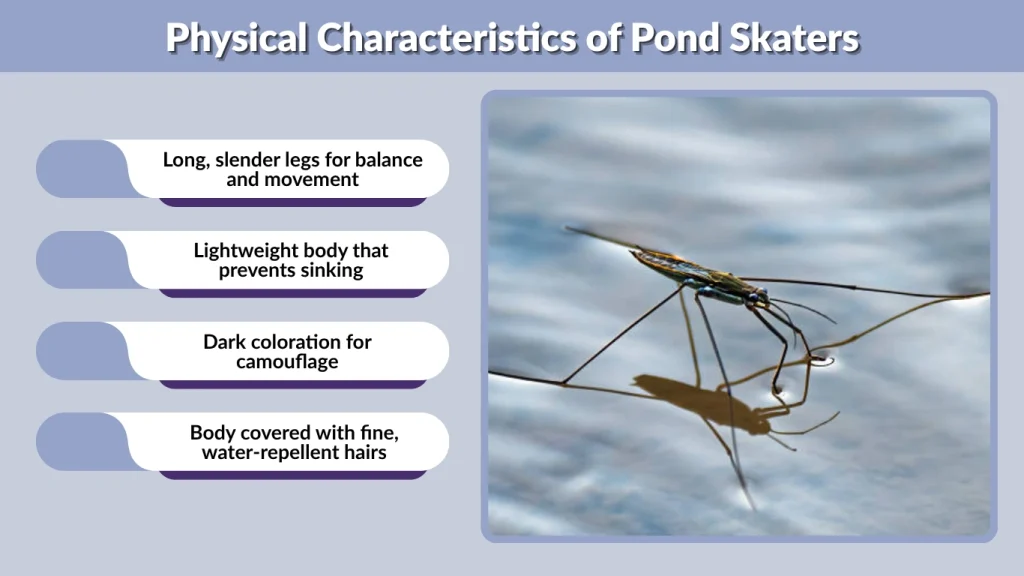
Pond skaters have a distinct appearance that makes them easily recognizable. Their bodies are slim and lightweight, which helps them stay on the water surface. Their legs are the most important feature, specially designed to support their unique lifestyle.
- Long, slender legs for balance and movement
- Lightweight body that prevents sinking
- Dark coloration for camouflage
- Body covered with fine, water-repellent hairs
Unique Leg Structure
Each pair of legs serves a specific function. The front legs are used to catch prey, while the middle legs help push the insect forward. The hind legs provide balance and allow smooth direction changes as they glide across the water.
How Do Pond Skaters Walk on Water?
Pond skaters do not actually “walk” on water in the traditional sense. Instead, they rely on surface tension, which creates a thin, elastic layer on the water’s surface. This natural force allows them to stay afloat without breaking through.
Their legs are covered with microscopic hairs that repel water. These hairs trap tiny pockets of air, preventing the legs from getting wet. As a result, the insect remains dry and buoyant. When a pond skater moves, it pushes against the water’s surface, creating small ripples that propel it forward.
This movement is both efficient and fast. Pond skaters can quickly glide across water to escape predators or catch prey. Their ability to sense vibrations also helps them detect nearby movement, making them skilled hunters.
Pond Skater Habitat and Distribution
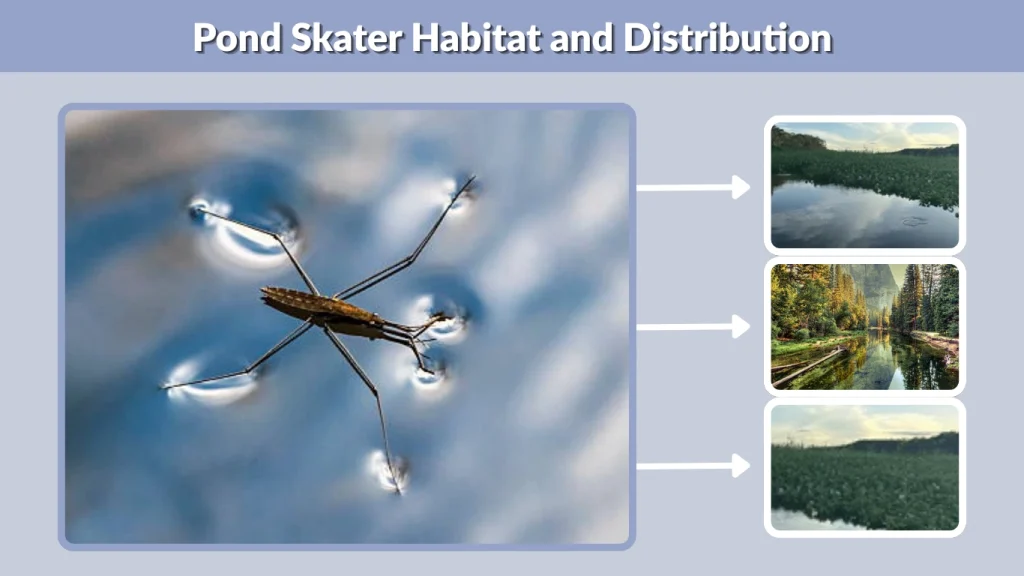
Where Do Pond Skaters Live?
Pond skaters are commonly found in freshwater environments such as ponds, lakes, and slow-moving streams. They prefer calm water surfaces where they can move easily without strong currents disturbing them.
Global Distribution
These insects are widely distributed across the world. They exist in both tropical and temperate regions, adapting to a variety of climates. Some species are even found in marine environments, living on the surface of the ocean.
Ideal Living Conditions
For pond skaters to thrive, their habitat must provide suitable conditions that support their lifestyle.
- Calm and undisturbed water surfaces
- Availability of small insects for food
- Clean or moderately clean water
- Presence of vegetation or shelter nearby
Pond Skater Diet and Feeding Behavior
Pond skaters are carnivorous insects that feed mainly on other small insects. They depend on vibrations in the water to locate their prey. When an insect becomes trapped on the surface, it creates ripples that signal its presence.
Once the pond skater detects this movement, it quickly glides toward the prey. Using its front legs, it captures the insect and pierces it with specialized mouthparts. Instead of chewing, it sucks out the internal fluids of its prey.
This feeding method allows pond skaters to consume their food efficiently. They may also scavenge dead insects when live prey is not available. Their role as predators helps control insect populations in aquatic environments, making them an important part of the ecosystem.
Life Cycle of a Pond Skater
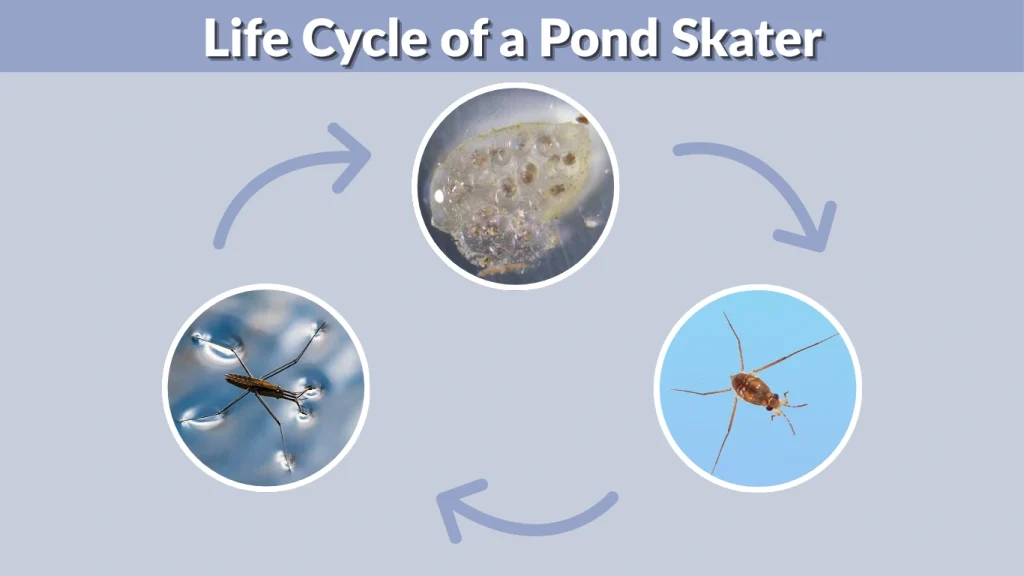
Egg Stage
The life cycle of a pond skater begins when the female lays eggs on aquatic plants or floating debris. These eggs are usually attached securely to surfaces near the water. This placement helps protect them from predators and environmental disturbances.
Nymph Stage
After hatching, young pond skaters enter the nymph stage. Nymphs look similar to adults but are smaller and lack fully developed wings. During this stage, they molt several times as they grow. Each molt brings them closer to their adult form.
Adult Stage
Once fully developed, pond skaters become adults capable of reproduction. Adult insects continue to live on the water surface, feeding and maintaining their role in the ecosystem. Their lifespan is relatively short, but they reproduce quickly to sustain their population.
Adaptations for Survival
Pond skaters have evolved several remarkable adaptations that allow them to thrive in aquatic environments. These features help them move efficiently, avoid predators, and capture prey.
- Water-repellent legs that prevent sinking
- Ability to detect vibrations on water
- Fast gliding motion for escape
- Lightweight body structure
Defense Mechanisms
To survive in the wild, pond skaters rely on quick reactions and environmental awareness.
- Rapid movement to escape predators
- Early detection of danger through ripples
- Ability to fly in some species
Role in the Ecosystem
Pond skaters play a vital role in maintaining balance within freshwater ecosystems. As predators, they help control populations of small insects, especially those that fall onto the water surface. This natural regulation prevents overpopulation and contributes to a healthier environment.
They also serve as a food source for larger animals such as fish and birds. This places them in the middle of the aquatic food chain. Because they are sensitive to changes in water conditions, their presence can indicate the overall health of a habitat. A stable population of pond skaters often reflects a well-balanced ecosystem.
Interesting Facts About Pond Skaters
Unique and Surprising Traits
Pond skaters have several fascinating characteristics that make them stand out among insects.
- They can move extremely fast across water
- They communicate using surface ripples
- Some species can jump on water
- A few species live in marine environments
FAQs
Why can pond skaters walk on water?
Pond skaters rely on surface tension and their water-repellent legs to stay afloat. Their legs distribute weight evenly while tiny hairs trap air, preventing water from sticking. This combination allows them to glide across the surface without sinking.
What do pond skaters eat?
They mainly feed on small insects trapped on the water surface. Using vibrations, they locate prey quickly and capture it with their front legs. They then pierce the prey and suck out its body fluids.
Are pond skaters harmful to humans?
No, pond skaters are harmless to humans. They do not bite or sting and pose no threat. In fact, they are beneficial because they help control insect populations in aquatic environments.
How long do pond skaters live?
Pond skaters typically have a short lifespan, often lasting a few months. However, they reproduce quickly, ensuring the continuation of their species in suitable environments.
Can pond skaters fly?
Some pond skater species have wings and can fly, especially when they need to move to new habitats. Others may remain wingless depending on environmental conditions and availability of resources.
