
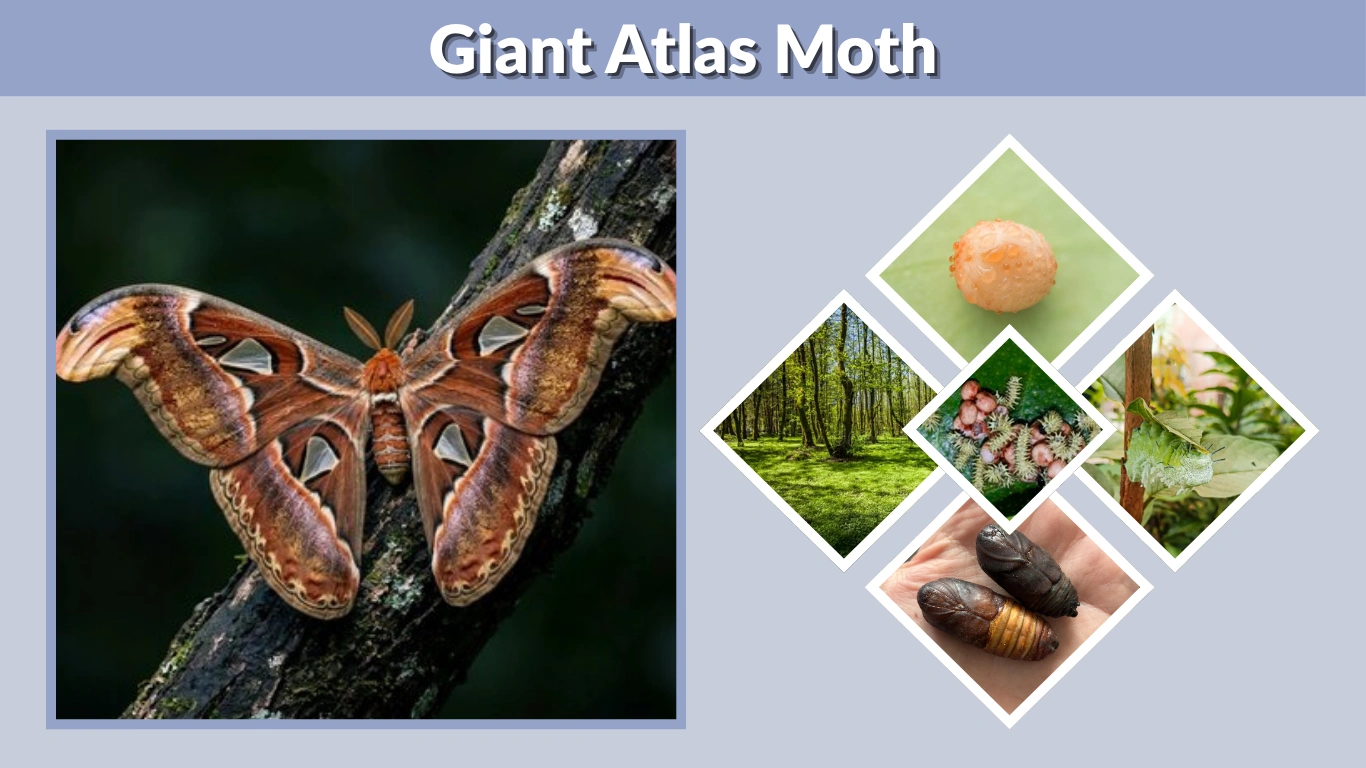
The giant atlas moth (Attacus atlas) is one of the largest and most impressive moths in the world. Known for its massive wingspan and unique patterns, it attracts attention from nature enthusiasts and researchers alike. Native to tropical regions of Asia, this moth is famous for its short adult lifespan and fascinating life cycle. Learning about its size, diet, and development helps explain why it remains one of the most remarkable insects on Earth.
What Is the Giant Atlas Moth?
The giant atlas moth belongs to the Saturniidae family, a group known for large and colorful moths. It is widely recognized for its enormous wings and distinctive patterns that resemble snake heads at the tips. This species is commonly found in tropical forests, where it thrives in warm and humid conditions.
As one of the largest moth species, it has gained popularity not only in scientific studies but also in art and media. Its size and appearance make it stand out among other insects, contributing to its global fascination.
Giant Atlas Moth Size
The size of the giant atlas moth is its most defining feature. It is often considered one of the largest moths in the world based on wingspan and surface area, making it a true giant in the insect world.
How Big Is It?
- Wingspan can reach 25–30 cm
- Larger than an average human hand
- One of the widest wings among moth species
Physical Appearance
- Brown and reddish wing patterns
- Snake-like shapes on wing tips
- Broad and triangular wings
Giant Atlas Moth Life Cycle
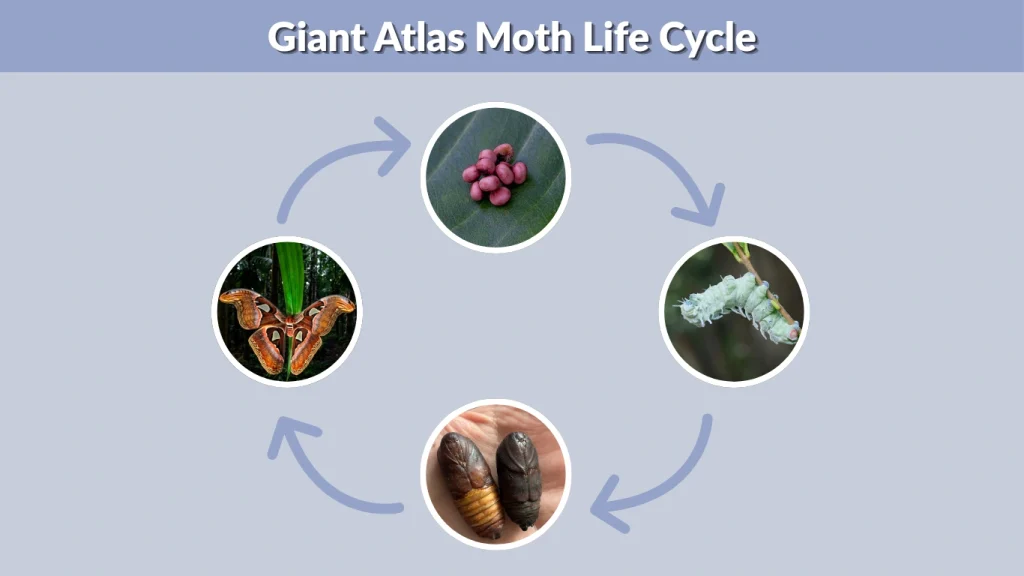
The life cycle of the giant atlas moth follows a complete metamorphosis, involving several stages from egg to adult. Each stage plays a critical role in the insect’s development and survival.
Stages of Development
- Egg
- Caterpillar (larva)
- Cocoon (pupa)
- Adult moth
Giant Atlas Moth Caterpillar
The caterpillar stage is the most active phase of the giant atlas moth’s life. During this period, it feeds constantly and grows rapidly, storing energy that will later sustain the adult moth.
The caterpillar is large, thick-bodied, and usually pale green with a waxy coating. It sheds its skin several times as it grows, a process known as molting. This stage is essential because the energy accumulated here determines how long the adult moth can survive.
What Do Giant Atlas Moths Eat?
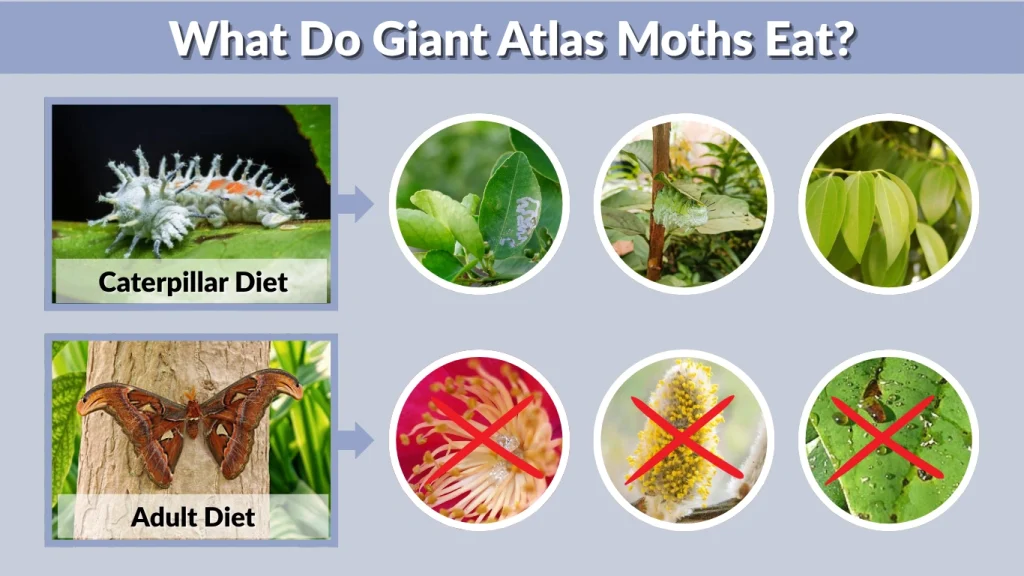
Understanding the feeding habits of the giant atlas moth helps explain its rapid growth and short adult life. The diet varies depending on the life stage, with the caterpillar doing all the feeding.
Caterpillar Diet
- Citrus leaves
- Guava leaves
- Cinnamon leaves
Adult Feeding Behavior
- Does not eat at all
- Relies on stored energy
- Lives only to reproduce
Giant Atlas Moth Lifespan
The lifespan of the giant atlas moth is relatively short, especially in its adult stage. While the earlier stages may last several weeks, the adult moth typically lives only a few days.
This short lifespan is due to the fact that adult moths do not have functional mouthparts. Instead of feeding, they depend entirely on the nutrients stored during their caterpillar stage. Their primary goal during adulthood is reproduction, which they accomplish within a limited time frame.
Giant Atlas Moth Eggs and Pupae
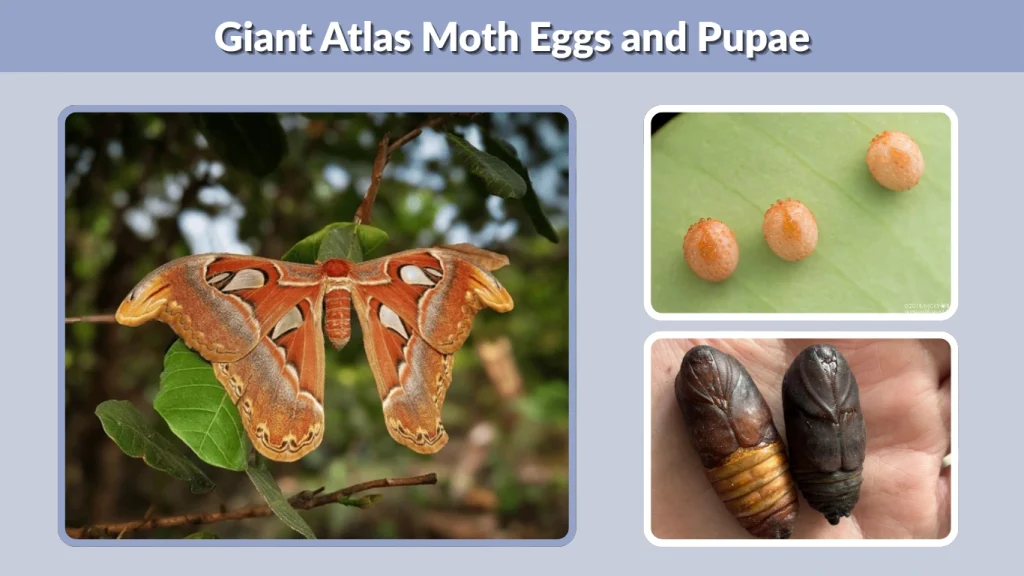
The early and middle stages of the giant atlas moth’s life cycle involve eggs and pupae, both of which are essential for successful development. These stages ensure the continuation of the species and protect it during transformation.
Egg Stage
- Small and round in shape
- Laid on host plant leaves
- Hatch within a short period
Pupa (Cocoon) Stage
- Enclosed in a strong silk cocoon
- Protects the developing moth
- Transformation occurs inside cocoon
Giant Atlas Moth Habitat
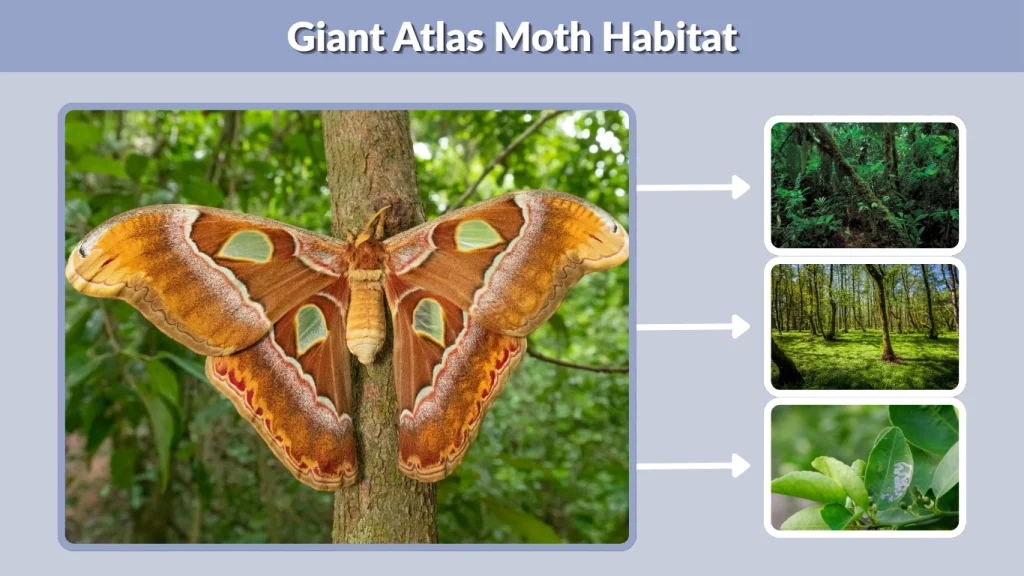
The giant atlas moth is primarily found in tropical and subtropical regions where warm temperatures and dense vegetation support its life cycle. These environments provide the necessary food sources for caterpillars and safe spaces for cocoon formation.
Where They Live
- Southeast Asia
- India
- Indonesia
Natural Environment
- Tropical forests
- Humid, green landscapes
- Areas with abundant host plants
Giant Atlas Moth Care Sheet
Keeping a giant atlas moth can be an interesting experience, especially for those who enjoy observing insect life cycles. However, proper care is essential to ensure healthy development from caterpillar to adult.
Can You Keep Them as Pets?
Yes, they are commonly kept by hobbyists for educational and observation purposes. Their short lifespan means they are not long-term pets but are ideal for studying transformation.
Basic Care Requirements
- Provide fresh host plant leaves daily
- Maintain a warm and humid environment
- Ensure proper airflow in the enclosure
Giant Atlas Moth for Sale
Giant atlas moths are sometimes available through breeders and specialized insect sellers. They may be sold in different life stages, such as eggs, caterpillars, or cocoons. Availability often depends on the season and region.
Before purchasing, it is important to check local laws and ensure the seller follows ethical practices. Transport conditions and proper handling are also important factors, as these insects are delicate and sensitive to environmental changes.
Giant Atlas Moth Meaning and Symbolism
The giant atlas moth is often associated with transformation and personal growth due to its dramatic life cycle. Its emergence from a cocoon into a large, winged insect symbolizes change, renewal, and new beginnings.
In some interpretations, its massive wings represent strength and presence, while its short lifespan reminds people of the temporary nature of life. These meanings have made it a popular subject in art and cultural symbolism.
Interesting Facts About Giant Atlas Moths
The giant atlas moth is full of fascinating features that make it one of the most unique insects in the world. Its size and behavior continue to attract curiosity from scientists and nature lovers alike.
- One of the largest moths in the world
- Wing tips resemble snake heads
- Adults do not eat at all
- Active mostly at night
Common Misconceptions
There are several misconceptions about the giant atlas moth, mostly due to its size and unusual appearance. Many people believe it is dangerous, but it is completely harmless and does not bite or sting.
Another common myth is that it lives for a long time, when in reality the adult stage lasts only a few days. Some also confuse it with other large moth species, leading to misunderstandings about its true characteristics.
FAQs
How big is a giant atlas moth?
The giant atlas moth can reach a wingspan of up to 25–30 cm, making it one of the largest moths in the world. Its wings are broad and visually striking.
What do giant atlas moths eat?
Caterpillars eat leaves such as citrus and guava, while adult moths do not eat at all and rely on stored energy from their larval stage.
How long does a giant atlas moth live?
The adult moth lives for about 5 to 10 days. The full life cycle, including caterpillar and cocoon stages, can last several weeks.
Can you buy a giant atlas moth?
Yes, they are available from breeders in the form of eggs, caterpillars, or cocoons. Always check legal and ethical considerations before buying.
Where do giant atlas moths live?
They are found in tropical regions of Asia, including India, Indonesia, and Southeast Asia, where they thrive in warm and humid environments.
