
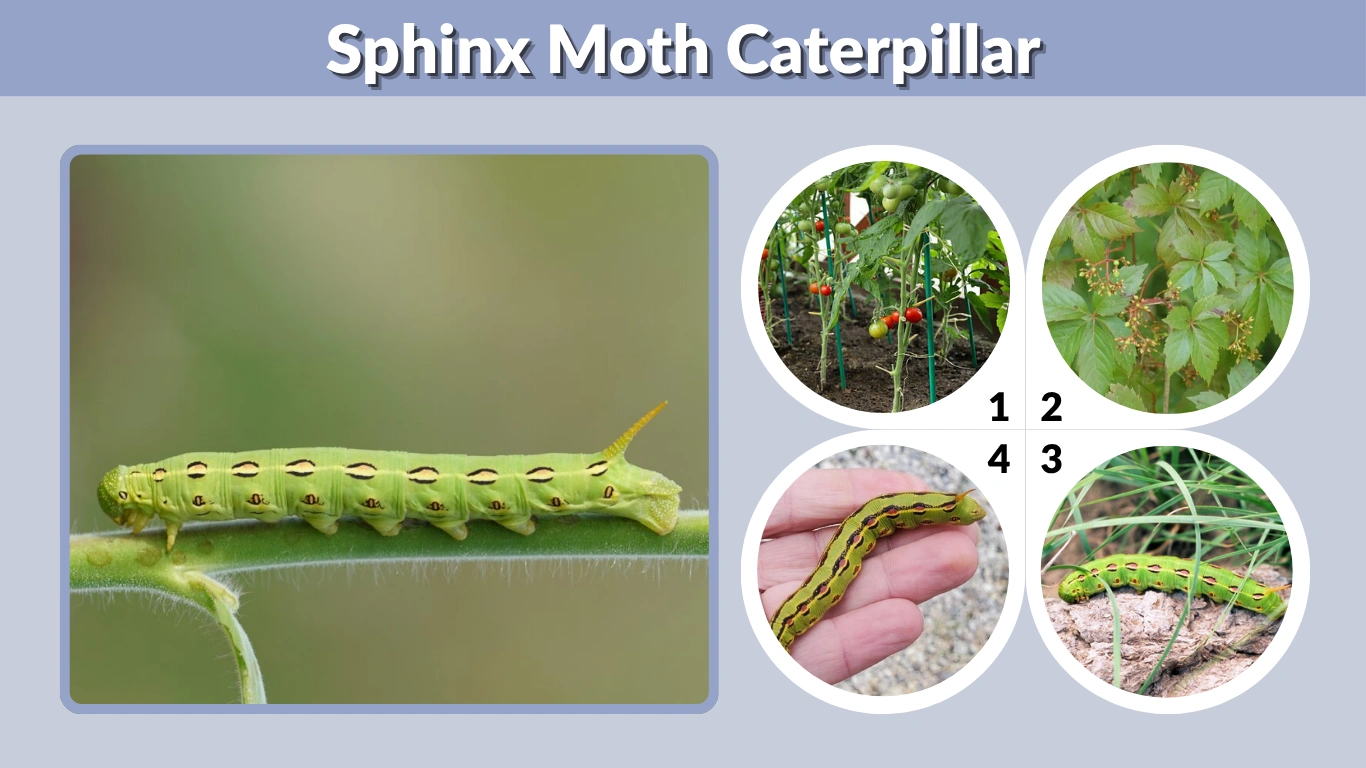
Sphinx moth caterpillars are large, fascinating insects often mistaken for dangerous species due to their bold appearance and tail horn. Also known as hawk moth or hummingbird moth caterpillars, they are commonly found in gardens and forests. While their size and snake-like posture may seem intimidating, most are harmless to humans. Understanding how to identify them, where they live, and what they eat can help you safely observe them. This guide covers key features, common types, and essential facts you should know.
What Is a Sphinx Moth Caterpillar?
Sphinx moth caterpillars belong to a group of large moth species known for their strong bodies and rapid growth. They are often called hornworms because of the pointed horn at the rear. These caterpillars play an important role in ecosystems and later transform into fast-flying moths.
Key Features
- Thick, smooth, and cylindrical body
- Distinct tail horn that looks like a spike
- Large size compared to most caterpillars
- Colors vary from green to brown, pink, or black
Life Cycle
- Eggs are laid on host plants by adult moths
- Caterpillars hatch and begin feeding immediately
- They grow rapidly and shed their skin multiple times
- Eventually form a cocoon or pupate in soil before emerging as moths
Sphinx Moth Caterpillar Identification Guide
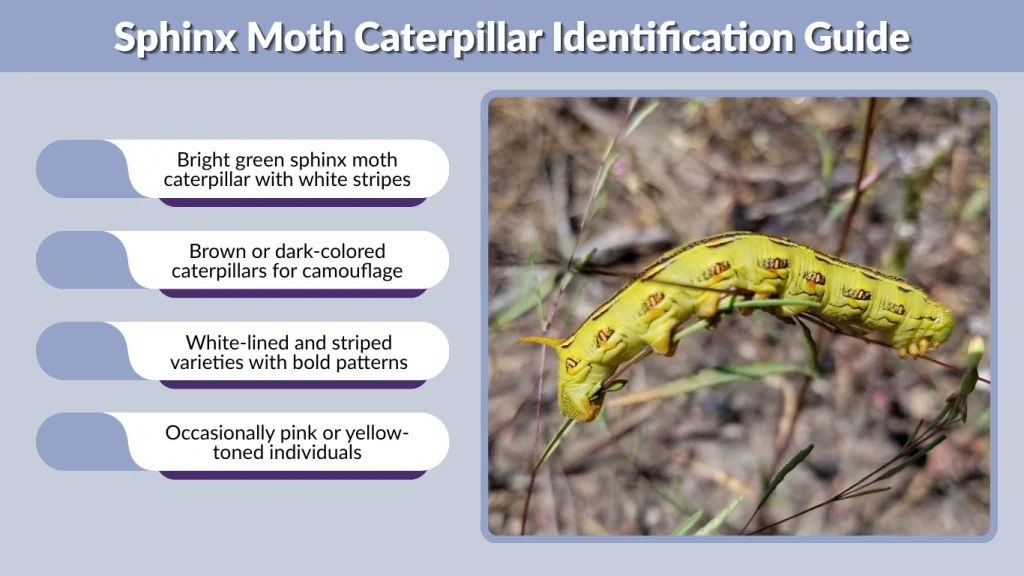
Identifying a sphinx moth caterpillar can be easy once you know what to look for. Their size, horn, and color patterns make them stand out. However, variations between species can sometimes cause confusion for beginners.
What Does a Sphinx Moth Caterpillar Look Like?
These caterpillars have a long, thick body that tapers slightly toward the head. The most noticeable feature is the horn located at the rear, which is not harmful. Their skin is usually smooth, and some species have diagonal stripes or small spots along the sides.
Common Colors and Variations
- Bright green sphinx moth caterpillar with white stripes
- Brown or dark-colored caterpillars for camouflage
- White-lined and striped varieties with bold patterns
- Occasionally pink or yellow-toned individuals
Snake-Like Appearance Explained
Many sphinx moth caterpillars raise the front part of their body when disturbed, creating a posture that resembles a small snake. This behavior helps scare away predators. Some species even have eye-like markings that enhance this illusion, making them appear more threatening than they actually are.
Common Types of Sphinx Moth Caterpillars
There are many species of sphinx moth caterpillars found across different regions. While they share similar features, each type has unique markings, colors, and host plants.
Popular Species
- White-lined sphinx moth caterpillar
- Tersa sphinx moth caterpillar
- Achemon sphinx moth caterpillar
- Carolina sphinx moth caterpillar
- Abbott’s sphinx moth caterpillar
Other Notable Species
- Pandora or Pandorus sphinx moth caterpillar
- Walnut sphinx moth caterpillar
- Elm sphinx moth caterpillar
- Fig sphinx moth caterpillar
- Rustic sphinx moth caterpillar
Where Are Sphinx Moth Caterpillars Found?
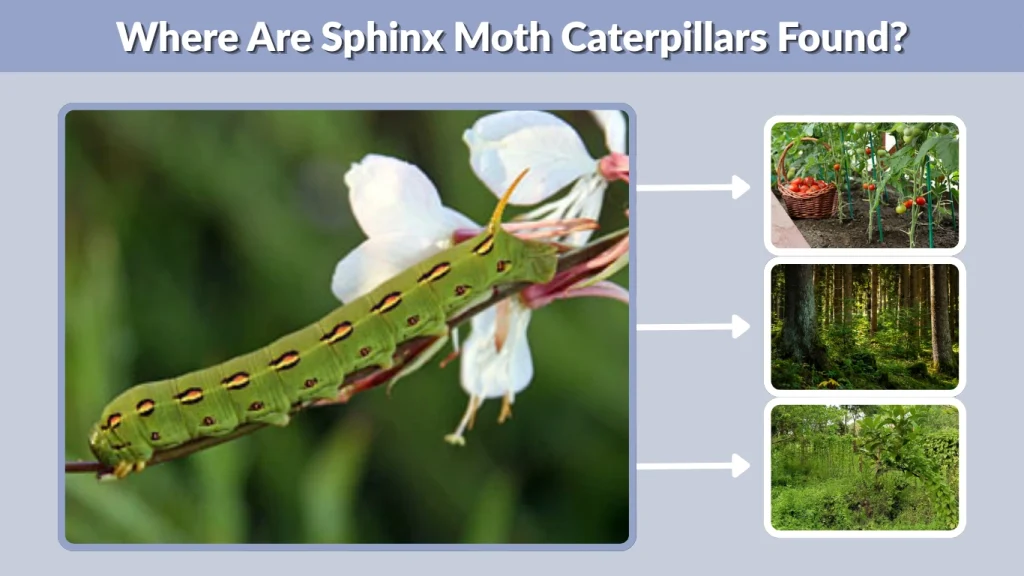
Sphinx moth caterpillars are widely distributed and can be found in many regions around the world. They prefer environments where host plants are abundant, making both wild and residential areas suitable habitats.
Common Regions
- Frequently seen in Arizona, Texas, and Florida
- Also found in California, Colorado, and Utah
- Present in New Mexico and other warm regions
Natural Habitat
They are commonly found in gardens, forests, and areas rich in vegetation. These caterpillars often stay close to their food sources, resting on leaves or stems. Their natural camouflage helps them blend into surroundings, reducing the chance of being noticed by predators or humans.
You have not enough Humanizer words left. Upgrade your Surfer plan.
What Do Sphinx Moth Caterpillars Eat?
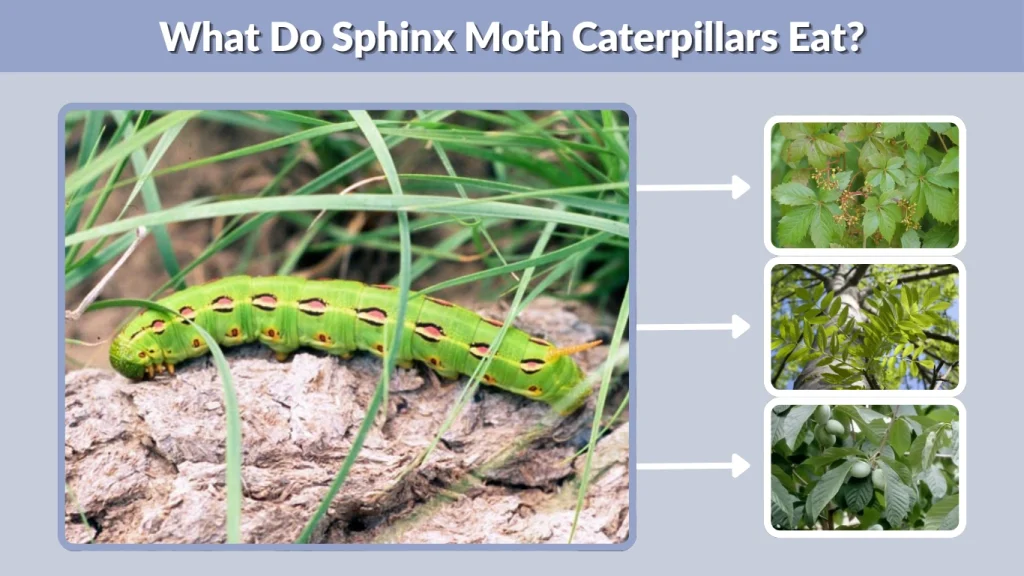
Sphinx moth caterpillars are active feeders and rely heavily on specific host plants for survival. Their diet plays a key role in their growth and development. While different species prefer different plants, most feed on leaves and can consume large amounts in a short time.
Common Host Plants
- Virginia creeper and grapevine species
- Elm, ash, and walnut trees
- Pawpaw, cherry, and fig plants
- Various shrubs and garden vegetation
Diet by Species
- White-lined sphinx moth caterpillar feeds on a wide range of plants
- Tersa sphinx moth caterpillar prefers ornamental and tropical plants
- Rustic sphinx moth caterpillar depends on specific host trees
Are Sphinx Moth Caterpillars Poisonous?
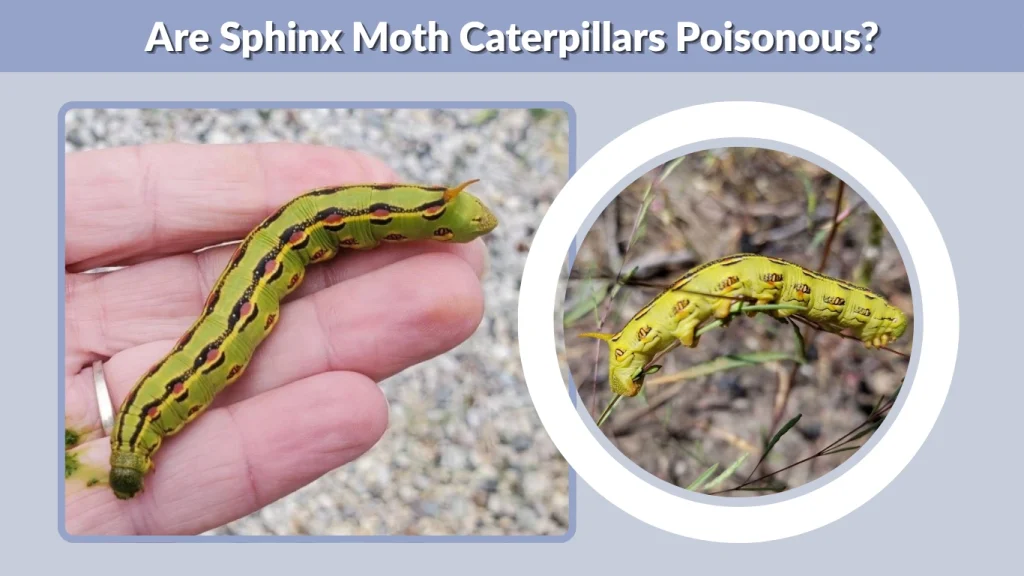
Many people assume these caterpillars are dangerous because of their size and horn. However, most species are harmless and do not pose a serious threat. Understanding the truth behind common myths can help reduce unnecessary fear.
Are They Dangerous to Humans?
Sphinx moth caterpillars are generally not poisonous and do not produce venom. They do not sting like some other caterpillars. While they may look intimidating, they are safe to observe and usually do not cause harm unless handled roughly.
Do They Sting or Bite?
The tail horn often causes concern, but it is completely harmless. It does not sting or inject venom. These caterpillars may move or react when touched, but they do not actively bite or attack humans.
Are They Poisonous to Pets?
Most sphinx moth caterpillars are not toxic to pets such as dogs or cats. However, ingestion may cause mild digestive discomfort. It is still best to prevent pets from eating them to avoid any potential issues.
How to Care for a Sphinx Moth Caterpillar
Caring for a sphinx moth caterpillar can be a simple and educational experience. With the right setup and proper feeding, they can grow and complete their life cycle successfully in captivity.
Basic Care Setup
- Use a ventilated container with enough space
- Keep the environment clean and dry
- Add twigs or leaves for natural support
Feeding Guide
- Provide fresh leaves from the correct host plant
- Replace food daily to keep it fresh
- Ensure proper hydration from leaves
Cocoon and Transformation
As the caterpillar matures, it will stop feeding and prepare to pupate. Some species burrow into soil, while others form a cocoon. During this stage, it is important not to disturb them, as they will eventually transform into a moth.
Interesting Facts About Sphinx Moth Caterpillars
Sphinx moth caterpillars are not only unique in appearance but also fascinating in behavior and development. Their rapid growth and transformation make them one of the most interesting insects to observe in nature.
They can grow very quickly, sometimes reaching full size within a few weeks. Many are known as hornworms due to their tail structure. As adults, they become fast-flying moths that can hover like hummingbirds. Their role in pollination and the ecosystem makes them beneficial despite their leaf-eating habits.
FAQs
What does a sphinx moth caterpillar turn into?
A sphinx moth caterpillar transforms into a large, fast-flying moth known as a sphinx or hawk moth. Some species are also called hummingbird moths because they hover while feeding on nectar, similar to hummingbirds.
How long does a sphinx moth caterpillar live?
The caterpillar stage usually lasts a few weeks, depending on the species and environmental conditions. After that, it enters the pupal stage, where it remains for several weeks before emerging as an adult moth.
Why does it look like a snake?
Some sphinx moth caterpillars raise their front body and display markings that resemble eyes. This behavior is a defense mechanism designed to scare predators by mimicking the appearance of a small snake.
Can you keep a sphinx moth caterpillar as a pet?
Yes, they can be kept as temporary pets for observation. Providing the correct host plant and a clean environment allows them to grow and eventually transform into moths, making them great for educational purposes.
Are white-lined sphinx moth caterpillars poisonous?
No, white-lined sphinx moth caterpillars are not poisonous. They do not sting or inject venom. Despite their large size and bold markings, they are harmless to humans and can be safely observed from a distance.
