
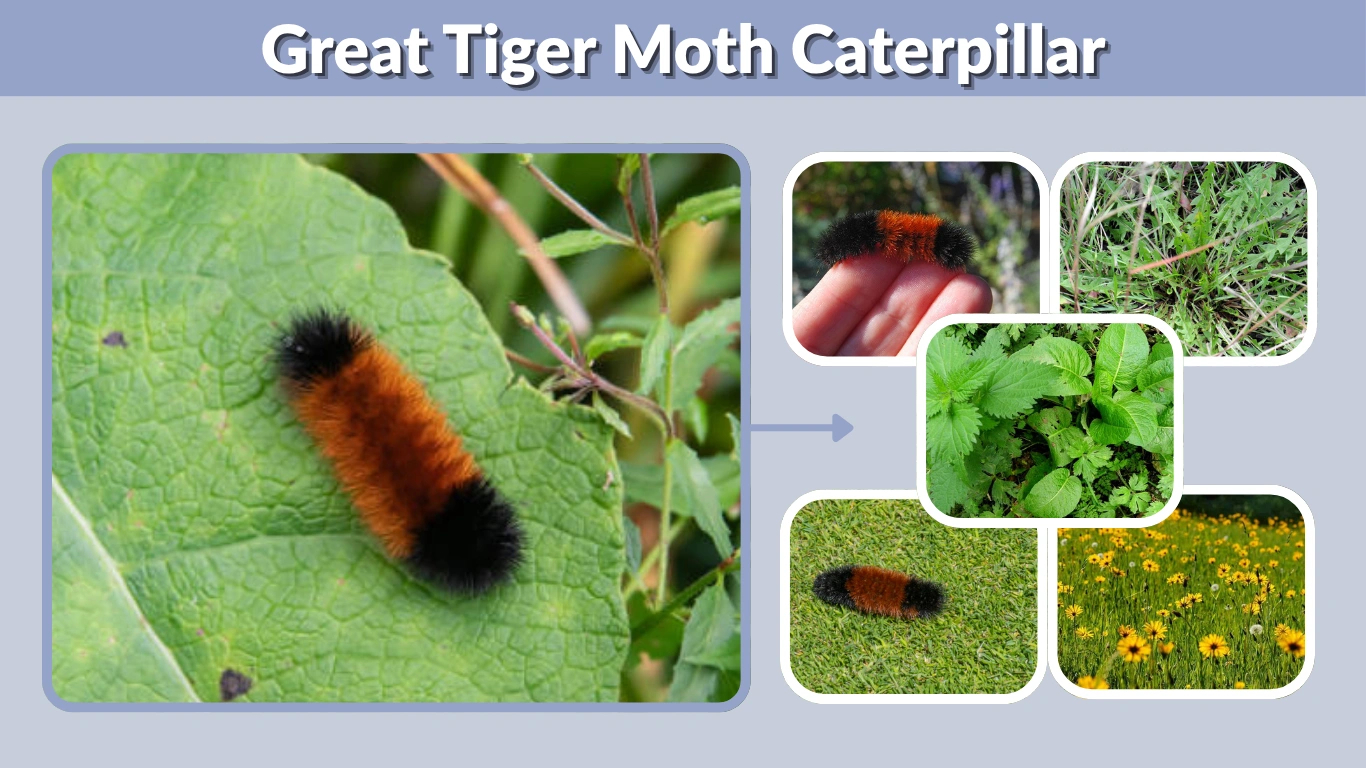
The great tiger moth caterpillar, also known as the garden tiger moth larva, is a hairy and eye-catching insect often found in gardens and wild areas. Its thick coat of bristles gives it a rugged appearance, leading many people to wonder if it is dangerous. While it may look intimidating, it plays an important role in nature. Learning how to identify it, understand its behavior, and know whether it is harmful can help you safely observe this fascinating caterpillar in its natural environment.
What Is a Great Tiger Moth Caterpillar?
The great tiger moth caterpillar is the larval stage of the garden tiger moth, a well-known species recognized for its bold patterns and hairy body. These caterpillars are commonly referred to as woolly bears due to their dense covering of bristles and slow-moving nature.
Scientific Name and Classification
- Scientific name: Arctia caja
- Belongs to the tiger moth family
- Known for bright adult moth coloration
- Found mostly in temperate regions
Life Cycle
- Eggs are laid on low-growing plants
- Caterpillars hatch and begin feeding quickly
- They grow through several stages, shedding skin
- Pupate before emerging as adult moths
Great Tiger Moth Caterpillar Identification
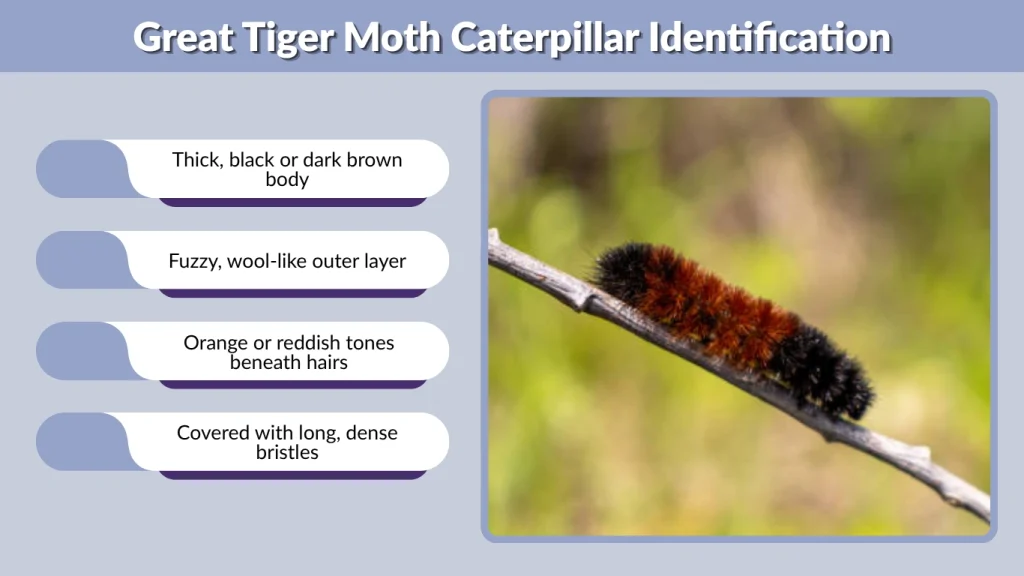
Identifying this caterpillar is relatively easy due to its distinctive hairy appearance. However, beginners may confuse it with other fuzzy caterpillars, some of which can be harmful. Knowing its unique traits helps avoid mistakes.
What Does It Look Like?
- Thick, black or dark brown body
- Covered with long, dense bristles
- Often curls into a ball when disturbed
- Medium-sized with a slightly rounded shape
Key Identification Features
- Fuzzy, wool-like outer layer
- Orange or reddish tones beneath hairs
- Slow-moving behavior
- Clearly segmented body under the fur
Comparison With Other Hairy Caterpillars
- Less brightly colored than some toxic species
- Lacks sharp venomous spines
- More uniform in color compared to patterned species
- Safer than many spiny caterpillars
Are Tiger Moth Caterpillars Dangerous or Poisonous?
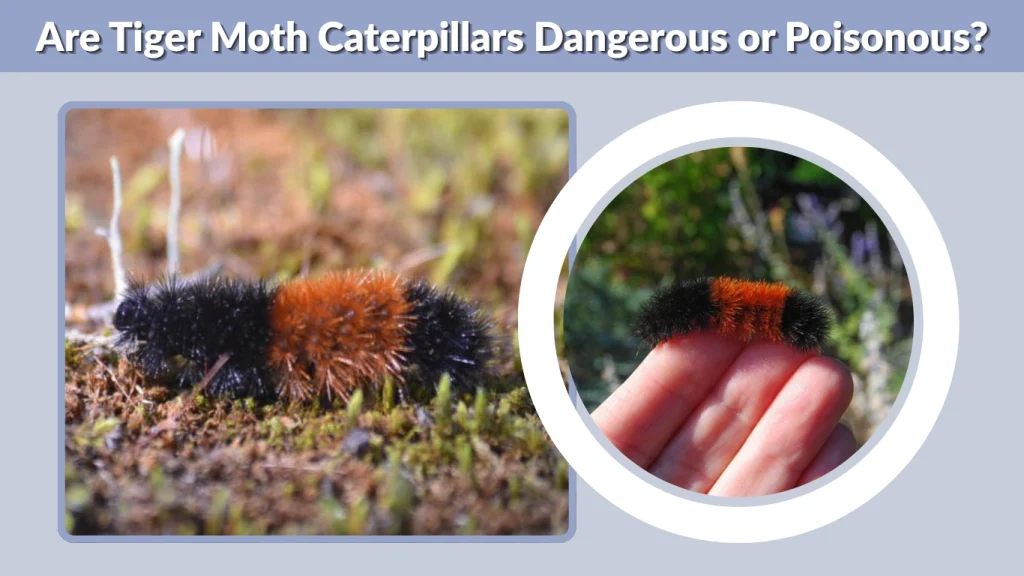
Many people worry about touching hairy caterpillars, and this concern is understandable. While some species are venomous, the great tiger moth caterpillar is generally harmless. However, it still has basic defense mechanisms that should be respected.
Are They Dangerous to Humans?
The great tiger moth caterpillar is not dangerous in the traditional sense. It does not sting or inject venom. However, its bristles can cause mild skin irritation in some people, especially those with sensitive skin. Direct handling is not recommended, but accidental contact is usually not serious.
Are They Poisonous?
These caterpillars are not poisonous and do not produce toxins that harm humans. Their defense relies on physical irritation rather than venom. This makes them far less risky than other caterpillar species that can deliver painful stings.
Can They Harm Pets?
- Not toxic to dogs or cats
- May cause mild irritation if eaten
- Pets usually avoid them naturally
- Best to keep pets from chewing on them
What Do Great Tiger Moth Caterpillars Eat?
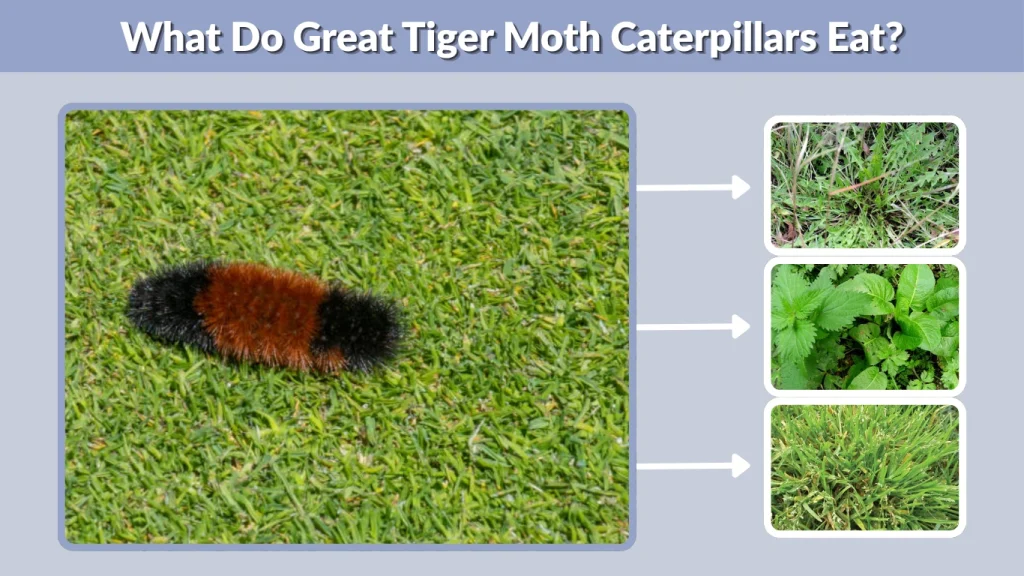
The great tiger moth caterpillar is not a picky eater and feeds on a variety of low-growing plants. Its flexible diet allows it to survive in different environments, especially in gardens and natural landscapes.
Common Food Plants
- Dandelion and plantain
- Nettles and dock leaves
- Various grasses and weeds
- Small garden plants
Feeding Behavior
These caterpillars usually feed during cooler parts of the day, often at night. They consume leaves steadily and can grow quickly when food is abundant. Their feeding rarely causes serious damage, making them less of a concern compared to other plant-eating insects.
Great Tiger Moth Caterpillar Habitat and Distribution
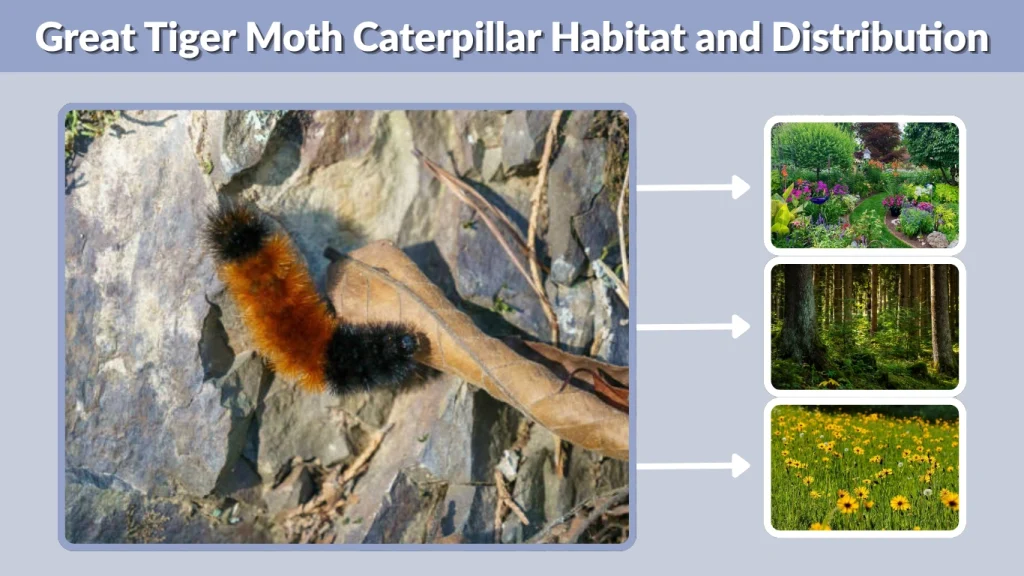
The great tiger moth caterpillar is widely distributed and can be found in a variety of natural and human-influenced environments. Its adaptability allows it to thrive in different climates where suitable food plants are available, making it a common sight in many regions.
Where Are They Found?
- Common across Europe and parts of Asia
- Found in gardens, meadows, and forest edges
- Often seen in grassy and plant-rich areas
- Active during warmer seasons
Presence in Warmer Regions
In warmer climates, similar tiger moth species may appear in place of the classic garden tiger moth. These environments provide year-round vegetation, allowing caterpillars to develop more consistently. Although exact species may vary, their behavior and appearance remain quite similar.
Behavior and Defense Mechanisms
The great tiger moth caterpillar uses simple but effective defense strategies to protect itself from predators. While it lacks venom, its physical features and behavior help it avoid being eaten in the wild.
Why Do They Curl Up?
When threatened, the caterpillar curls into a tight ball. This behavior helps protect its softer underside while exposing its bristly exterior. The curled shape also makes it harder for predators to grab or bite effectively.
Role of Hair (Setae)
The dense hairs covering the caterpillar act as a physical barrier. These bristles can irritate the skin or mouth of predators, discouraging attacks. While not highly dangerous, this defense is enough to make many animals avoid them.
Interesting Facts About Tiger Moth Caterpillars
The great tiger moth caterpillar is not just visually unique but also biologically interesting. Its ability to survive and adapt makes it an important part of its ecosystem.
- Often called “woolly bear” due to its fuzzy appearance
- Can survive colder conditions better than many caterpillars
- Transforms into a brightly colored adult moth
- Plays a role in the food chain as prey for birds and insects
FAQs
Are great tiger moth caterpillars dangerous?
Great tiger moth caterpillars are not dangerous to humans. They do not sting or inject venom. However, their bristles can cause mild skin irritation in some individuals, so it is best to avoid direct handling and observe them safely.
What do ruby tiger moth caterpillars eat?
Ruby tiger moth caterpillars feed on a variety of low-growing plants, including weeds and grasses. Their flexible diet allows them to survive in different habitats, similar to the great tiger moth caterpillar.
Can you touch a tiger moth caterpillar?
It is not recommended to touch tiger moth caterpillars. While they are not poisonous, their hairs can cause irritation or itching, especially for sensitive skin. Observing them without direct contact is the safest approach.
What is the scientific name of the tiger moth?
The scientific name of the great tiger moth is Arctia caja. It belongs to the tiger moth family, known for its striking patterns and hairy caterpillar stage.
Where are tiger moth caterpillars found?
Tiger moth caterpillars are commonly found in gardens, meadows, and forest edges. They prefer areas with plenty of low-growing plants, which provide both food and shelter throughout their development stages.
