
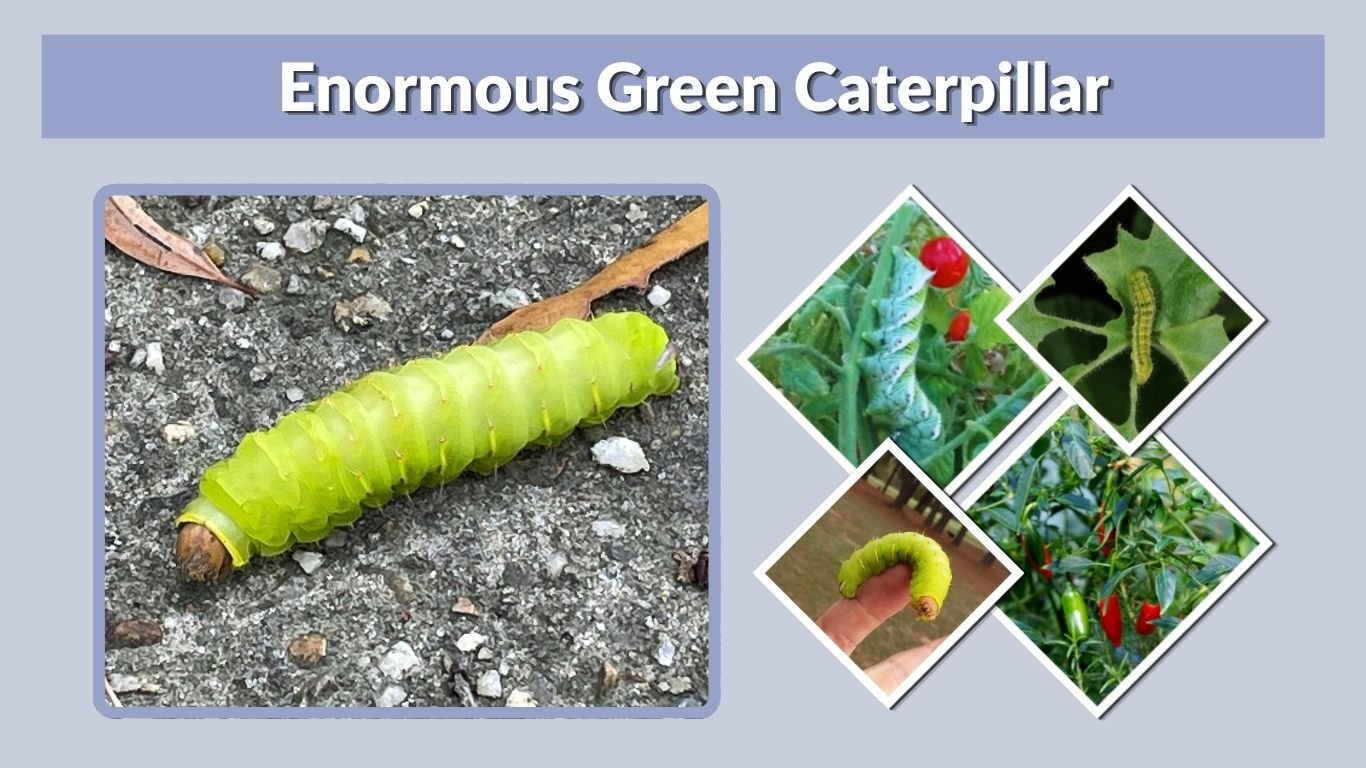
An enormous green caterpillar can look surprising, especially when it appears on a tomato plant, tree branch, garden path, or backyard wall. Its bright color and thick body often make people wonder whether it is dangerous, poisonous, or harmful to plants. In most cases, a giant green caterpillar is simply the larval stage of a moth. Some become beautiful luna moths, cecropia moths, or sphinx moths, while others are common garden pests that need careful handling. This guide explains how to identify it.
What Is an Enormous Green Caterpillar?
An enormous green caterpillar is usually the growing larval stage of a moth or butterfly. These caterpillars are green because the color helps them blend into leaves, stems, and garden plants. Many people notice them only after they become large enough to stand out or after they begin eating visible sections of foliage.
The Caterpillar Stage
A caterpillar is not a separate animal from a moth or butterfly. It is an early life stage. During this stage, the insect eats heavily, grows quickly, and molts several times. Its main purpose is to store enough energy for the next stage of life, when it forms a pupa or cocoon and eventually becomes an adult winged insect.
Large green caterpillars may look slow, soft, and defenseless, but they are highly adapted to survive. Their color works as camouflage, their markings may confuse predators, and some species have horn-like tails or raised bumps that make them look more threatening than they actually are.
Why the Green Color Matters
The green color helps the caterpillar hide among leaves. A bird or wasp may overlook a caterpillar that looks like part of the plant. This is why many giant green caterpillars stay hidden during the day and feed quietly on leaves. Their size becomes obvious only when they move across open ground or rest on a bare stem.
Common Types of Enormous Green Caterpillars
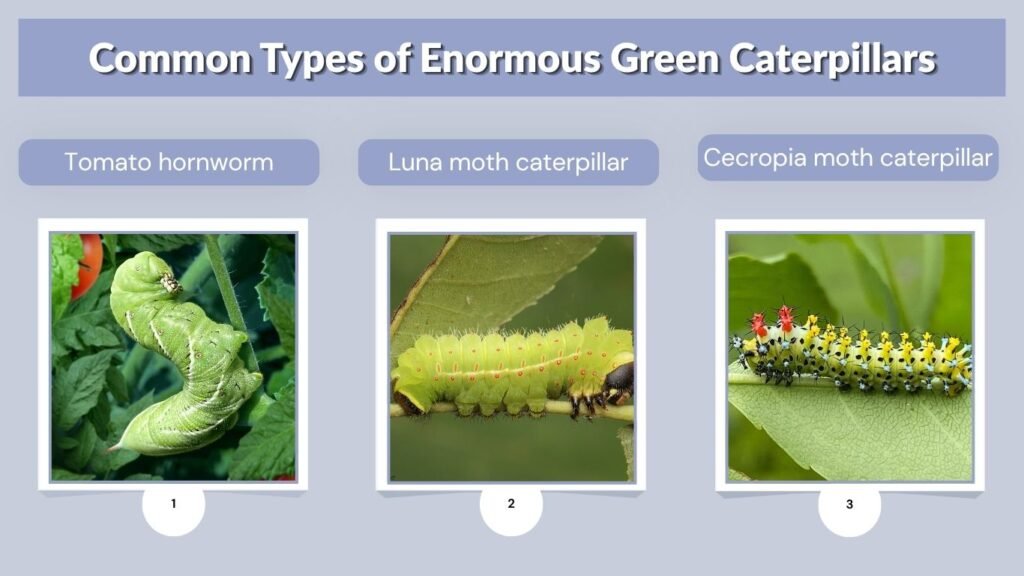
Several species can match the description of an enormous green caterpillar. The correct identification depends on body shape, markings, host plant, and location. Some are harmless tree-feeding caterpillars, while others are well-known garden pests. Looking closely at these features will help you understand what you have found and what it may become later.
Possible Species
Common types of large green caterpillars include:
- Tomato hornworm: A large green caterpillar often found on tomato plants, with V-shaped white markings and a dark horn at the rear.
- Tobacco hornworm: Similar to the tomato hornworm, but usually with diagonal white stripes and a reddish horn.
- Luna moth caterpillar: A plump pale green caterpillar that feeds on trees such as walnut, birch, hickory, and sweet gum.
- Cecropia moth caterpillar: A very large green or bluish-green caterpillar with colorful raised bumps on its body.
- Polyphemus moth caterpillar: A thick green caterpillar that feeds on tree leaves and later becomes a large brown silk moth.
Key Visual Clues
To identify the caterpillar, look for these details:
- Horn at the rear: Often suggests a hornworm, especially on tomato or tobacco plants.
- Colorful bumps: May point to a cecropia moth caterpillar.
- Smooth pale green body: Could be a luna moth or another silk moth caterpillar.
- White diagonal stripes: Common on tobacco hornworms.
- White V-shaped markings: Common on tomato hornworms.
- Tree host instead of vegetable plant: May suggest a silk moth caterpillar rather than a garden pest.
How to Identify It in Your Garden
Identification becomes easier when you observe where the caterpillar is feeding. A giant green caterpillar on a tomato plant is likely different from one on a maple, oak, walnut, or birch tree. The plant is often one of the strongest clues because many caterpillars feed only on certain plant families or preferred host species.
Check the Host Plant
The plant can tell you a lot:
- Tomato, pepper, eggplant, potato, or tobacco: The caterpillar may be a tomato hornworm or tobacco hornworm.
- Walnut, hickory, birch, sweet gum, or persimmon: It may be a luna moth caterpillar.
- Maple, cherry, willow, apple, or birch: It may be a cecropia moth caterpillar.
- Oak, elm, maple, or rose: It could be another large moth caterpillar.
- Random garden path or wall: It may be searching for a place to pupate.
Look at the Body
After checking the plant, study the body carefully without harming the insect. Notice the head, stripes, bumps, horn, and overall texture. Hornworms are usually smooth and muscular. Cecropia caterpillars look more decorated because of their raised colored tubercles. Luna moth caterpillars are plump, soft-looking, and pale green.
If the caterpillar has white rice-like cocoons attached to its body, it has likely been parasitized by beneficial wasps. In that case, it is best to leave it alone, especially in a vegetable garden, because those wasps help control future pest populations naturally.
Is an Enormous Green Caterpillar Dangerous?
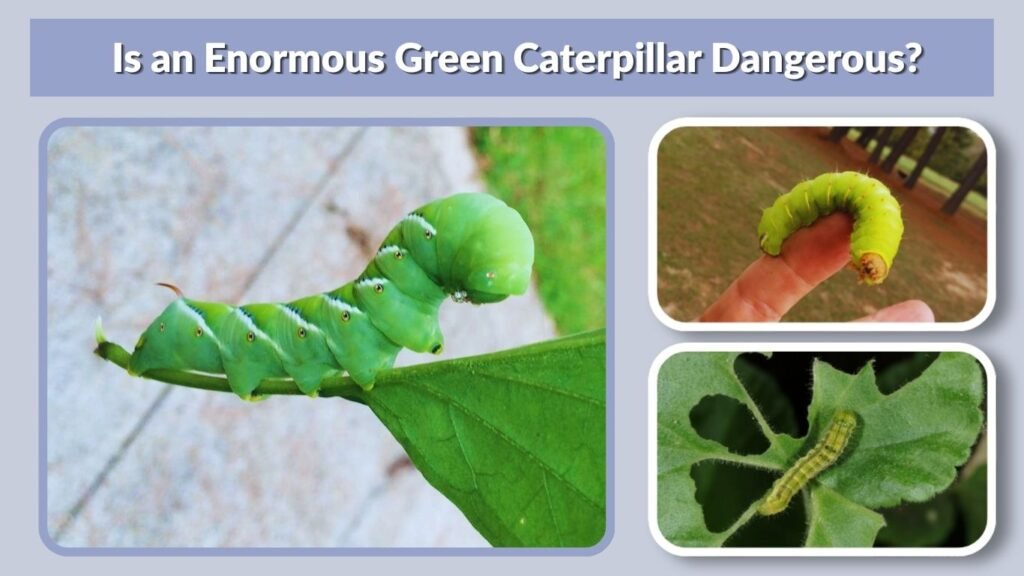
Most enormous green caterpillars are not dangerous to humans. Their size may look alarming, but many are harmless if left alone. Some can damage garden plants, especially hornworms on tomatoes, but that does not mean they are poisonous or aggressive. The safest approach is to observe first, identify second, and handle only when necessary.
Risk to People
Most large green caterpillars do not bite or sting people. The horn on a hornworm is not a stinger, even though it looks sharp. However, it is still better not to handle caterpillars with bare hands unless you know the species. Some people have sensitive skin, and rough handling can also injure the caterpillar.
Children may be tempted to pick up a large caterpillar because it looks interesting. Teach them to observe it gently instead. Looking closely is fine, but squeezing, poking, or carrying it around can harm the insect and may cause skin irritation in sensitive individuals.
Risk to Plants
The bigger concern is plant damage. Hornworms can eat a lot of foliage in a short time. On tomato plants, they may strip leaves, chew stems, and sometimes damage green fruit. A single hornworm can be hard to spot because its color blends perfectly with the plant, but its droppings and missing leaves often reveal its location.
Large moth caterpillars feeding on mature trees usually cause less concern. A healthy tree can normally tolerate some leaf loss. Problems are more likely when the plant is young, stressed, or already damaged.
What It Eats and What It Becomes
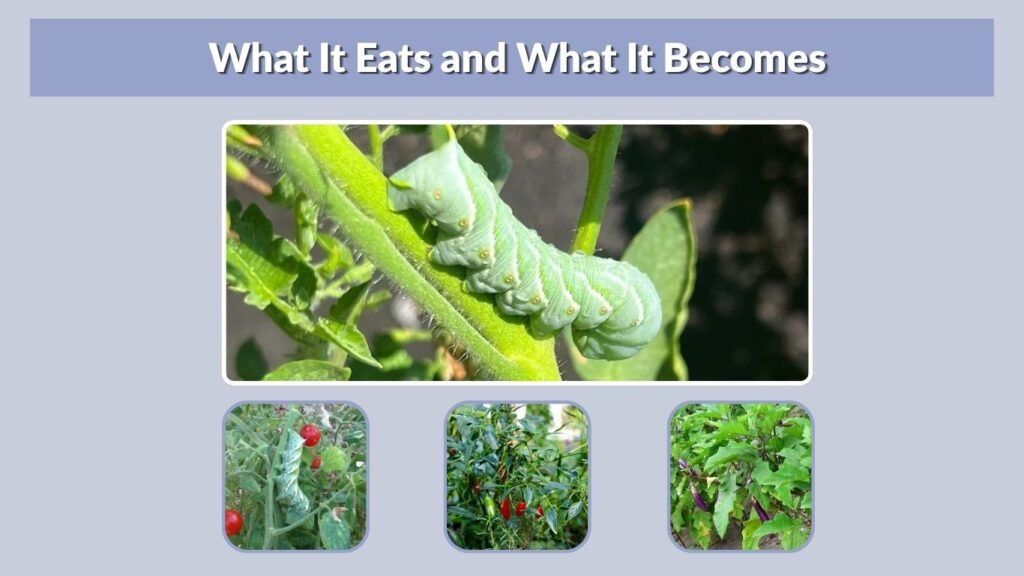
An enormous green caterpillar eats leaves because it needs energy for metamorphosis. The food plant depends on the species. Some caterpillars are specialists that feed on a narrow group of plants, while others accept several kinds of trees or shrubs. After feeding enough, the caterpillar pupates and later emerges as an adult moth.
Common Food Sources
Large green caterpillars may feed on:
- Tomato leaves
- Pepper plants
- Eggplant leaves
- Potato leaves
- Tobacco plants
- Walnut trees
- Birch trees
- Hickory trees
- Maple trees
- Oak trees
- Willow trees
- Cherry trees
- Sweet gum trees
What It Becomes
The adult form depends on the species. A tomato hornworm becomes a sphinx moth, also called a hawk moth. These moths are strong fliers and may hover near flowers. A luna moth caterpillar becomes a pale green luna moth with long wing tails. A cecropia caterpillar becomes a large, dramatic silk moth with reddish-brown wings and striking patterns.
This transformation is one reason many people choose not to kill large green caterpillars unless they are causing serious damage. The caterpillar may look strange now, but it may later become a beautiful and useful part of the local ecosystem.
What Should You Do If You Find One?
The best action depends on the location. A large green caterpillar on a wild tree may not need any control at all. A hornworm on a tomato plant may need to be removed before it causes serious damage. In every case, avoid panic and try to identify the caterpillar before deciding what to do next.
Safe Steps to Follow
Use these steps when you find one:
- Observe the plant: Identify what it is feeding on.
- Check the markings: Look for stripes, V-shapes, horns, or colorful bumps.
- Avoid crushing it immediately: Some large caterpillars become beneficial or beautiful moths.
- Move it carefully if needed: Relocate it away from valuable garden plants.
- Leave parasitized hornworms alone: White cocoons on the body usually mean beneficial wasps are developing.
- Inspect nearby plants: More caterpillars may be hidden under leaves.
When to Leave It Alone
If the caterpillar is on a mature tree, shrub, or wild plant and is not causing major damage, leaving it alone is usually best. It may become an important moth and may also serve as food for birds or other wildlife. Nature usually balances these insects without human interference.
If it is damaging vegetables, hand-picking is often enough for a small garden. You can move it to a wild area or dispose of it if necessary. Chemical control should be a last option because pesticides can also harm bees, butterflies, and other beneficial insects.
Why These Caterpillars Matter
Large green caterpillars may look like pests, but they also play an important ecological role. They provide food for birds, support parasitic wasps, and eventually become moths that may contribute to pollination. Understanding their place in nature helps gardeners make better decisions instead of treating every caterpillar as a threat.
Role in the Ecosystem
Caterpillars are a major food source for many animals. Birds often rely on caterpillars to feed their young because they are soft, protein-rich, and abundant during growing seasons. Wasps, spiders, beetles, and small mammals may also feed on them.
Adult moths also matter. Some visit flowers, some pollinate plants, and many become food for bats and birds. Even species that damage garden plants are part of a larger natural system. The goal is not always to eliminate them, but to manage them wisely when they affect crops.
FAQs
An enormous green caterpillar can raise many questions, especially if you find one for the first time. People often want to know whether it is poisonous, what it eats, what it turns into, and whether it should be removed from the garden. These answers cover the most common concerns in simple terms.
1. Is an enormous green caterpillar poisonous?
Most enormous green caterpillars are not poisonous to humans. Hornworms, luna moth caterpillars, and cecropia moth caterpillars are generally not dangerous if left alone. Still, avoid handling unknown caterpillars with bare hands because some species can irritate sensitive skin.
2. What does a giant green caterpillar turn into?
It usually turns into a moth. Tomato and tobacco hornworms become sphinx moths. Luna moth caterpillars become luna moths, while cecropia caterpillars become large silk moths. The exact adult form depends on the species.
3. Why is there a huge green caterpillar on my tomato plant?
A huge green caterpillar on a tomato plant is often a tomato hornworm or tobacco hornworm. These caterpillars feed on leaves and can damage tomato plants quickly. Check for missing leaves, chewed stems, and dark droppings beneath the plant.
4. Should I remove a large green caterpillar from my garden?
Remove it if it is damaging vegetables or young plants. If it is feeding on a mature tree or wild plant, you can usually leave it alone. Try to identify it first so you know whether it is a pest or a harmless moth larva.
5. What are the white things on a green caterpillar’s back?
White rice-like objects on a caterpillar’s back are often cocoons of parasitic wasps. These wasps help control caterpillar populations naturally. If you see them on a hornworm, leave the caterpillar in place so the beneficial wasps can complete their life cycle.
