
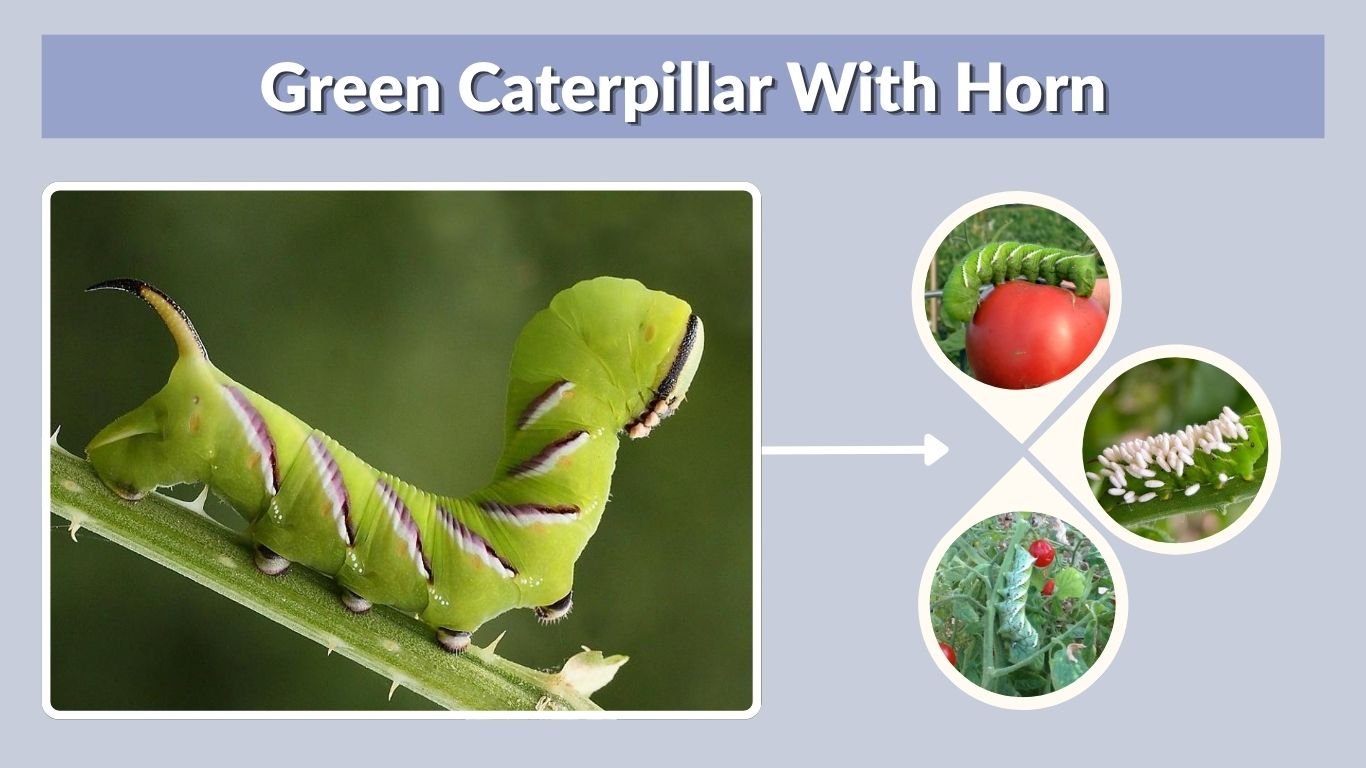
A green caterpillar with a horn is usually a hornworm, the larval stage of a sphinx or hawk moth. These large caterpillars often appear on tomato, pepper, eggplant, potato, tobacco, grapevine, and ornamental plants. The horn may look dangerous, but it is usually harmless. Correct identification helps you know whether to leave it alone, protect your garden, or watch for signs of natural parasite control.
What Is a Green Caterpillar With a Horn?
A green caterpillar with a horn is most often called a hornworm. The “horn” is a pointed, fleshy projection found near the rear end of the caterpillar, not on the head. Hornworms belong to the sphinx moth family, and many become large night-flying moths as adults. Tomato hornworms and tobacco hornworms are two of the most common green horned caterpillars found in gardens.
Main Identification Signs
- Large, smooth, green body
- One horn or spike on the tail end
- White diagonal stripes or V-shaped markings on the sides
- Thick body that may reach 3–4 inches long
- Often found feeding on tomato, pepper, eggplant, potato, or tobacco plants
- Dark green or black droppings below damaged leaves
- Strong camouflage that makes it hard to see among green leaves
The most important clue is the horn on the last abdominal segment. This horn is not a stinger. It is mainly a defensive-looking body part that makes the caterpillar appear more dangerous than it really is.
Why It Looks So Large
Hornworms grow quickly because they eat a lot of leaves. A small caterpillar may be hard to notice at first, but within a short time it can become a fat, bright green larva. By the time many gardeners find one, it may already be several inches long and eating heavily. UC IPM notes that mature hornworms can reach up to 4 inches and are among the largest caterpillars seen in vegetable gardens.
Where the Horn Is Located
Many people search for “green caterpillar with horn on tail” because the horn is usually at the rear end. It may point upward, backward, or slightly curved depending on the species. If the horn appears red, orange, blue, black, or yellow, color can help narrow down the type of hornworm.
Common Types of Green Caterpillars With Horns
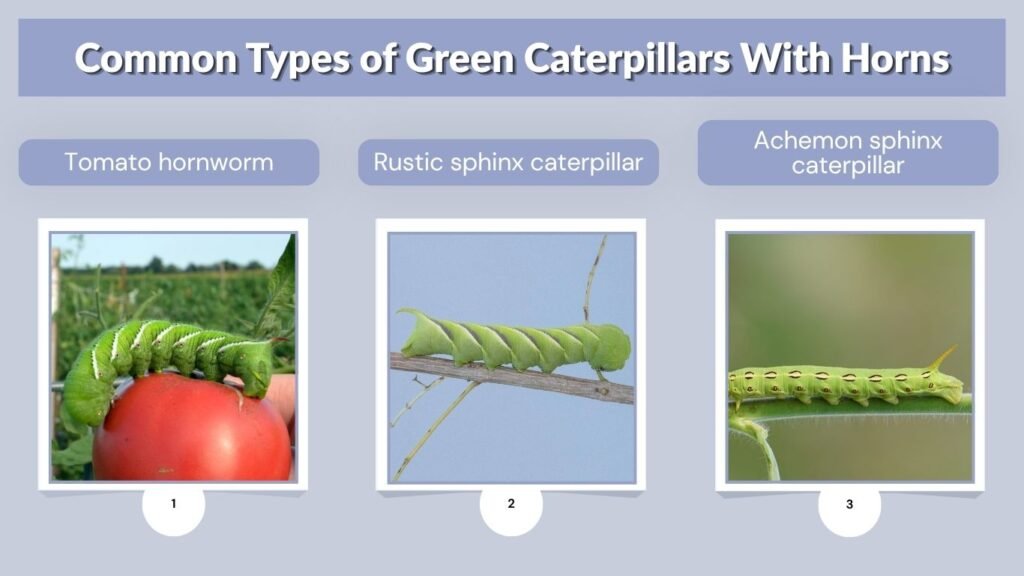
Several caterpillars can match the phrase “big green caterpillar with horn.” Some are garden pests, while others feed on wild plants or ornamental vines. The table below compares common possibilities.
| Caterpillar Type | Main Clues | Common Host Plants | Adult Form |
| Tomato hornworm | Green body, black horn, V-shaped side marks | Tomato, potato, eggplant, pepper | Five-spotted hawk moth |
| Tobacco hornworm | Green body, red horn, diagonal white lines | Tobacco, tomato, pepper, eggplant | Carolina sphinx moth |
| Rustic sphinx caterpillar | Green or brown body, horn at rear | Beautyberry, jasmine, fringe tree | Rustic sphinx moth |
| Achemon sphinx caterpillar | Green or reddish-brown, horn early then eye-like spot | Grapevine, Virginia creeper | Achemon sphinx moth |
| Laurel sphinx caterpillar | Green body, pale stripes, rear horn | Ash, lilac, privet | Laurel sphinx moth |
Tomato Hornworm
The tomato hornworm is one of the most searched green caterpillars with a horn. It usually has a bright green body, white V-shaped marks on the sides, and a black horn at the rear. It often feeds on tomato plants but can also attack potato, eggplant, and pepper plants. University of Minnesota Extension describes tomato hornworms as large caterpillars with eight white V-shaped marks and a black projection on the last abdominal segment.
Tomato hornworms can be difficult to see because their green color blends with tomato leaves. Gardeners often notice missing leaves, chewed stems, or dark droppings before spotting the caterpillar itself.
Tobacco Hornworm
The tobacco hornworm looks very similar to the tomato hornworm, but it usually has a red horn and diagonal white side stripes. It is also a large green caterpillar that feeds on nightshade-family plants. University of Maryland Extension notes that tobacco hornworms have a red horn, while tomato hornworms have a black horn that is less curved.
Despite the name, tobacco hornworms may also appear on tomato plants. This is why people often confuse the two species.
Green Caterpillar With Red, Orange, or Blue Horn
A green caterpillar with a red horn is often a tobacco hornworm. A green caterpillar with an orange horn may be a related sphinx moth caterpillar or a color variation. A green caterpillar with a blue horn can also belong to the sphinx moth group, especially in earlier growth stages of some species.
Color is helpful, but it should not be the only identification feature. Always check the side markings, host plant, body shape, and location of the horn.
Is a Green Caterpillar With Horn Poisonous?
Many people worry that a green caterpillar with a horn is poisonous because the horn looks sharp. In most cases, hornworms are not poisonous to humans and do not sting. The horn is not a venomous spine. It is a soft or firm body extension used for defense and appearance.
Safety for Humans and Pets
- The horn does not inject venom.
- The caterpillar does not bite aggressively.
- It can be picked off plants by hand, though gloves are better.
- Some people may get mild skin irritation from handling insects.
- Pets should not be encouraged to eat caterpillars.
- Wash hands after touching caterpillars or damaged plants.
Hornworms are mainly a plant problem, not a human danger. However, avoid touching unknown fuzzy, spiny, or brightly colored caterpillars, because some caterpillars outside the hornworm group can irritate skin.
Are They Dangerous to Tomato Plants?
Yes, hornworms can seriously damage garden plants. They eat leaves, tender stems, flowers, and sometimes fruit. Because they grow large and feed quickly, a few hornworms can strip a tomato plant in a short time. UC IPM explains that large black or green droppings under tomato plants are a common sign of hornworm presence.
Should You Kill Them?
You do not always need to kill them. If the caterpillar is actively destroying vegetables, hand removal is usually the easiest control method. But if you see small white rice-like cocoons attached to the caterpillar, leave it in place. Those are usually braconid wasp cocoons. The wasp larvae have parasitized the hornworm, and the hornworm will soon stop feeding and die. Leaving it helps increase beneficial wasps in the garden.
Green Caterpillar With Horn on Tomato Plant
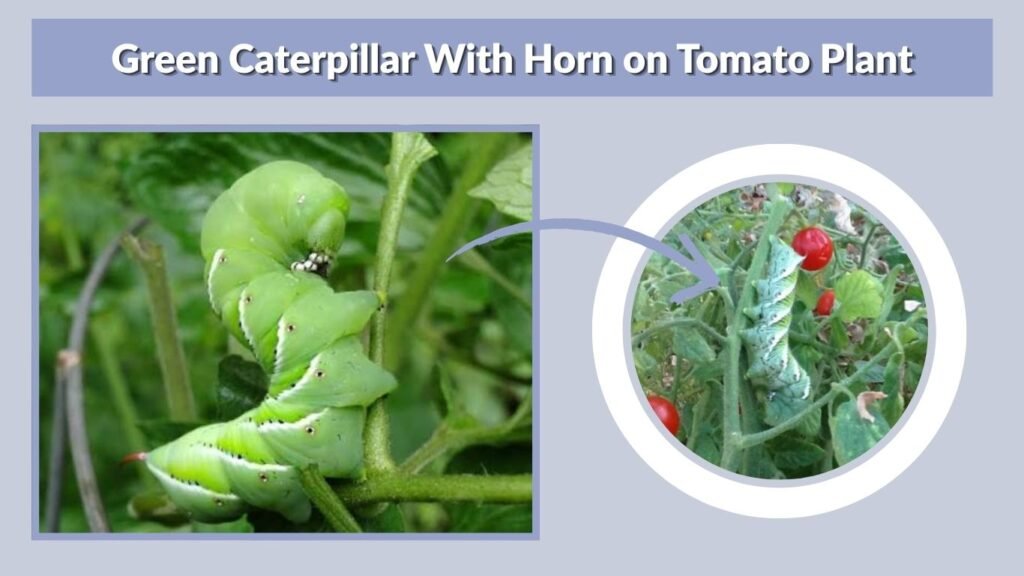
A large green caterpillar with a horn on a tomato plant is usually a tomato hornworm or tobacco hornworm. These caterpillars are famous for blending into tomato foliage. They often rest along stems or under leaves during the day.
Signs on Tomato Plants
- Missing leaves near the top of the plant
- Half-chewed leaves or bare stems
- Damaged green tomatoes
- Dark droppings on leaves, soil, or mulch
- A thick green caterpillar hiding along the stem
- White cocoons on the caterpillar’s back if parasitized
Look closely in the early morning or evening when caterpillars are easier to find. Follow the trail of droppings upward, and check the underside of nearby leaves.
Why They Like Tomatoes
Tomato plants belong to the nightshade family. Hornworms commonly feed on nightshade plants such as tomato, pepper, potato, eggplant, and tobacco. These plants provide the leaves hornworms need for fast growth. Illinois Extension lists tomato, eggplant, potato, and pepper among plants damaged by hornworms.
Natural Garden Control
The safest method is handpicking. Wear gloves, remove the caterpillar, and relocate it away from vegetables or drop it into soapy water if you need pest control. For small larvae, gardeners sometimes use biological controls such as Bacillus thuringiensis, but mature hornworms are often easiest to remove by hand.
Avoid spraying broad insecticides if possible. They may kill helpful insects, including parasitic wasps, lacewings, and other natural enemies that help control hornworms.
What Does a Green Caterpillar With Horn Turn Into?
A green caterpillar with a horn usually turns into a sphinx moth, hawk moth, or hummingbird moth. The adult moth is often large, fast-flying, and active around flowers. Some species hover while feeding on nectar, which makes people mistake them for tiny hummingbirds.
Life Cycle
- Egg: Small greenish eggs are laid on host plant leaves.
- Larva: The green horned caterpillar hatches and feeds heavily.
- Mature caterpillar: It becomes large, thick, and easy to notice.
- Pupa: Many hornworms burrow into soil to pupate.
- Adult moth: A sphinx or hawk moth emerges later.
Rutgers NJAES explains that hornworms are the caterpillar stage of large moths and later develop into hawk moths that feed on flower nectar and do not damage garden plants.
Tomato Hornworm Adult
The tomato hornworm becomes the five-spotted hawk moth. This moth is usually grayish-brown with a strong body and narrow wings. It may visit flowers at dusk or night.
Tobacco Hornworm Adult
The tobacco hornworm becomes the Carolina sphinx moth. This moth is also large and strong-flying. Although the caterpillar may damage garden plants, the adult moth feeds on nectar.
Green Caterpillar With White Eggs or Cocoons
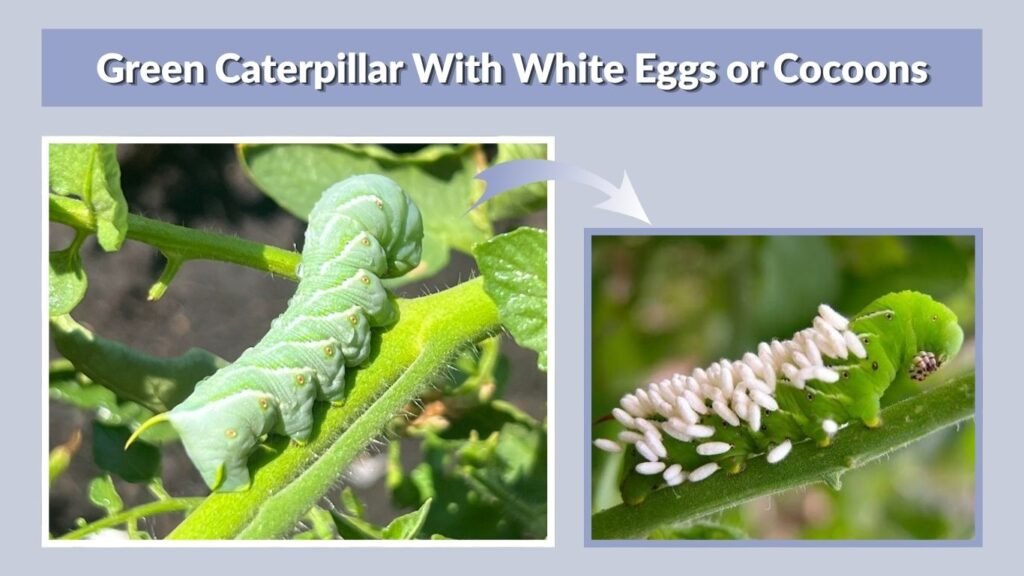
Many people search for “green horned caterpillar with wasp eggs” or “green caterpillar with horn and white eggs.” These white objects are not usually eggs sitting on the caterpillar. They are often cocoons of parasitic braconid wasps.
What the White Cocoons Mean
- The caterpillar has been parasitized.
- Tiny wasp larvae have fed inside the hornworm.
- The white structures are cocoons, not caterpillar eggs.
- The hornworm will usually stop feeding soon.
- Adult wasps will emerge and help control more hornworms.
Do not remove or kill a hornworm covered with white cocoons. It is already being controlled naturally, and it can help protect your garden from future caterpillars.
Are Braconid Wasps Dangerous?
Braconid wasps are tiny beneficial insects. They are not a threat like large stinging wasps. They help gardeners by parasitizing pest caterpillars. Encouraging these wasps is one reason to avoid unnecessary pesticide use.
Large Green Caterpillar With Horn by Location
Green horned caterpillars appear in many places, but the exact species depends on region and host plant. In the United States, tomato and tobacco hornworms are common in vegetable gardens. In the UK, a large green caterpillar with a horn may belong to an elephant hawk moth, privet hawk moth, or another hawk moth species. In Australia, several native hawk moth caterpillars can look similar.
United States
In states such as Texas, Colorado, Minnesota, Ohio, Florida, and California, green caterpillars with horns are often hornworms from the sphinx moth family. If found on tomato plants, the most likely options are tomato hornworm or tobacco hornworm.
UK
A large green caterpillar with a horn in the UK may be a hawk moth caterpillar. The elephant hawk moth caterpillar can look brown or greenish and has eye-like markings, while the privet hawk moth caterpillar is often green with diagonal stripes and a rear horn.
Australia
In Australia, large green horned caterpillars may be hawk moth larvae feeding on native or garden plants. Identification should be based on host plant, markings, horn color, and local species.
How to Identify by Color and Markings
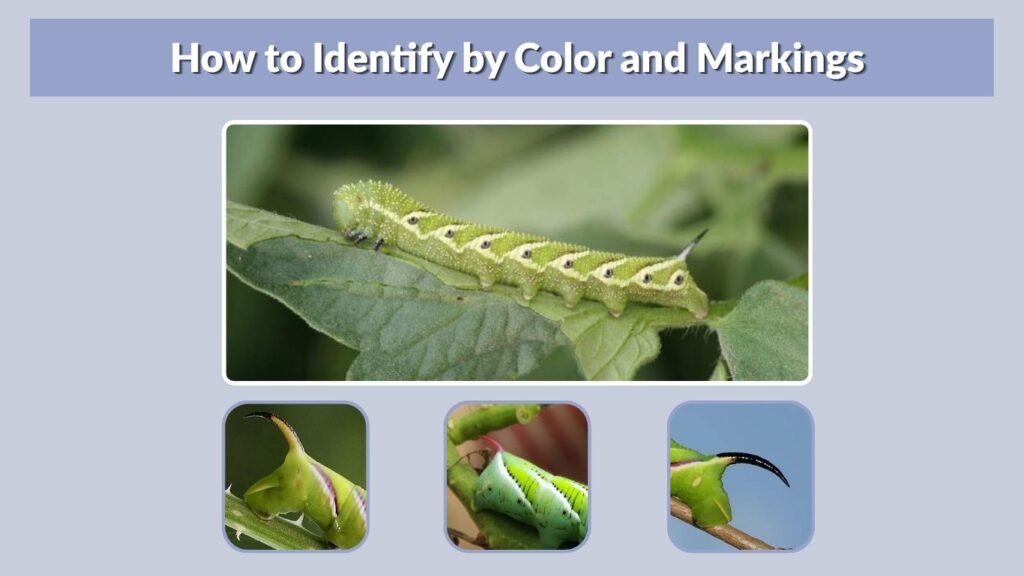
Horn color is one of the most useful clues, but it works best when combined with body markings and host plant.
Quick Color Guide
- Black horn: Often tomato hornworm
- Red horn: Often tobacco hornworm
- Blue horn: May be a sphinx moth caterpillar in an earlier stage
- Yellow horn: Could be a related hornworm or hawk moth larva
- Orange horn: Often a sphinx moth type, depending on region
- Multiple horns on head: May not be a true hornworm; could be another caterpillar group
- Horns on both ends: Check carefully, because one end may have false eye markings or raised body parts
If the caterpillar has four horns or horn-like projections near the head, it may not be a tomato or tobacco hornworm. Some swallowtail caterpillars and other species have defensive organs or body shapes that look like horns.
Green With Spots and Horn
A green caterpillar with spots and a horn may be a sphinx moth caterpillar or another large moth larva. Look for diagonal side stripes, small breathing holes, and the rear horn. If it is on tomato, pepper, eggplant, or potato, hornworm is the most likely answer.
Green and Black Caterpillar With Horn
A black and green caterpillar with a horn may be a later-stage or region-specific sphinx moth larva. Some caterpillars change color as they grow. Others look darker before pupation. If the body is smooth and thick with a single tail horn, it is likely still a sphinx moth caterpillar.
How to Manage Hornworms Without Harming the Garden
Hornworms can be frustrating, but they are also part of the natural food web. The goal is to protect your plants while keeping beneficial insects active.
Simple Control Steps
- Inspect tomato plants every few days in summer.
- Look for missing leaves and dark droppings.
- Check under leaves and along stems.
- Handpick large caterpillars with gloves.
- Leave caterpillars that have white wasp cocoons.
- Remove weeds in the nightshade family near the garden.
- Encourage beneficial insects with flowers and herbs.
- Avoid broad insecticides unless damage is severe.
For small gardens, handpicking is usually enough. Hornworms are large, so once you know what to look for, they are easier to control.
Prevention Tips
Keep your garden clean after harvest. Remove old tomato vines and plant debris where pests may continue their life cycle. Rotate crops when possible, especially if hornworms appear every year. You can also check plants more often during midsummer and late summer, when hornworm damage is commonly noticed.
FAQs
What is a big green caterpillar with a horn?
A big green caterpillar with a horn is usually a hornworm, the larva of a sphinx or hawk moth. In vegetable gardens, the most common types are tomato hornworms and tobacco hornworms. They are smooth, thick caterpillars with a horn-like projection on the tail end.
Is a green caterpillar with a horn poisonous?
Most green caterpillars with a rear horn are not poisonous and cannot sting. The horn is not a venomous spine. It is mainly a harmless defensive feature. Still, it is best to wear gloves when handling any unknown caterpillar and wash your hands afterward.
What does a green horned caterpillar turn into?
A green horned caterpillar usually turns into a sphinx moth, hawk moth, or hummingbird moth. Tomato hornworms become five-spotted hawk moths, while tobacco hornworms become Carolina sphinx moths. Adult moths feed on nectar and do not chew garden leaves.
Why is there a green caterpillar with a horn on my tomato plant?
A green caterpillar with a horn on a tomato plant is probably a tomato hornworm or tobacco hornworm. These caterpillars feed on tomato leaves and can remove foliage quickly. Look for chewed leaves, bare stems, damaged fruit, and dark droppings near the plant.
Should I remove a hornworm with white eggs on it?
Do not remove it if the white objects look like small rice grains attached to its back. They are usually braconid wasp cocoons, not eggs. The wasps are beneficial parasites that kill hornworms naturally. Leaving the caterpillar helps more helpful wasps emerge in your garden.
