
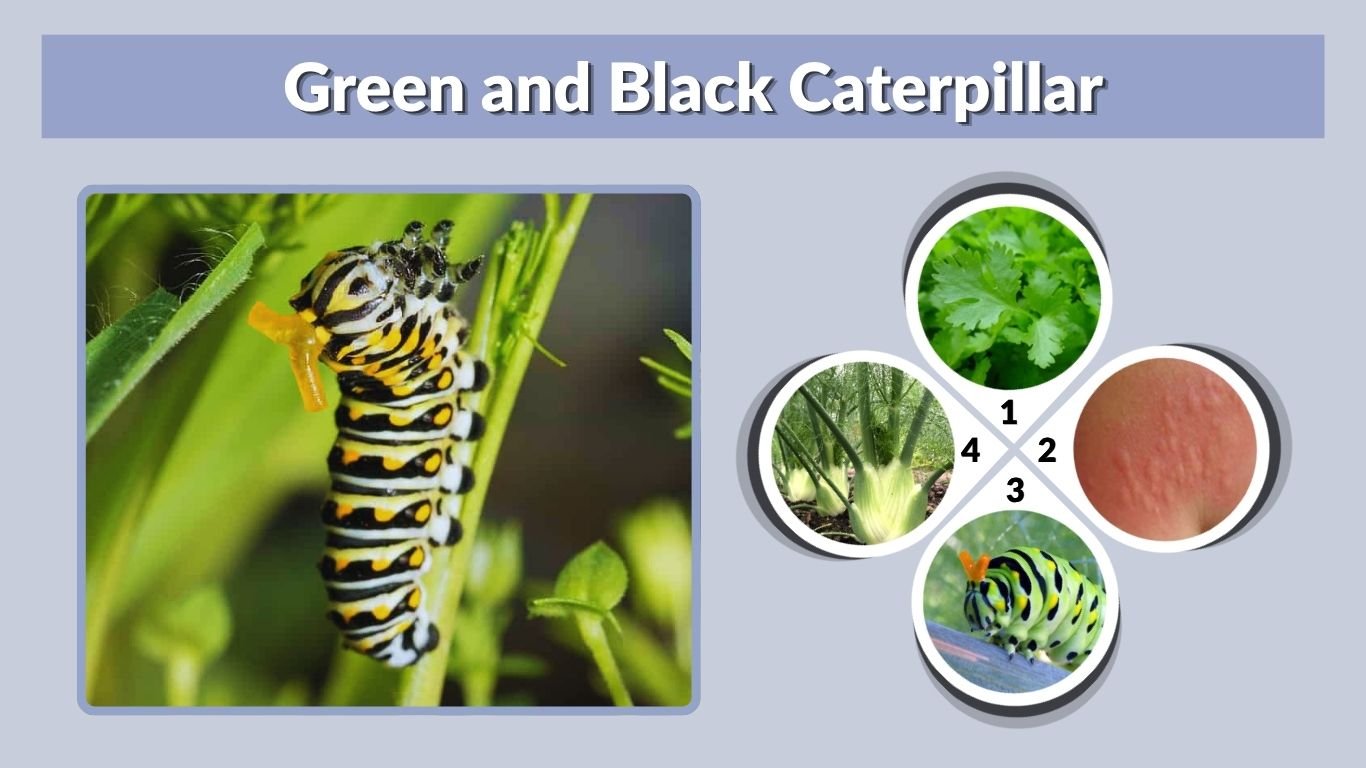
A green and black caterpillar is one of the most commonly searched garden insects because its colors are bold, bright, and easy to notice. Many people find one on parsley, dill, fennel, tomato plants, flowers, or tree leaves and immediately wonder what it is. Some green, black, and yellow caterpillars become butterflies, while others become moths. Most are not dangerous to people, but correct identification matters because some are helpful wildlife and others can damage garden plants.
What Is a Green and Black Caterpillar?
A green and black caterpillar is usually the larval stage of a butterfly or moth. The phrase does not describe only one species. It can refer to several caterpillars with green bodies, black stripes, yellow spots, dark bands, horns, or other markings. To identify it correctly, you need to look at the color pattern, host plant, size, and body shape.
Why This Caterpillar Gets So Much Attention
A green and black caterpillar stands out because its markings look unusual. Some have black bands across a green body. Others have yellow dots, white stripes, orange spots, or small defensive organs. These markings can help the caterpillar blend into plants, confuse predators, or warn animals that it may taste unpleasant.
The most common match for “green and black caterpillar” is often the black swallowtail caterpillar, also called the parsleyworm. Older black swallowtail larvae are green with black bands and yellow spots, and they commonly grow up to about 1.5 to 2 inches long.
Why Identification Depends on the Plant
The plant where you find the caterpillar is one of the strongest clues. A green and black caterpillar on parsley or dill may be a black swallowtail. A green caterpillar with a horn on tomato plants may be a hornworm. A striped caterpillar on milkweed may be a monarch caterpillar. The host plant often narrows the answer quickly.
Common Green, Black, and Yellow Caterpillars
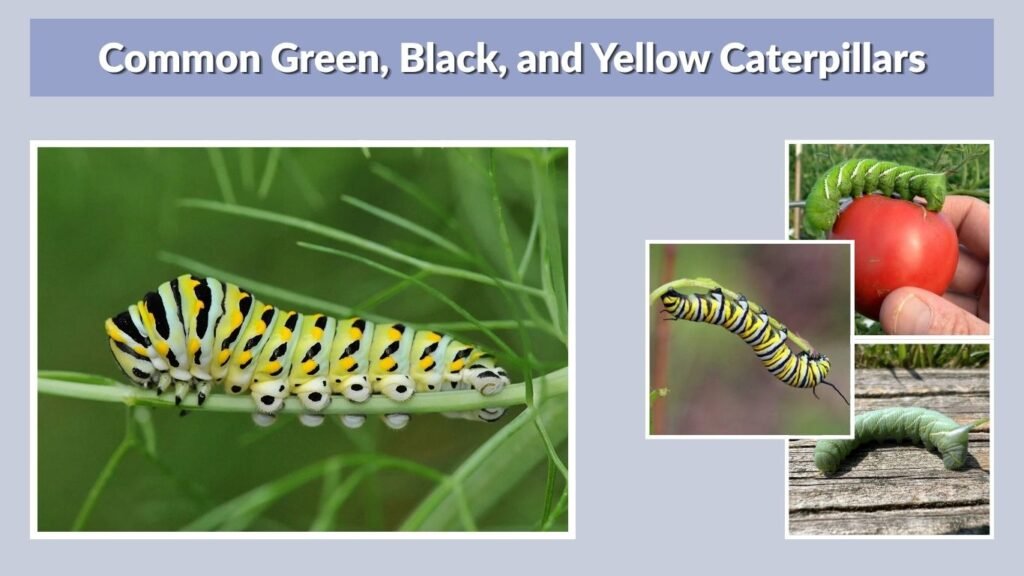
Many searches include phrases such as green black and yellow caterpillar, black yellow and green caterpillar, or green caterpillar with black stripes and yellow dots. These searches usually point to species with bold warning colors or camouflage patterns. Some are butterfly caterpillars, while others are moth caterpillars that can be confused with them.
Common Types to Know
- Black swallowtail caterpillar: Green with black bands and yellow or orange spots. It is often found on parsley, dill, fennel, carrot tops, and related plants.
- Monarch caterpillar: Usually striped with black, white, and yellow or greenish bands. It feeds on milkweed and has black, whip-like structures near both ends of the body.
- Tomato hornworm: A large green caterpillar with pale V-shaped markings and a dark horn at the rear. It feeds on tomato plants and other nightshades.
- Tobacco hornworm: Similar to the tomato hornworm but usually has diagonal white stripes and a red horn. It may also feed on tomato, tobacco, pepper, eggplant, and potato plants.
- Other moth caterpillars: Some large moth larvae may appear green and black at certain stages, especially when shadows, stripes, or body markings are visible.
The Most Likely Match
If the caterpillar is green, black, and yellow, with neat bands or yellow dots, the black swallowtail caterpillar is one of the strongest possibilities. It is especially likely if you find it on parsley, dill, fennel, carrot leaves, celery, or Queen Anne’s lace. Because of this, many people also call it a parsley caterpillar or parsleyworm.
The black swallowtail caterpillar changes appearance as it grows. Young larvae can look darker, while older larvae develop the familiar green body with black bands and yellow spots. This color change is one reason people sometimes struggle with identification.
How to Identify a Green and Black Caterpillar
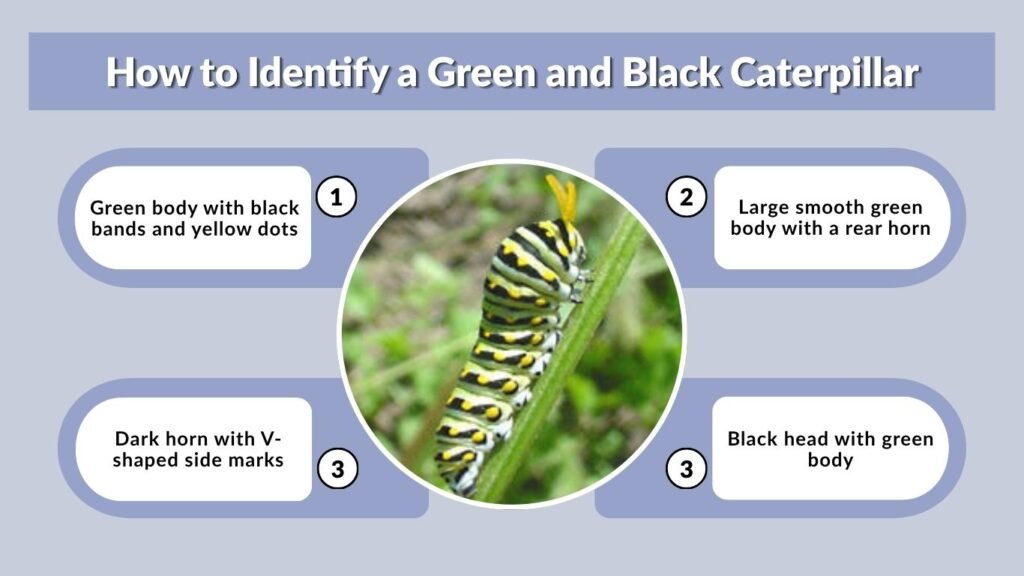
Correct identification starts with observation. Do not rely on color alone because many caterpillars share green, black, yellow, or white markings. Instead, look at the plant, the body pattern, whether it has a horn, whether it has tentacle-like structures, and whether it is smooth, fuzzy, spiky, or striped.
Check These Visual Clues
- Green body with black bands and yellow dots: Often a black swallowtail caterpillar.
- Black, white, and yellow stripes with tentacle-like filaments: Often a monarch caterpillar.
- Large smooth green body with a rear horn: Often a tomato or tobacco hornworm.
- Red horn with diagonal stripes: More likely a tobacco hornworm.
- Dark horn with V-shaped side marks: More likely a tomato hornworm.
- Fuzzy or hairy body: May be another species and should not be handled.
- Black head with green body: Could be a young caterpillar or a different species depending on the plant.
Check the Host Plant
- Parsley, dill, fennel, carrot, celery: Usually points toward black swallowtail caterpillars.
- Milkweed: Usually points toward monarch caterpillars.
- Tomato, pepper, potato, eggplant, tobacco: Often points toward hornworms.
- Tree leaves: May point toward moth caterpillars rather than common garden butterfly caterpillars.
- Flowers or weeds: Identification depends on the exact plant and region.
Look for Defensive Features
Black swallowtail caterpillars have a special defensive organ called an osmeterium. When disturbed, they can push out a small orange forked structure that gives off an unpleasant smell. This may look alarming, but it is mainly a defense against predators.
Hornworms have a horn-like projection on the rear of the body. This horn looks like a spike, but it is not a stinger. The caterpillar may look dangerous, but the horn is mostly for appearance and defense.
Is a Green and Black Caterpillar Poisonous?
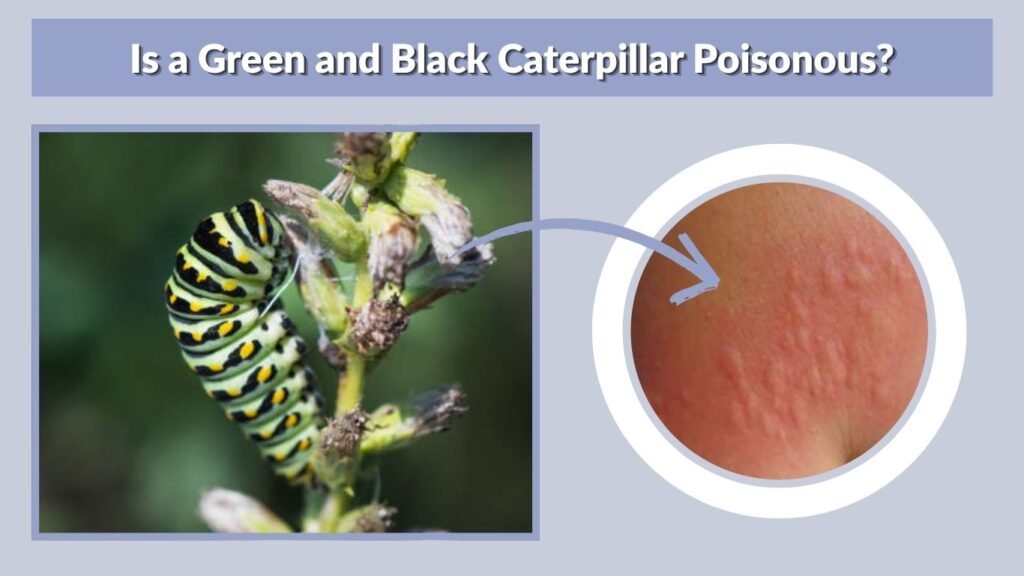
Most green and black caterpillars found in gardens are not dangerous to humans. However, “not dangerous” does not mean you should handle every caterpillar. Some caterpillars can irritate sensitive skin, and some may use defensive smells or chemicals. The safest choice is to identify the caterpillar first and avoid touching unknown fuzzy, spiny, or hairy species.
Are Black Swallowtail Caterpillars Dangerous?
Black swallowtail caterpillars are not considered dangerous to people. Gardeners often leave them alone because they become attractive black swallowtail butterflies. If they are eating a small amount of parsley or dill, the plant usually recovers. If you want to protect your herbs, you can move the caterpillar to another suitable host plant rather than killing it.
Are Hornworms Dangerous?
Tomato and tobacco hornworms are not usually dangerous to people, but they can be very destructive to vegetable plants. Tomato hornworms can remove many leaves and may damage fruit. Their droppings are often visible before the caterpillar itself is found because the green body blends into the plant so well.
What Does a Green and Black Caterpillar Eat?
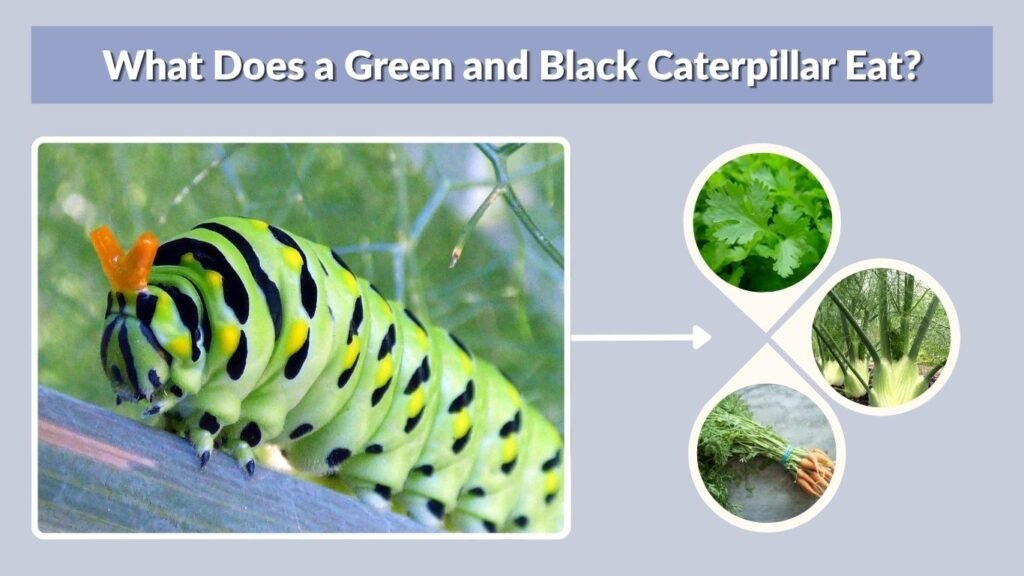
A green and black caterpillar eats leaves from its host plant. Some species are picky and feed only on certain plants, while others accept a wider range. Knowing the food plant is helpful because it tells you whether the caterpillar is a butterfly larva, a moth larva, or a garden pest that needs management.
Common Food Plants
- Parsley
- Dill
- Fennel
- Carrot tops
- Celery
- Queen Anne’s lace
- Milkweed
- Tomato plants
- Pepper plants
- Eggplant
- Potato leaves
- Tobacco plants
- Tree and shrub leaves
Why Food Plant Matters
If the caterpillar is on parsley, dill, or fennel, it may be worth protecting because it could become a black swallowtail butterfly. If it is on milkweed, it may be a monarch caterpillar, which depends on milkweed as its host plant. If it is on tomato plants and has a horn, it may be a hornworm and should be managed before it causes major damage.
What Does It Turn Into?
A green and black caterpillar can become either a butterfly or a moth, depending on the species. A black swallowtail caterpillar becomes a black swallowtail butterfly. A monarch caterpillar becomes a monarch butterfly. Tomato and tobacco hornworms become sphinx moths, also known as hawk moths.
Butterfly Caterpillars
The black swallowtail is one of the most common answers for green and black caterpillar identification. Its adult form is a dark butterfly with yellow markings and blue or red accents, depending on sex and region. The caterpillar stage is especially familiar to gardeners because it often appears on culinary herbs.
Monarch caterpillars are also widely recognized, but they are usually more clearly striped with black, white, and yellow. Their milkweed diet is the easiest way to separate them from swallowtail caterpillars.
Moth Caterpillars
Hornworms become large sphinx moths. These adult moths are strong fliers and often visit flowers. While the adult moths may help with pollination, the caterpillar stage can be damaging in vegetable gardens. This is why gardeners often remove hornworms from tomato plants but leave swallowtail caterpillars on herbs.
What Should You Do If You Find One?
Your response depends on the species and the plant. A green and black caterpillar on herbs may be a future butterfly. A green caterpillar with a horn on tomatoes may be a pest. Before removing it, check its markings, host plant, and size. Many caterpillars are harmless unless they are damaging an important crop.
Safe Garden Steps
- Identify the plant first: The host plant is the fastest clue.
- Check the pattern: Look for black bands, yellow dots, white stripes, or a rear horn.
- Avoid spraying immediately: Pesticides can harm butterflies, bees, and beneficial insects.
- Move it if needed: Place it on another suitable host plant if you want to save your herbs.
- Hand-pick hornworms: Remove them from tomato plants if damage is serious.
- Leave parasitized hornworms: White rice-like cocoons on a hornworm usually mean beneficial wasps are developing.
When to Leave It Alone
Leave the caterpillar alone if it is not causing serious damage. A few chewed parsley leaves are usually less important than supporting a butterfly life cycle. If the caterpillar is on milkweed, avoid disturbing it because monarch caterpillars rely on that plant. If it is on a wild plant or mature tree, it is probably part of the normal ecosystem.
When to Remove It
Remove the caterpillar if it is rapidly damaging vegetables, especially tomatoes. Hornworms can eat heavily as they grow, and older hornworms cause the most visible defoliation. Hand removal is usually enough in a small garden.
FAQs
Green and black caterpillars are common in gardens, but their similar colors can make identification confusing. The most frequent questions involve poison, plant damage, butterfly life cycles, and the difference between swallowtail caterpillars, monarch caterpillars, and hornworms. These quick answers cover the main search questions.
1. What is a green and black caterpillar?
It is usually the larval stage of a butterfly or moth. The most common match is often the black swallowtail caterpillar, especially if it has black bands and yellow dots and is found on parsley, dill, fennel, or carrot leaves.
2. Is a green and black caterpillar poisonous?
Most common garden species are not dangerous to people. However, avoid handling unknown caterpillars, especially fuzzy, hairy, or spiny ones, because some species may irritate skin.
3. What is a green and black caterpillar with yellow spots?
A green and black caterpillar with yellow spots is often a black swallowtail caterpillar. Older black swallowtail larvae are green with black bands and yellow spots.
4. What is a green and black caterpillar with a horn?
A green caterpillar with a horn is often a tomato hornworm or tobacco hornworm. Tomato hornworms usually have V-shaped side markings and a darker horn, while tobacco hornworms usually have diagonal stripes and a red horn.
5. Should I kill a green and black caterpillar?
Do not kill it until you identify it. If it is a black swallowtail caterpillar on parsley or dill, it will become a butterfly. If it is a hornworm damaging tomato plants, you may need to remove it by hand.
