
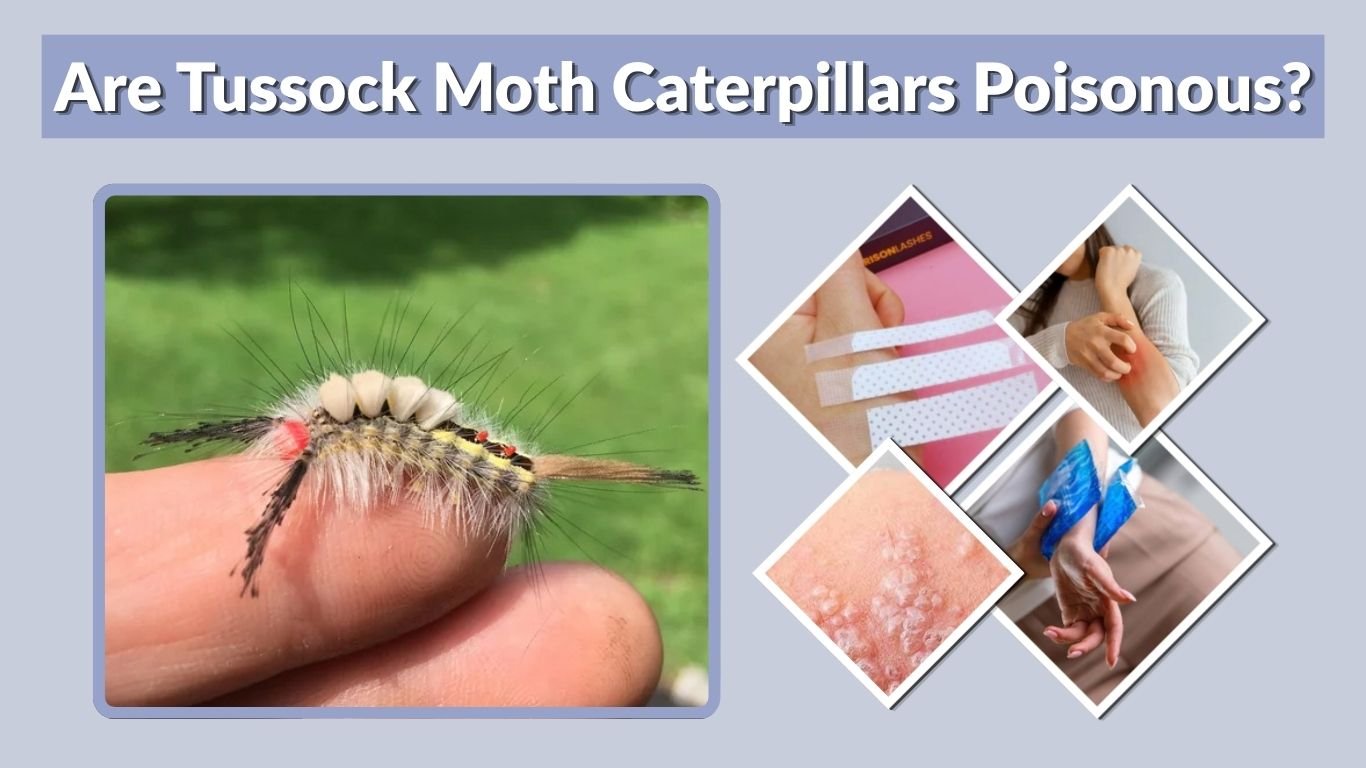
Tussock moth caterpillars look soft, fuzzy, and harmless, but many species can irritate human skin. People often ask, “Is the tussock moth caterpillar poisonous?” The simple answer is: most tussock moth caterpillars are not poisonous in the way a toxic plant or venomous snake is poisonous, but their tiny hairs can cause itching, redness, burning, swelling, or rash. Some species also carry plant-based toxins or stronger irritating hairs. Because reactions vary, it is best not to touch any fuzzy tussock moth caterpillar with bare hands.
Are Tussock Moth Caterpillars Poisonous?
Many tussock moth caterpillars have defensive hairs called urticating hairs. These hairs can break off, stick in the skin, and cause irritation. University of Maine Extension explains that tussock caterpillar hairs can cause a very itchy rash, but the prickly hairs are a defense mechanism and are not usually considered poisonous or venomous.
However, “not venomous” does not mean “safe to touch.” Ohio State University notes that white-marked tussock moth caterpillar hairs can puncture the skin and cause hives or rashes in sensitive people. The CDC also reported skin rashes in children after exposure to white-marked tussock moth caterpillars, with irritation linked to caterpillar hairs or cocoon hairs.
| Question | Simple Answer |
| Are tussock moth caterpillars poisonous? | Usually irritating, not deadly poisonous |
| Can they cause rash? | Yes, many can |
| Should you touch them? | No |
| Are they dangerous to kids? | Kids may react more strongly |
| Are they poisonous to dogs? | They can irritate pets if touched or eaten |
Why Tussock Moth Caterpillars Cause Rashes
Tussock moth caterpillars are covered with hair-like structures called setae. These hairs help protect them from predators. When people touch the caterpillar, the hairs may lodge in the skin and trigger itching, redness, or a burning feeling.
The reaction can be mechanical, allergic, or both. In some people, the rash is mild and goes away quickly. In sensitive people, the rash can become very itchy and uncomfortable. Rubbing or scratching can make the problem worse because it may push the hairs deeper into the skin. Medical toxicology guidance for white-marked tussock moth exposure notes that rubbing can worsen irritation by embedding hairs more deeply.
What Does a Tussock Moth Caterpillar Rash Look Like?
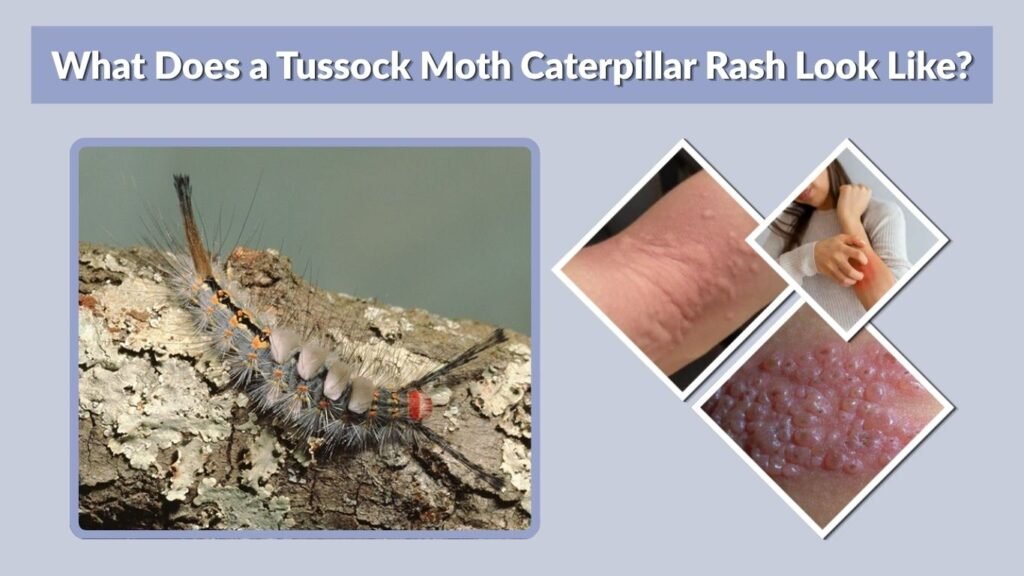
A tussock moth caterpillar rash may look like small red bumps, itchy patches, hives, swelling, or irritated skin. It may appear within minutes or hours after contact. The rash can happen on fingers, hands, arms, neck, legs, or any skin that touched the caterpillar or its hairs.
Common Symptoms
Symptoms may include:
- Itching
- Redness
- Burning feeling
- Small bumps
- Hives
- Mild swelling
- Skin tenderness
- Rash where hairs touched the skin
If hairs get into the eyes, mouth, or throat, irritation can be more serious. Seek medical help if there is eye pain, breathing trouble, severe swelling, or a widespread reaction.
Hickory Tussock Moth Caterpillar Poisonous?
The hickory tussock moth caterpillar is one of the most searched species because it is white, fuzzy, and easy for children to notice. It has white hairs, black markings, and longer black hair tufts. It feeds on hickory, walnut, ash, oak, and other hardwood trees.
Penn State Extension says exposure to hickory tussock moth caterpillar hairs generally causes a localized rash and itching, and ingestion of the hairs may cause more serious symptoms.
The hickory tussock moth caterpillar should not be handled. Even if one person touches it and has no reaction, another person may develop itching or rash.
White-Marked Tussock Moth Caterpillar Poisonous?
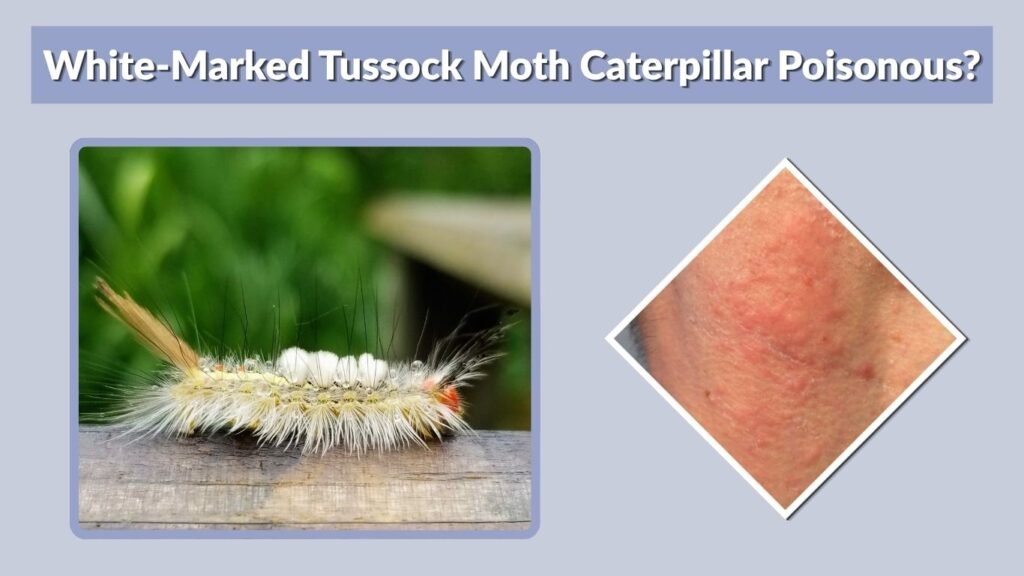
The white-marked tussock moth caterpillar is another common species that often causes concern. It has a bright red or orange head, four pale brush-like tufts on its back, black hair pencils, yellow markings, and red spots.
This species is known for irritating hairs. Ohio State University explains that the hairs are not attached to venom glands like more dangerous caterpillars, but they can puncture the skin and cause hives or rashes in sensitive individuals.
The CDC also described a Florida outbreak where children developed rashes after contact with white-marked tussock moth caterpillars. For homeowners, the safest rule is simple: admire it, photograph it, but do not touch it.
Sycamore Tussock Moth Caterpillar Poisonous?
The sycamore tussock moth caterpillar is a fuzzy caterpillar often found on sycamore trees and related hosts. Like many hairy caterpillars, it may cause skin irritation if handled. The word “poisonous” is often used by homeowners, but the bigger issue is usually irritating hairs rather than a dangerous internal poison.
If you find fuzzy caterpillars on sycamore trees, avoid brushing them with bare skin. Wear gloves and long sleeves when working around infested branches or fallen caterpillars.
Banded Tussock Moth Caterpillar Poisonous?
The banded tussock moth caterpillar is usually pale yellow, tan, or grayish with black and white hair tufts. It can look soft, but it should still be treated as a “do not touch” caterpillar.
Banded tussock moth caterpillars are not usually considered deadly poisonous to humans, but their hairs may irritate sensitive skin. Since people can react differently, children should be taught not to pick up fuzzy caterpillars.
Douglas-Fir Tussock Moth Caterpillar Poisonous?
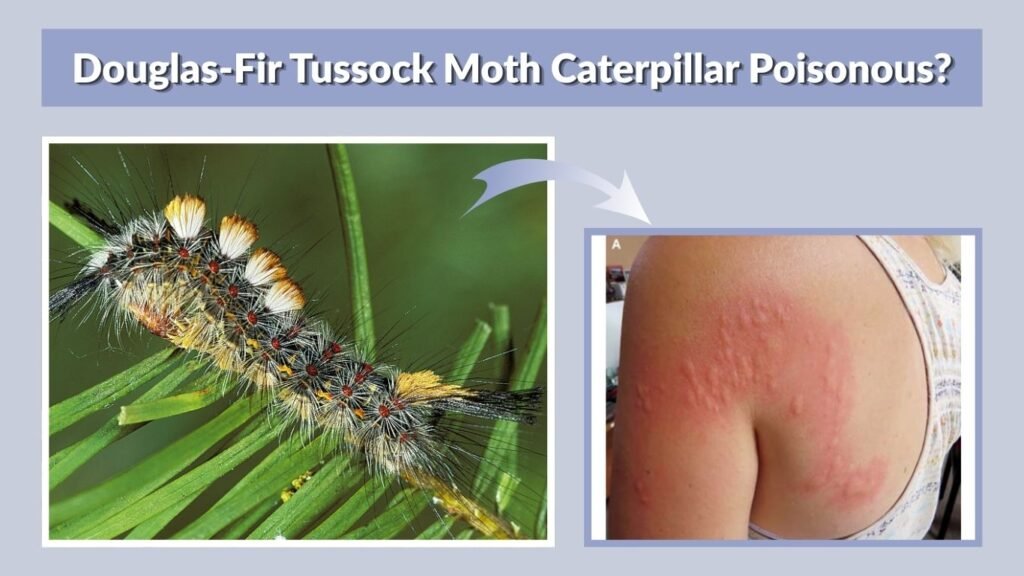
Douglas-fir tussock moth caterpillars feed on conifers such as Douglas-fir, true firs, and spruce. They are important forest pests in some areas because outbreaks can defoliate trees.
The caterpillars have hairy bodies and can irritate the skin. People working around infested trees may develop itching or rash from direct contact with caterpillars, shed skins, or airborne hairs. Protective clothing is a good idea when handling branches, firewood, or outdoor equipment in areas with heavy caterpillar activity.
Milkweed Tussock Moth Caterpillar Poisonous?
Milkweed tussock moth caterpillars are a special case. They feed on milkweed and can store toxic cardiac glycosides from the plant. Clemson Extension explains that their black, orange, and white warning colors signal that they contain accumulated toxic cardiac glycosides from milkweed.
Ohio State University also notes that milkweed tussock moth caterpillars use toxins from milkweed as a chemical defense.
This does not mean they are dangerous to touch in the same way as a venomous insect, but they should not be eaten or handled. Their bright colors are a warning to predators.
Are Tussock Moth Caterpillars Poisonous to Dogs?
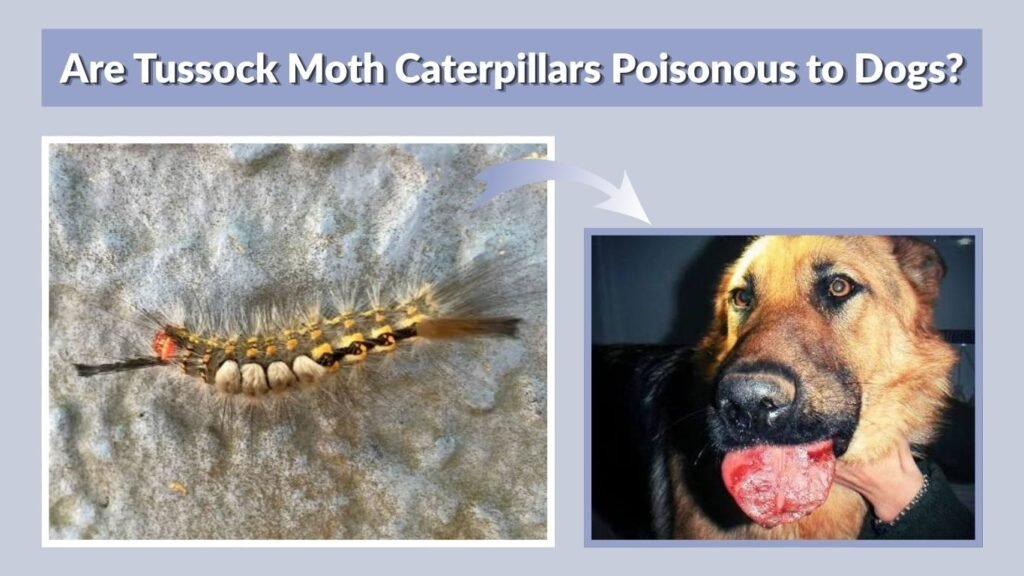
Tussock moth caterpillars can be a problem for dogs and cats if pets lick, chew, or swallow them. ASPCA warns that many caterpillar hairs can be harmful when touched or ingested by pets, and ingestion may cause head shaking, pawing at the mouth, vomiting, diarrhea, and irritation of the lips, mouth, or throat.
If your dog eats a tussock moth caterpillar, remove any remaining caterpillar material from the mouth if you can do so safely, rinse the mouth gently, and call a veterinarian. For poison-related pet emergencies, ASPCA Poison Control is available 24/7.
Signs in Dogs and Cats
Watch for:
- Drooling
- Pawing at the mouth
- Vomiting
- Diarrhea
- Swollen lips
- Mouth irritation
- Head shaking
- Refusing food
- Trouble breathing
Trouble breathing, facial swelling, repeated vomiting, or extreme distress should be treated as urgent.
What to Do If You Touch a Tussock Moth Caterpillar
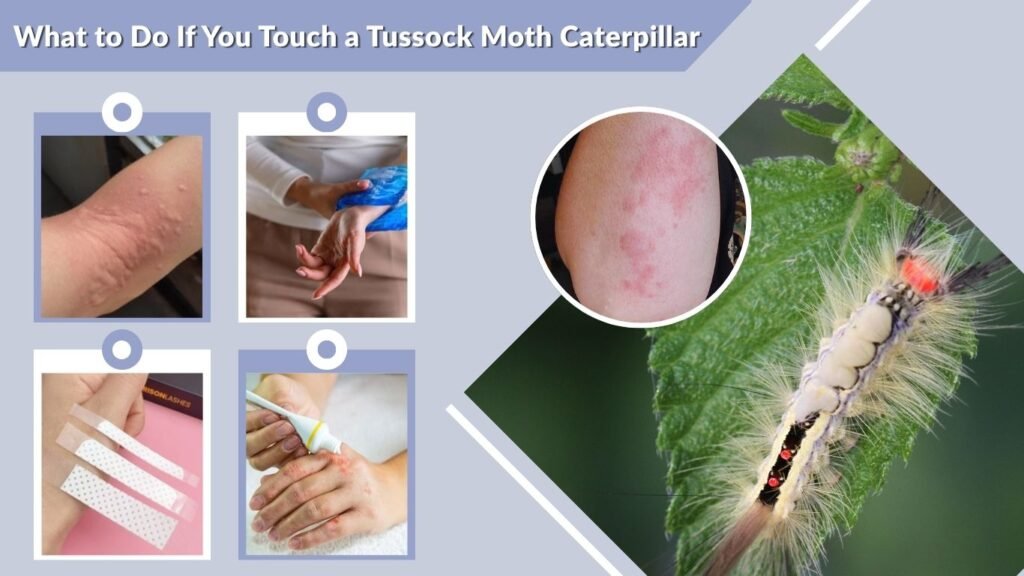
If you touch a tussock moth caterpillar, do not rub the area. Rubbing can push hairs deeper into the skin.
First Aid Steps
- Move away from the caterpillar.
- Use tape to gently lift hairs from the skin.
- Wash the area with soap and water.
- Apply a cold compress to reduce itching.
- Use an over-the-counter anti-itch cream if needed.
- Wash clothing that may have hairs on it.
- Seek medical help for severe swelling, eye exposure, breathing issues, or a spreading rash.
Medical sources on caterpillar rash commonly recommend removing hairs, washing the area, and using symptom relief such as antihistamines or hydrocortisone for itching.
How to Remove Tussock Moth Caterpillars Safely
Do not pick up tussock moth caterpillars with bare hands. If they are on a walkway, porch, playground, or pet area, remove them carefully.
Use gloves, long sleeves, a broom, dustpan, or a stick to move them. Avoid crushing them with bare skin because hairs may spread. If there are many caterpillars on trees, contact a local extension office or pest control professional for advice.
Safe Control Tips
- Keep children away from fuzzy caterpillars
- Keep dogs and cats from eating them
- Wear gloves when gardening
- Do not touch cocoons with bare hands
- Wash outdoor toys if caterpillars are present
- Remove caterpillars from patios with tools
- Avoid shaking infested branches overhead
- Call professionals for heavy tree infestations
Poisonous Tussock Moth Caterpillars by Type
Different species have different risk levels, but most should be handled with caution.
| Caterpillar Type | Main Concern |
| Hickory tussock moth | Rash and itching from hairs |
| White-marked tussock moth | Skin irritation, hives, rash |
| Sycamore tussock moth | Possible skin irritation |
| Banded tussock moth | Possible irritation from hairs |
| Douglas-fir tussock moth | Rash risk and tree damage |
| Milkweed tussock moth | Plant-based toxins from milkweed |
| Southern tussock moth | Irritating hairs possible |
| Fir tussock moth | Irritating hairs possible |
| Rusty tussock moth | Skin irritation possible |
| Pale tussock moth | Handle with caution |
Because species identification can be difficult, the safest approach is to avoid touching all fuzzy tussock-like caterpillars.
FAQs
Is a tussock moth caterpillar poisonous?
Most tussock moth caterpillars are better described as irritating rather than deadly poisonous. Their hairs can cause itching, redness, hives, or rash, especially in sensitive people.
What happens if you touch a tussock moth caterpillar?
You may develop itching, redness, burning, swelling, or small bumps where the hairs touched your skin. Remove hairs with tape, wash the area, and avoid scratching.
Is the hickory tussock moth caterpillar poisonous?
The hickory tussock moth caterpillar can cause rash and itching from its hairs. Penn State Extension notes that exposure usually causes localized rash and itching, while ingestion of hairs may cause more serious symptoms.
Are tussock moth caterpillars poisonous to dogs?
They can irritate dogs if touched or eaten. ASPCA warns that caterpillar hairs may cause mouth irritation, vomiting, diarrhea, drooling, or pawing at the mouth in pets.
Should I kill tussock moth caterpillars?
Not always. Many are part of the natural ecosystem. If they are in a high-contact area, move them safely without touching. For large infestations on trees, ask a local extension office or pest control professional for proper control advice.
