
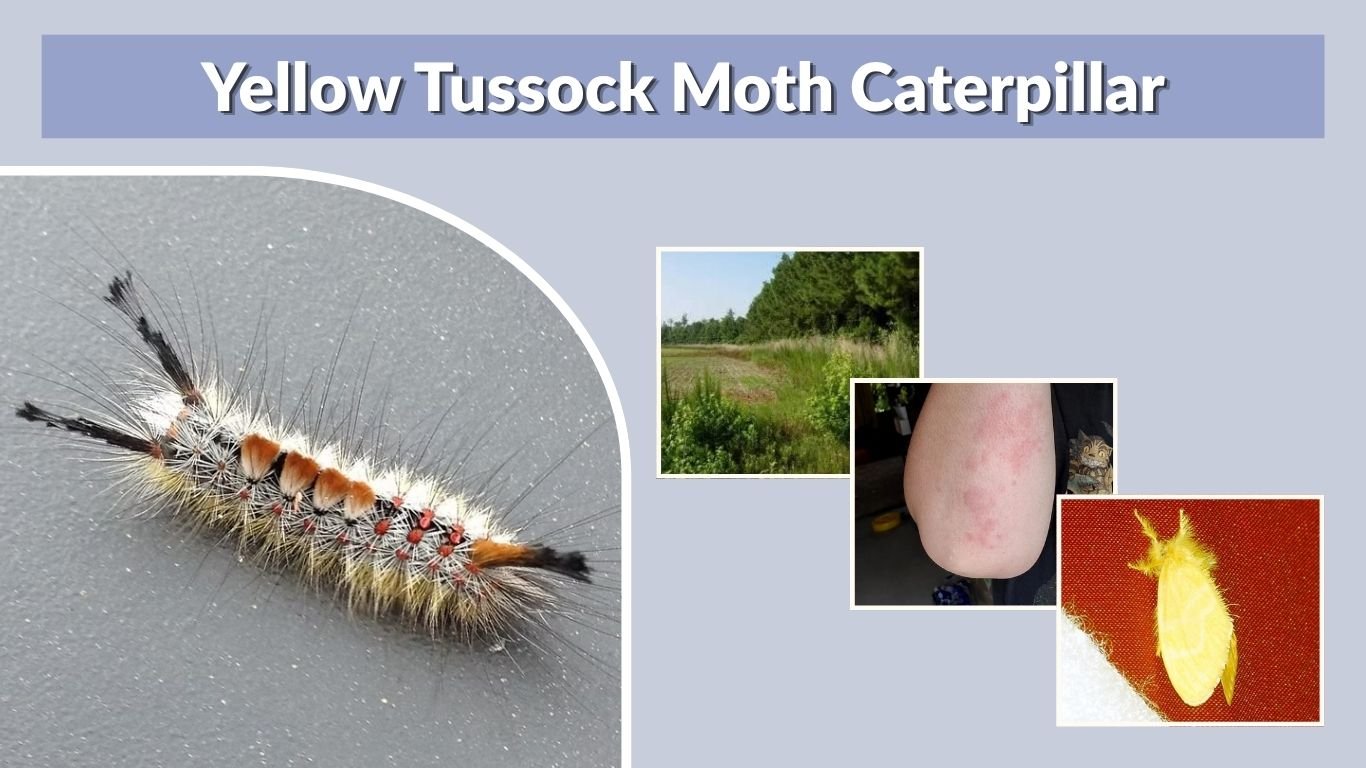
A yellow tussock moth caterpillar is usually a fuzzy yellow or yellow-and-black caterpillar with hair tufts along its body. In North America, this name often points to the yellow-spotted tussock moth, also called the spotted tussock moth or yellow-spotted tiger moth, Lophocampa maculata. These caterpillars are attractive, but their hairs may irritate skin. This guide explains identification, diet, habitat, poison concerns, sting treatment, and similar yellow caterpillars.
What Is a Yellow Tussock Moth Caterpillar?
The phrase “yellow tussock moth caterpillar” is a common search term, not always one exact species name. Most people use it for fuzzy yellow tussock-like larvae, especially the yellow-spotted tussock moth caterpillar, Lophocampa maculata. This moth belongs to the family Erebidae and subfamily Arctiinae, the tiger moth group.
| Feature | Details |
| Common search name | Yellow tussock moth caterpillar |
| Common species match | Yellow-spotted tussock moth caterpillar |
| Scientific name | Lophocampa maculata |
| Other names | Spotted tussock moth, yellow-spotted tiger moth, mottled tiger moth |
| Family | Erebidae |
| Main concern | Irritating hairs may cause rash |
| Main diet | Leaves of trees such as birch, maple, oak, poplar, and willow |
Is It the Same as the Yellow-Spotted Tussock Moth?
Usually, yes. When people search for a bright yellow tussock moth caterpillar with black spots, they are often describing Lophocampa maculata. Butterflies and Moths of North America lists this species as the spotted tussock moth or yellow-spotted tiger moth.
Why the Name Is Confusing
“Tussock moth” can refer to several fuzzy caterpillars with hair tufts. Some yellow caterpillars may be hickory tussock moths, banded tussock moths, white-marked tussock moths, yellow-based tussock moths, or other tiger moth larvae. Identification should be based on pattern, host plant, region, and body shape, not yellow color alone.
Yellow Tussock Moth Caterpillar Identification
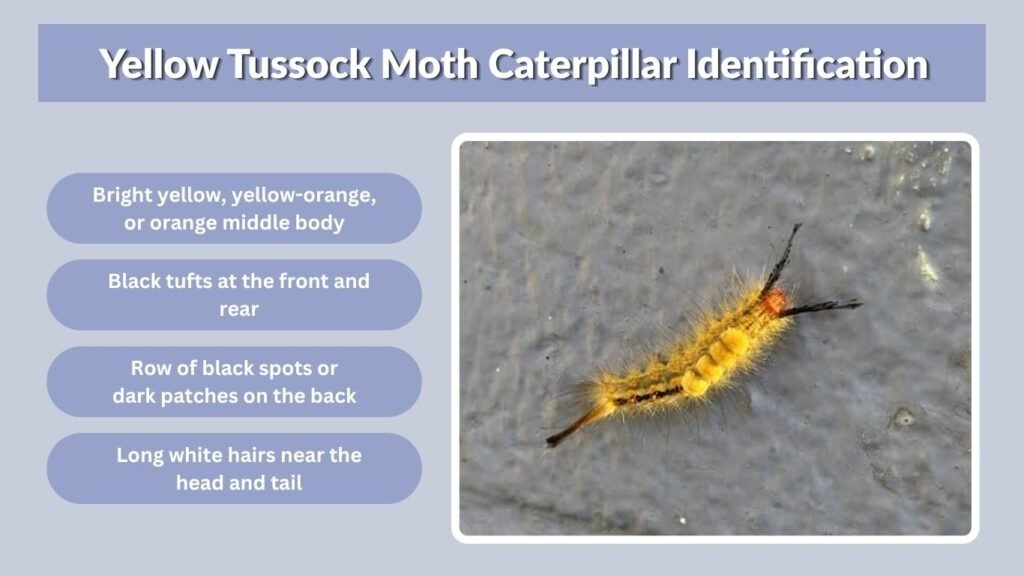
The yellow-spotted tussock moth caterpillar is one of the easier fuzzy caterpillars to recognize when mature. It often has a yellow or orange middle section, black areas near the front and rear, and long pale hairs sticking out from the ends.
Color and Markings
A mature spotted tussock moth larva is densely covered with hair tufts. PNW Moths describe the mature larva as having black hair tufts at the head and tail, a red-orange middle section, and scattered long white hair tufts along the body. Younger larvae can look more orange and may lack the strong black coloration.
Common field marks include:
- Bright yellow, yellow-orange, or orange middle body
- Black tufts at the front and rear
- Row of black spots or dark patches on the back
- Long white hairs near the head and tail
- Dense fuzzy body texture
- Caterpillar often found on tree leaves
Size and Shape
The adult moth has a wingspan of about 3.5–4.3 cm, according to Butterflies and Moths of North America. The caterpillar is medium-sized when mature and appears larger because of its thick hair covering.
Yellow and Black Pattern
Many searchers describe it as a “yellow and black tussock moth caterpillar.” This is a useful clue, but it is not enough by itself. Some individuals have stronger black spotting, while others may look more orange, pale yellow, or less sharply marked.
Is the Yellow Tussock Moth Caterpillar Poisonous?
A yellow tussock moth caterpillar is not poisonous in the way people often imagine. It does not bite like a spider or sting like a bee. The main problem is that its tiny hairs can irritate the skin, especially if handled with bare hands.
DermNet explains that caterpillar and moth hairs can cause skin reactions such as itchy bumps, redness, swelling, and sometimes blister-like irritation. The CDC also notes that tussock moth caterpillars are documented causes of rash after physical contact.
Does It Sting?
It does not have a stinger. People call it a “sting” because the hairs can create a sharp, itchy, burning, or prickly feeling. Sensitive people may react more strongly than others.
Can You Touch It?
It is better not to touch any fuzzy yellow tussock caterpillar with bare skin. Children are especially likely to pick them up because they look soft. If you need to move one, use a leaf, stick, paper, or gloves.
Yellow Tussock Moth Caterpillar Rash
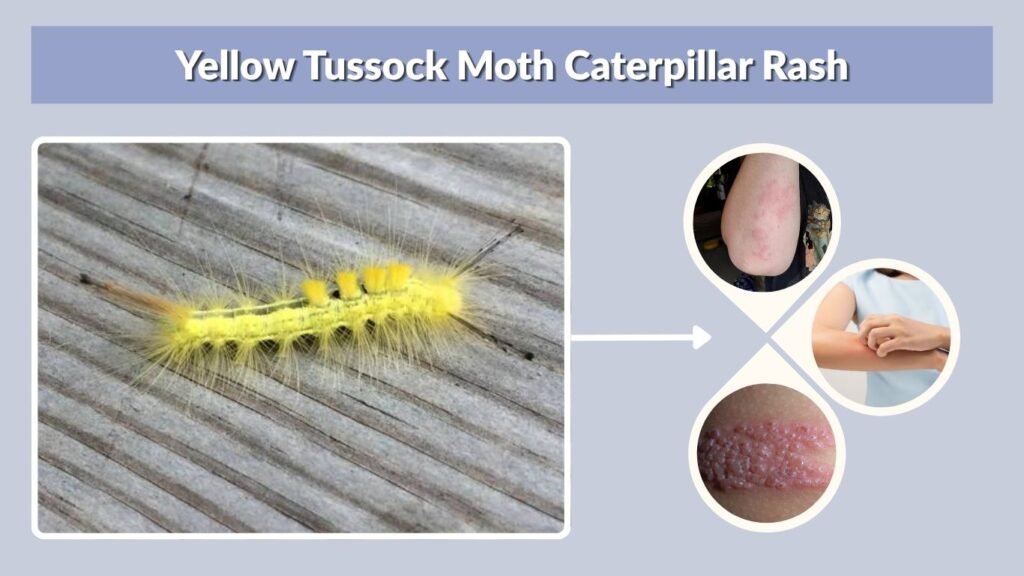
A rash may appear shortly after contact or after several hours. The reaction depends on the species, the number of hairs touching the skin, and the person’s sensitivity.
Common Rash Symptoms
Possible symptoms include:
- Itching
- Red bumps
- Mild swelling
- Burning feeling
- Stinging sensation
- Tender skin
- Hives in sensitive people
- Blister-like irritation in stronger reactions
A rash photo alone cannot prove which caterpillar caused it. Poison ivy, mites, flea bites, ant bites, allergies, and skin infections can look similar.
Sting Treatment
If you touch a yellow tussock moth caterpillar, do not rub the area. Cleveland Clinic recommends removing caterpillar hairs with adhesive tape, washing the skin with soap and water, and using ice to reduce swelling and discomfort. DermNet also lists ice, pain relief, topical anesthetics, topical steroids, or antihistamines as possible treatments depending on the reaction.
Basic steps:
- Remove visible hairs with tape.
- Wash the skin with soap and cool water.
- Apply a cold compress or ice pack wrapped in cloth.
- Avoid scratching the rash.
- Use anti-itch cream or an oral antihistamine if safe for you.
- Wash clothing that may have caterpillar hairs on it.
- Seek medical care for severe swelling, eye exposure, breathing trouble, or a spreading rash.
Yellow Tussock Moth Caterpillar Habitat and Range
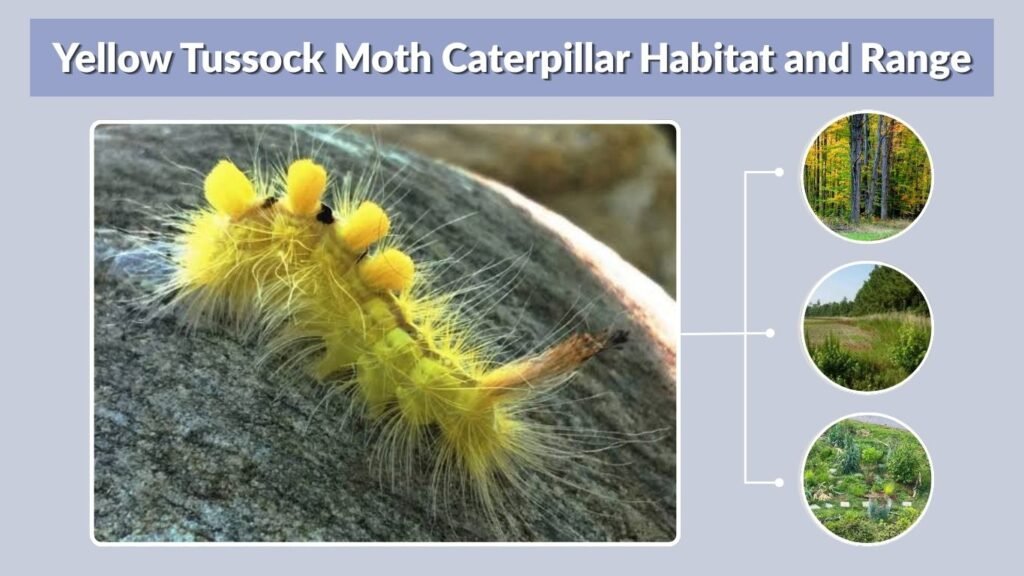
Yellow-spotted tussock moth caterpillars are found in many parts of North America. NatureServe lists Lophocampa maculata as the spotted tussock moth or yellow-spotted tiger moth. Other sources describe it from Canada and parts of the United States, including western regions and parts of the Appalachians.
Where You May Find Them
You may see yellow tussock caterpillars in:
- Forest edges
- Woodlands
- Parks
- Yards with host trees
- Shrubby areas
- Roadsides near trees
- Garden edges
Searches for yellow tussock moth caterpillars in Ontario, Kentucky, Indiana, and similar areas often come from people finding these larvae in late summer on trees or low vegetation.
Yellow Tussock Moth Caterpillar Diet and Host Plants
Yellow-spotted tussock moth caterpillars feed on leaves of several deciduous trees. Butterflies and Moths of North America lists caterpillar hosts as birches, maples, oaks, poplars, and willows. The BC Conservation Data Centre also lists birch, maple, oak, poplar, willow, alder, and basswood among larval food plants.
| Host Plant Group | Examples |
| Common forest trees | Oak, maple, birch |
| Wet-area trees | Willow, poplar, alder |
| Other host trees | Basswood and related deciduous trees |
| Yard trees | Maples, oaks, birches, and poplars |
Do They Harm Trees?
A few caterpillars usually do not seriously damage healthy trees. They may chew holes in leaves, but late-season feeding is often minor. A heavy outbreak on a young or stressed tree may look more noticeable, but most casual sightings do not require pesticide treatment.
Life Cycle of the Yellow Tussock Moth
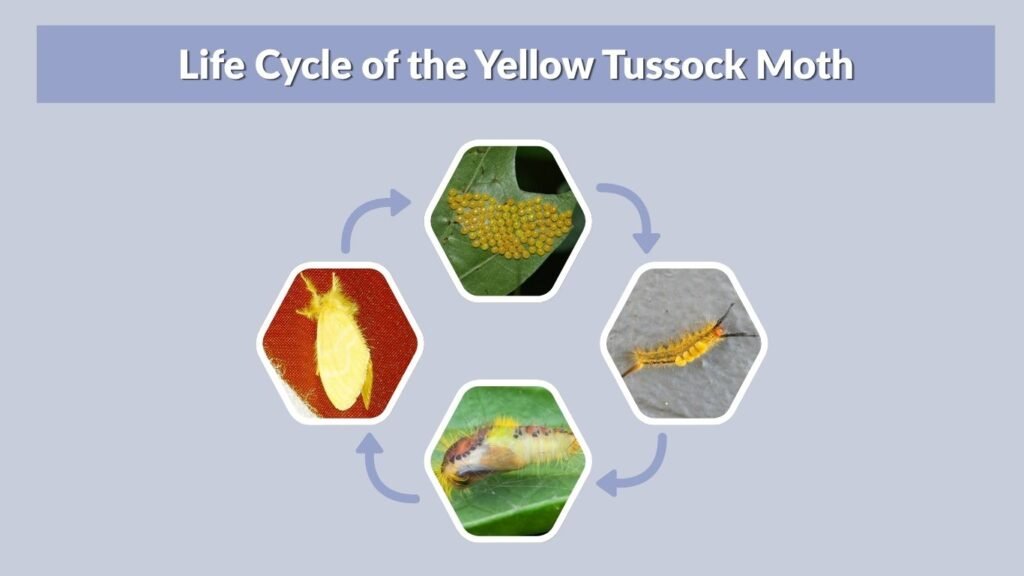
Like other moths, the yellow-spotted tussock moth develops through egg, caterpillar, pupa, and adult stages. The caterpillar stage is the one people notice most because it is colorful and fuzzy.
Caterpillar Stage
The larvae are often noticed in summer and early fall. Wikipedia’s species summary describes larvae from July to September and one generation per year, while other regional sources may show timing differences depending on climate.
Cocoon Stage
When mature, the caterpillar pupates in a protected place. Fuzzy caterpillars may use body hairs in cocoon construction, so cocoons from irritating caterpillars should also be handled carefully.
Adult Moth
The adult yellow-spotted tussock moth has yellow to tan forewings with brown bands or markings. Butterflies and Moths of North America describes the forewing as deep yellow with brown bands, while the hindwing is paler yellow and translucent.
Similar Yellow Tussock Caterpillars
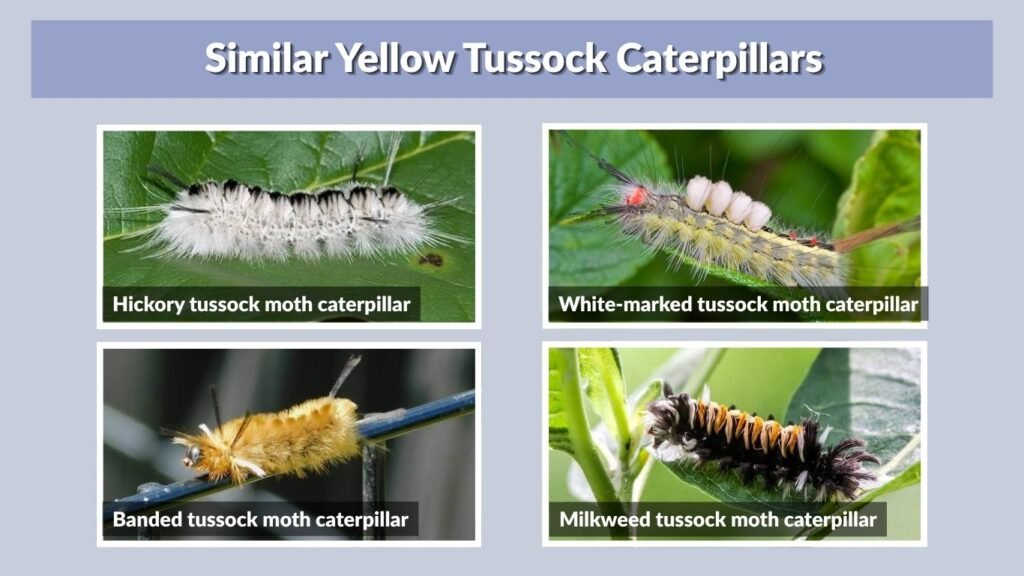
Not every yellow fuzzy caterpillar is Lophocampa maculata. Several look-alikes may appear in yards, forests, and gardens.
| Similar Caterpillar | How It May Differ |
| Hickory tussock moth caterpillar | Usually white with black markings, sometimes yellowish in appearance |
| Banded tussock moth caterpillar | Tan, gray, yellowish, or brown with long hair pencils |
| White-marked tussock moth caterpillar | Has bright tufts, red head, and distinctive back brushes |
| Yellow-based tussock moth | A different tussock moth species, Dasychira basiflava |
| Woolly bear caterpillar | Often black and orange/brown, not the same species |
Yellow-Based Tussock Moth Caterpillar
The yellow-based tussock moth, Dasychira basiflava, is another species that may appear in search results. Butterflies and Moths of North America lists it under family Erebidae and subfamily Lymantriinae, while other species pages report oak, dogwood, and blueberry as larval food plants.
Yellow Hickory Tussock Moth Caterpillar
Some hickory tussock caterpillars may look slightly yellowish, especially under certain lighting or in older stages. However, hickory tussock caterpillars are usually described as white or pale with black markings, not bright yellow with black end tufts.
FAQs
Is a yellow tussock moth caterpillar poisonous?
It is not usually poisonous to humans, but its hairs can irritate skin and cause itching, redness, swelling, or a rash. Avoid touching it with bare hands.
Does a yellow tussock moth caterpillar sting?
It does not sting like a bee. The sting-like feeling comes from irritating hairs that can stick in the skin and cause a rash.
What does a yellow tussock moth caterpillar turn into?
If it is the yellow-spotted tussock moth caterpillar, it turns into the spotted tussock moth, also called the yellow-spotted tiger moth, Lophocampa maculata.
What do yellow tussock moth caterpillars eat?
The yellow-spotted tussock moth caterpillar feeds on leaves of trees such as birch, maple, oak, poplar, willow, alder, and basswood.
How do you treat a yellow tussock moth caterpillar rash?
Use tape to remove loose hairs, wash the skin with soap and water, apply a cold compress, and avoid scratching. Seek medical help if symptoms are severe, affect the eyes, or involve breathing trouble.
