
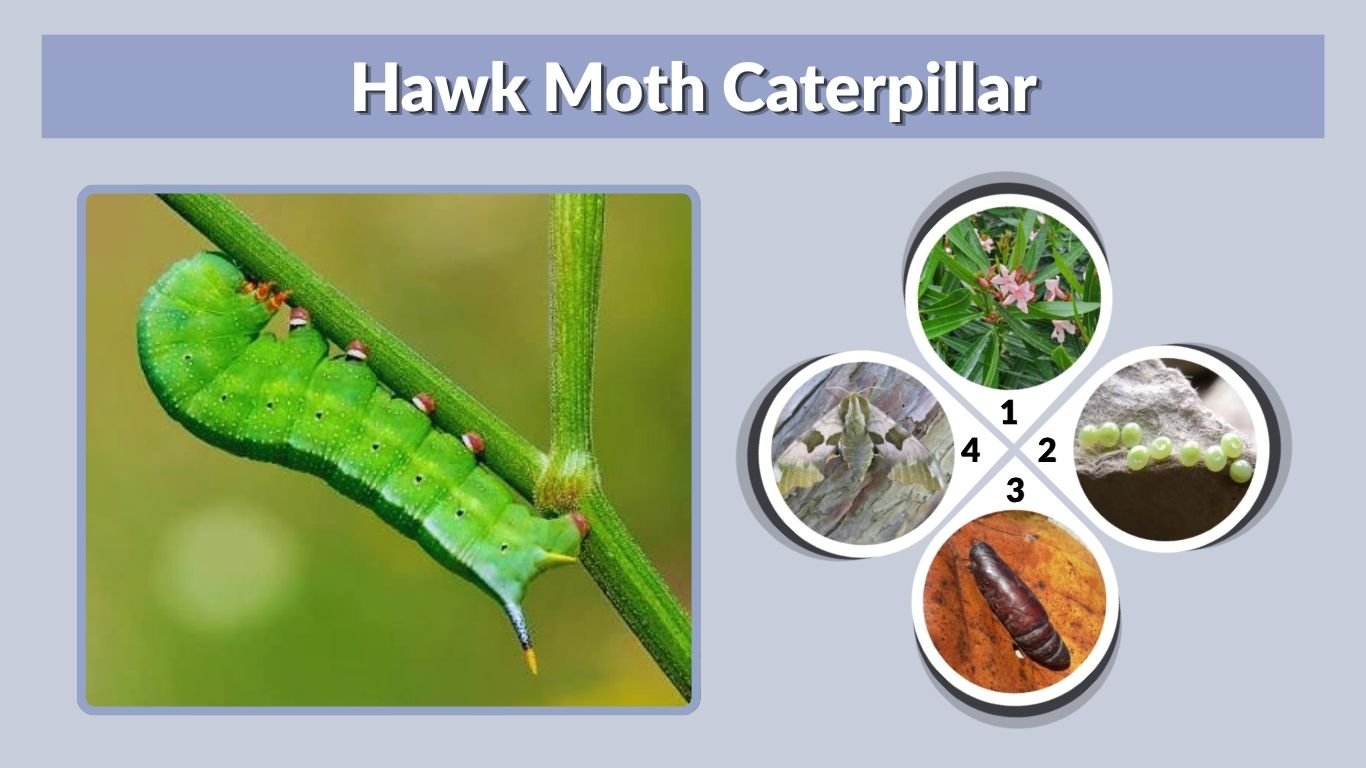
A hawk moth caterpillar is the larval stage of a hawk moth, also called a sphinx moth. These caterpillars are usually large, smooth-bodied, and often have a horn-like tail at the rear. Some are green, brown, striped, or covered with eye-like markings that help scare predators. Popular examples include the elephant hawk moth caterpillar, oleander hawk moth caterpillar, death’s-head hawk moth caterpillar, privet hawk moth caterpillar, and hummingbird hawk moth caterpillar.
What Is a Hawk Moth Caterpillar?
Hawk moth caterpillars belong to the family Sphingidae. They are also commonly called sphinx moth caterpillars or hornworms because many species have a small horn at the back of the body. Sphingid caterpillars are usually medium to large, smooth, and stout-bodied. Many have green or brown camouflage, while others have stripes, spots, or dramatic eye markings.
| Feature | Hawk Moth Caterpillar |
| Family | Sphingidae |
| Common name | Hawk moth, sphinx moth, hornworm |
| Body | Large, smooth, thick-bodied |
| Rear feature | Often has a tail horn |
| Colors | Green, brown, gray, yellow, striped, spotted |
| Diet | Leaves of specific host plants |
| Adult form | Fast-flying hawk moth or sphinx moth |
Most hawk moth caterpillars are harmless to people, but some feed on toxic plants, and some may irritate pets if eaten. It is best to identify the species before touching or keeping one.
Hawk Moth Caterpillar Identification
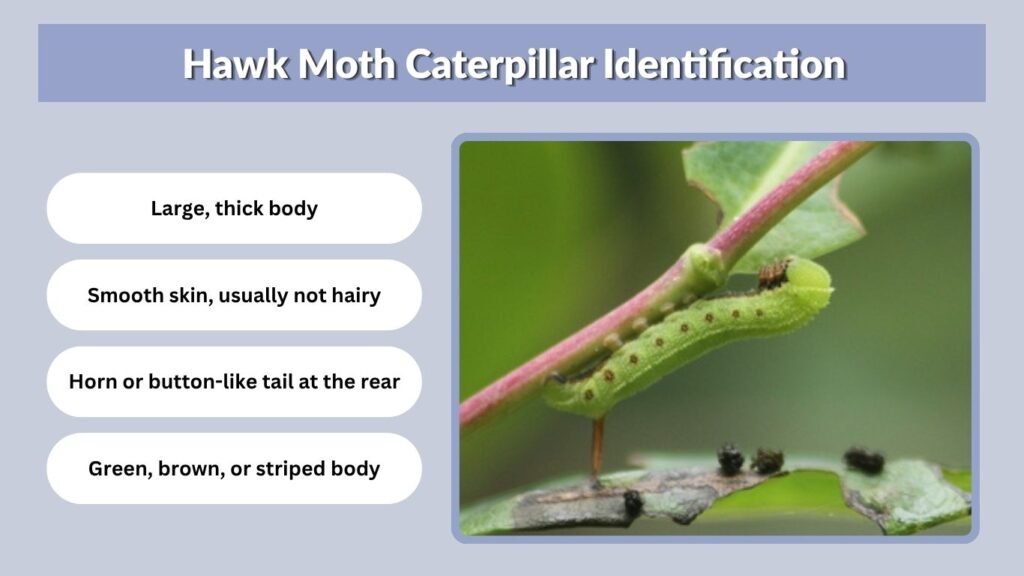
Hawk moth caterpillar identification starts with body shape, color, horn, eye spots, stripes, and host plant. Many species are found on very specific plants, so the plant can be one of the best clues.
Key ID Features
Look for these signs:
- Large, thick body
- Smooth skin, usually not hairy
- Horn or button-like tail at the rear
- Green, brown, or striped body
- Diagonal side stripes in many species
- Eye-like markings in some species
- Strong camouflage on leaves and stems
- Found feeding on a specific host plant
A green hawk moth caterpillar on tomato plants may be a hornworm, while a large brown caterpillar with bold eye spots may be an elephant hawk moth caterpillar. A bright green caterpillar on oleander may be an oleander hawk moth caterpillar.
Elephant Hawk Moth Caterpillar
The elephant hawk moth caterpillar is one of the most famous hawk moth larvae. It is usually large, brown or greenish-brown, and has dramatic eye spots near the front of the body. When threatened, it can pull in its head and swell the front body segments, making the eye spots look more like a snake’s head. The Wildlife Trusts describes the elephant hawk moth caterpillar as chunky, about 8 cm long when fully grown, with large fake eye spots and a short horn at the rear.
Elephant Hawk Moth Caterpillar Food
Elephant hawk moth caterpillars commonly feed on willowherb, bedstraw, fuchsia, and related plants. Butterfly Conservation notes that the larvae are often seen when looking for a place to pupate or resting on stems, and they overwinter as pupae near the base of plants or just below the ground surface.
Hawk Moth Caterpillar Snake Mimic
Some hawk moth caterpillars are famous for snake mimicry. The elephant hawk moth caterpillar is a classic example. Its eye-like markings and defensive posture help scare birds and other predators.
This type of defense is often linked to Batesian mimicry, where a harmless animal looks like something more dangerous. The caterpillar does not become a snake, but its swollen front body and false eyes may make predators hesitate. Wildlife Trusts also highlights the elephant hawk moth caterpillar’s ability to puff up and resemble a snake when threatened.
Common Types of Hawk Moth Caterpillars
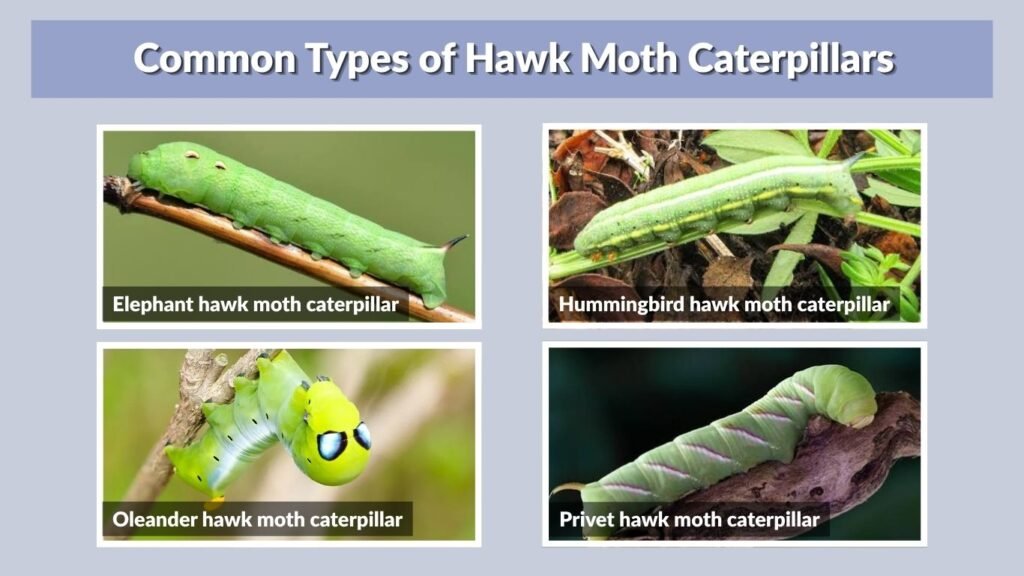
There are many hawk moth caterpillars around the world. Some are garden visitors, while others are important crop pests or rare wildlife species.
| Type | Common Look | Common Food Plants |
| Elephant hawk moth caterpillar | Brown or greenish with eye spots | Willowherb, bedstraw, fuchsia |
| Hummingbird hawk moth caterpillar | Green or brown, smaller | Bedstraw, wild madder, red valerian |
| Oleander hawk moth caterpillar | Green with eye spots and side markings | Oleander, periwinkle |
| Privet hawk moth caterpillar | Green with diagonal stripes | Privet, ash, lilac |
| Lime hawk moth caterpillar | Green with pale stripes | Lime, elm, birch |
| Poplar hawk moth caterpillar | Green with pale markings | Poplar, willow |
| Death’s-head hawk moth caterpillar | Yellow, green, or brown with stripes | Potato, tomato, nightshades |
| Five-spotted hawk moth caterpillar | Green hornworm | Tomato, tobacco, potato |
| Spurge hawk moth caterpillar | Brightly patterned | Spurge plants |
| Bedstraw hawk moth caterpillar | Green, brown, or dark form | Bedstraw, willowherb |
Host plant is very important. A caterpillar on a tomato is not the same as one on oleander, bedstraw, privet, or willowherb.
Oleander Hawk Moth Caterpillar
The oleander hawk moth caterpillar is a striking green caterpillar with eye-like markings and a rear horn. It feeds mainly on oleander and related plants. Oleander is toxic to humans and many animals, but the caterpillar can tolerate feeding on it. Some sources describe the oleander hawk moth larva as using toxic host plants as part of its defense strategy.
Is the Oleander Hawk Moth Caterpillar Poisonous?
The caterpillar itself is not usually considered dangerous to touch like a stinging caterpillar, but because it feeds on toxic oleander, it should not be eaten by pets or handled carelessly. Oleander plant material is highly toxic, so always wash hands after touching the plant or caterpillar area.
Hummingbird Hawk Moth Caterpillar
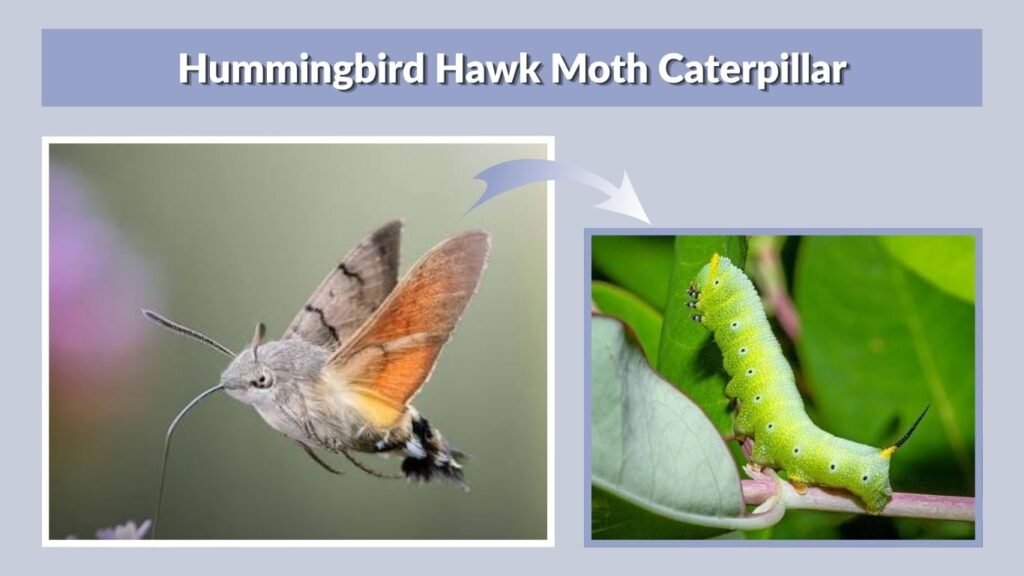
The hummingbird hawk moth caterpillar is the larval stage of the fast-flying hummingbird hawk moth. The adult moth hovers at flowers like a tiny hummingbird. Butterfly Conservation lists the caterpillar food plants as lady’s bedstraw, hedge bedstraw, wild madder, and sometimes red valerian.
These caterpillars may be green or brown and are often harder to notice than the adult moth. They blend into stems and leaves and may be found from summer into autumn in suitable areas.
Death’s-Head Hawk Moth Caterpillar
The death’s-head hawk moth caterpillar is large and dramatic. It may appear yellow, green, or brown with bold diagonal stripes and a curved horn. It is linked with the famous adult moth that has a skull-like marking on its thorax.
Death’s-head hawk moth caterpillars feed on plants in the nightshade family, including potato and related plants. Like many hawk moth caterpillars, they can look intimidating because of their size, but they are not built to bite or sting people.
Tomato Hornworm and Five-Spotted Hawk Moth Caterpillar
The five-spotted hawk moth caterpillar is commonly known as the tomato hornworm. It is a large green caterpillar with diagonal markings and a horn at the rear. It feeds on tomato, potato, eggplant, pepper, and other nightshade plants. Garden sources note that tomato hornworms can heavily defoliate tomato plants, but they are harmless to humans.
If you find one covered with white rice-like cocoons, leave it alone. Those are usually parasitic wasp cocoons, and the wasps help naturally control hornworms.
What Does a Hawk Moth Caterpillar Eat?
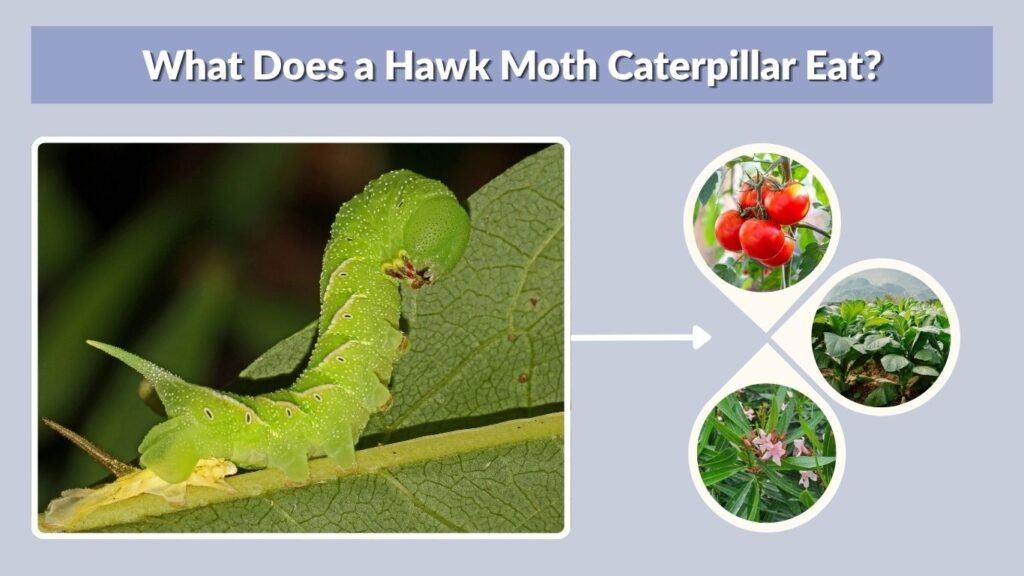
Hawk moth caterpillars eat leaves from host plants. Most species are selective and prefer certain plant families. For example, hummingbird hawk moth caterpillars feed on bedstraws and wild madder, while tomato hornworms feed on nightshade plants.
Common Food Plants
Hawk moth caterpillars may feed on:
- Tomato
- Potato
- Tobacco
- Oleander
- Privet
- Bedstraw
- Willowherb
- Fuchsia
- Poplar
- Willow
- Lime tree leaves
- Spurge plants
- Wild madder
- Red valerian
If you want to identify a hawk moth caterpillar, always note the plant it was eating.
Are Hawk Moth Caterpillars Poisonous?
Most hawk moth caterpillars are not poisonous or dangerous to humans. They usually do not sting, and many can be moved gently with a leaf or gloved hand. However, some species feed on toxic plants, and pets should not be allowed to eat them.
Safety Tips
Use these simple rules:
- Do not eat or crush caterpillars.
- Do not let dogs or cats chew them.
- Wash hands after handling plants or caterpillars.
- Avoid touching caterpillars found on toxic plants like oleander.
- Use gloves if you are unsure of the species.
The scary horn on the rear is not a stinger. It is usually a soft defensive structure.
Hawk Moth Caterpillar Life Cycle
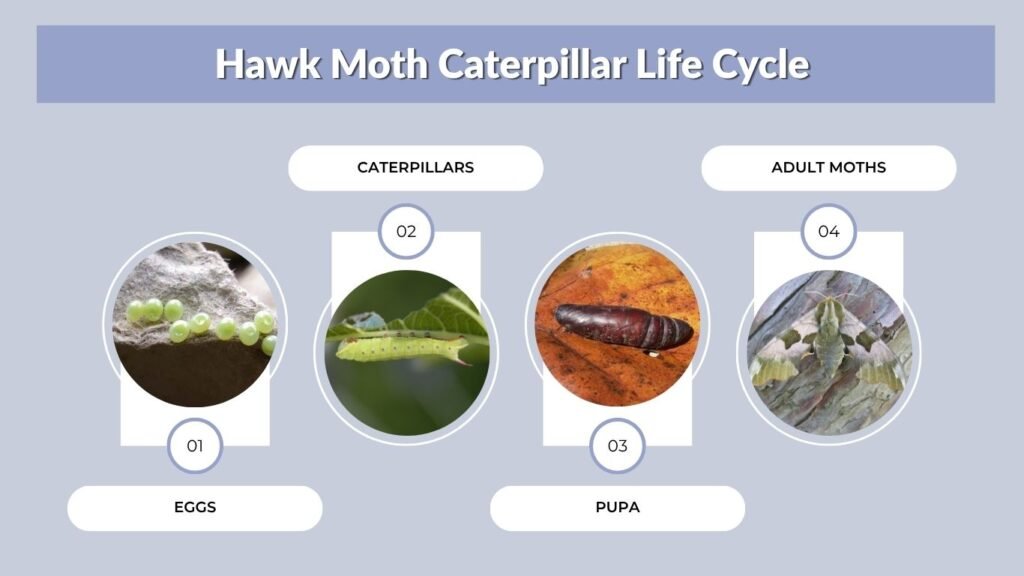
The hawk moth life cycle has four stages: egg, caterpillar, pupa, and adult moth. Females lay eggs on suitable host plants. The caterpillar hatches, feeds heavily, grows through several stages, and then pupates. Many hawk moths pupate in soil, leaf litter, or loose debris near the host plant. Butterfly Conservation notes that elephant hawk moth caterpillars overwinter as pupae in fragile cocoons at the base of plants or just below the soil surface.
Basic Life Cycle
- The female moth lays eggs on the host plant.
- Caterpillar hatches and begins feeding.
- Caterpillars grow larger through molts.
- Mature caterpillars search for a pupation site.
- Pupa develops in soil or plant debris.
- Adult hawk moths emerge and feed on nectar.
Adult hawk moths are often powerful flyers and important flower visitors. Some are active at night, while others fly during the day or at dusk.
How to Care for a Hawk Moth Caterpillar
If you want to observe a hawk moth caterpillar, first identify the species and host plant. The caterpillar must have fresh leaves from the correct food plant. A tomato hornworm will not thrive on bedstraw, and an elephant hawk moth caterpillar will not feed like an oleander hawk moth.
Use a ventilated container, add fresh leaves daily, remove droppings, and provide dry leaf litter or loose soil when the caterpillar is ready to pupate. Do not keep wild caterpillars if local rules forbid collection, and do not release non-native species.
Should You Remove Hawk Moth Caterpillars?
It depends on the situation. If the caterpillar is on a wild plant or ornamental plant and causing little damage, it is best to leave it alone. Moths are important parts of the food web and can support birds, bats, and other wildlife. Recent wildlife gardening guidance encourages tolerance of caterpillars where possible because moths are valuable pollinators and wildlife food.
If tomato hornworms are damaging vegetable crops, handpick them and move or dispose of them. Avoid broad pesticide use when possible because it can harm beneficial insects.
FAQs
What is a hawk moth caterpillar?
A hawk moth caterpillar is the larva of a hawk moth or sphinx moth in the family Sphingidae. Many are large, smooth, green or brown, and have a horn-like tail at the rear.
Is a hawk moth caterpillar poisonous?
Most hawk moth caterpillars are not poisonous to humans and do not sting. However, some feed on toxic plants like oleander, so pets should not eat them and people should handle them carefully.
What does an elephant hawk moth caterpillar look like?
An elephant hawk moth caterpillar is large, chunky, usually brown or greenish-brown, and has big eye spots near the front. When threatened, it can puff up and look like a small snake.
What do hawk moth caterpillars eat?
They eat leaves from specific host plants. Depending on species, food plants may include tomato, potato, bedstraw, willowherb, fuchsia, privet, oleander, poplar, willow, lime, and spurge.
Are hawk moth caterpillars good or bad?
They are good for nature because they become moths that support pollination and the food chain. In gardens, some species like tomato hornworms can damage crops, while others cause little harm and are best left alone.
