
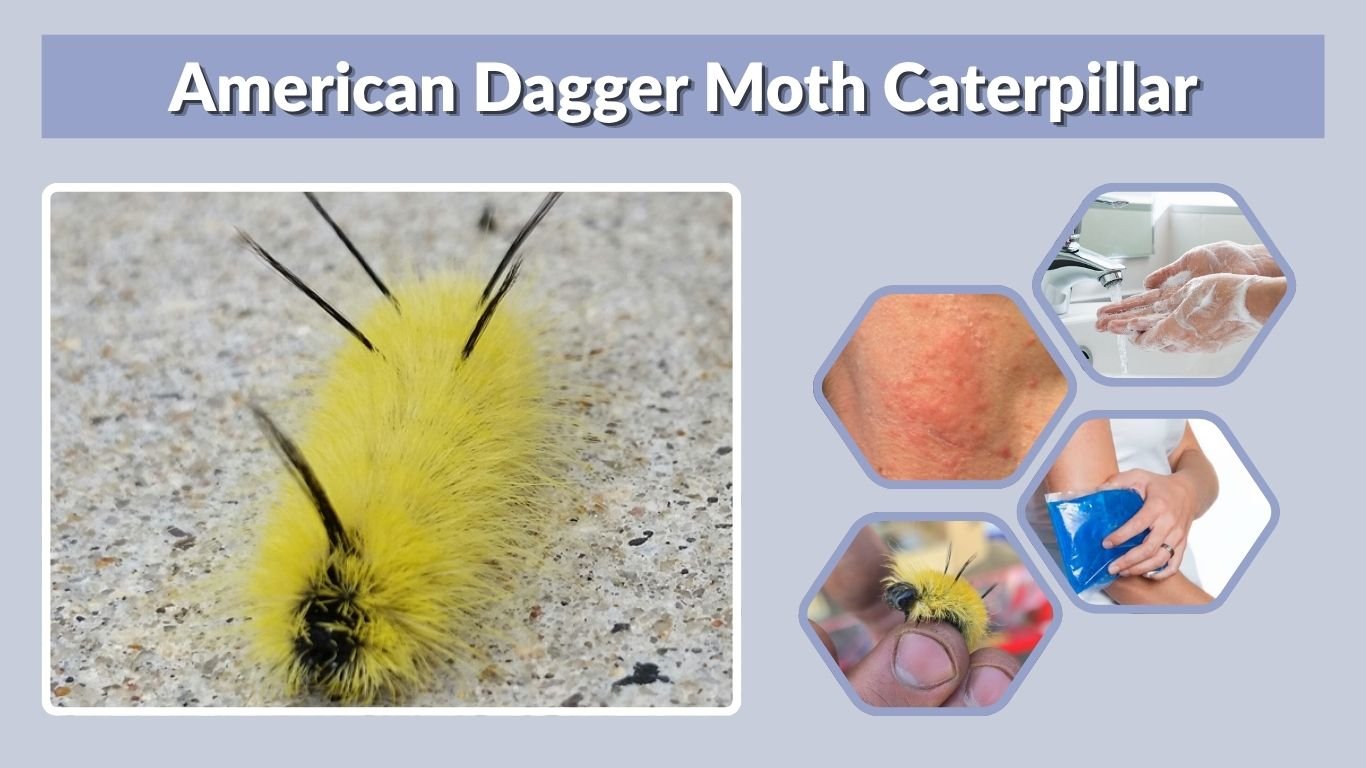
The American dagger moth caterpillar is a fuzzy yellow or white caterpillar that many people notice on trees, sidewalks, decks, and garden plants in late summer or fall. It may look soft, but it should not be handled with bare hands. The caterpillar’s hairs can break off into the skin and cause burning, itching, hives, or a rash in some people. This guide explains how to identify the American dagger moth caterpillar, whether it is poisonous, what it eats, and what to do if you touch one.
What Is an American Dagger Moth Caterpillar?
The American dagger moth caterpillar is the larval stage of the American dagger moth, scientifically known as Acronicta americana. It belongs to the moth family Noctuidae. The adult moth is gray and patterned, but the caterpillar is much more noticeable because it is fuzzy, pale yellow to white, and has long black hair-like tufts. Butterflies and Moths of North America lists the species as Acronicta americana and notes that its caterpillar feeds on many deciduous trees.
| Feature | American Dagger Moth Caterpillar |
| Scientific name | Acronicta americana |
| Color | Pale yellow, yellow-white, or white |
| Body texture | Fuzzy with long hairs |
| Key marking | Long black hair pencils |
| Size | Can grow around 2 inches or more |
| Main food | Leaves of hardwood trees |
| Safety | Do not touch with bare hands |
The caterpillar is often found in eastern North America and is commonly seen in areas with hardwood trees, including parks, yards, forests, and neighborhoods.
American Dagger Moth Caterpillar Identification
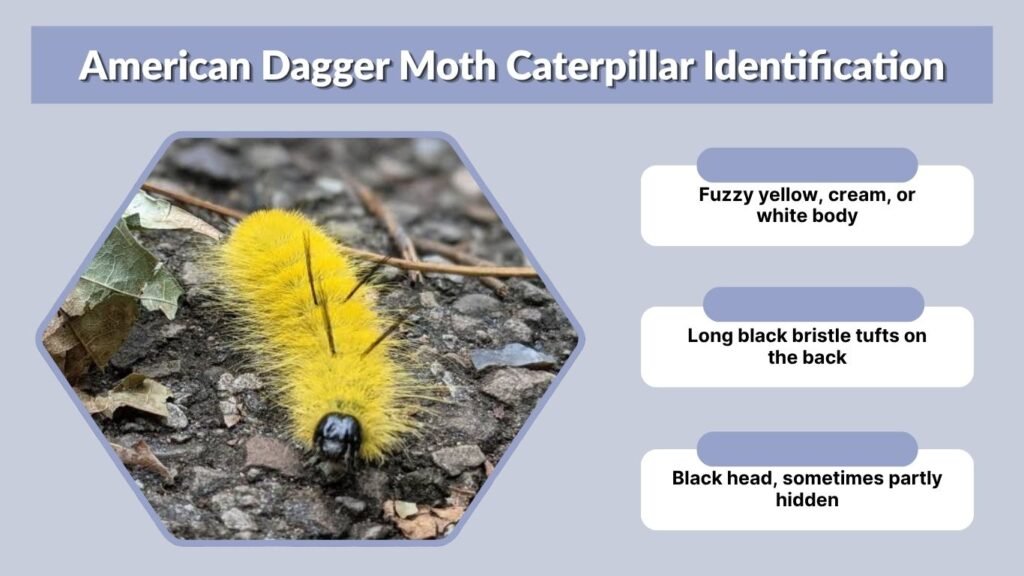
American dagger moth caterpillar identification is usually based on color, fuzz, and black tufts. The body is covered in yellow, yellow-green, or white hairs. Several long black “pencils” of bristles rise from the body and make the caterpillar easy to recognize. NC State Extension describes dagger moth caterpillars as fuzzy, with yellow to white setae and several long black pencils of setae.
Key Identification Signs
Look for these features:
- Fuzzy yellow, cream, or white body
- Long black bristle tufts on the back
- Black head, sometimes partly hidden
- Soft, woolly appearance
- Smooth caterpillar body under the hairs
- Often found on tree trunks, leaves, sidewalks, or decks
- Usually seen in summer through fall
Young caterpillars may look brighter yellow, while older ones may look pale yellow or white. Some people search for “white American dagger moth caterpillar” because late-stage caterpillars can look very light.
Is the American Dagger Moth Caterpillar Poisonous?
The American dagger moth caterpillar is often called poisonous, but the more accurate concern is skin irritation from its hairs. It does not sting like a bee or wasp, and it does not have a scorpion-like stinger. However, the hairs can break off and become embedded in the skin, causing a stinging or burning sensation and sometimes a rash. NC State Extension notes that toxins inside the hairs are “reputed” to cause a stinging sensation that may develop into a rash, while BugGuide notes that the caterpillar’s hairs can cause skin irritation.
So, is the American dagger moth caterpillar poisonous to humans? It is not usually considered deadly or highly dangerous, but it can cause painful skin reactions. Children, people with sensitive skin, and people with allergies may react more strongly.
American Dagger Moth Caterpillar Sting
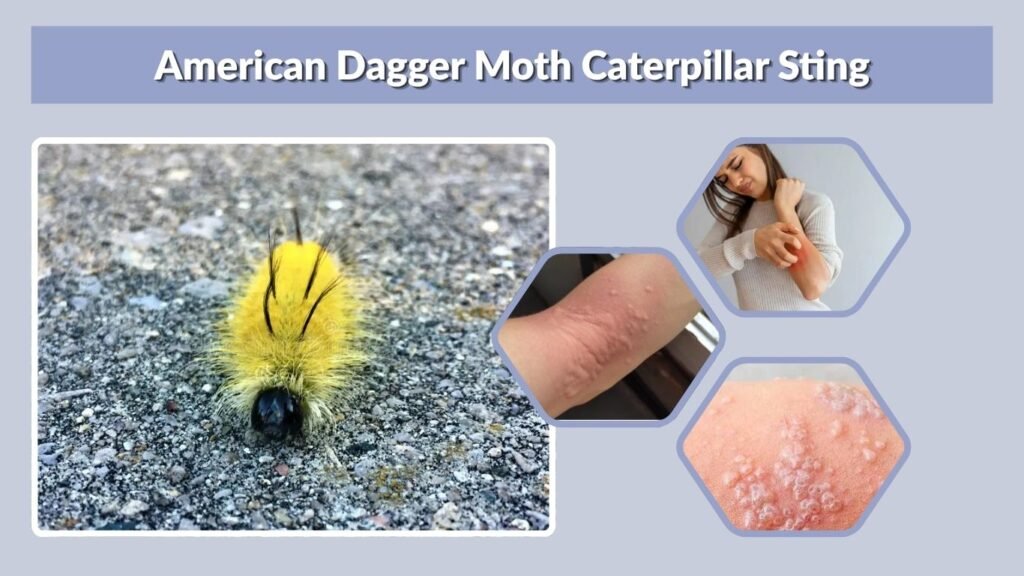
Many people use the word “sting” because the reaction can feel sharp, hot, or painful. In reality, the caterpillar’s hairs are the problem. When they touch skin, they may irritate the area and create symptoms similar to a sting.
Common Sting or Rash Symptoms
A skin reaction may include:
- Burning sensation
- Itching
- Red bumps
- Hives
- Swelling
- Skin tenderness
- Rash where hairs touched
- Pain or prickling feeling
Caterpillar rash, also called lepidopterism, can happen when contact with caterpillar hairs causes skin irritation. Medical sources describe possible symptoms such as pain, hives, redness, itching, and swelling.
What Happens If You Touch an American Dagger Moth Caterpillar?
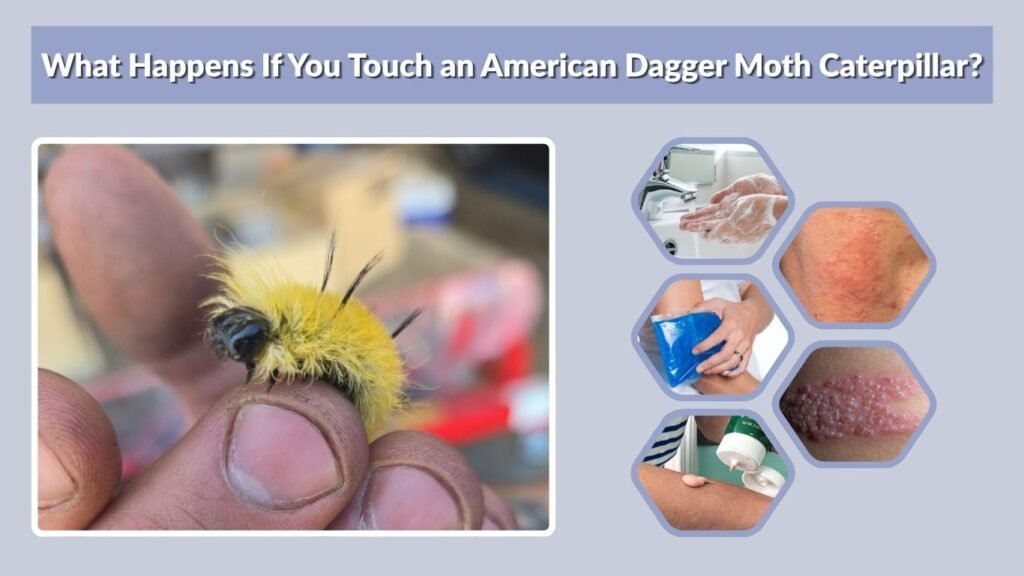
If you touch an American dagger moth caterpillar, you may feel nothing at first or you may quickly feel itching, burning, or stinging. The reaction depends on how many hairs touched the skin and how sensitive you are.
Do not rub the area. Rubbing can push hairs deeper into the skin and make the irritation worse. Instead, remove the hairs carefully and wash the area.
First Aid Steps
If you touch one:
- Move away from the caterpillar.
- Do not scratch or rub the skin.
- Use tape to lift hairs from the skin.
- Wash the area with soap and water.
- Apply a cold pack wrapped in cloth.
- Use anti-itch cream if needed.
- Seek medical help for severe swelling, eye exposure, breathing trouble, or worsening rash.
MedlinePlus recommends using sticky tape to remove caterpillar hairs, washing the area with soap and water, and applying ice in short intervals. Poison Control also recommends tape removal, gentle washing, and itch relief such as baking soda paste or hydrocortisone cream if needed.
American Dagger Moth Caterpillar Poisonous to Dogs and Cats
American dagger moth caterpillars can also bother pets. Dogs and cats may sniff, lick, chew, or eat fuzzy caterpillars. Their fur may protect much of the skin, but the mouth, lips, tongue, and throat can be irritated if a pet bites or swallows one.
ASPCA warns that caterpillar hairs can be harmful when touched or ingested by pets and may cause head shaking, pawing at the mouth, vomiting, diarrhea, and irritation of the lips, mouth, or throat.
Signs in Pets
Watch for:
- Drooling
- Pawing at the mouth
- Head shaking
- Vomiting
- Diarrhea
- Swollen lips
- Mouth irritation
- Trouble swallowing
- Trouble breathing
If your dog ate an American dagger moth caterpillar, call a veterinarian, especially if symptoms appear. Do not try to make your pet vomit unless a vet tells you to.
What Does the American Dagger Moth Caterpillar Eat?
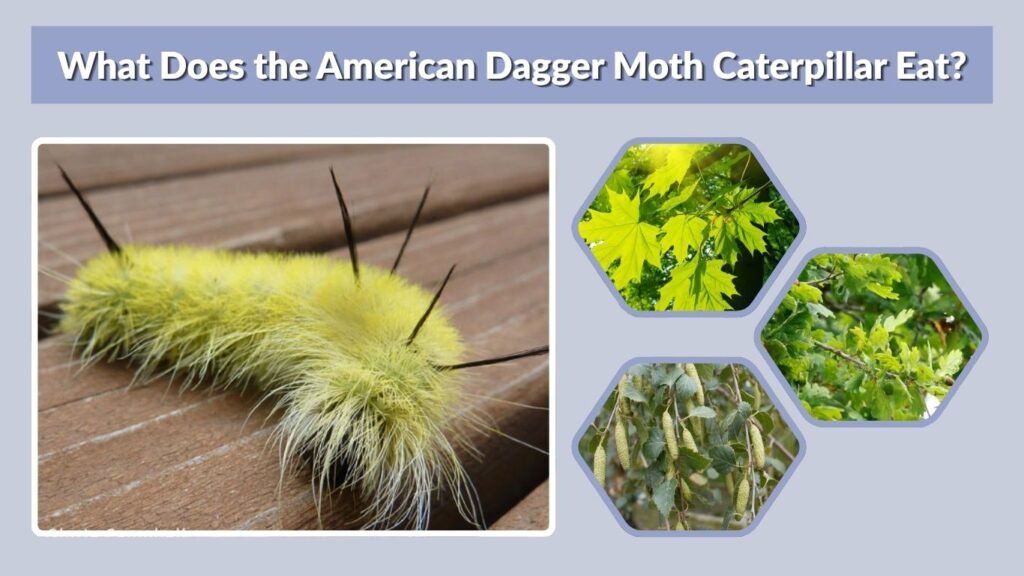
The American dagger moth caterpillar feeds on leaves of many deciduous trees. It is not usually tied to only one host plant. BugGuide lists host trees such as alder, ash, birch, elm, hickory, maple, oak, poplar, walnut, willow, and other deciduous trees.
Common Food Plants
American dagger moth caterpillars may eat leaves from:
- Maple
- Oak
- Birch
- Hickory
- Ash
- Elm
- Willow
- Poplar
- Walnut
- Alder
- Sycamore
- Basswood
Because they feed on trees, you may find them crawling on trunks, branches, fences, patios, or lawns when they leave the tree to pupate.
American Dagger Moth Caterpillar Life Cycle
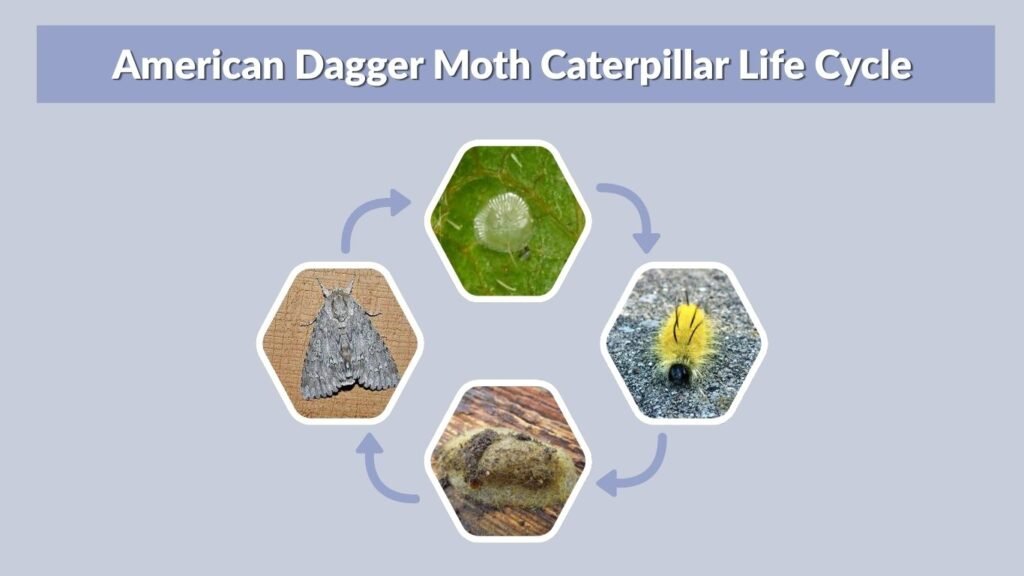
The American dagger moth has a complete life cycle: egg, caterpillar, pupa, and adult moth. Adults fly during the warm months, lay eggs on host plants, and the caterpillars feed on leaves through the growing season. BugGuide reports adult flight from April to September and caterpillars seen from June to October, depending on region.
Colorado State University notes that winter is spent as a pupa inside a cocoon in sheltered areas near previously infested trees. Adults emerge and lay eggs in late spring, and larvae feed through summer.
| Stage | What Happens |
| Egg | Laid on host tree leaves |
| Caterpillar | Feeds on hardwood tree leaves |
| Cocoon/pupa | Overwinters in a protected cocoon |
| Adult moth | Gray moth emerges and mates |
American Dagger Moth Caterpillar Cocoon
When the caterpillar is fully grown, it searches for a protected place to pupate. It may form a dense silken cocoon in leaf litter, bark crevices, wood piles, or sheltered spots near trees. BugGuide notes that the species overwinters as pupae in dense silken cocoons.
If you find one crawling quickly across a sidewalk or patio in late summer or fall, it may be looking for a place to make its cocoon. Move it only with a stick, leaf, or gloved hand.
Is the American Dagger Moth Caterpillar Dangerous?
The American dagger moth caterpillar is not usually dangerous in a life-threatening way, but it can be painful or irritating. It is more concerning for children because they may try to pick up fuzzy caterpillars. It can also be risky for pets that try to eat it.
The safest rule is simple: look, photograph, but do not touch. If it is in a playground, porch, schoolyard, or pet area, move it carefully with a tool rather than your hands.
How to Get Rid of American Dagger Moth Caterpillars
In most cases, you do not need to kill American dagger moth caterpillars. A few caterpillars on a tree rarely cause serious damage. They are part of the natural food web and become moths that are eaten by birds, bats, and other wildlife.
Safe Removal Tips
Use these steps:
- Do not handle them with bare hands.
- Wear gloves, long sleeves, and eye protection if needed.
- Use a stick, leaf, broom, or dustpan to move one.
- Keep children and pets away.
- Avoid crushing the caterpillar with bare skin contact.
- Wash outdoor toys or furniture if caterpillars were crawling on them.
- Contact local extension or pest control for large outbreaks.
If many caterpillars are defoliating a valued tree, ask a local extension office for region-specific control advice before spraying insecticides.
American Dagger Moth Caterpillar in Michigan, Wisconsin, Illinois and Ontario
Searches for American dagger moth caterpillar in Michigan, Wisconsin, Illinois, Maryland, Ohio, Ontario, and other northern or eastern areas are common because the species is widespread in eastern North America. It is often noticed in late summer and fall when large caterpillars leave trees and wander across yards, driveways, decks, and sidewalks. BugGuide and Butterflies and Moths of North America both describe it as a species associated with deciduous trees across much of its range.
FAQs
Is the American dagger moth caterpillar poisonous?
It is not usually considered deadly poisonous, but its hairs can irritate skin and cause burning, itching, hives, or rash. Avoid touching it with bare hands.
What does an American dagger moth caterpillar sting feel like?
It may feel like a sharp sting, burning, itching, or prickling. Red bumps, swelling, hives, or a rash may appear where the hairs touched the skin.
What should I do if I touch an American dagger moth caterpillar?
Use sticky tape to remove hairs, wash the area with soap and water, and apply a cold pack. Seek medical help for severe swelling, eye exposure, breathing trouble, or a worsening rash.
Is the American dagger moth caterpillar poisonous to dogs?
It can irritate dogs and cats if touched or eaten. Watch for drooling, pawing at the mouth, vomiting, diarrhea, or mouth irritation, and contact a veterinarian if symptoms appear.
What does the American dagger moth caterpillar turn into?
It turns into the American dagger moth, a gray moth in the family Noctuidae. The caterpillar pupates inside a silken cocoon and emerges as an adult moth in the next suitable season.
