
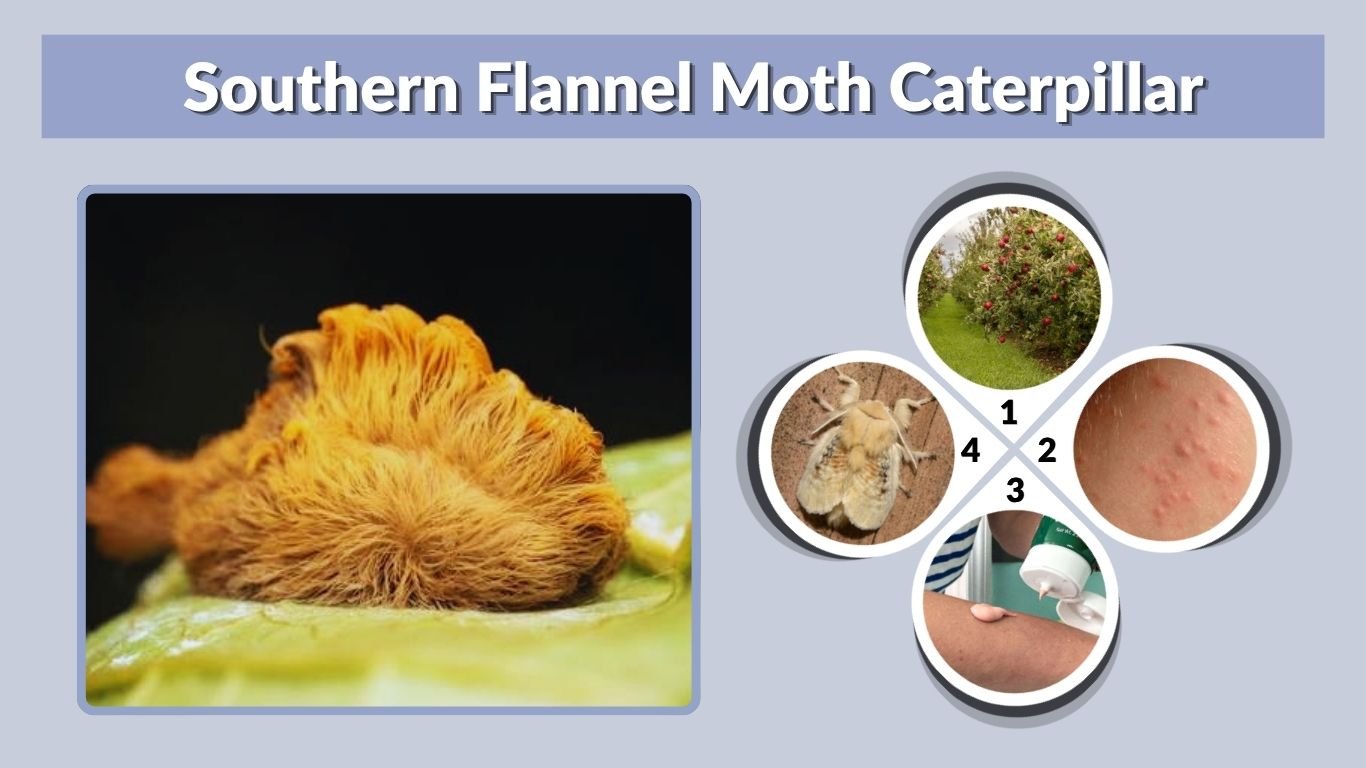
The southern flannel moth caterpillar is one of the most dangerous-looking “cute” caterpillars in the United States. It is also called the puss caterpillar, tree asp, or asp caterpillar. Its soft, furry body may look harmless, but hidden under the hair are venomous spines that can cause severe pain when touched. This caterpillar is found mostly in warm southern and eastern states, especially on trees and shrubs. Correct identification is important because accidental contact can lead to painful stings.
What Is the Southern Flannel Moth Caterpillar?
The southern flannel moth caterpillar is the larval stage of the southern flannel moth, Megalopyge opercularis. The adult moth is fuzzy and yellowish-orange, but the caterpillar stage is the dangerous stage.
The caterpillar is often called a puss caterpillar because it looks like a tiny piece of soft fur. However, the “fur” hides hollow venomous spines. When the caterpillar is brushed or pressed against the skin, those spines can break and release irritating venom. NC State Extension explains that the sting comes from tiny hollow spines filled with urticating fluid, and the pain may last for several hours.
Southern Flannel Moth Caterpillar Identification
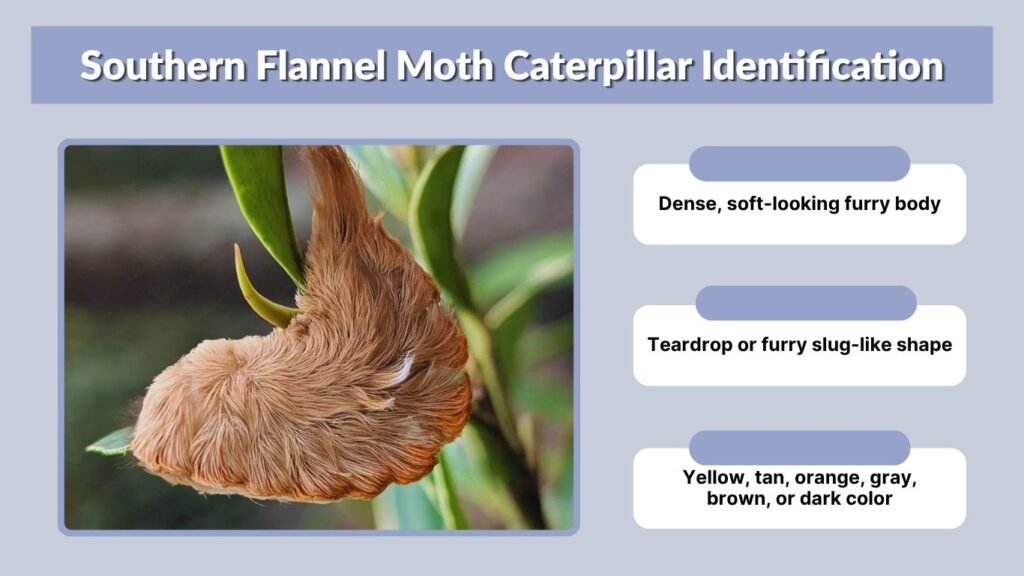
This caterpillar can vary in color and shape, so identification should not depend on color alone. Some are pale yellow or tan, while others are orange-brown, gray, or dark charcoal.
Identification Features
- Dense, soft-looking furry body
- Teardrop or furry slug-like shape
- Yellow, tan, orange, gray, brown, or dark color
- Hidden venomous spines beneath the hair
- Often looks like a small wig or piece of fur
- May have a “face-like” front end, but the face is not always clear
- Often found on trees, shrubs, porches, and outdoor furniture
| Feature | Southern Flannel Moth Caterpillar |
| Scientific name | Megalopyge opercularis |
| Common names | Puss caterpillar, asp, tree asp |
| Main risk | Venomous sting |
| Adult form | Southern flannel moth |
| Body look | Furry, soft, teardrop-shaped |
| Safe to touch? | No |
Is the Southern Flannel Moth Caterpillar Poisonous?
Yes, but venomous is the more accurate word. A poisonous animal harms you when you eat or touch its toxins, while a venomous animal delivers venom through a sting, bite, or spine. The southern flannel moth caterpillar delivers venom through hidden spines.
The caterpillar does not need to bite you. A sting can happen if it falls onto skin, is picked up, or is brushed against while gardening or sitting outdoors. UF/IFAS notes that puss caterpillars release toxins through venom glands at the base of hollow spines as a defense mechanism when touched.
Southern Flannel Moth Caterpillar Bite or Sting?
People often search for “southern flannel moth caterpillar bite,” but this caterpillar does not truly bite people. The correct term is sting.
The pain comes from venomous spines hidden under the hairs. These spines can stick into the skin and cause an immediate reaction. So, if someone says they were “bitten” by a puss caterpillar, they usually mean they were stung.
Southern Flannel Moth Caterpillar Sting Symptoms
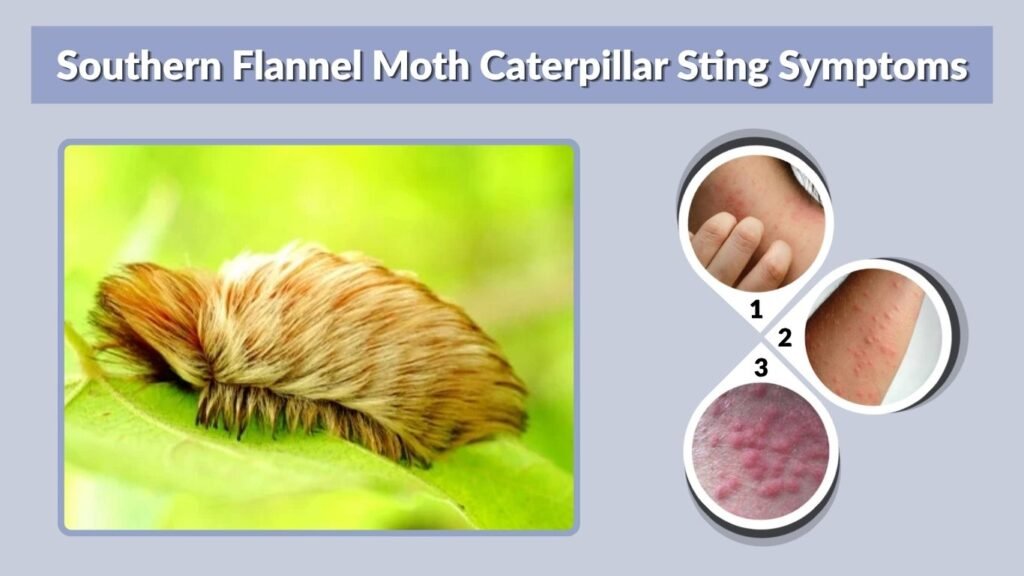
A sting from a southern flannel moth caterpillar can be very painful. The reaction varies depending on the person, the contact area, and how many spines enter the skin.
Common Sting Symptoms
- Sudden burning pain
- Sharp or throbbing pain
- Redness
- Swelling
- Itchy rash
- Welts or blisters
- Pain spreading up the arm or leg
- Headache
- Nausea
- Vomiting
- Swollen lymph nodes
- Chest pain or breathing trouble in serious cases
Clemson Extension lists possible symptoms such as burning, swelling, rash, blisters, nausea, vomiting, headache, lymph node irritation, and rare severe reactions such as anaphylaxis or chest pain.
Southern Flannel Moth Caterpillar Sting Treatment
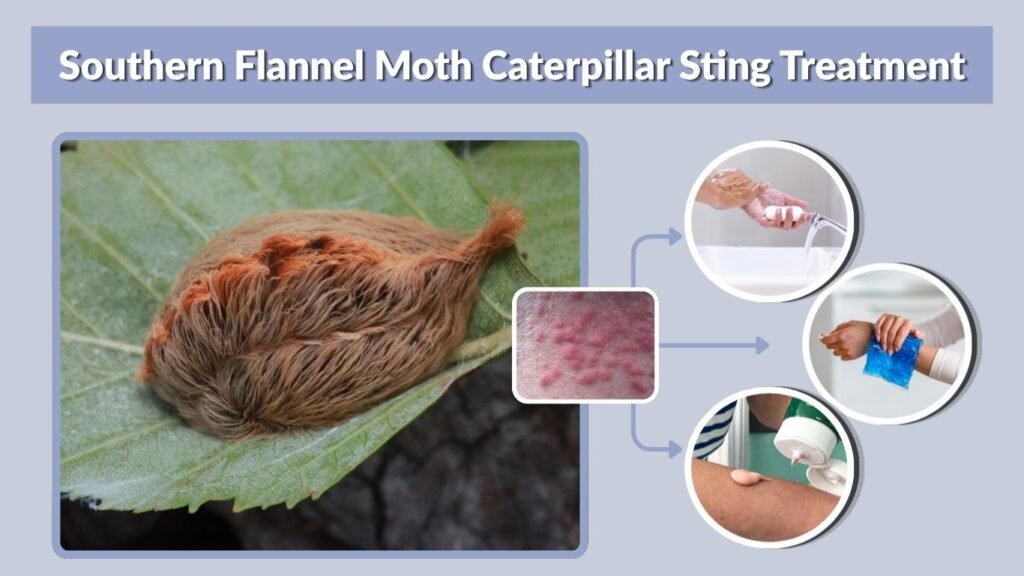
A sting should be treated quickly because spines may remain in the skin. Texas A&M AgriLife recommends applying an ice pack, using oral antihistamines for itching and burning, removing spines with tape when possible, and seeing a physician for allergic reactions such as generalized itching or breathing difficulty.
First Aid Steps
- Do not rub the sting area.
- Wash the area with soap and water.
- Place tape over the sting site and peel it off gently to remove spines.
- Apply an ice pack to reduce pain and swelling.
- Use calamine lotion or hydrocortisone cream for itching.
- Consider an oral antihistamine if itching or burning is strong.
- Seek medical help for severe pain, chest pain, breathing trouble, dizziness, or widespread reaction.
This is general first-aid information, not a medical diagnosis. Children, allergic people, and anyone with serious symptoms should get medical advice quickly.
Can a Southern Flannel Moth Caterpillar Sting Cause Death?
Deaths from southern flannel moth caterpillar stings are not commonly reported, but severe reactions can happen. The main danger is intense pain, allergic reaction, breathing difficulty, or rare systemic symptoms.
A sting should be taken seriously, especially if the person is a child, has asthma, has a history of severe allergies, or develops chest pain or breathing trouble.
Southern Flannel Moth Caterpillar Range
The southern flannel moth caterpillar is mainly found in the southern and eastern United States. It is especially associated with warm states such as Texas, Florida, Georgia, Louisiana, and the Carolinas.
Reports also occur in other states, especially during warm seasons or where suitable host trees grow. The range is often described from New Jersey to Florida and westward to Texas, with some records farther west.
States Where It May Be Found
- Texas
- Florida
- Georgia
- Louisiana
- Mississippi
- Alabama
- South Carolina
- North Carolina
- Tennessee
- Oklahoma
- Missouri
- Arkansas
- Maryland
- New Jersey
- Parts of Arizona
Searches for Michigan, Wisconsin, Illinois, and West Virginia may come from people checking unusual sightings or similar-looking caterpillars. In cooler northern states, correct identification is especially important because other fuzzy caterpillars may be confused with the puss caterpillar.
Southern Flannel Moth Caterpillar Habitat
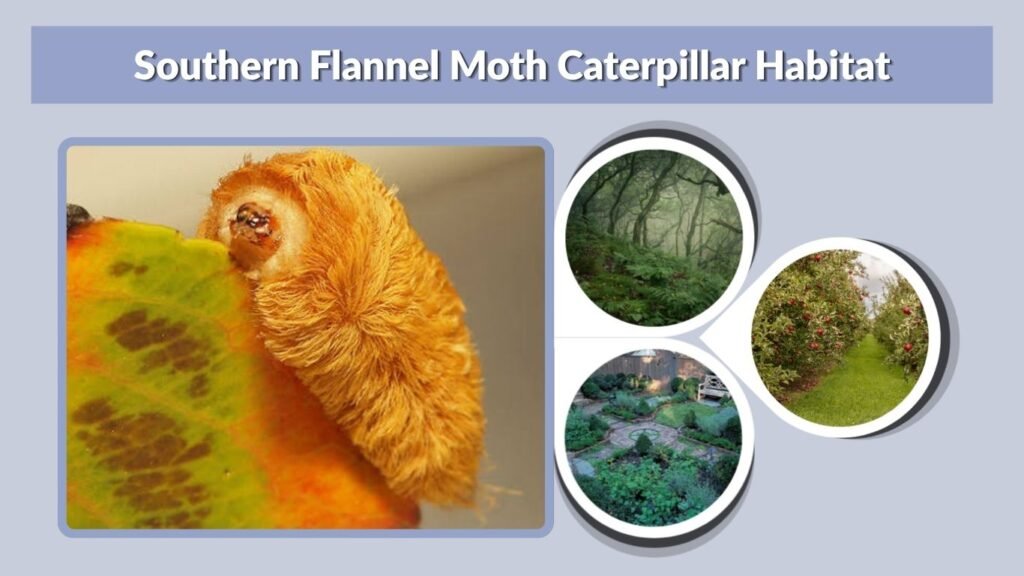
The caterpillar lives on or near trees and shrubs. It may be found in yards, parks, school grounds, woodlands, orchards, and landscaped areas.
Common Host Plants
- Oak
- Elm
- Hackberry
- Maple
- Sycamore
- Pecan
- Citrus
- Rose
- Ornamental shrubs
NC State Extension notes that puss caterpillars feed on various deciduous trees and shrubs, especially elm, hackberry, maple, oak, and sycamore.
Southern Flannel Moth Caterpillar Size
The southern flannel moth caterpillar is usually small to medium-sized, often around an inch long when mature. Because it is covered in dense hair, it may look larger than the actual body underneath.
Young caterpillars are smaller and may look less dramatic. Older caterpillars become thicker, furrier, and more noticeable.
Southern Flannel Moth Caterpillar Life Cycle
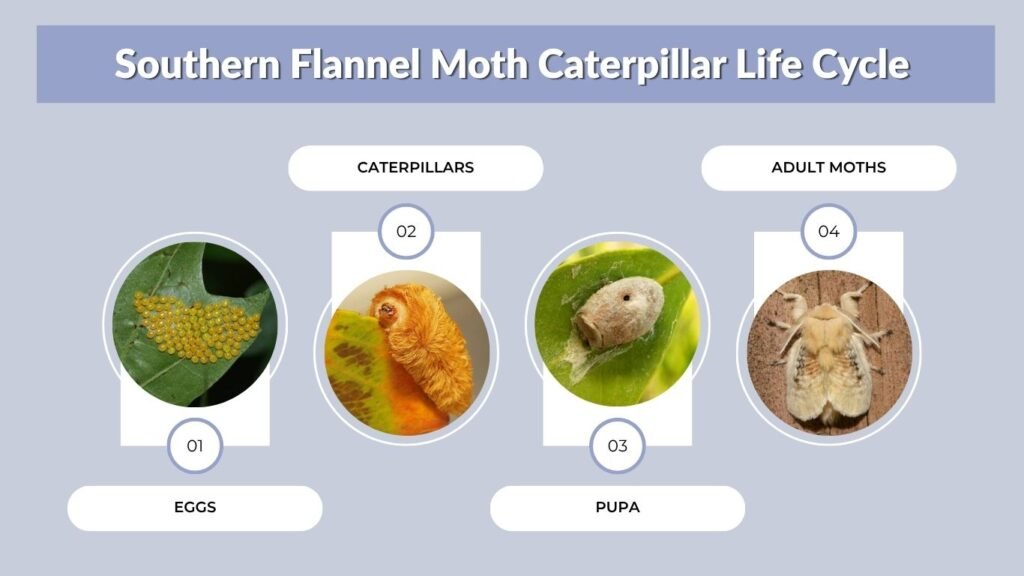
The southern flannel moth has a complete life cycle with four stages: egg, caterpillar, pupa, and adult moth.
| Stage | What Happens |
| Egg | Female moth lays eggs on host plants |
| Caterpillar | Venomous larva feeds on leaves |
| Cocoon/Pupa | Caterpillar spins a cocoon and changes form |
| Adult | Fuzzy moth emerges, mates, and lays eggs |
The adult moth is not the main danger. The caterpillar stage is the stage that causes painful stings.
How to Get Rid of Southern Flannel Moth Caterpillars
Do not remove this caterpillar with bare hands. If one is on a porch, chair, wall, or low branch, use a tool instead of touching it.
Safe Removal Tips
- Wear thick gloves, long sleeves, and eye protection.
- Use cardboard, a stick, or a garden tool to move it.
- Keep children and pets away.
- Check outdoor chairs, picnic tables, and play areas.
- Avoid brushing against tree branches.
- Place the caterpillar in soapy water if removal is necessary.
- Contact a pest professional for heavy infestations.
For garden or landscape control, avoid unnecessary broad spraying because insecticides can harm beneficial insects. If treatment is needed, use only products labeled for caterpillars on the target plant and follow the label exactly.
Southern Flannel Moth Caterpillar Pictures and Images
Pictures of the southern flannel moth caterpillar often show a fluffy yellow, tan, or gray caterpillar shaped like a small furry teardrop. However, online images can be misleading because color varies.
When using pictures for identification, compare several features: body shape, hair density, location, host plant, and range. Never touch a caterpillar just to confirm the identification.
FAQs
Is the southern flannel moth caterpillar dangerous?
Yes, it can be dangerous because it has venomous spines hidden under its fur. Touching it can cause severe pain, swelling, rash, nausea, and other symptoms. Most stings are not fatal, but serious reactions need medical attention.
What does a southern flannel moth caterpillar sting feel like?
The sting often feels like sudden burning or sharp pain. The pain may spread from the sting area and last for hours. Some people also develop swelling, rash, headache, nausea, vomiting, or swollen lymph nodes.
How do you treat a southern flannel moth caterpillar sting?
Wash the area, remove spines with tape, apply ice, and use anti-itch cream or antihistamines if needed. Do not rub the sting site. Get medical help for severe pain, breathing problems, chest pain, or allergic symptoms.
Where does the southern flannel moth caterpillar live?
It lives mostly in the southern and eastern United States, especially warm states like Texas, Florida, Georgia, Louisiana, and the Carolinas. It is commonly found on trees and shrubs such as oak, elm, maple, hackberry, sycamore, and pecan.
How do you get rid of southern flannel moth caterpillars?
Use thick gloves and a tool, cardboard, or stick to remove them without touching. Keep children and pets away. Check outdoor furniture and low branches. For many caterpillars or repeated sightings, contact a pest control professional or local extension office.
