
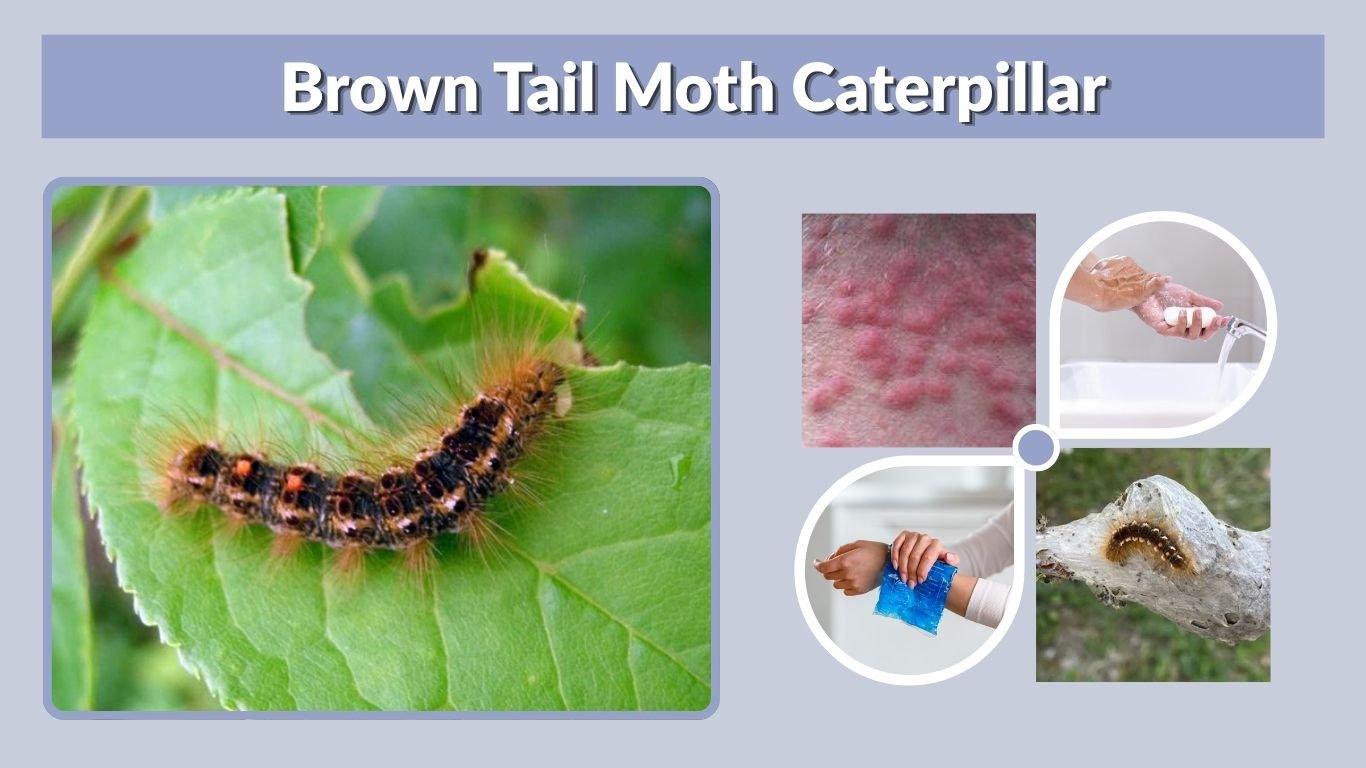
The brown tail moth caterpillar is the larval stage of Euproctis chrysorrhoea, a moth known for causing itchy skin rashes and breathing irritation. The caterpillar’s tiny hairs can break off, remain in the environment, and irritate people even without direct contact. Brown-tail moth problems are especially well known in Maine, but the species also occurs in parts of Europe and the UK. Correct identification is important because it can be confused with tent caterpillars, spongy moth caterpillars, and other hairy larvae.
What Is a Brown Tail Moth Caterpillar?
The brown tail moth caterpillar is a hairy, toxic caterpillar that feeds on leaves of trees and shrubs. The adult moth is mostly white with a brown tuft at the end of the abdomen, which gives the species its common name. UKMoths describes the adult as a plain white moth at rest with a brown abdominal tuft used by females to cover eggs.
The caterpillar stage is the main concern. Maine CDC states that browntail moth caterpillars have tiny hairs that shed into the environment, irritate skin, and contain a toxin.
Brown Tail Moth Caterpillar Identification
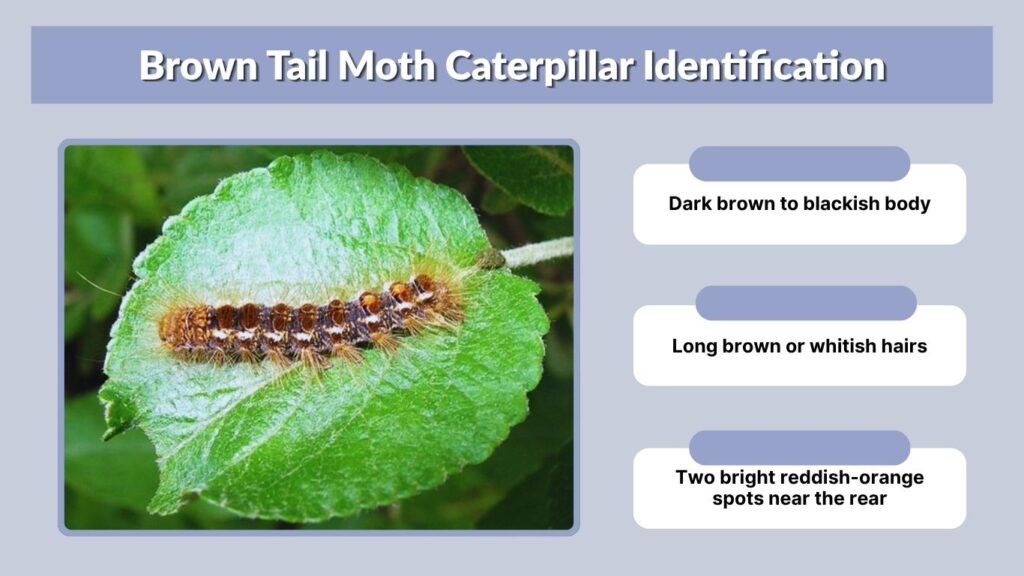
Brown tail moth caterpillars are dark, hairy caterpillars with distinctive markings. They are often found feeding in groups when young and may live inside webbed winter nests on host trees.
Identification Features
- Dark brown to blackish body
- Long brown or whitish hairs
- Two bright reddish-orange spots near the rear
- Broken white markings or pale side stripes
- Often found in groups on leaves
- Webbed winter nests at branch tips
- Irritating hairs that can cause rash
| Feature | Brown Tail Moth Caterpillar |
| Scientific name | Euproctis chrysorrhoea |
| Main concern | Toxic hairs causing rash and breathing irritation |
| Common location | Maine, parts of New England, coastal UK and Europe |
| Nest type | Silken web nests, often at branch tips |
| Active season | Mainly spring to early summer, depending on region |
| Adult moth | White moth with brown tail tuft |
What Does a Brown Tail Moth Caterpillar Look Like?
A brown tail moth caterpillar looks like a dark, hairy caterpillar with pale side markings and two orange-red spots near the back. Young caterpillars may be smaller and live together in webbed nests. Older caterpillars spread out more as they feed.
The reddish-orange spots are one of the most useful clues. However, people should avoid touching any hairy caterpillar for identification because brown-tail moth hairs can cause irritation.
Brown Tail Moth Caterpillar Rash
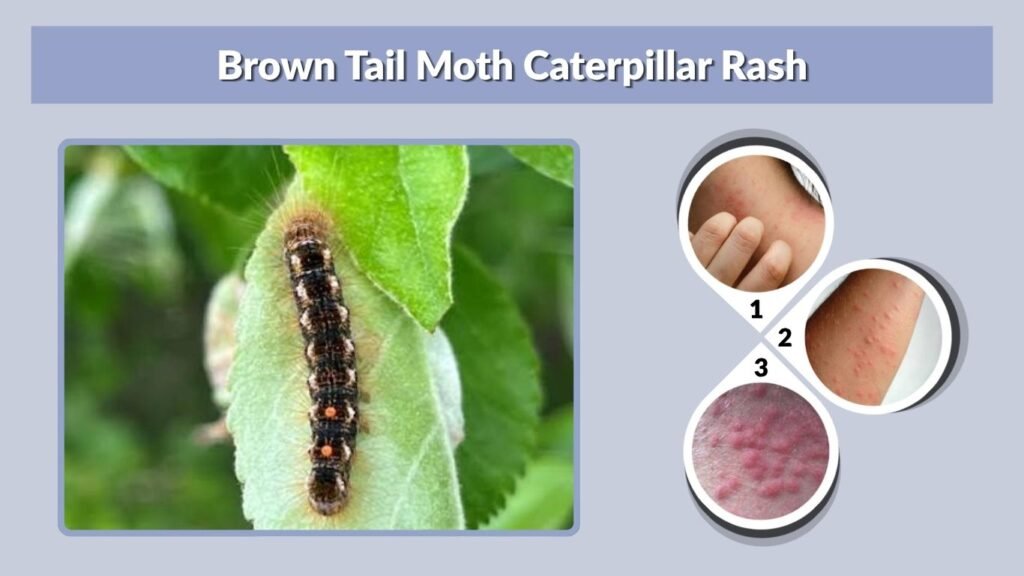
Brown tail moth caterpillar rash is caused by tiny hairs that can touch the skin directly or become airborne. The rash may feel similar to poison ivy for some people. Maine CDC notes that the hairs can cause skin irritation and respiratory issues.
Rash Symptoms
- Itchy red bumps
- Burning or stinging feeling
- Raised rash patches
- Irritated skin after outdoor exposure
- Symptoms after touching contaminated clothing, pets, tools, or yard debris
- Breathing irritation in sensitive people
The rash is not caused by a bite. It comes from contact with toxic hairs.
Is Brown Tail Moth Caterpillar Rash Contagious?
Brown tail moth caterpillar rash itself is not contagious like an infection. You cannot “catch” it from another person in the normal way. However, the tiny hairs can remain on clothing, towels, bedding, pets, outdoor furniture, and tools.
This means the hairs can transfer from one surface to another. Washing contaminated clothing and showering after outdoor exposure can help reduce further contact.
Brown Tail Moth Caterpillar Rash Treatment
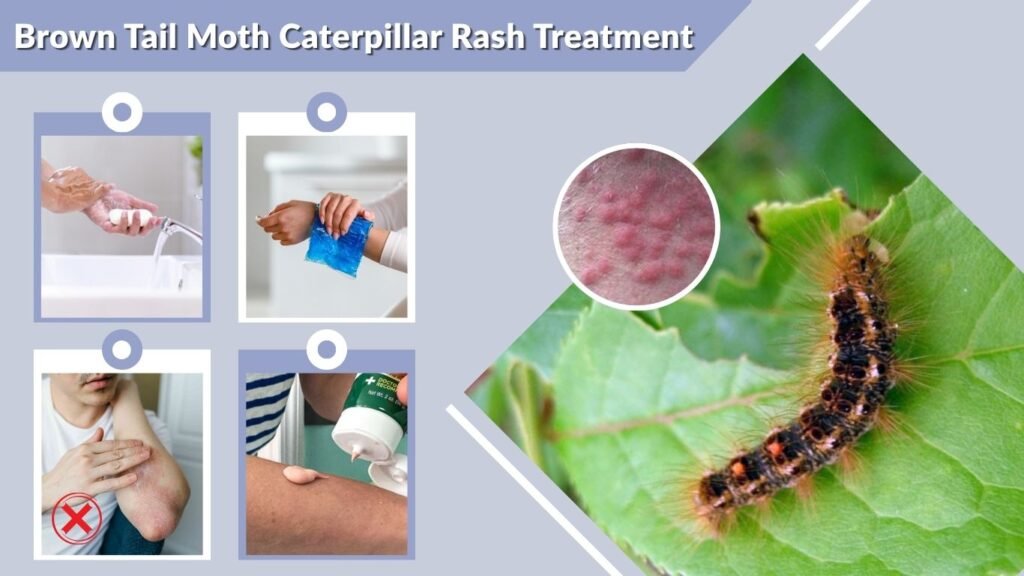
Treatment focuses on reducing itching and preventing more exposure. Maine CDC says treatment for rash or breathing problems focuses on relieving symptoms and eliminating further exposure.
Home Care Options
- Wash exposed skin with soap and cool water.
- Take a cool shower after outdoor work.
- Wash clothes, towels, and bedding.
- Use cold compresses for itching.
- Avoid scratching the rash.
- Consider over-the-counter anti-itch creams or antihistamines.
- Seek medical advice for severe rash, eye irritation, or breathing symptoms.
This is general information, not a medical diagnosis. If symptoms are serious, spreading quickly, infected-looking, or affecting breathing, contact a healthcare professional.
Brown Tail Moth Caterpillar Hairs and Respiratory Problems
The caterpillar hairs are light and can become airborne, especially during dry yard work, mowing, pruning, or handling nests. Breathing in these hairs may irritate the throat, nose, or lungs.
People with asthma, allergies, or other respiratory conditions should be extra careful in infested areas. Wear protective clothing, avoid dry sweeping, and do outdoor work after rain or when vegetation is damp.
Brown Tail Moth Caterpillar and Dogs
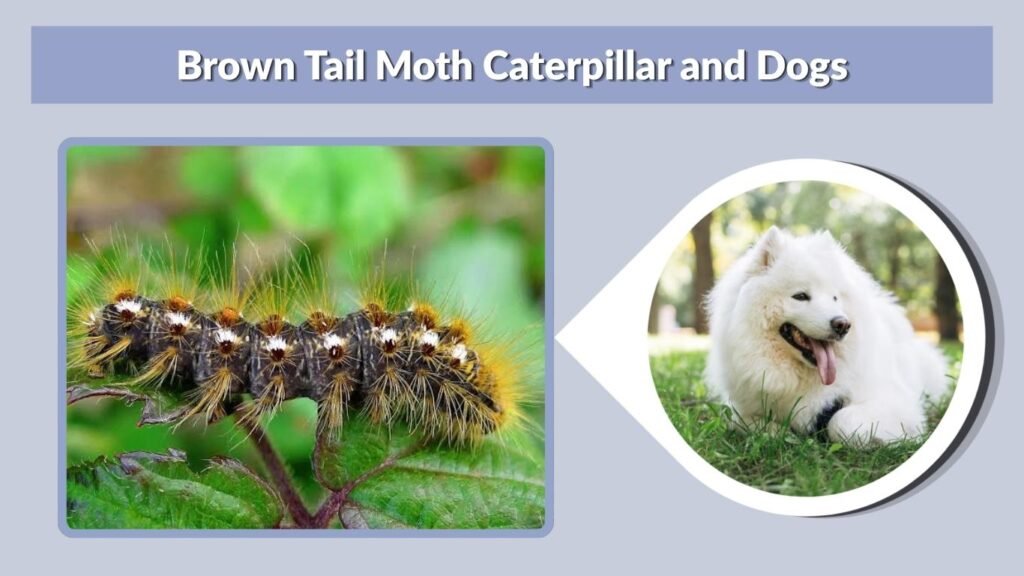
Dogs may carry brown tail moth hairs on their fur after walking through infested areas. The rash is usually a bigger issue for humans, but pets can transfer hairs to couches, bedding, carpets, or people’s skin.
If your dog has been in an infested area:
- Wipe paws and fur carefully.
- Bathe the dog if needed.
- Wash pet bedding.
- Avoid letting the dog sleep on your bed after exposure.
- Call a vet if your dog shows mouth irritation, vomiting, or unusual discomfort.
Brown Tail Moth Caterpillar Nest
Brown tail moth caterpillars create silken nests, especially for overwintering. These nests are often found at the tips of branches. They can look like tight webs holding dead leaves together.
Winter nest removal is one of the most common control methods because caterpillars are still inside the nests before they emerge in spring.
Nest Signs
- Webbed leaves at branch tips
- Tight silk around leaves
- Groups of caterpillars inside
- Nests on oak, apple, cherry, hawthorn, rose, and other hosts
- More visible in winter after leaves fall
Brown Tail Moth Nest vs Tent Caterpillar Nest
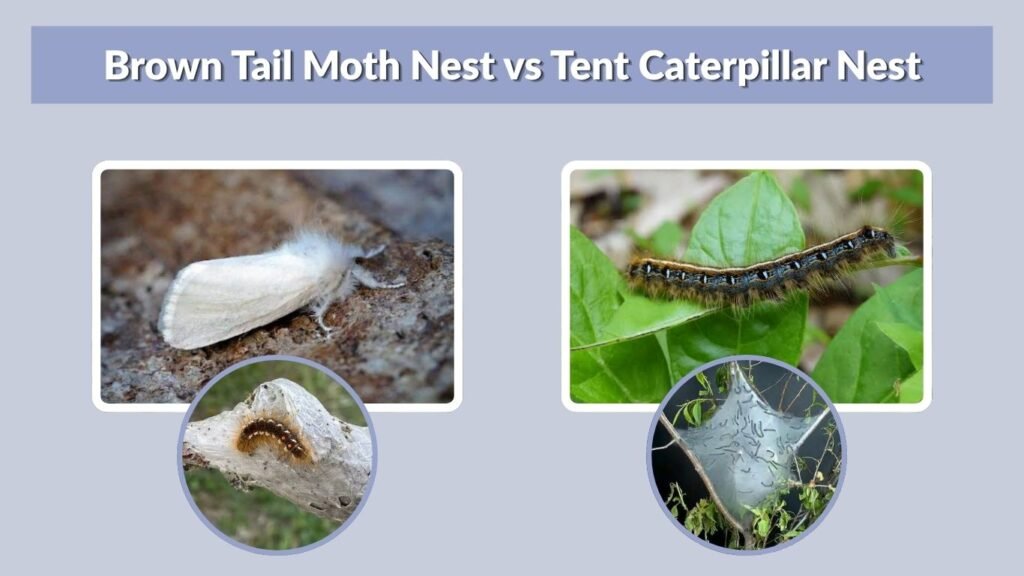
Brown tail moth nests and tent caterpillar nests are often confused, but they are not the same.
| Feature | Brown Tail Moth Nest | Tent Caterpillar Nest |
| Location | Often branch tips | Usually branch crotches |
| Season noticed | Winter and spring | Spring |
| Health risk | Toxic hairs can cause rash | Usually less irritating |
| Appearance | Webbed leaves bound tightly | Large tent-like silk web |
| Control concern | Use protective gear | Often managed by removal |
Tent caterpillars make larger silk tents, usually in branch forks. Brown tail moth winter nests are tighter and often hold leaves at the ends of branches.
Brown Tail Moth vs Tent Caterpillar
Brown tail moth caterpillars have toxic hairs and two orange-red spots near the rear. Tent caterpillars are also hairy, but they usually have different body markings and form visible tents in tree branches.
If you are unsure, do not touch the caterpillar. Use location, nest shape, markings, and local extension resources to confirm identification.
Brown Tail Moth Caterpillar vs Gypsy Moth Caterpillar
The “gypsy moth” is now commonly called the spongy moth. Its caterpillar can be confused with brown tail moth caterpillars because both are hairy tree-feeding larvae.
| Feature | Brown Tail Moth Caterpillar | Spongy Moth Caterpillar |
| Key mark | Two orange-red spots near rear | Blue and red dot pairs along back |
| Rash risk | High due to toxic hairs | Hairs may irritate some people |
| Nest | Webbed winter nests | Does not make the same winter web nests |
| Main concern | Rash and defoliation | Heavy tree defoliation |
Brown Tail Moth Caterpillar Life Cycle
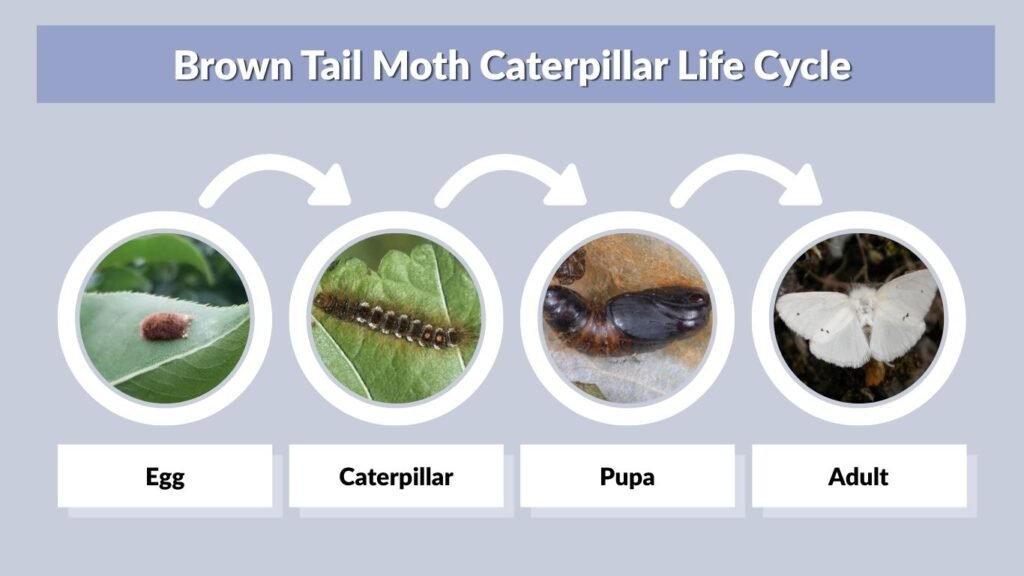
Brown tail moths go through egg, caterpillar, pupa, and adult stages. The caterpillar stage is the most harmful stage for human health.
Main Stages
- Eggs are laid by adult female moths.
- Young caterpillars feed together.
- Caterpillars build winter nests.
- They emerge in spring and feed again.
- Mature caterpillars spin cocoons.
- Adult white moths emerge and reproduce.
The adult moths have abdominal hairs, but Maine Forest Service notes these are not the same toxic hairs found in the caterpillar stage. However, adults may still pick up residual caterpillar hairs when emerging from pupal packets.
Brown Tail Moth Caterpillar Cocoon
When mature, the caterpillar forms a cocoon before becoming an adult moth. Cocoons may be found in leaves, on buildings, in sheltered outdoor areas, or near host plants.
Do not handle cocoons bare-handed because irritating hairs may be present around pupation sites. Use gloves and proper disposal methods if removal is necessary.
Brown Tail Moth Caterpillar Control
Control is easiest before caterpillars spread. Removing winter webs from trees can reduce populations, especially on small properties.
Control Methods
- Clip winter webs from branch tips.
- Soak removed nests in soapy water.
- Wear gloves, long sleeves, eye protection, and a mask.
- Avoid dry mowing or leaf blowing in infested areas.
- Hire a licensed arborist for tall trees.
- Use insecticides only according to local rules and label directions.
- Avoid spraying during bloom to protect pollinators.
University of Maine Extension provides detailed browntail moth information and photos, including early-instar caterpillars and winter nests.
Brown Tail Moth Caterpillar Insecticide and Pesticide
Insecticides may be used in some cases, but timing matters. Young caterpillars are usually easier to control than older ones. In many areas, pesticide applications to trees may require licensed professionals, especially near water, roads, or public spaces.
For bird-safe or pollinator-conscious control, start with non-chemical methods such as winter web clipping, reducing exposure, and targeted removal. Never apply pesticide broadly without checking the label and local guidance.
Brown Tail Moth Caterpillar Natural Treatment and Removal
Natural or low-chemical management focuses on removing nests and reducing human exposure rather than spraying everything.
Safer Removal Tips
- Remove nests in winter or early spring.
- Work when webs are damp.
- Wear protective clothing.
- Do not burn nests in a way that releases hairs into the air.
- Bag or soak nests before disposal.
- Wash clothing after work.
- Shower after working near infested trees.
Brown Tail Moth Caterpillar in Maine
Maine is one of the best-known areas for brown tail moth problems in the United States. Maine CDC provides public health guidance because the caterpillar hairs can cause rash and breathing irritation.
People in affected Maine areas should be careful during spring and early summer, especially when doing yard work, camping, gardening, or spending time near infested trees.
Brown Tail Moth Caterpillar in the UK
In the UK, brown-tail moths are found mainly in parts of southern and eastern coastal areas. UKMoths says the species is distributed mainly around the south and east coasts of England and can become locally abundant in some years.
Local councils may issue warnings when caterpillars are active because the hairs can cause skin irritation.
FAQs
Is the brown tail moth caterpillar toxic?
Yes, the brown tail moth caterpillar has toxic, irritating hairs. These hairs can cause itchy skin rashes and breathing irritation. The caterpillar does not need to bite or sting you; contact with shed hairs may be enough to cause symptoms.
What does a brown tail moth caterpillar rash look like?
The rash often appears as itchy red bumps, irritated patches, or a poison ivy-like reaction. Severity varies by person. Some people have mild itching, while others develop stronger reactions. Breathing symptoms need medical attention, especially in sensitive individuals.
How do you treat brown tail moth caterpillar rash?
Wash exposed skin, shower with cool water, launder clothing, and avoid scratching. Cold compresses, anti-itch creams, and antihistamines may help. Contact a healthcare professional if the rash is severe, infected-looking, near the eyes, or linked with breathing problems.
How do you identify a brown tail moth caterpillar?
Look for a dark, hairy caterpillar with pale markings and two orange-red spots near the rear. It may be found near webbed winter nests on tree branch tips. Do not handle it directly because the hairs can irritate skin.
How do you get rid of brown tail moth caterpillars?
Remove winter webs from branch tips while wearing protective gear, then soak or bag the nests safely. For large trees or heavy infestations, hire a professional. Insecticides may help in some cases, but they must be used carefully and according to label directions.
