
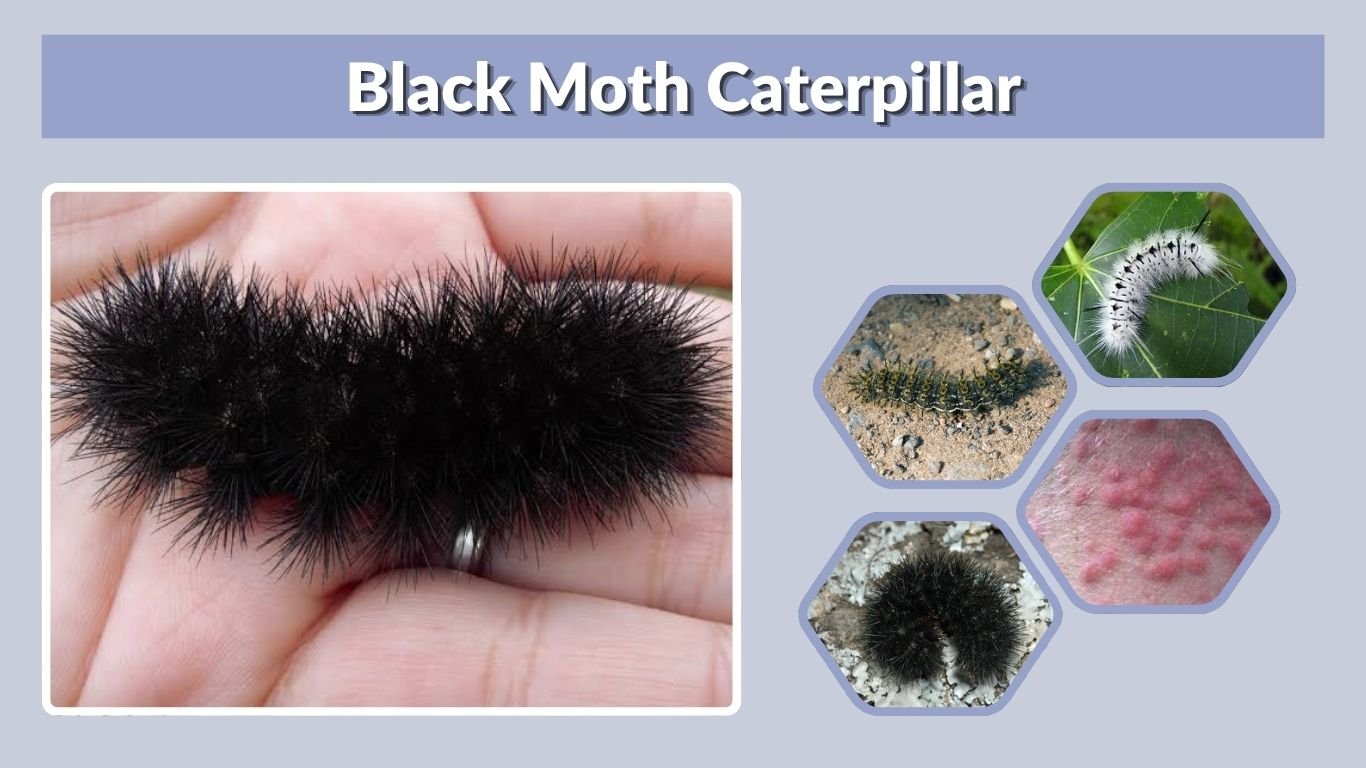
A black moth caterpillar can be the larva of many different moth species. Some are harmless fuzzy caterpillars, while others can sting, irritate skin, or damage plants. Black caterpillars may be all black, black and orange, black and yellow, black and white, spiky, hairy, or striped. Because color alone is not enough for identification, it is important to look at body shape, hairs, host plant, location, and markings before deciding what species you found.
What Is a Black Moth Caterpillar?
A black moth caterpillar is any moth larva that has mostly black coloration. It is not one single species. Many moth families include black caterpillars, including tiger moths, tussock moths, flannel moths, buck moths, sphinx moths, cutworm moths, and leopard moths.
Some black caterpillars later become plain brown moths, while others become white, spotted, striped, or large dramatic moths. A black caterpillar may also be confused with a butterfly caterpillar, such as the black swallowtail, which feeds on fennel, dill, and parsley.
Quick Identification Table
| Caterpillar Type | Appearance | Safety Level |
| Giant leopard moth caterpillar | Black fuzzy body with red/orange bands when curled | Usually not dangerous |
| Black woolly bear caterpillar | Dense black hairs, often seen crawling in fall | Usually harmless but may irritate skin |
| Buck moth caterpillar | Black, spiny body | Stinging and painful |
| Black-waved flannel moth caterpillar | Hairy/flannel-like body | Can sting or irritate |
| Black witch moth caterpillar | Dark patterned caterpillar on legumes | Not known as a major stinging caterpillar |
| Tussock moth caterpillar | Hairy with tufts, black/white/yellow patterns | Hairs may irritate skin |
| Sphinx moth caterpillar | Smooth or horned, sometimes black | Usually harmless |
Black Fuzzy Caterpillar
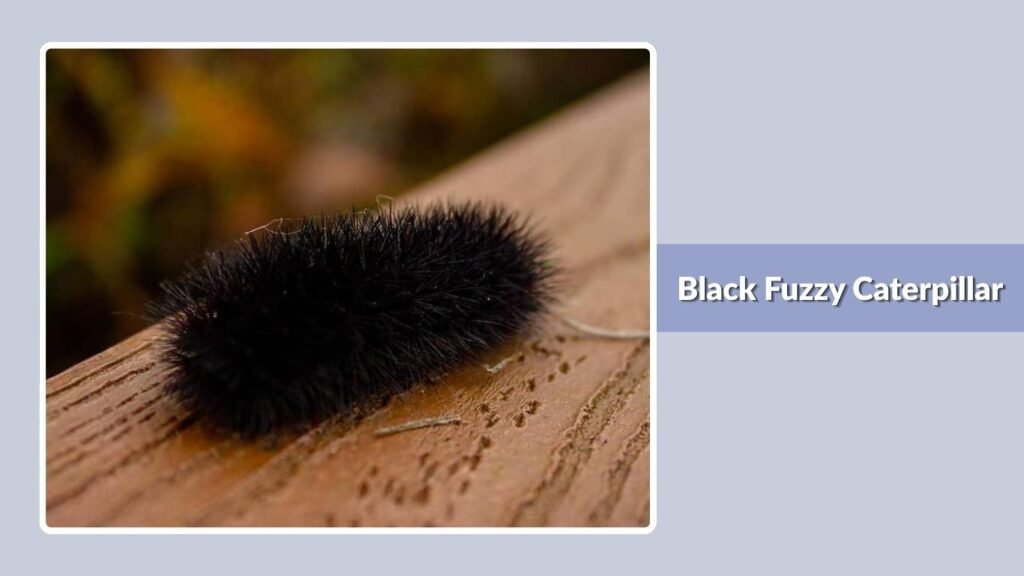
A black fuzzy caterpillar is often a tiger moth or leopard moth larva. These caterpillars are commonly called woolly bears or woolly worms. They may look dangerous because of their thick hairs, but many are not venomous.
The giant leopard moth caterpillar is a common example. It is black and fuzzy, and when it curls up, it shows red or orange bands between the body segments. Mississippi State Extension notes that giant leopard moth caterpillars overwinter as partly grown larvae and occur throughout the United States and into Canada.
Identification Features
- Dense black hairs
- Often curls into a ball when disturbed
- May show red or orange bands
- Usually found on the ground, weeds, or garden plants
- Often becomes a tiger moth or leopard moth
Black Witch Moth Caterpillar
The black witch moth caterpillar becomes the large black witch moth, Ascalapha odorata. The adult moth is famous for its large dark wings and folklore in parts of the Americas.
The caterpillar feeds on woody legumes and related plants. Reported host plants include black locust, Kentucky coffeetree, acacia, cassia, and mesquite. A naturalist account from Ohio notes that black witch caterpillars can use black locust and Kentucky coffeetree as native host plants.
Black witch moth caterpillars are not usually treated as dangerous stinging caterpillars, but they should still be handled carefully because caterpillar identification can be uncertain.
Black Buck Moth Caterpillar
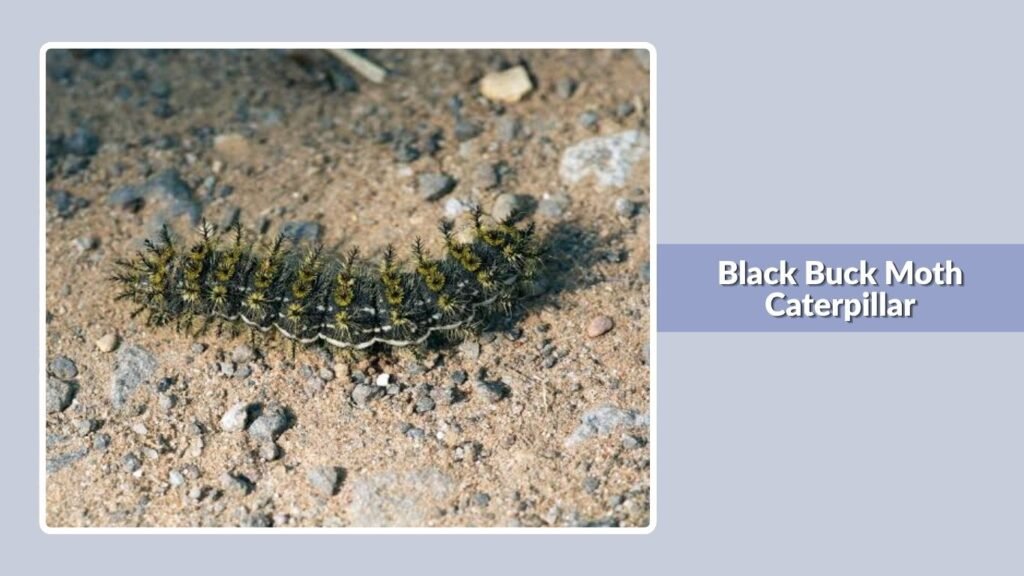
The black buck moth caterpillar is one of the black caterpillars you should avoid touching. Buck moth caterpillars have branched spines that can cause painful stings.
They may be black or dark-colored with rows of spines. They are often found on oak and other host trees. A sting can cause immediate pain, redness, swelling, or a burning sensation.
Safety Tips
- Do not touch spiny black caterpillars.
- Wear gloves when gardening under host trees.
- Teach children not to pick up black spiky caterpillars.
- Use a stick, leaf, or tool if one must be moved.
- Seek medical advice for severe pain or allergic symptoms.
Black-Waved Flannel Moth Caterpillar
The black-waved flannel moth caterpillar belongs to the flannel moth group. Flannel moth caterpillars are important because many have venomous or irritating spines hidden under soft-looking hairs.
This caterpillar may look fuzzy or unusual, but it should not be touched. Flannel moth relatives, especially the southern flannel moth or puss caterpillar, can produce extremely painful stings. Clemson Extension describes the southern flannel caterpillar as having venomous spines hidden beneath its hair-like covering.
Black Tiger Moth Caterpillar
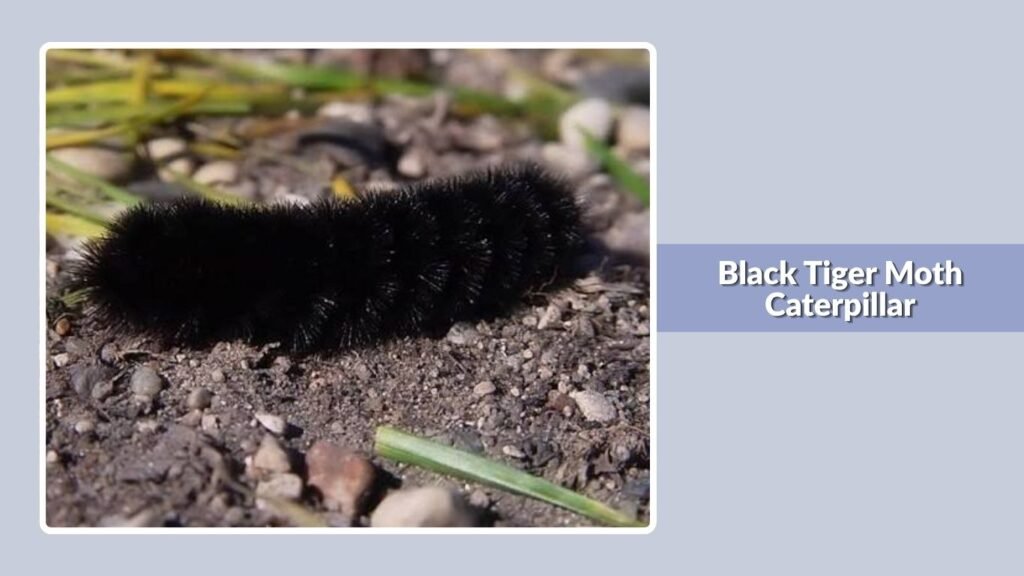
Many black fuzzy caterpillars are tiger moth larvae. Tiger moth caterpillars are often hairy, active, and commonly found crossing paths or feeding on weeds. Some are all black, while others have orange, yellow, white, or brown markings.
The all-black woolly bear caterpillar is often linked to tiger moths. It may later become a moth in the tiger moth group, depending on the exact species.
Black Tussock Moth Caterpillar
Tussock moth caterpillars may be black, white, yellow, gray, or mixed in color. Some have long hair pencils, tufts, and bright warning colors. They can be beautiful, but many should not be handled.
Penn State Extension notes that exposure to hickory tussock moth caterpillar hairs generally causes a localized rash and itching. University of Maine Extension also notes that hairs from many tussock caterpillars can cause an itchy rash.
Black and Orange Moth Caterpillar
A black and orange moth caterpillar may be a woolly bear, leopard moth caterpillar, tiger moth caterpillar, or another species. The giant leopard moth caterpillar is a common black fuzzy caterpillar that reveals red-orange bands when curled. Texas A&M describes the great leopard moth caterpillar as a fuzzy black caterpillar with red to orange underlying body color.
Some orange-and-black caterpillars are also butterfly larvae, not moth larvae. The black swallowtail caterpillar, for example, can have black, green, yellow, and orange markings and feeds on fennel, dill, parsley, and carrot family plants.
Black and Yellow Caterpillar Moth
Black and yellow caterpillars may become moths or butterflies. Some tussock moth caterpillars have black and yellow patterns, while some sphinx moth or tiger moth larvae may also show yellow stripes.
A black moth caterpillar with yellow stripes should be identified by:
- Stripe pattern
- Hair or spine type
- Host plant
- Location
- Size
- Whether it has a tail horn
- Whether it lives alone or in groups
Never assume a bright black-and-yellow caterpillar is safe to touch. Bright colors can be warning colors in many insects.
Black and White Moth Caterpillar
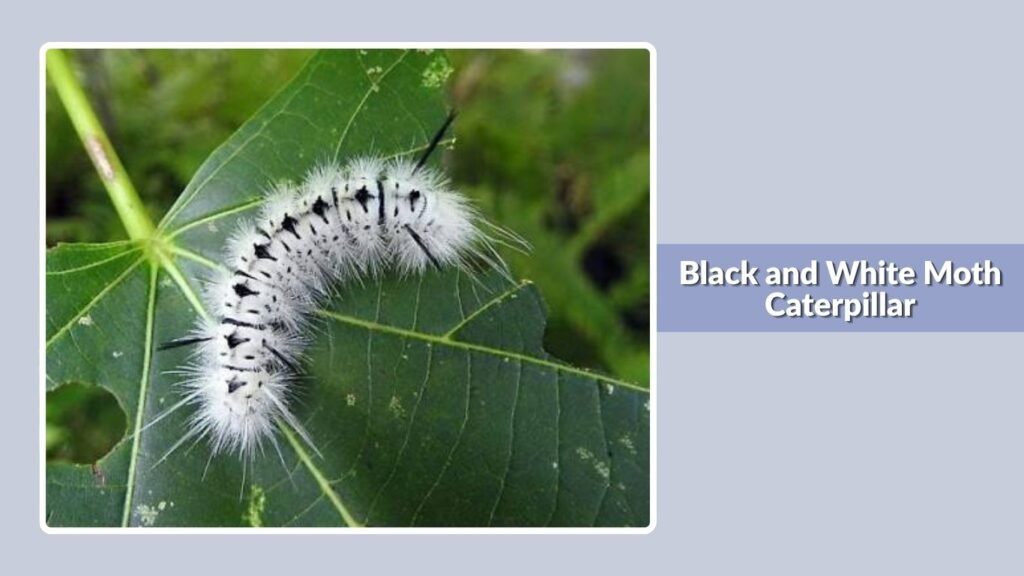
Black and white caterpillars often belong to tussock moths, tiger moths, or related groups. The hickory tussock moth caterpillar is a well-known white caterpillar with black markings and black hair tufts. It can cause skin irritation in some people.
Black and white fuzzy caterpillars should be observed rather than handled, especially if they have long hairs or tufts.
Black Sphinx or Hawk Moth Caterpillar
Some sphinx moth and hawk moth caterpillars can appear black, brown, green, or patterned. Many have a horn-like tail, which helps separate them from fuzzy tiger moths or spiny buck moth caterpillars.
Most sphinx moth caterpillars are not dangerous to people, but they may eat leaves of host plants. Tomato hornworms, elephant hawk moth larvae, and other sphinx larvae are examples of caterpillars that may be dark or patterned in some stages.
Is a Black Moth Caterpillar Poisonous?
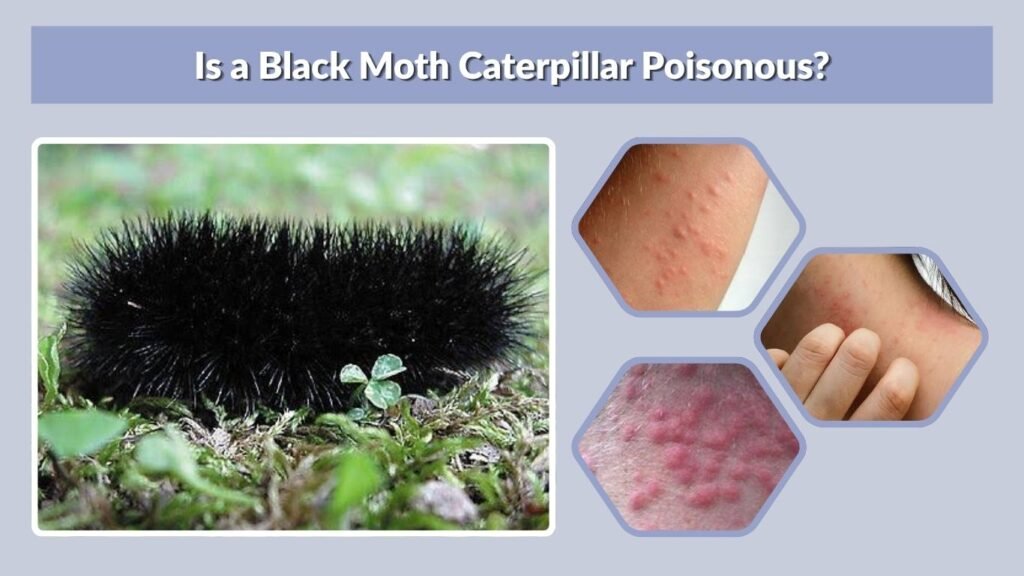
Some black moth caterpillars are harmless, while others are irritating, stinging, or venomous. The safest answer is: do not touch a black caterpillar unless you are sure of the species.
| Type | Poison/Sting Risk |
| Giant leopard moth caterpillar | Usually low risk |
| Woolly bear caterpillar | Usually low risk, may irritate sensitive skin |
| Buck moth caterpillar | Painful sting |
| Flannel moth caterpillar | Venomous sting |
| Tussock moth caterpillar | Rash or irritation possible |
| Hickory tussock moth caterpillar | Irritating hairs possible |
| Black witch moth caterpillar | Not a major stinging species |
Black Moth Caterpillar Sting
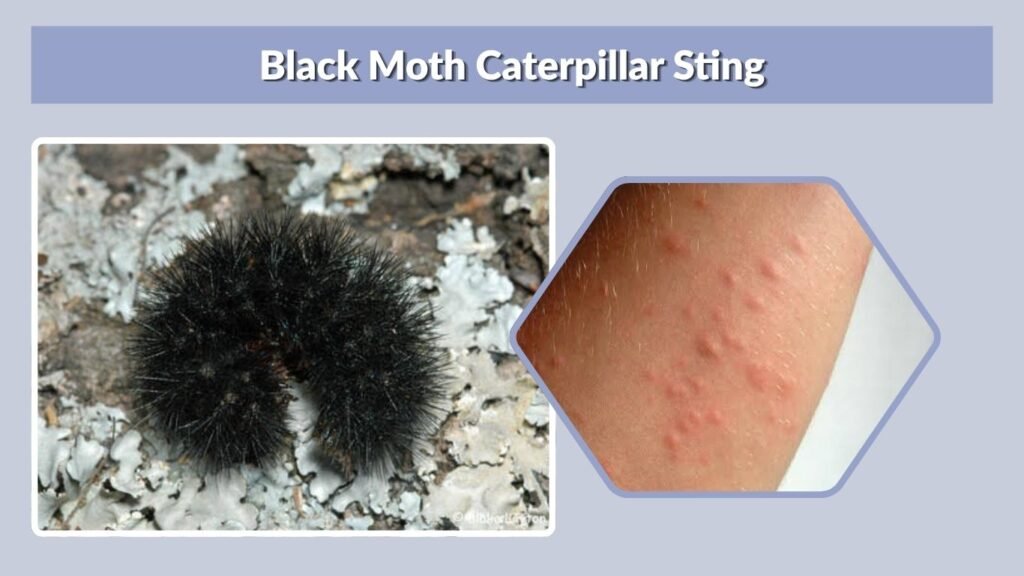
A black moth caterpillar sting is most likely from a spiny species such as a buck moth caterpillar or a flannel moth caterpillar. Hairy tussock caterpillars may cause irritation, but the reaction is more often a rash than a true venomous sting.
What to Do After Contact
- Do not rub the area.
- Wash with soap and water.
- Use tape to lift off loose hairs or spines.
- Apply an ice pack for pain or swelling.
- Use anti-itch cream for mild irritation.
- Seek medical help for severe pain, trouble breathing, swelling of the face, or allergic symptoms.
Black Moth Caterpillar UK
In the UK, “black moth caterpillar” may refer to several moth larvae, including tiger moths, tussock moths, hawk moths, and dark forms of common garden caterpillars. Some may be harmless, while others can irritate skin.
For UK identification, check the plant it was feeding on and compare the markings carefully. A black caterpillar on nettles, for example, may be a butterfly larva rather than a moth larva.
Black Caterpillar Moth or Butterfly?
Not every black caterpillar becomes a moth. Some black caterpillars become butterflies. The easiest clues are host plant, body shape, and markings.
| Feature | More Likely Moth | More Likely Butterfly |
| Body | Fuzzy, hairy, or spiny | Often smoother or patterned |
| Activity | Often hides by day | Often visible on host plants |
| Host plant | Wide variety | Often specific plants |
| Cocoon/chrysalis | Moth caterpillars form cocoons | Butterflies form chrysalises |
FAQs
What does a black moth caterpillar turn into?
A black moth caterpillar may turn into many different moths, such as a tiger moth, leopard moth, buck moth, tussock moth, flannel moth, sphinx moth, or black witch moth. Exact identification depends on markings, hairs, spines, host plant, and location.
Are black fuzzy caterpillars poisonous?
Many black fuzzy caterpillars are not poisonous, but some can irritate sensitive skin. Spiny species, flannel moth caterpillars, and some tussock moth caterpillars can cause painful stings or rashes. It is safest not to touch unidentified fuzzy caterpillars.
What is a black and orange moth caterpillar?
A common black and orange moth caterpillar is the giant leopard moth caterpillar. It looks black and fuzzy, but when it curls up, red-orange bands show between the body segments. Some black and orange caterpillars may also become butterflies, not moths.
Does a black moth caterpillar sting?
Some black moth caterpillars sting, especially buck moth caterpillars and flannel moth caterpillars. Others, like many woolly bears, do not truly sting but may cause mild irritation. Avoid touching black spiny or hairy caterpillars with bare hands.
What does a black witch moth caterpillar eat?
Black witch moth caterpillars feed on woody legumes and related plants. Host plants may include acacia, mesquite, cassia, black locust, and Kentucky coffeetree. The adult black witch moth is a large, dark moth often noticed because of its impressive size.
