
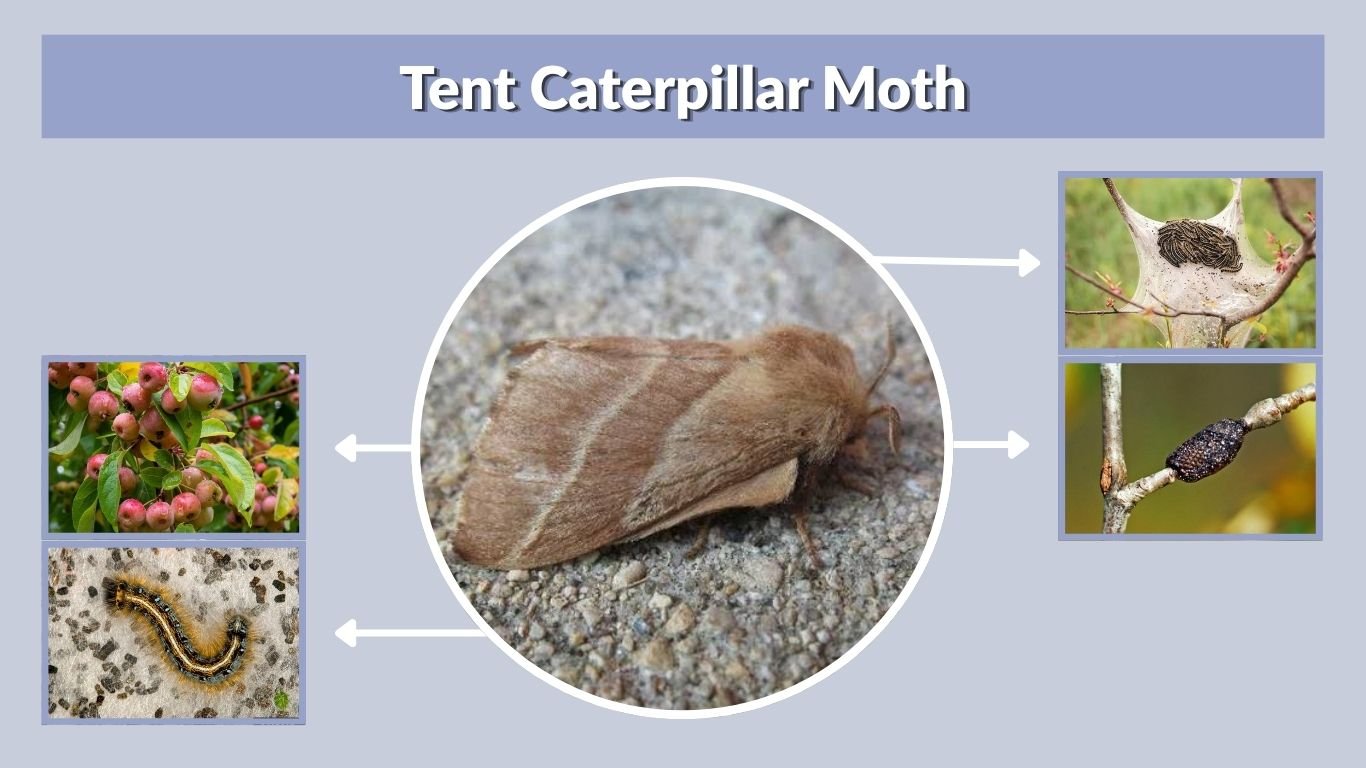
The tent caterpillar moth is the adult stage of several caterpillars in the genus Malacosoma. These insects are best known for their social caterpillars, which feed on tree leaves in spring and may form silk tents or mats on branches. The most searched types include the eastern tent caterpillar moth, forest tent caterpillar moth, western tent caterpillar moth, and southwestern tent caterpillar moth. Although they can defoliate trees during outbreaks, they are usually not poisonous to people and are often confused with spongy moth and browntail moth caterpillars.
What Is a Tent Caterpillar Moth?
A tent caterpillar moth is a medium-sized moth that develops from a tent caterpillar. The caterpillar stage is more noticeable than the adult moth because the larvae gather in groups, feed on leaves, and sometimes build silk tents.
The adult moths are usually brown, tan, reddish-brown, or yellowish-brown with simple wing markings. They are not showy like butterflies. Their main role is to mate and lay eggs for the next generation.
Common Types of Tent Caterpillar Moths
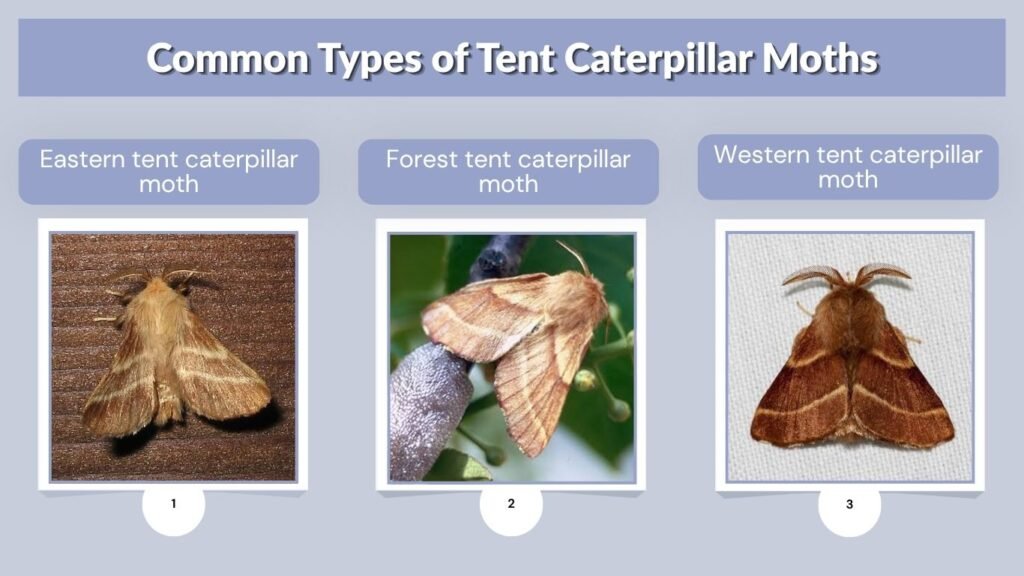
Several tent caterpillar species occur in North America. They are related, but their caterpillars differ in nest behavior, host plants, and markings.
| Type | Scientific Name | Key Feature |
| Eastern tent caterpillar moth | Malacosoma americanum | Builds tents in branch forks |
| Forest tent caterpillar moth | Malacosoma disstria | Does not build true tents |
| Western tent caterpillar moth | Malacosoma californicum | Common in western North America |
| Southwestern tent caterpillar moth | Malacosoma incurvum | Found in parts of the Southwest |
| Pacific tent caterpillar moth | Malacosoma constrictum group/related western forms | Western region species/forms |
Eastern Tent Caterpillar Moth
The eastern tent caterpillar moth is one of the best-known species. Its caterpillars commonly feed on wild cherry, apple, and related trees. They build visible silk tents in branch crotches during spring.
University of Wisconsin Extension notes that eastern tent caterpillar is easiest to control early in the season, and egg masses can be removed in winter while small tents can be removed in early spring.
Eastern Tent Caterpillar Identification
- Black body with pale markings
- White stripe along the back
- Blue and yellow side markings
- Hairy but not dangerously venomous
- Silk tent usually in branch forks
- Common on cherry, apple, and crabapple trees
Forest Tent Caterpillar Moth
The forest tent caterpillar moth is slightly misleadingly named because its caterpillars do not make true tents. Instead, they create silk mats or resting areas on branches and trunks. UMass Extension explains that the forest tent caterpillar is native to North America and does not build a tent despite its name.
Forest tent caterpillars feed on many hardwood trees, including oak, poplar, aspen, willow, elm, and others. They may cause heavy defoliation during outbreaks, especially in forests and shade trees.
Forest Tent Caterpillar Identification
- Bluish-gray or dark body
- Row of pale footprint-shaped or keyhole-shaped spots along the back
- Blue side lines
- Hairy body
- No large tent in branch forks
- Feeds on many deciduous trees
Western and Southwestern Tent Caterpillar Moths
Western and southwestern tent caterpillar moths are found in western parts of North America. Like eastern tent caterpillars, many western species have social larvae that feed in groups and make silk shelters or trails.
These species may feed on trees and shrubs such as willow, poplar, alder, fruit trees, oak, and other woody plants, depending on the region. In dry or high-outbreak years, they may become very noticeable on landscape trees.
What Do Tent Caterpillar Moths Look Like?
Adult tent caterpillar moths are usually modest-looking. They are often tan, brown, reddish-brown, or yellowish-brown. Their wings may have pale bands or lines, but they are not brightly colored.
Adult Moth Features
- Medium-sized moth
- Fuzzy body
- Broad wings
- Brown, tan, or reddish coloring
- Simple pale wing lines or bands
- Active mainly at night
- Short adult life focused on mating and egg-laying
Adult moths are less damaging than caterpillars. The caterpillars do the feeding damage.
What Do Tent Caterpillar Moths Eat?
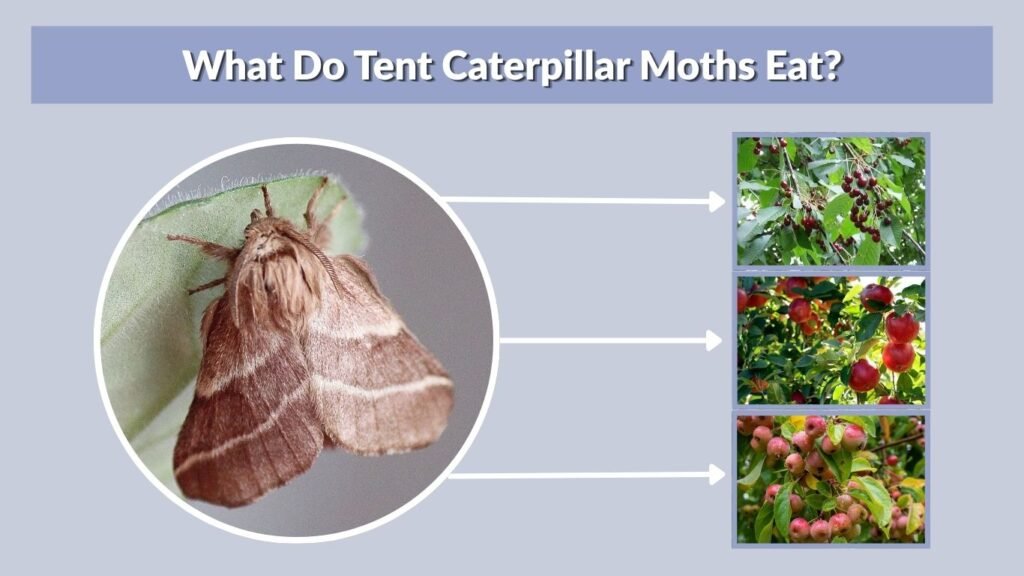
Adult tent caterpillar moths eat little or nothing. Like many moths with short adult lives, their main purpose is reproduction. The caterpillars are the main feeding stage.
Tent caterpillars eat tree and shrub leaves. Their exact diet depends on the species.
Common Caterpillar Foods
- Wild cherry
- Apple
- Crabapple
- Plum
- Aspen
- Poplar
- Willow
- Oak
- Elm
- Maple
- Hawthorn
- Other deciduous trees and shrubs
Forest tent caterpillars have a broader diet than eastern tent caterpillars and can feed on many hardwoods.
Tent Caterpillar Moth Life Cycle
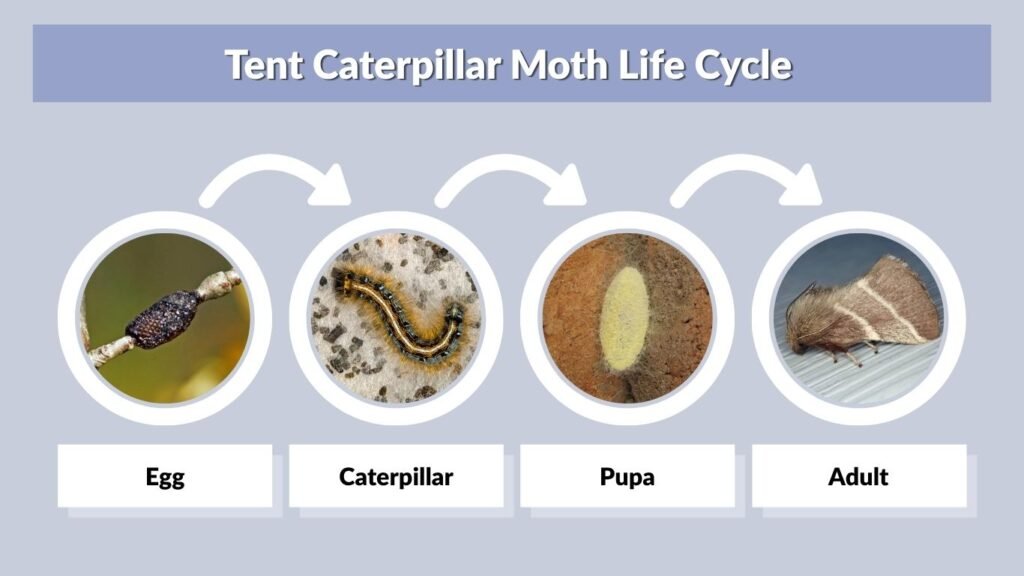
Tent caterpillar moths have a complete life cycle: egg, caterpillar, cocoon, pupa, and adult moth. Most damage happens during the caterpillar stage in spring.
| Stage | What Happens |
| Egg | Female moth lays egg masses on twigs |
| Caterpillar | Larvae hatch in spring and feed on leaves |
| Tent or silk mat | Caterpillars rest together in silk shelters or mats |
| Cocoon/pupa | Mature larvae spin cocoons and pupate |
| Adult moth | Moths emerge, mate, and lay eggs |
Egg Stage
Females lay eggs in masses around small twigs. These egg masses often overwinter and hatch when new leaves appear in spring.
Caterpillar Stage
Young caterpillars feed in groups. Eastern tent caterpillars make visible tents, while forest tent caterpillars move in groups but do not build true tents.
Cocoon and Adult Stage
After feeding, mature caterpillars leave the tree to spin cocoons in protected areas. Adult moths emerge later, mate, and lay eggs.
Tent Caterpillar Moth Nest
A tent caterpillar nest is a silk shelter made by caterpillars. Eastern tent caterpillars usually build tents in branch crotches. These tents grow larger as the caterpillars add more silk.
Forest tent caterpillars do not make the classic tent. Instead, they create silk mats where they rest during molting. This is one of the easiest ways to separate them.
Tent Caterpillar vs Spongy Moth Caterpillar
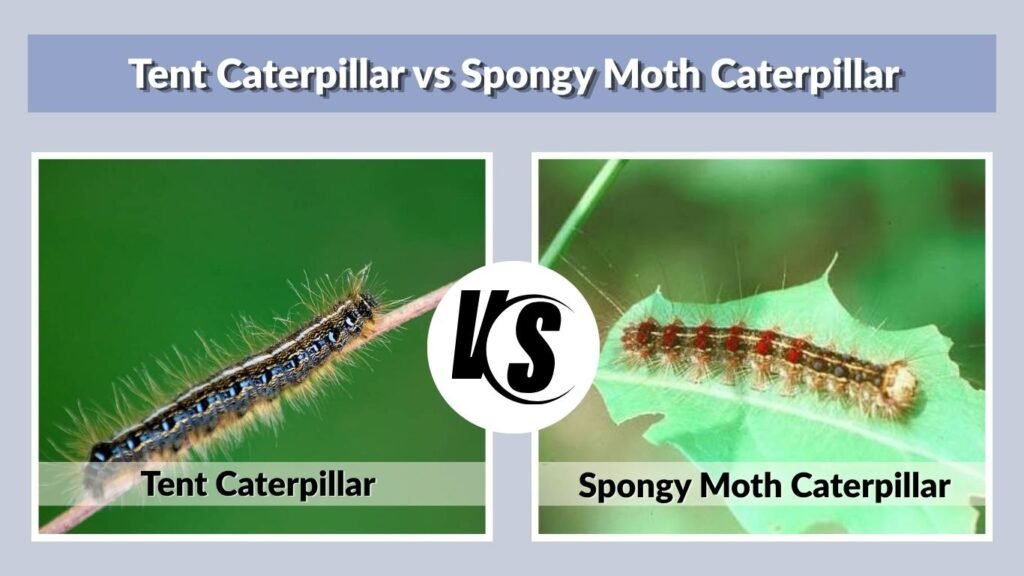
The insect once widely called “gypsy moth” is now commonly called spongy moth. Spongy moth caterpillars are often confused with tent caterpillars because both feed on tree leaves and can appear in outbreaks.
| Feature | Tent Caterpillar | Spongy Moth Caterpillar |
| Nest | Eastern species make tents | Does not make true silk tents |
| Body marks | Stripes or pale back markings | Blue and red dot pairs |
| Feeding behavior | Often social when young | More dispersed as they grow |
| Main season | Spring | Spring to early summer |
| Tree damage | Can defoliate trees | Can cause severe defoliation |
Michigan State University Extension notes that eastern tent caterpillar, forest tent caterpillar, and spongy moth caterpillars are commonly confused because all feed on hardwood tree leaves.
Gypsy Moth Nest vs Tent Caterpillar Nest
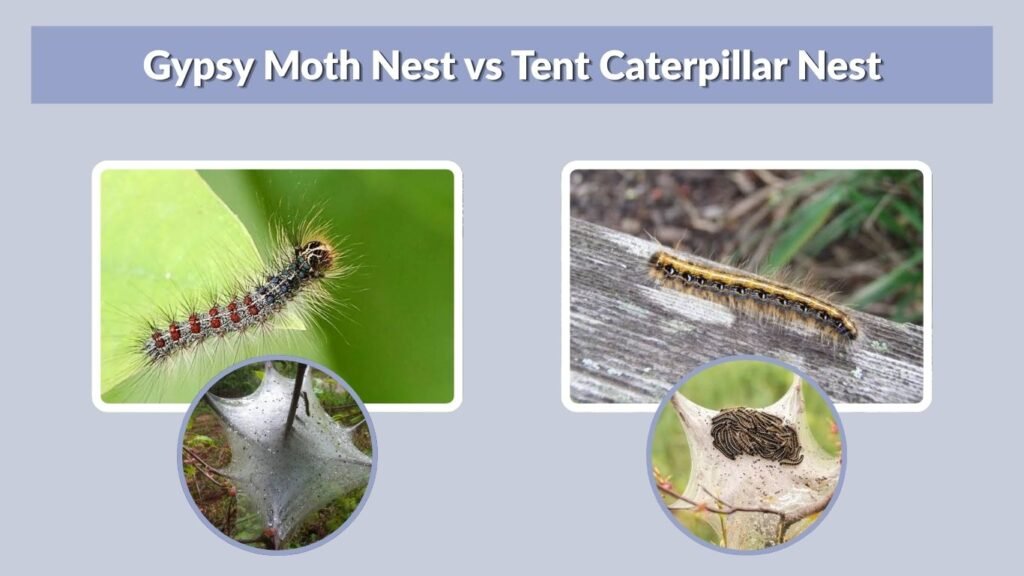
Spongy moth caterpillars do not build large tents like eastern tent caterpillars. If you see a big silk tent in a branch fork of a cherry or apple tree, it is more likely an eastern tent caterpillar than spongy moth.
Spongy moth egg masses are tan, fuzzy patches on tree trunks, outdoor furniture, rocks, vehicles, or buildings. Tent caterpillar egg masses usually encircle small twigs.
Tent Caterpillar vs Browntail Moth
Browntail moth caterpillars are a bigger health concern because their hairs can cause irritating rashes and breathing problems. Tent caterpillars may be hairy, but they are not known for the same toxic hair problem.
| Feature | Tent Caterpillar | Browntail Moth Caterpillar |
| Health risk | Usually low | Toxic hairs can cause rash |
| Nest | Silk tents or mats | Webbed winter nests at branch tips |
| Key markings | Stripes or pale back spots | Two orange-red spots near rear |
| Main concern | Tree defoliation | Rash, breathing irritation, defoliation |
Is the Tent Caterpillar Moth Poisonous?
Tent caterpillar moths and their caterpillars are not considered poisonous to people. They do not sting like flannel moth caterpillars and do not have the same toxic hairs as browntail moth caterpillars.
However, some people may get mild skin irritation from handling hairy caterpillars. It is best to avoid unnecessary handling and use gloves when removing nests.
Tent Caterpillar Moth Damage
Tent caterpillars damage trees by eating leaves. Small trees may look unsightly when tents and caterpillars are abundant. Healthy mature trees usually recover after light or moderate defoliation, especially if the damage happens early in the growing season.
Repeated heavy defoliation, drought, disease, or stress can weaken trees. Young fruit trees and ornamental trees may need closer attention.
Tent Caterpillar Moth Control
Control is most effective when caterpillars are young and nests are small. Winter egg mass removal and early spring tent removal can reduce local numbers.
Control Methods
- Remove egg masses from twigs in winter.
- Prune out small tents early in spring.
- Wear gloves when handling nests.
- Drop removed nests into soapy water.
- Avoid burning tents on trees because it can damage bark.
- Use targeted biological controls only when needed.
- Encourage birds and beneficial insects.
- Avoid broad spraying unless damage is severe.
Washington State University notes that tent caterpillar larvae mature in about 4–6 weeks and later wander to pupate, with moths emerging in June and July in their region.
FAQs
What does a tent caterpillar moth look like?
A tent caterpillar moth is usually tan, brown, reddish-brown, or yellowish-brown with simple pale wing lines. It has a fuzzy body and broad wings. The caterpillar stage is easier to notice because larvae feed in groups and may build silk tents.
Are tent caterpillar moths poisonous?
No, tent caterpillar moths are not considered poisonous to humans. Their caterpillars do not sting like flannel moth caterpillars. However, hairy caterpillars can irritate sensitive skin, so gloves are recommended when removing tents or caterpillars.
What do tent caterpillar moths eat?
Adult moths eat little or nothing. Tent caterpillars feed on leaves of trees and shrubs such as cherry, apple, crabapple, poplar, willow, oak, elm, maple, and aspen. The exact host plants depend on the species.
What is the difference between a tent caterpillar and gypsy moth?
Tent caterpillars often feed socially and some build silk tents. Spongy moth caterpillars do not make true tents and have pairs of blue and red dots along the back. Their egg masses also look different from tent caterpillar egg masses.
How do you control tent caterpillar moths?
Remove egg masses in winter and small tents in early spring. Wear gloves and place removed nests in soapy water. Avoid burning tents on trees. For serious infestations, use labeled controls carefully or contact a local extension service.
