
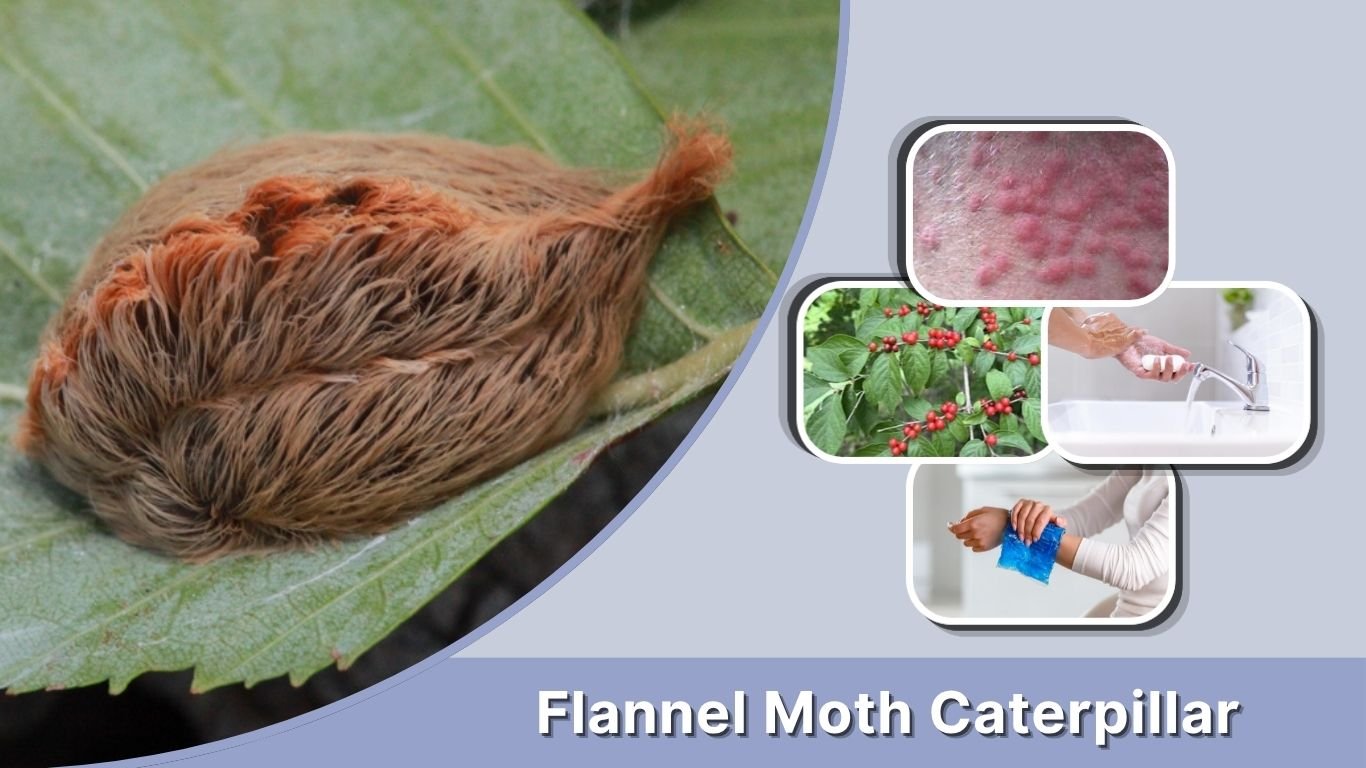
The flannel moth caterpillar is one of the most important stinging caterpillars to recognize in the United States. The best-known species is the southern flannel moth caterpillar, also called the puss caterpillar, tree asp, or Megalopyge opercularis. It looks soft and furry, but venomous spines are hidden under the hair. Touching it can cause severe burning pain, swelling, rash, nausea, and other symptoms. Because it may appear on trees, shrubs, porches, and garden plants, identification and safe handling are very important.
What Is a Flannel Moth Caterpillar?
A flannel moth caterpillar is the larval stage of a moth in the family Megalopygidae. These caterpillars are known for their dense, hair-like covering, which can make them look like tiny pieces of fur or cotton.
The southern flannel moth caterpillar is especially famous because it is considered one of the most venomous caterpillars in the United States. Its soft-looking hairs hide venomous spines that can break into the skin when touched.
Southern Flannel Moth Caterpillar Identification
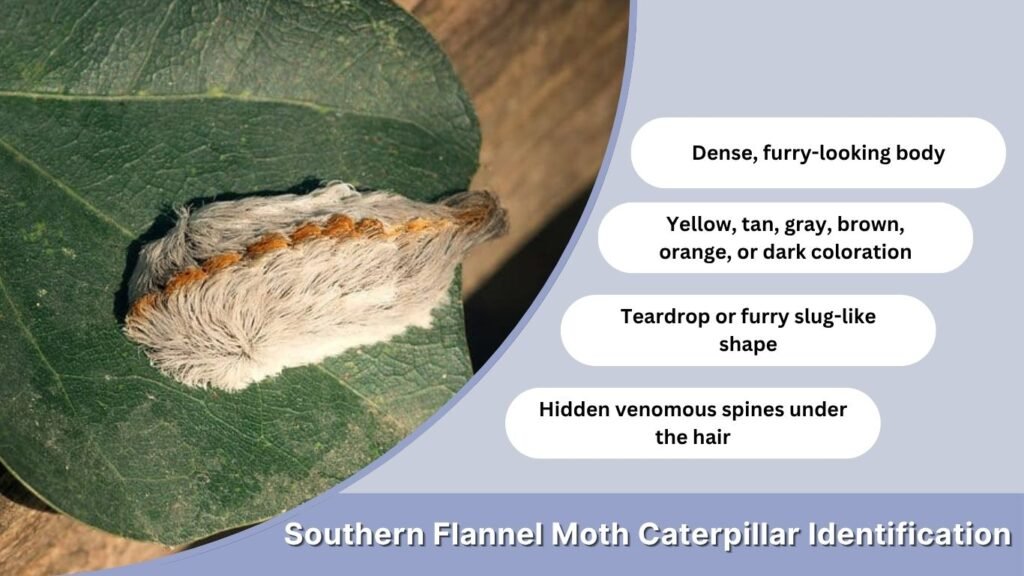
The southern flannel moth caterpillar can vary in color. It may be grayish white, golden brown, yellowish, orange-brown, or dark charcoal. Some individuals have a long, furry “tail” shape, while others look like a small clump of soft hair.
Identification Features
- Dense, furry-looking body
- Yellow, tan, gray, brown, orange, or dark coloration
- Teardrop or furry slug-like shape
- Hidden venomous spines under the hair
- Often found on trees and shrubs
- May resemble a tiny wig, cotton ball, or “Donald Trump hair” caterpillar
- Adult moth is fuzzy but not dangerous like the caterpillar
| Feature | Southern Flannel Moth Caterpillar |
| Scientific name | Megalopyge opercularis |
| Other names | Puss caterpillar, tree asp, asp caterpillar |
| Main danger | Venomous sting from hidden spines |
| Common colors | Yellow, tan, gray, orange-brown, charcoal |
| Adult form | Southern flannel moth |
| Touch safely? | No, avoid direct contact |
Is the Flannel Moth Caterpillar Poisonous?
Yes, the flannel moth caterpillar is venomous. People often say “poisonous,” but the more accurate word is venomous because the caterpillar injects venom through hidden spines when touched.
It does not bite like a mosquito or spider. The pain comes from contact with the spines under the fur. Even a light brush against the caterpillar may cause a painful reaction.
Flannel Moth Caterpillar Sting
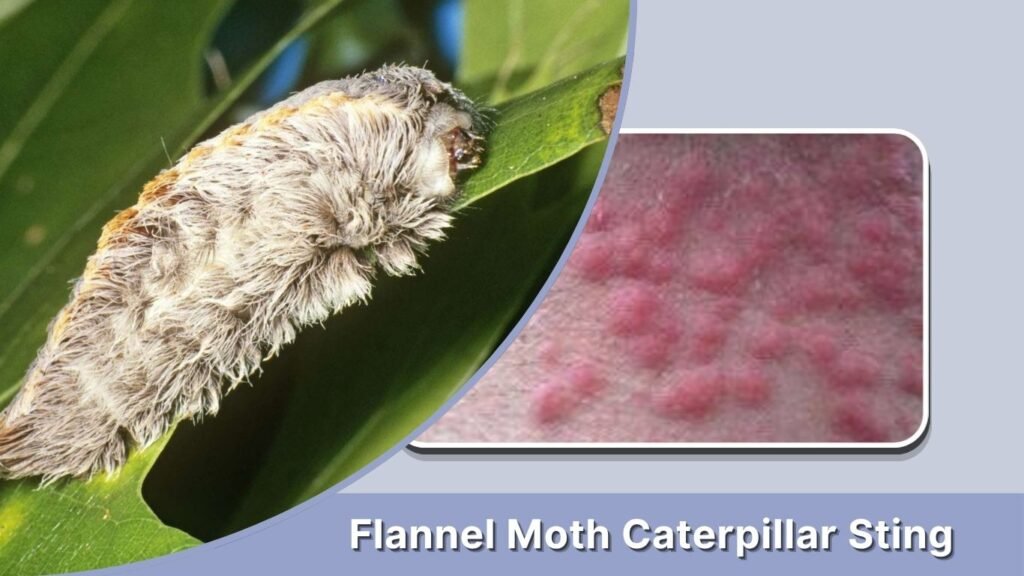
A flannel moth caterpillar sting can be extremely painful. Texas A&M AgriLife Extension recommends using an ice pack and oral antihistamines for itching and burning, and removing embedded spines with tape when possible. It also advises seeing a physician immediately for allergic reactions such as generalized itching or difficulty breathing.
Common Sting Symptoms
- Sudden burning pain
- Redness and swelling
- Rash or welts
- Blisters in some cases
- Pain spreading up the arm or leg
- Headache
- Nausea or vomiting
- Stomach pain
- Swollen lymph nodes
- Chest pain or breathing trouble in severe cases
Clemson Extension notes that symptoms can include swelling, blisters, burning, rash, nausea, vomiting, headache, lymph node irritation, and rarely anaphylaxis or chest pain.
Flannel Moth Caterpillar Sting Treatment
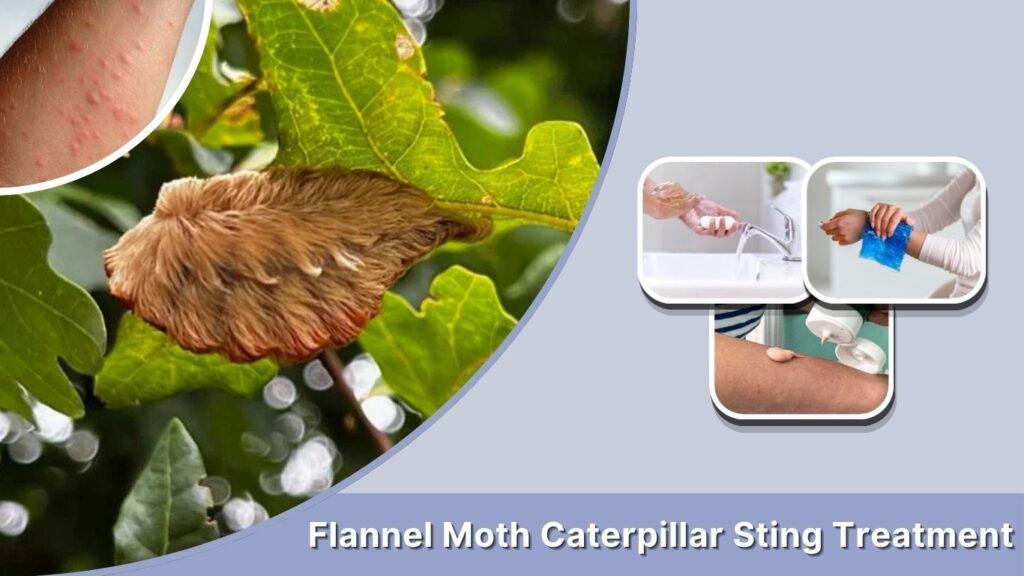
A sting from a flannel moth caterpillar can be serious, especially for children, allergic people, or anyone with breathing symptoms. Basic first aid may help, but medical care is needed for severe reactions.
First Aid Steps
- Do not rub the sting area.
- Wash the area with soap and water.
- Use tape to gently remove embedded hairs or spines.
- Apply an ice pack to reduce pain and swelling.
- Use calamine lotion or hydrocortisone cream for itching.
- Consider an oral antihistamine for itching or burning.
- Seek medical help for severe pain, chest pain, breathing trouble, widespread rash, or allergic symptoms.
Merck Manual also lists washing the sting, using tape to remove hairs, applying rubbing alcohol, baking soda slurry, calamine lotion, and ice packs as possible pain-relief measures.
Flannel Moth Caterpillar Bite vs Sting
A flannel moth caterpillar does not truly bite people. The injury is a sting caused by venomous spines hidden beneath the hair. The caterpillar may look soft, but the fur is a warning sign, not an invitation to touch.
For SEO and common searches, people may type “flannel moth caterpillar bite,” but “sting” is the correct term.
Southern Flannel Moth Caterpillar Range
The southern flannel moth caterpillar is found mainly in the southeastern and south-central United States. It is commonly associated with states such as Florida, Georgia, Texas, Louisiana, and nearby regions. Reports also occur farther north and west depending on species, season, and local conditions.
The species is often mentioned in the eastern United States from New Jersey to Florida and westward toward Texas and Arizona.
Common Locations
- Florida
- Georgia
- Texas
- Louisiana
- South Carolina
- Tennessee
- Maryland
- Parts of the eastern U.S.
- Some records farther west, including Arizona
- Warm wooded or suburban areas
Flannel Moth Caterpillar Habitat
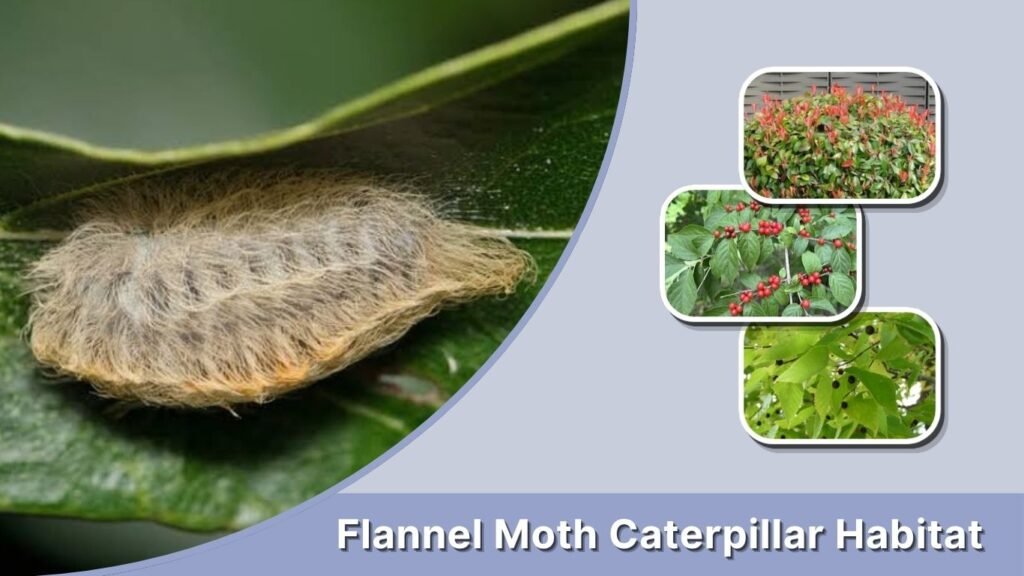
Flannel moth caterpillars are often found on trees, shrubs, and woody plants. They may appear in yards, parks, school grounds, woodland edges, and gardens.
Host Trees and Plants
- Oak
- Elm
- Hackberry
- Maple
- Sycamore
- Citrus
- Rose
- Shrubs
- Ornamental trees
They may also crawl onto fences, outdoor furniture, walls, or porches while searching for a place to pupate.
White Flannel Moth Caterpillar
The white flannel moth caterpillar is another stinging species in the flannel moth family. It is not the same as the southern flannel moth caterpillar. White flannel moth caterpillars often have a flatter appearance with noticeable dark and light markings.
White flannel moth caterpillars can also sting, so they should not be handled. If a fuzzy or unusual caterpillar is found, treat it as potentially irritating unless confidently identified.
Black-Waved Flannel Moth Caterpillar
The black-waved flannel moth caterpillar is another related species. Like other flannel moth caterpillars, it may have irritating or stinging hairs. The adult moth has dark wavy markings, which gives the species its common name.
Because many flannel moth caterpillars can sting, the safest rule is simple: do not touch hairy flannel moth caterpillars with bare hands.
Yellow Flannel Moth Caterpillar
Many southern flannel moth caterpillars look yellow, tan, or golden. These are often the ones people notice most because they look like soft fur. The yellow color does not mean they are safe.
A yellow flannel moth caterpillar can still have venomous spines hidden under the hairs. Avoid touching it, even if it looks harmless.
Flannel Moth Caterpillar Size
Flannel moth caterpillars are usually small to medium-sized, but their dense hair makes them look larger. The southern flannel moth caterpillar may look like a small furry lump, often around an inch long when mature, though size can vary by stage and species.
Young caterpillars may appear smaller, curlier, and lighter colored, while older ones become larger and more densely hairy.
Flannel Moth Caterpillar Life Cycle
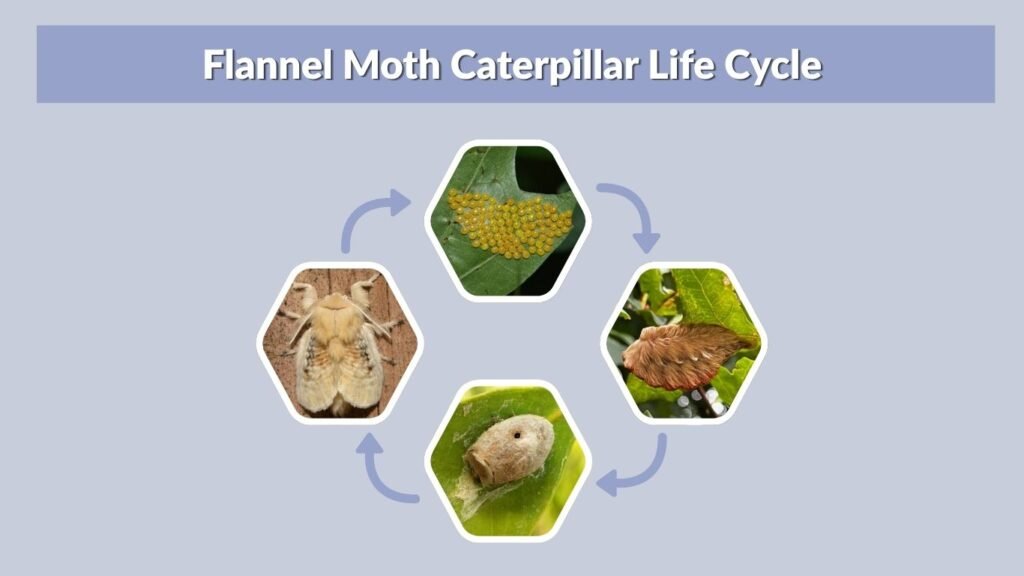
The flannel moth goes through complete metamorphosis: egg, caterpillar, cocoon/pupa, and adult moth.
| Stage | What Happens |
| Egg | Female moth lays eggs on host plants |
| Caterpillar | Larva feeds and carries venomous spines |
| Cocoon | Caterpillar spins a protective cocoon |
| Pupa | It changes inside the cocoon |
| Adult moth | Fuzzy moth emerges and reproduces |
The adult moth is furry but does not sting like the caterpillar. The main danger is the larval stage.
Flannel Moth Caterpillar Adaptations
The flannel moth caterpillar’s most important adaptation is defense. Its soft-looking hairs hide venomous spines, which protect it from predators. The caterpillar’s fuzzy appearance may also discourage birds and mammals from eating it.
Key Adaptations
- Venomous spines for defense
- Hairy covering that hides the spines
- Camouflage on bark, leaves, and branches
- Variable colors that blend with surroundings
- Slow movement that helps it stay unnoticed
How to Get Rid of Southern Flannel Moth Caterpillars
The safest method is careful removal without touching the caterpillar. Do not crush it with bare hands, and do not let children or pets play near it.
Safe Control Tips
- Wear thick gloves, long sleeves, and eye protection.
- Use a stick, cardboard, or tool to move the caterpillar.
- Place it in soapy water if removal is necessary.
- Inspect outdoor furniture, play areas, and porches.
- Avoid brushing against host trees and shrubs.
- Teach children not to touch fuzzy caterpillars.
- For heavy infestations, contact local extension services or pest professionals.
Avoid broad insecticide use unless necessary. Sprays can also harm beneficial insects, pollinators, and predators.
Flannel Moth Caterpillar in Florida, Georgia, and Texas
Flannel moth caterpillars are especially relevant in warm southern states. Florida, Georgia, and Texas commonly report southern flannel moth caterpillar encounters. In Texas, the caterpillar is often called an asp, and Texas A&M includes it among stinging caterpillars that can cause painful reactions.
People in these states should be careful when gardening, pruning trees, sitting under host trees, or letting children play near low branches.
FAQs
Is the southern flannel moth caterpillar poisonous?
Yes, it is venomous. The caterpillar has hidden venomous spines under its soft hair. Touching it can cause intense pain, rash, swelling, nausea, and other symptoms. It does not bite; the injury comes from a sting.
What does a flannel moth caterpillar sting feel like?
A sting can feel like sudden burning, sharp pain, or intense throbbing. Pain may spread from the contact area up the arm or leg. Some people also develop swelling, rash, headache, nausea, or more serious allergic symptoms.
How do you treat a flannel moth caterpillar sting?
Wash the area, remove embedded spines with tape, apply ice, and use anti-itch treatments if needed. Antihistamines may help itching. Seek medical care for severe pain, chest pain, breathing trouble, widespread rash, or allergic reactions.
Where do southern flannel moth caterpillars live?
They live mostly in warm parts of the southern and eastern United States, including Florida, Georgia, Texas, Louisiana, and nearby areas. They are often found on trees and shrubs such as oak, elm, citrus, hackberry, and ornamental plants.
How do you get rid of flannel moth caterpillars?
Do not touch them bare-handed. Wear gloves and use a tool, cardboard, or stick to remove them. Check outdoor furniture, porches, and children’s play areas. For many caterpillars, contact a pest professional or local extension office.
