
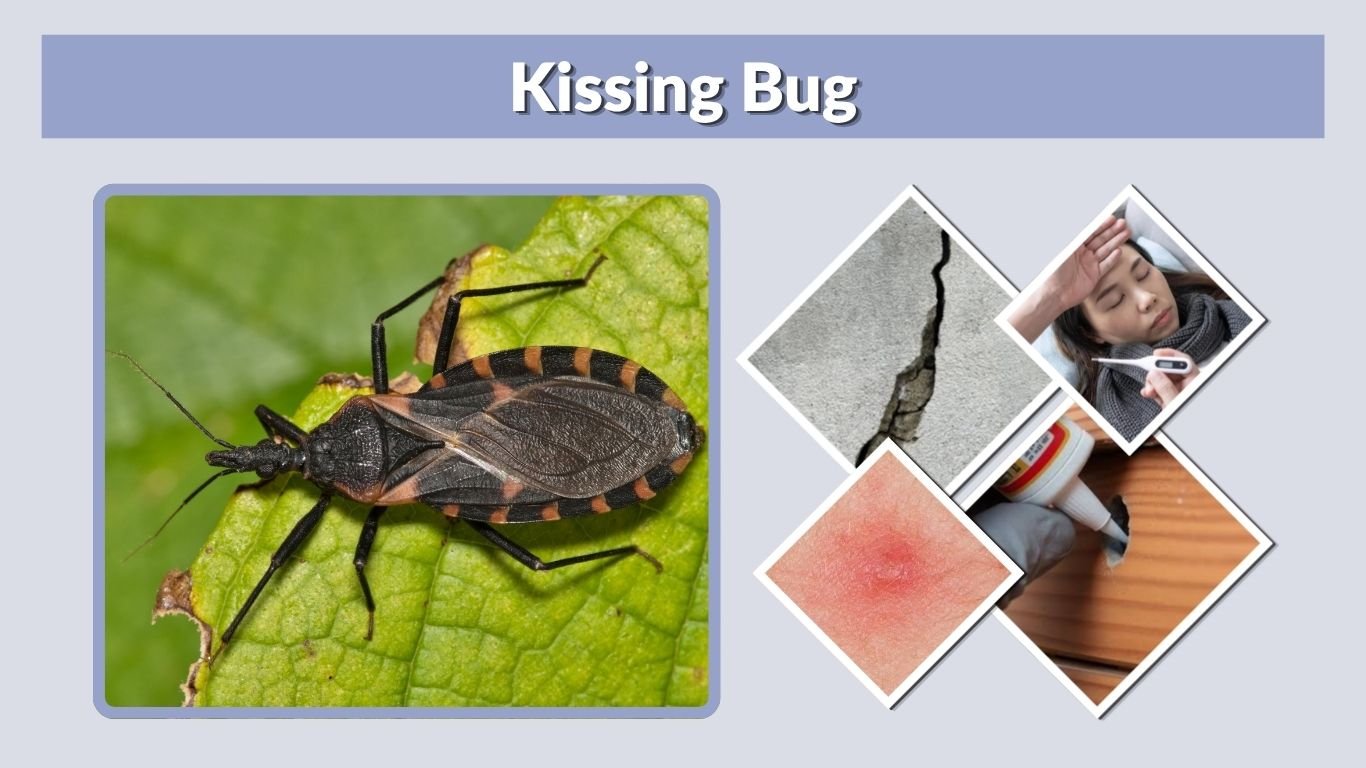
The kissing bug is a blood-feeding insect best known for its possible connection to Chagas disease. Although its name sounds harmless, finding one inside or around your home deserves careful attention. These insects usually become active at night and may feed on sleeping people, pets, and wild animals. However, seeing a kissing bug does not automatically mean that you have been infected. Learning how to identify the insect, recognize a bite, understand the health risks, and prevent entry can help you respond safely.
What Is a Kissing Bug?
Kissing bugs are members of the triatomine group, a subfamily of assassin bugs. They are also called cone-nosed bugs, triatomine bugs, vampire bugs, and sometimes “kiss-me bugs.”
They received their common name because some species feed on exposed skin around a sleeping person’s face, including areas near the lips or eyes. However, they may bite other exposed parts of the body as well.
Kissing bugs feed on blood from:
- Humans
- Dogs and cats
- Rodents
- Opossums
- Raccoons
- Livestock
- Other wild animals
Unlike many plant-feeding insects, kissing bugs have piercing mouthparts designed to draw blood.
What Does a Kissing Bug Look Like?
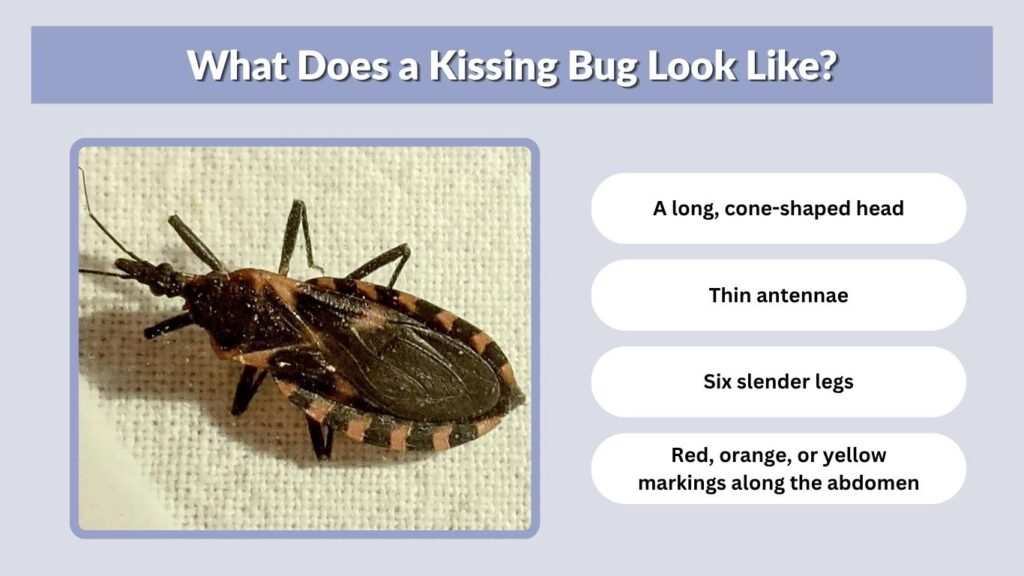
Correct identification is important because several harmless insects resemble kissing bugs.
Size and Body Shape
Adult kissing bugs are generally elongated and relatively flat. Depending on the species, they may measure approximately ½ inch to more than 1 inch long.
Common identification features include:
- A long, cone-shaped head
- Thin antennae
- Six slender legs
- A narrow connection between the head and body
- A dark brown or black body
- Red, orange, or yellow markings along the abdomen
- Wings that lie flat across the back
Kissing bugs found in the United States are commonly dark brown or black, with colored bands or stripes around the outer edge of the abdomen. Their cone-shaped heads and thin legs are especially useful identification clues.
Young kissing bugs, called nymphs, do not have fully developed wings. They may still have the same dark body and colored abdominal markings seen in adults.
Kissing Bug vs. Stink Bug
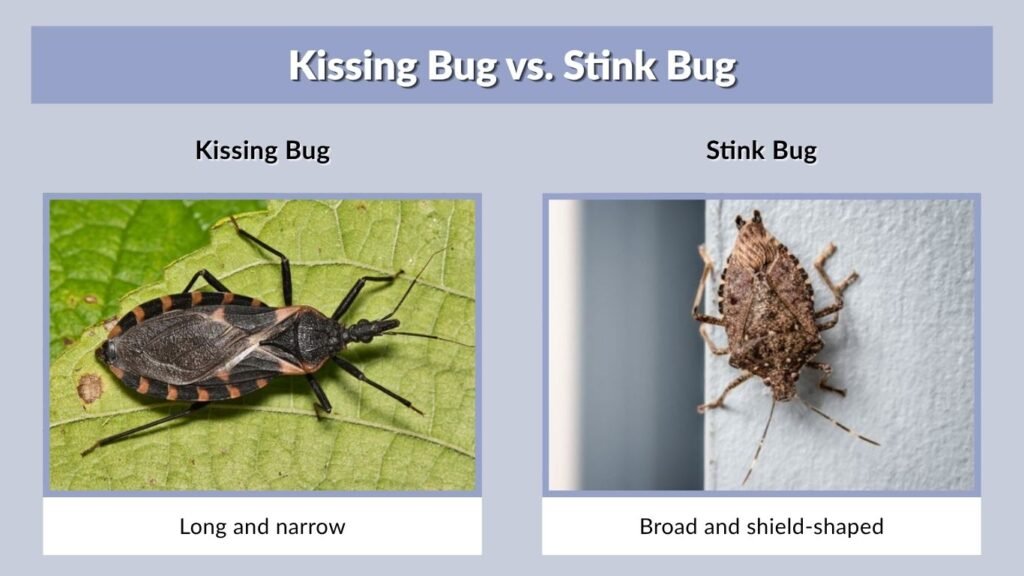
Stink bugs are frequently mistaken for kissing bugs because both can have brown bodies and visible markings.
| Feature | Kissing Bug | Stink Bug |
| Body shape | Long and narrow | Broad and shield-shaped |
| Head | Long and cone-shaped | Shorter and wider |
| Legs | Thin and relatively long | Shorter and thicker |
| Feeding habit | Feeds on blood | Usually feeds on plants |
| Odor | Not known mainly for odor | Releases a strong smell |
| Health concern | Some can carry a parasite | Generally not a disease vector |
A stink bug usually looks wider and more shield-like. A kissing bug has a noticeably narrow head and a longer body.
Kissing Bug vs. Assassin Bug
Kissing bugs belong to the assassin bug family, but not every assassin bug is a kissing bug.
Many assassin bugs hunt caterpillars, flies, beetles, and other insects. They can be beneficial predators in gardens. Kissing bugs are different because they primarily feed on vertebrate blood.
Wheel bugs, leaf-footed bugs, western conifer seed bugs, and masked hunters may also be confused with kissing bugs. Avoid identifying an insect solely by its color. Its head shape, body proportions, leg structure, and abdominal markings should all be considered.
Where Are Kissing Bugs Found?
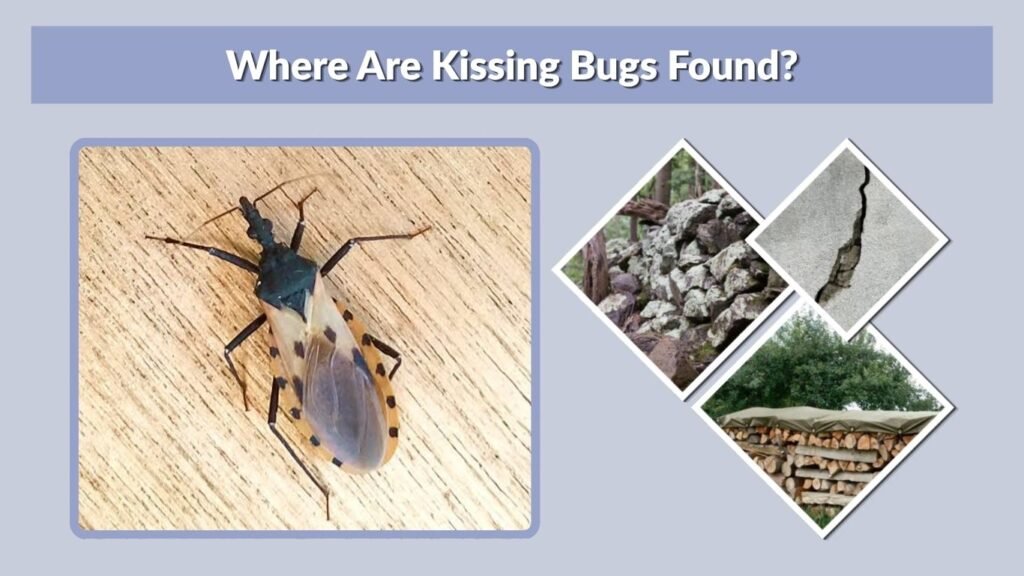
Kissing bugs occur throughout much of the Americas, particularly in Mexico, Central America, South America, and parts of the southern United States. Different species have also been recorded farther north.
In the United States, they are most often associated with warmer regions, including:
- Texas
- Arizona
- California
- New Mexico
- Florida
- Louisiana
- Georgia
- Other southern and southwestern states
Individual bugs may also be reported in states such as Ohio, Indiana, Michigan, and Colorado. Their presence in a state does not mean that every community has a high risk of Chagas disease.
Common Hiding Places
Kissing bugs are mainly nocturnal. During daylight hours, they may hide in:
- Cracks in walls
- Roof gaps
- Attics and crawl spaces
- Woodpiles
- Rock piles
- Animal shelters
- Rodent nests
- Dog kennels
- Chicken coops
- Brush and yard debris
- Spaces beneath porches
They are often connected with nests, dens, or resting areas used by wild animals. Outdoor lights may attract flying adults toward buildings at night.
Do Kissing Bugs Fly?
Adult kissing bugs have wings and many species can fly. They may fly toward porch lights, windows, houses, or animal shelters after dark.
Nymphs cannot fly because their wings have not developed. Both adults and nymphs can crawl through small openings around doors, windows, vents, roofs, and foundations.
Finding one adult near a light does not necessarily indicate an indoor infestation. Repeated sightings, nymphs inside the home, eggs, or fecal marks may indicate that the bugs are living nearby.
What Does a Kissing Bug Bite Look Like?
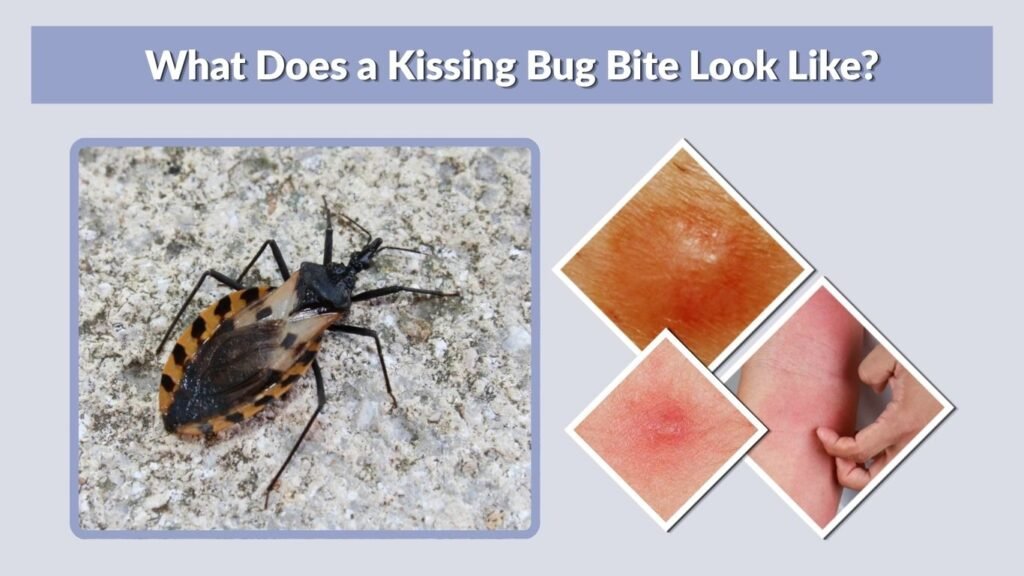
A kissing bug bite may resemble bites from mosquitoes, fleas, bed bugs, or other insects. The bite itself is often painless because the insect attempts to feed without waking its host.
Possible signs include:
- A small red bump
- Mild swelling
- Itching
- Localized warmth
- Several bites close together
- A raised welt
- Redness around the bite
Some people have little or no visible reaction. Others may develop a stronger allergic response.
Because the appearance is not unique, a bite mark alone cannot confirm that a kissing bug caused it.
Severe Bite Reactions
Rarely, a person may experience a serious allergic reaction. Seek emergency medical help for symptoms such as:
- Trouble breathing
- Swelling of the lips, tongue, face, or throat
- Dizziness or fainting
- Widespread hives
- Rapidly worsening swelling
Do not scratch the bite. Wash the area with soap and water, and speak with a healthcare professional when symptoms are severe, unusual, or persistent.
Are Kissing Bugs Dangerous?
The bite is usually not the main danger. The greater concern is that some kissing bugs carry Trypanosoma cruzi, the parasite responsible for Chagas disease.
Importantly, the parasite is generally not injected through the bite. An infected bug may pass the parasite in its feces after feeding. Infection can occur when contaminated feces are rubbed or scratched into:
- The bite wound
- Broken skin
- The eyes
- The mouth
- Another mucous membrane
The CDC explains that people can become infected after accidentally rubbing infected bug feces into a wound, eye, or mouth.
Therefore, being bitten does not automatically mean that a person has Chagas disease.
What Is Chagas Disease?
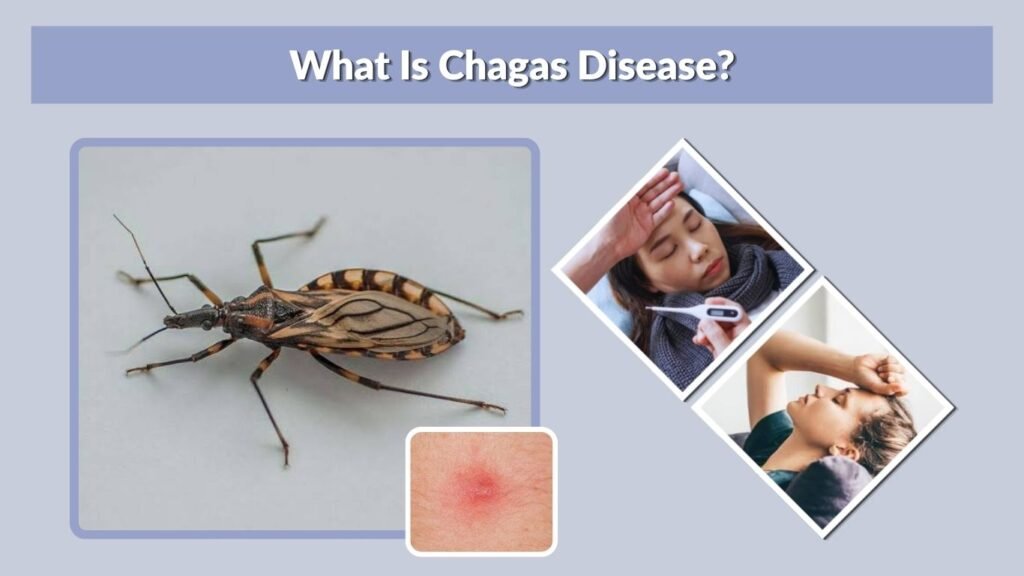
Chagas disease is an illness caused by the parasite Trypanosoma cruzi. It has an acute phase and a chronic phase. Many infected people experience no obvious symptoms during the early stage, making the infection difficult to recognize.
Acute Chagas Disease Symptoms
The acute stage may last for several weeks or months. Possible symptoms include:
- Fever
- Fatigue
- Headache
- Body aches
- Rash
- Swollen lymph nodes
- Loss of appetite
- Diarrhea or vomiting
- Swelling around the infection site
Swelling of one eyelid, known as Romaña’s sign, may occur when infected material enters the eye.
Chronic Chagas Disease Symptoms
After the acute stage, the infection may remain silent for years. Some infected people never develop serious complications. Others may eventually experience:
- Irregular heartbeat
- Enlargement of the heart
- Heart failure
- Difficulty swallowing
- Digestive enlargement or constipation
- Increased risk of stroke or sudden cardiac problems
Anyone who believes they may have been exposed should discuss the circumstances with a healthcare provider. Chagas disease cannot be diagnosed by examining a bite mark; blood testing and medical evaluation are needed.
What to Do After Finding a Kissing Bug
Do not crush the insect with your bare hands. Crushing it may expose you to its blood, feces, or internal material.
Instead:
- Place a container over the insect.
- Slide stiff paper beneath the container.
- Transfer the bug into a sealed jar or plastic bag.
- Avoid direct skin contact.
- Clean the surface where the insect was found.
- Photograph the top and side of the insect.
- Contact a local health department, extension office, or qualified pest professional for identification.
Some public-health or university programs accept specimens for identification or testing, although availability varies by location.
How to Get Rid of Kissing Bugs
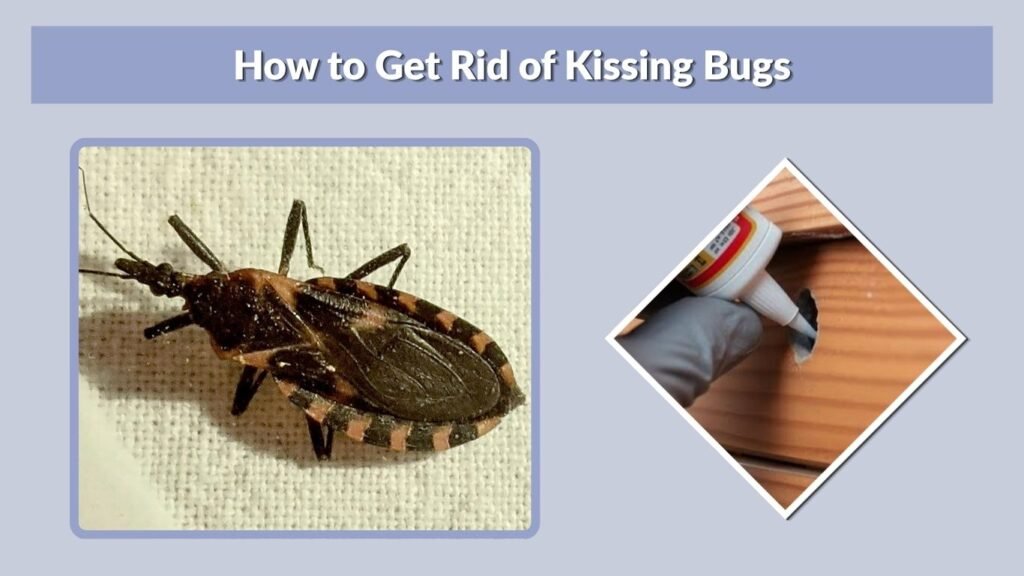
Effective control should focus on blocking entry, removing hiding places, and reducing wildlife activity near the building.
Seal Entry Points
Inspect the home and repair:
- Cracks in foundations
- Openings around pipes
- Gaps beneath doors
- Damaged window screens
- Loose roof edges
- Openings around vents
- Spaces in siding
- Attic and crawl-space gaps
Integrated pest management guidance emphasizes sealing cracks, repairing screens, and inspecting doors, windows, roofs, and walls.
Clean the Yard
Reduce places where kissing bugs and their animal hosts can hide:
- Move firewood away from the house.
- Remove unused lumber and debris.
- Clear thick brush near exterior walls.
- Eliminate abandoned animal nests safely.
- Keep outdoor pet areas clean.
- Trim branches touching the roof or siding.
- Repair rodent entry points.
- Avoid allowing pets to sleep outdoors at night in high-risk areas.
Wildlife dens, rodent nests, and animal resting places should be handled carefully and in accordance with local wildlife regulations.
Manage Outdoor Lighting
Because adult kissing bugs may be attracted to lights, reduce unnecessary exterior lighting near doors and windows. Place essential lights farther from entrances or consider insect-resistant outdoor bulbs.
Use Insecticides Carefully
A pesticide should never be selected only because it kills general insects. Check the label to confirm that the product is approved for the intended location and pest situation.
Follow all directions concerning:
- Application areas
- Protective equipment
- Pets and children
- Reentry times
- Food-contact surfaces
- Indoor or outdoor restrictions
For repeated sightings or suspected indoor breeding, contact a licensed pest-control professional. Broad spraying without correcting structural gaps and animal activity may provide only temporary relief.
FAQs
Can a kissing bug kill you?
A kissing bug bite is not normally fatal. However, some bugs can carry the parasite that causes Chagas disease. Untreated chronic Chagas disease may produce serious heart or digestive complications. A sighting or bite does not prove infection, so medical testing is required when meaningful exposure is suspected.
Do all kissing bugs carry Chagas disease?
No. Not every kissing bug carries Trypanosoma cruzi, and not every encounter causes transmission. Risk depends on the insect species, location, whether the bug is infected, its defecation behavior, and whether contaminated feces enter broken skin, an eye, or the mouth.
Are kissing bug bites painful?
Many people do not feel the bite while it happens. The area may later become itchy, red, or swollen. These reactions resemble many other insect bites, so the appearance of the mark cannot reliably identify the insect responsible.
Why are kissing bugs inside my house?
They may enter through gaps around doors, windows, roofs, vents, pipes, or foundations. Adults can also fly toward nighttime lights. Nearby rodent nests, wildlife shelters, woodpiles, kennels, chicken coops, or heavy debris may make the property more attractive.
Should I go to a doctor after seeing a kissing bug?
Simply seeing a bug does not always require medical treatment. Contact a healthcare provider when you were bitten, touched or crushed the insect, developed unexplained symptoms, had contaminated material near your eyes or mouth, or live in an area where infected kissing bugs are documented.
