
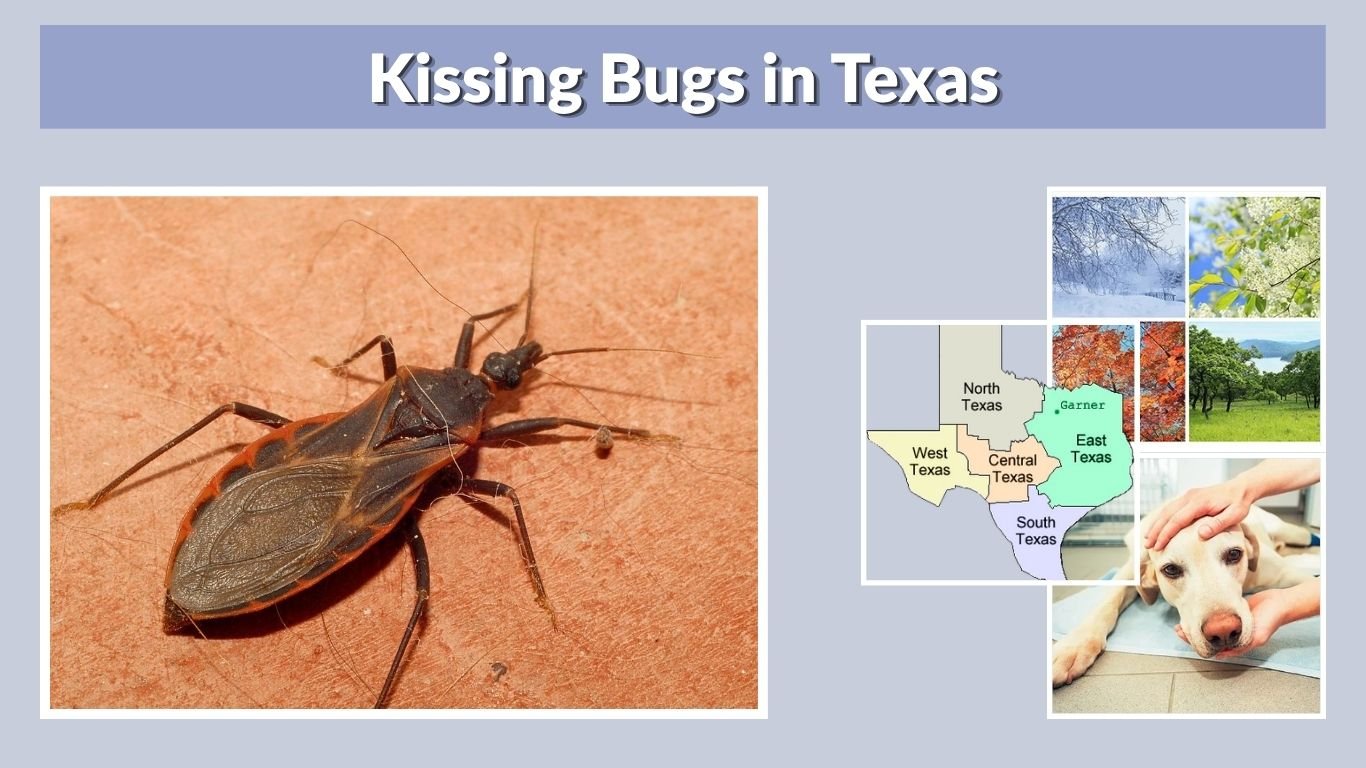
Kissing bugs are found in Texas, where several species live in warm outdoor habitats and feed on the blood of wildlife, pets, and occasionally humans. These insects are medically important because some carry Trypanosoma cruzi, the parasite that causes Chagas disease.
However, finding a kissing bug does not mean you have been infected. Understanding where Texas kissing bugs occur, how to recognize them, and what to do after finding one can help you respond without unnecessary panic.
Are There Kissing Bugs in Texas?
Yes. Texas is one of the U.S. states with the greatest number of kissing bug species and reported sightings. Kissing bugs are not new or recently introduced to Texas; they have existed in the southern United States for many years.
They are also called:
- Triatomine bugs
- Cone-nose bugs
- Blood-sucking conenose bugs
- Chinches
Texas A&M identifies several kissing bug species in the state, including Triatoma gerstaeckeri, Triatoma sanguisuga, Triatoma indictiva, Triatoma lecticularia, Triatoma rubida, and Triatoma protracta. Their ranges overlap, but certain species are more strongly associated with particular regions of Texas.
Where Are Kissing Bugs Found in Texas?
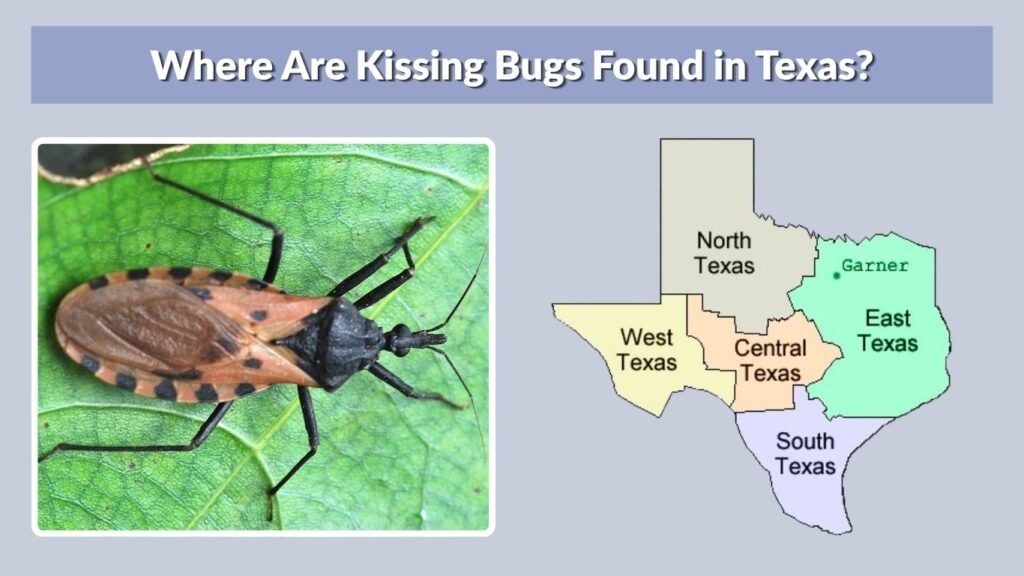
Kissing bugs have been documented across multiple parts of Texas. Their distribution depends on species, climate, wildlife hosts, shelter, and the availability of places to hide.
| Texas region | Species commonly associated with the region |
| South and West Texas | Triatoma gerstaeckeri |
| Central and North Texas | Triatoma sanguisuga |
| Central Texas | Triatoma indictiva and T. lecticularia |
| West Texas | Triatoma rubida and T. protracta |
These are general distribution patterns rather than strict boundaries. A species may occasionally be found outside its principal region.
South Texas
South Texas provides warm conditions and abundant wildlife hosts. Kissing bugs may shelter around woodrat nests, livestock facilities, dog kennels, hunting cabins, brush piles, and spaces beneath outdoor structures.
Triatoma gerstaeckeri is especially associated with southern and western parts of the state.
Central Texas
Central Texas has the greatest variety of kissing bug species documented within the state. Residents may encounter them around rural homes, wooded properties, rocky areas, animal shelters, and outdoor lights.
North and East Texas
Kissing bugs also occur in northern and eastern portions of Texas. Triatoma sanguisuga, sometimes called the eastern blood-sucking conenose bug, is commonly associated with central and northern Texas.
West Texas
West Texas species are adapted to dry environments where they may live near rodent burrows, rock piles, caves, animal dens, kennels, and rural buildings. Research around Big Bend National Park has documented kissing bugs feeding on dogs, humans, feral hogs, ringtails, woodrats, and birds.
Are Kissing Bugs Common in Houston, Dallas, and Austin?
Kissing bugs can potentially be encountered around major Texas metropolitan regions, including Houston, Dallas–Fort Worth, Austin, San Antonio, and El Paso. Encounters may be more likely in wooded suburbs, rural outskirts, properties near wildlife habitats, and homes with outdoor animal shelters.
Reported Chagas disease cases have occurred in counties containing or surrounding several major Texas cities. However, a human case does not prove that infection happened locally or that kissing bugs are common in every neighborhood. Texas data distinguish between locally acquired, imported, and unknown cases.
A Texas kissing bug map should therefore be interpreted as evidence of documented records or reports—not as a real-time infestation or risk map for individual homes.
What Does a Texas Kissing Bug Look Like?
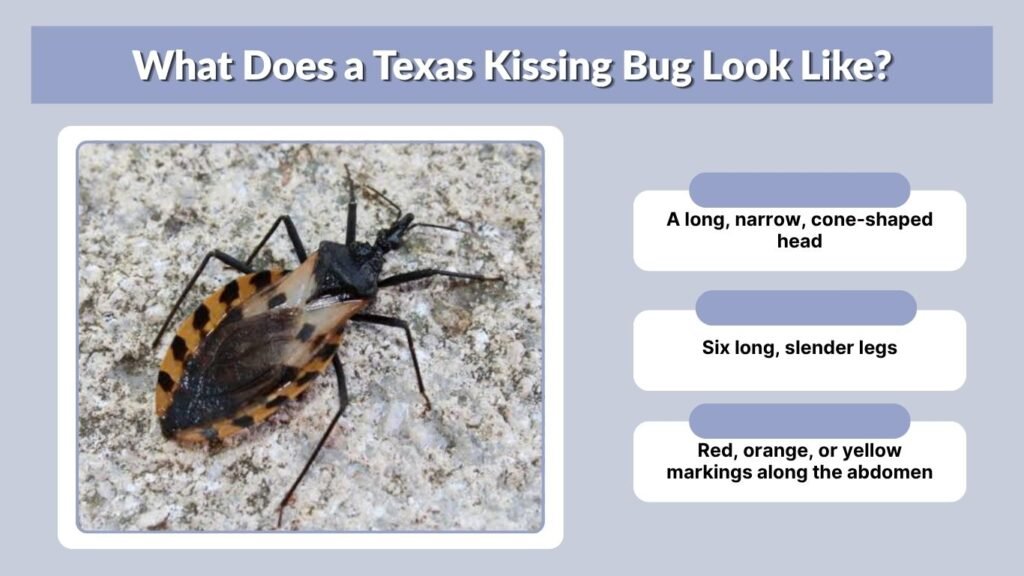
Adult kissing bugs are generally about one-half to one inch long. Their bodies are flattened and usually black or very dark brown.
Main Identification Features
Look for the following characteristics:
- A long, narrow, cone-shaped head
- Thin antennae
- Six long, slender legs
- A dark, flattened body
- Red, orange, or yellow markings along the abdomen
- A thin, straight mouthpart tucked beneath the body
- Wings covering the backs of adults
Only adult kissing bugs have functional wings and can fly. Young kissing bugs, called nymphs, do not have developed wings but still feed on blood.
The common Texas species Triatoma gerstaeckeri usually has yellow-orange markings around the outer edges of its abdomen. Triatoma sanguisuga generally has darker red markings.
Texas Bugs That Look Like Kissing Bugs
Many harmless or beneficial insects are mistaken for kissing bugs. Appearance alone can cause confusion because several Texas bugs have long bodies, dark wings, or orange markings.
Common look-alikes include:
- Leaf-footed bugs
- Wheel bugs
- Squash bugs
- Milkweed bugs
- Masked hunters
- Other assassin bugs
- Certain stink bugs
Leaf-footed bugs often have widened, leaf-shaped sections on their hind legs. Wheel bugs have a raised, gear-like structure on their backs. True kissing bugs have uniformly thin legs and a narrow, elongated head.
Avoid identifying an insect solely from its color. Take clear photographs showing its head, legs, back, and abdomen.
When Is Kissing Bug Season in Texas?
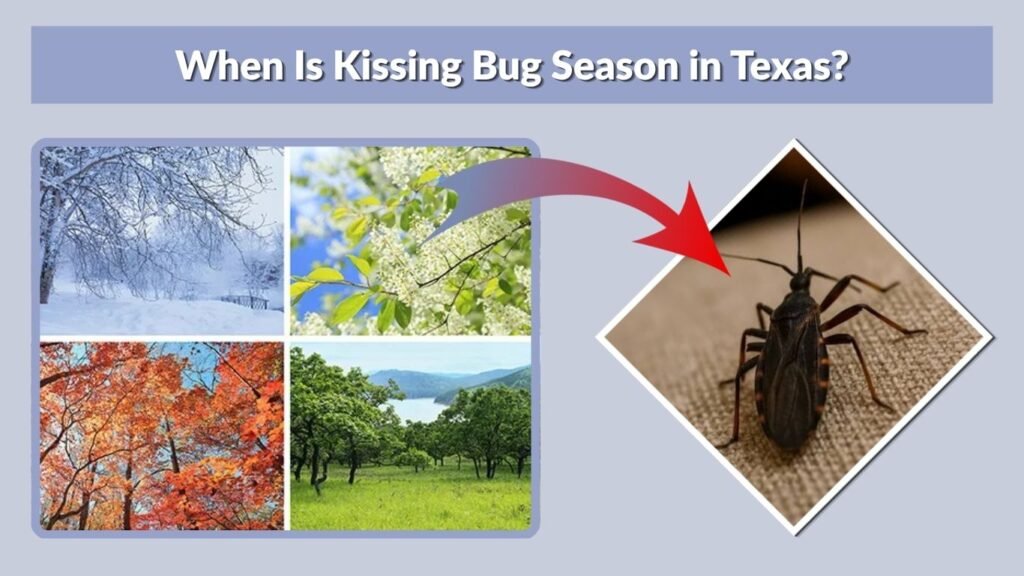
Texas kissing bugs are most active during the warmer months, generally from May through September. Reports often increase during early and midsummer, when adults fly in search of hosts and shelter.
The insects are primarily active at dusk and during the night. Adults may fly toward outdoor lights, illuminated windows, porches, or buildings. They may then enter through damaged screens, gaps beneath doors, vents, cracks, or open windows.
Kissing bugs can remain sheltered during cooler periods, particularly in animal nests, protected cracks, wood piles, and outdoor structures.
Are Texas Kissing Bugs Deadly?
A kissing bug bite is not normally deadly. Most bites are painless and may cause only redness, itching, or swelling.
The main concern is Chagas disease. An infected bug may release parasite-containing feces after feeding. Infection can occur when the feces are rubbed into the bite, broken skin, an eye, or the mouth. The parasite is not ordinarily injected through the bug’s saliva during the bite.
Most people with chronic Chagas disease remain symptom-free. However, approximately 20% to 30% may eventually develop heart or digestive complications, including abnormal heart rhythms, heart failure, enlargement of the esophagus or colon, and, in severe cases, sudden death.
Finding a bug does not mean transmission occurred. The insect must carry the parasite, and contaminated feces must enter the body.
Kissing Bug Bites in Texas
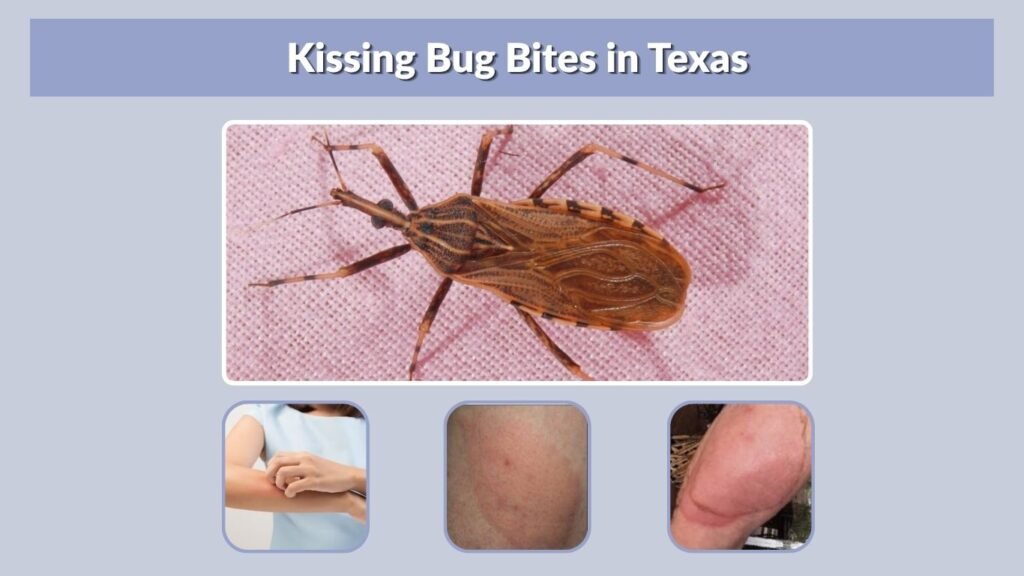
Kissing bug bites may produce:
- A small red bump
- Itching
- Mild swelling
- Local warmth
- A raised welt
- Several marks on exposed skin
Many people do not feel the initial bite because the bug’s feeding mouthpart is thin and its bite is generally painless.
Seek medical advice after confirmed or likely exposure if you develop fever, fatigue, body aches, unexplained swelling around one eye, increasing redness, breathing difficulty, or severe facial swelling.
Kissing Bugs and Dogs in Texas
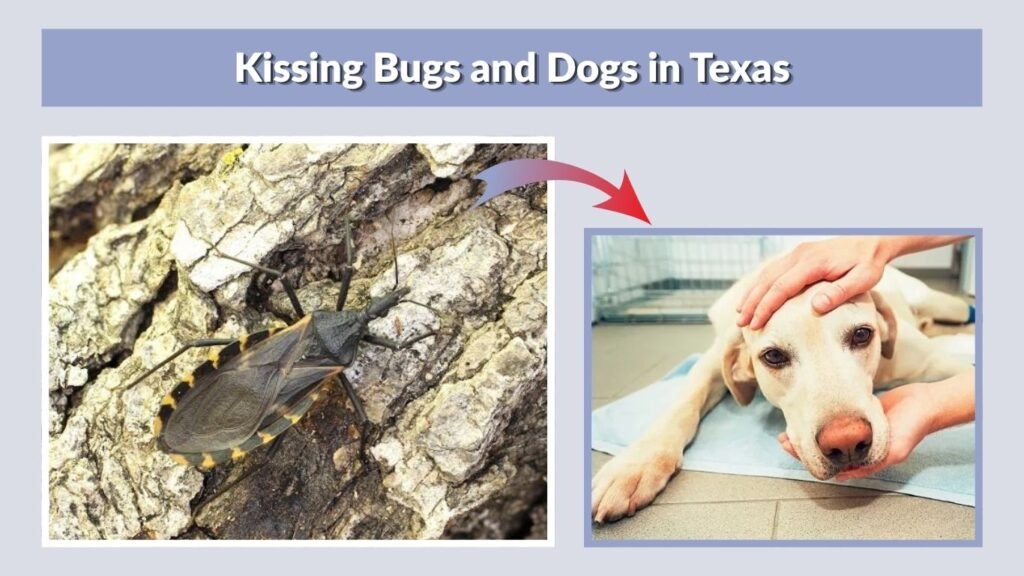
Dogs are particularly vulnerable because kissing bugs commonly gather around outdoor kennels and resting areas. Dogs can become infected when contaminated bug feces enter a wound or when they eat an infected bug.
Possible signs of canine Chagas disease include:
- Weakness or unusual tiredness
- Reduced exercise tolerance
- Coughing
- Difficulty breathing
- Fainting
- Abnormal heart rhythm
- Abdominal swelling
- Sudden collapse
Infection can be fatal in dogs. However, an infected dog does not directly transmit Chagas disease to people through ordinary contact.
What to Do After Finding a Kissing Bug
Do not pick up or crush the insect with bare hands. Use gloves, a plastic bag, or a container to collect it without direct contact.
Place the bug in a sealed container and record:
- Where it was found
- Whether it was indoors or outdoors
- The date and time
- Whether it contacted or bit a person
- Whether pets were nearby
Texas residents can send photographs to the Texas Department of State Health Services for identification. DSHS provides testing for Texas specimens associated with human exposure. Bugs found outdoors without human exposure may be reported to the Texas A&M community-science program.
How to Prevent Kissing Bugs in Texas Homes
Seal openings around doors, windows, walls, roofs, vents, and foundations. Repair damaged screens and reduce unnecessary outdoor lighting near entrances.
Remove potential shelters such as stacked wood, brush, rocks, and debris from immediately around the house. Clean pet bedding regularly and move outdoor kennels away from wildlife nests and dense vegetation.
Allowing dogs to sleep indoors can reduce their nighttime exposure. Repeated indoor sightings may require inspection by a licensed pest-control professional.
FAQs
Do kissing bugs live throughout Texas?
Several species live across southern, western, central, northern, and eastern Texas. Distribution varies by species, and they are generally more noticeable around wildlife habitat, outdoor animal shelters, rural structures, and homes with accessible cracks.
Are kissing bugs found in San Antonio?
Kissing bugs occur in South and Central Texas, so they may be encountered around San Antonio and Bexar County. Their presence does not mean every neighborhood has them or that every bug carries the Chagas parasite.
Are kissing bugs found in North Texas?
Yes. Triatoma sanguisuga is especially associated with central and northern Texas. Residents should distinguish it from common look-alikes such as leaf-footed bugs, wheel bugs, and other assassin bugs.
Can a Texas kissing bug fly into your house?
Adult kissing bugs have wings and can fly, particularly during warm months. They may be attracted to lights and enter through open doors, torn screens, vents, or gaps. Nymphs cannot fly and move by crawling.
Should you kill a kissing bug?
Avoid crushing it with bare hands. Safely trap it in a sealed container using gloves or a plastic bag. Preserving the specimen may allow Texas health officials or researchers to identify and, in qualifying cases, test it.
