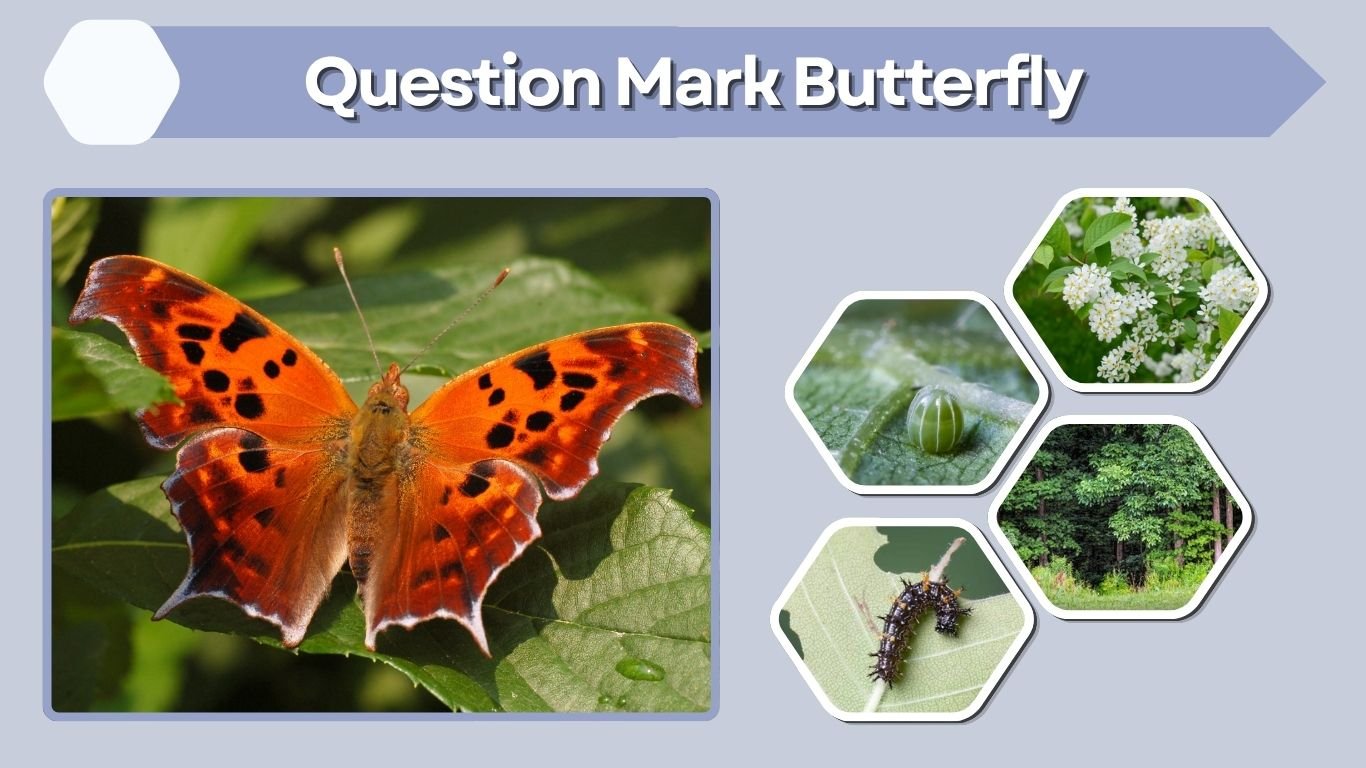
The question mark butterfly (Polygonia interrogationis) is a distinctive North American butterfly recognized by its orange wings, black spots, and unusual silver marking resembling a question mark. Commonly found in woodlands, parks, and suburban gardens, this butterfly is known for its seasonal color variations and remarkable camouflage. Understanding the question mark butterfly’s identification, caterpillar, host plants, life cycle, habitat, and differences from the comma butterfly can help nature enthusiasts recognize this fascinating species.
Question Mark Butterfly Identification
The question mark butterfly belongs to the Nymphalidae family, commonly known as brush-footed butterflies. Its jagged wing edges, hooked forewings, and orange coloration make it recognizable. However, its appearance can change significantly between summer and winter generations.
Physical Appearance and Size
- Scientific Name: Polygonia interrogationis
- Family: Nymphalidae
- Wingspan: Approximately 2.25–3 inches (5.7–7.6 cm).
- Upper Wing Color: Orange to reddish-orange with black markings.
- Underside: Mottled brown or gray, resembling dried leaves.
- Wing Shape: Jagged edges with hooked forewing tips.
- Distinctive Marking: A silvery question-mark-shaped spot beneath each hindwing.
The unusual wing shape provides excellent camouflage when the butterfly rests with its wings closed.
Why Is It Called a Question Mark Butterfly?
The name comes from a small silver marking on the underside of the hindwing. This marking usually consists of a curved line and a separate dot, resembling a punctuation mark.
The question mark is particularly visible when the butterfly closes its wings. In some individuals, the dot may be reduced or difficult to see.
Summer vs. Winter Form
Question mark butterflies exhibit two seasonal color forms.
The summer form generally has orange forewings and predominantly dark hindwings. The winter form displays more orange on its hindwings and often has longer, violet-tipped tails.
These variations can make individuals of the same species appear surprisingly different.
Question Mark Butterfly Habitat and Range
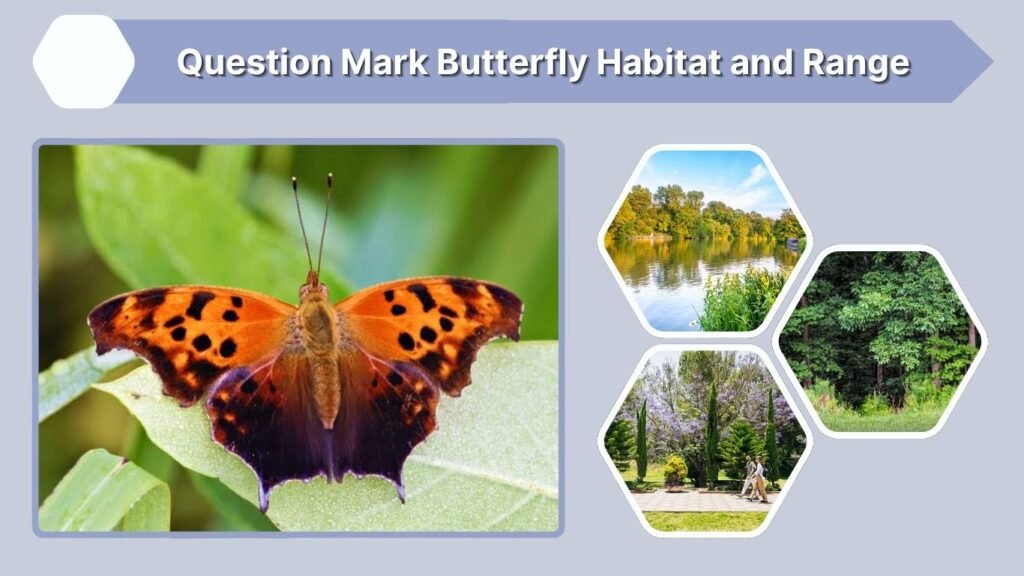
Question mark butterflies inhabit wooded environments across much of eastern North America. They prefer areas with suitable caterpillar host plants and access to tree sap, fermenting fruit, and protected resting locations.
Where Do Question Mark Butterflies Live?
The question mark butterfly occurs throughout much of the eastern United States and southern Canada, extending into parts of the Southwest and Mexico.
It can be found in states including Michigan, Wisconsin, Ohio, Illinois, New York, Indiana, and Texas.
Common habitats include deciduous forests, woodland edges, parks, suburban gardens, and riverside vegetation.
What Do Question Mark Butterflies Eat?
Adult question mark butterflies primarily consume fermenting fruit, tree sap, animal droppings, and occasionally carrion.
Unlike many nectar-feeding butterflies, they visit flowers less frequently, although they may feed on nectar when other food sources are unavailable.
These unusual feeding habits help explain why adults are often observed near fallen fruit or damaged trees.
Question Mark Butterfly Life Cycle
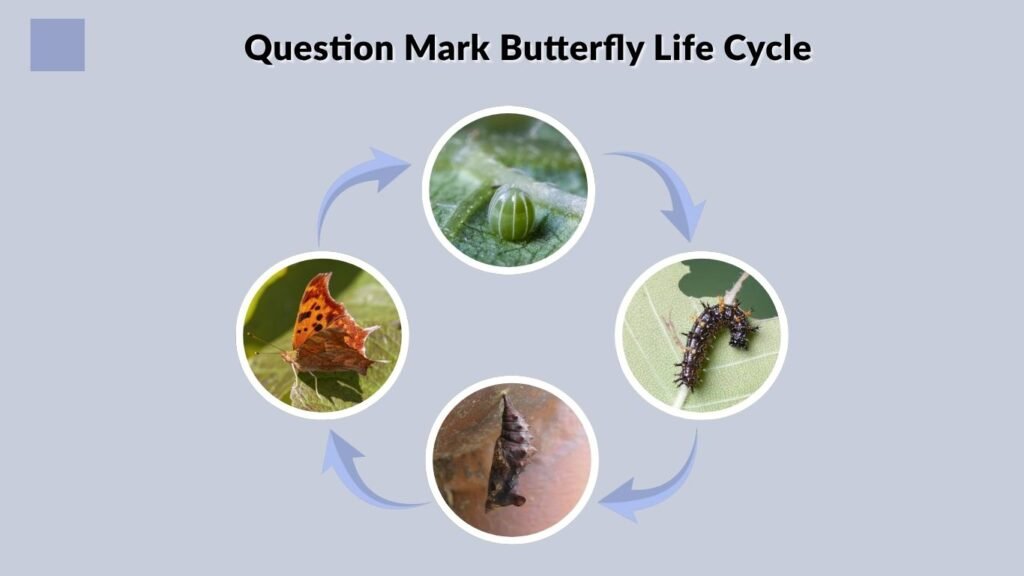
The question mark butterfly undergoes complete metamorphosis, passing through egg, caterpillar, chrysalis, and adult stages. It typically produces two generations annually in much of its range, although seasonal development depends on local environmental conditions.
1. Question Mark Butterfly Eggs
Female question mark butterflies lay small green eggs, either individually or in short stacks.
The eggs have distinctive vertical ridges and may be placed beneath leaves of suitable host plants or nearby vegetation.
After hatching, young caterpillars search for appropriate foliage and begin feeding.
2. Question Mark Butterfly Caterpillar
Question mark butterfly caterpillars have dark bodies covered with rows of branched spines.
Their appearance varies considerably, with some individuals displaying prominent yellow, white, or orange markings.
Mature caterpillars can reach approximately 1.4 inches in length.
Unlike certain social caterpillars, question mark larvae generally feed alone and do not construct communal silk nests.
3. Question Mark Butterfly Chrysalis
After completing their growth, caterpillars enter the pupal stage.
The chrysalis is usually tan or dark brown with an angular appearance and small metallic-looking spots.
It hangs from a silk attachment while the caterpillar transforms into an adult butterfly.
The duration of this stage varies with temperature and other environmental conditions.
4. Adult Butterfly and Hibernation
Adults emerging later in the season may overwinter in protected shelters, including tree cavities and other sheltered spaces.
Some individuals also migrate southward before winter.
During warmer spring weather, surviving adults become active again, feed, and reproduce.
Question Mark Butterfly Host Plants
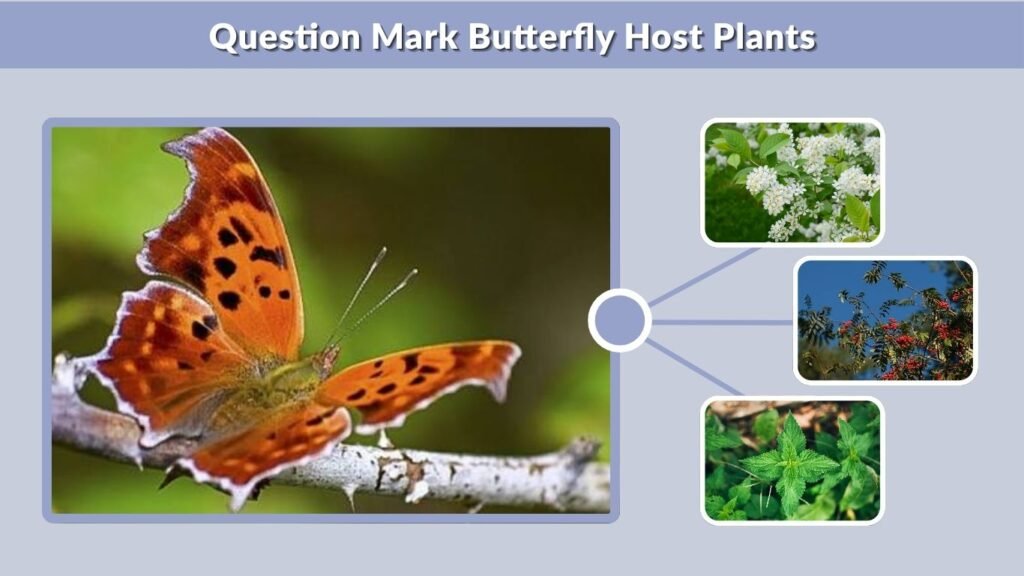
Host plants are essential because question mark butterfly caterpillars depend on particular leaves for growth. Although adult butterflies feed on various liquids, their larvae require suitable vegetation to complete development.
Common Host Plants
Important host plants include:
- American elm
- Winged elm
- Hackberry
- Sugarberry
- Stinging nettle
- False nettle
- Hops
Elm trees are particularly important hosts, although caterpillars also use several other plant species.
Preserving native host plants can help maintain suitable breeding habitats for these butterflies.
Question Mark vs. Comma Butterfly
The question mark butterfly is frequently confused with the eastern comma butterfly (Polygonia comma). Both belong to the same genus and share orange wings, irregular margins, and silver markings underneath their hindwings.
Key Identification Differences
| Feature | Question Mark | Eastern Comma |
| Scientific name | Polygonia interrogationis | Polygonia comma |
| Wingspan | 2.25–3 inches | 1.75–2.5 inches |
| Silver marking | Curved mark with separate dot | Comma-shaped mark without separate dot |
| Forewing pattern | Additional dark dash above three spots | Lacks additional dash |
| Wing shape | Strongly hooked forewing | Generally less strongly hooked |
| Hindwing tail | Usually longer | Usually shorter |
The underside silver marking is the easiest identification clue. However, because the question mark’s dot is sometimes faint or absent, examining the forewing markings and overall wing shape provides additional confirmation.
Question Mark Butterfly Meaning and Symbolism
Question mark butterflies sometimes attract symbolic interpretations because of their unusual name and seasonal transformations. Like other butterflies, they may be associated with change, renewal, and personal growth.
Spiritual Meaning of a Question Mark Butterfly
Some people interpret seeing a question mark butterfly as a reminder of curiosity, uncertainty, transformation, or new beginnings.
Its ability to survive winter may also inspire associations with perseverance.
These interpretations are personal or cultural beliefs rather than scientifically established meanings.
FAQs
1. Is the Question Mark Butterfly Rare?
The question mark butterfly is not considered globally rare or endangered. It is widespread across much of eastern North America, although local abundance varies. Populations may be less common near the edges of their range or in areas where suitable host plants and woodland habitats are limited.
2. Are Question Mark Butterfly Caterpillars Poisonous?
Question mark butterfly caterpillars are not generally considered venomous or dangerous to humans. However, their branched spines may cause minor mechanical irritation if handled. Observing them without touching is preferable, especially for people with sensitive skin or a history of reactions to insect contact.
3. What Is the Difference Between a Question Mark and a Comma Butterfly?
The question mark butterfly usually has a curved silver marking accompanied by a separate dot beneath its hindwing. The eastern comma has a single curved marking without the dot. Question marks are also typically larger and possess an additional dark dash on their upper forewings.
4. Do Question Mark Butterflies Hibernate?
Yes. Question mark butterflies can overwinter as adults in sheltered locations. Their winter form survives periods of cold weather and becomes active during warmer conditions. Some individuals also migrate southward before winter, so overwintering behavior can vary depending on geography and environmental conditions.
5. What Attracts Question Mark Butterflies?
Question mark butterflies are attracted to fermenting fruit, tree sap, and suitable woodland habitats. Preserving native elm, hackberry, and nettle plants supports their caterpillars. Maintaining pesticide-free vegetation and natural shelter can also make gardens and wooded areas more suitable for these butterflies.