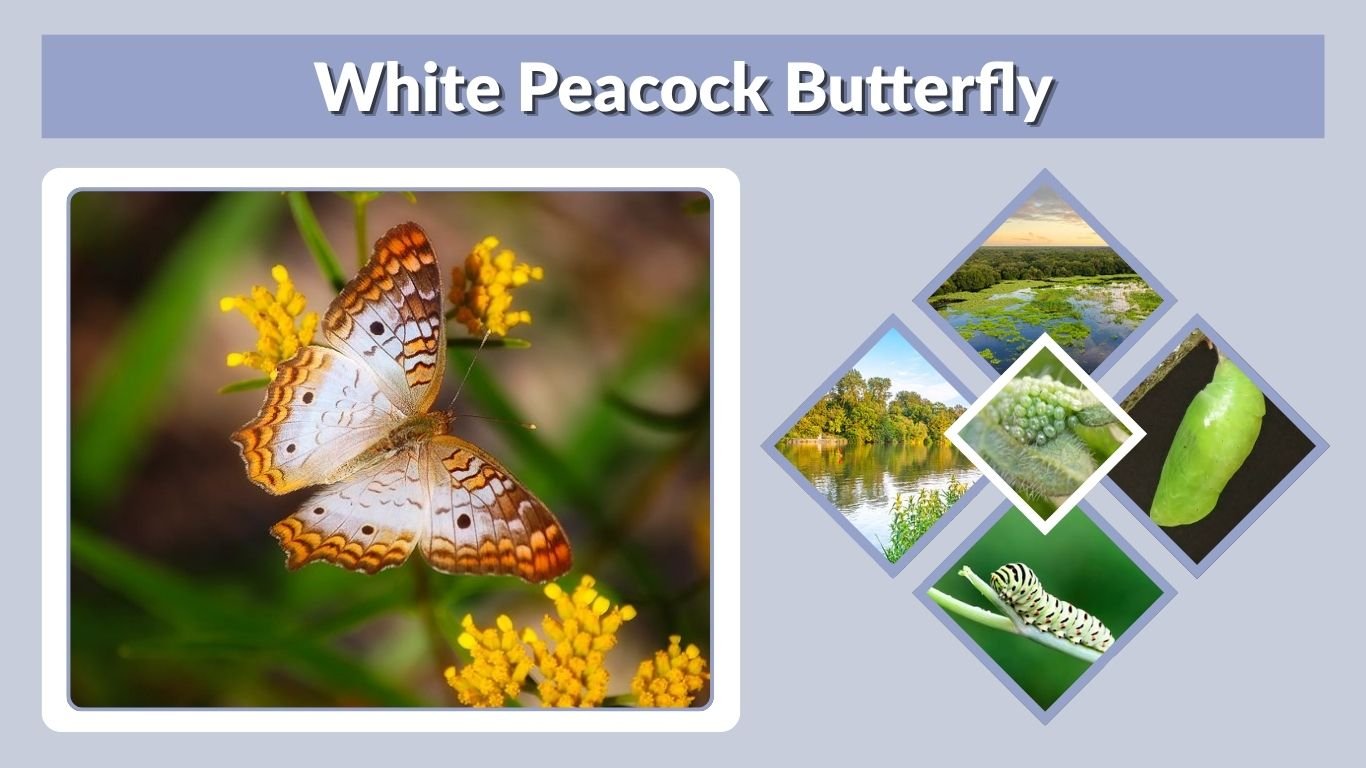
The white peacock butterfly (Anartia jatrophae) is a beautiful butterfly known for its creamy-white wings, delicate brown patterns, and distinctive black eyespots. Commonly found in Florida and other warm regions of the Americas, this butterfly prefers sunny, moist habitats with abundant flowering plants. Beyond its attractive appearance, it plays an important role in pollination. Understanding its identification, host plants, caterpillar stages, habitat, and life cycle reveals what makes this butterfly so fascinating.
White Peacock Butterfly Identification
The white peacock butterfly belongs to the brush-footed butterfly family, Nymphalidae. Its light-colored wings, decorated with dark spots and orange-brown markings, make it recognizable among Florida butterflies. Although individuals may vary in color intensity, their general wing patterns remain consistent. Understanding these physical features helps distinguish this species from other pale-colored butterflies commonly found in gardens and wetlands.
Physical Characteristics
- Scientific Name: Anartia jatrophae
- Family: Nymphalidae
- Color: Creamy white with brown and orange markings.
- Wingspan: Approximately 2–2.75 inches (5–7 cm).
- Forewings: Each has a prominent round black spot.
- Hindwings: Usually display two black spots and scalloped edges.
- Body: Slender, with fine hairs and club-shaped antennae.
- Wing Pattern: Brown wavy lines and orange-brown markings near the edges.
These markings create a delicate appearance, especially when the butterfly spreads its wings while resting in sunlight.
Male vs. Female White Peacock Butterfly
Male and female white peacock butterflies look remarkably similar. Both have pale wings decorated with dark markings, making identification by appearance alone difficult.
Behavior provides additional clues. Males frequently patrol territories containing suitable host plants, while females spend time searching for places to lay eggs. Females may have slightly fuller abdomens, but this feature is not always reliable for identification.
White Peacock Butterfly Habitat and Range
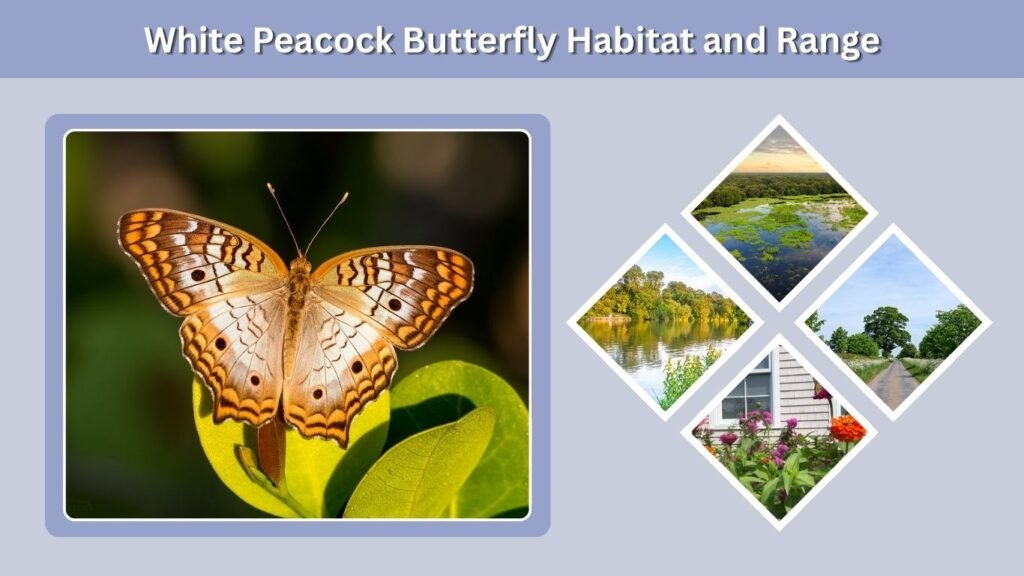
White peacock butterflies prefer warm, sunny environments with moisture, low vegetation, and flowering plants. Unlike many forest-dwelling butterflies, they frequently inhabit open areas near water. Their preferred habitats provide both nectar sources for adults and suitable leaves for developing caterpillars. These conditions help explain their abundance in tropical and subtropical regions throughout the Americas.
Where Do White Peacock Butterflies Live?
White peacock butterflies commonly inhabit:
- Wetlands, marshes, and pond edges.
- Riverbanks and drainage canals.
- Open grasslands and weedy fields.
- Roadsides with flowering vegetation.
- Parks and butterfly gardens.
- Moist coastal and tropical environments.
Their natural range extends from Argentina through Central America, Mexico, and the Caribbean into southern parts of the United States.
White Peacock Butterfly in Florida
Florida is one of the best places in the United States to observe this butterfly. It is especially associated with southern Florida but also occurs farther north, particularly during favorable weather.
Because Florida has a warm climate, white peacock butterflies can remain active throughout the year in suitable areas. They commonly fly close to the ground, visiting small flowers or resting on low vegetation.
White Peacock Butterfly Host Plants
Host plants are essential to the survival of white peacock butterflies because they provide food for developing caterpillars. Female butterflies carefully select suitable vegetation before laying their eggs. Unlike adult butterflies, which visit different flowers for nectar, caterpillars depend on specific plant species. Maintaining these plants in gardens and natural habitats helps support successful reproduction.
Common White Peacock Butterfly Host Plants
Several plants support white peacock caterpillars, including:
- Frogfruit (Phyla nodiflora): A low-growing flowering plant widely used by caterpillars.
- Water Hyssop (Bacopa monnieri): A moisture-loving plant commonly found near ponds and wetlands.
- Lemon Bacopa (Bacopa caroliniana): Another documented host plant that grows in wet environments.
- Wild Petunia (Ruellia caroliniensis): A flowering plant reported as a caterpillar host.
Frogfruit and water hyssop are especially valuable for supporting white peacock populations in Florida.
What Do White Peacock Butterflies Eat?
Adult white peacock butterflies mainly feed on flower nectar. Their long, flexible proboscis allows them to reach nectar inside blossoms.
Common nectar sources include frogfruit flowers, Spanish needles, and other small flowering plants. Adults may visit multiple flower species during the day, helping transfer pollen between blossoms.
Caterpillars have a completely different diet. They primarily consume the leaves of their host plants, obtaining the nutrients necessary for growth before entering the chrysalis stage.
How to Attract White Peacock Butterflies
Creating a butterfly-friendly garden can encourage white peacocks to visit and reproduce.
Choose a sunny planting area, provide native host plants, and include flowers that produce nectar throughout the growing season. Frogfruit is particularly useful because it can support both caterpillars and adult butterflies.
Avoid unnecessary insecticide applications and leave some low-growing vegetation undisturbed. Gardens near moist areas may be especially attractive to this species.
White Peacock Butterfly Life Cycle
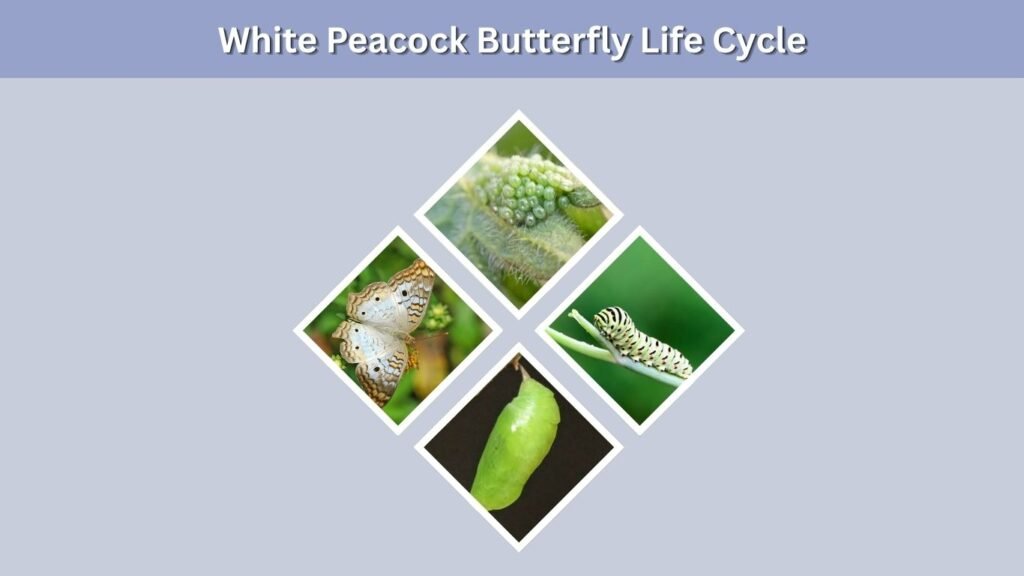
Like other butterflies, the white peacock undergoes complete metamorphosis, passing through four distinct developmental stages: egg, caterpillar, chrysalis, and adult. Each stage serves a specific biological purpose. Development depends on environmental conditions, including temperature and food availability. In warm regions, multiple generations can develop throughout the year, allowing populations to remain active across different seasons.
1. White Peacock Butterfly Eggs
Female white peacock butterflies lay tiny green eggs individually on or near suitable host plants.
Eggs are often deposited on the undersides of leaves, where newly hatched caterpillars can access food immediately. Hatching may occur in approximately 3–10 days, depending on environmental conditions.
2. White Peacock Butterfly Caterpillar
White peacock caterpillars look dramatically different from adults. Mature larvae are dark, almost black, with numerous pale spots and branching black spines covering their bodies.
These caterpillars spend much of their time feeding on host plant leaves. As they grow, they shed their outer skin several times before becoming ready to pupate.
Their spiny appearance may appear intimidating, but they are not considered dangerous to humans.
3. White Peacock Butterfly Chrysalis
After reaching maturity, the caterpillar enters the pupal stage and forms a chrysalis.
The chrysalis is generally green, sometimes with small darker markings. Its coloration helps it blend into surrounding vegetation.
Inside, the insect undergoes major physical changes as its adult structures develop, including wings, antennae, and reproductive organs.
4. Adult White Peacock Butterfly
When metamorphosis is complete, an adult butterfly emerges from the chrysalis.
Its wings initially appear soft and folded. The butterfly expands and dries them before taking flight.
Once mature, adults search for nectar, mates, and suitable reproductive habitats, continuing the life cycle.
White Peacock Butterfly Behavior and Lifespan
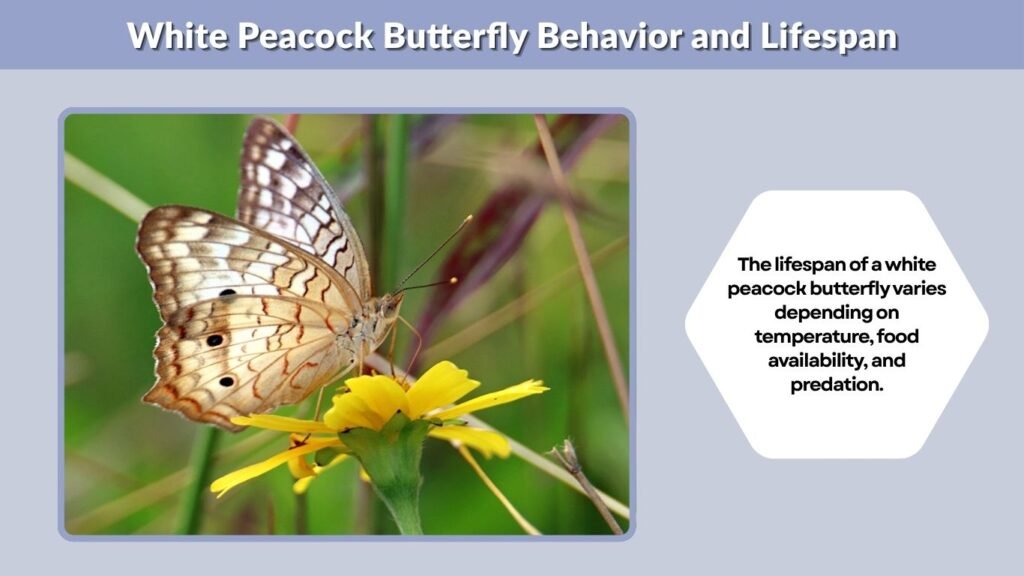
White peacock butterflies are active during daylight and are often observed flying low over vegetation. Their flight can be quick and unpredictable, especially when disturbed. Males demonstrate territorial behavior, while females concentrate on finding suitable egg-laying locations. Their activity changes with weather conditions, available food sources, and seasonal temperatures.
How Long Does a White Peacock Butterfly Live?
The lifespan of a white peacock butterfly varies depending on temperature, food availability, and predation.
An older biological account reports a typical lifespan of approximately one to four months, although this should not be treated as a fixed adult lifespan. Individual survival can vary considerably under natural conditions.
Warm temperatures and adequate food resources support successful development and reproduction.
Predators and Defense Mechanisms
White peacock butterflies face threats from insect-eating birds, predatory insects, and other natural enemies.
Their quick, irregular flight makes them difficult to capture. Their brown and cream wing markings may also help them blend into dry vegetation when resting.
Male territorial behavior is another interesting characteristic. Males sometimes chase competing butterflies away from areas containing valuable host plants.
White Peacock Butterfly Meaning and Conservation
Beyond their ecological importance, white peacock butterflies attract attention because of their distinctive beauty and graceful movements. Some people associate their pale coloring with peace, renewal, or transformation. However, these symbolic interpretations are cultural or personal rather than scientific. From an ecological perspective, the butterfly contributes to pollination and forms part of local food webs.
White Peacock Butterfly Symbolism
The white peacock butterfly may symbolize transformation, hope, personal growth, or new beginnings in individual interpretations.
Its metamorphosis from caterpillar to adult naturally connects it with ideas of change and renewal. There is no universally established spiritual meaning specifically associated with this butterfly species.
Conservation Status and Importance
The white peacock is considered globally secure, although its abundance varies across its range. Local populations still depend on suitable habitats containing nectar flowers and larval host plants.
Protecting wetlands, maintaining native vegetation, and reducing unnecessary pesticide use can help support this butterfly and many other pollinating insects.
FAQs
1. Is the White Peacock Butterfly Rare?
No. The white peacock butterfly is relatively common in suitable warm habitats, particularly in southern Florida, the Caribbean, and Central America. However, sightings can be uncommon near the northern edges of its range.
2. What Is the Main Host Plant for White Peacock Butterflies?
Frogfruit (Phyla nodiflora) and water hyssop (Bacopa monnieri) are two important host plants. Female butterflies lay eggs on or near these plants, and developing caterpillars feed on their leaves.
3. Are White Peacock Butterfly Caterpillars Poisonous?
White peacock caterpillars are not known to be poisonous or medically dangerous to humans. Their black branching spines give them a defensive appearance, but they are not classified as medically significant stinging caterpillars.
4. Can You See White Peacock Butterflies in Florida During Winter?
Yes. White peacock butterflies can remain active during winter in warmer parts of Florida, particularly southern regions. Their activity may decrease during colder weather, but the species can be observed throughout the year.
5. Is Lantana a Host Plant for White Peacock Butterflies?
Lantana can provide nectar for visiting adult butterflies, but it is not a well-established larval host plant for white peacocks. Frogfruit and water hyssop are more reliable choices for supporting caterpillar development.