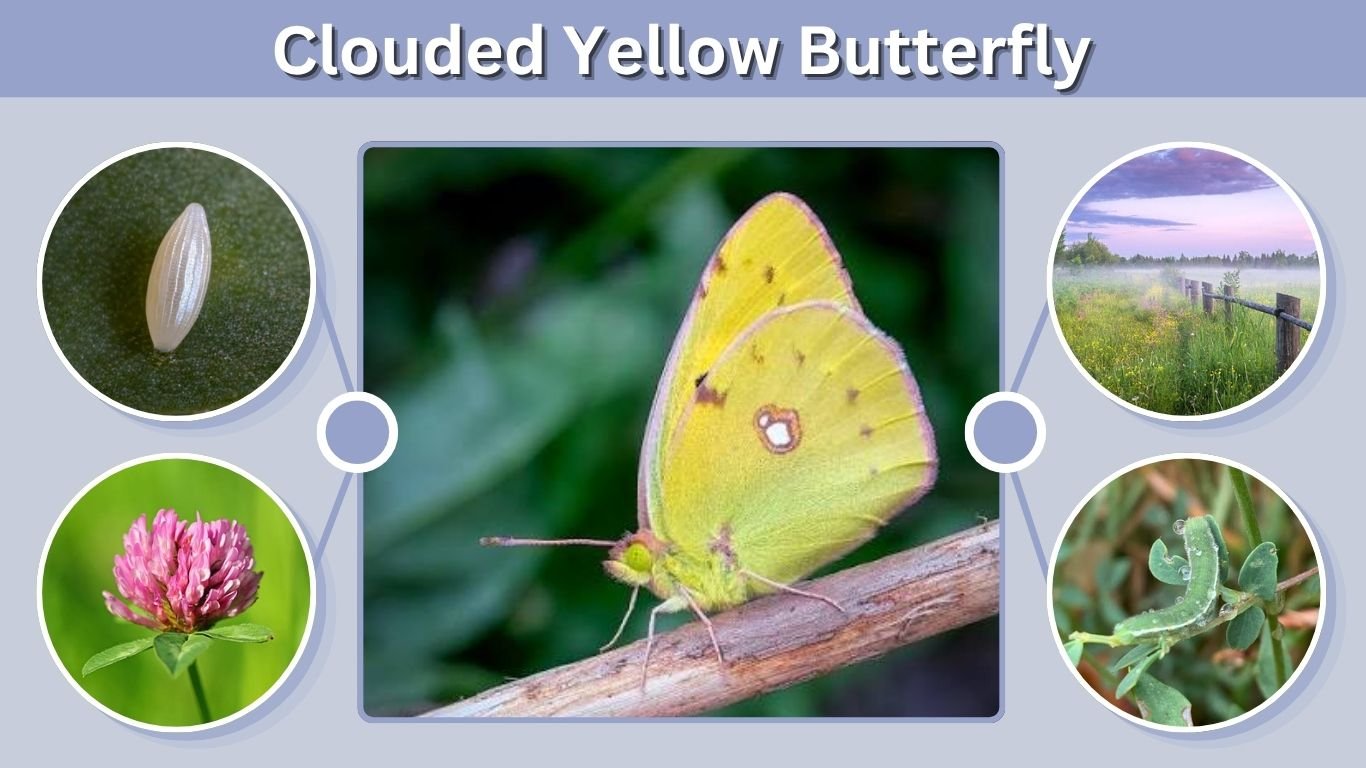
The clouded yellow butterfly is a fast-flying species recognized by its bright yellow-orange wings and dark outer borders. Found across parts of Europe, North Africa, and Asia, it is especially associated with warm, open habitats such as meadows and grasslands. It is also a well-known migrant, sometimes appearing far beyond its usual breeding range. This guide explains how to identify the clouded yellow, where it lives, what adults and caterpillars eat, and how it develops from egg to adult butterfly in its natural habitat.
What Is a Clouded Yellow Butterfly?
The clouded yellow butterfly (Colias croceus) is a colorful member of the Pieridae family, which includes white and sulphur butterflies. It is known for its orange-yellow wings, dark borders, and energetic flying behavior. This species is particularly common in warmer parts of Europe and can travel long distances during seasonal migrations.
Clouded Yellow Butterfly Facts
- Scientific Name: Colias croceus
- Common Name: Clouded Yellow Butterfly
- Family: Pieridae
- Order: Lepidoptera
- Subfamily: Coliadinae
- Wingspan: Approximately 4.5–5.5 cm
- Main Colors: Orange-yellow, black, and greenish-yellow
- Diet: Flower nectar
- Caterpillar Food: Clover, lucerne, vetch, and other legumes
- Habitat: Meadows, grasslands, fields, and coastal areas
- Behavior: Migratory and active during sunny weather
The clouded yellow is an active butterfly that spends much of its time flying between flowers and searching for suitable breeding locations. Its bright appearance makes it relatively easy to recognize when it visits gardens or open countryside.
Clouded Yellow Butterfly Appearance and Identification
The clouded yellow butterfly has distinctive orange-yellow wings with dark outer borders. Its forewings usually feature a dark spot, while the hindwings have an orange-colored central marking. The underside is generally more yellowish or greenish, helping the butterfly blend into vegetation when resting.
Wing Colors and Markings
The upper wings are usually bright orange-yellow, although their appearance can vary depending on lighting and individual differences. The dark borders are especially noticeable along the edges of the wings.
The underside of the hindwings typically contains two pale or silvery spots surrounded by darker markings. These details are useful when identifying the species in the field.
Male and Female Differences
Male and female clouded yellow butterflies have similar overall appearances, but their wing patterns can help distinguish them. Males generally have more solid dark borders, while females often display small yellow spots within those borders.
Some females have a pale cream or whitish appearance instead of the typical orange-yellow coloring. This variation is known as the helice form. It is a natural color variation rather than a separate species.
Clouded Yellow Butterfly Habitat and Distribution
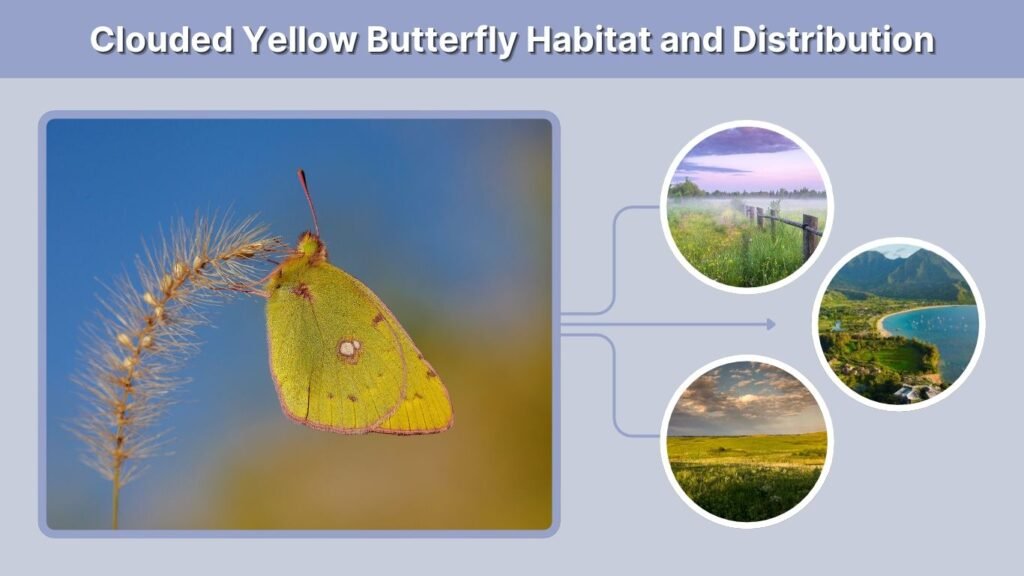
Clouded yellow butterflies prefer warm, sunny environments with plenty of flowering plants and suitable vegetation for their caterpillars. They are commonly associated with open landscapes and can occupy several different habitats throughout the year. Their migratory behavior allows them to move between regions as temperatures and food availability change.
Common Habitats
Clouded yellow butterflies can be found in several types of natural and agricultural environments:
- Meadows: Flower-rich meadows provide nectar and suitable breeding plants.
- Grasslands: Open grasslands offer sunny conditions and plenty of flowering vegetation.
- Agricultural Fields: Clover and lucerne fields provide important food sources for caterpillars.
- Coastal Areas: Warm coastal grasslands attract migrating butterflies.
- Gardens: Flower gardens provide nectar during the warmer months.
- Chalk Grasslands: These habitats support flowering plants and suitable breeding conditions in parts of Europe.
Geographic Distribution and Migration
The clouded yellow butterfly occurs across Europe, North Africa, and parts of western and central Asia. It is particularly established in Mediterranean regions, where warm temperatures support regular breeding.
In the United Kingdom, it is considered a migrant rather than a regularly established resident. Butterflies arrive from warmer regions, particularly southern Europe and North Africa. Sightings can occur from spring through autumn, with numbers varying considerably between years.
Although people sometimes search for clouded yellow butterflies in North America, the European clouded yellow should not be confused with the American clouded sulphur (Colias philodice). These are separate species with different geographic distributions.
What Do Clouded Yellow Butterflies Eat?
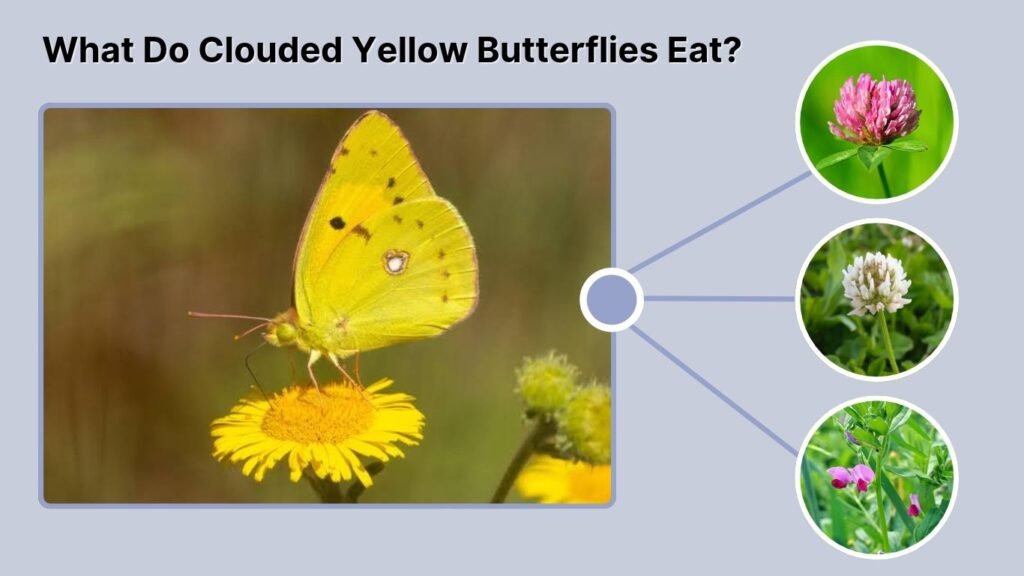
The clouded yellow butterfly has different feeding requirements during its adult and caterpillar stages. Adult butterflies obtain energy from flower nectar, while caterpillars consume the leaves of leguminous plants. These host plants are important for successful reproduction because females need suitable vegetation for laying eggs and supporting developing larvae.
Clouded Yellow Butterfly Caterpillar Food
Clouded yellow caterpillars mainly feed on plants belonging to the pea family (Fabaceae). Female butterflies lay their eggs on or near suitable host plants so that newly hatched caterpillars can access food.
Common host plants include:
- Red Clover: Provides nutritious leaves for developing caterpillars.
- White Clover: An important food plant in grasslands and meadows.
- Lucerne: Also called alfalfa, this plant provides a valuable food source.
- Bird’s-Foot Trefoil: A flowering legume used as a caterpillar host plant.
- Vetch: Several vetch species can support larval development.
- Other Legumes: Suitable related plants may also provide food depending on the region.
Adult Butterfly Diet
Adult clouded yellow butterflies feed primarily on nectar. They use a long, flexible feeding tube called a proboscis to reach nectar inside flowers.
They commonly visit flowering plants such as thistles, dandelions, knapweed, and other nectar-rich species. Flowering gardens, meadows, and fields provide valuable feeding opportunities.
Regular access to nectar helps adults maintain the energy needed for flying, migration, mating, and reproduction.
Clouded Yellow Butterfly Life Cycle
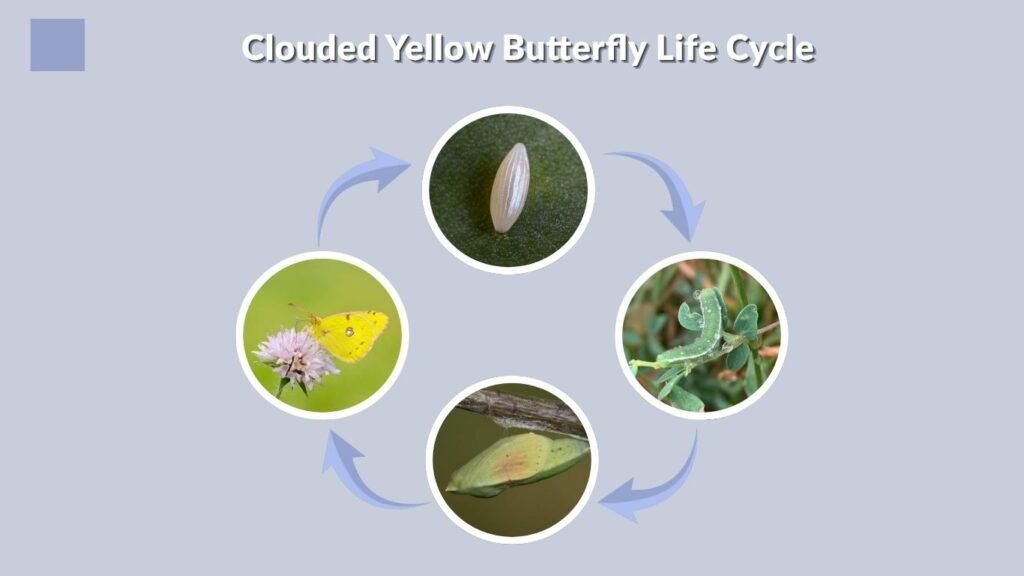
The clouded yellow butterfly develops through four stages: egg, caterpillar, chrysalis, and adult. This process is called complete metamorphosis. Each stage involves significant physical changes, allowing the insect to develop from a small egg into a fully winged butterfly. The development period depends on temperature, food availability, and seasonal conditions.
Egg Stage
The life cycle begins when a female butterfly lays individual eggs on suitable host plants. These eggs are usually pale yellow or whitish when first deposited and may change color as they develop.
After several days, a small caterpillar emerges from the egg and begins feeding on nearby leaves. Warm temperatures generally encourage faster development.
Caterpillar Stage
The clouded yellow butterfly caterpillar is typically green with a noticeable pale stripe along its sides. It may also have yellowish or orange markings and small dark spots.
During this stage, the caterpillar feeds on clover, lucerne, and other suitable host plants. It grows through several stages, shedding its outer skin as its body becomes larger.
Chrysalis Stage
Once the caterpillar reaches its full size, it prepares to transform into a chrysalis. It attaches itself to a plant using silk and forms a hanging pupa.
Inside the chrysalis, the insect undergoes major developmental changes. Its larval body is reorganized as the adult butterfly’s wings, legs, and other structures develop.
Adult Butterfly Stage
When development is complete, the adult butterfly emerges from the chrysalis. Its wings are initially soft and folded, so it needs time to expand and dry them before flying.
The adult then searches for nectar, mates, and suitable host plants for reproduction. Several generations may develop during favorable seasons, particularly in warmer regions.
Similar Types of Clouded Yellow Butterflies
Several related butterflies have similar yellow or orange coloring, making identification challenging. Some belong to the same genus, Colias, and can look remarkably alike. Their wing patterns, geographic ranges, and scientific names are useful for distinguishing them.
Pale Clouded Yellow Butterfly
The pale clouded yellow (Colias hyale) is a close relative with lighter yellow wings. Males are generally pale yellow, while females can appear yellowish or almost white. It is a scarce migrant in Britain and is more difficult to identify than the common clouded yellow.
Berger’s Clouded Yellow Butterfly
Berger’s clouded yellow (Colias alfacariensis) is another closely related species found mainly in parts of mainland Europe. It prefers dry grasslands and limestone habitats. Its caterpillars commonly feed on plants such as horseshoe vetch and crown vetch.
Dark Clouded Yellow Butterfly
The dark clouded yellow (Colias fieldii) is a related species associated with parts of Asia. It has yellow-orange wings with dark markings, making it similar in appearance to other members of the genus. Its geographic distribution helps distinguish it from the European clouded yellow.
Clouded Yellow vs. Clouded Sulphur
The clouded yellow (Colias croceus) and clouded sulphur (Colias philodice) are different butterfly species. The clouded yellow is primarily found in Europe, North Africa, and parts of Asia, whereas the clouded sulphur is native to North America. Both have yellow wings and dark borders, but their markings and geographic ranges differ.
FAQs
1. What is the scientific name of the clouded yellow butterfly?
The scientific name of the clouded yellow butterfly is Colias croceus. It belongs to the Pieridae family and is recognized by its orange-yellow wings, dark borders, and migratory behavior.
2. What does a clouded yellow butterfly caterpillar look like?
The caterpillar is generally green with a pale stripe along each side and small dark markings. It feeds on leguminous plants, including clover, lucerne, and vetch, before transforming into a chrysalis.
3. Where are clouded yellow butterflies found?
They occur across Europe, North Africa, and parts of Asia. They prefer sunny grasslands, meadows, agricultural fields, and coastal habitats. They also migrate into the United Kingdom during warmer months.
4. What does the clouded yellow butterfly symbolize?
Yellow butterflies are traditionally associated with happiness, hope, optimism, and positive change. These meanings come from cultural beliefs and personal interpretations rather than scientific evidence about the butterfly.
5. Are clouded yellow butterflies migratory?
Yes. Clouded yellow butterflies are strong migrants that move from warmer regions into northern areas when conditions are favorable. Their migration patterns and population numbers vary with seasonal temperatures and food availability.