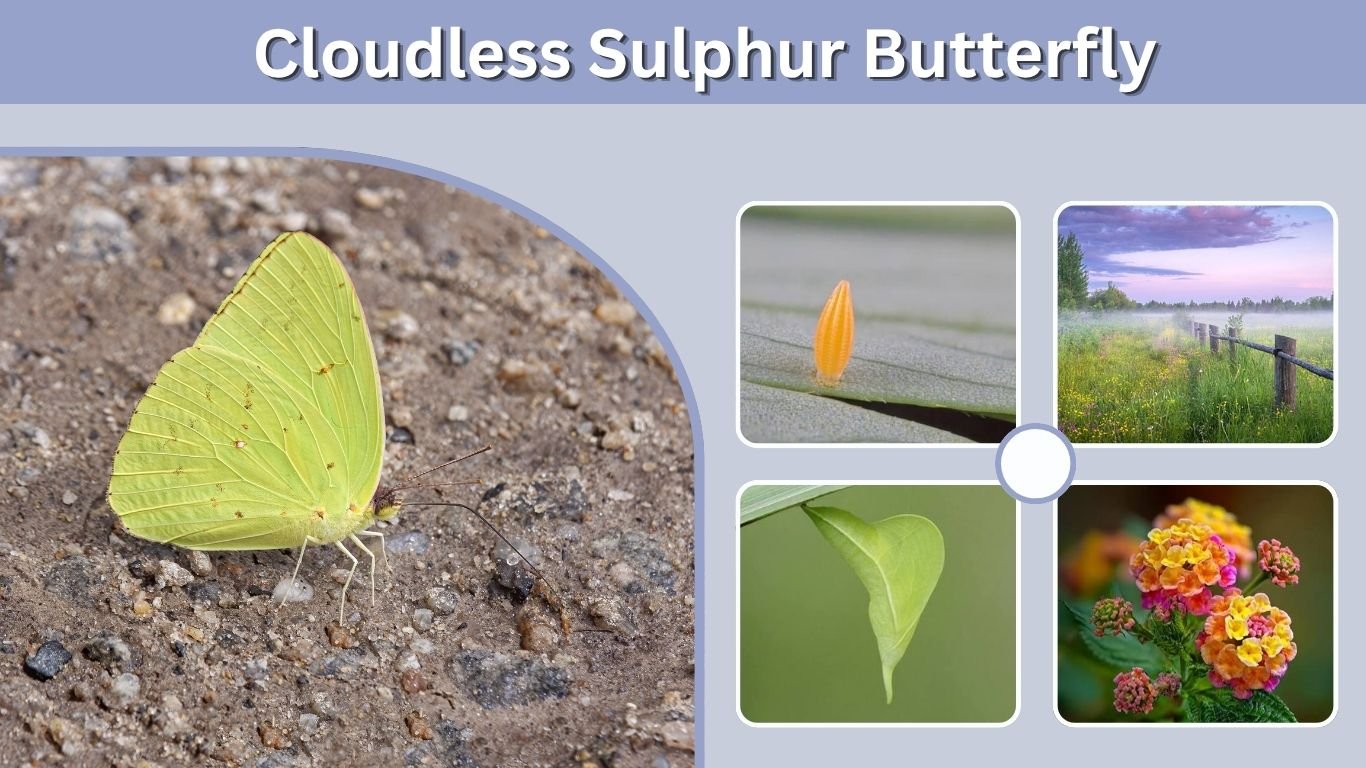
The cloudless sulphur butterfly is a large, bright yellow butterfly commonly found in warm regions of North, Central, and South America. Known for its rapid flight and beautiful lemon-yellow wings, this species frequently visits gardens, meadows, and open fields. It is particularly common in Florida, Texas, and other southern states, although seasonal migrations carry it farther north. Understanding the cloudless sulphur butterfly’s appearance, host plants, caterpillar, life cycle, habitat, and feeding behavior can help butterfly enthusiasts identify this fascinating species and support its survival in natural environments.
What Is a Cloudless Sulphur Butterfly?
The cloudless sulphur butterfly (Phoebis sennae) belongs to the Pieridae family, which includes white and yellow butterflies. It is among the larger sulphur butterflies found in North America and is especially noticeable because of its clear yellow wings and powerful flight. The species is sometimes called the giant sulphur because of its relatively large size.
Cloudless Sulphur Butterfly Facts
- Scientific Name: Phoebis sennae
- Common Name: Cloudless Sulphur Butterfly
- Family: Pieridae
- Order: Lepidoptera
- Subfamily: Coliadinae
- Wingspan: Approximately 5.7–8 cm
- Main Colors: Lemon yellow, pale yellow, or greenish-white
- Adult Diet: Flower nectar
- Caterpillar Food: Senna and related plants
- Habitat: Gardens, fields, roadsides, and open landscapes
- Distribution: North, Central, and South America
- Behavior: Migratory and fast-flying
Cloudless Sulphur Butterfly Appearance
The cloudless sulphur has broad, delicate wings that are predominantly yellow. The upper surfaces are usually bright lemon-yellow, while the undersides may appear pale yellow or slightly greenish.
Small brown or pinkish markings can sometimes be seen on the underside of the wings. These markings vary between individuals and may become more noticeable during different seasons.
Unlike some other yellow butterflies, the cloudless sulphur typically lacks prominent black wing borders in males.
Male vs. Female Cloudless Sulphur Butterfly
Male and female cloudless sulphur butterflies differ in appearance, particularly in their wing coloration and markings. Understanding these differences is useful when identifying butterflies in gardens or natural habitats.
Male Cloudless Sulphur Butterfly
Male cloudless sulphurs usually have bright, almost uniformly lemon-yellow upper wings. They generally lack the dark borders seen in females.
Males are active flyers that patrol flowering areas and open habitats while searching for receptive females. Their bright color makes them especially noticeable during sunny weather.
Female Cloudless Sulphur Butterfly
Female cloudless sulphurs can have yellow, creamy-white, or slightly greenish wings. Their upper wings commonly feature irregular dark borders and a distinctive dark spot on each forewing.
Females also tend to have more noticeable markings on the wing undersides. Their coloration can make them resemble other sulphur butterfly species.
Cloudless Sulphur Butterfly Habitat and Range
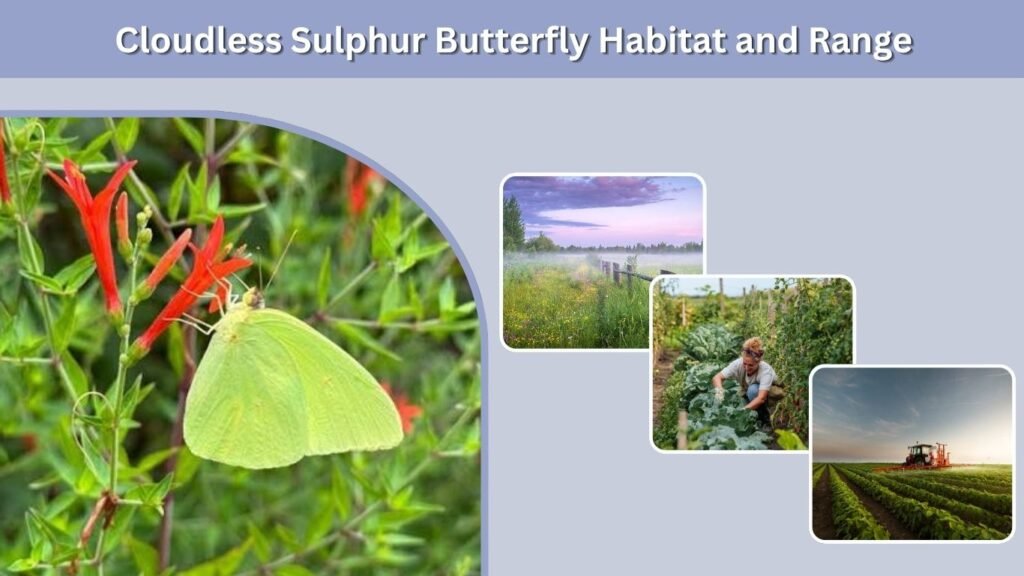
Cloudless sulphur butterflies thrive in warm, open habitats with abundant flowers and suitable caterpillar host plants. They frequently visit human-modified landscapes, including gardens and parks. Their ability to migrate allows them to occupy different regions throughout the year, particularly during warmer seasons.
Common Habitats
Cloudless sulphurs are commonly found in gardens, meadows, agricultural areas, coastal landscapes, and roadsides.
They prefer places receiving plenty of sunlight because warm temperatures support their active flying behavior. Flowering plants provide nectar, while Senna and related species offer suitable locations for egg-laying.
In Florida, cloudless sulphurs are frequently observed in gardens and open natural areas throughout the year.
Cloudless Sulphur Butterfly Migration
Cloudless sulphur butterflies are strong seasonal migrants. They can travel northward during spring and summer, reaching regions where they cannot survive the winter.
In late summer and autumn, many individuals fly southward toward warmer climates.
Their migration is particularly noticeable in the southeastern United States. Large numbers may be seen moving in similar directions during favorable weather conditions.
Cloudless Sulphur Butterfly Host Plants
Host plants are essential for cloudless sulphur reproduction because caterpillars depend on specific vegetation for food. Female butterflies carefully select suitable plants before laying their eggs. The most important host plants belong to the genera Senna and Chamaecrista, both members of the legume family.
Best Host Plants for Cloudless Sulphur Butterflies
Common host plants include:
- Partridge Pea: Chamaecrista fasciculata, a native plant that supports developing caterpillars.
- Maryland Senna: Senna marilandica, an important host species in parts of North America.
- Sensitive Pea: Chamaecrista nictitans, another suitable caterpillar food plant.
- Candlestick Plant: Senna alata, an ornamental plant that can attract egg-laying females.
- Sicklepod: Senna obtusifolia, a leguminous plant used by cloudless sulphur larvae.
- Christmas Senna: Certain cultivated Senna plants can provide additional breeding opportunities.
Cloudless Sulphur on Candlestick Plants
Candlestick plants are particularly attractive to cloudless sulphurs because they provide leaves, flower buds, and blossoms that developing caterpillars can consume.
Females may lay eggs on young foliage or flower buds. Once the eggs hatch, the caterpillars begin feeding directly on the host plant.
Gardeners growing these plants may notice caterpillars feeding on their leaves or flowers.
What Do Cloudless Sulphur Butterflies Eat?
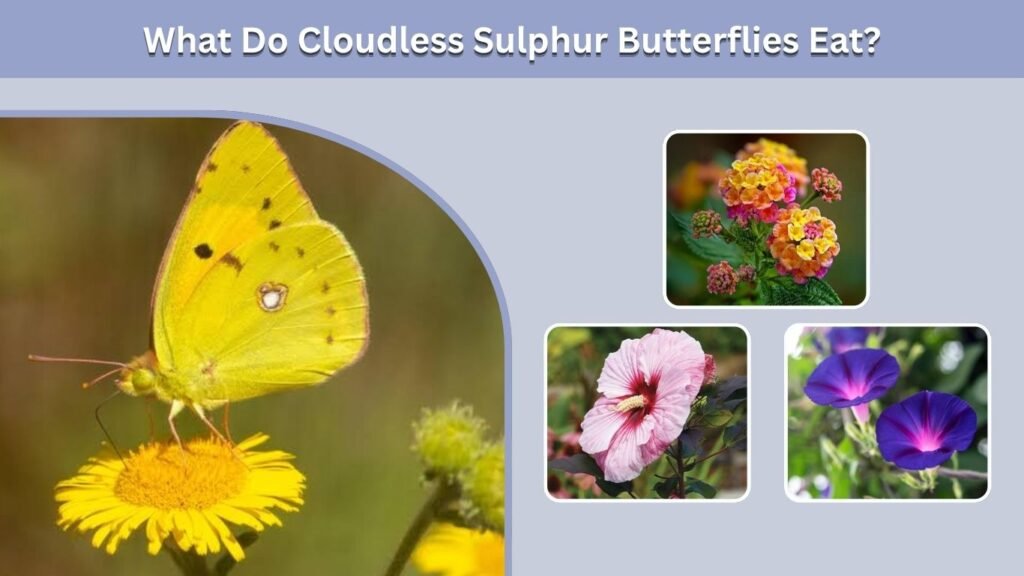
Cloudless sulphur butterflies have different diets during their adult and caterpillar stages. Adults consume nectar from flowers, while caterpillars feed on host plants. Both food sources are necessary for successful development and reproduction. Their feeding activities also contribute to the surrounding ecosystem.
Adult Cloudless Sulphur Butterfly Food
Adult cloudless sulphurs prefer nectar-rich flowers, especially those with long tubular shapes.
Common nectar sources include:
- Lantana: Produces clusters of nectar-rich flowers.
- Hibiscus: Provides nectar from large, colorful blossoms.
- Cardinal Flower: A tubular flower visited by these butterflies.
- Morning Glory: Offers nectar during suitable weather conditions.
- Scarlet Sage: Attracts adults with its bright red flowers.
Their long proboscis allows them to reach nectar inside flowers that some other butterfly species cannot easily access.
What Do Cloudless Sulphur Caterpillars Eat?
Cloudless sulphur caterpillars consume the leaves, flowers, and buds of suitable host plants.
Caterpillars feeding mainly on leaves are usually green, while those consuming flowers may develop yellow coloration.
This difference helps camouflage caterpillars against the vegetation or flowers on which they feed.
Cloudless Sulphur Butterfly Life Cycle
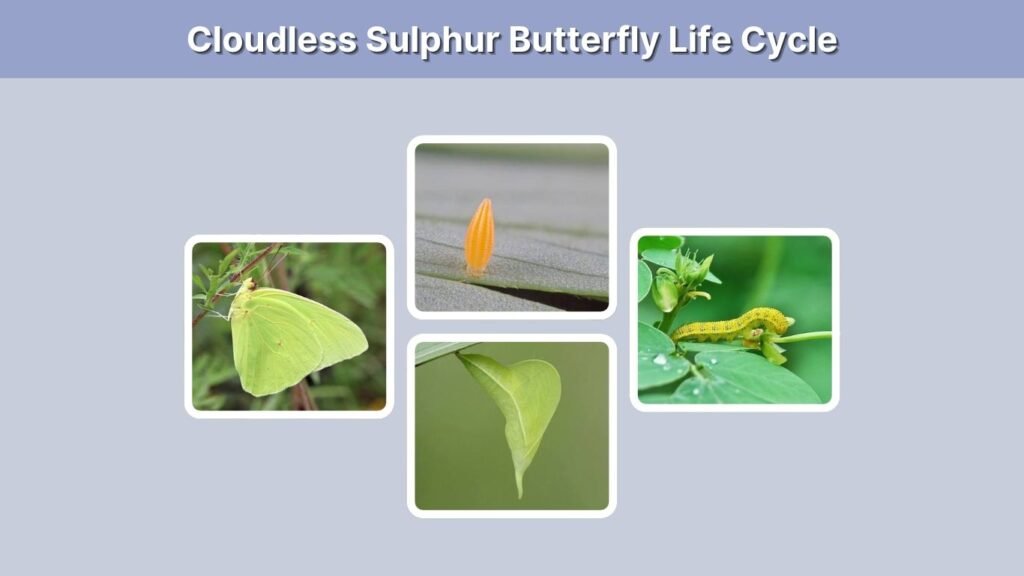
The cloudless sulphur undergoes complete metamorphosis, passing through four developmental stages: egg, caterpillar, chrysalis, and adult. Each stage involves important changes in body structure and behavior. Development speed depends on temperature, food availability, and environmental conditions, with multiple generations possible in warmer regions.
Four Stages of the Life Cycle
1. Egg Stage
Female butterflies deposit individual eggs on young leaves or flower buds of suitable host plants. The eggs are initially cream-colored and gradually become orange as development progresses.
2. Caterpillar Stage
Newly hatched caterpillars begin feeding on host plants. They may be green with yellow stripes and blue markings or yellow with dark bands. Caterpillars grow through several molts before reaching maturity.
3. Chrysalis Stage
Mature caterpillars attach themselves to vegetation using silk. They develop into greenish or pinkish chrysalises supported by a silk girdle. During this stage, the adult butterfly develops inside the protective pupal covering.
4. Adult Butterfly Stage
The adult emerges with folded wings that gradually expand and harden. Once capable of flying, it begins feeding on nectar and searching for mates.
How Long Do Cloudless Sulphur Butterflies Live?
The lifespan of a cloudless sulphur varies with temperature, food availability, predators, and seasonal conditions.
Adults generally live for several weeks under favorable conditions, although longevity differs between individuals.
Development from egg to adult also varies. Warmer temperatures typically support faster growth, while cooler conditions slow the developmental process.
Cloudless vs. Clouded Sulphur Butterfly
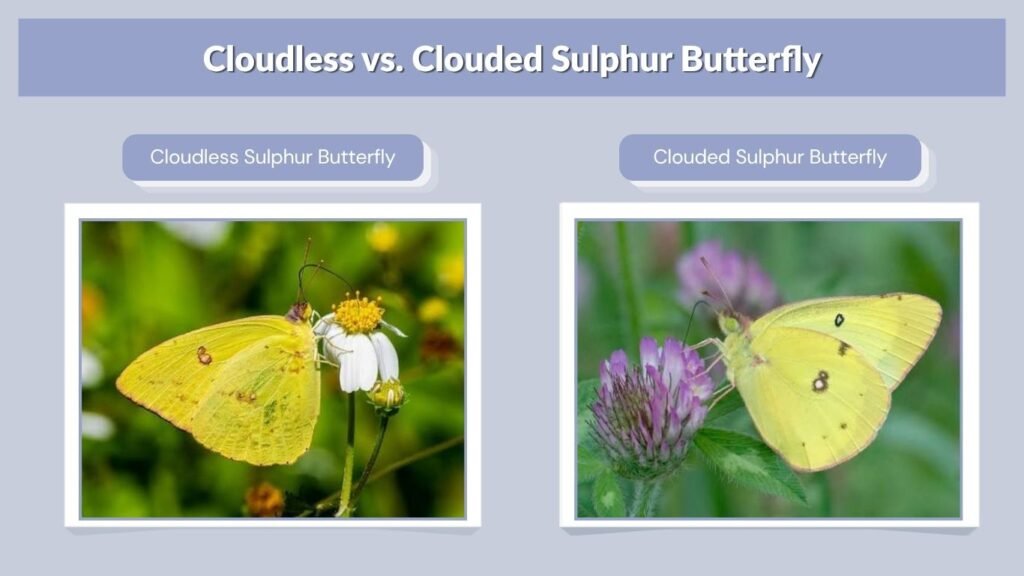
The cloudless sulphur and clouded sulphur are two different species that share similar yellow coloration. However, their size, wing markings, and classification help distinguish them.
Key Identification Differences
The cloudless sulphur (Phoebis sennae) is generally larger and has bright lemon-yellow wings. Males have mostly unmarked upper wings, while females display irregular dark borders.
The clouded sulphur (Colias philodice) is usually smaller and has more obvious dark wing borders on the upper surfaces.
Both belong to the Pieridae family, but they occupy different ecological ranges and use different preferred host plants.
Cloudless Sulphur Butterfly Meaning and Symbolism
The cloudless sulphur’s bright yellow appearance has inspired several symbolic interpretations. Yellow butterflies are commonly associated with happiness, optimism, personal growth, and renewal. These meanings come from cultural beliefs rather than scientific observations.
Cloudless Sulphur Butterfly Spiritual Meaning
In some spiritual interpretations, seeing a yellow butterfly symbolizes hope, encouragement, or positive changes in life.
Its transformation from caterpillar to butterfly is also associated with growth and new beginnings.
However, these interpretations vary among individuals and cultures. There is no scientific evidence that the appearance of a cloudless sulphur predicts future events.
FAQs
1. What is the scientific name of the cloudless sulphur butterfly?
The scientific name of the cloudless sulphur butterfly is Phoebis sennae. It belongs to the Pieridae family and Coliadinae subfamily. This large yellow butterfly is commonly found throughout warmer parts of the Americas.
2. What is the best host plant for cloudless sulphur butterflies?
Partridge pea and various Senna species are excellent host plants for cloudless sulphur butterflies. Maryland senna, sensitive pea, and candlestick plants can also support caterpillars. Choosing suitable native plants is especially beneficial for butterfly gardening.
3. What does a cloudless sulphur butterfly caterpillar look like?
Cloudless sulphur caterpillars are usually green or yellow with distinctive stripes and small dark markings. Their coloration depends partly on whether they feed on leaves or flowers. These colors help them blend into their surroundings.
4. Are cloudless sulphur butterflies common in Florida?
Yes, cloudless sulphur butterflies are common throughout Florida. They can be observed in gardens, parks, meadows, and roadsides during much of the year. Florida also receives migrating individuals during seasonal movements.
5. What does seeing a cloudless sulphur butterfly mean?
Seeing a cloudless sulphur butterfly is sometimes interpreted as a symbol of happiness, hope, transformation, or positive energy. These meanings reflect personal and cultural beliefs. Scientifically, its presence usually indicates suitable weather and nearby feeding habitats.