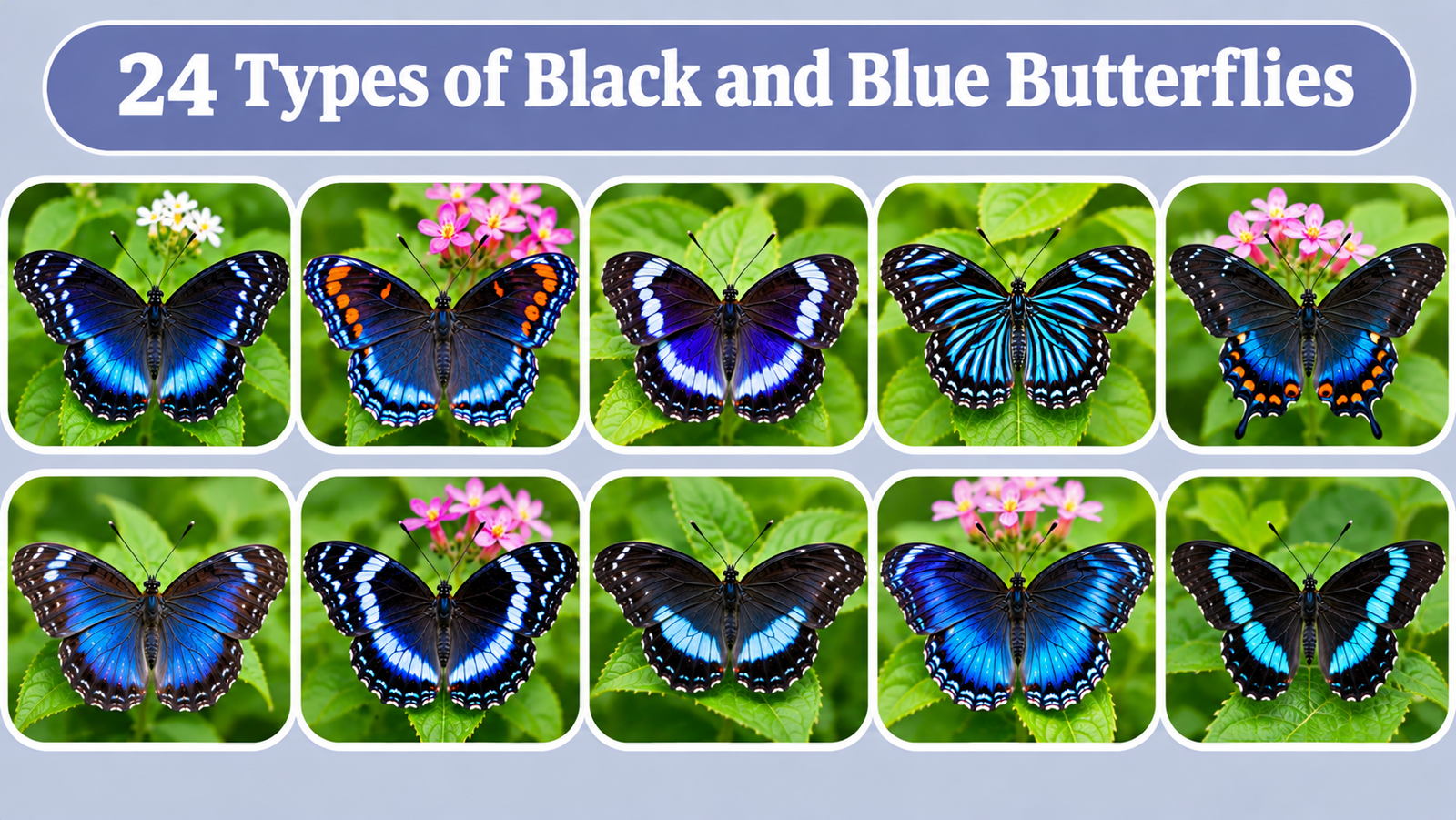
Black and blue butterflies are among the most beautiful insects in nature, admired for their striking wing patterns and brilliant metallic colors. From the stunning Blue Morpho to the elegant Ulysses Butterfly, these species are found in forests, gardens, and tropical habitats worldwide. Some display shimmering blue wings with black borders, while others feature colorful spots and bands. In this guide, explore 24 types of black and blue butterflies, including their identification, habitats, diets, and unique characteristics.
1. Ulysses Butterfly (Papilio ulysses)

The Ulysses Butterfly is one of the most beautiful black and blue butterflies in the world. Also called the Blue Mountain Swallowtail, it is famous for its brilliant electric-blue wings surrounded by deep black borders. This striking butterfly belongs to the Papilionidae family and is commonly found in tropical rainforests of northeastern Australia, New Guinea, and nearby islands.
Identification
- Scientific Name: Papilio ulysses
- Family: Papilionidae
- Wingspan: 10–14 cm
- Wing Color: Metallic blue with black borders
- Underside: Dark brown with subtle markings
- Body: Slender, dark-colored body
- Distinctive Feature: Bright blue wings and elongated hindwing tails
Habitat and Distribution
Ulysses Butterflies prefer warm, humid tropical rainforests with abundant flowering plants. They are particularly common in Queensland, Australia, and New Guinea. They frequently fly through forest openings, gardens, and woodland edges where nectar sources are available.
Diet and Feeding Habits
Adult Ulysses Butterflies primarily feed on flower nectar. Their long proboscis allows them to reach nectar inside blossoms. Caterpillars feed on the leaves of host plants, particularly species belonging to the citrus family, including Melicope elleryana.
Behavior and Unique Characteristics
These butterflies are active daytime flyers, often displaying their brilliant blue wings in sunlight. The brown undersides help camouflage them when their wings are closed. Males are also strongly attracted to blue objects, making their behavior particularly interesting to observe.
2. Blue Morpho Butterfly (Morpho peleides)
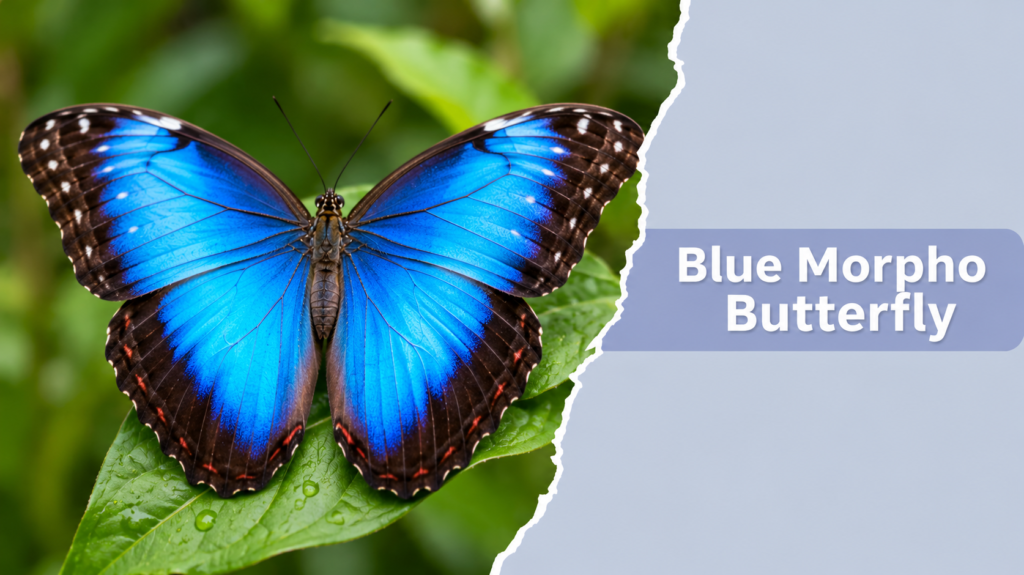
The Blue Morpho Butterfly is one of the most recognizable black and blue butterflies found in tropical rainforests. Its brilliant metallic-blue wings have dark black borders that create a beautiful contrast. This large butterfly belongs to the Nymphalidae family and is famous for its shimmering appearance during flight. Its blue coloration comes from microscopic wing structures that reflect light rather than blue pigments.
Identification
- Scientific Name: Morpho peleides
- Family: Nymphalidae
- Wingspan: 13–20 cm
- Wing Color: Iridescent blue with black edges
- Underside: Brown with prominent eyespots
- Body: Dark brown or black
- Distinctive Feature: Large, reflective blue wings
Habitat and Distribution
Blue Morpho Butterflies inhabit tropical rainforests throughout Central and South America. They prefer humid environments, particularly forest edges, riverbanks, and open woodland trails. Adults often fly through the forest understory, where sunlight highlights their brilliant wings.
Diet and Feeding Habits
Unlike many butterfly species, adult Blue Morphos primarily feed on fermenting or decaying fruits rather than flower nectar. They also obtain nutrients from tree sap and other natural sources. Caterpillars feed on leaves of various host plants, particularly members of the pea family.
Behavior and Unique Characteristics
Blue Morphos are active during daylight hours and have a distinctive flashing flight pattern. Their brown wing undersides provide camouflage when resting, while their bright upper wings appear and disappear as they flap. This visual effect can confuse predators.
3. Menelaus Blue Morpho (Morpho menelaus)

The Menelaus Blue Morpho is a spectacular tropical butterfly known for its vivid metallic-blue wings surrounded by narrow black borders. It belongs to the Nymphalidae family and is closely related to other blue morpho butterflies. Its large wings and shimmering coloration make it particularly noticeable when flying through sunlit rainforest openings.
Identification
- Scientific Name: Morpho menelaus
- Family: Nymphalidae
- Wingspan: Approximately 12–15 cm
- Wing Color: Brilliant metallic blue with black borders
- Underside: Brown with circular eyespots
- Body: Dark brown with slender antennae
- Distinctive Feature: Intense blue coloration across broad wings
Habitat and Distribution
Menelaus Blue Morphos live in tropical forests of South America, particularly Brazil and neighboring regions of the Amazon Basin. They inhabit primary and secondary rainforests, including areas near rivers, forest trails, and clearings where sunlight reaches the vegetation.
Diet and Feeding Habits
Adult butterflies mainly consume juices from overripe and fermenting fruits. They use their long proboscis to absorb liquids containing sugars and other nutrients. Their caterpillars feed on leaves of suitable tropical host plants during development.
Behavior and Unique Characteristics
Male Menelaus Blue Morphos generally display brighter blue wings than females. Their coloration changes in appearance depending on the viewing angle and surrounding light. When resting, they usually close their wings, exposing the darker undersides that help conceal them from predators.
4. Blue Mormon Butterfly (Papilio polymnestor)
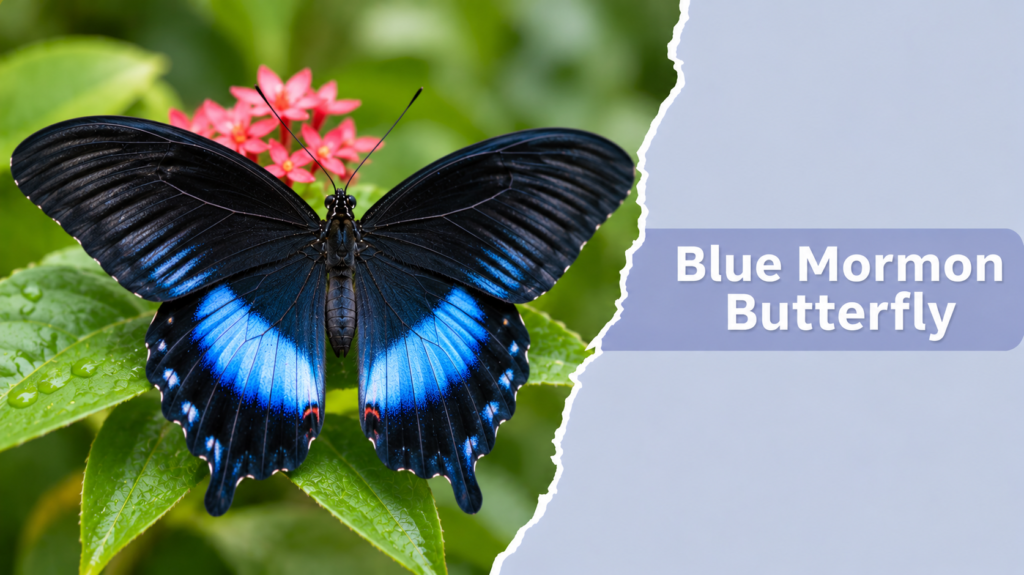
The Blue Mormon Butterfly is a large, attractive black and blue swallowtail butterfly native to South Asia. It is admired for its velvety black forewings and striking pale-blue hindwings decorated with dark markings. This beautiful species belongs to the Papilionidae family and is frequently observed in forests, gardens, and areas containing flowering plants.
Identification
- Scientific Name: Papilio polymnestor
- Family: Papilionidae
- Wingspan: 10–15 cm
- Wing Color: Black with pale-blue markings
- Underside: Dark with contrasting pale markings
- Body: Stout and dark-colored
- Distinctive Feature: Large, rounded blue hindwings without tails
Habitat and Distribution
Blue Mormon Butterflies are commonly found in India and Sri Lanka. They inhabit tropical forests, moist deciduous woodlands, gardens, and wooded residential areas. Their presence is especially noticeable in regions with abundant citrus plants and flowering vegetation.
Diet and Feeding Habits
Adults feed primarily on flower nectar, visiting plants such as jasmine and ixora. Their caterpillars consume leaves of citrus trees, curry leaf plants, and other members of the Rutaceae family. These host plants provide the nutrition necessary for larval development.
Behavior and Unique Characteristics
Blue Mormon Butterflies are strong, fast daytime flyers. They frequently visit flowers and sometimes fly high above vegetation. Their large wings and contrasting black-and-blue patterns make them relatively easy to recognize.
5. Blue Peacock Butterfly (Papilio arcturus)

The Blue Peacock Butterfly is an impressive black and blue swallowtail known for its shimmering blue patches and dark, greenish-black wings. This butterfly belongs to the Papilionidae family and is mainly associated with mountainous forest habitats. Its elegant wing patterns and long hindwing tails make it one of the most attractive swallowtail butterflies of the Himalayan region.
Identification
- Scientific Name: Papilio arcturus
- Family: Papilionidae
- Wingspan: Approximately 11–13 cm
- Wing Color: Dark greenish-black with metallic-blue patches
- Underside: Brownish-black with reddish markings
- Body: Dark with slender antennae
- Distinctive Feature: Blue hindwing patches and prominent tails
Habitat and Distribution
Blue Peacock Butterflies occur in the Himalayan region, including Nepal, Bhutan, and northern India. They prefer moist mountain forests, wooded valleys, and forest edges. Adults are frequently observed around streams, hilltops, and sunny openings surrounded by dense vegetation.
Diet and Feeding Habits
Adult Blue Peacock Butterflies obtain energy from flower nectar. They may also visit damp soil near streams to absorb dissolved minerals through a behavior known as mud-puddling. Their caterpillars depend on suitable host plants for nourishment throughout their development.
Behavior and Unique Characteristics
These butterflies are active during the daytime and are strong flyers. Males may patrol elevated areas while searching for mates. Their metallic-blue wing markings become especially visible in direct sunlight, creating an eye-catching contrast with their darker wings.
6. Paris Peacock Butterfly (Papilio paris)
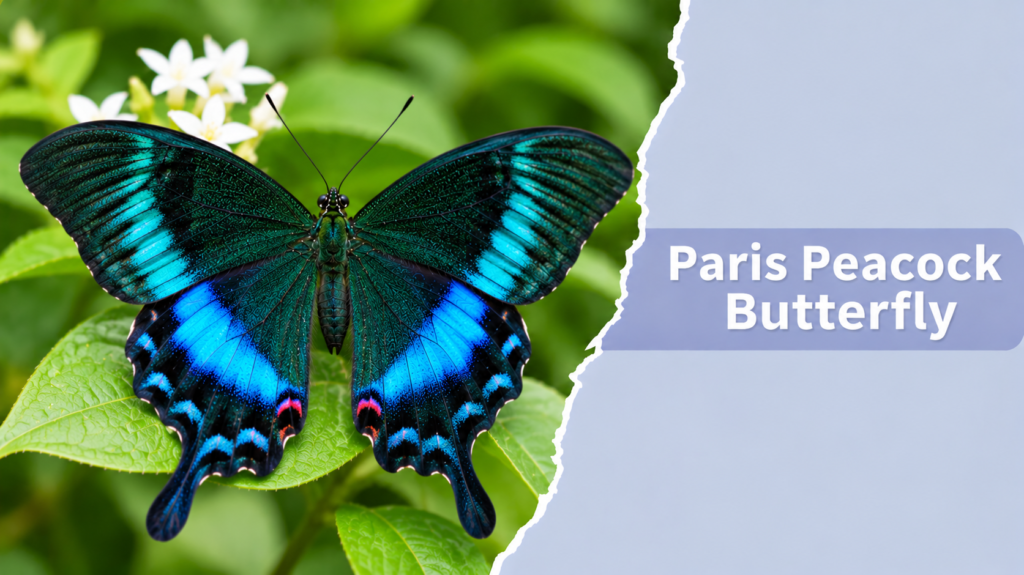
The Paris Peacock Butterfly is a beautiful black and blue butterfly recognized for its dark wings, greenish iridescence, and brilliant turquoise-blue markings. It belongs to the Papilionidae family and is widely admired for its colorful wing patterns. The combination of metallic shades and delicate hindwing tails gives this tropical swallowtail an exceptionally elegant appearance.
Identification
- Scientific Name: Papilio paris
- Family: Papilionidae
- Wingspan: Approximately 9–12 cm
- Wing Color: Black with metallic green and blue patches
- Underside: Dark brown with subtle markings
- Body: Dark and slender
- Distinctive Feature: Bright blue-green hindwing patches and reddish eyespots
Habitat and Distribution
Paris Peacock Butterflies are found across parts of South and Southeast Asia, including India, Nepal, Bangladesh, Myanmar, and southern China. They prefer moist evergreen forests, wooded hillsides, and tropical environments with plentiful vegetation. Adults are often observed near forest streams and flowering plants.
Diet and Feeding Habits
Adult butterflies mainly consume nectar from flowering plants. Their caterpillars feed on leaves of plants belonging to the citrus family, particularly Citrus, Zanthoxylum, and Toddalia species. These plants support their growth during the larval stages.
Behavior and Unique Characteristics
Paris Peacock Butterflies are active daytime flyers that frequently visit flowers and moist ground. Their blue and green wing markings appear especially vibrant in sunlight. When resting with closed wings, their darker undersides provide camouflage against surrounding vegetation.
7. Blue-banded Swallowtail (Papilio nireus)
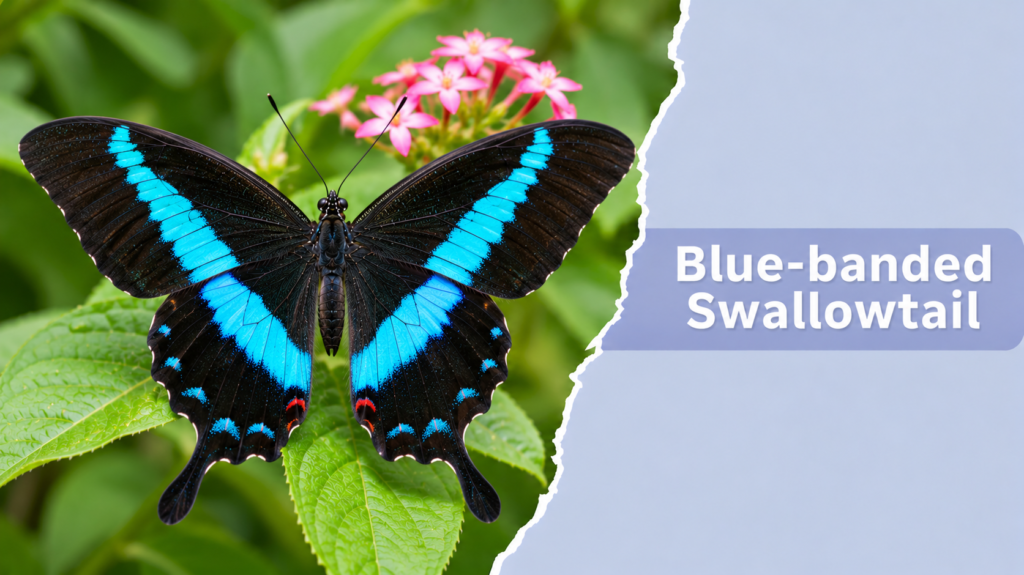
The Blue-banded Swallowtail is a beautiful black and blue butterfly native to Africa. It is recognized by its dark, velvety wings decorated with striking blue-green bands. This butterfly belongs to the Papilionidae family and is also called the Green-banded Swallowtail. Its contrasting wing colors make it particularly attractive when flying through sunlit forests and gardens.
Identification
- Scientific Name: Papilio nireus
- Family: Papilionidae
- Wingspan: 7.5–9.5 cm
- Wing Color: Black with metallic blue-green bands
- Underside: Dark brown with pale markings
- Body: Dark and slender
- Distinctive Feature: Narrow, continuous blue-green wing bands
Habitat and Distribution
Blue-banded Swallowtails are widely distributed across sub-Saharan Africa. They inhabit tropical forests, woodlands, forest edges, and gardens. These butterflies prefer warm environments with abundant vegetation and flowering plants.
Diet and Feeding Habits
Adult Blue-banded Swallowtails primarily consume nectar from flowers. Their caterpillars feed on citrus plants and other members of the Rutaceae family. These plants provide essential nutrients for their growth and development.
Behavior and Unique Characteristics
These butterflies are active daytime flyers and frequently visit flowering plants. Males often gather around damp soil to absorb minerals through mud-puddling. Their shimmering blue-green markings become particularly noticeable in bright sunlight, creating a beautiful contrast against their black wings.
8. Common Bluebottle Butterfly (Graphium sarpedon)
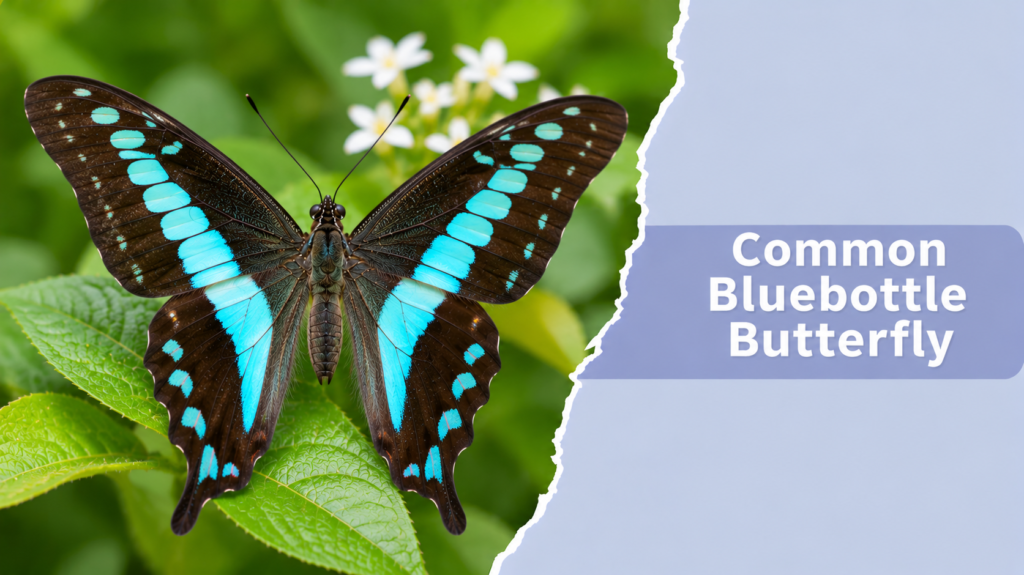
The Common Bluebottle Butterfly is a striking black and blue swallowtail butterfly recognized by its bright turquoise-blue wing bands. It belongs to the Papilionidae family and is widely distributed across Asia. Its beautiful coloration and rapid flying movements make it one of the most recognizable butterflies in tropical and subtropical environments.
Identification
- Scientific Name: Graphium sarpedon
- Family: Papilionidae
- Wingspan: Approximately 6–9 cm
- Wing Color: Black with turquoise-blue bands
- Underside: Brown with blue and reddish markings
- Body: Dark with slender antennae
- Distinctive Feature: Continuous blue bands across both wings
Habitat and Distribution
Common Bluebottle Butterflies inhabit tropical and subtropical forests, gardens, parks, and wooded areas. They are found throughout India, Bangladesh, Nepal, Sri Lanka, Southeast Asia, and parts of East Asia. They prefer environments with flowering vegetation and suitable larval host plants.
Diet and Feeding Habits
Adults mainly feed on flower nectar. They frequently visit flowering shrubs and garden plants. Caterpillars consume leaves of plants belonging to the Lauraceae family, particularly Cinnamomum and Litsea species.
Behavior and Unique Characteristics
Common Bluebottles are fast, energetic daytime flyers. Males often gather on damp ground near streams to absorb minerals. Their brilliant turquoise-blue bands make them easy to recognize during flight, while their darker wing surfaces help them blend into shaded vegetation.
9. Great Jay Butterfly (Graphium eurypylus)

The Great Jay Butterfly is an attractive black and blue butterfly known for its pale turquoise-blue markings and dark wings. It belongs to the Papilionidae family and is closely related to other jay butterflies. Its elegant wing patterns and swift movements make it a fascinating species commonly observed in tropical forest environments.
Identification
- Scientific Name: Graphium eurypylus
- Family: Papilionidae
- Wingspan: Approximately 6–10 cm
- Wing Color: Black with pale blue-green patches
- Underside: Brownish with pale and reddish markings
- Body: Dark with pale markings
- Distinctive Feature: Broad bands of pale turquoise spots
Habitat and Distribution
Great Jay Butterflies occur in parts of South and Southeast Asia, including India, Bangladesh, Myanmar, Thailand, and Indonesia. They are also found in northern and eastern Australia. Their preferred habitats include tropical forests, wooded areas, and forest edges with abundant flowering plants.
Diet and Feeding Habits
Adult Great Jays primarily consume nectar from flowering plants. Their caterpillars feed on leaves of host plants, particularly members of the Annonaceae family, including Annona species. These plants support their development from larvae into adult butterflies.
Behavior and Unique Characteristics
Great Jays are strong, active daytime flyers. They frequently visit flowering vegetation and may gather around damp ground to obtain minerals. Their pale blue-green patches contrast beautifully with their dark wings, making them particularly noticeable in sunlight.
10. Common Jay Butterfly (Graphium doson)
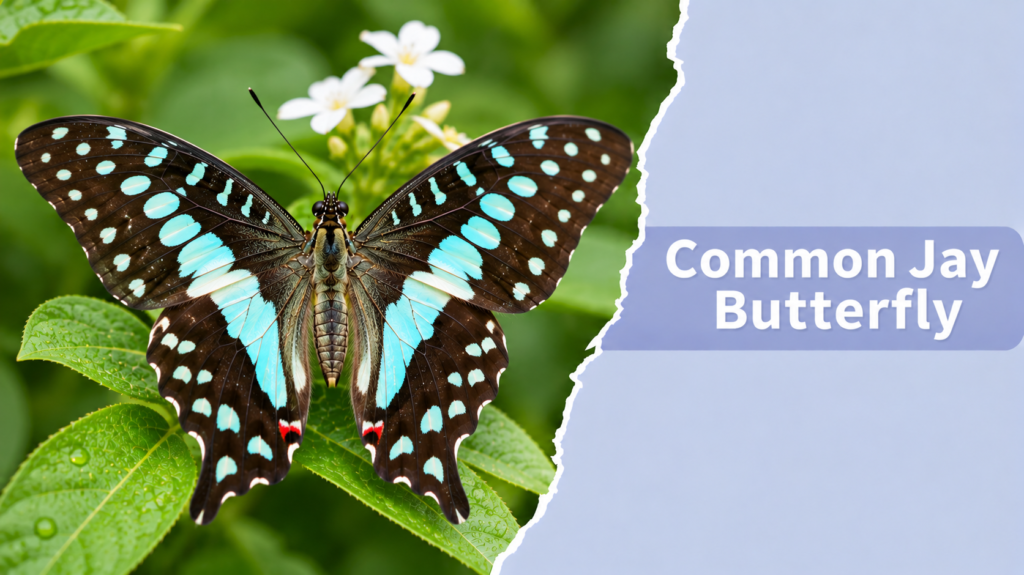
The Common Jay Butterfly is a beautiful black and blue butterfly characterized by its dark wings and distinctive pale-blue spots. It belongs to the Papilionidae family and is commonly found in tropical Asian regions. Its elegant wing patterns, rapid flight, and contrasting colors make it an easily recognizable member of the swallowtail family.
Identification
- Scientific Name: Graphium doson
- Family: Papilionidae
- Wingspan: Approximately 7–8 cm
- Wing Color: Black with pale-blue spots and bands
- Underside: Brown with whitish markings
- Body: Dark with pale stripes
- Distinctive Feature: Rows of semi-transparent blue spots
Habitat and Distribution
Common Jay Butterflies inhabit tropical forests, woodland edges, gardens, and areas near streams. They are widely distributed across India, Bangladesh, Nepal, Sri Lanka, Myanmar, and other Southeast Asian countries. They prefer sunny locations with abundant flowering plants.
Diet and Feeding Habits
Adult Common Jays primarily feed on flower nectar. Their caterpillars consume leaves from various host plants, including Magnolia, Annona, and Polyalthia species. These plants provide essential nutrients during larval development.
Behavior and Unique Characteristics
Common Jays are active daytime butterflies recognized for their fast, direct flight. Males frequently participate in mud-puddling along damp roadsides and streambanks. Their pale-blue wing spots create a striking pattern against the dark background, helping distinguish them from other swallowtail butterflies.
11. Blue Triangle Butterfly (Graphium choredon)
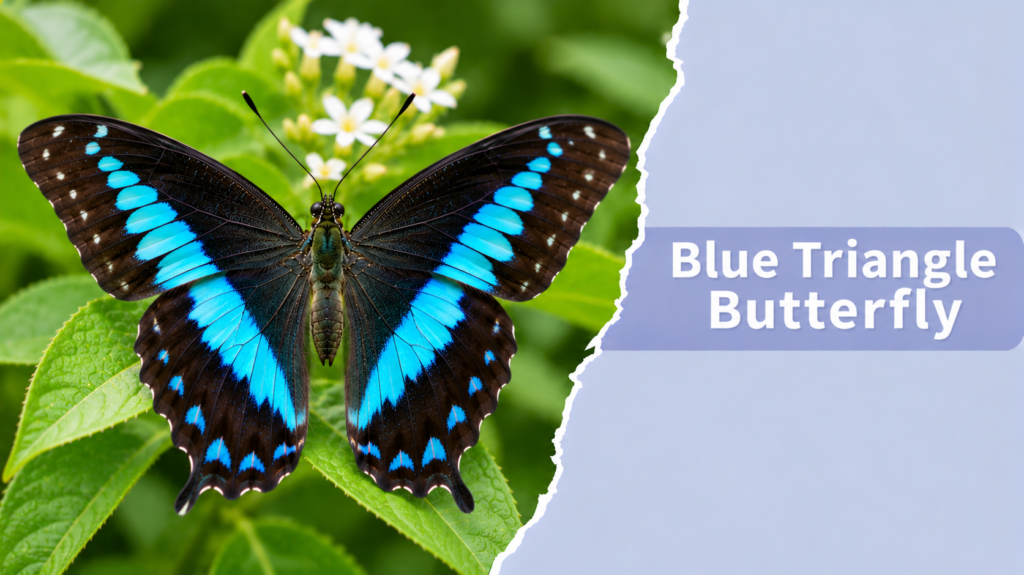
The Blue Triangle Butterfly is an eye-catching black and blue butterfly famous for its brilliant turquoise wing markings. It belongs to the Papilionidae family and is especially common in eastern Australia. Often classified as Graphium sarpedon choredon, this butterfly is closely related to the Common Bluebottle and is admired for its striking triangular wing pattern.
Identification
- Scientific Name: Graphium choredon
- Family: Papilionidae
- Wingspan: Approximately 6.5–7.5 cm
- Wing Color: Black with turquoise-blue patches
- Underside: Brown with blue and reddish markings
- Body: Dark and slender
- Distinctive Feature: Bright triangular blue markings across the wings
Habitat and Distribution
Blue Triangle Butterflies are mainly found along eastern Australia, particularly Queensland and New South Wales. They inhabit tropical rainforests, woodlands, suburban gardens, and parks. They prefer warm environments with flowering plants and suitable host trees.
Diet and Feeding Habits
Adults feed primarily on nectar from various flowering plants. Their caterpillars consume leaves of plants belonging to the Lauraceae family, including camphor laurel and native rainforest trees. These plants provide the nutrients needed for healthy growth.
Behavior and Unique Characteristics
Blue Triangle Butterflies are energetic daytime flyers that move quickly between flowers. Their vibrant turquoise markings become especially noticeable in sunlight. Caterpillars possess a defensive organ called an osmeterium, which releases an unpleasant odor when threatened by predators.
12. Blue Pansy Butterfly (Junonia orithya)
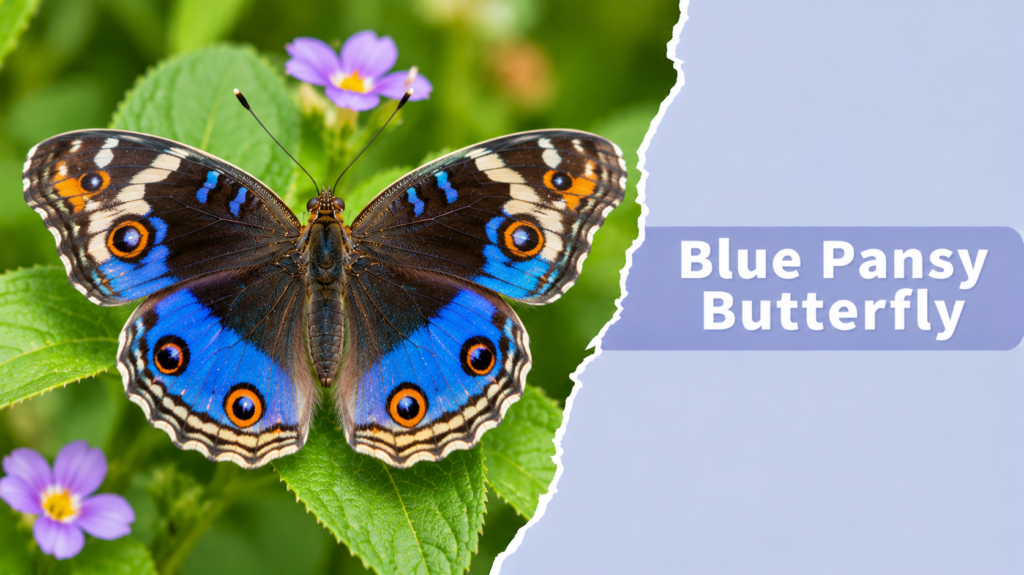
The Blue Pansy Butterfly is a beautiful black and blue butterfly recognized for its brilliant blue hindwings, dark forewings, and colorful eyespots. It belongs to the Nymphalidae family and is commonly found in warm, open habitats. Male butterflies display especially vibrant blue coloration, making them attractive and easy to recognize.
Identification
- Scientific Name: Junonia orithya
- Family: Nymphalidae
- Wingspan: 4.5–6 cm
- Wing Color: Black with bright blue patches
- Underside: Pale brown with irregular markings
- Body: Dark brown or black
- Distinctive Feature: Blue hindwings with orange-ringed eyespots
Habitat and Distribution
Blue Pansy Butterflies occur throughout South and Southeast Asia, including India, Bangladesh, Sri Lanka, and Thailand. They inhabit grasslands, gardens, open woodlands, and agricultural areas. These butterflies prefer sunny locations with low-growing vegetation and abundant flowering plants.
Diet and Feeding Habits
Adult Blue Pansies primarily consume nectar from small flowers. Their caterpillars feed on various herbaceous plants, including Justicia and Lepidagathis species. These host plants provide essential nutrients during larval development.
Behavior and Unique Characteristics
Blue Pansies are active daytime butterflies that frequently bask in sunlight with their wings fully spread. Males are territorial and often chase competing butterflies away from preferred resting spots. Their colorful eyespots may also help discourage predators.
13. Great Eggfly Butterfly (Hypolimnas bolina)
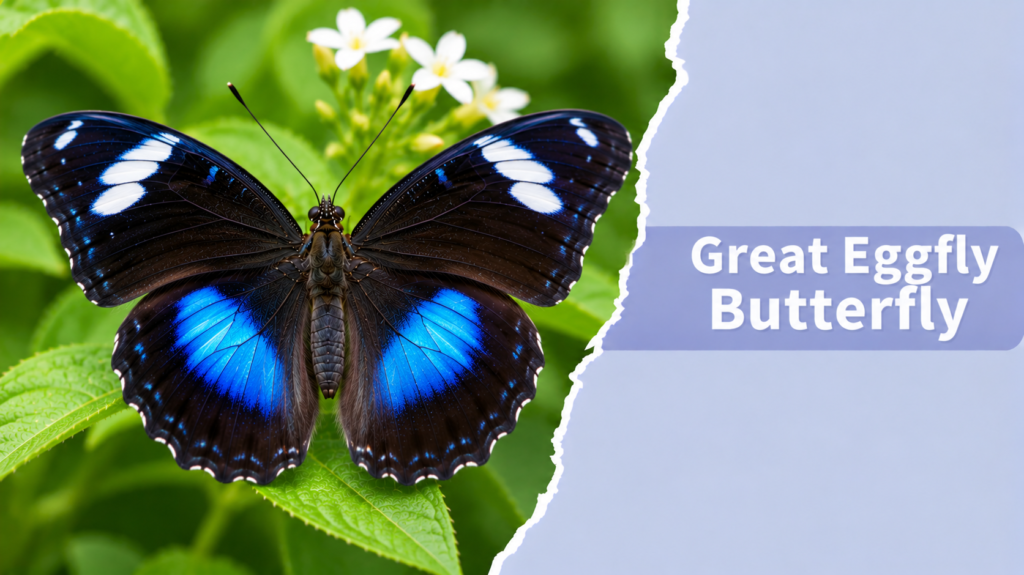
The Great Eggfly Butterfly is an attractive black and blue butterfly known for its velvety dark wings and shimmering blue-purple markings surrounding white spots. It belongs to the Nymphalidae family and is widely distributed across tropical regions. This species is especially interesting because males and females have noticeably different wing patterns.
Identification
- Scientific Name: Hypolimnas bolina
- Family: Nymphalidae
- Wingspan: 7–11 cm
- Wing Color: Black with iridescent blue-purple and white patches
- Underside: Brown with pale markings
- Body: Dark brown or black
- Distinctive Feature: Bright blue-purple reflections surrounding white wing spots
Habitat and Distribution
Great Eggfly Butterflies inhabit tropical forests, gardens, grasslands, and open woodlands. They are found throughout South and Southeast Asia, Australia, and various Pacific islands. These butterflies prefer warm environments with suitable vegetation and flowering plants.
Diet and Feeding Habits
Adult Great Eggflies primarily feed on nectar from flowering plants. Their caterpillars consume leaves from several host plants, including Asystasia gangetica. These plants provide the nutrition required for caterpillar growth and development.
Behavior and Unique Characteristics
Male Great Eggflies frequently defend territories from other butterflies. Females display variable wing patterns, sometimes resembling other butterfly species. Interestingly, females may guard their eggs after laying them, offering protection against certain predators and parasites.
14. Blue Tiger Butterfly (Tirumala limniace)
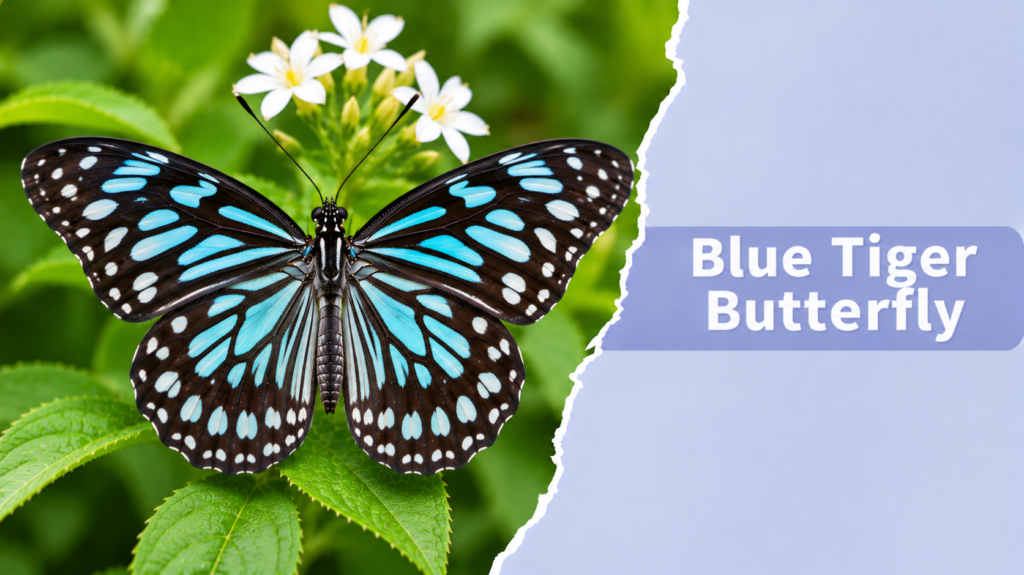
The Blue Tiger Butterfly is a striking black and blue butterfly recognized for its dark wings decorated with numerous pale-blue spots and streaks. It belongs to the Nymphalidae family and is commonly observed across tropical Asian regions. Its distinctive blue markings and graceful flight make it one of the most recognizable tiger butterflies.
Identification
- Scientific Name: Tirumala limniace
- Family: Nymphalidae
- Wingspan: Approximately 7–10 cm
- Wing Color: Dark brown or black with pale-blue markings
- Underside: Brown with bluish-white spots
- Body: Dark with small white markings
- Distinctive Feature: Numerous elongated blue streaks across both wings
Habitat and Distribution
Blue Tiger Butterflies occur throughout India, Bangladesh, Sri Lanka, Southeast Asia, and neighboring regions. They inhabit tropical forests, gardens, scrublands, and open wooded areas. These butterflies frequently visit flowering plants and locations containing suitable caterpillar host plants.
Diet and Feeding Habits
Adult Blue Tigers primarily consume flower nectar. Their caterpillars feed on plants belonging to the Apocynaceae family, including Calotropis, Wattakaka, and Hoya species. These plants contain defensive chemicals that may help protect the butterflies against predators.
Behavior and Unique Characteristics
Blue Tigers are known for their relatively slow, floating flight. They sometimes gather in groups and undertake seasonal migrations. Their contrasting blue markings make them noticeable, while chemical defenses acquired during their larval stage discourage many predators.
15. Dark Blue Tiger Butterfly (Tirumala septentrionis)
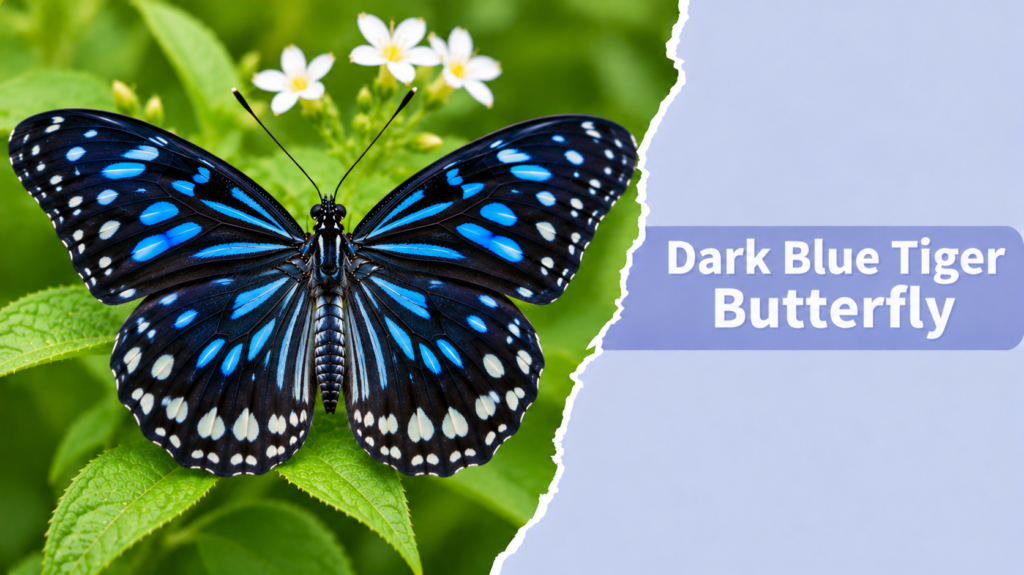
The Dark Blue Tiger Butterfly is a beautiful black and blue butterfly closely related to the Blue Tiger. It belongs to the Nymphalidae family and features dark brownish-black wings decorated with narrow, pale-blue markings. Its elegant appearance and gentle flying movements make it an interesting species found throughout parts of Asia.
Identification
- Scientific Name: Tirumala septentrionis
- Family: Nymphalidae
- Wingspan: 7.5–9.5 cm
- Wing Color: Dark brownish-black with narrow blue streaks
- Underside: Dark brown with bluish-white markings
- Body: Dark with pale spots
- Distinctive Feature: Narrower blue wing markings than the Blue Tiger
Habitat and Distribution
Dark Blue Tiger Butterflies inhabit tropical and subtropical environments across South and Southeast Asia. They occur in India, Sri Lanka, Bangladesh, Myanmar, and nearby countries. Their preferred habitats include moist forests, woodland edges, grasslands, and flowering gardens.
Diet and Feeding Habits
Adult Dark Blue Tigers primarily consume nectar from flowering plants. Their caterpillars feed on various climbing plants in the Apocynaceae family, including Wattakaka volubilis and Vallaris species. These plants provide important nutrients throughout larval development.
Behavior and Unique Characteristics
Dark Blue Tigers are graceful daytime flyers with slow, gliding movements. They frequently visit flowers and sometimes gather around damp ground. Their narrower wing markings distinguish them from ordinary Blue Tigers. Like related tiger butterflies, they possess chemical defenses that discourage many predators.
16. Blue Glassy Tiger Butterfly (Ideopsis vulgaris)

The Blue Glassy Tiger Butterfly is an elegant black and blue butterfly recognized for its translucent bluish-gray wings decorated with dark veins and borders. It belongs to the Nymphalidae family and is native to Southeast Asia. Its delicate, glass-like wing appearance distinguishes it from other tiger butterflies.
Identification
- Scientific Name: Ideopsis vulgaris
- Family: Nymphalidae
- Wingspan: Approximately 5.6–8.1 cm
- Wing Color: Pale bluish-gray with black veins
- Underside: Light bluish-gray with dark markings
- Body: Dark with pale spots
- Distinctive Feature: Translucent blue-gray wings with bold black patterns
Habitat and Distribution
Blue Glassy Tiger Butterflies are distributed across Southeast Asia, including Malaysia, Indonesia, Singapore, and surrounding regions. They inhabit tropical forests, mangrove areas, woodland edges, and occasionally urban gardens. These butterflies prefer warm, humid environments with abundant vegetation.
Diet and Feeding Habits
Adult Blue Glassy Tigers obtain nectar from flowering plants. Their caterpillars feed on climbing plants such as Tylophora tenuissima and Gymnema species. These host plants support caterpillar development and may contribute to their chemical defenses.
Behavior and Unique Characteristics
Blue Glassy Tigers are generally slow, graceful daytime flyers. Their pale blue-gray wing markings create a beautiful glass-like appearance. They possess chemical defenses associated with their larval host plants, making them unpalatable to many predators. Their distinctive markings also help predators recognize and avoid them.
17. Pipevine Swallowtail (Battus philenor)
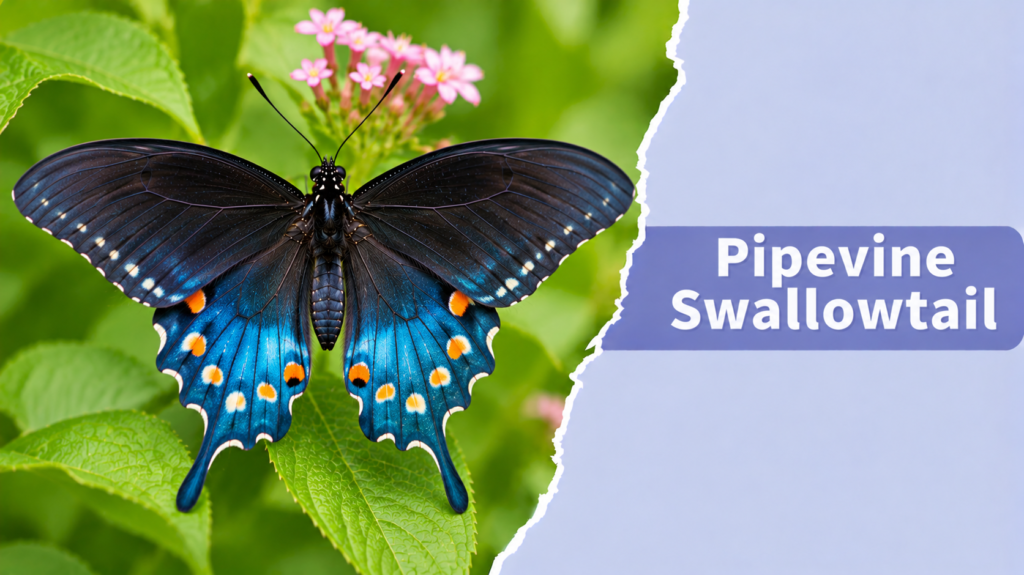
The Pipevine Swallowtail is a stunning black and blue butterfly native to North America. It belongs to the Papilionidae family and is recognized by its velvety black forewings and shimmering metallic-blue hindwings. The butterfly is particularly fascinating because its caterpillars develop chemical defenses from their host plants, making adults distasteful to many predators.
Identification
- Scientific Name: Battus philenor
- Family: Papilionidae
- Wingspan: 7–13 cm
- Wing Color: Black with iridescent blue hindwings
- Underside: Blue-black with bright orange spots
- Body: Dark with pale markings
- Distinctive Feature: Metallic-blue hindwings with elongated tails
Habitat and Distribution
Pipevine Swallowtails inhabit woodlands, gardens, forest edges, and open landscapes throughout parts of the United States and Mexico. They prefer warm environments where native pipevine plants grow abundantly. These butterflies are frequently observed near flowering plants and sunny woodland openings.
Diet and Feeding Habits
Adult Pipevine Swallowtails primarily consume nectar from flowers such as thistles, phlox, and lantana. Their caterpillars feed on pipevine plants belonging to the Aristolochia genus, which contain naturally occurring defensive chemicals.
Behavior and Unique Characteristics
These butterflies are active daytime flyers. Their brilliant blue coloration is particularly noticeable in males. Their chemical defenses help discourage predators, and several other butterfly species mimic their dark appearance for protection.
18. Spicebush Swallowtail (Papilio troilus)
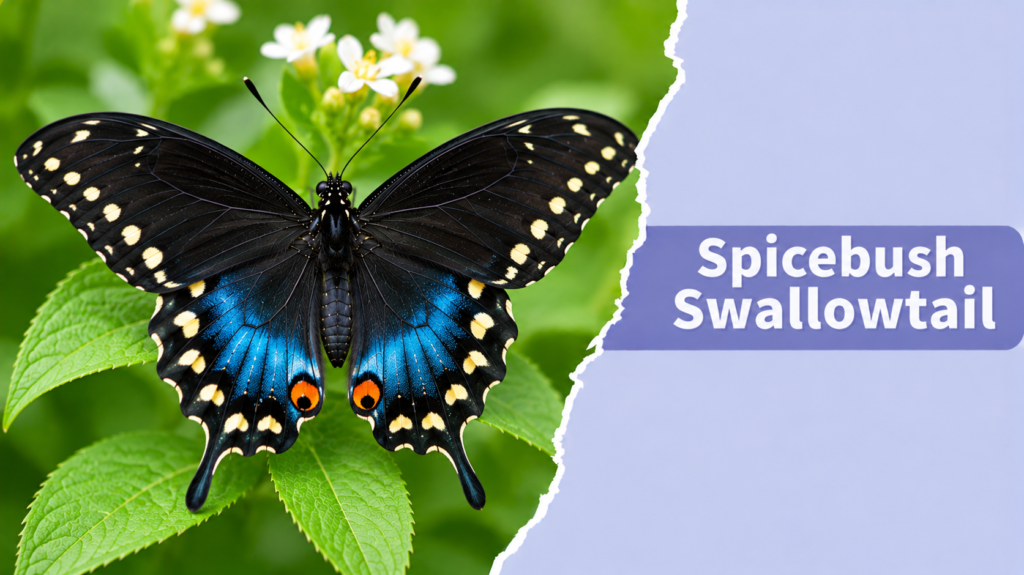
The Spicebush Swallowtail is a beautiful black and blue butterfly found across eastern North America. It belongs to the Papilionidae family and is recognized by its dark wings, shimmering blue or blue-green hindwing markings, and delicate tails. This species is particularly interesting because its caterpillars resemble small snakes, with large false eyespots that may help frighten predators.
Identification
- Scientific Name: Papilio troilus
- Family: Papilionidae
- Wingspan: Approximately 7.5–10 cm
- Wing Color: Black with blue or blue-green hindwings
- Underside: Dark with orange and pale-green spots
- Body: Dark with small pale markings
- Distinctive Feature: Iridescent hindwing patches and prominent tails
Habitat and Distribution
Spicebush Swallowtails are commonly found in eastern United States woodlands, gardens, forest edges, and wetlands. They prefer environments containing spicebush and sassafras trees. Adults frequently visit sunny woodland openings and flowering gardens.
Diet and Feeding Habits
Adult Spicebush Swallowtails feed on nectar from various flowering plants. Their caterpillars primarily consume leaves of spicebush and sassafras trees, which provide essential nutrients for development.
Behavior and Unique Characteristics
These butterflies are active daytime flyers. Males often patrol woodland paths while searching for mates. Their caterpillars construct protective shelters by folding leaves together with silk. Older caterpillars develop large, snake-like eyespots that may discourage predators.
19. Red-spotted Purple Butterfly (Limenitis arthemis astyanax)

The Red-spotted Purple Butterfly is an attractive black and blue butterfly native to North America. It belongs to the Nymphalidae family and is admired for its dark wings decorated with brilliant iridescent-blue patches. Despite its name, the butterfly displays more blue and black than purple. Its resemblance to the chemically defended Pipevine Swallowtail provides an interesting example of protective mimicry.
Identification
- Scientific Name: Limenitis arthemis astyanax
- Family: Nymphalidae
- Wingspan: Approximately 7.5–9 cm
- Wing Color: Black with iridescent-blue patches
- Underside: Dark brown with blue and orange-red spots
- Body: Dark brown or black
- Distinctive Feature: Shimmering blue hindwings without swallowtail extensions
Habitat and Distribution
Red-spotted Purple Butterflies inhabit deciduous forests, woodland edges, gardens, and wooded residential areas. They are commonly found throughout the eastern United States, particularly where suitable host trees and feeding sources are available.
Diet and Feeding Habits
Adults primarily consume tree sap, fermenting fruits, and other nutrient-rich liquids. They occasionally visit flowers for nectar. Their caterpillars feed on leaves of various trees, including wild cherry, willow, and poplar.
Behavior and Unique Characteristics
These butterflies are active during daylight hours and frequently rest on leaves or tree branches. Their resemblance to the toxic Pipevine Swallowtail helps discourage predators. Their iridescent-blue wings become especially noticeable when illuminated by sunlight.
20. Blue Clipper Butterfly (Parthenos sylvia)
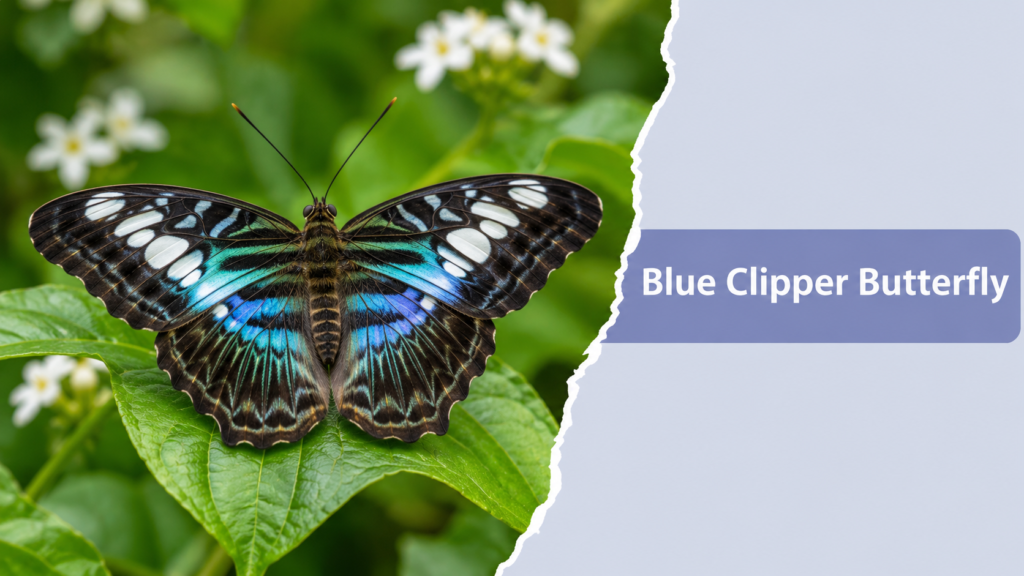
The Blue Clipper Butterfly is a beautiful black and blue butterfly recognized for its distinctive wing patterns and powerful flight. It belongs to the Nymphalidae family and occurs throughout tropical Asian regions. Certain forms display striking bluish-gray wings decorated with black streaks and pale markings, making them especially attractive among rainforest butterflies.
Identification
- Scientific Name: Parthenos sylvia
- Family: Nymphalidae
- Wingspan: Approximately 6–12 cm, varying by regional form
- Wing Color: Blue-gray, greenish, or brownish with black markings
- Underside: Pale gray-green or brownish with darker patterns
- Body: Dark with subtle markings
- Distinctive Feature: Broad wings with bold black streaks and pale patches
Habitat and Distribution
Blue Clipper Butterflies inhabit tropical rainforests across South and Southeast Asia, including India, Bangladesh, Sri Lanka, Thailand, Malaysia, and Indonesia. They prefer humid forests, woodland openings, and areas near rivers and streams.
Diet and Feeding Habits
Adult Blue Clippers feed on flower nectar, tree sap, and occasionally fermenting fruits. Their caterpillars consume leaves of climbing plants, including species belonging to the Adenia and Tinospora genera.
Behavior and Unique Characteristics
Blue Clippers are powerful daytime flyers known for their unusual flight pattern. They alternate rapid wingbeats with short glides, creating a distinctive clipping motion. Adults frequently fly along forest paths and riverbanks, sometimes gathering around flowering plants.
21. Blue Admiral Butterfly (Kaniska canace)

The Blue Admiral Butterfly is a striking black and blue butterfly known for its dark wings and brilliant electric-blue bands. It belongs to the Nymphalidae family and is widely distributed across Asia. Its distinctive wing markings and unusual resting appearance make it one of the most recognizable butterflies in woodland environments.
Identification
- Scientific Name: Kaniska canace
- Family: Nymphalidae
- Wingspan: 5–7 cm
- Wing Color: Blackish-blue with bright blue bands
- Underside: Dark brown with bark-like markings
- Body: Dark brown or black
- Distinctive Feature: Continuous blue bands across both wings
Habitat and Distribution
Blue Admiral Butterflies inhabit forests, woodland edges, mountain slopes, and shaded gardens. They occur in India, Nepal, China, Japan, and Southeast Asia. They prefer areas containing suitable host plants and often rest on tree trunks or leaves.
Diet and Feeding Habits
Adult Blue Admirals primarily consume tree sap and juices from overripe fruits. Unlike many nectar-feeding butterflies, they rarely visit flowers. Their caterpillars feed on plants such as Smilax and certain lily species.
Behavior and Unique Characteristics
These butterflies are active during daylight and frequently rest with their wings closed. Their brown undersides resemble dried leaves or tree bark, providing excellent camouflage. The contrasting blue bands become highly visible when they spread their wings.
22. Blue Begum Butterfly (Prothoe franck)
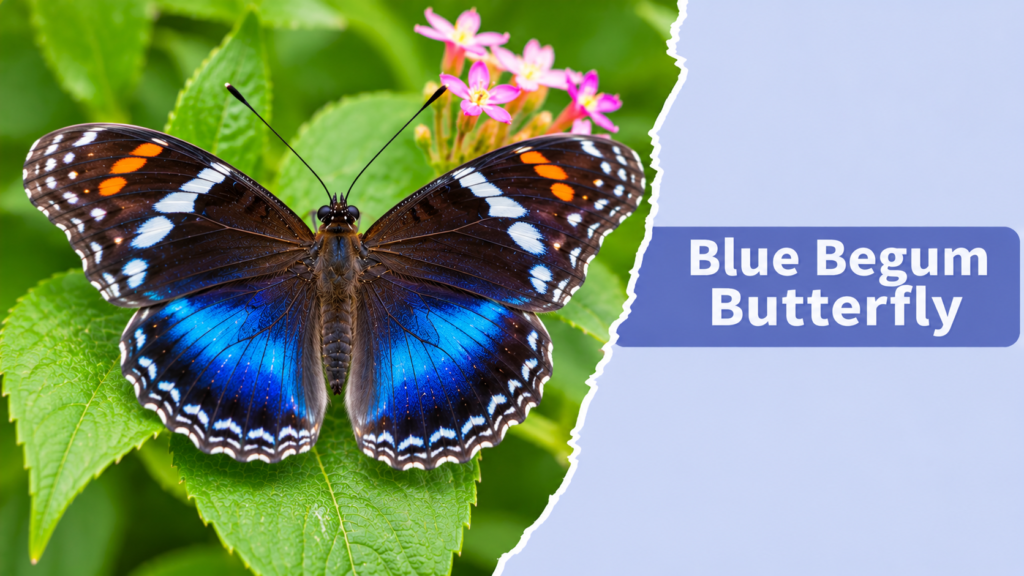
The Blue Begum Butterfly is a beautiful black and blue butterfly found in tropical Asian forests. It belongs to the Nymphalidae family and is admired for its shimmering metallic-blue wing bands. Its dark background coloration and brilliant blue markings create a distinctive appearance, especially when the butterfly opens its wings in sunlight.
Identification
- Scientific Name: Prothoe franck
- Family: Nymphalidae
- Wingspan: Approximately 6–8 cm
- Wing Color: Dark brown or black with metallic-blue bands
- Underside: Brown with irregular camouflage markings
- Body: Dark and robust
- Distinctive Feature: Shining blue bands across the upper wings
Habitat and Distribution
Blue Begum Butterflies inhabit tropical rainforests throughout parts of South and Southeast Asia. They occur in northeastern India, Myanmar, Thailand, Malaysia, and Indonesia. These butterflies prefer shaded forest environments containing dense vegetation and abundant natural food sources.
Diet and Feeding Habits
Adult Blue Begums feed primarily on juices from decaying fruits and tree sap. They may also obtain nutrients from other decomposing organic materials. Their caterpillars feed on suitable host plants in the Annonaceae family, including Fissistigma and Friesodielsia species.
Behavior and Unique Characteristics
Blue Begums are strong daytime flyers that frequently remain within forested areas. Their dark undersides provide camouflage while resting on tree trunks. Males may visit animal dung, while females are commonly attracted to fermenting fruits.
23. Dark Archduke Butterfly (Lexias dirtea)
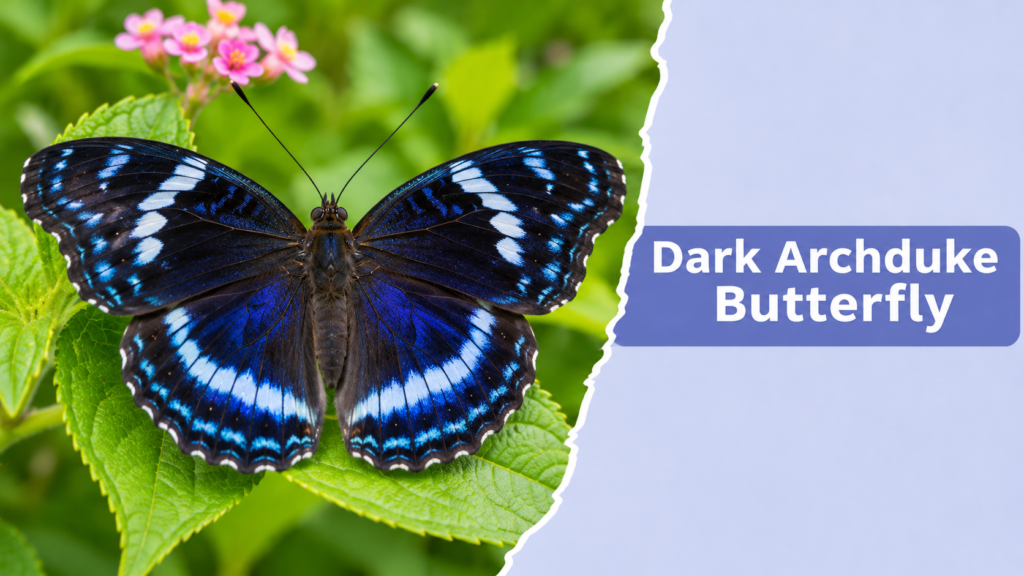
The Dark Archduke Butterfly is an impressive black and blue butterfly recognized for its velvety dark wings and metallic blue-green markings. It belongs to the Nymphalidae family and is native to tropical Asian forests. Male butterflies display particularly vibrant coloration, while females have brown wings with pale-yellow spots.
Identification
- Scientific Name: Lexias dirtea
- Family: Nymphalidae
- Wingspan: Approximately 7–9 cm
- Wing Color: Black with metallic blue-green margins in males
- Underside: Brown with irregular markings
- Body: Dark brown or black
- Distinctive Feature: Shimmering blue-green wing edges in males
Habitat and Distribution
Dark Archduke Butterflies inhabit tropical and subtropical forests throughout South and Southeast Asia. They occur in Bangladesh, India, Myanmar, Thailand, Malaysia, and Indonesia. These butterflies prefer shaded forest floors, woodland trails, and areas containing fallen fruits.
Diet and Feeding Habits
Adult Dark Archdukes primarily consume juices from fermenting fruits and other decaying organic materials. They may also absorb minerals from damp soil. Their caterpillars depend on suitable forest host plants for development.
Behavior and Unique Characteristics
These butterflies are powerful daytime flyers and frequently move close to the forest floor. Males sometimes gather near moist ground to obtain minerals. Their metallic-blue coloration helps distinguish them from females, which display predominantly brown and yellow wing patterns.
24. Striped Blue Crow Butterfly (Euploea mulciber)
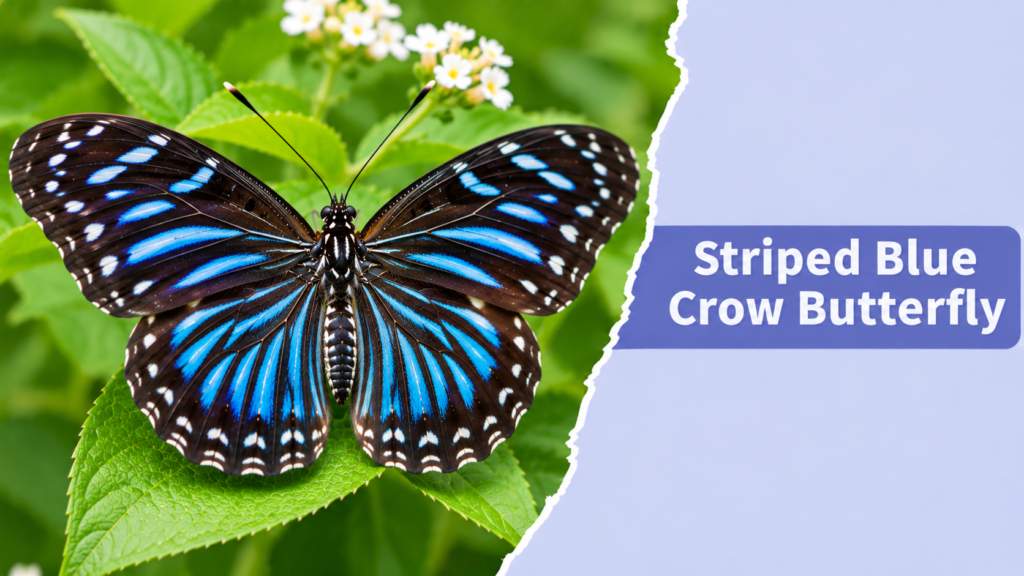
The Striped Blue Crow Butterfly is a striking black and blue butterfly recognized for its glossy dark wings and beautiful blue reflections. It belongs to the Nymphalidae family and is commonly found in tropical Asian regions. Male butterflies display shimmering blue forewings, while females possess distinctive pale stripes on their hindwings.
Identification
- Scientific Name: Euploea mulciber
- Family: Nymphalidae
- Wingspan: 9–11 cm
- Wing Color: Glossy black with blue reflections
- Underside: Brown with pale spots
- Body: Dark with small white markings
- Distinctive Feature: Iridescent blue forewings in males and white hindwing streaks in females
Habitat and Distribution
Striped Blue Crow Butterflies inhabit tropical forests, woodland edges, gardens, and coastal vegetation. They occur in India, Bangladesh, Nepal, Myanmar, Thailand, Malaysia, and Singapore. They prefer warm environments containing flowering plants and suitable larval host plants.
Diet and Feeding Habits
Adult Striped Blue Crows primarily consume nectar from flowering plants, including lantana. Their caterpillars feed on various host plants, including Ficus, Nerium, and Gymnanthera species.
Behavior and Unique Characteristics
These butterflies have relatively slow, graceful flight movements. Their glossy blue wings become particularly noticeable in bright sunlight. The difference between male and female wing patterns makes this species especially interesting to identify in nature.
FAQs
1. What Is the Most Common Black and Blue Butterfly?
The most common black and blue butterfly depends on the region. In parts of Asia, Common Bluebottles and Blue Tigers are frequently observed. In eastern North America, Pipevine Swallowtails and Red-spotted Purples are familiar examples of butterflies displaying black and blue wing patterns.
2. Are Black and Blue Butterflies Rare?
Some black and blue butterflies are common, while others are uncommon or geographically restricted. Their abundance depends on habitat quality, climate, and host plant availability. Species such as the Blue Morpho and Ulysses Butterfly are particularly famous for their striking colors.
3. What Causes the Blue Color in Black and Blue Butterflies?
Many black and blue butterflies display structural coloration rather than relying entirely on blue pigments. Microscopic structures on their wing scales reflect specific wavelengths of light, producing brilliant blue shades. This explains why some butterfly wings appear to shimmer or change color depending on the viewing angle.
4. Where Do Black and Blue Butterflies Live?
Black and blue butterflies inhabit tropical rainforests, temperate woodlands, gardens, grasslands, and forest edges. They are distributed across Asia, Africa, Australia, and the Americas. Their preferred habitats vary by species, especially according to temperature, humidity, nectar sources, and caterpillar host plants.
5. Are Black and Blue Butterflies Poisonous?
Not all black and blue butterflies are poisonous or chemically defended. Some species, including Pipevine Swallowtails and certain tiger butterflies, contain chemicals that make them distasteful to predators. Others are harmless mimics that resemble chemically protected species to reduce the risk of being eaten.