

Geometer Moths, belonging to the family Geometridae, are a fascinating group known for their delicate wing patterns and unique larval movements, often called “inchworms.” These moths are widespread across gardens, woodlands, and meadows, where their excellent camouflage helps them stay hidden from predators. In this article, we will explore seven distinct types of Geometer Moths, highlighting their identification traits, habitats, and behaviors in detail.
1. Peppered Moth (Biston betularia)

The Peppered Moth is one of the most famous Geometer Moths, often highlighted in studies of natural selection and evolution. Native to Europe and parts of Asia, it is best known for its color variations, which shifted during the Industrial Revolution when darker forms became more common in polluted areas. This species perfectly illustrates how environmental change can influence adaptation in moth populations.
Identification
- Medium-sized moth with a wingspan of 45–62 mm
- Typical form: pale whitish wings with black speckling (peppered appearance)
- Melanic form: almost entirely black or dark grey
- Slender body with delicate scaling
- Resting posture aligns wings flat against surfaces, blending into tree bark
Habitat and Distribution
The Peppered Moth is widely distributed across Europe, extending into Asia and North America (where it has been introduced). It thrives in woodlands, gardens, and urban areas where lichen-covered tree trunks or soot-darkened bark provide camouflage.
Behavior and Diet
Adults are nocturnal and fly from May to August, depending on the region. They are strongly attracted to light. Caterpillars feed on a variety of deciduous trees and shrubs, including birch, oak, willow, and hawthorn. Their twig-like appearance helps them avoid predation by birds.
2. Winter Moth (Operophtera brumata)

The Winter Moth is a well-known Geometer Moth, particularly famous for its unusual flight season during the cold months when most insects are inactive. It is native to Europe but has spread to North America, where it is sometimes considered a pest due to its caterpillars’ appetite for trees. Despite the harsh conditions it endures, this moth has adapted remarkably well to survive and thrive in winter climates.
Identification
- Small moth with a wingspan of 20–30 mm
- Males: light brown to grey wings with darker crossbands
- Females: almost wingless, with reduced wings and spider-like appearance
- Slender body with fine scaling
- Caterpillars are green, resembling inchworms with looping movement
Habitat and Distribution
The Winter Moth is widespread across Europe and introduced to parts of North America, especially Canada and the northeastern United States. It prefers woodlands, orchards, and suburban gardens where deciduous trees are abundant.
Behavior and Diet
Adults emerge late in the year, usually from November to January, often seen flying around lights during frosty nights. Males fly, while females remain on tree trunks, releasing pheromones to attract mates. Caterpillars feed voraciously in spring on the buds and leaves of trees such as oak, apple, birch, and maple, sometimes causing significant defoliation.
3. Common Emerald (Hemithea aestivaria)

The Common Emerald is a beautiful green Geometer Moth often admired for its delicate appearance. Its fresh green wings, edged with white, make it one of the most striking moths in gardens and woodlands. Unlike many moths that blend into bark or soil, this species relies on leafy camouflage to remain hidden during the day. It is a widespread species in Europe and parts of Asia.
Identification
- Medium-sized moth with a wingspan of 30–35 mm
- Bright green wings with fine white edging and faint crosslines
- Body also green, blending seamlessly with wings
- Over time, green fades to yellowish or whitish tones as the moth ages
- Slender antennae, typical of Geometer Moths
Habitat and Distribution
The Common Emerald is found throughout Europe, extending into parts of Asia. It thrives in gardens, woodlands, hedgerows, and meadows where its green coloration provides perfect camouflage among leaves. It is particularly common in regions with dense vegetation.
Behavior and Diet
Adults are nocturnal and active from June to August, often seen at light sources on warm nights. Caterpillars feed on a wide range of trees and shrubs, including hawthorn, oak, birch, and blackthorn. Their green, stick-like bodies make them almost invisible among leaves and twigs, protecting them from predators.
4. Large Emerald (Geometra papilionaria)

The Large Emerald is one of the most impressive Geometer Moths, easily recognized by its vivid green wings and large size compared to other emerald moths. With its graceful appearance, it is often considered one of the most beautiful moths found in Europe. The bright coloration gives it excellent camouflage among fresh summer foliage, though older individuals may fade over time.
Identification
- Large moth with a wingspan of 50–60 mm
- Bright emerald-green wings with fine white crosslines
- Distinct scalloped edges to wings, unlike the straighter wings of the Common Emerald
- Body is also green, blending seamlessly with the wings
- Green fades to yellowish or whitish as the moth ages
Habitat and Distribution
This species is widespread in Europe and parts of Asia, most common in deciduous and mixed woodlands. It favors regions with plenty of birch, alder, and oak trees. Although not rare, it is less frequently seen than smaller emerald moths due to its woodland preferences.
Behavior and Diet
Adults are active from June to August, flying mostly at night but sometimes flushed during the day. They are attracted to lights but less commonly than other emerald species. Caterpillars feed on birch, alder, and hazel, where their twig-like camouflage makes them difficult to spot.
5. Swallow-tailed Moth (Ourapteryx sambucaria)
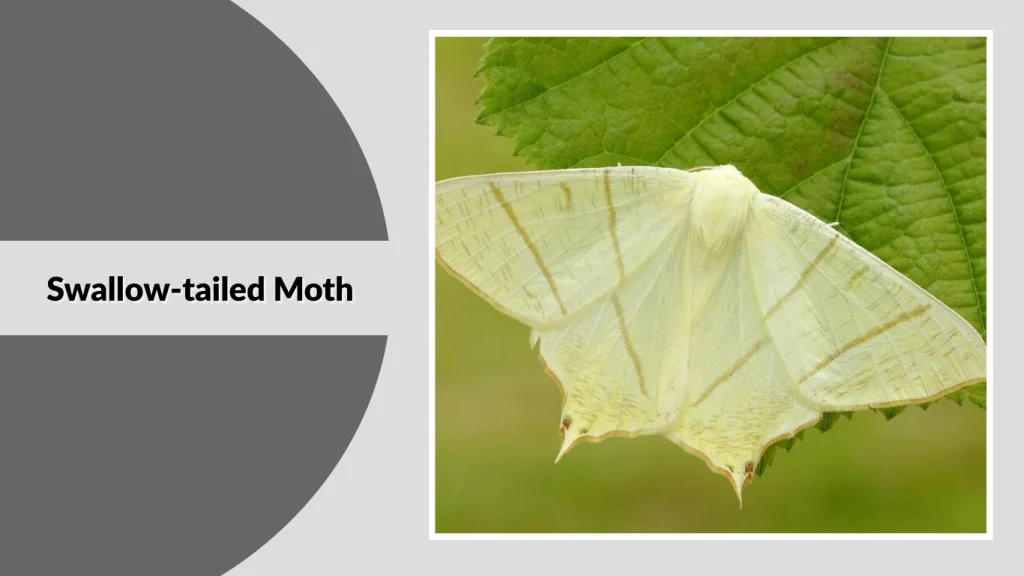
The Swallow-tailed Moth is one of the most recognizable Geometer Moths due to its striking wing shape and pale yellow coloration. Its extended tail-like projections on the hindwings resemble those of a swallow’s tail, giving the moth both its name and unique beauty. It is widespread and often seen resting near garden lights during warm summer nights.
Identification
- Large moth with a wingspan of 50–70 mm
- Pale yellow wings with faint brown crosslines
- Hindwings have long, pointed tails, resembling a swallow’s tail
- Body is slender and yellowish
- Caterpillars are brown and twig-like, with excellent camouflage
Habitat and Distribution
This species is widespread across Europe and parts of Asia, thriving in gardens, parks, hedgerows, and woodland edges. It is often common in suburban areas where host plants are abundant, making it a familiar sight to many people during summer.
Behavior and Diet
The Swallow-tailed Moth flies from June to August and is strongly attracted to artificial lights, often appearing in large numbers around lamps. Caterpillars feed on a wide variety of shrubs and trees, including ivy, hawthorn, and elder. Their twig-like appearance helps them remain hidden from predators during the day.
6. Willow Beauty (Peribatodes rhomboidaria)
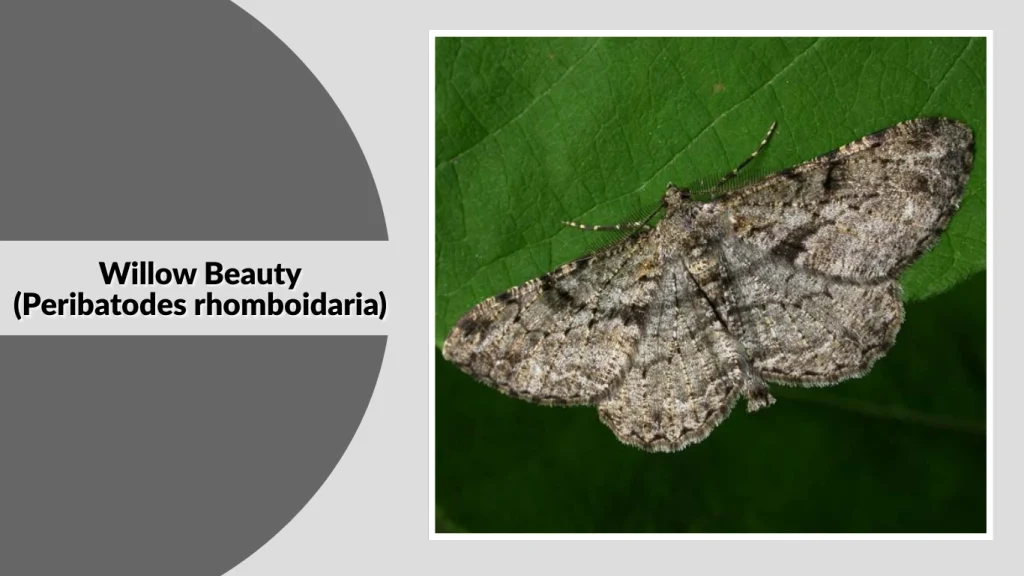
The Willow Beauty is a well-known Geometer Moth that often visits gardens and woodland edges. Despite its name, it feeds on a wide range of plants beyond willow, including ivy and birch. Its mottled brown coloration allows it to blend perfectly into tree bark, making it less noticeable during the day when it rests motionless. This species is widespread and fairly common.
Identification
- Medium-to-large moth with a wingspan of 35–44 mm
- Mottled brown and gray wings with darker crossbands
- Hindwings paler than forewings, often with faint markings
- Caterpillars resemble twigs, brownish with angular bodies
- Camouflage makes it hard to spot against bark
Habitat and Distribution
The Willow Beauty is found widely across Europe and Asia, with a preference for gardens, woodland edges, parks, and scrublands. Its adaptability to different habitats makes it one of the most encountered Geometer Moths in suburban and rural environments.
Behavior and Diet
Adults are nocturnal and strongly attracted to light, often appearing in large numbers on warm summer nights. Their flight season usually spans from July to September. The larvae feed on a broad range of trees and shrubs, such as ivy, birch, hawthorn, and willow, which supports their wide distribution.
7. Riband Wave (Idaea aversata)
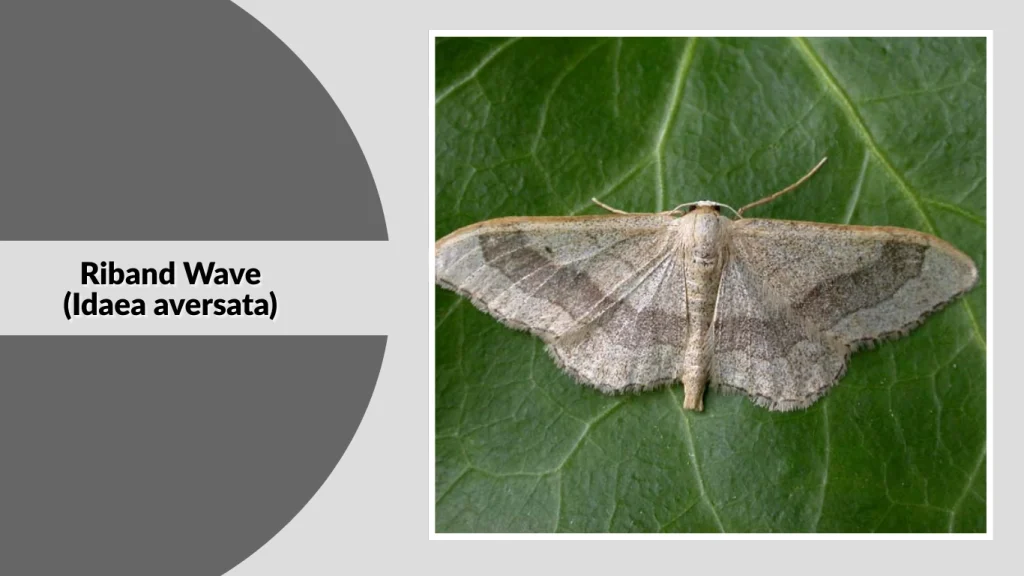
The Riband Wave is a small but distinctive Geometer Moth, commonly found in gardens, meadows, and woodland edges. Its name comes from the dark “riband” (band) that runs across its forewings in some forms, although a plain variant also exists. This variation makes it a fascinating species for moth enthusiasts, as both forms can often be seen in the same area during summer nights.
Identification
- Small moth with a wingspan of 25–30 mm
- Pale buff or whitish wings with wavy crosslines
- Dark brown central band (“riband”) present in the common form
- Some individuals lack the band, appearing much paler
- Caterpillars are slender, brownish, and well-camouflaged against stems
Habitat and Distribution
The Riband Wave is one of the most widespread Geometer Moths in Europe, occurring in gardens, grasslands, hedgerows, and woodland margins. It is also found in parts of Asia. Its adaptability makes it a frequent visitor to suburban gardens.
Behavior and Diet
Active from June to August, this moth is strongly attracted to light and can appear in large numbers on warm nights. Its larvae feed on a wide range of low-growing plants, including dandelions, bedstraws, and clovers, which supports its broad distribution.
