
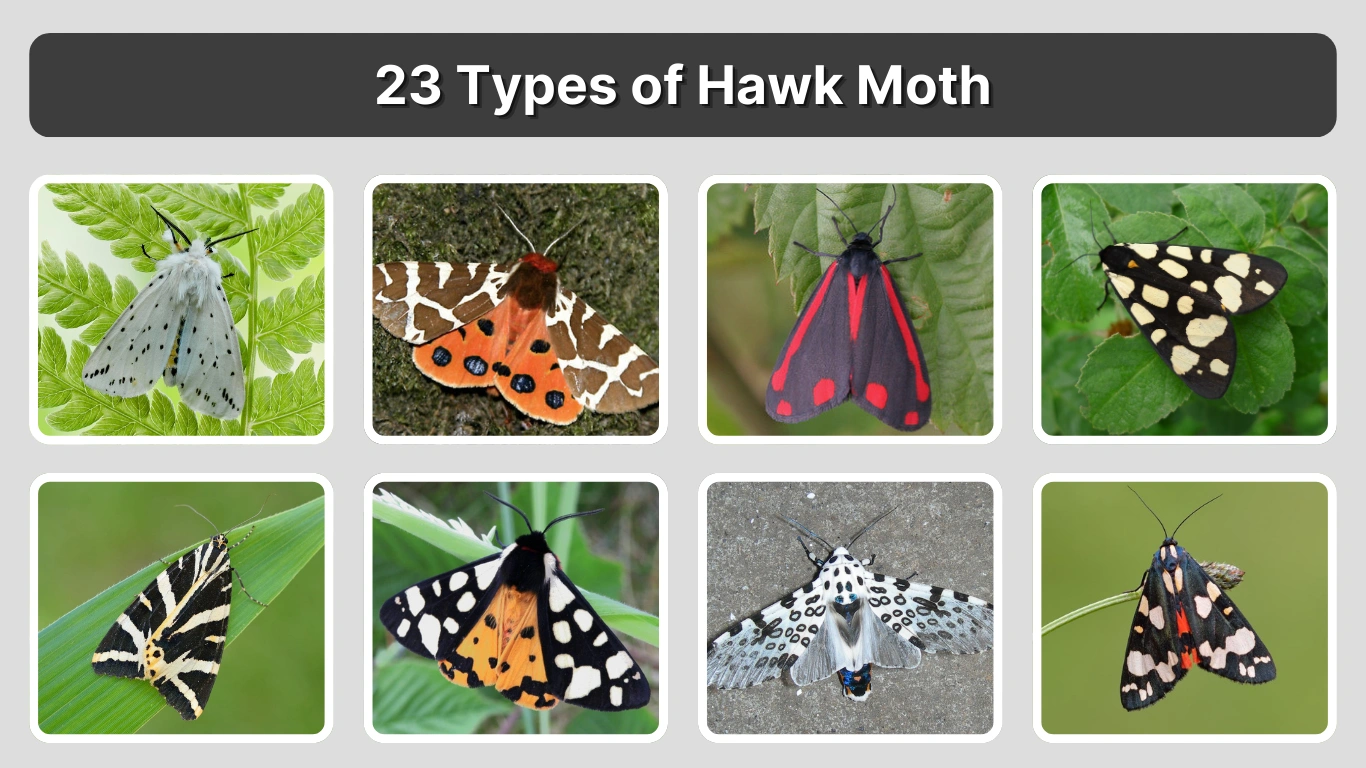
Tiger moths are among the most striking members of the moth family, admired for their bold patterns and bright warning colors. Found across different regions of the world, they play an important role in ecosystems as both pollinators and a food source for predators. This article explores 16 unique types of tiger moths, detailing their identification, habitat, and behavior so you can better understand these fascinating insects.
1. Garden Tiger Moth (Arctia caja)

The Garden Tiger Moth is one of the most striking and colorful tiger moths, well-known across Europe and North America. Its bold patterns serve as a warning to predators, as this moth contains toxic compounds that make it unpalatable. Beyond its beauty, it plays an important role in ecosystems by serving as both a pollinator and a food source for certain predators.
Identification
- Wingspan: 45–65 mm
- Forewings: Brown with cream or white irregular patches
- Hindwings: Bright orange or red with bold black spots
- Body: Furry, with a reddish abdomen and dark markings
- Caterpillar: Known as “woolly bear,” covered in dense dark hairs
Habitat and Distribution
This moth inhabits gardens, meadows, coastal grasslands, and open woodlands. It is widespread across Europe, parts of Asia, and North America. They are often spotted in temperate regions where host plants like nettles, docks, and dandelions are abundant.
Behavior and Diet
The adult Garden Tiger Moth is nocturnal and often attracted to light. Its caterpillars, called woolly bears, feed on a wide variety of low-growing plants, making them highly adaptable. When threatened, adults flash their bright hindwings to startle predators, relying on both visual warning and chemical defense to survive.
2. Jersey Tiger Moth (Euplagia quadripunctaria)
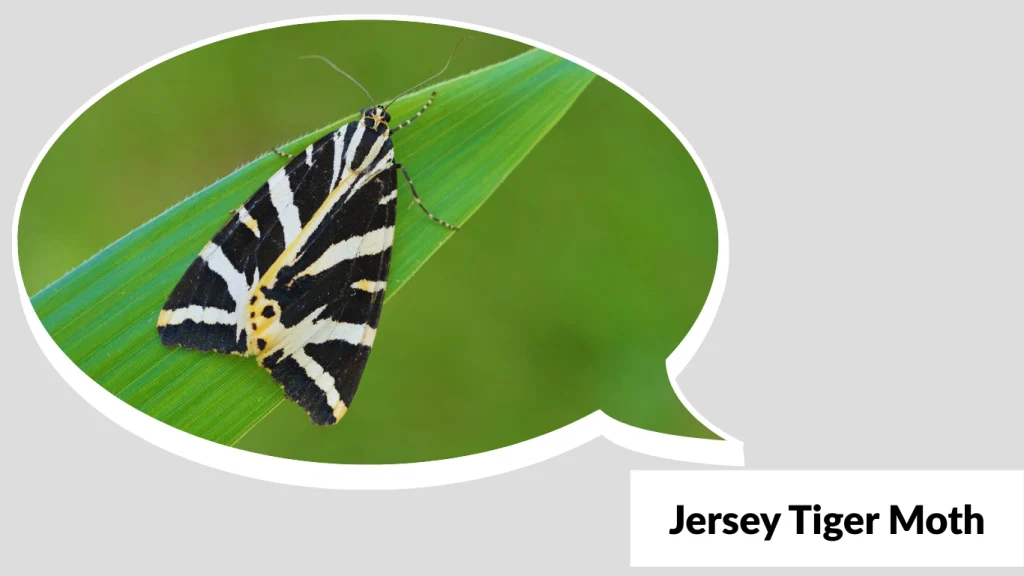
The Jersey Tiger Moth is a beautifully patterned tiger moth, well-recognized for its striking black, white, and orange wing coloration. Unlike many other moths, this species is often seen flying during the daytime, especially in sunny weather, making it more noticeable to people. It is commonly spotted in southern Europe but has been expanding its range into northern regions.
Identification
- Wingspan: 52–65 mm
- Forewings: Black with bold cream or white stripes forming a tiger-like pattern
- Hindwings: Bright orange-red with black spots
- Body: Furry, dark with orange markings
- Flight: Active both day and night, unlike most moths
Habitat and Distribution
This moth is widely found across southern and central Europe, including the Mediterranean, and has become increasingly common in parts of the UK. It prefers warm habitats such as gardens, meadows, coastal areas, and woodland edges, where plenty of nectar plants are available.
Behavior and Diet
Adult Jersey Tiger Moths are known for their day-flying activity, feeding on nectar from flowers such as buddleia, hemp-agrimony, and thistles. The caterpillars feed on a wide variety of herbaceous plants, including nettles and ground ivy. When disturbed, the moth flashes its bright hindwings as a warning display to deter predators.
3. Cream-spot Tiger Moth (Arctia villica)

The Cream-spot Tiger Moth is one of the most eye-catching moths in Europe, admired for its striking wing coloration. Its bold patterns are a form of warning coloration, signaling to predators that it is unpalatable. This moth is especially common in southern and central Europe but also appears in parts of western Asia, favoring warm and flowery habitats.
Identification
- Wingspan: 45–60 mm
- Forewings: Black with numerous large cream or white spots
- Hindwings: Bright red, orange, or yellow with several black spots
- Body: Black with orange or red patches, covered in fine hairs
- Caterpillar: Dark, hairy with reddish bands
Habitat and Distribution
The Cream-spot Tiger Moth thrives in sunny, open landscapes such as grasslands, meadows, and gardens. It is widely distributed across Europe, especially the Mediterranean, and extends into parts of Asia Minor. These habitats provide plenty of host plants for its caterpillars and nectar sources for adults.
Behavior and Diet
Adults are mainly nocturnal and are strongly attracted to light, though they may also be seen resting during the day. The caterpillars are polyphagous, feeding on a wide range of low-growing plants such as dandelions, nettles, and plantains. When threatened, the moth reveals its vivid hindwings in a sudden flash, startling predators and using its chemical defenses to deter attack.
4. Cinnabar Moth (Tyria jacobaeae)
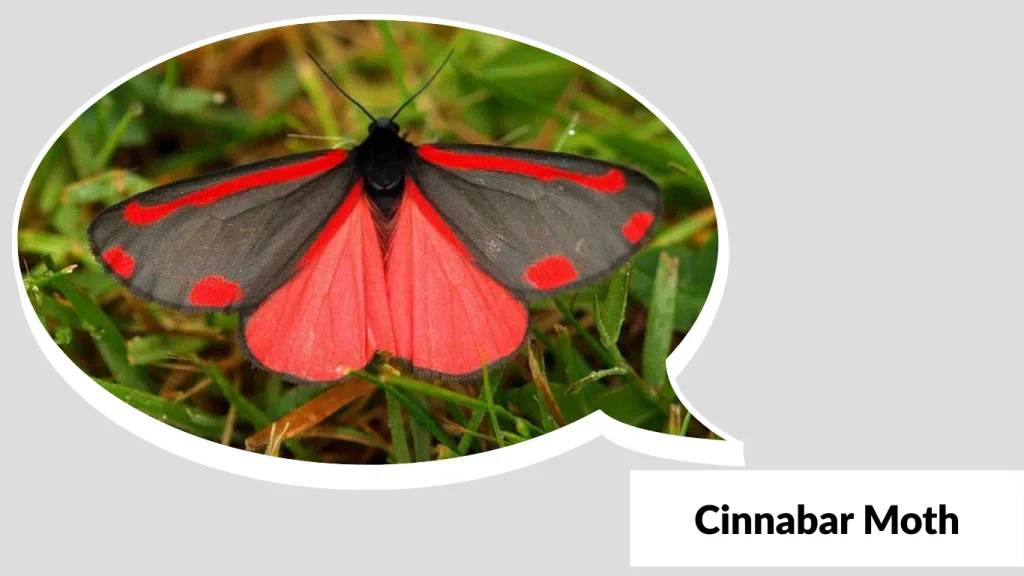
The Cinnabar Moth is one of the most distinctive tiger moths, recognized for its striking black and red coloration. Named after the bright red mineral cinnabar, this moth is a classic example of aposematism—using bold colors to warn predators of its toxicity. It plays an important ecological role by helping control ragwort plants, which are its caterpillar’s main food source.
Identification
- Wingspan: 32–42 mm
- Forewings: Black with bright red stripes and spots
- Hindwings: Vivid red with black borders
- Body: Black with flashes of red
- Caterpillar: Bold yellow and black bands, highly visible
Habitat and Distribution
Cinnabar Moths are widespread across Europe and western Asia, and they were also introduced into New Zealand, Australia, and North America as a biological control for ragwort. They thrive in grasslands, meadows, coastal areas, and open woodlands where ragwort grows abundantly.
Behavior and Diet
Adults are mostly nocturnal but can sometimes be seen flying during the day. Their caterpillars feed almost exclusively on ragwort, accumulating its toxic alkaloids, which make both larvae and adults poisonous to many predators. When disturbed, the bright coloration of both the caterpillars and adults serves as a visual warning, deterring birds and other insect-eating animals.
5. Scarlet Tiger Moth (Callimorpha dominula)
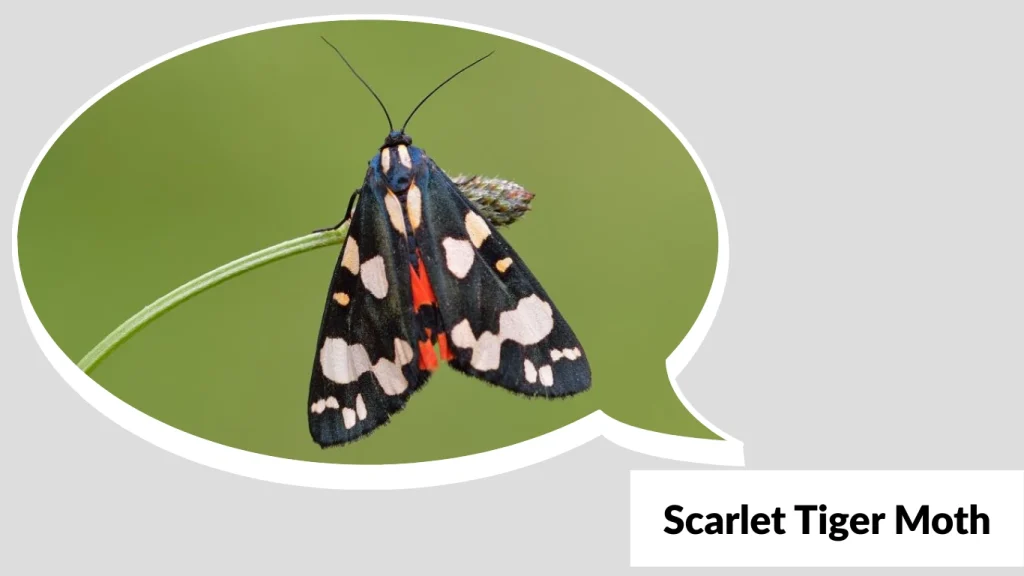
The Scarlet Tiger Moth is among the most vividly patterned tiger moths, admired for its dazzling mix of black, yellow, white, and scarlet colors. Unlike many moths, it is often seen flying during the daytime, making it easy to spot in gardens and meadows. Its striking coloration not only deters predators but also makes it a favorite species for moth-watchers and nature enthusiasts.
Identification
- Wingspan: 45–55 mm
- Forewings: Metallic black with bold white or yellow spots
- Hindwings: Bright scarlet or orange-red with black spots
- Body: Black with reddish or orange markings
- Caterpillar: Dark with yellow bands and spiny hairs
Habitat and Distribution
Scarlet Tiger Moths are widely distributed across Europe, particularly in southern England, Wales, and parts of central Europe. They prefer damp meadows, marshes, gardens, and woodland edges where a variety of wildflowers and host plants grow.
Behavior and Diet
Adults are active both day and night, often seen flying on warm sunny days in June and July. They feed on nectar from flowers, while the caterpillars consume a variety of plants including nettles, comfrey, and brambles. Their vibrant coloration is a classic example of aposematism, serving as a warning to birds and other predators of their unpalatability.
6. Wood Tiger Moth (Arctia plantaginis)

The Wood Tiger Moth is a striking and widespread species in the northern hemisphere, admired for its bold warning colors. Its appearance varies depending on the region, with hindwings ranging from yellow to red. This variability, along with its wide distribution, makes it one of the most studied tiger moths. Its bright colors signal toxicity, discouraging predators like birds from attacking.
Identification
- Wingspan: 35–55 mm
- Forewings: Black or dark brown with large white patches
- Hindwings: Bright yellow, orange, or red with black spots (regional variation)
- Body: Black with yellow or orange markings
- Caterpillar: Dark, hairy, with rusty-red or orange sides
Habitat and Distribution
The Wood Tiger Moth is common across Europe, Asia, and North America, particularly in grasslands, woodland edges, and alpine meadows. Its adaptability allows it to thrive in both lowland and highland habitats, making it one of the most widespread tiger moths.
Behavior and Diet
Adults are active during the daytime and often bask in the sun. They fly from May to July, depending on location. Caterpillars are polyphagous, feeding on various herbaceous plants including dandelion, plantain, and dock. When threatened, the moth displays its vivid hindwings as a warning signal, coupled with defensive chemicals that deter predation.
7. Garden Tiger Moth (Arctia caja)
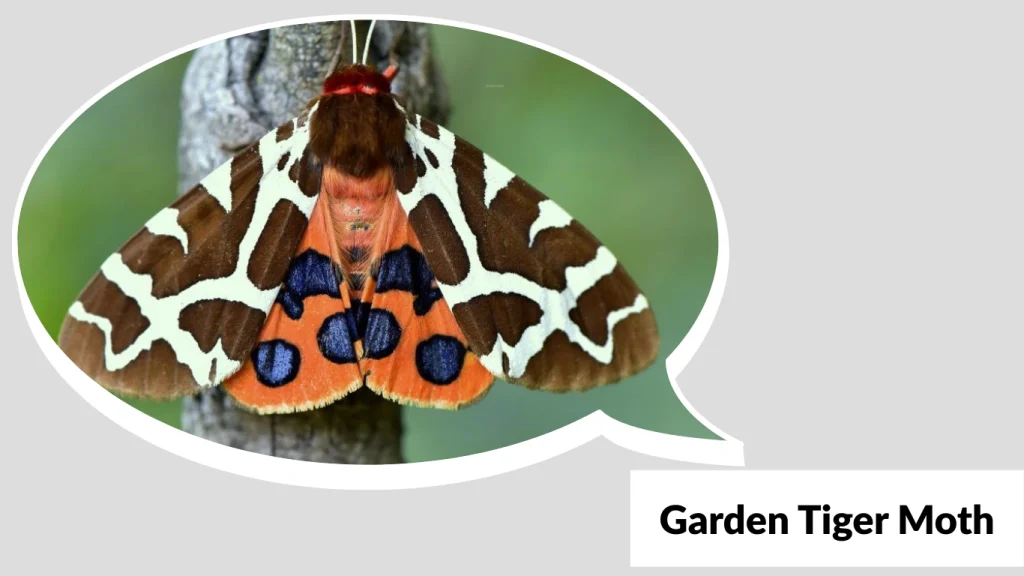
The Garden Tiger Moth is one of the most iconic and eye-catching species of tiger moth, famous for its dramatic patterns and bold warning colors. Its striking wings, which combine chocolate-brown and white forewings with brilliant orange hindwings, make it instantly recognizable. This moth has long fascinated both scientists and nature lovers for its beauty and its strong chemical defenses against predators.
Identification
- Wingspan: 45–65 mm
- Forewings: Brown with creamy-white patches in a mosaic pattern
- Hindwings: Bright orange-red with large black spots
- Body: Orange-red with dark markings, hairy and robust
- Caterpillar: Known as the “woolly bear,” dark brown and very hairy with orange bands
Habitat and Distribution
Garden Tiger Moths are widely distributed across Europe, Asia, and North America, often found in gardens, meadows, and woodland edges. They prefer cooler climates and are especially common in northern regions, including the Arctic Circle.
Behavior and Diet
Adults are nocturnal and fly in mid to late summer, frequently drawn to light sources. Caterpillars are generalist feeders, consuming a variety of plants such as nettles, dock, and foxglove. Both caterpillars and adults are toxic, producing bitter-tasting chemicals to discourage predators. When threatened, the moth displays its bright hindwings in a sudden flash to startle birds and other attackers.
8. Cream-spot Tiger Moth (Arctia villica)

The Cream-spot Tiger Moth is a visually striking species, recognized by its jet-black forewings adorned with creamy-white spots. Its hindwings reveal vivid red or orange tones with black markings, making it another excellent example of aposematism—using bold colors to ward off predators. This moth is not only admired for its beauty but also for its role in balancing ecosystems by controlling herbaceous plants.
Identification
- Wingspan: 45–60 mm
- Forewings: Black with multiple large, irregular cream-white spots
- Hindwings: Bright orange or red with bold black spots
- Body: Black with red or orange segments
- Caterpillar: Hairy, dark brown to black, with lighter streaks along the body
Habitat and Distribution
Cream-spot Tiger Moths are primarily found across southern and central Europe, extending into parts of North Africa and western Asia. They thrive in open habitats such as meadows, scrublands, and woodland clearings, often in warmer climates.
Behavior and Diet
Adults are nocturnal and fly from May to July, frequently attracted to light. They are strong fliers and often show their bright hindwings when threatened, startling predators. Caterpillars feed on a wide range of plants, including dandelions, nettles, and various herbaceous vegetation, allowing the species to flourish in diverse environments.
9. Cinnabar Moth (Tyria jacobaeae)
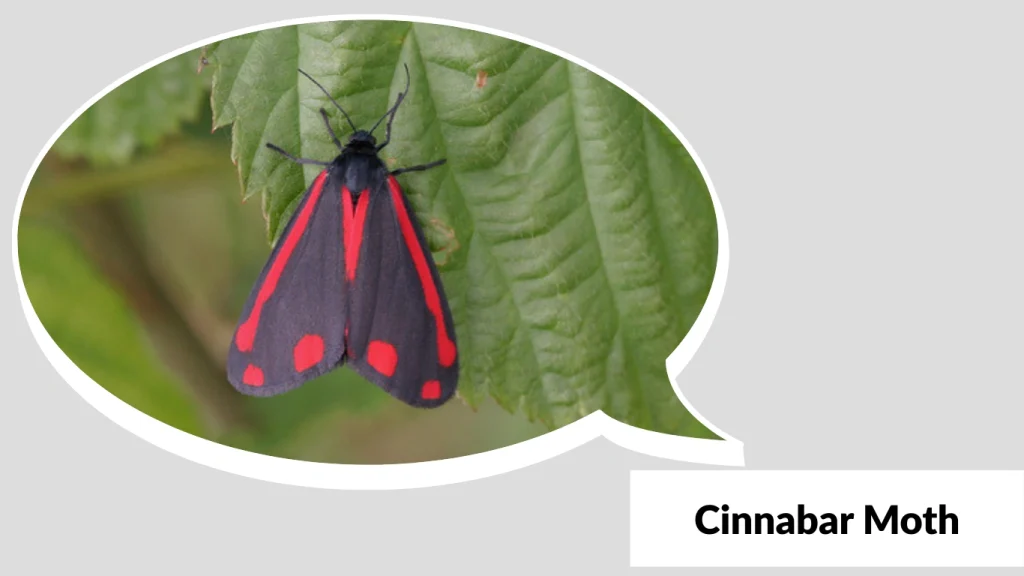
The Cinnabar Moth is a brightly colored species that stands out with its bold red and black wings. It is one of the most recognizable tiger moths in Europe and is closely associated with its host plant, ragwort. Its striking colors serve as a warning to predators that both the caterpillar and the adult are toxic due to the alkaloids ingested from their food plants.
Identification
- Wingspan: 32–42 mm
- Forewings: Dark grayish-black with two distinct red stripes and red spots
- Hindwings: Bright red with a black border
- Body: Black with touches of red on the abdomen
- Caterpillar: Black and yellow-banded, hairless, often found in groups feeding on ragwort
Habitat and Distribution
Cinnabar Moths are widely distributed across Europe and Asia and have been introduced to other regions, including New Zealand and North America, for biological control of ragwort. They thrive in grasslands, coastal dunes, and areas with abundant ragwort growth.
Behavior and Diet
Adults are primarily nocturnal but may occasionally be seen flying during the day. Caterpillars feed almost exclusively on ragwort and related species, absorbing toxic alkaloids that render them distasteful to predators. Both caterpillars and adults are important in natural pest control, helping manage ragwort populations in meadows and pastures.
10. Scarlet Tiger Moth (Callimorpha dominula)
The Scarlet Tiger Moth is among the most colorful and dazzling species of tiger moth, admired for its metallic forewings and vivid hindwing colors. Unlike many other moths, this species is often active during the day, making its striking appearance easy to observe. Its vibrant red, yellow, and black hindwings act as a defense mechanism, startling predators when flashed suddenly.
Identification
- Wingspan: 45–55 mm
- Forewings: Dark metallic green or black with white or cream spots
- Hindwings: Bright red or orange with black patches; sometimes yellowish in variations
- Body: Black with hints of red or orange on the abdomen
- Caterpillar: Velvety black with yellow streaks running along the sides, covered in small bristles
Habitat and Distribution
Scarlet Tiger Moths are found across parts of Europe, particularly in the UK, southern Europe, and extending into western Asia. They inhabit damp meadows, riverbanks, woodland edges, and gardens where host plants are plentiful.
Behavior and Diet
Unlike most moths, Scarlet Tiger Moths are diurnal and often fly in sunny conditions. They are known to feed on various herbaceous plants during their larval stage, including comfrey, nettles, and borage. Their sudden display of scarlet hindwings is an effective deterrent to birds and other predators, reinforcing their warning coloration strategy.
11. Jersey Tiger Moth (Euplagia quadripunctaria)
The Jersey Tiger Moth is a vibrant and eye-catching species, best known for its bold forewing stripes and brightly colored hindwings. Unlike most moths, it is often seen flying in daylight, particularly in late summer. Its striking contrast of black, white, and orange-red serves as both camouflage among vegetation and a defensive warning to predators.
Identification
- Wingspan: 52–66 mm
- Forewings: Black with creamy-white diagonal stripes
- Hindwings: Bright orange-red or scarlet with black spots
- Body: Black with orange markings on the abdomen
- Caterpillar: Dark gray to black, covered in fine hairs with pale streaks along the body
Habitat and Distribution
This moth is native to southern and central Europe but has become increasingly common in the UK, especially along the southern coast. It thrives in meadows, hedgerows, gardens, and open woodlands where food plants are abundant.
Behavior and Diet
The Jersey Tiger Moth is both nocturnal and diurnal, frequently seen basking or flying during sunny afternoons. Caterpillars feed on a wide range of plants, including nettles, ground ivy, and brambles. Adults often nectar on buddleia and other summer-flowering plants, making them a familiar sight in urban gardens during July and August.
12. Garden Tiger Moth (Arctia caja)
The Garden Tiger Moth is one of the most iconic and striking tiger moths in Europe, celebrated for its dramatic wing patterns and vibrant coloration. Its bold designs serve as a strong warning to predators, as both the larvae and adults contain toxic alkaloids. This moth is not only admired for its beauty but also plays an important role in biodiversity across temperate regions.
Identification
- Wingspan: 45–65 mm
- Forewings: Mottled chocolate-brown and cream with irregular patches
- Hindwings: Bright orange or scarlet with large black-blue spots
- Body: Fuzzy, with bright orange abdomen marked with black spots
- Caterpillar: Known as the “woolly bear,” covered in dense brown-black hairs with orange streaks
Habitat and Distribution
The Garden Tiger Moth is found throughout Europe, parts of Asia, and North America. It favors open meadows, gardens, riverbanks, and marshy areas where host plants like nettles, dandelions, and dock are plentiful. Its adaptability makes it a common sight in rural and suburban landscapes.
Behavior and Diet
The moth is mainly nocturnal, often attracted to lights at night. Caterpillars feed on a wide variety of herbaceous plants, giving them a high survival advantage. Adults rely on their bold coloration for defense rather than camouflage. When threatened, they flash their bright hindwings and exude a defensive chemical to deter predators such as birds.
13. Giant Leopard Moth (Hypercompe scribonia)

The Giant Leopard Moth is one of the most spectacular tiger moth species in North America, admired for its striking white wings patterned with bold black rosettes. Its name comes from the leopard-like spots that make it unmistakable. Beyond its beauty, this species is well known for its remarkable caterpillar stage, which is a classic “woolly bear” with dense black bristles.
Identification
- Wingspan: 76–100 mm (one of the largest tiger moths)
- Forewings: White with bold black circular spots resembling leopard rosettes
- Hindwings: Iridescent blue to purplish-black with a few white spots
- Body: White with metallic blue and orange bands on the abdomen
- Caterpillar: Black “woolly bear” with stiff bristles and bright red bands between segments visible when it curls
Habitat and Distribution
The Giant Leopard Moth is widely distributed across the eastern and southern United States, extending into Central and South America. It prefers woodlands, fields, gardens, and suburban areas where host plants are abundant.
Behavior and Diet
Adults are nocturnal and strongly attracted to artificial lights. They do not feed much as moths but focus on reproduction. Caterpillars feed on a wide variety of plants, including dandelions, violets, sunflowers, lettuce, and plantains. When disturbed, the caterpillar curls into a tight ball, exposing its red warning bands to discourage predators.
14. Great Tiger Moth (Arctia caja orientalis)

The Great Tiger Moth is a subspecies closely related to the well-known Garden Tiger Moth, but it is often larger and shows regional variations in color intensity. This moth is admired for its bold forewing patterns and vibrant hindwings that act as a visual deterrent to predators. Its impressive appearance makes it one of the most photographed and studied tiger moths in Eurasia.
Identification
- Wingspan: 55–75 mm
- Forewings: Dark brown to black with cream or white blotches, forming irregular patterns
- Hindwings: Brilliant orange-red with large black spots that vary in number and size
- Body: Thick and furry with orange abdomen and black spots
- Caterpillar: Dense “woolly bear” type, dark brown to black with reddish hairs mixed throughout
Habitat and Distribution
This moth is native to Eurasia, particularly in regions of Eastern Europe, Russia, and parts of Asia. It inhabits grasslands, meadows, gardens, river valleys, and forest edges where a diverse range of herbaceous plants is available.
Behavior and Diet
The Great Tiger Moth is nocturnal and strongly drawn to light sources. When disturbed, it flashes its bright hindwings to startle predators. Caterpillars feed on a wide range of host plants such as nettles, docks, burdock, and plantains. Adults do not rely heavily on feeding, instead focusing on reproduction during their short adult phase.
15. White Ermine Moth (Spilosoma lubricipeda)
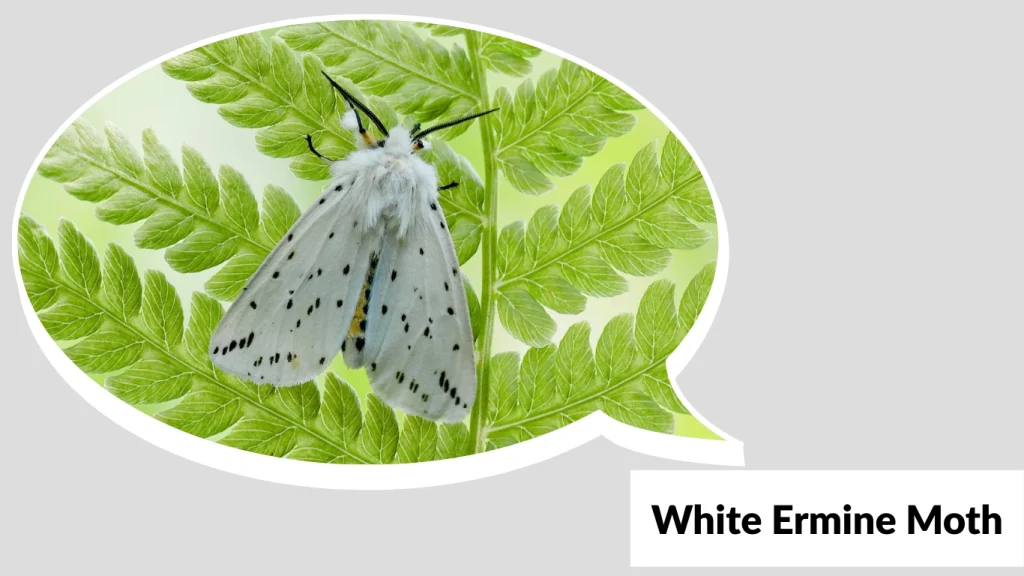
The White Ermine Moth is a beautiful species within the tiger moth family, easily recognized by its silky white wings adorned with striking black spots. Its delicate, almost snowy appearance contrasts with the toxic defenses it possesses, making it less appealing to predators. This moth is common in many parts of Europe and is often spotted near gardens, grasslands, and hedgerows during summer nights.
Identification
- Wingspan: 34–48 mm
- Forewings: Pure white with scattered black dots, varying in number and arrangement
- Hindwings: White to pale cream, sometimes with faint black spots
- Body: White and furry, with a hint of yellow or orange at the abdomen tip
- Caterpillar: Known as the “woolly bear,” dark brown to black with tufts of reddish or orange hairs
Habitat and Distribution
The White Ermine Moth is widespread across Europe, extending into parts of Asia and the Middle East. It thrives in a variety of habitats including gardens, open meadows, woodland edges, and farmland. Its adaptability makes it one of the more frequently encountered moths in suburban environments.
Behavior and Diet
This moth is nocturnal and frequently visits light sources. The caterpillars feed on many herbaceous plants, including dandelions, dock, nettles, and plantains. Adults, like many tiger moths, do not feed extensively but rely on stored energy. When threatened, both adults and larvae use chemical defenses combined with warning coloration to deter predators.
16. Scarlet Tiger Moth (Callimorpha dominula)
The Scarlet Tiger Moth is one of the most vibrant and eye-catching tiger moths in Europe. Its striking color combination of metallic green forewings and bright scarlet hindwings makes it instantly recognizable. Unlike many moths, the Scarlet Tiger is often active during the day, fluttering around meadows and riverbanks. Its beauty and unusual behavior make it a favorite among moth watchers and nature enthusiasts.
Identification
- Wingspan: 45–55 mm
- Forewings: Metallic greenish-black with creamy yellow or white spots
- Hindwings: Bright scarlet or orange-red with large black spots
- Body: Black with red markings on the abdomen
- Caterpillar: Black with yellow and white stripes, covered in small bristles
Habitat and Distribution
This moth is most commonly found across western and southern Europe, extending into parts of the Middle East. It prefers damp habitats, including marshes, riverbanks, gardens, and wildflower meadows. Populations can often be quite localized, forming dense colonies in suitable areas.
Behavior and Diet
The Scarlet Tiger Moth is unusual because it can be seen flying both at night and during the day. It is attracted to light but also actively visits flowers for nectar. The caterpillars feed on a wide variety of plants, including comfrey, nettles, brambles, and honeysuckle. When threatened, the adult moth flashes its scarlet hindwings to deter predators, relying on its warning colors to signal toxicity.
