

Hawk moths, belonging to the family Sphingidae, are some of the most remarkable and powerful fliers in the insect world. Known for their streamlined bodies, rapid wingbeats, and sometimes bird-like hovering, these moths are often mistaken for hummingbirds. With diverse colors, sizes, and wing patterns, each species plays an important role in pollination and ecosystem balance. This collection of 23 types highlights their beauty, adaptability, and unique characteristics across different regions.
1. Hummingbird Hawk Moth (Macroglossum stellatarum)
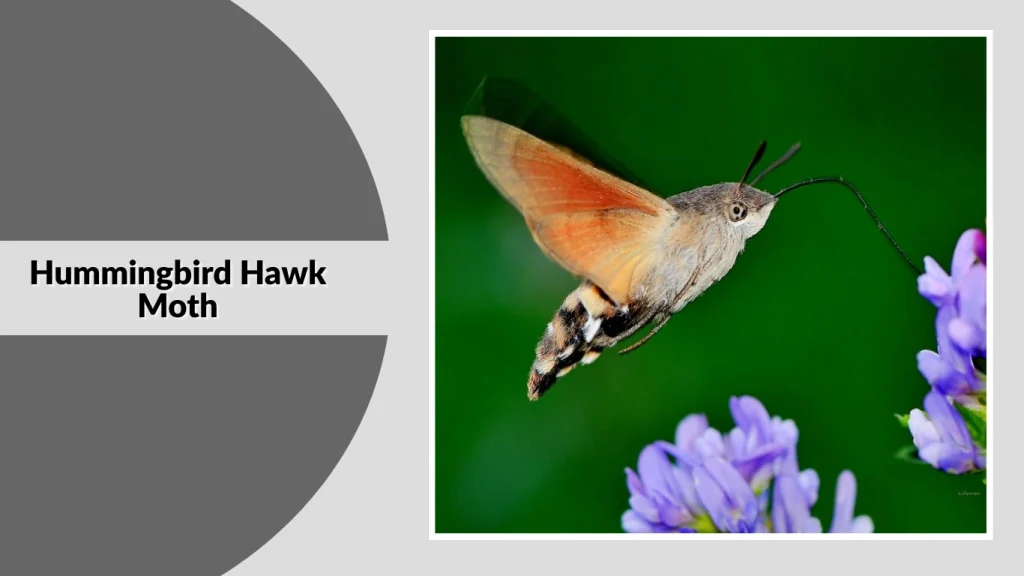
The Hummingbird Hawk Moth is one of the most fascinating moths in the Sphingidae family, often mistaken for a hummingbird due to its hovering flight and rapid wingbeats. Found across Europe, Asia, and North Africa, it is known for its daytime activity, which is unusual among moths. Its unique feeding behavior and agility make it a remarkable species to observe.
Identification
- Medium-sized moth with a wingspan of 40–50 mm
- Forewings are mottled brown and gray, providing camouflage
- Hindwings are bright orange, visible in flight
- Long proboscis, used for feeding on nectar while hovering
- Rapid, hummingbird-like wingbeats
- Often seen hovering at flowers in full daylight
Habitat and Distribution
This moth is widely distributed across Europe, North Africa, and parts of Asia. It prefers gardens, meadows, and areas with abundant flowering plants. Unlike many moths, it thrives in bright, sunny conditions and is frequently seen during the day.
Behavior and Diet
The Hummingbird Hawk Moth feeds on nectar from a variety of flowers, favoring those with long tubular shapes. Its hovering ability allows it to sip nectar without landing, much like a hummingbird. It is also known for its impressive migratory behavior, often traveling long distances across continents.
2. Oleander Hawk Moth (Daphnis nerii)
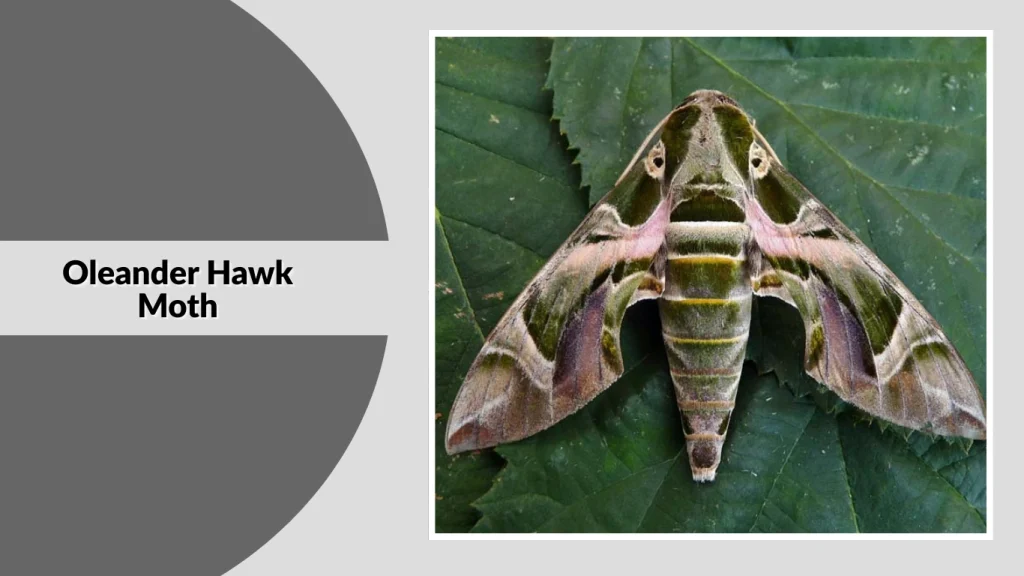
The Oleander Hawk Moth is one of the most visually striking members of the Sphingidae family. Famous for its bold, leaf-like green and pink camouflage patterns, it is often considered a jewel among moths. Native to Africa, Asia, and parts of Europe, this moth is also a skilled migrant, traveling across regions with ease. Its beauty and size make it a favorite among moth enthusiasts.
Identification
- Large moth with a wingspan of 90–110 mm
- Forewings patterned in shades of olive green, pale pink, and cream
- Camouflage resembles leafy vegetation
- Hindwings are dark green with light edges
- Strong, streamlined body adapted for fast flight
- Long proboscis for feeding on deep flowers
Habitat and Distribution
This species is found across Africa, the Middle East, southern Europe, and South Asia. It often inhabits warm regions where oleander plants thrive, as the larvae feed almost exclusively on them. During migration, it can be spotted far beyond its usual range.
Behavior and Diet
The Oleander Hawk Moth is nocturnal, actively feeding at night. Adults are strong fliers and can travel long distances while feeding on nectar from flowers such as petunias and honeysuckle. The caterpillars feed on oleander leaves, which are toxic, giving them protection from many predators.
3. Death’s-head Hawk Moth (Acherontia atropos)

The Death’s-head Hawk Moth is one of the most mysterious and iconic members of the Sphingidae family, instantly recognizable by the skull-shaped pattern on its thorax. Associated with superstition and folklore across cultures, this moth has captured human imagination for centuries. Found mainly in Africa and parts of Europe, it is also a seasonal migrant known for its distinctive squeaking sound when threatened.
Identification
- Large moth with a wingspan of 90–130 mm
- Distinct skull-like marking on the thorax
- Forewings are mottled brown and black for camouflage
- Hindwings are yellow with dark bands
- Thick, robust body adapted for strong flight
- Produces an audible squeak by expelling air from its pharynx
Habitat and Distribution
The Death’s-head Hawk Moth is native to Africa but migrates into southern and central Europe during warmer seasons. It thrives in farmlands, gardens, and open habitats where its host plants, such as potato and other nightshades, are cultivated.
Behavior and Diet
This moth is nocturnal and known for raiding beehives to feed on honey, a behavior unique among moths. It also consumes nectar from flowers. When disturbed, it produces a squeaking noise and flashes its yellow hindwings to deter predators. Despite its ominous reputation, it poses no real danger to humans.
4. Privet Hawk Moth (Sphinx ligustri)

The Privet Hawk Moth is one of the largest moths found in Europe, admired for its striking appearance and powerful flight. It gets its name from the privet plant, which is the primary food source for its caterpillars. With bold colors and impressive size, it is often noticed by gardeners during summer evenings when it visits flowers for nectar.
Identification
- Very large moth with a wingspan of 95–120 mm
- Forewings are mottled in gray, brown, and black for camouflage
- Hindwings display striking pink and black banding
- Thick body with pink and black stripes along the abdomen
- Long proboscis adapted for nectar feeding
Habitat and Distribution
This moth is widely distributed across Europe and parts of Asia. It prefers woodlands, gardens, hedgerows, and places where privet, lilac, and ash trees grow. The caterpillars are most commonly found feeding on privet leaves in summer.
Behavior and Diet
Privet Hawk Moths are nocturnal and feed primarily on nectar from fragrant, tubular flowers such as honeysuckle and jasmine. Caterpillars are large, green, and feature a prominent horn on their tail end. Adults are strong fliers, often seen near gardens during warm nights.
5. Convolvulus Hawk Moth (Agrius convolvuli)
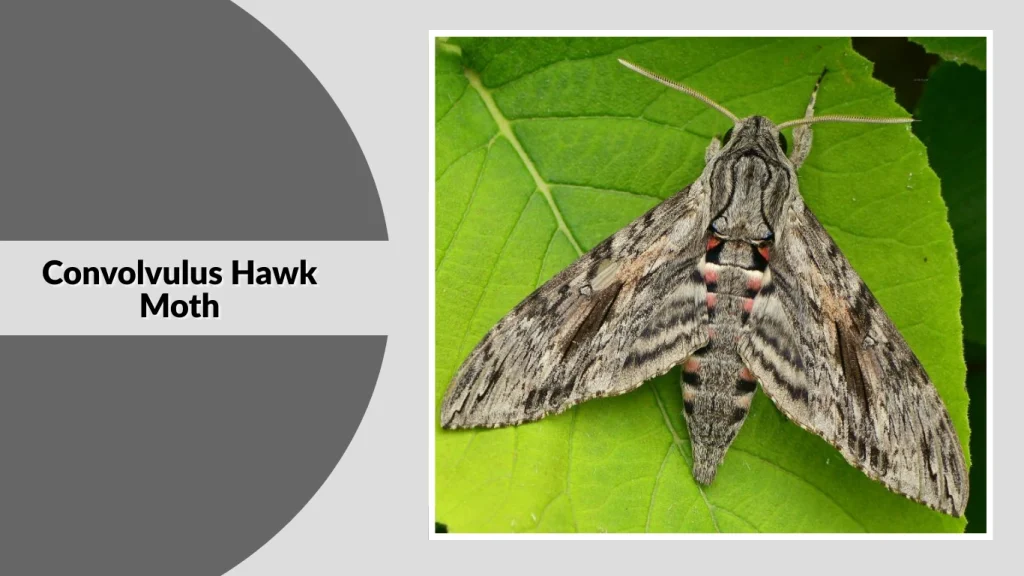
The Convolvulus Hawk Moth is a powerful and fast-flying moth known for its long proboscis, which allows it to feed from deep flowers that many other insects cannot reach. It is one of the largest hawk moths found across Europe, Asia, and Africa, and is famous for its impressive migratory journeys. Its name comes from the larval host plant, the convolvulus (bindweed).
Identification
- Very large moth with a wingspan of 80–120 mm
- Forewings are grayish-brown with streaks and mottling for camouflage
- Hindwings are pale brownish-gray with darker borders
- Abdomen features pale and dark bands running lengthwise
- Exceptionally long proboscis, often longer than its body, for nectar feeding
Habitat and Distribution
This moth is widely distributed across Europe, Asia, Africa, and Australia. It prefers open habitats such as grasslands, gardens, and fields where bindweed plants grow. It is a strong migrant and can travel thousands of kilometers, often appearing in regions far from its breeding grounds.
Behavior and Diet
Adults are nocturnal and feed on nectar from deep, tubular flowers like petunias, tobacco, and honeysuckle. The caterpillars feed on the leaves of bindweed (Convolvulus) and sweet potato plants. Their strong flight and long tongue make them one of the most remarkable pollinators among moths.
6. Hummingbird Hawk Moth (Macroglossum stellatarum)

The Hummingbird Hawk Moth is one of the most fascinating members of the hawk moth family, often mistaken for an actual hummingbird due to its hovering flight and rapid wingbeats. Active during the day, unlike most moths, it feeds while hovering at flowers, making quick darting movements that closely resemble a tiny bird in flight. Its unique behavior has earned it widespread attention and admiration.
Identification
- Medium-sized moth with a wingspan of 40–50 mm
- Forewings are grayish-brown with black markings
- Hindwings are orange with a dark border
- Abdomen has tufts that resemble a hummingbird’s tail
- Long proboscis, often extended while hovering
- Rapid wingbeats create a humming sound
Habitat and Distribution
The Hummingbird Hawk Moth is widely distributed across Europe, Asia, and North Africa. It is commonly seen in gardens, meadows, and open countryside. Unlike many moths, it is diurnal and active in bright daylight, especially around nectar-rich flowers.
Behavior and Diet
This species feeds on nectar from flowers such as honeysuckle, valerian, and petunias. It hovers in front of blossoms, sipping nectar much like a hummingbird, and can even remember the locations of flowers it has previously visited. Its speed, hovering ability, and constant motion make it one of the most recognizable hawk moths.
7. Pine Hawk Moth (Sphinx pinastri)

The Pine Hawk Moth is a large moth commonly found in coniferous forests, where pine trees serve as the primary food source for its caterpillars. With its cryptic coloration, it blends perfectly into tree bark, making it well-camouflaged against predators. Although less colorful than some other hawk moths, its size, shape, and habitat preference make it a distinctive member of the family.
Identification
- Wingspan ranges from 70–90 mm
- Forewings are grayish with streaks of darker gray and brown, resembling pine bark
- Hindwings are pale gray with darker margins
- Body is long and robust, matching the forewing colors for camouflage
- Straight, narrow wings give it a streamlined appearance
Habitat and Distribution
This species is found across Europe and parts of Asia, particularly in regions dominated by coniferous forests. It thrives in habitats with abundant pine and spruce trees, including both natural woodlands and managed plantations.
Behavior and Diet
The adult moths are nocturnal and feed on nectar from night-blooming flowers. Their larvae feed primarily on pine needles, though they can also be found on other conifers such as spruce and fir. Thanks to their camouflage, both adults and larvae are difficult to spot in their natural environment.
8. Eyed Hawk Moth (Smerinthus ocellata)
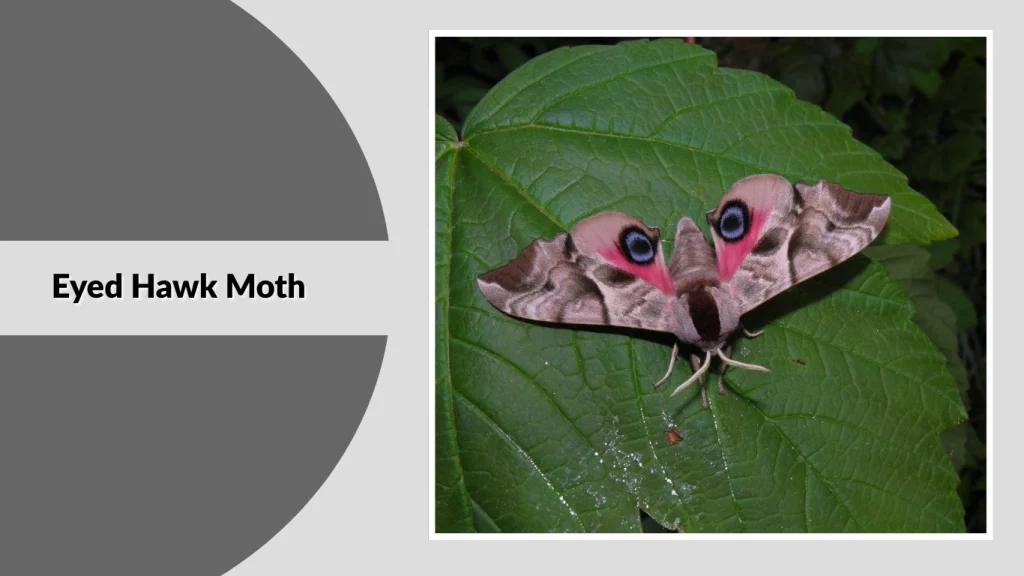
The Eyed Hawk Moth is a striking species named for the vivid eye-like markings on its hindwings, which are revealed when the moth feels threatened. This defense mechanism startles predators, giving it a chance to escape. By day, it remains hidden thanks to its bark-like forewings, but at night it becomes active and is easily drawn to light sources.
Identification
- Wingspan: 70–80 mm
- Forewings are mottled gray-brown, resembling tree bark
- Hindwings display bright blue and black eyespots on a reddish background
- Body is stout and matches the forewing coloration for camouflage
- When disturbed, it flashes its hindwings to scare predators
Habitat and Distribution
This species is widespread across Europe and parts of Asia, particularly in woodlands, gardens, and areas with abundant willow and poplar trees, which are the primary food plants of its caterpillars.
Behavior and Diet
Adults are nocturnal and usually feed at night, although unlike some other hawk moths, they do not feed much as adults. The larvae consume leaves of willows, poplars, and apple trees. Its impressive display of false eyes is one of the best examples of mimicry among moths.
9. Poplar Hawk Moth (Laothoe populi)
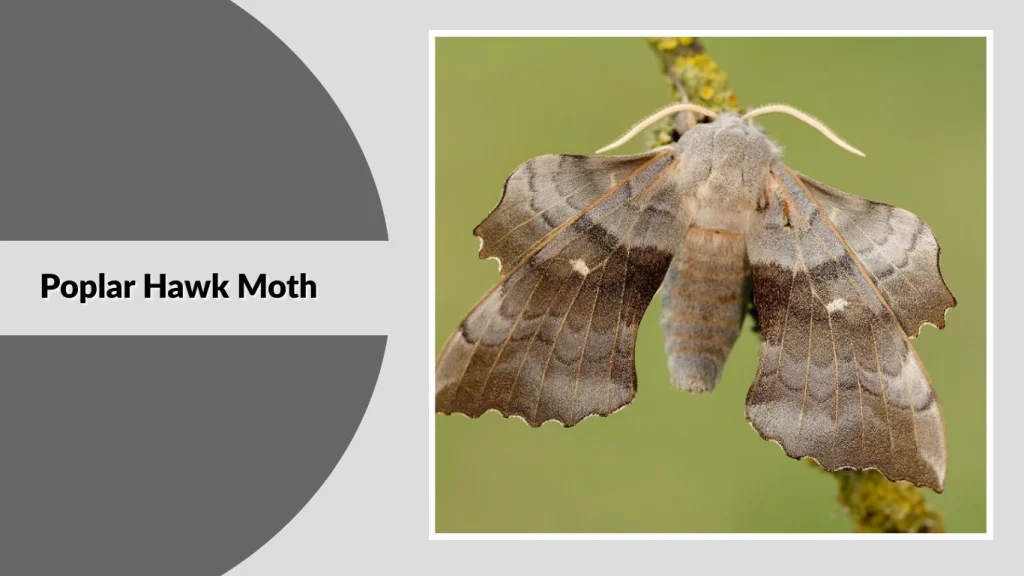
The Poplar Hawk Moth is one of the most recognizable hawk moths in Europe due to its unusual resting posture, where its hindwings extend forward, partially covering the forewings. This distinctive stance, combined with its large size, makes it easy to identify. Despite its striking appearance, it relies on its cryptic coloration to blend with tree bark during the day.
Identification
- Wingspan: 65–90 mm
- Forewings are mottled gray or brown with wavy patterns
- Hindwings are reddish-brown with pale patches
- Resting posture is unique—hindwings project forward, unlike most moths
- Large and robust body, matching the forewing tones for camouflage
Habitat and Distribution
The Poplar Hawk Moth is widespread throughout Europe and parts of Asia, inhabiting gardens, woodlands, and riverbanks where poplar, willow, and aspen trees are common.
Behavior and Diet
Adults are nocturnal and attracted to light, but unlike many moths, they rarely feed as adults. The larvae feed on leaves of poplar, willow, and aspen, growing into large green caterpillars with a curved horn at the tail end. Its unusual wing position when resting makes it one of the most distinctive hawk moths.
10. Lime Hawk Moth (Mimas tiliae)
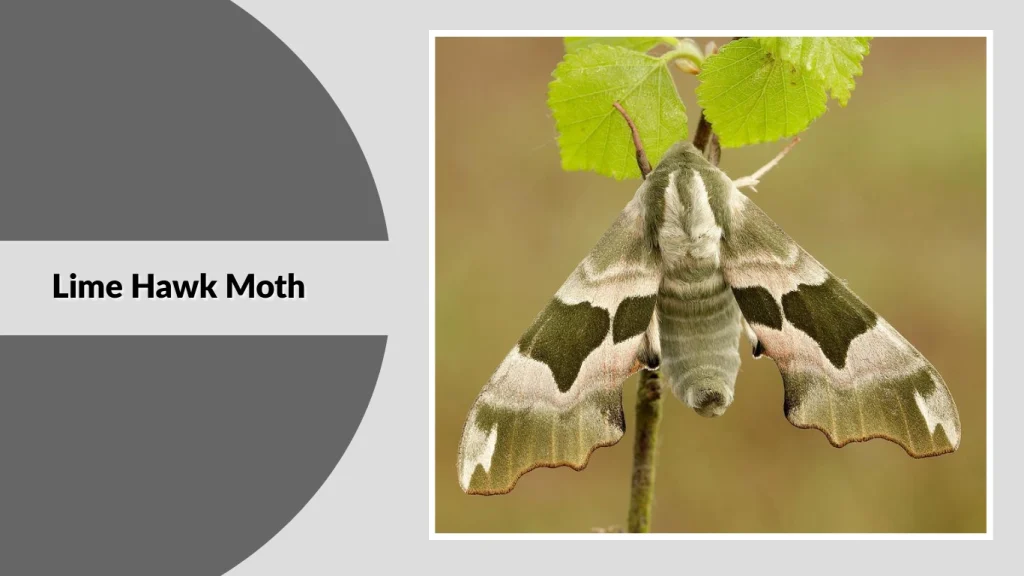
The Lime Hawk Moth is a beautifully patterned species, often admired for its soft green and brown wing markings that resemble lime tree leaves. Unlike many hawk moths, it has a more delicate and angular appearance, which makes it stand out. Its camouflage allows it to blend into foliage during the day, making it less visible to predators.
Identification
- Wingspan: 55–75 mm
- Forewings display a mix of pale green, brown, and pinkish patches
- Hindwings are pinkish-brown with lighter edges
- Angular and scalloped wing shape adds to its leafy camouflage
- Robust but slightly slimmer body compared to other hawk moths
Habitat and Distribution
This species is widely found across Europe and parts of Asia, particularly in urban parks, gardens, and woodlands where lime, elm, and birch trees grow.
Behavior and Diet
Adults are nocturnal and strongly attracted to artificial light. Unlike some hawk moths, adults do not feed extensively and rely on stored energy. The larvae, however, feed on lime, elm, and birch leaves, developing into large green caterpillars with a curved tail horn. The Lime Hawk Moth is often spotted resting motionless on tree trunks during the day.
11. Privet Hawk Moth (Sphinx ligustri)

The Privet Hawk Moth is the largest resident hawk moth in much of Europe, with an imposing wingspan and striking markings. Its bold contrast of black, pink, and white patterns on the abdomen and hindwings make it one of the most easily recognized species. Despite its size, it rests quietly during the day, camouflaged against tree trunks and walls.
Identification
- Wingspan: 90–120 mm
- Forewings are mottled brown and gray with streaked patterns
- Hindwings are vivid pink with bold black bands
- Abdomen is striped pink and black, creating a wasp-like effect
- Large and powerful body, among the biggest moths in Europe
Habitat and Distribution
The Privet Hawk Moth is widely distributed across Europe, Asia Minor, and parts of North Africa. It thrives in gardens, hedgerows, woodland edges, and urban areas where privet, lilac, and ash trees are common.
Behavior and Diet
Adults are nocturnal and strongly attracted to light. They feed on nectar from various flowers, including honeysuckle and petunia. The caterpillars are large and bright green with purple and white diagonal stripes, often feeding openly on privet, lilac, and ash leaves. Their size and colorful appearance make them easy to spot compared to many other moth larvae.
12. Oleander Hawk Moth (Daphnis nerii)
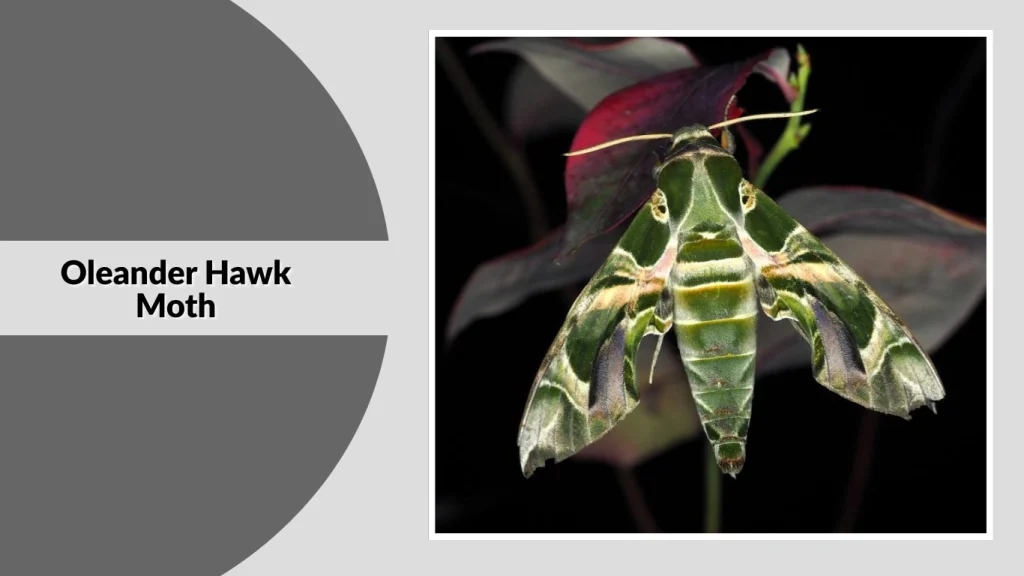
The Oleander Hawk Moth, also known as the Army Green Moth, is one of the most spectacularly patterned hawk moths. Its camouflage is striking, with shades of olive green, brown, and pink forming a leafy design that blends perfectly with vegetation. This tropical and subtropical species is admired not only for its beauty but also for its strong migratory habits.
Identification
- Wingspan: 80–120 mm
- Forewings are olive green with brown and pink patches forming a leafy pattern
- Hindwings are darker with pale pink edges
- Abdomen is robust, patterned in green and brown
- Slender body, streamlined for long-distance flight
Habitat and Distribution
Native to Africa and Asia, the Oleander Hawk Moth is a migratory species that occasionally reaches southern Europe. It thrives in warm climates, particularly in gardens, fields, and forests where oleander and periwinkle plants grow.
Behavior and Diet
Adults are nocturnal and feed on nectar from fragrant, night-blooming flowers like jasmine and honeysuckle. They are strong fliers and can migrate long distances. The larvae are large and green with eye-like spots on the thorax, often feeding on oleander, periwinkle, and other dogbane family plants. This species is highly admired by moth enthusiasts due to its stunning camouflage and size.
13. Hummingbird Hawk Moth (Macroglossum stellatarum)
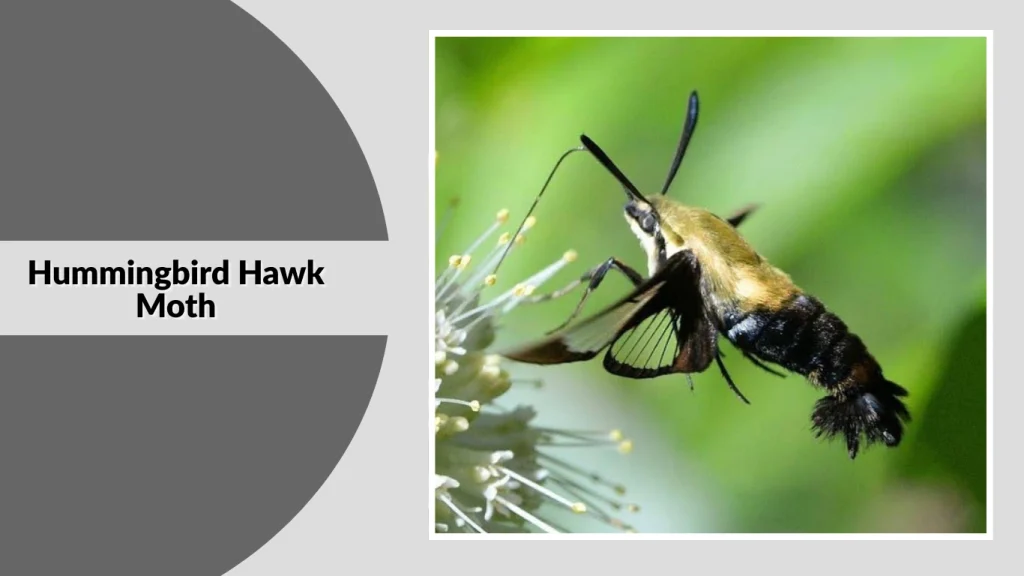
The Hummingbird Hawk Moth is one of the most well-known and fascinating hawk moths, often mistaken for a real hummingbird due to its hovering flight and rapid wingbeats. This diurnal species is frequently seen feeding on nectar in daylight, darting quickly between flowers while hovering in mid-air, making it unique among hawk moths.
Identification
- Wingspan: 40–50 mm
- Forewings are brownish-gray with darker streaks
- Hindwings are orange with black borders
- Long, extendable proboscis for feeding on deep flowers
- Fast, hummingbird-like wingbeats and hovering behavior
Habitat and Distribution
Found across Europe, North Africa, and Asia, the Hummingbird Hawk Moth is a strong migrant and can travel long distances. It inhabits gardens, meadows, and open countryside, especially where nectar-rich flowers are abundant.
Behavior and Diet
Unlike most hawk moths, this species is active during the day. It feeds on flowers such as petunias, honeysuckle, and valerian, hovering while inserting its long proboscis into blooms. Its hovering style closely mimics hummingbirds, which is why it often catches people’s attention. The caterpillars feed on bedstraw plants, blending well with green foliage.
14. Poplar Hawk Moth (Laothoe populi)
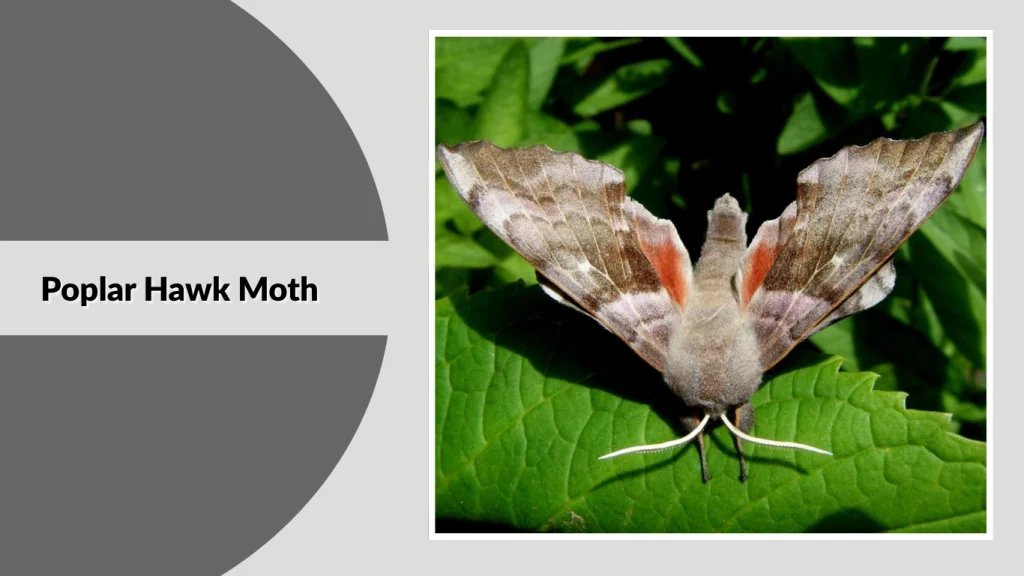
The Poplar Hawk Moth is one of the most widespread and easily recognized hawk moths in Europe. Known for its unusual resting posture, it holds its hindwings forward beneath its forewings, creating a distinctive triangular shape. Despite its large size and striking wing patterns, it relies heavily on camouflage when resting on tree bark.
Identification
- Wingspan: 65–90 mm
- Forewings are grayish-brown with darker streaks and a pale cross-line
- Hindwings are pale with reddish-brown patches near the base
- Abdomen is thick and furry, aiding in insulation and flight
- Unique resting posture with hindwings pushed forward, making it look asymmetrical
Habitat and Distribution
This species is widespread across Europe and into parts of Asia. It inhabits woodlands, parks, and gardens where poplars, willows, and aspen trees grow, as these are the main larval food plants.
Behavior and Diet
The Poplar Hawk Moth is nocturnal and flies from late spring to mid-summer. Adults do not feed, relying entirely on fat reserves built up during the larval stage. The caterpillars are bright green with diagonal stripes and a characteristic tail horn, feeding on poplar and willow leaves until they pupate in the soil.
15. Vine Hawk Moth (Hippotion celerio)
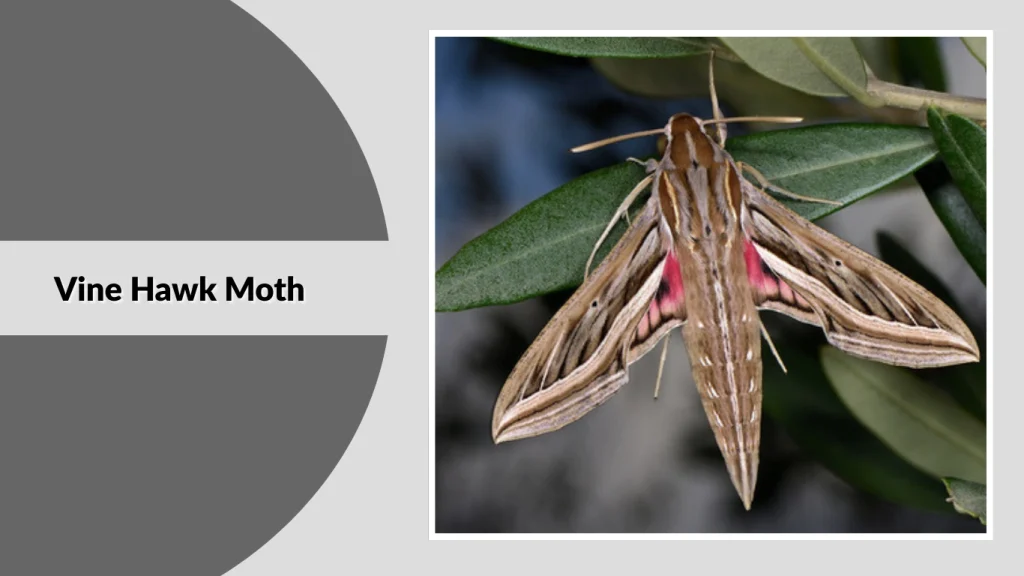
The Vine Hawk Moth is a sleek and fast-flying species admired for its streamlined body and beautiful wing patterns. As its name suggests, the larvae primarily feed on grapevines and related plants, making it an occasional pest in vineyards. This moth is highly migratory and has been recorded in diverse regions, from Africa and Asia to parts of Europe.
Identification
- Wingspan: 60–80 mm
- Forewings are brownish with pale streaks running diagonally, giving a striped appearance
- Hindwings are pinkish with black bands
- Slender, aerodynamic body built for strong flight
- Long proboscis adapted for nectar feeding
Habitat and Distribution
The Vine Hawk Moth is widely distributed across Africa, Asia, southern Europe, and parts of Australia. It prefers warm regions with abundant grapevines, vineyards, and gardens where host plants thrive.
Behavior and Diet
Adults are powerful nocturnal fliers that visit tubular flowers for nectar. They play an important role as pollinators, although their larvae can sometimes be destructive to grapevine crops. Caterpillars are large, with green and brown morphs, and feature eye-like spots that serve as a defense mechanism against predators.
16. Convolvulus Hawk Moth (Agrius convolvuli)

The Convolvulus Hawk Moth is a large and powerful migrant species, known for its striking size and fast, sustained flight. It gets its name from the larval host plants, which are primarily bindweeds (Convolvulus species). This moth is admired for its ability to travel long distances and for its impressive appearance when resting with wings closed against its robust body.
Identification
- Wingspan: 80–120 mm
- Forewings are mottled gray and brown, providing excellent camouflage
- Hindwings are pale with dark bands
- Abdomen striped with pink and black
- Long proboscis (often exceeding body length), ideal for feeding on deep tubular flowers
Habitat and Distribution
The Convolvulus Hawk Moth is found across Africa, Europe, Asia, and Australasia. It is highly migratory, often appearing in northern Europe during late summer and autumn. It prefers open countryside, gardens, and coastal regions where bindweed and nectar-rich flowers are common.
Behavior and Diet
This nocturnal moth is a strong and relentless flier, often seen hovering like a hummingbird while feeding on deep flowers such as petunias and nicotiana. The larvae feed on bindweed and related plants, growing into large caterpillars with eye-like spots for defense. Adults are non-pestilent pollinators but may surprise observers with their sheer size and buzzing flight.
17. Oleander Hawk Moth (Daphnis nerii)

The Oleander Hawk Moth, also known as the Army Green Moth, is one of the most spectacular hawk moths due to its vibrant green and pink camouflage-like wing patterns. It is often admired for its beauty and is a favorite among moth enthusiasts. Despite its striking colors, the moth blends well into vegetation, making it surprisingly difficult to spot when resting.
Identification
- Wingspan: 90–110 mm
- Forewings are olive-green with bold pink and cream markings in a camouflage pattern
- Hindwings are dark with pinkish areas
- Body thick, also patterned in green and cream shades
- Long proboscis suited for deep tubular flowers
Habitat and Distribution
This species is native to Africa, Asia, and the Mediterranean region but has been recorded as a migrant in Europe. It prefers warm climates and areas with abundant oleander plants, as these are the primary host plants for its caterpillars.
Behavior and Diet
Adults are nocturnal and highly attracted to light sources. They feed on nectar from jasmine, petunia, and other deep-throated flowers. The larvae are large, green, and feature eye-like spots on the thorax, which serve as a defense mechanism against predators. Despite feeding on toxic oleander leaves, the caterpillars manage to store toxins without harm, making them less palatable to predators.
18. Striped Hawk Moth (Hyles livornica)
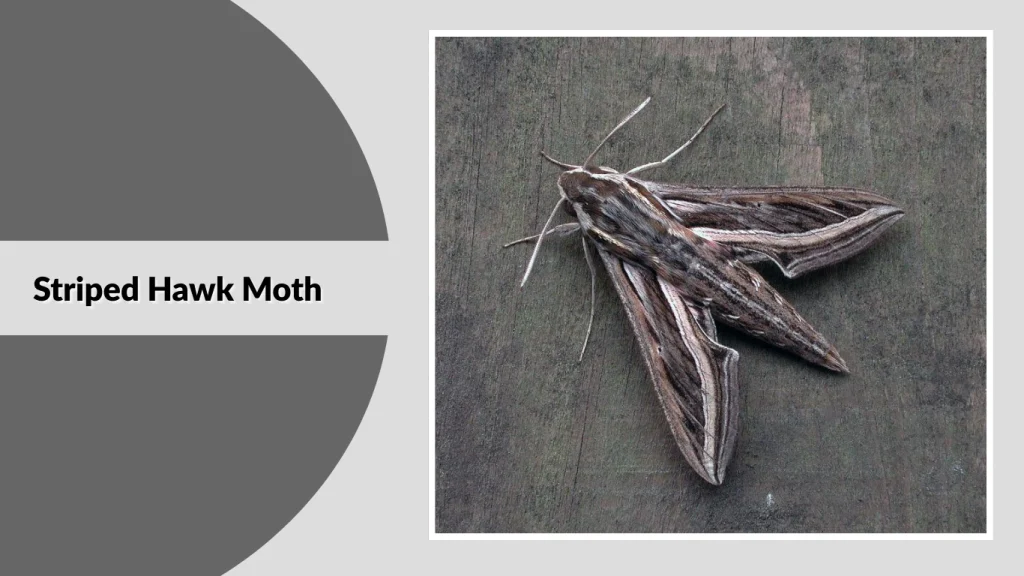
The Striped Hawk Moth is a widespread and well-known species, easily recognized by the bold stripes on its wings and body. It is a strong migrant, often traveling long distances across continents. This moth is admired for its striking appearance and its role as a pollinator of many fragrant, night-blooming flowers.
Identification
- Wingspan: 70–100 mm
- Forewings brownish with pale cream stripes running diagonally across
- Hindwings black with pink bands
- Body striped with white and brown lines
- Long proboscis, ideal for nectar feeding
Habitat and Distribution
The Striped Hawk Moth is found across Africa, Asia, Europe, and Australia. It is particularly common in open countryside, coastal areas, and gardens where its host plants, such as bedstraw and grapevine, are found. Its migratory behavior allows it to appear in regions far outside its breeding range.
Behavior and Diet
Adults are nocturnal and feed while hovering at flowers, much like hummingbirds. They prefer deep tubular flowers, such as honeysuckle and petunia, which match their long proboscis. Caterpillars are colorful, often green or black with orange and yellow spots, and feature a horn at the tail end—a typical trait of hawk moth larvae.
19. Death’s-head Hawk Moth (Acherontia atropos)
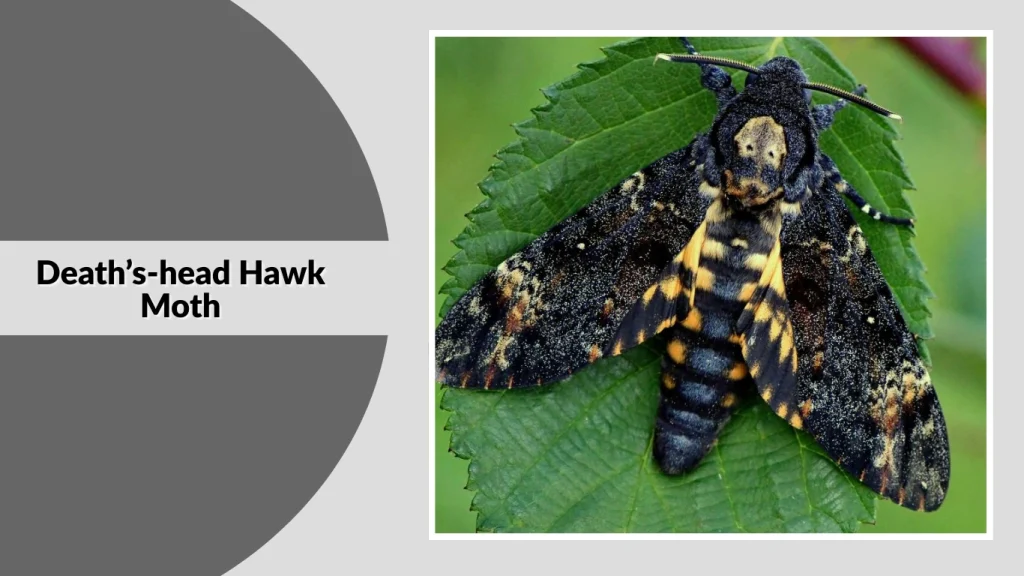
The Death’s-head Hawk Moth is one of the most iconic and mysterious hawk moths, instantly recognizable by the skull-like marking on its thorax. This species has long been associated with myths, folklore, and even superstition, due to its eerie appearance and unique behaviors. It is also known for producing a squeaking sound, unusual among moths.
Identification
- Wingspan: 90–130 mm
- Forewings mottled brown and gray for camouflage
- Hindwings yellow with dark bands
- Thorax bears a distinct pale marking resembling a skull
- Robust body with yellow and black striped abdomen
Habitat and Distribution
The Death’s-head Hawk Moth is found across Africa, southern Europe, and parts of Asia. It prefers warmer regions and migrates northwards in summer. It is often associated with agricultural areas, gardens, and open landscapes where its larval host plants—such as potato and other members of the nightshade family—are available.
Behavior and Diet
This moth is unique for its ability to raid beehives, where it feeds on honey. Its thick cuticle and bee-like markings allow it to enter hives without being immediately detected. Adults are nocturnal and often drawn to artificial light. Caterpillars are very large, yellow-green with diagonal stripes, and feature a curved horn at the rear.
20. Poplar Hawk Moth (Laothoe populi)
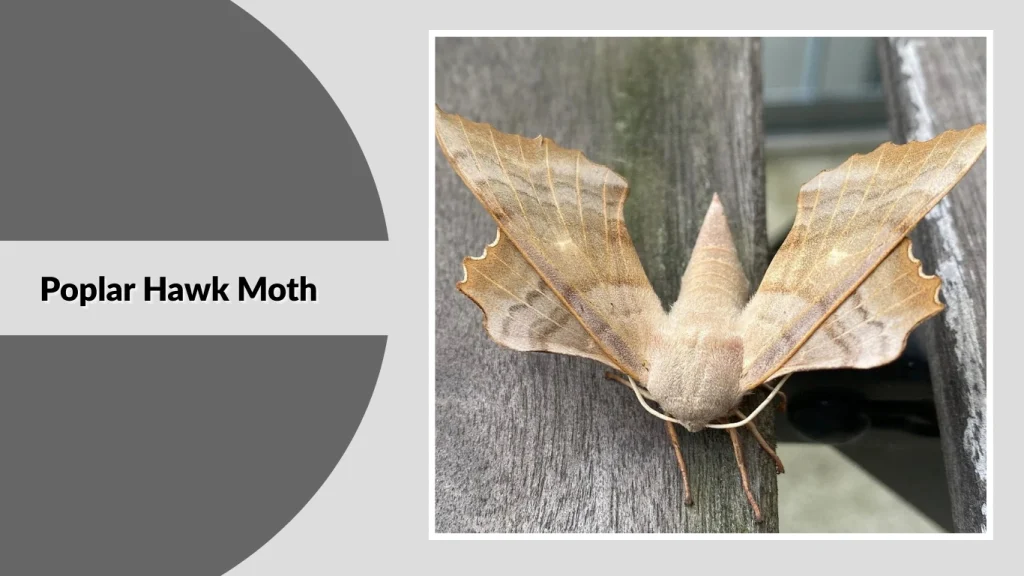
The Poplar Hawk Moth is one of the most common and widespread hawk moths in Europe. Known for its unique resting posture, with hindwings held forward and visible above the forewings, it creates a distinctive silhouette. Despite its large size and striking appearance, this moth is harmless and often goes unnoticed during the day due to its excellent camouflage.
Identification
- Wingspan: 65–90 mm
- Forewings gray-brown with subtle wavy patterns
- Hindwings reddish-brown with a pale patch near the base
- Thick, furry body blending well with tree bark
- Resting posture makes the moth look like a curled dry leaf
Habitat and Distribution
The Poplar Hawk Moth is found throughout Europe, Asia, and parts of North Africa. It thrives in woodlands, parks, and gardens, particularly near poplar, aspen, and willow trees—its primary larval host plants. Its adaptability allows it to appear in both rural and urban areas.
Behavior and Diet
Adults are nocturnal and rarely feed, though they may occasionally sip nectar. Most of their energy is devoted to reproduction. The large green caterpillars feed on poplar and willow leaves, featuring diagonal stripes and a blue horn at the tail end. Their appearance provides effective camouflage against foliage.
21. Lime Hawk Moth (Mimas tiliae)

The Lime Hawk Moth is a beautiful species, easily recognized by its striking green and brown camouflage pattern. Unlike many other hawk moths, it has a softer, almost leafy appearance that blends perfectly with lime and other deciduous trees. This species is admired for both its resting posture and its subtle yet elegant wing coloration.
Identification
- Wingspan: 70–80 mm
- Forewings patterned with shades of green, brown, and cream
- Hindwings pale with brownish edges
- No prominent eyespots, but excellent leaf-like camouflage
- Resting position resembles overlapping leaves
Habitat and Distribution
The Lime Hawk Moth is common throughout Europe, especially in central and southern regions, and extends into parts of Asia. It is typically found in woodlands, parks, and urban gardens where lime, birch, and elm trees are abundant. Caterpillars feed mainly on lime (linden) leaves, hence the name.
Behavior and Diet
Adults are nocturnal and usually do not feed, relying on fat reserves stored during the larval stage. They are attracted to light at night. The caterpillars are large, green, and feature diagonal stripes with a bluish tail horn. Their camouflage allows them to remain well hidden among foliage until pupation.
22. Eyed Hawk Moth (Smerinthus ocellata)
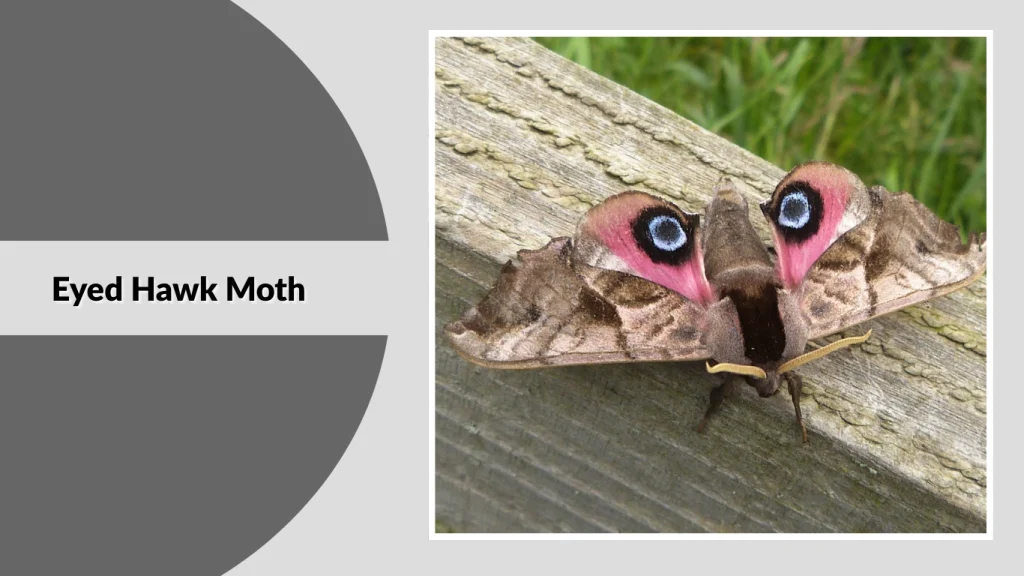
The Eyed Hawk Moth is a striking hawk moth known for its dramatic defense mechanism. When disturbed, it flashes its hindwings to reveal bold blue and black “eyes,” which resemble the eyes of a larger predator. This sudden display often startles birds and other threats, giving the moth a chance to escape. At rest, however, its muted forewings blend seamlessly into tree bark.
Identification
- Wingspan: 70–80 mm
- Forewings mottled brown and gray, offering camouflage
- Hindwings orange-red with large black and blue eyespots
- Robust, furry body that helps retain warmth during cool nights
- Resting posture conceals eyespots until threatened
Habitat and Distribution
The Eyed Hawk Moth is widely distributed across Europe, North Africa, and temperate Asia. It prefers woodlands, parks, and gardens where willow, poplar, and apple trees—common larval host plants—are found. It thrives in both rural and suburban areas, often remaining hidden during the day.
Behavior and Diet
Adults are nocturnal and generally do not feed, relying on energy reserves from their larval stage. They are strongly attracted to light. Caterpillars are green with diagonal white stripes and a bluish tail horn, blending perfectly into foliage until pupation. The species is admired for its unique predator-deterrent behavior.
23. Small-eyed Hawk Moth (Smerinthus minor)
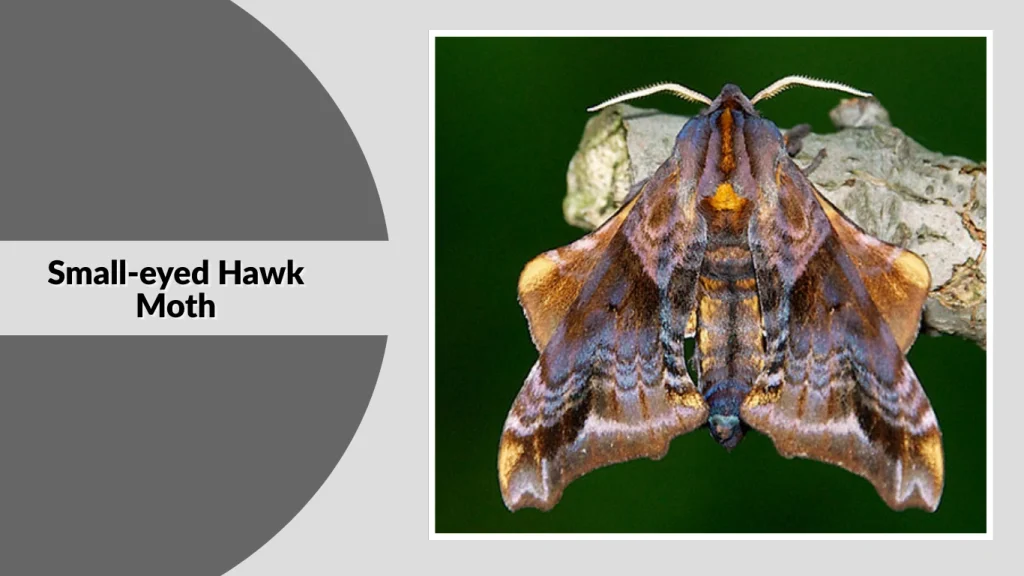
The Small-eyed Hawk Moth is a rare and localized species, closely related to the Eyed Hawk Moth but distinguished by its smaller size and more subtle eyespots. It is less widespread than other hawk moths, often confined to specific habitats. Despite its name, it still employs its hindwing “eye flash” defense against predators, though the eyespots are smaller and less vivid.
Identification
- Wingspan: 65–75 mm
- Forewings brownish-gray with fine mottled patterns
- Hindwings pinkish-red with smaller, bluish eyespots
- Stout, furry body, typical of hawk moths
- Resting position conceals hindwing markings, resembling tree bark
Habitat and Distribution
This species is mainly found in parts of southern and central Europe, extending into Asia but with a patchy distribution. It prefers wetlands, marshes, and river valleys where host plants like willow and poplar thrive. Its restricted habitat makes sightings less common compared to its relatives.
Behavior and Diet
The Small-eyed Hawk Moth is nocturnal and usually does not feed in its adult stage, depending on fat reserves built during its caterpillar stage. The caterpillars are green, with oblique stripes and a characteristic blue horn, blending into foliage effectively. Though rarer, this species remains an important part of wetland ecosystems.
