
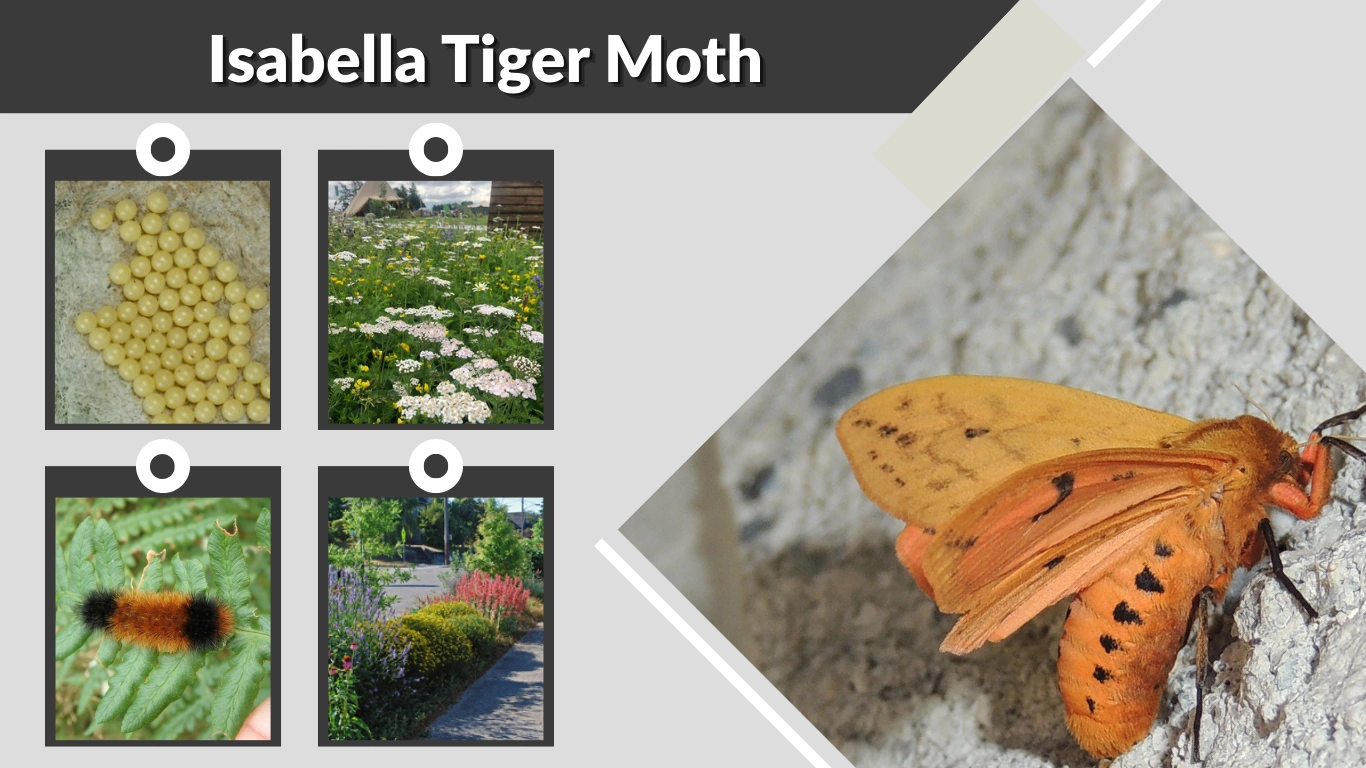
The Isabella Tiger Moth (Pyrrharctia isabella) is one of the most recognizable and beloved moths in North America. While the adult moth is modest in appearance, its caterpillar — the famous banded woolly bear — has captured human imagination for centuries. People across the U.S. and Canada look for woolly bears each fall, believing that their distinctive black and brown bands can predict the severity of the coming winter.
Beyond folklore, the Isabella Tiger Moth is a fascinating species with unique survival adaptations, a wide distribution, and an important ecological role. From the antifreeze-like compounds in its body that help it survive freezing winters, to its ability to feed on a wide range of plants, this moth has ensured its place as one of the most common tiger moths in North America.
Scientific Classification and Name
- Scientific name: Pyrrharctia isabella
- Family: Erebidae
- Subfamily: Arctiinae (Tiger Moths)
- Common Names: Isabella Tiger Moth, Banded Woolly Bear
The species was first described in the 18th century and has since become a household name thanks to its caterpillar stage. The genus name Pyrrharctia combines Greek roots meaning “flame-colored bear,” a reference to the moth’s orange body and the fuzzy “bear-like” appearance of its caterpillars.
Physical Appearance
Adult Moth
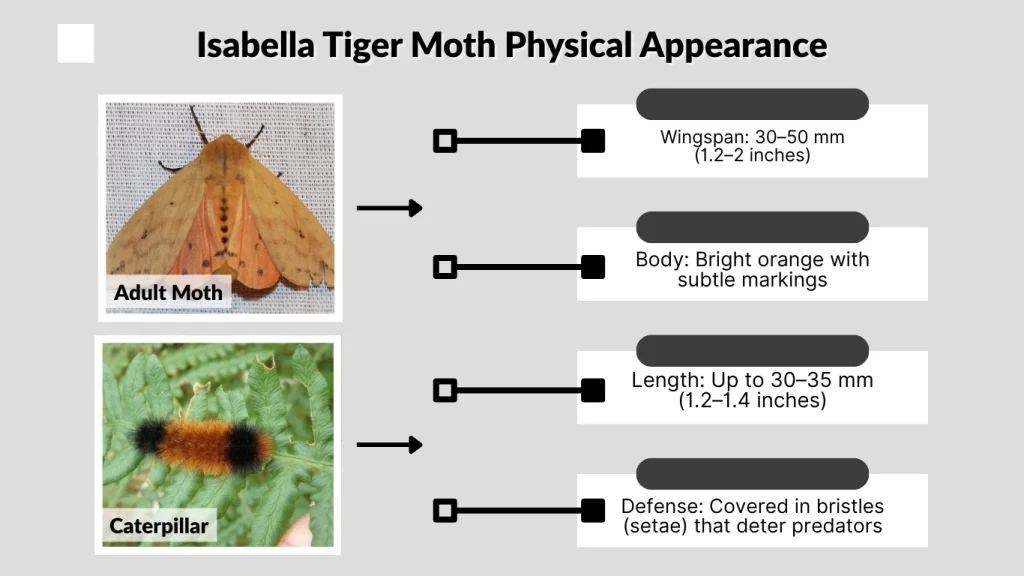
The adult Isabella Tiger Moth is fairly modest compared to its caterpillar stage. Its wings are pale yellow to orange with faint, scattered black spots that vary among individuals. The thorax is furry and orange, while the abdomen is bright orange with a row of small black dots running along its length.
- Wingspan: 30–50 mm (1.2–2 inches)
- Body: Bright orange with subtle markings
- Lifespan: Adults live only 1–2 weeks
Though not as striking as the Garden or Virginia Tiger Moths, the Isabella Tiger Moth is still distinctive because of its soft orange tones and tidy shape.
Caterpillar (Banded Woolly Bear)
The banded woolly bear caterpillar is far more famous than the adult moth. It is instantly recognizable by its black bristly hairs at both ends and its reddish-brown band in the middle. The width of this brown band is what led to the folklore that woolly bears can predict winter weather.
- Length: Up to 30–35 mm (1.2–1.4 inches)
- Defense: Covered in bristles (setae) that deter predators
- Behavior: Rolls into a ball when disturbed, exposing only its spiky hairs
The caterpillar’s fuzzy coat is more than just protection — it helps insulate the insect during cold months.
Habitat and Distribution
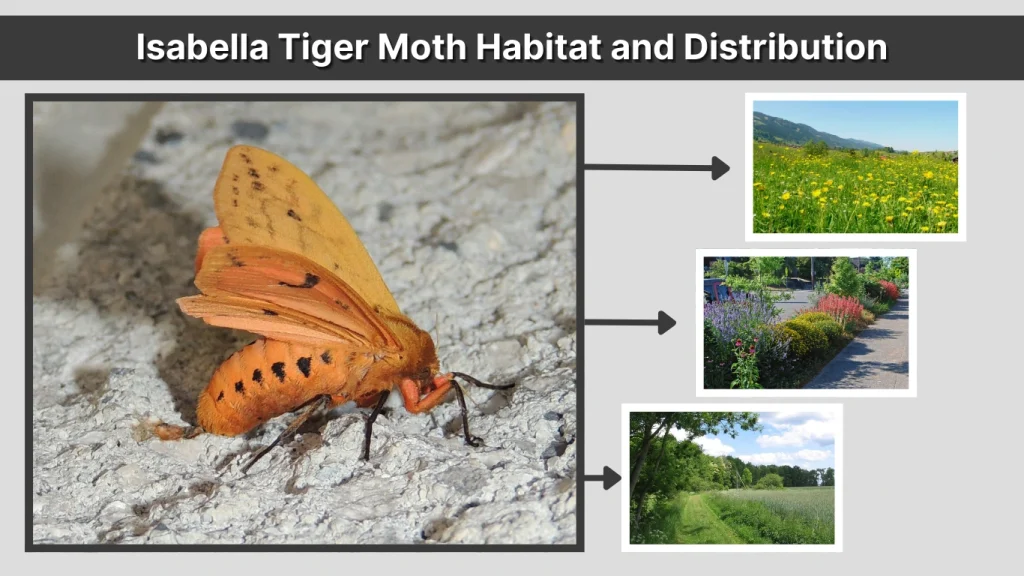
The Isabella Tiger Moth is widespread across North America, from southern Canada through the United States and into Mexico.
Preferred Habitats
- Meadows and fields
- Gardens and roadsides
- Woodland edges
- Open grasslands
Caterpillars are frequently spotted in the fall as they cross sidewalks, roads, and yards in search of sheltered overwintering sites. Adults, on the other hand, are nocturnal and more often seen around porch lights in spring and summer.
Banded Woolly Bear Caterpillar
Identification
The woolly bear is one of the most easily recognized caterpillars in North America. Its black-brown-black pattern makes it stand out from other fuzzy caterpillars. When threatened, it curls into a tight ball, protecting its vulnerable underside with a shield of spines.
Folklore: Winter Prediction
The woolly bear’s fame largely comes from folklore about weather prediction. For generations, people believed that the width of the brown band in the middle of the caterpillar could forecast the severity of winter:
- Wide brown band = mild winter
- Narrow brown band = harsh winter
While charming, scientific studies have shown that the band width is influenced by age, diet, and growing conditions, not by weather forecasts. Still, the tradition remains popular, and many U.S. towns even host Woolly Bear Festivals each fall to celebrate the caterpillar.
Overwintering Ability
One of the most remarkable features of the banded woolly bear is its ability to survive freezing temperatures. It produces a natural antifreeze compound (glycerol) in its body fluids, which prevents its tissues from freezing solid. This adaptation allows it to overwinter under logs, leaf litter, or soil, emerging the following spring to pupate.
Diet and Host Plants
Caterpillar Diet
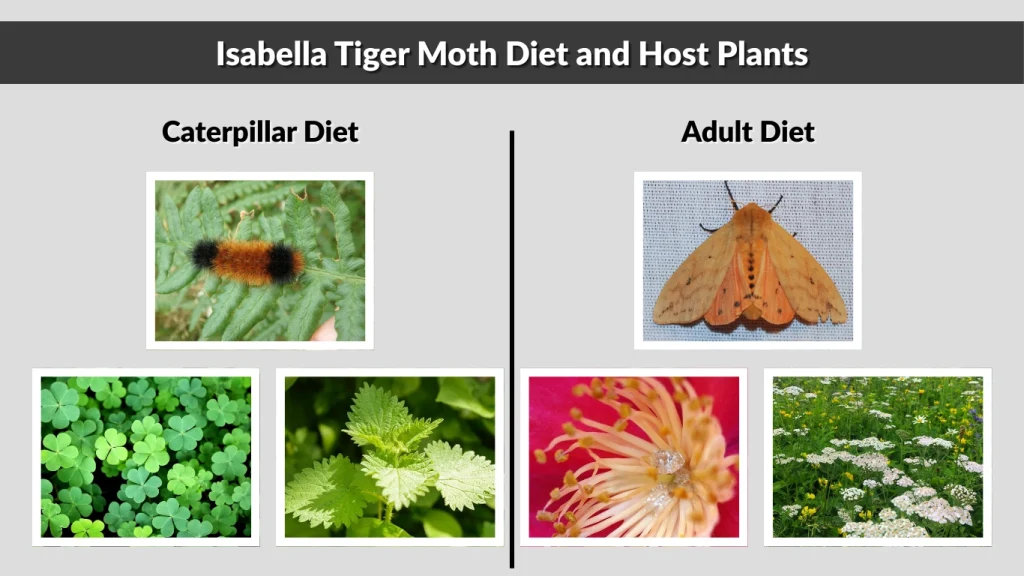
The banded woolly bear caterpillar is a generalist feeder, consuming a wide variety of plants. This adaptability is one reason why it is so widespread and abundant.
Common Host Plants:
- Clover
- Dandelions
- Nettles
- Plantain
- Carrots and cabbage
- Corn and other crops
Because of its broad diet, it is sometimes considered a minor pest, especially in gardens and fields. However, it rarely occurs in numbers large enough to cause significant damage.
Adult Diet
The adult Isabella Tiger Moth feeds primarily on nectar from night-blooming flowers. Its role as a pollinator is relatively small compared to bees and butterflies, but it still contributes to the pollination of wildflowers and garden plants.
Life Cycle of the Isabella Tiger Moth

The Isabella Tiger Moth undergoes complete metamorphosis, with four distinct stages:
Eggs
After mating in spring or summer, the female lays clusters of pale yellow eggs on the undersides of leaves. These eggs hatch within 7–10 days.
Caterpillar Stage
The famous banded woolly bear is the larval stage. It grows through several molts, each time expanding its reddish-brown band slightly. Unlike most moth caterpillars, woolly bears overwinter in caterpillar form, hiding beneath logs, stones, or leaf litter. They can survive temperatures as low as –30°C (–22°F) thanks to natural antifreeze compounds in their bodies.
Cocoon (Pupa)
In spring, the caterpillar spins a cocoon made of silk and its own hairs. Inside, it transforms into a pupa. The pupal stage lasts for about 2–3 weeks before the adult moth emerges.
Adult Moth
Adults appear in late spring and early summer. Their short life (1–2 weeks) is dedicated to mating and laying eggs, ensuring the cycle continues.
Size and Lifespan
- Caterpillars: Up to 30–35 mm (1.2–1.4 inches) long.
- Adults: Wingspan 30–50 mm (1.2–2 inches).
- Lifespan:
- Egg: 1–2 weeks
- Caterpillar: Several months (including overwintering)
- Pupa: 2–3 weeks
- Adult: 1–2 weeks
- Egg: 1–2 weeks
Overall, the life cycle spans about one year, with most of that time spent as a caterpillar.
Are Isabella Tiger Moths Poisonous or Dangerous?
Caterpillars
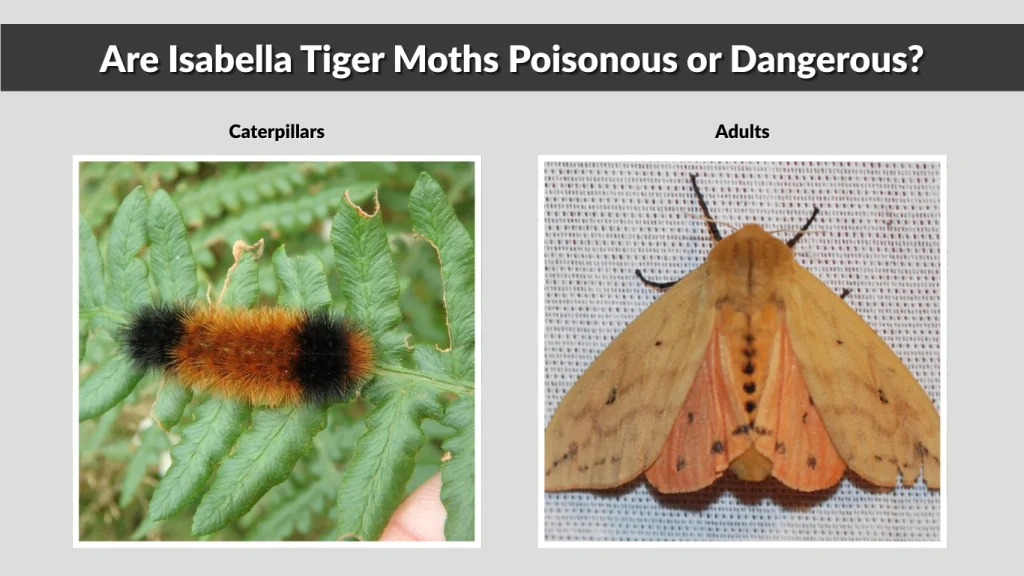
Banded woolly bear caterpillars are not poisonous or venomous, but their bristly hairs can cause mild skin irritation or rashes in sensitive individuals. These hairs act as a deterrent to predators such as birds. While harmless to most people, it’s best to avoid handling them directly.
Adults
Adult Isabella Tiger Moths are completely harmless. They do not sting, bite, or damage property. Their mild toxicity, stored from plants eaten during the caterpillar stage, makes them distasteful to some predators, but they pose no danger to humans or pets.
Isabella Tiger Moth: Good or Bad for Humans?
- Good Aspects:
- Caterpillars feed on weeds like dandelions and nettles, helping control their growth.
- Adults act as night pollinators, visiting flowers after dusk.
- Culturally significant due to folklore and festivals, inspiring interest in nature.
- Caterpillars feed on weeds like dandelions and nettles, helping control their growth.
- Bad Aspects:
- Caterpillars occasionally nibble on garden crops such as carrots, cabbage, or corn.
- Large populations may cause minor leaf damage, though rarely in destructive numbers.
- Caterpillars occasionally nibble on garden crops such as carrots, cabbage, or corn.
Overall, the Isabella Tiger Moth is considered more beneficial than harmful, contributing to ecosystems without posing real threats to humans.
Ecological Importance
The Isabella Tiger Moth plays several important roles:
- Food Chain Contribution: Caterpillars provide food for birds, rodents, and predatory insects.
- Pollination: Adults feed on nectar, supporting cross-pollination in wildflowers.
- Weed Control: Caterpillars consume a variety of common weeds, balancing plant growth.
- Winter Survival Studies: Their antifreeze adaptation makes them a model species for scientific research on insect survival in extreme cold.
Conservation Status
The Isabella Tiger Moth is one of the most common and widespread tiger moths in North America. Its adaptability, broad diet, and tolerance for varied climates have ensured stable populations.
Threats
- Pesticide Use: Reduces caterpillar numbers in agricultural areas.
- Habitat Changes: Loss of natural meadows and hedgerows.
- Light Pollution: Disrupts adult moth behavior at night.
Current Status
Despite these pressures, the species is not threatened and remains abundant across its range. Conservation efforts mainly focus on promoting healthy habitats for pollinators and reducing pesticide reliance.
FAQs
What is the scientific name of the Isabella Tiger Moth?
The scientific name is Pyrrharctia isabella. It belongs to the family Erebidae and subfamily Arctiinae, which also includes other tiger moths such as the Virginia and Garden Tiger Moths.
Are banded woolly bear caterpillars poisonous to humans?
Banded woolly bears are not poisonous, but their bristly hairs can irritate the skin. Some people may develop mild rashes or itching after handling them. The irritation is temporary and not medically dangerous, though wearing gloves is recommended when touching them.
Can woolly bear caterpillars really predict winter weather?
The belief that woolly bears can forecast winter is folklore. Their brown band width is influenced by age, diet, and growing conditions, not by seasonal forecasts. While they don’t predict weather, the tradition has become a cultural favorite across North America.
What do Isabella Tiger Moth caterpillars eat?
They are generalist feeders and eat many plants, including clover, dandelions, nettles, plantains, cabbage, carrots, and corn. This wide diet helps them survive in gardens, fields, and meadows, making them one of the most adaptable caterpillars in North America.
How long do Isabella Tiger Moths live?
The full life cycle lasts about one year, but adults live only 1–2 weeks. Most of their life is spent as caterpillars, especially during winter when they hibernate in leaf litter or soil before pupating in spring.
