

The Virginia Tiger Moth (Spilosoma virginica) is one of the most common tiger moths in North America, well known for its striking white wings and its fuzzy caterpillar stage, often called the Yellow Woolly Bear Caterpillar. With its distinctive life cycle and ability to thrive in diverse habitats, this moth plays a fascinating role in nature.
While admired for its beauty, the Virginia Tiger Moth also sparks questions: Are its caterpillars poisonous? Do they damage crops? Are they good or bad for humans? To answer these, we need to look closely at its biology, diet, and ecological role.
Scientific Classification and Name
- Scientific name: Spilosoma virginica
- Family: Erebidae
- Subfamily: Arctiinae (Tiger Moths)
- Common Names: Virginia Tiger Moth, Yellow Woolly Bear Caterpillar
The genus Spilosoma includes several white tiger moths with subtle differences in wing patterns. The Virginia Tiger Moth is one of the most widespread and frequently encountered, especially in gardens and open fields.
Physical Appearance

Adult Moth
The adult Virginia Tiger Moth is striking in its simplicity. Its wings are bright white, sometimes marked with scattered black or yellow spots, which vary from one individual to another. The thorax is fuzzy and white, while the abdomen is bright yellow with small black dots running along its length.
The moth has a wingspan of 30–50 mm (1.2–2 inches), making it medium-sized compared to other tiger moths. When at rest, its wings fold neatly over its body, giving it a smooth, streamlined appearance.
This clean white coloration is not just for show; it provides camouflage at night and makes the moth less visible to nocturnal predators such as bats.
Caterpillar (Yellow Woolly Bear)
The larval stage of the Virginia Tiger Moth is one of the most recognized caterpillars in North America. Known as the Yellow Woolly Bear, it is covered in dense bristly hairs that may range from pale yellow to orange or even white. These hairs serve as a defense mechanism by deterring predators and can cause mild skin irritation in humans.
The caterpillar typically grows up to 25–30 mm (around 1 inch) before pupation. It has a habit of curling into a ball when threatened, exposing only its spiny hairs.
Habitat and Distribution
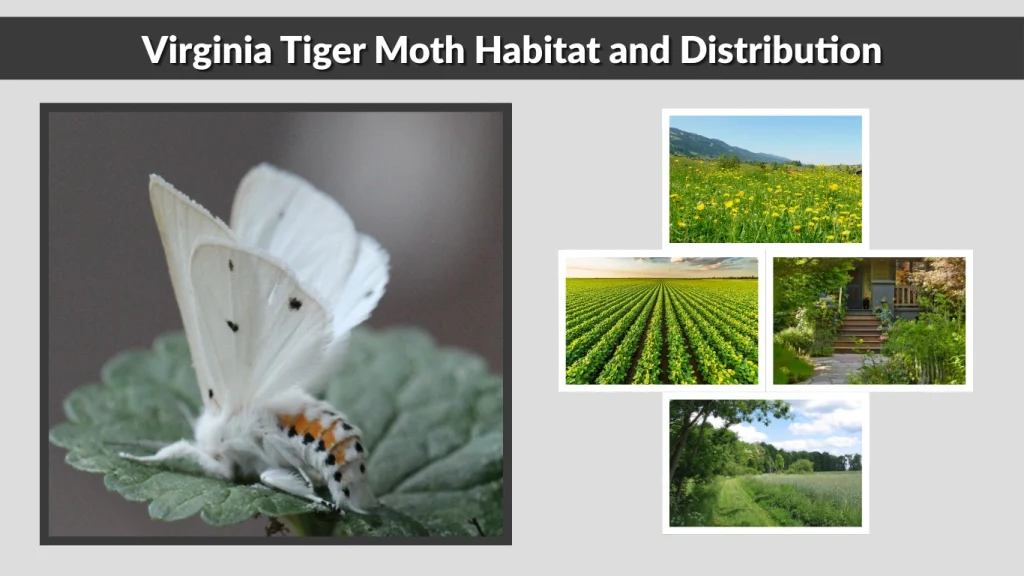
The Virginia Tiger Moth is found throughout North America, from Canada to Mexico, and adapts well to different environments. It thrives in:
- Meadows and grasslands
- Suburban gardens
- Woodland edges
- Agricultural fields
This adaptability explains why it is one of the most common tiger moths seen across the continent. The caterpillars often appear in gardens, feeding on both weeds and cultivated plants. Adults are nocturnal and are strongly attracted to artificial lights, often turning up on porch walls and windows during summer evenings.
Virginia Tiger Moth Caterpillar
Identification
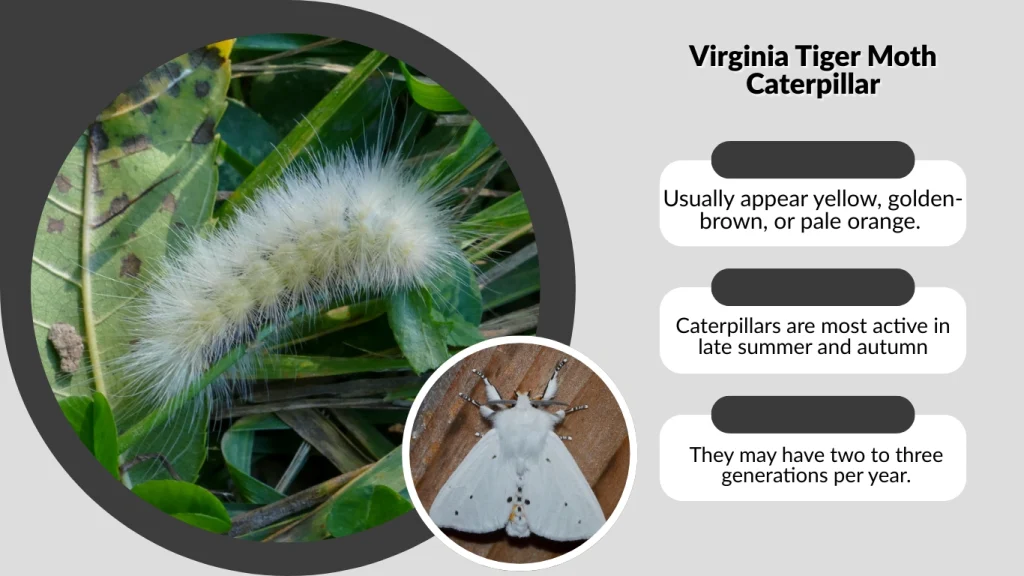
The Yellow Woolly Bear Caterpillar is easy to identify because of its fuzzy coat and compact size. Its hairs vary in color depending on region and diet but usually appear yellow, golden-brown, or pale orange. When disturbed, the caterpillar tucks in its head and legs, forming a ball for protection.
This stage is crucial for survival, as caterpillars must feed and store enough energy to transform into adults. Unlike social insects, each caterpillar grows independently, seeking food plants on its own.
Behavior
Caterpillars are most active in late summer and autumn, sometimes crossing sidewalks and driveways in search of food or shelter. In warmer areas, they may have two to three generations per year, while in cooler climates, only one generation is common.
Host Plants of the Virginia Tiger Moth
One of the reasons why the Virginia Tiger Moth is so widespread is its ability to feed on a huge variety of host plants. Unlike some caterpillars that rely on specific plants, the Yellow Woolly Bear is highly adaptable.
Common Host Plants
- Weeds: Dandelion, plantain, dock, and clover
- Garden plants: Spinach, cabbage, carrots, and beets
- Crops: Corn, soybeans, and other field crops
This wide diet means they can survive in both wild and cultivated habitats. However, it also makes them occasional pests, as large numbers of caterpillars can damage vegetable gardens and crops.
Diet of the Virginia Tiger Moth

Caterpillar Diet
The caterpillar is a voracious feeder. It consumes the leaves of its host plants and can defoliate small plants if present in large numbers. However, it rarely causes severe agricultural damage unless populations boom.
Its generalist feeding strategy helps it adapt to different environments. By eating both weeds and crops, it can survive in wild meadows as well as human-influenced landscapes.
Adult Diet
The adult moths, like many tiger moths, feed primarily on nectar from flowers. They are nocturnal pollinators, visiting blossoms at night and helping with cross-pollination. While not as significant as bees or butterflies, their role as pollinators contributes to biodiversity.
Life Cycle of the Virginia Tiger Moth

Like all moths, the Virginia Tiger Moth undergoes complete metamorphosis, transitioning through four distinct stages:
Eggs
After mating in late spring or early summer, females lay clusters of tiny pale eggs on the underside of leaves. These eggs are usually placed on host plants such as dandelions, clover, or crops. The eggs hatch within 7–14 days, depending on temperature and conditions.
Larvae (Caterpillar Stage)
The Yellow Woolly Bear Caterpillar emerges and immediately begins feeding. This is the longest stage of the life cycle. In northern climates, they often overwinter as larvae, hiding under leaf litter or soil to survive the cold. In warmer regions, multiple generations may occur each year.
Cocoon (Pupa)
When fully grown, the caterpillar spins a cocoon made of silk and its own hairs. Inside this protective casing, it transforms into a pupa. The pupal stage lasts about 2–3 weeks, though it can extend longer if overwintering.
Adult Moth
The adult Virginia Tiger Moth emerges with its characteristic white wings and yellow abdomen. Adults live briefly — usually only one to two weeks — and focus entirely on reproduction. They are active at night, flying in search of mates and flowers for nectar.
Size and Lifespan
- Caterpillar Size: 25–30 mm (1–1.2 inches) long.
- Adult Size: Wingspan 30–50 mm (1.2–2 inches).
- Lifespan:
- Egg stage: 1–2 weeks.
- Caterpillar stage: Several weeks to months, depending on climate.
- Pupa stage: 2–3 weeks (or overwinter).
- Adult stage: 1–2 weeks.
- Egg stage: 1–2 weeks.
The entire life cycle generally takes 6–8 weeks, though overwintering can extend it to nearly a year.
Are Virginia Tiger Moths Poisonous or Dangerous?
Caterpillars
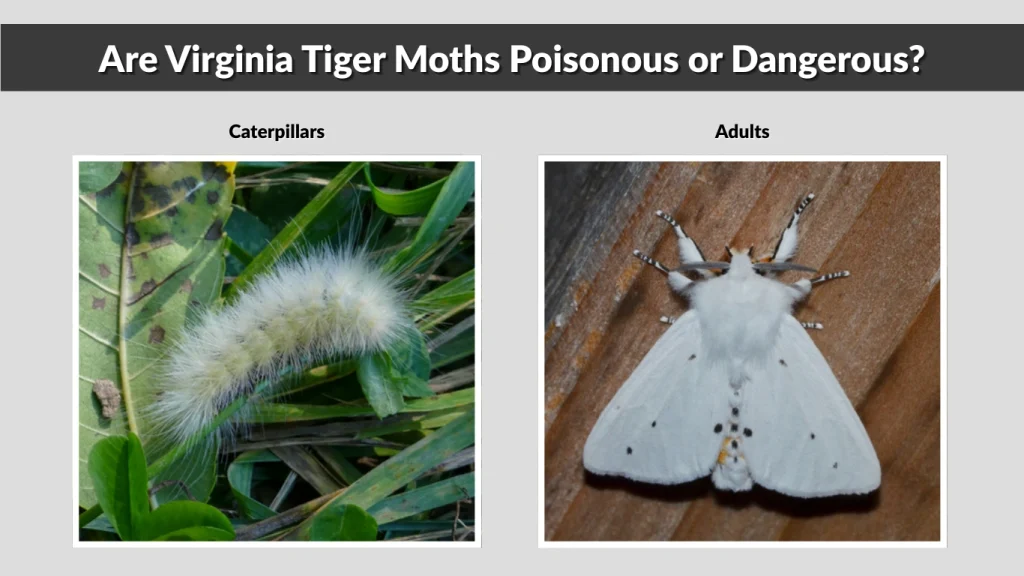
The Yellow Woolly Bear Caterpillar is not poisonous in the sense of being deadly. However, its dense bristly hairs can cause mild skin irritation, rashes, or itching if touched. These hairs deter predators and act as a natural defense. For most people, the reaction is temporary and not serious.
Adults
Adult Virginia Tiger Moths are completely harmless. They do not sting, bite, or transmit disease. They contain mild toxic compounds from their caterpillar diet, which makes them unappealing to predators, but they pose no threat to humans.
Virginia Tiger Moth: Good or Bad for Humans?
- Good Aspects:
- Caterpillars help control weeds such as dandelions and plantains.
- Adults act as nighttime pollinators, visiting flowers and contributing to biodiversity.
- Serve as an important food source for birds and small mammals.
- Caterpillars help control weeds such as dandelions and plantains.
- Bad Aspects:
- Caterpillars may feed on vegetables like spinach, cabbage, or corn, causing minor garden damage.
- Large infestations in agricultural areas can defoliate crops, though this is uncommon.
- Caterpillars may feed on vegetables like spinach, cabbage, or corn, causing minor garden damage.
Overall, the Virginia Tiger Moth is more beneficial than harmful, making it an important species in its ecosystem.
Ecological Importance
The Virginia Tiger Moth plays several critical roles:
- Pollination: Adults feed on nectar, transferring pollen between plants.
- Food Chain Contribution: Caterpillars provide food for birds, wasps, and small mammals despite their defenses.
- Weed Control: Caterpillars feed on invasive weeds, helping balance plant growth.
- Ecosystem Indicator: Their widespread presence indicates healthy ecosystems, while population declines can signal environmental stress.
Conservation Status
The Virginia Tiger Moth is not endangered and remains one of the most common tiger moths in North America. Its adaptability to different plants and habitats has ensured survival across a wide range.
However, some threats exist:
- Pesticide Use: Reduces caterpillar survival rates.
- Habitat Loss: Declines in wildflower meadows and natural spaces.
- Light Pollution: Disrupts adult moth navigation and mating behavior.
Encouraging natural habitats, reducing pesticide use, and maintaining wildflower-rich areas can help sustain populations.
FAQs
What is the scientific name of the Virginia Tiger Moth?
The scientific name of the Virginia Tiger Moth is Spilosoma virginica. It belongs to the tiger moth subfamily Arctiinae within the family Erebidae. The name reflects its wide distribution across North America and its close relation to other tiger moths such as the Garden Tiger Moth.
Are Virginia Tiger Moth caterpillars poisonous to humans?
The caterpillars, known as Yellow Woolly Bears, are not deadly but their hairs can cause mild skin irritation. Sensitive individuals may develop itching or rashes if they touch the caterpillar directly. Wearing gloves when handling them is recommended, although observing them without contact is completely safe.
What do Virginia Tiger Moth caterpillars eat?
Virginia Tiger Moth caterpillars are generalist feeders. They eat a wide range of plants including dandelions, clover, spinach, cabbage, corn, and even garden weeds. This broad diet makes them adaptable and capable of thriving in both wild habitats and human-influenced landscapes.
How big do Virginia Tiger Moths get?
Caterpillars typically grow up to 25–30 mm (around 1 inch) in length. Adult moths have a wingspan of 30–50 mm (1.2–2 inches). Their compact size allows them to survive in a variety of environments while remaining less visible to predators.
What is the lifespan of a Virginia Tiger Moth?
The full life cycle usually lasts 6–8 weeks, though overwintering caterpillars may extend it to a year. The adult moth lives for only 1–2 weeks, during which its main goal is reproduction. Most of its life is spent in the caterpillar stage, feeding and preparing for transformation.
